Author: bang7

  • The Most Dangerous Job in F1: Can Rookie Isack Hadjar Survive Max Verstappen’s “Cursed” Seat in the High-Stakes 2026 Reset?

    The Most Dangerous Job in F1: Can Rookie Isack Hadjar Survive Max Verstappen’s “Cursed” Seat in the High-Stakes 2026 Reset?

    In the high-octane world of Formula 1, there is perhaps no challenge more daunting, no assignment more perilous, than occupying the garage next to Max Verstappen. It is a role that has been described as the “gold standard” of difficulty, a crucible that has melted the confidence of some of the sport’s brightest talents. As we look toward the revolutionary 2026 season, the Red Bull Racing garage is once again the epicenter of a dramatic shake-up. The team has officially confirmed that 21-year-old French sensation Isack Hadjar will step into the line of fire, replacing a string of predecessors who couldn’t quite crack the code. But this time, the context is different. With a new Ford-powered era dawning and Verstappen hungry for redemption after a razor-thin title loss in 2025, the pressure on this new partnership is nothing short of stratospheric.

    The Graveyard of Ambition

    To understand the magnitude of the task facing young Isack Hadjar, one must first walk through the veritable graveyard of careers that the second Red Bull seat has become over the last decade. It is a history written in skid marks and shattered confidence. We all remember Pierre Gasly, the hopeful French talent whose promotion in 2019 lasted only half a season before the relentless pressure and performance gap saw him demoted. Then came Alex Albon, a driver of immense skill and heart, who survived until the end of 2020 but ultimately couldn’t match the Dutchman’s blistering pace, sealing his fate.

    Sergio “Checo” Perez offered a brief respite from the chaos. The veteran Mexican driver brought stability and flashes of brilliance, surviving four full seasons and securing five Grand Prix victories. Yet, even he was not immune to the “Verstappen Effect.” A catastrophic collapse in form during the 2024 season led to his early exit, despite holding a valid contract. The ruthlessness of the Red Bull machine was further underscored recently with the treatment of Liam Lawson and Yuki Tsunoda. Lawson was given a mere two races to prove his worth before being unceremoniously sent back to the junior team, while Tsunoda, despite years of development, has been sidelined to a reserve role for 2026. This revolving door policy raises a terrifying question for any incoming driver: Is success alongside Max Verstappen even possible?

    Verstappen’s Cold, Hard Demands

    For the first time, Max Verstappen has peeled back the curtain on exactly what he requires from the man sitting in the other car. His comments are devoid of sentimentality, painting a picture of a driver who views his teammate not as a rival or a buddy, but as a tool for collective dominance.

    “Good in also developing the car with the team,” Verstappen stated with characteristic bluntness. “Good understanding between the drivers… not hiding things throughout the weekend.”

    These words carry immense weight. In the complex engineering war of Formula 1, a teammate who cannot provide accurate feedback on tire degradation, aerodynamic balance, or fuel load handling is a liability. Verstappen’s insistence on transparency—”not hiding things”—reveals a pragmatic approach to modern motorsport. He doesn’t need secrets; he needs data. When one driver finds a faster line or a better braking point, sharing that information elevates the entire team. A teammate who hoards secrets to gain a petty advantage only slows down the car’s overall development, something a championship-contending team cannot afford.

    Perhaps most telling was Verstappen’s dismissal of the personal element. “If you are good friends off track, that’s a nice bonus but not necessarily needed,” he explained. “As long as you are very professional on track and it benefits the team.”

    This is the mindset of a four-time World Champion who isn’t looking for a vacation companion. He is looking for efficiency. He wants a colleague who shows up prepared, shares the workload, and pushes the team forward. It is a strictly professional contract: do your job, help us win, and you will survive.

    Enter Isack Hadjar: The New Hope

    So, who is the young driver stepping into this cauldron? Isack Hadjar, the 21-year-old French-Algerian talent, is not arriving without credentials. His rookie season in 2025 with the Racing Bulls (formerly AlphaTauri) was a standout performance in a midfield car. Securing a maiden podium at the Dutch Grand Prix—in Verstappen’s backyard, no less—showed a flash of the “magic” that Red Bull advisor Helmut Marko is so fond of.

    Hadjar’s attitude towards the promotion is a mix of humility and steely determination. He has described the prospect of partnering Verstappen as “frightening” but also the ultimate challenge. Crucially, his mindset seems to align with Verstappen’s requirements. Hadjar has openly spoken about accepting that he will be slower in the first few months, focusing on learning rather than trying to be a hero on day one. This willingness to learn, to absorb data rather than fight it, could be his saving grace. Unlike Gasly or Albon, who arguably tried to overdrive the car to match Max immediately, Hadjar appears ready to play the long game.

    The Great Reset of 2026

    If there is a silver lining for Hadjar, it lies in the calendar. The 2026 season represents the most comprehensive regulation change in the sport’s recent history. The cars will be smaller and lighter, featuring active aerodynamics and a permanent retirement of the DRS system. The power units are undergoing a radical transformation with a 50/50 split between electrical and internal combustion power, running on fully sustainable biofuels.

    For Red Bull, this is a moment of massive risk and opportunity. The team is debuting its own power unit, developed in partnership with American automotive giant Ford. This “Red Bull Ford” engine is an unknown quantity. Verstappen has noted it makes a “good noise” on the dyno, but as his manager Raymond Vermeulen pointed out, “What is the reference? Nobody knows.”

    This uncertainty levels the playing field. Everyone, including Verstappen, is starting from zero. Hadjar won’t be jumping into a car that has been tailored to Max’s driving style for five years; he will be developing a brand-new machine alongside him. This reset could be the equalizer that allows a rookie to find his footing without the immediate pressure of matching a teammate who is one with the machinery.

    Redemption and the Future

    The narrative of 2026 is further spiced by Verstappen’s own hunger. Having missed the 2025 World Championship by a heartbreaking two points—ending his streak of consecutive titles—Max is a wounded animal. He wants that fifth title, and he knows he cannot do it alone. The Constructor’s Championship requires two scoring cars. The team cannot afford another season where the second car is nowhere to be found.

    Red Bull needs Isack Hadjar to be more than just a seat-filler. They need him to be a reliable wingman, a data gatherer, and a consistent points-scorer. The young Frenchman has the speed, and he seems to have the right mentality. But as history has shown, the pressure of the Red Bull garage is a unique beast.

    Will Hadjar crumble like those before him, or will the fresh start of 2026 allow him to forge a new legacy? The “frightening” reality is that we won’t know until the lights go out. But one thing is certain: in the high-stakes world of Formula 1, there is no place to hide, especially when you’re sitting next to Max Verstappen.

  • Mercedes’ 2026 Masterstroke? The “Genius” Thermal Loophole That Has Rival Teams Screaming for the FIA

    Mercedes’ 2026 Masterstroke? The “Genius” Thermal Loophole That Has Rival Teams Screaming for the FIA

    The Formula 1 paddock is rarely quiet, even in the off-season, but the noise currently emanating from the technical headquarters of Ferrari, Audi, and Honda is deafening. A storm is brewing over the 2026 regulations, and at the center of the hurricane sits a familiar protagonist: Mercedes-AMG Petronas.

    Reports have surfaced that the Brackley-based team has identified and exploited a significant “gray area” in the upcoming 2026 power unit regulations. The discovery has sent shockwaves through the sport, with rival manufacturers frantically petitioning the FIA for clarification. The fear? That Mercedes has just secured an advantage reminiscent of their crushing dominance at the start of the turbo-hybrid era in 2014.

    The “Dirty” Secret: A Physics Lesson

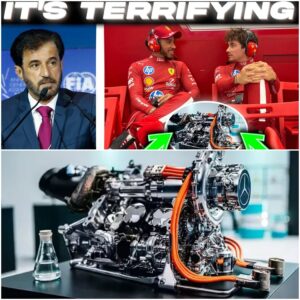
    At the heart of the controversy is a clever, if contentious, manipulation of physics involving the engine’s compression ratio. Under the new 2026 rules, the FIA has mandated a reduced compression ratio limit of 16:1, down from the current 18:1. This rule is found in Article 5.4.3 of the technical regulations.

    However, Mercedes engineers noticed a critical detail in the wording: compliance measurements are executed at “ambient temperature.” In other words, the FIA checks the engine when it is cold, sitting in the garage.

    According to technical analysis, Mercedes has reportedly constructed engine components using specific materials designed to expand significantly when heated. When the engine reaches its operating temperature of around 120°C (248°F) on the track, this thermal expansion alters the internal geometry of the combustion chamber. The result? The compression ratio shifts from the legal 16:1 up to a more potent 18:1.

    In the garage, the car is perfectly legal. On the track, it is a different beast entirely.

    The 13 Horsepower Goldmine

    To the casual observer, a shift in compression ratio might sound like negligible technical jargon. However, in the razor-thin margins of Formula 1, it is a goldmine.

    Former Jordan technical director Gary Anderson has crunched the numbers, explaining that with the mandated 80mm piston diameter, a mere half-millimeter of expansion is enough to trigger this shift. The result is a performance gain of approximately 10 kilowatts, or roughly 13 horsepower.

    While 13 horsepower might seem modest compared to the 1,000+ horsepower total output, its on-track impact is massive. This power boost translates to roughly 0.3 to 0.4 seconds per lap, depending on the circuit. In a sport where pole position is often decided by hundredths of a second, a four-tenth advantage is not just a gap; it is a chasm. It is the difference between fighting in the midfield and cruising to victory.

    Rivals in Revolt: The Joint Letter

    The reaction from the rest of the grid has been swift and severe. Ferrari, Honda, and newcomer Audi—who will supply engines to Aston Martin and Sauber (as the factory Audi team) respectively—have reportedly submitted a joint letter to the FIA demanding immediate clarification.

    Their argument hinges on Article 5.1.5, which states that cars must comply with regulations “in their entirety at all times during a competition.” The rival manufacturers argue that this clause implies the 16:1 limit should apply when the car is actually racing, not just when it is parked. They contend that Mercedes is violating the spirit of the rules, if not the letter.

    Ferrari Team Principal Fred Vasseur offered a measured but telling response when pressed on the issue. He acknowledged that teams have “grown up massively” in their ability to find loopholes but warned of the dangers of allowing such gaps to exist. He drew a chilling parallel to the 2009 season, where Brawn GP arrived with the “double diffuser” and obliterated the field, leaving established giants scrambling to catch up.

    “This time around, with the 2026 rule change being even bigger, the potential for surprises runs even greater,” Vasseur noted.

    The FIA’s Stance: Legal or Not?

    For now, the FIA appears to be standing its ground. The governing body’s position is straightforward: they wrote the rules, they defined the measurement method (ambient temperature), and Mercedes passed the test.

    Crucially, Mercedes did not try to hide this development. Reports indicate the team remained in constant dialogue with the FIA throughout the design process. They sought reassurance that their interpretation was valid before committing to the philosophy. This transparency makes it incredibly difficult for the FIA to retroactively ban the design without looking incompetent or unfair.

    This situation echoes the 2020 DAS (Dual-Axis Steering) controversy. Mercedes developed a system that allowed drivers to adjust the toe angle of the front wheels by pushing and pulling the steering wheel. Rivals cried foul, but the FIA ruled it legal for that season because it complied with the existing text of the regulations, even if it was later banned for the following year.

    Deja Vu: The Ghost of 2014

    For long-time F1 fans, the current panic feels incredibly familiar. In 2014, when the sport switched to V6 turbo-hybrid engines, Mercedes unveiled a split-turbo architecture that their rivals had completely missed. That singular design choice helped them secure seven consecutive Constructors’ Championships.

    James Allison, Mercedes’ Technical Director, has only fueled the fire. He recently described the 2026 regulations as a “complete tear-up” and, most alarmingly for his rivals, hinted that the team’s confidence level is similar to where it was in 2014.

    “The moment you think you’ve aced it, you’re going to get caught out massively,” Team Principal Toto Wolff said, characteristically playing down expectations. Yet, the reported 13hp advantage suggests the team knows exactly where they stand.

    Innovation or Cheating?

    So, is this cheating? Gary Anderson offers perhaps the most honest assessment: “This sort of thing exists for everyone to exploit as best they see fit.”

    In his view, pushing engineering to the absolute limit is the very definition of Formula 1. If other teams failed to spot the opportunity to use thermal expansion to their advantage, that is a failure of their own imagination, not a crime by Mercedes. “It is time to cry wolf,” Anderson added, suggesting rivals are simply bitter about being outsmarted.

    However, the controversy highlights the immense complexity of the 2026 rules. The new cars will feature a 50/50 split between electrical and internal combustion power, sustainable fuels, and active aerodynamics. With so many variables, the team that nails the engine regulations first will likely hold the keys to the kingdom.

    What Happens Next?

    The FIA now faces a difficult choice. They could maintain the status quo, forcing Ferrari, Audi, and Honda to play catch-up—a process that could take years. Alternatively, a formal protest could be lodged at the season-opening Australian Grand Prix in March 2026. This would force the stewards to make a definitive legal ruling that could disqualify Mercedes (and potentially McLaren and Williams, who use Mercedes customer engines) or vindicate them entirely.

    There is also talk of a compromise: allowing the system for 2026 but banning it for 2027. But in F1, a one-year head start is often all a team needs to cement a dynasty.

    As the paddock prepares for pre-season testing in Barcelona, one thing is certain: the race for the 2026 championship has already begun, and Mercedes may have just taken pole position before a single wheel has turned.

  • The Tragic Genius of Charles Leclerc: Why Ferrari’s Philosophy is Suffocating Formula 1’s Brightest Star

    The Tragic Genius of Charles Leclerc: Why Ferrari’s Philosophy is Suffocating Formula 1’s Brightest Star

    In the high-octane world of Formula 1, talent is supposed to be the golden ticket. We are told that if you are fast enough, brave enough, and dedicated enough, the results will follow. Yet, the career of Charles Leclerc stands as a painful counter-argument to this rule—a case study in how brilliance can be slowly suffocated by instability.

    Leclerc is, without a doubt, one of the most naturally gifted drivers of his generation. His junior career was ruthless, securing back-to-back championships in GP3 and Formula 2 as a rookie—a feat reserved for the sport’s elite. When he arrived at Ferrari in 2019, he didn’t just join the team; he put the paddock on notice, outperforming a four-time world champion in Sebastian Vettel and proving he wasn’t just a future star, but a present-tense threat.

    So, why does it feel like we are constantly watching him struggle? Why does the narrative often shift to him “cracking under pressure”? The answer lies not in Leclerc’s lack of ability, but in a fundamental mismatch between his specific driving genius and Ferrari’s operational failures.

    The “Knife-Edge” Surgeon

    To understand the tragedy, you first have to understand the magic. Charles Leclerc’s driving style is distinct. He thrives on a sharp front end, demanding immediate response when he turns the wheel. He attacks corners with a unique confidence, rotating the car early and carrying immense speed through the apex.

    Engineers describe this as “knife-edge driving.” His inputs are minimal, clean, and incredibly fast. When the car complies, the result is poetry in motion. This is exactly why Leclerc is arguably the best qualifier on the grid today. In 2022 alone, he secured nine pole positions—more than anyone else. On a Saturday, with fresh tires and low fuel, he can drag a Ferrari to grid slots it simply doesn’t deserve.

    But this surgical style requires a steady hand and, more importantly, a “stable table.” This is where the Ferrari dream begins to turn into a nightmare.

    The Stability Paradox

    Ferrari has developed a reputation in recent years for building cars that are fundamentally unstable. They may be fast over a single lap, but over a race distance, they suffer from unpredictable balance shifts and aggressive tire degradation.

    Leclerc’s style relies heavily on trust—trust that the rear of the car will stick when he commits to a corner. But when the fuel load is heavy and the tires begin to wear, the Ferrari becomes a volatile beast. The razor-sharp front end that gave him pole position suddenly becomes a liability as the rear becomes unpredictable.

    While rivals like Max Verstappen and Lewis Hamilton often appear calmer in the cockpit, it is partly because their machinery (and team philosophy) offers more adaptability. Leclerc is often fighting a car that is actively working against his natural instincts, forcing him into a mental recalculation at 300 km/h.

    The Myth of “Overdriving”

    This instability leads to the most unfair criticism levied against the Monegasque driver: that he is prone to errors.

    When strategy blunders occur—and let’s be honest, Ferrari’s strategy calls have become the stuff of memes—Leclerc is often left in a desperate position. Think back to Monaco or Silverstone, where race wins were snatched away not by speed, but by bad decisions from the pit wall.

    When a driver like Leclerc senses a win slipping away due to factors outside his control, he is forced to “overdrive.” He brakes later, pushes harder, and takes risks that his car cannot support. The resulting lock-ups or spins are not signs of a driver who can’t handle pressure; they are the symptoms of a driver trying to compensate for his team’s deficiencies. He is reactive to chaos, whereas a winning team should be providing clarity.

    A Broken Promise?

    There is an emotional weight to this story that makes it even harder to watch. Charles Leclerc drives for Ferrari not just as an employee, but as a believer. He grew up idolizing the Scuderia. He understands the weight of that red suit.

    This passion is a double-edged sword. It drives him to extract the absolute maximum from the car, but it also makes the failures hurt more deeply. When Ferrari fails him, it feels less like a sporting loss and more like a broken promise.

    The tragedy is that his peak years are coinciding with Ferrari’s years of operational immaturity. By the time the team learns to be consistent, one has to wonder if Leclerc will have paid too high a price in confidence and patience.

    The Final “What If”

    However, there is a glimmer of hope that keeps the Tifosi believing. On the rare occasions when Ferrari gets it right—when the car is balanced, the tires are managed, and the strategy is sound—Leclerc is practically untouchable. In those moments, we see no panic, no overdriving, just pure, dominant execution.

    This proves that Leclerc doesn’t need chaos to win; he needs a platform that matches his excellence. If Ferrari can ever consistently provide that “stable table,” the rest of the grid should be very worried. Until then, we are left watching a generational talent fight a battle with one hand tied behind his back, waiting for the day his team finally catches up to him.

  • One Rumor, Then Silence: Yuki Tsunoda Reveals the Heartbreaking “False Hope” Before Red Bull’s Brutal 2026 Decision

    One Rumor, Then Silence: Yuki Tsunoda Reveals the Heartbreaking “False Hope” Before Red Bull’s Brutal 2026 Decision

    In the high-octane world of Formula 1, speed is usually the currency of survival. You drive fast, you score points, you keep your seat. That is the contract every driver signs mentally when they step into the cockpit. But every so often, the sport peels back its glamorous veneer to reveal a business structure so ruthless and politically charged that it leaves even the most hardened veterans reeling. This week, that cold reality hit Yuki Tsunoda.

    For the first time, the Japanese driver has broken his silence regarding the events surrounding the Qatar Grand Prix—a weekend that will likely define the trajectory of his career. The headline news is already known: Yuki Tsunoda will not hold a permanent race seat for the 2026 season. Instead, he is being shuffled into a reserve and test driver role as Red Bull looks to “reset” its lineup for the new regulation era. But the dry press releases hide a far more human, and frankly, heartbreaking story that Tsunoda has only now decided to share.

    The Cruel Twist of Timing

    The most devastating part of Tsunoda’s departure wasn’t the decision itself, but the timing of it. According to Tsunoda, moments before he stepped into the official briefing where his fate would be sealed, he heard a rumor. It wasn’t just idle paddock gossip; it was a strong, reassuring whisper suggesting that his future within the Red Bull family was secure.

    Imagine the psychological state of a professional athlete in that moment. After five seasons of grinding, maturing, and proving his worth, he allowed himself a moment of relief. He was likely mentally preparing for the next season, visualizing qualifying laps, race starts, and the redemption arc of 2026. Then, he walked into the room, and the rug was violently pulled out from under him.

    Minutes after feeling safe, he was told it was over.

    Tsunoda admitted that this specific sequence of events—the false hope followed immediately by the bad news—made the blow significantly harder to process. It wasn’t just disappointing; it was disorienting. “Shocking” and “confusing” were the words used to describe a moment that highlighted how Formula 1 can be less of a sport and more of a volatile corporate machine.

    Politics Over Performance?

    The immediate reaction from the online F1 community was a mixture of outrage and confusion. The narrative that Tsunoda “wasn’t good enough” simply doesn’t hold water when subjected to scrutiny. He hasn’t been replaced by a proven world champion or a veteran race winner. He has been replaced by Isack Hadjar—a talented but undeniably untested rookie.

    By choosing Hadjar alongside Liam Lawson and Arvid Lindblad, Red Bull has made a calculated gamble: they are prioritizing raw, unproven potential over established experience. It is a decision that screams “reset.” The 2026 season brings with it a massive overhaul of the sport, featuring new power units, lighter cars, and different energy deployment rules. In the eyes of Red Bull’s hierarchy, Tsunoda represented the “old phase” of their development program. He wasn’t slow, and he wasn’t making the mistakes of his rookie years. He was simply inconvenient for the new narrative they wanted to write.

    This leads to an uncomfortable truth about the Red Bull junior system: it is not designed for fairness. It is an incubator built for extreme selection pressure. It rewards instant, meteoric impact rather than steady, linear improvement. Tsunoda’s crime, ironically, was getting better at a steady pace in a system that demands you either explode onto the scene or vanish.

    A Maturity Born of Fire

    Perhaps the most surprising aspect of this saga is Tsunoda’s reaction. A few years ago, the “fiery” Yuki might have exploded. He might have burned bridges or lashed out at the team publicly. Instead, the Tsunoda of today displayed the very maturity that Red Bull claims they are moving on from.

    He noted that while the news didn’t feel real at first, “it didn’t feel like the world collapsed either.” This statement reveals a driver who has become mentally hardened. He understood, perhaps long before the fans did, that his destiny was never entirely in his own hands. By accepting the reserve role and hinting at “possible scenarios” that go beyond simple simulator work, Tsunoda is playing the long game.

    He knows that reserve drivers in the modern era are not just benchwarmers; they are insurance policies. With the chaos that the 2026 regulations are almost guaranteed to bring—reliability issues, new car characteristics, and potential driver struggles—experience may suddenly become the most valuable commodity in the paddock.

    The Unanswered Questions

    The dust has settled on the decision, but the manner in which it was handled leaves a sour taste. Who started the rumor that Tsunoda was safe? Why did it reach him so late? Was there an internal power struggle that resulted in a last-minute flip-flop of the decision? We may never know the definitive answers, but the existence of the rumor suggests internal uncertainty and the chaotic nature of F1’s “paddock politics.”

    For now, Yuki Tsunoda plans to rest, train, and prepare. He is stepping back, but he is not stepping away. In a sport where narratives can shift as quickly as a pit stop, being the “safe pair of hands” waiting in the wings might just be the position that leads to an unexpected return.

    As fans debate whether Red Bull has made a masterstroke or a massive mistake, one thing remains clear: Yuki Tsunoda’s story is a stark reminder that in Formula 1, you can do everything right—improve, mature, and deliver—and still lose out to the invisible hand of timing and politics.

  • Beyond the Speed: How Secret Texts from Legends Saved Lando Norris and Secured the 2025 F1 Crown by Just Two Points

    Beyond the Speed: How Secret Texts from Legends Saved Lando Norris and Secured the 2025 F1 Crown by Just Two Points

    The engine notes have faded, the champagne has dried, and the floodlights of the Yas Marina Circuit have long since dimmed, but the seismic impact of the 2025 Formula 1 season finale continues to reverberate through the paddock. In a sport often defined by cold engineering and ruthless rivalries, the crowning of Lando Norris as the 2025 World Champion has revealed a deeply human narrative buried beneath the carbon fiber: a story of fragility, mentorship, and the razor-thin margin between collapse and glory.

    The record books will show that Lando Norris won his maiden title by a mere two points. They will list the victories, the pole positions, and the podiums. But what the statistics fail to capture is the “slow-burning thriller” that played out behind the visor—a psychological war where Norris found himself walking a perilous tightrope between absolute belief and crippling doubt. And as the new champion now reveals, he did not walk that line alone.

    The Burden of the Early Lead The 2025 campaign began with an air of inevitability. Norris, driving with a precision that terrified his rivals, seized victory in Australia, instantly marking himself as the man to beat. The McLaren grew wings under his command, and for a brief, shining moment, the championship seemed destined to be a procession. But Formula 1, in its cruel and unpredictable nature, has a way of turning certainty into shadow.

    By Round 5 in Saudi Arabia, the ground began to shift. The challenge didn’t come from the usual suspects in Red Bull or Ferrari initially, but from within his own garage. Oscar Piastri, Norris’s prodigious teammate, surged with a ferocity that caught the paddock off guard. Suddenly, the comfortable lead evaporated, and the championship slipped from Norris’s grasp.

    The Season on the Brink The middle sector of the season threatened to fracture Norris’s resolve permanently. It was a sequence of events that felt scripted by a tragedian. A collision with Piastri in Canada didn’t just end his race; it severed the momentum and left uncomfortable questions hanging in the humid Montreal air. Was Norris “too nice”? Did he lack the killer instinct required to put a teammate in their place?

    Then came Zandvoort. The Dutch Grand Prix was meant to be a redemption arc, but instead, it delivered heartbreak in the form of a mechanical failure. It wasn’t just points that were stolen that afternoon; it was hope. As the title dream flickered, the pressure tightened like a vice. Critics began to whisper that the “Lando Norris hype train” had derailed. The mental toll was visible—the young Briton looked isolated, carrying the weight of a legacy he hadn’t yet built.

    Voices from the Shadows It was in these dark moments, away from the prying lenses of the Netflix cameras and the glare of the media pen, that unseen voices began to intervene. Norris, in his first in-depth interview since claiming the crown, revealed that his salvation came in the form of private messages—fragments of clarity delivered by those who knew the crushing loneliness of the lead.

    “I’ve had some great words and great text messages and conversations with some incredible people,” Norris admitted, his voice thick with emotion. “People that have won world championships in different sports. Lewis and others like Seb.”

    The revelation that Sebastian Vettel, the retired four-time world champion known for his philosophical wisdom, was privately mentoring Norris is a stunning detail. “A lot of people don’t know I speak to Seb about things,” Norris said. These weren’t grand, Hollywood-style speeches. They were quiet reminders.

    Perhaps the most surprising influence came from two wheels. Casey Stoner, the legendary MotoGP champion known for his raw speed and distaste for the limelight, reached out when Norris was at his lowest. Stoner, a man who understood the suffocating nature of expectation better than most, offered a simple but profound push: “Think clearly. Believe. Trust yourself.”

    The Resurrection in Mexico Those words lingered. As the season turned toward its final act, the erratic, doubt-ridden Norris was replaced by something steadier. The noise of the critics faded, replaced by a singular, laser-like focus. The turning point came in Mexico. Under the immense altitude and even higher pressure, Norris delivered a masterclass. It was a dominant victory that didn’t just reclaim the championship lead—it silenced the demons.

    The doubts dissolved. The hesitation that had caused the collision in Canada was gone. Norris was no longer driving to prove he belonged; he was driving to rule.

    The Reckoning in Abu Dhabi By the time the circus arrived in Abu Dhabi, the title fight had distilled into a three-way reckoning: Norris versus Piastri versus the ever-dangerous Max Verstappen. It was a scenario that offered no margin for error. One locked wheel, one slow pit stop, one moment of hesitation, and the dream would be over.

    The race itself was a blur of strategy and nerve, but when the checkered flag finally fell, it was Norris who stood at the summit. The margin was agonizingly close—just two points. Two points that carried the weight of every text message, every late-night doubt, and every whispered encouragement from Hamilton, Vettel, and Stoner.

    “When you win the championship by two points,” Norris reflected, “I would certainly say having these moments of faith from others around me got me those two points.”

    A Victory for Faith At 26, Lando Norris has reached the pinnacle of motorsport. But his victory is a testament to something greater than aerodynamics or tire strategy. It is a victory for the community of champions—the “invisible hands” that guide the next generation through the fire.

    Lewis Hamilton and Sebastian Vettel, former rivals who defined an era, have now helped shape the next one. They understood that the cockpit is the loneliest place on earth, and they refused to let Norris navigate it alone.

    As the celebrations continue and the off-season begins, the 2025 season will be remembered not just for the three-way battle or the resurrection of McLaren, but for the quieter truth that lies beneath the trophy. In a sport defined by milliseconds, it was faith—borrowed from legends and internalized by a young star—that made the difference. Lando Norris is the champion, but he stands on the shoulders of giants.

  • Vindication in Abu Dhabi: How a Secret Test Saved Lewis Hamilton’s Ferrari Career and Exposed the “Skinny Risk” Disaster

    Vindication in Abu Dhabi: How a Secret Test Saved Lewis Hamilton’s Ferrari Career and Exposed the “Skinny Risk” Disaster

    It is often said that the stopwatch never lies, but for Lewis Hamilton and Scuderia Ferrari, the truth required more than just a fast lap time—it required a reckoning. As the sun set over the Yas Marina Circuit on December 10, 2025, bringing the post-season test to a close, the atmosphere in the Ferrari garage shifted from anxiety to a palpable sense of redemption.

    For months, the seven-time world champion had battled a car that seemed to defy logic, struggling to tame a machine that fought him at every corner. Critics whispered that perhaps age had finally caught up with the Briton, or that his move to Maranello was a romantic gamble destined for failure. But the data gathered during those critical 73 laps in Abu Dhabi told a very different story. It wasn’t the driver who had lost his edge; it was the machine that had lost its integrity.

    The “Skinny Risk” Scandal

    To understand the magnitude of what happened in Abu Dhabi, we must rewind to the beginning of the 2025 season. Stung by the aggressive evolution of McLaren and the dominance of their rivals, Ferrari’s technical department, under immense pressure to shed weight and gain speed, adopted a controversial philosophy internally dubbed “Skinny Risk Engineering.”

    The concept was theoretically sound: lighten every component to the absolute limit of its structural tolerance. In Formula 1, weight is the enemy, and shedding grams can mean gaining tenths of a second. However, Ferrari took this obsession to a dangerous extreme. According to leaked internal sources, key components of the SF25’s monocoque and suspension were redesigned with materials that were lighter but significantly less dense.

    While these parts held up in digital simulations, the brutal reality of the racetrack—with its kerb strikes, high-G cornering, and violent braking zones—exposed a fatal flaw. The car wasn’t just light; it was fragile. It lacked the structural rigidity necessary to provide a consistent platform for the aerodynamics to work.

    For Hamilton, a driver renowned for his sensitive feeling for a car’s balance, this was a nightmare. The SF25 suffered from unpredictable oscillations and “warp peaks” in the front axle. One lap the grip was there; the next, the platform would flex, and the car would wash out. Yet, for much of the season, his feedback was met with skepticism. The engineers, trusting their simulations over their driver, defended the structure. They silently froze aerodynamic development as early as April to focus on 2026, leaving Hamilton and Charles Leclerc to wrestle with a compromised machine.

    The Hybrid Mule: A Bridge to Redemption

    The Abu Dhabi test was officially scheduled to gather data on the 2026 Pirelli tire compounds. But for Hamilton, it was a final opportunity to confirm his suspicions. Ferrari rolled out what they called a “hybrid mule”—an experimental chassis that bridged the gap between the failed SF25 and the upcoming SF26.

    This car was different. It featured a new front wing with active aero concepts, narrower tires for the 2026 regulations, and, crucially, a reinforced chassis. Ferrari had added additional layers of composite material to critical load areas, prioritizing stiffness over weight for the first time in a year.

    The effect was instantaneous.

    As Hamilton pushed the car through the high-speed sweeping corners of the marina sector, the radio crackled to life with feedback that had been absent for months. “Stable,” he reported. “Predictable.” “Coherent.”

    For the first time in 2025, the car was an extension of the driver rather than an adversary. The unpredictable jumps in the platform vanished. The downforce delivery was consistent. Hamilton wasn’t fighting the wheel; he was dancing with it.

    The Emotional Impact

    The telemetry screens in the garage confirmed what Hamilton was feeling. The erratic data traces that had plagued the team all year smoothed out into consistent, reliable lines. The realization hit the engineers hard: the problem was never the driver. It was a fundamental error in their design philosophy.

    For Lewis Hamilton, this was more than just technical validation; it was an emotional vindication. He had spent a year questioning his instincts, wondering if he was the variable in the equation of failure. The Abu Dhabi test proved that his “feel” was as sharp as ever. The car had simply been betraying him.

    “It was a renaissance,” one insider observed. “You could see the weight lift off his shoulders. He realized it wasn’t him who had failed.”

    A New Direction for 2026

    The ramifications of this discovery are already reshaping the future of the Scuderia. The “Skinny Risk” approach has been scrapped. The data from Abu Dhabi has redefined the entire strategy for the SF26 project.

    Ferrari has established new, non-negotiable metrics for structural rigidity. They have initiated direct collaborations with aerospace suppliers to find materials that offer strength without the catastrophic flex of the previous year. The mantra has shifted from “lightness at all costs” to “stability creates performance.”

    More importantly, the team hierarchy has been restructured around their star driver. Lewis Hamilton is no longer just the man behind the wheel; he has been positioned as a “co-author” of the 2026 car. Future development steps will include mandatory private simulator sessions with Hamilton, and his feedback has been elevated to the primary reference point for dynamic behavior.

    The Future Is Bright

    The Abu Dhabi test was not just the end of a difficult season; it was the exorcism of a ghost. Ferrari admitted their mistake—a technical confession that is rare in the proud halls of Maranello. They acknowledged that you cannot build a championship-winning car on algorithms alone; you must listen to the human being inside the cockpit.

    As the F1 world looks toward 2026, the narrative has changed. The doubts surrounding Hamilton have evaporated, replaced by the terrifying prospect of a seven-time champion who has not only regained his confidence but is now driving a team that finally understands how to build a car for him.

    The error of 2025 was assuming they could compete without listening. The promise of 2026 is built on the conviction that they will never make that mistake again. Lewis Hamilton has found his center, and Ferrari has found its direction. The “invisible collapse” of 2025 may well have set the stage for the most visible rebirth in Formula 1 history.

  • The End of a Dynasty: Gianpiero Lambiase Quits Red Bull Role, Sparking a High-Stakes War for F1’s Most Coveted Engineer

    The End of a Dynasty: Gianpiero Lambiase Quits Red Bull Role, Sparking a High-Stakes War for F1’s Most Coveted Engineer

    The Formula 1 world has been rocked by a seismic shift that threatens to destabilize the sport’s most dominant force. Gianpiero Lambiase, the calm and measured voice that has guided Max Verstappen to four consecutive world championships, is stepping down from his trackside role at Red Bull Racing. The partnership, widely regarded as one of the most effective and iconic in the history of motorsport, has officially reached its breaking point, signaling the end of an era and the beginning of a desperate scramble for power among Red Bull’s fiercest rivals.

    For nine years, Lambiase—affectionately known as “GP”—has been the bedrock of Verstappen’s success. Through the high-octane pressure of the 2021 title fight to the crushing dominance of the ground-effect era, Lambiase was the one man who could manage the fiery temperament of the Dutch superstar. Their radio exchanges, often oscillating between brutal honesty and tense bickering, became the stuff of legend. But following a grueling 2025 season where Verstappen finished second to Lando Norris, the cracks have turned into a chasm. Citing personal reasons and a desire to reduce his relentless travel schedule, the 45-year-old British-Italian engineer has informed Red Bull management that he wants out.

    A Team in Freefall

    For Red Bull Racing, this resignation is nothing short of catastrophic. The team, once an invincible juggernaut based in Milton Keynes, is now hemorrhaging its top-tier talent. The departure comes hot on the heels of legendary designer Adrian Newey’s exit, painting a grim picture of a championship-winning structure that is fragmenting from the inside out. While Red Bull’s sporting chief Oliver Mintzlaff insists that Verstappen is going nowhere, the loss of his closest ally raises uncomfortable questions. How long can Max Verstappen remain convinced that Red Bull is the best path to a fifth title when the architects of his success are fleeing the ship?

    Lambiase’s absence was already felt during the 2025 season, where he missed the Austrian and Belgian Grands Prix due to personal commitments. Those absences were a precursor to this final decision: he will not continue as Max’s race engineer in 2026. But Lambiase isn’t just retiring to a quiet life; he is looking for a new challenge, and two teams are locked in a fierce battle to secure his signature.

    The Battle of Visions: Williams vs. Aston Martin

    The fight for Lambiase is a tale of two very different visions for the future of Formula 1. On one side stands Williams Racing, a team drowning in nostalgia but hungry for resurrection. On the other is Aston Martin, an ambitious financial powerhouse building a “super team” to dominate the grid.

    Williams Team Principal James Vowles has been aggressive in his pursuit. His pitch to Lambiase is romantic yet practical: help rebuild a fallen giant from the ground up. Vowles is offering Lambiase a senior management position that crucially does not require attendance at all 24 races—a key demand for the engineer. The role would focus on organizational structure and technical direction, allowing Lambiase to prove his worth beyond being “Max’s guy.” Reports suggest that negotiations were advanced before Christmas, with Lambiase seemingly intrigued by the entrepreneurial challenge of restoring the Grove-based team to its former glory.

    However, the allure of Aston Martin is proving difficult to ignore. Lawrence Stroll, the billionaire owner who has poured a fortune into transforming the team, has made a “substantial offer.” Aston Martin proposes a high-level management role—possibly even CEO or Team Principal—filling a vacuum left by Adrian Newey, who currently holds the reins but wishes to focus purely on car design.

    The “Verstappen Factor”: A Strategic Masterstroke?

    The most sensational aspect of this transfer saga lies in the shadows of the negotiation room. Industry insiders and paddock whispers suggest that Aston Martin’s interest in Lambiase goes far beyond his engineering capabilities. It may be part of a grander, more Machiavellian strategy to lure Max Verstappen himself.

    Verstappen’s contract with Red Bull runs through 2028, but the 2027 season is widely viewed as a potential exit window. With Fernando Alonso’s Aston Martin contract expiring after 2026, the timing is suspiciously perfect. If Lambiase joins Aston Martin, he would be reuniting with Adrian Newey, the man who designed Verstappen’s championship-winning cars, and Andy Cowell, the Mercedes engine guru.

    Imagine the scene in 2027: Verstappen walks into Aston Martin to find his favorite designer, his most trusted engine manufacturer, and his loyal race engineer all waiting for him. It is a “dream team” scenario that makes strategic sense. By securing Lambiase, Aston Martin wouldn’t just be gaining a manager; they would be building a bridge to the best driver in the world.

    The Verdict: Legacy or Ambition?

    We are witnessing a man at a crossroads, choosing between two distinct legacies. Williams offers the satisfaction of being the architect of a renaissance, a role with less immediate pressure but immense personal reward. Aston Martin offers immediate championship potential, massive resources, and a reunion with old friends.

    Regardless of his choice, the implications for Red Bull are dire. Verstappen will enter the 2026 season—a critical year for the new regulations—with a new voice in his ear for the first time in nearly a decade. In a sport where success is measured in milliseconds and trust is the ultimate currency, this disruption could be the difference between winning and losing.

    As the F1 world waits with bated breath, one question looms larger than the rest: Is Gianpiero Lambiase’s departure the first domino in the collapse of the Red Bull dynasty? And when the dust settles, will Max Verstappen eventually follow the men who made him a champion? The 2027 driver market has essentially already begun, and the first move has just been made.

  • Alpine’s 2025 Nightmare: How the “Best Worst Team” in F1 History Gambled Everything on a High-Stakes Future

    Alpine’s 2025 Nightmare: How the “Best Worst Team” in F1 History Gambled Everything on a High-Stakes Future

    In the high-octane world of Formula 1, standing still is equivalent to moving backward. But for the Alpine F1 Team, the 2025 season wasn’t just a slip; it was a freefall into the abyss. Finishing dead last in the Constructors’ Championship is a bitter pill for any team to swallow, but for a manufacturer with the resources and history of Renault, it is nothing short of a catastrophe. Yet, as the dust settles on the Abu Dhabi finale, a strange paradox has emerged. Alpine has unofficially claimed the title of the “Best Worst Team” in F1 history—a dubious honor that highlights just how bizarre and calculated their descent truly was.

    The Anatomy of a Historic Failure

    To understand the magnitude of Alpine’s 2025 collapse, one must look at the numbers. The team finished 10th, a staggering 48 points behind the next worst competitor. For a squad that was celebrating a fourth-place finish and besting McLaren just three years prior, this is a fall from grace of Icarus-like proportions. The contrast is stark: while McLaren soared to championship contention, Alpine spiraled in the completely opposite direction.

    However, 2025 was no ordinary failure. Despite finishing at the bottom, Alpine scored 22 points—a tally that would have been respectable for a backmarker in any other era. Even when adjusting for historical scoring systems, no last-place team has ever been this “successful.” Their qualifying performance tells a similar story of confused competence; Pierre Gasly made 11 Q3 appearances, meaning the “slowest” car on the grid started in the top 10 for nearly half the races. The single-lap pace deficit was just under 1.4%, the smallest margin for a last-place car in the 21st century.

    This wasn’t a case of a team being irredeemably slow. It was a case of a team being competitively irrelevant in the tightest midfield F1 has ever seen.

    A Management Carousel and a Dangerous Gamble

    The chaos at Enstone can be traced back to a revolving door of leadership and a strategy that borders on reckless. The return of the flamboyant and controversial Flavio Briatore as Executive Advisor was meant to galvanize the team. Instead, it presided over a season where the Renault works team hit rock bottom. The mismanagement of previous years, particularly under former CEO Laurent Rossi and the ultimate oversight of Renault Group CEO Luca de Meo, created a legacy of instability that came to a head in 2025.

    But the root cause of the on-track pain was a deliberate, strategic choice. Alpine essentially wrote off the 2025 season before it even began. In a move that stunned the paddock, development on the 2025 car was halted by the end of January—months before the first race even started. The logic? To throw every ounce of resource, time, and wind tunnel availability into the 2026 regulations.

    It was a bold, almost arrogant gamble. By accepting last place, Alpine secured the maximum allocation of aerodynamic testing time for the second half of the year. While rivals like Haas were bringing upgrades as late as October, Alpine’s factory was a ghost town for the current car, with eyes firmly locked on the future.

    The Human Cost: Gasly’s Heroics and the Rookie Meat Grinder

    The strategic sacrifice of 2025 placed an immense burden on the drivers, and the disparity in performance was brutal. Pierre Gasly emerged as the tragic hero of the campaign, scoring 100% of the team’s 22 points. He dragged a car that had no business fighting for points into scoring positions through sheer grit and experience.

    On the other side of the garage, the situation was a nightmare for young talent. The rookie pairing of Jack Doohan and later Franco Colapinto contributed exactly zero points. Thrown into a team in turmoil, with a car that was difficult to drive and management that was publicly uncertain about its driver direction, they were set up to fail. The pressure cooker environment, exacerbated by Briatore’s indecisiveness, meant that neither young driver could find their footing. It was a stark reminder that F1 can be a cruel environment for newcomers, especially when the machinery beneath them is treated as an afterthought.

    A “Warm Feeling” or a Delusion?

    As the season concluded, Alpine Managing Director Steve Nielsen described seeing rivals upgrade their 2025 cars as giving him a “warm feeling.” The implication is clear: every hour a rival spent on their 2025 car was an hour not spent on 2026. Alpine is betting the house that this head start will translate into a sharp, linear progression up the grid when the new regulations drop.

    There is logic to the madness. The 2026 reset offers a rare opportunity to leapfrog the competition. With the decision to scrap the Renault engine program and become a Mercedes customer team, Alpine addresses its long-standing power unit deficit. Theoretically, they will have a championship-winning engine and a chassis developed with more wind tunnel time than anyone else.

    However, optimism in F1 must be rooted in reality, and Alpine’s reality is sobering. The team has been “restructuring” for a decade. The leap from dead last to the podium is immense, even with a regulation change. Mercedes engines will solve the power issue, but they won’t fix the operational culture, the suspension deficits, or the history of poor decision-making that has plagued Team Enstone.

    The Final Verdict

    Alpine’s 2025 season will go down in history as a fascinating anomaly—a competitive failure designed by choice. They were the “best worst team” the sport has ever seen, competent enough to qualify in the top 10 but managed disastrously enough to finish last.

    The pain of 2025 was a down payment on 2026. If Alpine returns to the front of the grid next year, Briatore and de Meo will be hailed as strategic geniuses who sacrificed a pawn to save the king. But if 2026 brings more of the same, this gamble will be remembered as the final, desperate act of a manufacturer team that lost its way. For the sake of the hundreds of hardworking staff at Enstone, fans can only hope that the suffering was worth it.

  • Ferrari’s “Invisible” Suspension: The Billion-Dollar Gamble to Save Hamilton’s Legacy and End the 18-Year Drought

    Ferrari’s “Invisible” Suspension: The Billion-Dollar Gamble to Save Hamilton’s Legacy and End the 18-Year Drought

    In the high-stakes world of Formula 1, the difference between a championship and a crisis is often measured in millimeters and milliseconds. But as the paddock looks toward the revolutionary regulation changes of 2026, Ferrari has decided that mere evolution is no longer enough. After a catastrophic 2025 campaign that saw seven-time world champion Lewis Hamilton go podium-less for the first time in his 19-year career, the Scuderia has pushed all its chips to the center of the table.

    The weapon of choice? A revolutionary, borderline controversial suspension system hidden in plain sight—a technical “trick” so advanced that standard FIA tests literally cannot detect it.

    The “Magic” Wishbone: Bending the Rules Without Breaking Them

    At the heart of Ferrari’s 2026 challenger, codenamed “Project 678,” lies a technical innovation that has rivals whispering and engineers scrambling. The team has developed a front suspension system utilizing anisotropic carbon fiber. To the naked eye, and more importantly, to the FIA’s static load tests, these components appear perfectly rigid and completely compliant with the rules.

    However, the genius—and the controversy—lies in the material science. Unlike standard carbon fiber, which behaves consistently regardless of force direction, anisotropic layering allows the material to react differently depending on how the load is applied. When the car is stationary in the scrutineering bay, the suspension is stiff. But under the complex, multi-directional dynamic loads of a Grand Prix circuit—braking into Turn 1 at Monza or sweeping through Silverstone’s Maggots and Becketts—the suspension intentionally flexes.

    This controlled flexing effectively shortens the wishbone length on the fly, creating a passive “dynamic camber” adjustment. In simple terms, the car automatically leans its tires into the corners for maximum grip, then straightens them out on the straights for speed, all without a single electronic sensor or moving hydraulic part. It is, effectively, active suspension achieved through passive materials—a “Holy Grail” of mechanical grip that solves the chronic tire management issues that have plagued Maranello for over a decade.

    The Cost of Innovation: Sacrificing 2025

    To understand why Ferrari has resorted to such extreme engineering, one must look at the wreckage of their 2025 season. The arrival of Lewis Hamilton was supposed to herald a new golden era. Instead, it exposed deep-rooted flaws in the team’s design philosophy. The SF25 was a disaster of “ride height sensitivity”—it only worked when running dangerously low to the ground.

    This flaw culminated in Hamilton’s humiliating disqualification at the Chinese Grand Prix, where his plank wore down beyond legal limits. Forced to raise the car to stay legal, Ferrari lost downforce, pace, and dignity. Hamilton, a driver who had won a race in every single season since his 2007 rookie year, finished the year without a single victory or even a podium finish.

    Team Principal Fred Vasseur saw enough by late April 2025. In a decision that defines leadership, he effectively wrote off the season, halting wind tunnel work on the SF25 to shift every available resource to 2026. It was a painful, public admission of defeat, accepting a year of mediocrity to buy time for a revolution. That revolution is Project 678.

    The Architect and the Philosophy Shift

    The mastermind behind this new direction is Loic Serra, the former Mercedes performance guru who joined Ferrari as Technical Director. Serra has fundamentally flipped Ferrari’s design philosophy. For years, Ferrari built cars around aerodynamics—chasing peak downforce numbers in the wind tunnel—and then hoped the suspension could keep the tires alive.

    Serra’s approach for 2026 is the opposite: build the suspension first. The Project 678 chassis is designed explicitly to maximize tire usage across all compounds and conditions. The aerodynamics are then wrapped around this mechanical foundation. This shift is monumental. It signals that Ferrari finally understands that in the modern Pirelli era, how you treat the rubber is more important than raw peak downforce.

    Under Serra’s guidance, Ferrari is also returning to a push-rod suspension layout for both the front and rear, a configuration they haven’t used since the F10 in 2010. This layout allows for a slimmer nose and better airflow to the rear, crucial for the new 2026 aero rules which reduce overall downforce by nearly 20%.

    Hamilton’s Ultimatum: “I Refuse to Lose”

    Perhaps the most compelling element of this story is the role of Lewis Hamilton. Far from being a passive superstar waiting for his car, Hamilton has embedded himself in the engineering meetings. Reports confirm he has held direct summits with Ferrari Chairman John Elkann and Fred Vasseur, demanding specific characteristics for the new car.

    Hamilton’s frustration is palpable. He has watched fellow champions like Sebastian Vettel and Fernando Alonso wear the red suit, give their best years, and leave empty-handed. He has explicitly stated he refuses to be the next name on that list. The new suspension—designed to provide a stable, predictable platform—is tailored specifically to Hamilton’s smooth driving style, which relies on rear-end confidence that the erratic 2025 car could never provide. This isn’t just Ferrari’s car; it is Lewis’s car.

    The looming Regulatory War

    Of course, innovation in F1 never exists in a vacuum. While Ferrari believes their flexible wishbones are legal because they pass all current static tests, the political machinery of the sport is already grinding. If the system works as intended, rival teams like Red Bull and McLaren will undoubtedly protest, arguing it violates the “spirit” of the rules regarding movable aerodynamic devices.

    Furthermore, Ferrari is fighting a war on two fronts. While they perfect their chassis, a major controversy is brewing over the 2026 engine regulations. Allegations have surfaced that Mercedes and Red Bull have found a loophole in the compression ratio rules, potentially giving them a 13-horsepower advantage. Ferrari, along with Audi and Aston Martin, is demanding FIA clarification. If the engine deficit is real, even the most magical suspension might not be enough to close the gap.

    The Final Verdict: All or Nothing

    The timeline is set. On January 22, 2026, assembly concludes. On January 23, the car launches at Fiorano. By March in Melbourne, the world will know the truth.

    Ferrari has not won a Drivers’ Championship since Kimi Räikkönen in 2007. They are staring down the barrel of a two-decade drought. They have sacrificed a full year of competition, tarnished the record of the sport’s greatest driver, and bet their reputation on a piece of carbon fiber that bends when you don’t look at it.

    There is no backup plan. There is no “Wait until 2027.” For Fred Vasseur, Loic Serra, and Lewis Hamilton, Project 678 is the ultimate gamble. If the “trick” works, it will be hailed as a stroke of genius that returned the Prancing Horse to glory. If it fails, or if the FIA bans it, the fallout in Maranello will be nothing short of catastrophic. The world is watching.

  • Red Bull Dynasty on the Brink: Max Verstappen’s “Inner Circle” Shatters as Gianpiero Lambiase Set for Shock Exit

    Red Bull Dynasty on the Brink: Max Verstappen’s “Inner Circle” Shatters as Gianpiero Lambiase Set for Shock Exit

    The Silence Before the Collapse

    It started as a whisper in the paddock, a low rumble beneath the roar of the engines, but now it has erupted into a full-blown storm threatening to tear the heart out of Red Bull Racing. The team, once the unstoppable juggernaut of the ground-effect era, is reeling. Following a bruising 2025 season where the “unstoppable” Max Verstappen was finally dethroned by Lando Norris and a surging McLaren, the bad news just keeps coming.

    But this isn’t about aerodynamic upgrades or wind tunnel data. This is personal. This is about the disintegration of the most formidable human partnership in modern Formula 1. Gianpiero Lambiase—the man known simply as “GP,” the calm voice in Max Verstappen’s ear, the strategic genius behind four world titles—is reportedly heading for the exit door.

    This isn’t just a staff rotation; it is a seismic shift that signals the potential end of an empire.

    More Than an Engineer: The “Spiritual Rupture”

    To understand the gravity of this news, you have to understand the bond between Verstappen and Lambiase. They are not merely colleagues; they are pilot and co-pilot in a fighter jet flying at 200 mph. Their relationship is legendary—characterized by direct, no-nonsense radio messages, fiery debates, and an unwavering mutual trust that has navigated them through chaotic rain races and intense championship deciders.

    Losing GP is not like losing a front wing. As reports suggest, for Max, this would be a “spiritual rupture.” The 2026 season looms on the horizon, and the prospect of Verstappen walking into the garage without that familiar, grounding presence on the radio is a scenario that keeps Red Bull management awake at night.

    After the sting of finishing second in the 2025 championship, Max needs stability. Instead, he is facing the complete dismantling of his support system. With Adrian Newey already gone, the departure of Lambiase leaves Max isolated on an island that is rapidly eroding.

    The Human Cost of Victory

    Why would Lambiase leave a team where he is a legend? The answer is refreshingly, and painfully, human. It’s not about money, or at least, not entirely. It’s about life.

    The brutal 24-race calendar exacts a heavy toll, and reports indicate that Lambiase has reached his limit. He has reportedly asked Red Bull management to reduce his travel load due to personal and family matters—issues that already forced him to miss the Austrian and Belgian Grands Prix this past season. He wants a role that allows him to shape a team without living out of a suitcase for ten months of the year.

    Red Bull, constrained by the demands of the race engineer role, seemingly cannot offer what he needs. But their rivals can.

    The Suitors: A War for Talent

    Enter the plot twist that has the entire paddock whispering. Lambiase isn’t just walking away; he is being headhunted for positions of immense power.

    Williams: The Bold Gamble James Vowles, the charismatic leader of Williams, is reportedly negotiating aggressively. The historic team is looking to return to the front, and they see Lambiase as the missing link. The rumors are staggering: Williams has allegedly offered a management role, perhaps even as high as CEO or Team Principal. Such a position would grant Lambiase the seniority and salary he deserves while crucially allowing him to skip the grueling travel schedule he detests.

    Aston Martin: The Reunion Then there is Aston Martin. The connection here is obvious and potent: Adrian Newey. The design guru, who left Red Bull to join the Silverstone outfit, is reportedly keen to reopen his collaboration with Lambiase. Despite past internal tensions at Red Bull, the prospect of Newey and Lambiase joining forces again—backed by Aston Martin’s limitless resources—is a terrifying proposition for the rest of the grid.

    The “Long Game”: Is Max Next?

    This is where the story shifts from “staff news” to “conspiracy thriller.” Insiders and analysts are asking the dangerous question: Is Gianpiero Lambiase the bait?

    The 2027 driver market is wide open, and questions surrounding Max Verstappen’s long-term future at Red Bull are louder than ever. With the team’s performance dipping and key figures leaving, Max’s loyalty is being tested.

    The theory is simple yet brilliant: If Lambiase moves to Williams or Aston Martin now, he begins to build a culture and a car tailored to perfection. He prepares the ground. Then, when the 2027 transfer window opens, he makes the call to his old friend Max.

    “Come home. We built this for you.”

    If Lambiase joins a rival, he becomes a bridge—a lure to attract the best driver in the world away from a sinking Red Bull ship. It is a long-term strategy that could redefine the sport for the next decade.

    The End of the Red Bull Era?

    Red Bull is currently standing on a precipice. The loss of the 2025 title to Lando Norris proved they are beatable. The departure of Adrian Newey proved they are vulnerable. Now, the potential exit of Gianpiero Lambiase proves they are mortal.

    Who steps up to fill those headphones? Who can manage Max’s fiery temper when the car isn’t performing? Who makes the split-second strategy calls that win races? If Red Bull gets this wrong, the slide from “World Champions” to “midfield strugglers” can happen faster than anyone expects.

    As we stare down the barrel of the 2026 season, one thing is certain: The drama in Formula 1 is no longer just on the track. It’s in the meeting rooms, the contracts, and the broken partnerships. Red Bull is bleeding talent, and the sharks are circling.

    Max Verstappen once said he couldn’t imagine racing without Gianpiero Lambiase. We are about to find out if he really meant it.