Author: bang7

  • From Dominance to Disarray: Did the “Webber Trauma” and Monza Orders Cost Oscar Piastri the 2025 World Championship?

    From Dominance to Disarray: Did the “Webber Trauma” and Monza Orders Cost Oscar Piastri the 2025 World Championship?

    The dust has finally settled on the 2025 Formula 1 season, and while the history books will record Lando Norris as the World Champion, the real story brewing in the paddock is one of heartbreak, controversy, and a potential civil war within the McLaren garage. The narrative of the season was supposed to be the coronation of a new Australian king; instead, it became a cautionary tale of how quickly momentum can shift in the ruthless world of elite motorsport.

    Oscar Piastri, the 24-year-old phenom, seemed untouchable for the first half of the year. With seven race victories and a commanding 34-point lead over his teammate as the season entered its final phase, the championship was his to lose. Yet, as the checkered flag waved in Abu Dhabi, Piastri found himself not on the top step, but languishing in third place in the standings, leapfrogged by both his teammate and a relentless Max Verstappen. What caused this spectacular collapse? And more importantly, is the influence of his manager, Mark Webber, steering him towards a shocking exit?

    The Monza Turning Point

    To understand the unraveling of Piastri’s 2025 campaign, we must look back to the Italian Grand Prix at Monza. It was here, amidst the roar of the Tifosi, that McLaren made the call that arguably changed the course of history. With Piastri leading the championship, the team implemented a controversial “position management” strategy—a polite euphemism for team orders—intended to maintain a competitive balance.

    While McLaren leadership, including CEO Zak Brown, framed the decision as a necessary move to secure the Constructors’ Championship and manage race flow, the psychological impact on a leading driver cannot be overstated. For a driver in the form of his life, being asked to compromise his race for the “greater good” is a bitter pill to swallow. It sends a subtle but powerful message: you are not the undisputed number one.

    The statistics following Monza paint a grim picture. The confident, precise racer who dominated the early season seemed to vanish. In the subsequent rounds at the Azerbaijan Grand Prix in Baku, Piastri’s weekend was marred by on-track incidents and uncharacteristic errors. The struggles continued through the Americas triple-header, with the United States and Mexico City Grands Prix exposing a driver who appeared out of sync with his machinery and perhaps, his team. Across the final nine races, the man who had owned the first half of the season failed to record a single victory.

    The “Webber Factor”: A Manager’s Trauma?

    This dramatic dip in form has invited intense scrutiny, not just of Piastri, but of the team around him—specifically, his manager and former F1 star, Mark Webber. Juan Pablo Montoya, the seven-time Grand Prix winner known for his no-nonsense opinions, has brought a fascinating psychological dimension to the discussion.

    Montoya suggests that the current tension at McLaren might be triggering a sense of déjà vu for Webber. Fans will remember Webber’s own stint at Red Bull Racing, where he famously battled against Sebastian Vettel and the team’s apparent favoritism, culminating in the infamous “Multi-21” saga. Montoya warns that there is a dangerous possibility of Webber projecting his own past frustrations onto Piastri’s current situation.

    “Situations like this naturally lead drivers and their management teams to evaluate long-term career planning,” Montoya noted in a recent interview. However, he cautioned that past professional experiences should not dictate present decisions. The implication is clear: just because Webber was burned by team politics doesn’t mean Piastri is in the same boat, and reacting defensively could jeopardize a promising career.

    The parallels, however, are hard to ignore. Like Webber, Piastri is an Australian driver in a top team who led a championship charge only to see the tide turn towards a teammate who came up through the team’s own system. Norris, a McLaren junior graduate, fits the “golden child” mold that Vettel once occupied at Red Bull. If Webber perceives that McLaren shifted support to Norris to secure the title, his advice to Piastri could be to look for a way out—a move that would shock the paddock.

    The Fallout and Future Speculation

    The atmosphere following the season finale in Abu Dhabi has been thick with speculation. While Lando Norris celebrates his maiden title, the silence from the Piastri camp has been deafening. The sheer drop from championship leader to third place—behind a Red Bull that was arguably inferior in the latter stages—is a wound that will take time to heal.

    Johnny Herbert, the former driver and race steward, weighed in on the situation, noting that it is “standard practice” for drivers to reassess their options after such a demanding and disappointing conclusion. Herbert pointed out that while contracts are in place, the cyclical nature of F1 means loyalty is often fleeting.

    Rumors have already begun linking Piastri’s camp to discussions with other top outfits. Aston Martin, a team that has continued to invest heavily in state-of-the-art infrastructure and technical personnel, has been whispered as a potential suitor. Lawrence Stroll’s ambition is unmatched, and securing a talent like Piastri would be a statement of intent.

    McLaren’s Damage Control

    Aware of the swirling narrative, McLaren has moved quickly to quell the fires. Zak Brown has been vocal in his support for Piastri, publicly reiterating the organization’s long-term confidence in him. Brown describes Piastri as a driver with “championship potential”—a phrase that rings somewhat hollow given the events of the last few months.

    The team insists that having two number-one drivers is a luxury, not a liability. Yet, history tells us that such dynamic equilibrium is rarely sustainable. From Senna and Prost to Hamilton and Rosberg, one driver eventually cracks or leaves. McLaren’s challenge for 2026 will be to rebuild Piastri’s shattered confidence and convince him that he is not destined to be the “Webber” to Norris’s “Vettel.”

    Conclusion

    The 2025 season will be remembered for Lando Norris’s triumph, but the sub-plot of Oscar Piastri’s unraveling may have far longer-lasting consequences for the sport. We are witnessing a critical juncture in the career of a generational talent.

    If Juan Pablo Montoya’s assessment is correct, the biggest battle Piastri faces this winter is not on the simulator, but in the boardroom, managing the emotions of his inner circle. He must decide whether the events of Monza and the subsequent collapse were just a “performance fluctuation” or a sign of a systemic hierarchy within McLaren that he cannot overcome.

    As the F1 world heads into the off-season, one question remains: Will Oscar Piastri return in 2026 ready to fight for the team that engineered his downfall, or will the “Webber Factor” lead him to seek glory in new colors? The first domino has fallen; now we wait to see where the rest will land.

  • The Uncomfortable Truth: How Max Verstappen Mastered Lewis Hamilton’s Painful Lessons to Become Inevitable

    The Uncomfortable Truth: How Max Verstappen Mastered Lewis Hamilton’s Painful Lessons to Become Inevitable

    In the high-octane world of Formula 1, narratives often center on bitter rivalries and distinct driving styles. We see Lewis Hamilton as the master of the hybrid era, a driver who combined raw speed with an almost zen-like championship endurance. Conversely, Max Verstappen burst onto the scene as the disruptor—the aggressive, uncompromising force of nature who seemed to care for nothing but the checkered flag. But beneath the surface of this binary rivalry lies a quieter, more uncomfortable truth that explains the current state of the sport: Max Verstappen didn’t just defeat Lewis Hamilton; he learned from him. And he did it without paying the devastating price Lewis had to pay.

    The Tuition of Pain

    To understand the magnitude of Verstappen’s dominance, we must first look at the crucible that forged Lewis Hamilton. Hamilton’s journey to becoming a seven-time world champion was not a straight line of victories. It was a path paved with public heartbreak, political warfare, and brutal lessons in restraint.

    When Lewis entered the sport, he was raw speed wrapped in immense confidence. But Formula 1 has a way of punishing speed that lacks temperance. Lewis learned tire management through races where his rubber disintegrated and strategy collapsed. He learned political savvy by navigating internal team battles and media storms that threatened to derail his focus. Most importantly, he learned the art of “championship thinking”—knowing when to settle for points rather than risking it all for a win—by losing titles by agonizingly slim margins.

    Lewis Hamilton paid for his mastery with years of scars. He evolved slowly, season by season, refining his aggression into a potent, calculated weapon.

    The Student in the Shadows

    Max Verstappen entered Formula 1 watching this very evolution unfold. While Lewis was in the spotlight, absorbing the pressure and the penalties, Max was the observer. This is the critical difference that many fans and pundits miss: Max learned the lessons of patience, restraint, and political intelligence without having to lose a championship first.

    In his early years, Verstappen was indeed chaos incarnate. He was labeled “Mad Max” for a reason—dive-bombs, wheel-to-wheel aggression, and moves that terrified the stewards. He faced the same criticisms of recklessness that a young Hamilton once did. But whereas Lewis had to grow up while fighting for titles, Max used his early years in a non-championship car to refine his craft. He compressed a decade of learning into just a few short seasons.

    By the time Red Bull provided him with a machine capable of fighting for the title, Max had already shed the skin of the reckless challenger. He had adopted the championship mindset. He understood that you don’t fight every battle. He realized that sometimes, lifting off the throttle is the fastest way to the title.

    Mastering Patience by Choice, Not Necessity

    The terrifying aspect of Verstappen’s current form is that his patience is a choice, not a survival mechanism forced upon him. Lewis mastered patience because the sport gave him no other option; to win, he had to adapt. Max, however, mastered patience because he saw it was the most efficient way to kill the competition.

    Consider the modern Verstappen. How many times have we seen him back out of a corner at the start of a race, content to sit in second place for a few laps? The “Old Max” would have sent it down the inside, risking a crash. The “New Max”—the one who studied Hamilton—knows that the race is long. He manages his tires with a surgical precision that mirrors Hamilton in his prime. He controls the pace from the front, driving only as fast as necessary, never stressing the machinery.

    This is not just maturity; it is learned intelligence. Max combined his own supernatural natural aggression with Hamilton’s discipline. It is a hybrid style that shouldn’t exist: the ferocity of a street fighter with the calculation of a chess grandmaster.

    The “Post-Lewis” Era

    Max Verstappen is not the “Anti-Lewis”; he is the “Post-Lewis” driver. He represents the next stage of evolution in Formula 1. Lewis Hamilton normalized the idea of dominance through discipline. Max took that concept and perfected it with ruthless efficiency.

    Where Lewis’s dominance felt powerful and emotional—a man overcoming odds and carrying the weight of history—Max’s dominance feels inevitable. It feels cold, precise, and detached. This is because Max doesn’t carry the same baggage. He learned mental resilience before the pressure could crush him. He learned to ignore the noise of the media and the politics because he saw how it affected those before him.

    In many ways, Lewis Hamilton paid the tuition for Max Verstappen’s education. Lewis struggled so Max could glide. It is a harsh reality for Hamilton fans, but a testament to Verstappen’s intelligence. He didn’t just steal the crown; he inherited the wisdom required to keep it.

    The Final Form

    As we watch Max Verstappen destroy the field week in and week out, managing gaps and preserving tires while barely breaking a sweat, we are watching the final form of a lesson Formula 1 has been teaching for decades.

    Critics often say it looks “too easy” for Max. They claim it’s just the car. But they ignore the years of observation that got him here. It looks easy because it is refined. It looks easy because he knows exactly where the limit is, thanks to the man he spent years chasing.

    Max Verstappen is the product of Lewis Hamilton’s legacy, refined for a new era. And perhaps that is the ultimate compliment one rival can pay to another: to learn your lessons so well that you become untouchable.

  • FIA Sparks Fury: Mercedes and Red Bull Handed Controversial Advantage in 2026 Engine War

    FIA Sparks Fury: Mercedes and Red Bull Handed Controversial Advantage in 2026 Engine War

    In the high-stakes world of Formula 1, the race is never just run on Sunday. The true battle often takes place years in advance, inside hermetically sealed wind tunnels, on dyno test benches, and within the gray, text-heavy pages of the technical regulations. As the sport barrels toward its next major revolutionary overhaul in 2026, a seismic tremor has just ripped through the paddock. The FIA has quietly approved a controversial engine concept for Mercedes and Red Bull, a decision that has left rivals seething and threatens to unbalance the competitive order before the new era even begins.

    The heart of the controversy lies in the minutiae of combustion mechanics—specifically, compression ratios. For the uninitiated, this might sound like dry engineering jargon, but in a sport where victory is measured in thousandths of a second, it is the difference between a championship contender and a midfield runner. The 2026 regulations strictly cap the engine compression ratio at 16:1. Ideally, this rule is designed to keep costs down and ensure a level playing field, preventing an arms race that could bankrupt smaller teams or scare away new manufacturers like Audi.

    However, Mercedes and Red Bull appear to have found a loophole that is as brilliant as it is contentious. According to reports, their engine designs adhere perfectly to the 16:1 limit when tested under static conditions at room temperature. But Formula 1 cars do not race in climate-controlled laboratories. They race on blistering tarmac, vibrating violently at 200 miles per hour, generating immense heat. It has emerged that when these specific power units reach operating temperature on the track, thermal expansion and dynamic forces cause the effective compression ratio to creep upwards, potentially reaching as high as 18:1.

    In a move that has stunned the paddock, the FIA has essentially washed its hands of the dynamic discrepancy. Their stance is rigid in its simplicity: as long as the engine passes the static test in the garage, it is legal. The governing body has decided that what happens to the physics of the engine block out on the circuit is, quite frankly, not their problem to police.

    The implications of this ruling are staggering. Engineering estimates suggest that this “creeping” compression ratio could yield a performance advantage of roughly 10 horsepower. In the modern hybrid era of Formula 1, where power units are incredibly efficient and margins are razor-thin, 10 horsepower is a massive windfall. It is enough to change the outcome of a qualifying session, enough to defend against a DRS overtake on a straight, and over the course of a 24-race season, certainly enough to decide a championship.

    The anger from rival manufacturers—specifically Honda, Ferrari, and the incoming Audi project—is palpable and justifiable. These teams have reportedly designed their combustion chambers to stay strictly within the spirit and letter of the 16:1 regulation, both statically and dynamically. They are now facing a nightmare scenario. Due to the immense lead times required for engine development and manufacturing, these manufacturers are reportedly locked into their current combustion designs until at least 2027. The die is cast. They cannot simply snap their fingers and copy the Mercedes or Red Bull concept overnight. Even if they wanted to respond immediately, the logistical reality of Formula 1 prevents it.

    To redesign a combustion chamber is not merely a matter of changing a blueprint. It triggers a cascading series of problems. A new design requires a reliability reset, forcing teams to scrap months of durability data. It puts immense pressure on the cost cap, potentially draining resources from chassis or aerodynamic development. And crucially, with the engines not yet fully homologated, while tweaks are technically possible before the first race, a fundamental architectural change is a gamble few can afford to take this late in the game.

    This situation has triggered a domino effect of political maneuvering that brings the FIA’s safety net regulations into sharp focus. The governing body does have a mechanism to prevent total dominance, known as the “Additional Development and Upgrade” (ADO) opportunities. This system acts as a form of performance balancing: if a manufacturer’s engine is proven to be more than 2% down on power compared to the class leader, they are granted extra development hours. If the deficit exceeds 4%, the allowances are even more generous.

    However, relying on ADO is a poisoned chalice. It essentially requires a team to start the season on the back foot, endure the embarrassment of underperformance, and then hope that the extra development time allows them to catch up later. It is a reactive measure, not a proactive strategy. Teams like Ferrari and Audi, with their rich histories and massive investments, did not sign up to be second-class citizens relying on regulatory handouts to be competitive.

    The strategic dilemma now facing the paddock is fascinating. Do the disadvantaged teams wait for the first ADO review period, likely around the Miami Grand Prix, to officially petition for help? Or do they gamble now, scrapping their 2026 plans in a frantic bid to mimic the high-compression concept, risking reliability failures in the opening rounds?

    Furthermore, the specter of protests looms large. As seasoned F1 observers know, an FIA approval is rarely the final word. The memory of the 2020 “Pink Mercedes” saga remains fresh. In that instance, Racing Point’s brake ducts were initially deemed legal, only for the decision to be overturned following fierce protests from rivals, resulting in points deductions and fines. While Mercedes and Red Bull may feel confident with their current green light, the history of the sport suggests that this is not a closed book. If the performance gap is evident at pre-season testing, we can expect a barrage of technical directives and formal challenges lodged by the lagging teams.

    We are witnessing the opening shots of a war that will define the next half-decade of motorsport. The 2026 regulations were intended to simplify the sport and attract new OEMs, yet before the first car has even been launched, we are knee-deep in the classic Formula 1 quagmire: ingenious engineering exploiting poorly worded rules, a governing body taking a passive stance, and a political firestorm that threatens to consume the paddock.

    The bottom line is clear: the 2026 engine era hasn’t even started yet, and we already have politics, protests, performance gaps, and development wars lining up on the grid. If the FIA’s decision stands, Mercedes and Red Bull may have just won the first race of the new generation before the lights have even gone out. Welcome to the next cycle of Formula 1—where the most important victories are won in the meeting room, not on the track.

  • Christian Horner’s $60M Revenge Plan: A Shocking Bid for Alpine Ownership and the Secret Calls That Saved Max Verstappen

    Christian Horner’s $60M Revenge Plan: A Shocking Bid for Alpine Ownership and the Secret Calls That Saved Max Verstappen

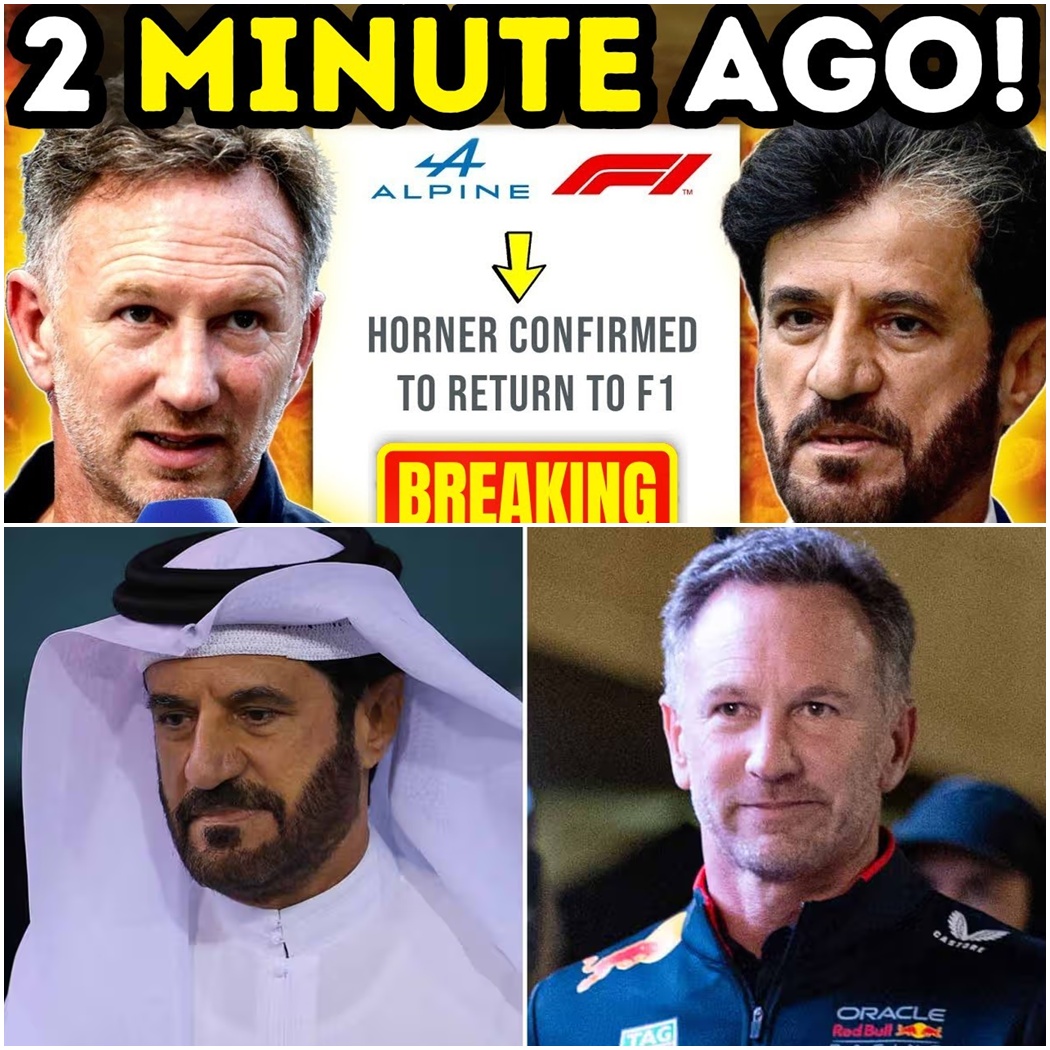
    In a development that has sent absolute shockwaves through the Formula 1 paddock, one of the sport’s most controversial and successful figures is plotting a comeback that no one saw coming. Christian Horner, the architect behind Red Bull Racing’s modern dynasty, is not just looking for a job—he is looking to own the team that finished dead last.

    Exclusive reports indicate that Horner is in active, high-stakes negotiations to acquire a substantial ownership stake in the struggling Alpine F1 Team, potentially using the massive golden parachute he received from Red Bull to fund the move. But amidst the business dealings, a deeply personal revelation from Max Verstappen has emerged, painting a picture of a secret alliance that continued long after Horner was unceremoniously removed from his post.

    The $60 Million Power Play

    When Christian Horner departed Red Bull in July 2025, following the British Grand Prix, he didn’t leave empty-handed. Reports suggest he walked away with a staggering payout in the region of $60 million (approx. £45m). Now, it appears he is ready to reinvest that fortune into the very sport that exiled him.

    Horner is reportedly eyeing a 24% stake in Alpine, currently held by Otro Capital. This is the same investment group that made headlines in 2023 by bringing in Hollywood A-listers like Ryan Reynolds, Rob McElhenney, and Michael B. Jordan. Despite pumping over $200 million into the French outfit, the “Hollywood dream” has turned into a competitive nightmare. With the investors looking for an exit strategy after less than three years, Horner sees an opening.

    His “gardening leave” expires in April 2026, perfectly timing his return for the start of the new regulation era. But why Alpine? Why would the man who oversaw Max Verstappen’s four world championships want to take charge of a team that finished 10th in the 2025 Constructors’ Championship?

    The answer is simple: Desperation creates opportunity. Alpine is a team in crisis. Their 2025 campaign was an unmitigated disaster, with Pierre Gasly describing it as the “lowest haul” of his career and brutally telling his team to “keep the car out of my sight.” In this vacuum of leadership and performance, Horner offers the one thing Alpine lacks: a proven, ruthless track record of winning.

    Verstappen’s Bombshell: The Secret Calls

    While the business world focuses on the Alpine deal, the emotional core of this story comes from Max Verstappen. In a candid and explosive interview with Viaplay, the four-time World Champion pulled back the curtain on what really happened after Horner was sacked.

    Despite the public separation, Verstappen revealed that he and Horner remained in constant contact throughout the second half of the 2025 season. As Verstappen clawed back a seemingly impossible 104-point deficit to Lando Norris, eventually losing the title by a heartbreaking two points, Horner was secretly in his corner.

    “We kept in touch every single week,” Verstappen admitted. “During every race—Friday, Saturday, and Sunday.”

    While new Team Principal Laurent Mekies tried to steer the Red Bull ship, Horner was acting as a shadow mentor to his former prodigy. “It’s more about him saying ‘I wish you the best of luck’ and ‘I believe in you’,” Verstappen explained. “Christian ultimately went through fire for me.”

    This revelation recontextualizes the entire 2025 season. It proves that despite the corporate power struggles and the “unrest” that led to Horner’s dismissal, the bond between the driver and his former boss remains unbreakable. Verstappen refused to let the politics of F1 sever a relationship forged in the fires of the intense 2021 title fight.

    The Mercedes Complication

    If Horner does take the reins at Alpine, he faces a deliciously awkward reality. From 2026, Alpine will become a customer team, using Mercedes power units. This means Horner would be directly reliant on Toto Wolff, his arch-nemesis during the Red Bull-Mercedes rivalry.

    The relationship between Horner and Wolff has been historically frosty, often spilling into open hostility. The idea of Horner—now an owner-principal at Alpine—having to attend engine meetings with Wolff is a scriptwriter’s dream. Furthermore, Horner carries the baggage of his feud with Helmut Marko, whose political maneuvering was a key factor in Horner’s initial exit from Red Bull.

    A New Challenge or a huge Gamble?

    The road ahead for Alpine is treacherous. They have discarded rookie Jack Doohan after just six races, cycled through management, and are now pinning their hopes on the 2026 regulation changes. But with Horner potentially at the helm, the dynamic shifts instantly.

    He brings credibility. He brings fear. And, perhaps most importantly, he brings a desire for redemption.

    Meanwhile, Verstappen faces his own future hurdles. He has been testing GT3 cars with an eye on the Nürburgring 24 Hours, a dream that is currently being stifled by the grueling 2026 F1 calendar. As he navigates a Red Bull team without his longtime mentor, the question arises: could we ever see a reunion?

    For now, Christian Horner is plotting his return. He isn’t just knocking on the door of F1; he’s trying to buy the building. If he succeeds in turning Alpine around, it will be the greatest second act in the history of the sport. If he fails, it will be an expensive footnote. But one thing is certain: F1 is never boring when Christian Horner is involved.

  • Hamilton’s Nightmare: Mercedes’ Genius ‘Thermal Expansion’ Loophole Could Decide the 2026 F1 Title Before Lights Out

    Hamilton’s Nightmare: Mercedes’ Genius ‘Thermal Expansion’ Loophole Could Decide the 2026 F1 Title Before Lights Out

    The Formula 1 world woke up this morning to a controversy that threatens to tear the 2026 season apart before a single wheel has turned. Just weeks ahead of the biggest regulatory overhaul in modern Grand Prix history, a bombshell discovery has sent shockwaves through the paddock: Mercedes and Red Bull may have found a decisive “magic bullet” in the engine regulations, leaving rivals like Ferrari, Honda, and Audi scrambling for answers.

    For Lewis Hamilton, who stunned the sporting world by leaving Mercedes to join Ferrari for this very reset, the news couldn’t be worse. The seven-time champion bet his legacy on the Scuderia being the team to beat in the new era. Instead, he faces the gut-wrenching possibility that the team he left behind has engineered a masterstroke he will now have to race against.

    The “Thermal Expansion” Trick Explained

    At the heart of the scandal is a clever piece of engineering that dances on the razor’s edge of legality. The dispute centers on Article C 5.4.3 of the 2026 FIA technical regulations, which drastically reduced the allowed engine compression ratio from 18:1 down to 16:1. In layman’s terms, a lower ratio usually means less explosive power from the internal combustion engine.

    However, the rulebook contains a critical flaw: it states the engine must be measured at “ambient temperature”—essentially, when the car is cold and sitting in the garage.

    According to explosive reports breaking over the Christmas holiday, Mercedes and Red Bull have designed engine components using specific materials that deliberately expand when heated. When the FIA measures the engine cold, it sits perfectly within the legal 16:1 limit. But once the engine fires up and reaches race temperature, the pistons and cylinders expand, closing the gap and effectively restoring the compression ratio closer to the banned 18:1 figure.

    The result? An estimated 10 kilowatts (roughly 13-15 horsepower) of “free” performance. In the tight world of F1, that translates to three or four-tenths of a second per lap—a lifetime in racing terms. It is the difference between fighting for pole position and struggling to make it into Q3.

    The Opposition Coalition Strikes Back

    The discovery has triggered panic and fury among the manufacturers who played it safe. Ferrari, Honda (supplying Aston Martin), and newcomer Audi have formed what insiders are calling an “opposition coalition.” They have fired off a joint letter to the FIA demanding immediate clarification and closing of the loophole.

    Their frustration is palpable. Ferrari Team Principal Fred Vasseur, speaking just days before the story broke, seemingly predicted the chaos. “When it comes to loopholes in the wording, that becomes much more difficult for everybody and much more dangerous for F1,” he warned.

    The anger isn’t just about the speed; it’s about the timing. The deadline to “homologate” (lock-in) engine designs for the season is March 1, 2026. If Ferrari and Audi are forced to redesign their engines to match this thermal trick, they would need months of development they simply don’t have. They are effectively stuck with a slower engine while their rivals start with a baked-in advantage.

    A Legal Quagmire for the FIA

    The FIA now finds itself in a nightmare scenario. On one hand, Mercedes and Red Bull are technically complying with the written test procedure. If the rule says “measure it cold,” and it passes when cold, they haven’t failed the test.

    On the other hand, Article C 1.5 of the regulations states that cars must comply “at all times.” Rivals argue that running an 18:1 compression ratio on track violates the spirit and letter of the performance limits, regardless of what the ruler says in the garage.

    History suggests the FIA might be reluctant to intervene heavily at the last minute. We’ve seen this movie before: the Brawn GP “double diffuser” in 2009 and Mercedes’ “DAS” system in 2020. In both cases, the teams that found the clever innovation were allowed to keep it for at least a season before it was banned, usually winning championships in the process. If that precedent holds, Mercedes and Red Bull could run unchecked throughout 2026.

    The Human Cost: Hamilton’s Regret?

    The narrative takes a deeply personal turn when looking at Lewis Hamilton. His move to Maranello was predicated on the belief that Ferrari was better positioned for the 2026 reset. He left the safety of Mercedes—the most successful engine manufacturer of the hybrid era—seeking a final challenge.

    Now, he faces the prospect of watching George Russell and Kimi Antonelli in the Mercedes cars he vacated storming down the straights with an engine advantage he cannot touch. While Hamilton has publicly stated he is “excited” for the Ferrari challenge, privately, this news must be a bitter pill to swallow. If the rumors are true, his former boss Toto Wolff hasn’t just built a good car; he’s outsmarted the rulebook again.

    What Happens Next?

    The clock is ticking. Reports suggest an emergency meeting has been called between the FIA and all five power unit manufacturers. Ferrari has already threatened to lodge a formal protest at the season-opening Australian Grand Prix on March 8 if the issue isn’t resolved.

    Imagine the scene: the first race of the revolutionary new era, overshadowed by lawyers, protests, and asterisks next to the race results. It is a disaster scenario Formula 1 is desperate to avoid.

    For now, the paddock waits with bated breath. Is this a genuine crisis that hands the title to Mercedes or Red Bull before the lights go out? or is it high-stakes political poker designed to slow down the frontrunners? One thing is certain: the 2026 season hasn’t even started, and the drama is already redlining.

  • The $100 Million Tweet: How Oscar Piastri Outsmarted F1’s Giants to Seize the Crown

    The $100 Million Tweet: How Oscar Piastri Outsmarted F1’s Giants to Seize the Crown

    In the high-octane world of Formula 1, where loyalty is often a currency as volatile as the fuel in the tanks, one moment in August 2022 redefined the career of a young Australian prodigy. It wasn’t an overtake at 200 miles per hour, nor was it a podium celebration bathed in champagne. It was a tweet. A simple, ruthless digital declaration that sent shockwaves through the paddock and brought a billion-dollar automotive giant to its knees.

    Oscar Piastri, the boy from Melbourne with no family dynasty to lean on, has done what few dared to imagine. As we stand here in late 2025, watching him dominate the season with seven Grand Prix victories and a stranglehold on the World Championship, it is easy to forget the gamble that brought him here. But to understand the “Ice Cold” determination of the man leading the grid, we must rewind to the moment he decided to burn a bridge to build an empire.

    The Rise of an Outsider

    Born in 2001, far from the glitz of Monaco, Piastri’s journey was paved with grit rather than gold. His father, a mechanic and engineer, laid the technical foundation, but it was Oscar’s raw adaptation that set him apart. By 2016, the Piastri family had uprooted their lives to Europe, chasing a dream that eats teenagers alive.

    His junior career was nothing short of historic. He didn’t just participate; he conquered. Winning the Formula Renault Eurocup, Formula 3, and Formula 2 titles in three consecutive rookie seasons is a “hat-trick” achievement unmatched in modern motorsport. By the end of 2021, he had proven he was ready. But Formula 1, in its cruel exclusivity, had no room.

    Relegated to a reserve role at Alpine for 2022, Piastri watched from the sidelines. Alpine, the team that had nurtured him, felt secure in their ownership of his future. They viewed him as an asset to be deployed on their timeline, floating plans to loan him out to slower teams like Williams for a “career detour.” For a driver of Piastri’s caliber, two years at the back of the grid was a death sentence. He knew his worth, even if Alpine didn’t.

    The Tweet Heard ‘Round the World

    The summer of 2022 brought the chaos. When Fernando Alonso shocked the paddock by defecting to Aston Martin, Alpine scrambled. In a desperate bid to save face and fill the seat, they issued a press release announcing Oscar Piastri as their 2023 driver. They thought it was a done deal. They thought they had the power.

    Hours later, Piastri dropped the bombshell on Twitter: “I understand that, without my agreement, Alpine F1 have put out a press release… This is wrong and I have not signed a contract with Alpine for 2023. I will not be driving for Alpine next year.”

    It was a move of breathtaking audacity. For a driver who hadn’t started a single Grand Prix to publicly refute a factory team was unheard of. Alpine was furious, dragging the matter to the FIA’s Contract Recognition Board, claiming they had a binding agreement. The result? A unanimous humiliation. The board ruled that Alpine’s “contract” was practically nonexistent, while Piastri’s secret deal with McLaren was ironclad.

    Piastri hadn’t just beaten them on the track; he had outmaneuvered them in the boardroom. He exposed Alpine’s disorganization and secured his seat at a team that actually wanted him to win.

    The McLaren Era: From Rookie to Ruler

    The pressure on Piastri’s shoulders entering 2023 was immense. He had to justify the legal war, the bad blood, and the “disloyal” tag. He didn’t flinch. A sprint win in Qatar and two podiums in his rookie season silenced the critics. By 2024, he was a Grand Prix winner, taking his maiden victory in Hungary amidst a tense team-order drama with teammate Lando Norris.

    But 2025 has been the year the gamble truly paid off. The current season has seen Piastri transform from a contender into a conqueror. While his teammate Norris took the opener in Australia, Piastri responded with a ruthlessness that recalls the sport’s legends. Wins in China, Bahrain, and Saudi Arabia set the tone. He followed up with victories in Miami, Spain, Spa, and a dominant “Grand Slam” in the Netherlands.

    The statistics tell one story—seven wins in a single season—but the atmosphere tells another. The internal battle at McLaren has reached a boiling point. The camaraderie of 2023 has evaporated, replaced by the friction of two alphas fighting for the same crown. When asked about Norris closing the gap, Piastri’s response was chillingly simple: “I don’t really care. I just want the best chance to beat Lando.”

    The Verdict

    Oscar Piastri’s story is a masterclass in self-belief. In a sport governed by politics and deep pockets, he bet on his own talent. He rejected the “safe” route offered by Alpine, risking his entire career for a shot at a competitive car.

    Today, as McLaren sits atop the Constructors’ Championship and Piastri leads the Drivers’ standings, the lesson is clear. He didn’t wait for permission to be great. He took it. The “betrayal” that rocked F1 was, in hindsight, the most intelligent career move of the decade. Oscar Piastri didn’t just outsmart a team; he outsmarted the system, and now, the world is watching him take his victory lap.

  • When F1 title was decided at Christmas and legendary Brit became champion

    When F1 title was decided at Christmas and legendary Brit became champion

    A handful of World Championship F1 races have been held over the Holiday period. Here’s a look back at those few events, including the one which saw a new champion crowned

    View 2 Images

    Jim Clark and Graham Hill on the front row of the grid

    The winter of 1962-63 in the UK was so infamously harsh that it was given its own nickname: The Big Freeze. The three months of December 1962 and the following January and February remain the coldest since at least the 1800s and snow drifts in some areas were several metres deep – highly unusual for Britain.

    Some snow had fallen earlier in December but it was the blizzards at the end of that month, overnight on December 29-30, which left the country under a freezing white blanket which, because it was so cold, did not melt away in some areas until the Spring.

    Several of the UK’s finest-ever motorsport exports, though, were not around to see it fall. Despite it being just days after Christmas the likes of Jim Clark, John Surtees and Graham Hill were not even in the same hemisphere. They were in East London – but a long, long way from Dagenham.

    East London is a far less globally-famous city on the south-east coast of South Africa, notable in the F1 world for being the site of the first World Championship South African Grand Prix. And there wasn’t a snowflake in sight.

    But there was a World Championship to be decided for both the drivers and teams who had made the trip south for the season finale, including a one-on-one showdown between Brits Clark and Hill – both bidding to become champion for the first time.

    Hill, the father of future title-winner Damon, had a nine-point lead over Clark heading into the race, in an era when victory was worth… exactly nine points. However, only each drivers’ top five results of the year counted, meaning a Clark victory would make him champion, despite Hill having scored more points overall.

    Their rivalry was reflected in the battle for supremacy between their respective teams. Hill’s British Racing Motors (BRM) also had an overall points advantage over Clark’s Lotus team, but that early scoring system left both championships open for the taking.

    And, for a long time, Hill and BRM would have been very nervous. In qualifying, the two title contenders were the only drivers to set a lap time below 90 seconds. Crucially, though, Clark snatched pole position by three-tenths, putting Hill in a position where he would have to overtake his fellow Brit to avoid being leapfrogged in the final standings.

    December 29 was race day and, a few hours before those blizzards began to batter Britain, thousands of miles away it looked for all the world as if Jim Clark was about to become world champion for the first time. He kept the lead from pole position and looked set to take a comfortable one and title-deciding victory, until his Lotus sprang an oil leak.

    View 2 Images

    Jim Clark, left, and Graham Hill would both go on to become multiple F1 champions

    Just 20 laps from the end of an 82-lap showpiece, and having built a lead of more than half-a-minute, the Scot was forced to retire from the race. Hill inherited the lead of the race, though it no longer mattered – he was going to be champion regardless. In the end, he did it in style by crossing the line almost 50 seconds clear of 1960 title-winner Bruce McLaren in second place.

    Hill and BRM won the drivers’ and constructors’ titles respectively, each for the first time. It was a tough defeat for Clark, but he came back much stronger the following year and won both the South Africa race and, indeed, the title.

    Sadly, both men would die far too young. Jim Clark might have won more than the two championships he managed had he not died in a crash at a Formula Two race at the Hockenheimring, Germany, in April 1968. He was 32. Graham Hill survived his racing career but was just 46 years old when, on November 29, 1975, the plane he was flying crashed while he was preparing to land at an airfield north of London. He was among six people killed, the others being senior members of his Embassy Hill team.

  • Ferrari’s Secret 2026 Aero Weapon Leaked: Can the Scuderia Outsmart the Mercedes “Rocket Ship” Engine?

    Ferrari’s Secret 2026 Aero Weapon Leaked: Can the Scuderia Outsmart the Mercedes “Rocket Ship” Engine?

    The Formula 1 landscape is currently shivering through its winter break, but behind the closed doors of Maranello and Brackley, a high-stakes technical war is reaching a fever pitch. As the sport prepares for the radical 2026 regulatory overhaul, new rumors and official announcements are painting a picture of a grid that could be completely turned on its head. From aerodynamic “cheats” to shocking driver shifts, the path to 2026 is becoming increasingly volatile.

    The Ferrari “Outwash” Gamble

    While much of the recent paddock chatter has centered on Mercedes’ potentially dominant new power unit, Ferrari is reportedly taking a different route to glory. Sources suggest that Ferrari’s aerodynamicists have found a way to circumvent the FIA’s strict 2026 “anti-outwash” regulations. The new rules were specifically designed to minimize dirty air, making it easier for cars to follow one another. However, Ferrari is allegedly working to “partially recreate” the outwash effect—pushing air away from the car’s body to clean up its own aerodynamic flow while making life miserable for anyone trying to chase them.

    This move is a classic Formula 1 “gray area” maneuver. If Ferrari can successfully manage their tire wakes and sidepod airflow to create this outwash, they could gain a significant performance advantage that offsets any horsepower deficit. While it may go against the “spirit” of the rules, in the objective world of F1 technical inspection, if it ticks the boxes, it’s legal.

    The Mercedes Engine “Loophole”

    The urgency in Maranello is fueled by the terrifying rumors coming out of the Mercedes High Performance Powertrains division. There is growing speculation that Mercedes has discovered a loophole regarding variable compression ratios. By potentially increasing the compression ratio while the engine is running—perhaps through thermal deformation or other innovative engineering—Mercedes could be looking at a gain of roughly 13 horsepower.

    In the world of F1, 13 horsepower can translate to roughly three-tenths of a second per lap. Ferrari, historically the “master of coming second,” is desperate to avoid a repeat of the 2014 era where the Mercedes engine was so dominant they actually had to turn it down to avoid FIA intervention. To counter this, Ferrari is leaning heavily into their ERS (Energy Recovery System) software, believing that smarter battery management can eliminate the need for the “lift and coast” tactics that plagued them throughout the 2025 season.

    Verstappen’s “Silver” Future?

    In a move that sent shockwaves through the social media landscape, Verstappen Racing has officially announced a multi-year partnership with Mercedes-AMG for their GT3 activities. While Max Verstappen remains a Red Bull driver in Formula 1 for now, seeing the reigning champion behind the wheel of a Mercedes GT3 car in 2026 is a visual that many believe is the “first step” in Toto Wolff’s long-term plan to lure the Dutchman to the Silver Arrows.

    Wolff has never hidden his desire to bring Verstappen into the fold, and this GT3 collaboration provides a “foot in the door” that could evolve if Red Bull’s own 2026 engine project stumbles.

    The Hamilton-Adami Alliance

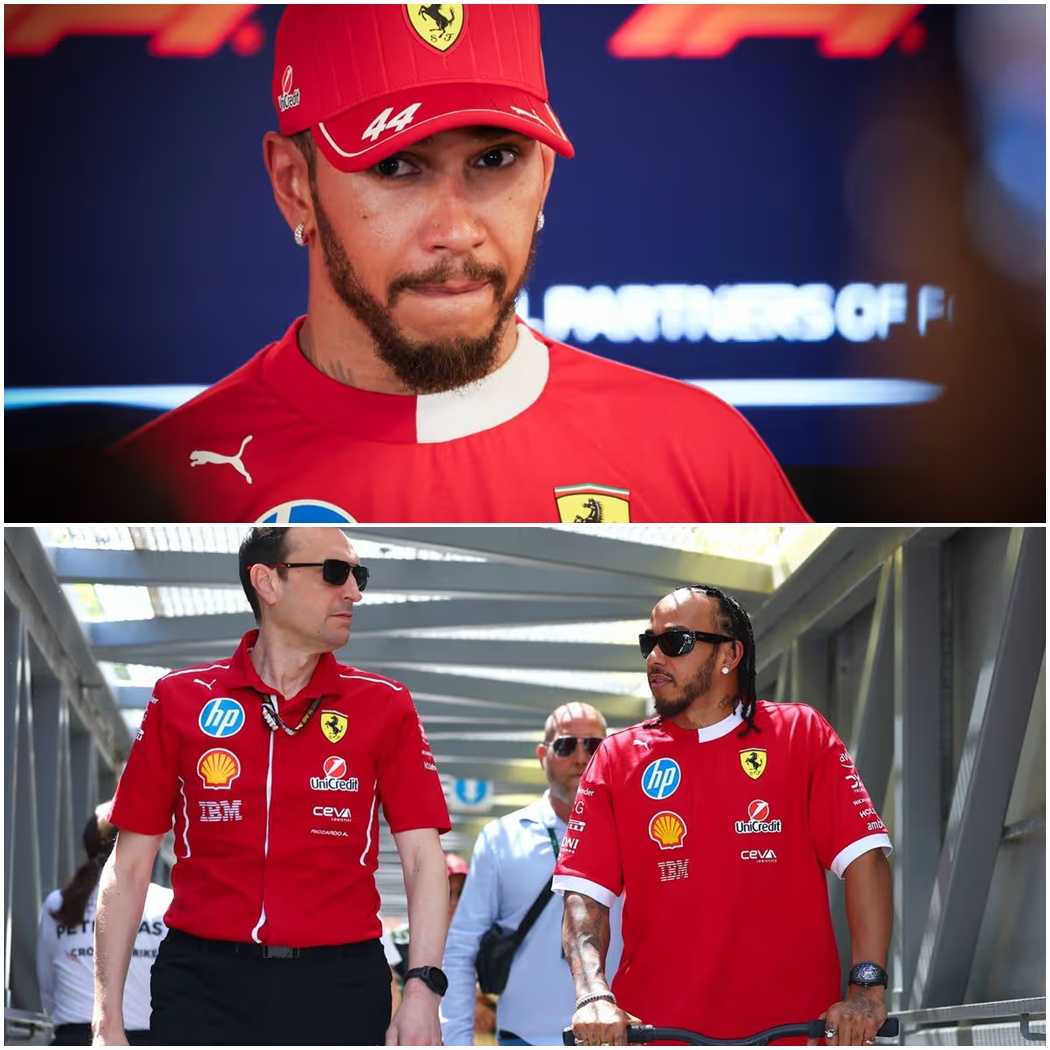
    For Lewis Hamilton, the transition to Ferrari has been anything but smooth. His final year at Mercedes was marked by visible frustration, and his early interactions with his future Ferrari race engineer, Riccardo Adami, were scrutinized after several tense radio exchanges. However, reports now indicate that the pair held a “positive end-of-year dinner” to clear the air.

    The complexity of the 2026 cars will require a level of communication never seen before. Teams are even planning to add dedicated ERS engineers to the pit wall specifically to talk the drivers through energy deployment strategy in real-time. For Hamilton to secure that elusive eighth title, his relationship with Adami must be flawless.

    A New Era of Racing

    As we look toward the 2026 regulations, the drivers themselves are beginning to adapt. While initial simulator sessions left many stars feeling “unhappy” with the new handling characteristics, that sentiment is shifting toward excitement as they realize the tactical depth required for the new power units.

    The battle for 2026 isn’t just about who has the most money or the biggest names; it’s about who can find the cleverest loophole in the rulebook. Whether it’s Mercedes’ engine compression or Ferrari’s aerodynamic trickery, the next generation of Formula 1 is already being won and lost in the shadows of the design offices. One thing is certain: the rivalry between the Prancing Horse and the Silver Arrows is about to enter its most intense chapter yet.

  • Lewis Hamilton went against boss of his Formula 1 team to appear on massive BBC show

    Lewis Hamilton went against boss of his Formula 1 team to appear on massive BBC show

    The producer of one of the BBC’s most recognisable TV shows has opened up on how Lewis Hamilton overruled his formidable Formula 1 team boss to make an appearance

    View 2 Images

    Lewis Hamilton once went against McLaren boss Ron Dennis who was reluctant to let him make a BBC TV appearance(Image: AFP via Getty Images)

    As a seven-time Formula 1 world champion, most would agree that Lewis Hamilton has earned the right to decide how to best spend his time. As it turns out, he was not yet even a title-winner in F1 when he first overruled his boss in his personal desire to make an appearance on one of his favourite TV shows.

    Andy Wilman, the former chief producer of Top Gear, has opened up on how Hamilton first made an appearance on the show’s popular ‘Star in a Reasonable Priced Car’ segment. Over the years, dozens of celebrities and a handful of F1 stars were given the keys to an unremarkable road car and told to set the fastest lap time possible around their test track in Dunsfold, Surrey.

    Hamilton appeared more than once but his first appearance came after just one season in F1, in which he had just missed out on the title after a bitter battle with McLaren team-mate Fernando Alonso.

    The ‘reasonably priced car’ used by Top Gear at the time as a light blue Suzuki Liana and, as it turned out, that was a sticking point when it came to convincing McLaren to let Hamilton appear. The Brit was also affiliated with Mercedes and team principal Ron Dennis was hesitant to let the driver get into the car that Top Gear wanted him to.

    “The first time he came down, I think it was when he just lost that rookie season, the championship by [one point],” Wilman told the Midweek F1 podcast. “So McLaren, still [in the] Ron Dennis days, so we were getting all Ron Dennis-ish-ness coming down the phone, ‘He’s in a Suzuki Liana’, you know?

    “And then like I think it was Matt Bishop was a PR at the time. Matt Bishop sort of rings and he goes, ‘Oh, Ron wants him to do it in like an SLR’. And we’re like, ‘It’s not the point, like… [everyone has the] same car’.

    View 2 Images

    Lewis Hamilton later returned for a second Top Gear appearance in 2013(Image: PA)

    “And he went, ‘Yeah, you know what Ron’s like’. And Ron’s gone, ‘Yeah, but he’s a Mercedes man’. And we’re like, ‘Jesus Christ, Ron, is anybody going to go, well, I’m going to buy a Liana now. I won’t buy that S-Class’. It’s like, let it go!”

    As it turned out, whether or not Dennis caved was immaterial as Hamilton, back then a fan of the show and its famous trio of presenters – Jeremy Clarkson, Richard Hammond and James May – took it upon himself to decide that he was going to make the appearance anyway.

    Wilman added: “And then I think Lewis stepped in even as a kid and went, ‘I’m doing Top Gear’, because he was such a kid and he’d grown up watching it, so it was a red-letter day for him. Now, obviously now he’s stratospheric and everything bows to him, but back then he was like, ‘I’m coming down’.”

    The track was wet on that first day Hamilton appeared which hampered his efforts to top the timesheets, though he did set the quickest time of any F1 driver to drive on Top Gear when he returned for a second go on a drier day. But before the show ended, he would be beaten by Daniel Ricciardo who managed to go seven-tenths of a second quicker in the same Liana.

  • The Mercedes Betrayal? Inside Max Verstappen’s Secret Portugal Test and the 2026 Blueprint to Conquer the Racing World

    The Mercedes Betrayal? Inside Max Verstappen’s Secret Portugal Test and the 2026 Blueprint to Conquer the Racing World

    While the rest of the Formula 1 grid is currently soaking up the sun on luxury yachts or posting sunset photos from tropical paradises, one man remains stubbornly, almost obsessively, connected to the asphalt. Three days ago, under the hammering rain of the Estoril circuit in Portugal, Max Verstappen wasn’t just killing time during the off-season. He was behind the wheel of a car that carries the badge of his greatest rival: Mercedes.

    The images of the four-time World Champion piloting a Mercedes-AMG GT3 sent shockwaves through social media, but the surface story is only the beginning. This wasn’t a casual joyride or a simple marketing stunt. It was the public opening of a calculated, two-year master plan that signals a shift in Verstappen’s career—one that moves beyond the confines of Red Bull and the F1 paddock.

    The Secret Test in the Freezing Cold

    The conditions at Estoril were, by all accounts, miserable. Cold, wet, and unpredictable, it was the kind of weather that would send even the most seasoned veterans back to the garage. Yet, Verstappen stayed out lap after lap. Driving for the 2S Motorsports team, he wasn’t there to showcase his F1 status; he was there to learn.

    The technical challenge is significant. Moving from a mid-engine, high-downforce Formula 1 beast to a front-engine GT3 car requires a fundamental shift in driving philosophy. The weight distribution is different, the braking points are foreign, and the way the car rotates through a corner is a world away from his Red Bull RB20. By choosing to test in the worst possible conditions, Verstappen proved once again that he is a perfectionist. He wasn’t looking for easy speed; he was looking for the limit of a machine he intends to master.

    A Strategic Alliance with the Silver Arrows

    The real revelation, however, lies in the hardware. https://www.google.com/search?q=Verstappen.com Racing—Max’s own GT racing team—is reportedly making a massive switch for the 2025 GT World Challenge Europe season. They are abandoning their current Ferrari setup and going “all-in” on Mercedes-AMG machinery. Sources close to the team suggest that the move was driven by a need for a more predictable, well-developed platform that can handle the rigors of endurance racing.

    But the plot thickens. This isn’t just about his team; it’s about Max himself. Reports have confirmed that Verstappen has already held high-level strategy sessions with top AMG officials. These weren’t casual “get to know you” meetings. These were planning discussions centered around one of the most legendary and dangerous challenges in all of motorsport: the Nürburgring 24 Hours.

    The 2026 Blueprint: Bending the Calendar to His Will

    For years, scheduling conflicts have prevented F1 stars from competing in other major races. However, the stars are finally aligning. In 2026, the Nürburgring 24 Hours does not conflict with any Formula 1 weekend. But Max doesn’t just show up to “participate.” He wants to win, and winning at the “Green Hell” requires participation in the NLS1 warm-up event.

    Currently, NLS1 conflicts with the Chinese Grand Prix. In any other era, that would be the end of the story. But such is the gravity of the “Verstappen Effect” that NLS organizers are reportedly considering modifying their entire race schedule to accommodate the Dutch champion. When Max raced at the Nürburgring earlier this year, the economic impact and global media attention were unprecedented. The racing world is beginning to realize that if they want the world’s best driver, they have to play by his rules.

    Beyond the F1 Horizon

    In a recent interview, Verstappen dropped a hint that many missed. He noted that his future isn’t just about finding a “faster F1 car.” It’s about his life outside the cockpit—his team, his legacy, and his desire to prove himself across multiple disciplines. At just 27 years old, Max is looking at the careers of legends like Mario Andretti and Fernando Alonso. He doesn’t want to be remembered just as a Formula 1 champion; he wants to be the greatest all-around racer of his generation.

    The test in Portugal was a statement of independence. It showed that while he is contracted to Red Bull in F1, his racing soul is not owned by any single brand. He is building an empire. By forging a relationship with Mercedes-AMG now, he is ensuring that when he eventually walks away from the F1 grid, he has the ultimate machinery waiting for him in the world of endurance racing.

    The Legacy of the “Green Hell”

    As we look toward 2026, the image of Verstappen in that Mercedes GT3 at Estoril will be remembered as the moment the “Triple Crown” of a different sort began to take shape. Whether it’s the Nürburgring, Le Mans, or Daytona, Max Verstappen is no longer waiting for the future to happen to him. He is actively building it, one rain-soaked lap at a time.

    The question is no longer if he will win outside of F1, but how many disciplines he will conquer before he’s done. One thing is certain: the motorsport world is now operating on Max Verstappen’s time.