Author: bang7

  • The 2026 F1 Revolution: Cadillac’s Arrival, Hamilton’s Redemption, and a 22-Car Grid Ready for Chaos

    The 2026 F1 Revolution: Cadillac’s Arrival, Hamilton’s Redemption, and a 22-Car Grid Ready for Chaos

    The world of Formula 1 is bracing for its most seismic shift in a decade. As the dust settles on a historic 2025 season that saw Lando Norris crowned World Champion, the sport is gearing up for 2026—a year defined by massive technical regulation changes, new engine manufacturers, and, most excitedly, the expansion of the grid to 11 teams and 22 drivers. It is a fresh start for everyone, from the giants of Maranello to the ambitious newcomers from Detroit. The paddock is buzzing with anticipation, uncertainty, and the promise of a spectacle unlike anything we have seen before.

    The American Dream: Cadillac Joins the Fray

    Perhaps the biggest headline going into 2026 is the arrival of the Cadillac Formula 1 Team. After a drawn-out saga involving the FIA’s expression of interest process, the American giant was finally confirmed late in 2024. Branding themselves as the “United States of America’s team,” they are entering the sport with serious intent. While they will initially run Ferrari engines before switching to their own General Motors power units, their driver lineup is a statement of stability mixed with experience.

    Valtteri Bottas returns to the grid after a stint as a Mercedes development driver, paired with Sergio “Checo” Perez, who finds a lifeline after being dropped by Red Bull. Both drivers are fighting for their careers, knowing that American sensation Colton Herta is being groomed for a seat in 2027. For Perez, this is a chance to rebuild his reputation after a rollercoaster end to his Red Bull tenure, while Bottas brings the technical know-how from his years at Mercedes.

    The Champions and The Challengers: McLaren vs. Red Bull

    At the sharp end of the grid, McLaren enters the new era as the team to beat. Lando Norris, fresh off his first Driver’s Championship title, has cemented his status as the team’s “main man.” However, the dynamic within the team is fascinating. Oscar Piastri, who finished third in the standings, will be looking to dethrone his teammate. The internal battle at Woking will be intense, especially with the uncertainties of the new car regulations.

    Red Bull Racing, meanwhile, is a team in transition. Gone are the stalwarts Christian Horner, Adrian Newey, and Helmut Marko. The team is stepping into a bold new future with Ford as an engine partner. Max Verstappen, who narrowly lost the 2025 title by just two points after a miraculous recovery drive, remains the benchmark. But the biggest shock comes in the second seat: young Frenchman Isack Hadjar has been promoted to what is often called the most high-pressure seat in F1. Hadjar impressed in the junior team, but partnering Verstappen is a task that has broken many careers. He will need to hit the ground running to avoid the “meat grinder” that consumed his predecessors.

    Ferrari’s High-Stakes Gamble

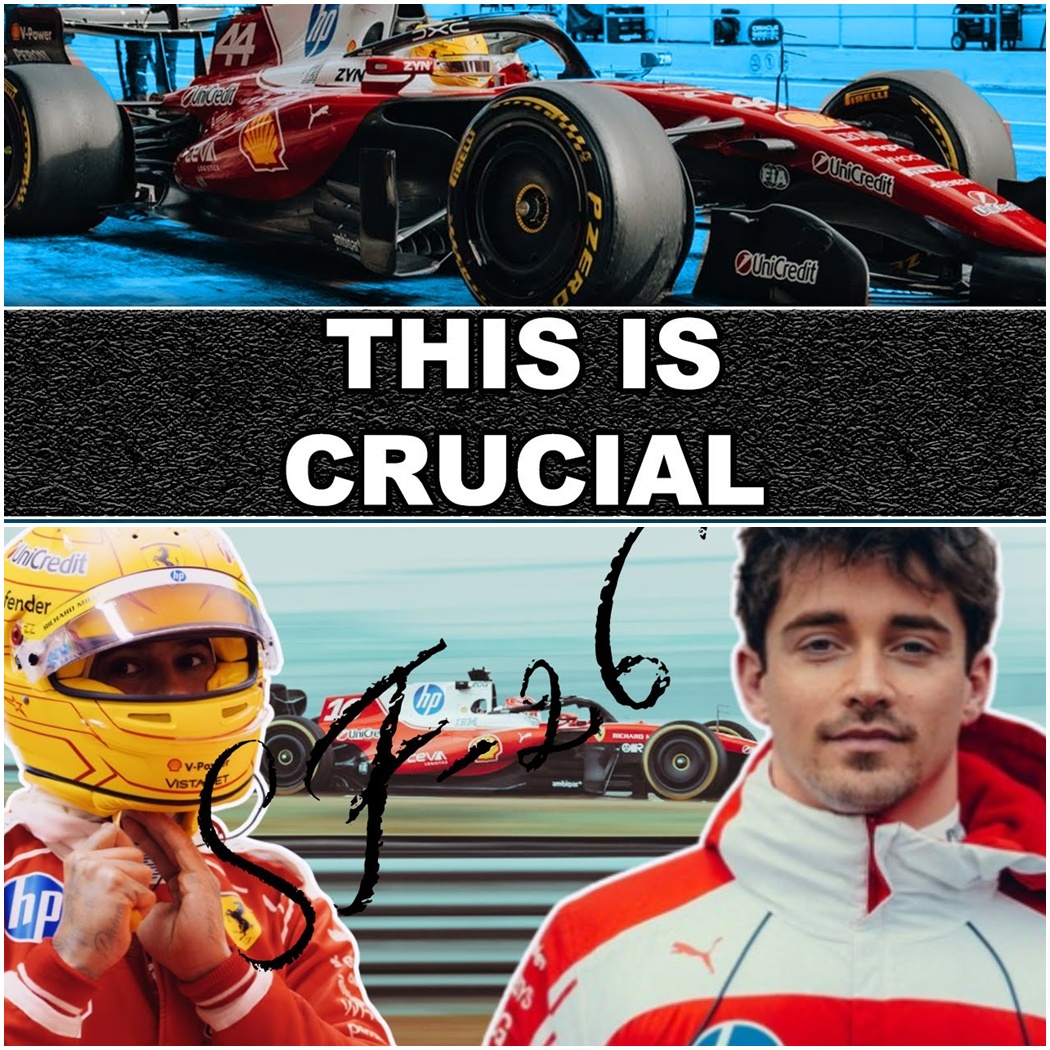
    Over at Maranello, the pressure is reaching a boiling point. The dream pairing of Charles Leclerc and Lewis Hamilton didn’t quite deliver the fairytale start in 2025. Hamilton, the sport’s most successful driver, endured a difficult debut season in red, setting an unwanted record for the most race starts before a first podium for the Scuderia.

    However, 2026 offers a clean slate. Hamilton has had significant input into the new car’s design and will be desperate to chase that elusive eighth world title. But patience is wearing thin for Leclerc. The Monégasque star has hinted that if Ferrari cannot deliver a championship-contending car this year, he may look elsewhere. With two alpha drivers and a team desperate to return to the top, the internal politics at Ferrari will be a key storyline to watch.

    The Midfield Shake-Up: Audi, Alpine, and Williams

    The midfield is unrecognizable. Audi officially takes over the Sauber entry, bringing German engineering might to the grid. They have paired the reliable Nico Hülkenberg with exciting Brazilian rookie Gabriel Bortoleto. Bortoleto, a winner of both F3 and F2 in his debut seasons, is one of the most hyped rookies in years.

    Alpine undergoes a major philosophy shift, ditching the Renault engine program to become a Mercedes customer team. Pierre Gasly is joined by Franco Colapinto, the Argentine driver who brings massive financial backing and a point to prove after a tough run of form in 2025.

    Williams, arguably the feel-good story of 2025, looks to build on their resurgence. Under James Vowles, the team finished fifth in the constructors’ championship. Their lineup of Alex Albon and Carlos Sainz is one of the strongest on the grid. Sainz, in particular, shone last season with two podiums, proving his worth after being let go by Ferrari.

    The Youth Movement

    2026 also sees a wave of young talent eager to make their mark. At Mercedes, the “Italian Senna” Andrea Kimi Antonelli enters his second season alongside George Russell, looking to live up to the immense hype surrounding his junior career. Meanwhile, the newly branded Racing Bulls (Red Bull’s second team) will field Liam Lawson alongside 18-year-old sensation Arvid Lindblad, a driver identified early by Red Bull as a “generational talent.” At Haas, Oliver Bearman partners Esteban Ocon, with the young Briton looking to continue his impressive form that saw him outscore his teammate in 2025.

    Conclusion: A Season into the Unknown

    The 2026 season represents a complete reset for Formula 1. With the new engine regulations leveling the playing field, no one truly knows who will come out on top. Could Aston Martin, with Adrian Newey at the helm and Honda power, finally give Fernando Alonso the championship-contending car he deserves? Will Cadillac shock the world on their debut? Or will the established giants of McLaren and Red Bull continue their duel?

    One thing is certain: with 22 drivers fighting for their futures and 11 teams pushing the limits of technology, 2026 is shaping up to be the most unpredictable and thrilling season in Formula 1 history. Buckle up.

  • The 47-Point Swing: How Oscar Piastri’s “Unlosable” 2025 Championship Unraveled into a Nightmare

    The 47-Point Swing: How Oscar Piastri’s “Unlosable” 2025 Championship Unraveled into a Nightmare

    The Fragility of the “Iceman”: A Championship Lost in the Mind

    In the high-octane world of Formula 1, fortunes can change with the wind, but rarely do we witness a collapse as spectacular, as sudden, and as psychologically complex as the conclusion of the 2025 season. Zandvoort in September felt like a coronation. The Dutch Grand Prix had concluded, and the paddock was abuzz not with “if” but “when” Oscar Piastri would claim his maiden title. The numbers were irrefutable: a 34-point lead over his McLaren teammate Lando Norris and a staggering 104-point chasm back to the reigning king, Max Verstappen. With the fastest car on the grid and a driving style described as “flawless,” the Australian prodigy looked set to join the sport’s immortals.

    Yet, as the engines cooled on that massive lead, a different narrative began to simmer—one that would end with Piastri watching from the sidelines, 13 points adrift, while his teammate hoisted the World Championship trophy. This wasn’t just a loss of points; it was a deconstruction of a driver’s psyche, played out on the global stage.

    The Breaking Point: Baku and the Barrier

    If one were to pinpoint the exact moment the dream died, the finger would point unhesitatingly to the streets of Azerbaijan. The Baku circuit, notorious for its narrow castle section and unforgiving barriers, demands absolute precision—a trait Piastri had displayed in abundance. But in 2025, Baku became the graveyard of his confidence.

    It began with a crash in qualifying, a rare unforced error that cracked the armor. But the true shattering happened on race day. In the opening laps, amidst the chaos of the start, Piastri lost control and slammed into the barriers. His race was run before it had truly begun. Jacques Villeneuve, never one to mince words, offered a poetic yet brutal assessment: “He left his confidence in that barrier in Baku.”

    It wasn’t just metal and carbon fiber that were destroyed that afternoon. Martin Brundle, watching from the commentary box, observed a shift in the young driver’s demeanor. “He threw it in the wall in Baku and lost his head a little bit,” Brundle noted. The crash acted as a psychological earthquake, sending tremors through the rest of his season. The myth of mental invincibility—the “stone cold” persona that had intimidated rivals—was suddenly exposed as fragile.

    The Monza Betrayal: A Team Divided?

    However, to understand the crash in Baku, one must rewind one race earlier to Monza. The “Temple of Speed” may have been where the seeds of doubt were truly sown. In a moment that will be debated by fans for decades, McLaren management made a call that fundamentally altered the team dynamic.

    Despite racing for the same championship, Piastri was ordered to move aside and let Norris through after the Briton suffered a bad pit stop. It was a strategic decision for the team, but for a driver leading the standings, it was a slap in the face. Villeneuve connected the dots ominously: “That must have hit Piastri hard.”

    From being the “Golden Boy” McLaren had fought Alpine in court to secure, Piastri was suddenly relegated to a supporting role in his own title fight. The psychological impact of being asked to play second fiddle while holding the championship lead cannot be overstated. It signaled a shift in priority, and perhaps, a shift in belief from the pit wall. Did this vote of no confidence trigger the spiral that led to the mistake in Baku? The timeline suggests a correlation too strong to ignore.

    The Long Slide into Mediocrity

    What followed Baku was a nightmare run that defied logic. For six consecutive races, the driver who had made the podium his second home failed to stand on the rostrum even once. The precision was gone. On low-grip tracks, where a driver’s feel for the car is paramount, Piastri looked lost. The “Iceman” was melting.

    Johnny Herbert, a three-time Grand Prix winner, observed that the qualities which defined Piastri’s early success simply “evaporated.” The errors weren’t just mechanical; they were mental. He struggled to find rhythm, his racecraft became tentative, and the “horizontal” demeanor was replaced by what Brundle described as “sulking.”

    “We might have misread him a little bit,” Brundle admitted, reflecting the shifting consensus in the paddock. “He’s not absolutely stone cold… I think he sulks a little bit as well.” The realization that Piastri was, after all, human and susceptible to the immense pressure of a title fight changed the way he was viewed by peers and pundits alike.

    The Resurrection of Rivals

    Nature abhors a vacuum, and as Piastri stumbled, his rivals surged into the void. Max Verstappen, written off by bookmakers and fans alike, embarked on a resurrection tour that will go down in history. From the Dutch GP onwards, the Dutchman hit a 100% podium streak, including six victories. He smelled blood in the water.

    Simultaneously, Lando Norris found a new gear. Stung by technical failures earlier in the season, Norris channeled his frustration into a laser-focused drive for glory. The experience gap became glaringly obvious. Norris, with 82 more races under his belt, knew how to navigate the ebbs and flows of a long season. Piastri, in only his third year, was learning the hardest lesson of his life in real-time.

    The Final Tally and the Road Ahead

    When the dust settled in Abu Dhabi, the standings painted a picture of a historic collapse. Lando Norris was Champion. Verstappen, a mere two points behind. And Piastri? Third place, 13 points adrift of a title he had once led by 34. A swing of 47 points had occurred in the blink of an eye.

    Andrea Stella, McLaren’s Team Principal, tried to frame the season positively, citing “30 milliseconds” in qualifying as the difference-maker and insisting Piastri is a “future multiple world champion.” Yet, the questions remain. Johnny Herbert bluntly stated that Piastri “missed a slam dunk” and that his mental strength “needs to be strengthened.”

    As the F1 circus enters the winter break, Oscar Piastri faces the most critical period of his career. The physical skills are undeniable—the speed, the racecraft, the talent are all there. But the mind is the final frontier. He must now deconstruct the trauma of 2025, “digest this winter,” as Villeneuve put it, and return as a new man.

    History is littered with drivers who never recovered from “the one that got away.” But it is also filled with champions who used the pain of defeat to forge an armor of invincibility. 2026 will be the make-or-break season. Will we look back on the 2025 collapse as the end of the Piastri hype, or the crucible that forged a true legend? The answer lies not in the car, but in the mind of the man behind the wheel.

  • The $6 Billion Paradox: How F1’s “Failed” Ground Effect Rules Created a Financial Empire

    The $6 Billion Paradox: How F1’s “Failed” Ground Effect Rules Created a Financial Empire

    It was supposed to be the revolution that saved Formula 1. When the ground effect regulations were introduced in 2022, the promise was seductive and simple: “raceability.” The sport’s governors envisioned a new golden era where cars could follow each other closely, nose-to-tail, without being washed away by the turbulent “dirty air” that had plagued the sport for decades.

    Fast forward to the end of the 2025 season, and the verdict is in. It is messy, complicated, and incredibly lucrative.

    On the asphalt, the dream has largely crumbled. The cars, described by experts and drivers alike as “unracable beasts,” have become faster but significantly harder to drive. The initial success of 2022, where a following car could retain 85% of its downforce at a 10-meter distance, has evaporated. By 2025, that figure plummeted to 65%, dragging the sport back into the very aerodynamic quagmire it tried to escape.

    But off the track? The sport has never been healthier. In a twist that no one saw coming, the very regulations that failed to fix the racing have inadvertently created the most financially robust and competitively tight grid in the history of Grand Prix racing.

    The “Dirty Air” Deception

    To understand what went wrong, you have to look at the physics of “outwash.” In simple terms, F1 teams want to push turbulent air away from their own car to maximize speed. The 2022 rules were designed to stop this, forcing teams to generate performance from the floor (ground effect) rather than complex wings that throw “dirty air” into the face of the driver behind.

    “The short answer is that the teams did everything they could to break the regulations in their relentless pursuit of performance,” says the analysis from The Race.

    And break them they did. From Mercedes’ controversial front wing endplates to the complex “brake duct winglet arrays” that sprouted like mushrooms on every car, the smartest minds in engineering found every loophole available. They clawed back the outwash, sacrificing the sport’s “raceability” for pure lap time.

    Nikolas Tombazis, the FIA’s Single Seater Director, was candid in his assessment, giving the regulations a “B or a C” grade. He admitted that while the intent was noble, the governance structure of F1—which requires team agreement for mid-cycle rule changes—left the FIA powerless to stop the rot. The result? A 2025 season plagued by driver complaints about the difficulty of overtaking, mirroring the frustrations of the pre-2022 era.

    The Competitive Miracle

    However, to label the era a total failure would be to miss the forest for the trees. While the quality of the wheel-to-wheel combat may have suffered, the closeness of the competition has been nothing short of miraculous.

    The 2025 season ended with a three-way fight for the title involving Lando Norris, Max Verstappen, and Oscar Piastri—a scenario fans could only dream of during the Hamilton domination years. But the real statistic that proves the success of the era is buried deep in the data: the “competitive spread.”

    In 2025, the average single-lap pace deficit of the slowest team (Alpine) to the front was just 1.369%. This is the smallest gap in the 21st century. Essentially, the entire grid has been compressed. There are no more backmarkers finishing three laps down. Every team, from Red Bull to Haas, is fighting within the same few seconds of asphalt.

    This tightening of the field isn’t an accident. It is the direct result of the restrictive technical rules and the standardization of parts. By limiting what designers could do with suspension and gearboxes, the FIA forced the teams into a smaller performance box, inadvertently creating the most competitive field the sport has ever seen.

    The $6 Billion Gold Rush

    If the technical rules earned a “C,” the financial regulations have earned a resounding “A+.”

    The cost cap, introduced in 2021 and tightened throughout the ground effect era, has fundamentally altered the DNA of Formula 1. Gone are the days of teams spending $400 million a year to buy a championship. The spending limit—dropping to $135 million by 2023—has saved the teams from themselves.

    The impact has been astronomical. With costs controlled and revenues skyrocketing, F1 teams have transformed from money pits into profit-generating machines. The ultimate proof of this financial metamorphosis arrived in late 2025, when Mercedes team principal Toto Wolff sold a 15% stake of his holding to CrowdStrike CEO George Kurtz.

    The deal valued the Mercedes F1 team at a staggering $6 billion.

    To put that in perspective, that is a higher valuation than many top-tier European football clubs or NFL franchises. It is a testament to the stability and profitability that the cost cap and the “sliding scale” of aerodynamic testing (ATR) have brought to the sport.

    “That might prove to be the great legacy of these regulations,” the analysis concludes. “The ground effect rules didn’t deliver on the best hopes for improving the racing… But in terms of the health and stability of the F1 teams… they will go down in history as a resounding success.”

    A Mixed Legacy

    As the sport prepares for yet another massive regulation overhaul in 2026, the 2022-2025 era will be remembered as a paradox. It was a time when the cars became “unracable beasts,” defying the very physics they were meant to harness. Yet, it was also the era that saved Formula 1 from financial ruin, turning a grid of precarious businesses into a powerhouse of billion-dollar enterprises.

    The fans may still be waiting for that perfect, wheel-to-wheel dogfight, but for the team principals and shareholders, the ground effect era has been nothing short of a victory lap.

  • F1 2026 Bombshell: FIA Declares Mercedes and Red Bull’s Controversial “Engine Trick” Legal, Leaving Ferrari and Audi in the Dust

    F1 2026 Bombshell: FIA Declares Mercedes and Red Bull’s Controversial “Engine Trick” Legal, Leaving Ferrari and Audi in the Dust

    The 2026 Formula 1 season was supposed to be a reset—a blank slate where new regulations would level the playing field and invite new manufacturers like Audi to compete with the sport’s established giants. Instead, before a single wheel has turned in anger, the championship may effectively be decided.

    As of late December 2025, the Formula 1 paddock is in a state of absolute turmoil. Following weeks of speculation and hush-hush rumors, the FIA has broken its silence on the most explosive technical controversy of the decade. The governing body has officially confirmed that the innovative “thermal expansion” method developed by Mercedes and Red Bull to bypass compression ratio limits is, technically, 100% legal.

    This ruling has sent shockwaves through the sport, effectively splitting the grid into “haves” and “have-nots” just months before the season opener in Melbourne. With 12 cars set to benefit from this loophole, teams like Ferrari, Honda (powering Aston Martin), and newcomer Audi are facing a nightmare scenario: starting the new era with a built-in, insurmountable performance deficit.

    The “Magic” Loophole: It’s All in the Wording

    To understand the fury of the rival teams, one must understand the technical genius—or “legal cheating,” depending on who you ask—that Mercedes and Red Bull have deployed.

    The cornerstone of the 2026 engine regulations was a reduction in the compression ratio limit from 18:1 down to 16:1. This rule was specifically lobbied for and implemented to lower the barrier to entry for new manufacturers, simplifying the combustion process and reducing development costs. The regulation, Article C 5.4.3, states clearly that no cylinder may exceed a geometric compression ratio of 16.0.

    However, the regulation includes a critical qualifier: the procedure to measure this value is executed “at ambient temperature.”

    This is where the Mercedes and Red Bull engineers earned their paychecks. While the engines comply with the 16:1 limit when sat cold in the garage during FIA checks, they are designed with materials that have specific thermal expansion properties. As the engine heats up to its operating temperature of approximately 120°C (248°F) on the track, the pistons and internal components expand in a calculated manner. This expansion effectively lengthens the piston’s reach, shrinking the combustion chamber volume and driving the compression ratio back up to near 18:1.

    It is a masterclass in exploiting the “letter of the law” versus the “spirit of the law.” The FIA, in their December 19th response to a joint letter from Ferrari, Honda, and Audi, acknowledged the reality of physics: materials expand when heated. Since the rules only mandate compliance during static, ambient checks, the on-track behavior of the engine is outside the regulatory scope.

    The Impact: A Championship-Defining Advantage

    For the casual viewer, a change in compression ratio might sound like minor technical jargon. In the world of Formula 1, however, it is the difference between winning and losing.

    The estimated performance gain from this “thermal expansion” trick is approximately 10 kilowatts of additional power—roughly 10 to 15 horsepower. In a sport where engineers fight for single digits, a 15-horsepower advantage is colossal. Simulations for the upcoming Australian Grand Prix suggest this translates to a lap time advantage of roughly 0.3 to 0.4 seconds per lap.

    Over a standard 58-lap race distance in Melbourne, this compounds to a theoretical advantage of over 17 seconds. To put that in perspective, that is the difference between a comfortable cruise to victory and a desperate dogfight in the midfield.

    This advantage isn’t limited to just two cars. Because Mercedes supplies engines to McLaren, Alpine, and Williams, and Red Bull Power Trains (in partnership with Ford) supplies both Red Bull Racing and the Racing Bulls, half the 2026 grid will start the season with this “baked-in” performance boost.

    The Fallout: Rivals Furious and Helpless

    The reaction from the “left-behind” manufacturers—Ferrari, Honda, and Audi—has been apocalyptic. They argue that this flagrantly violates Article C 1.5, which mandates cars must comply with regulations “in their entirety at all times.” They contend that running a 18:1 compression ratio on track violates the 16:1 limit, regardless of the temperature measurement clause.

    Ferrari Team Principal Fred Vasseur has been particularly vocal, warning that such loopholes are “dangerous for Formula 1 as a whole.” The frustration is compounded by the timing. The engine homologation deadline is March 1, 2026. After this date, power unit designs are frozen.

    Redesigning an engine to utilize thermal expansion is not a quick fix. It requires fundamental changes to metallurgy, piston design, and block architecture. With the season opener just weeks away, it is physically impossible for Ferrari or Audi to copy this solution in time. They are staring down the barrel of a season where they are significantly slower through no fault of their own, simply because they followed the intended spirit of the rules while others exploited the text.

    Shadows of 2009: The “Double Diffuser” Moment

    Veterans of the paddock are drawing uncomfortable parallels to the 2009 season. That year, the Brawn GP team discovered a loophole in the floor regulations, creating the legendary “double diffuser.” They arrived in Melbourne with a car that was seconds faster than the competition, dominating the early season and securing the championship before rivals could catch up.

    The 2026 situation feels eerily similar. Just as in 2009, the timing is the killer. By the time the rivals realized what was happening, it was too late. The FIA’s hands are tied; banning the Mercedes/Red Bull solution now would require penalizing 12 cars and potentially delaying the season, a commercial disaster the sport cannot afford.

    The “Spy” in the Camp?

    Adding a layer of intrigue to the technical scandal is a rumor circulating in the Italian press. Reports suggest that the rapid convergence of Mercedes and Red Bull on this identical solution might not be a coincidence.

    Allegations have emerged that a senior Mercedes engineer defected to Red Bull Power Trains in May 2025—roughly seven months before the scandal broke. It is rumored this engineer brought the knowledge of the thermal expansion concept, which Mercedes had allegedly been refining for over a year. While unverified, this narrative adds a spicy “espionage” flavor to the controversy, suggesting that Red Bull may have been struggling to match Mercedes until they received this crucial intelligence.

    What Comes Next?

    For now, the FIA stands firm. The engines are legal. The loophole exists.

    There is a mechanism in the 2026 rules known as “ADU” (Additional Development and Upgrade), which allows manufacturers who are more than 4% down on power to have extra development time. However, this only kicks in after the first six races. By then, Mercedes and Red Bull could have already built an unassailable lead in the championship standings.

    As the F1 circus packs up for Melbourne, the mood is tense. The 2026 revolution, designed to bring the field closer together, has seemingly done the opposite. Unless a dramatic intervention occurs, we may be witnessing a season where the trophy is engraved before the lights even go out. The engineers have won this battle; now the drivers just have to bring the cars home.

  • Ferrari’s 2026 “Bombshell”: The Brutal Discovery That Changes Formula 1 Forever

    Ferrari’s 2026 “Bombshell”: The Brutal Discovery That Changes Formula 1 Forever

    It started quietly. There was no flashy press release, no dramatic teaser video featuring a silhouette of a car speeding through the Italian countryside. Instead, the revelation that has sent shockwaves through the Formula 1 paddock came during a simple Christmas lunch in Maranello. Amid the clinking of glasses and festive cheer, a few careful words from inside Ferrari painted a picture of a future so radically different that it threatens to turn the sport upside down.

    What Ferrari has discovered about its 2026 challenger isn’t just a minor technical hiccup or a clever loophole. It is a fundamental shift in the DNA of Grand Prix racing. As the sport barrels toward the most significant regulatory overhaul in recent history, the team’s findings suggest that the old rules of engagement—where bravery and raw horsepower reigned supreme—are effectively dead.

    The End of the Horsepower War

    For decades, the formula for winning in F1 was relatively straightforward: build the biggest, baddest engine and strap it to the most aerodynamic chassis you can design. But the 2026 regulations have thrown that playbook into the fire. The new rules are not a mere update; they are a hard reset. Ground effect is out, active aerodynamics are in, and most critically, the power unit is undergoing a metamorphosis.

    For the first time, the electric component of the engine will be just as powerful as the internal combustion engine—a 50/50 split delivering roughly 1,000 horsepower in total. On paper, it sounds like the perfect marriage of petrol and electric power. But as every race fan knows, paper doesn’t race on Sundays.

    Enrico Gualtieri, Ferrari’s Power Unit Technical Director, dropped the bombshell that this single change turns the entire philosophy of engine building on its head. The MGU-H—the complex piece of engineering wizardry that used exhaust heat to recharge the battery—is gone. That safety net, which teams have relied on for years to keep the energy flowing, has been ripped away.

    Now, drivers are left with only the MGU-K and braking zones to harvest energy. The problem? The new batteries, while physically larger, drain at a terrifying rate. On high-speed tracks with long straights and few braking zones—tracks where Ferrari has historically struggled—the fear is that cars will run out of juice, forcing drivers into a humiliating game of “lift and coast” just to make it to the finish line.

    Software: The New Battleground

    This is where Ferrari’s “discovery” changes everything. Gualtieri made it clear that the answer to this crisis isn’t found in hardware anymore. You can’t just bolt on a bigger turbo or a lighter piston. The savior of 2026 will be software.

    Ferrari is pivoting its entire focus to developing aggressive, intelligent algorithms that decide when to harvest energy and when to unleash it. The active aerodynamics won’t just be there to make the cars go faster; they will be used to compensate for energy shortages, reducing drag when the battery runs dry. It’s a game of 4D chess played at 200 miles per hour.

    This shift explains why Ferrari isn’t chasing raw speed anymore. They are chasing control. The team that masters the code will master the championship. It’s a realization that strips away the romance of the sport; the roaring V12s of the past have been replaced by lines of code and energy deployment maps.

    The Hamilton Warning

    While Ferrari fights to control the future, they are also struggling to understand the present—a struggle personified by Lewis Hamilton. His high-profile transfer to the Scuderia was supposed to be the final glorious chapter of a legendary career. Instead, it has been a season of frustration. No Grand Prix wins, no consistent podiums, and a painful deficit to his teammate Charles Leclerc.

    Ferrari Team Principal Fred Vasseur openly admitted a hard truth: he underestimated the challenge. “It’s not that we are doing things worse or better,” Vasseur explained. “It’s that we are just doing things differently. Different software, different systems, different people.”

    For Hamilton, who spent two decades inside the Mercedes ecosystem, the shock was profound. In modern F1, missing a setting or misunderstanding a system by a fraction of a second is the difference between pole position and the midfield. Vasseur recalled a painful memory from Budapest, where a single tenth of a second separated Hamilton from Leclerc—and destroyed the Briton’s entire weekend strategy.

    This is the warning for 2026. If a seven-time world champion can struggle to adapt to a new system today, what happens when the entire grid is thrown into the chaos of the new regulations?

    Verstappen’s Brutal Truth

    Adding salt to the wound, Max Verstappen offered a candid analysis of Hamilton’s situation that borders on cruel but rings true. The reigning champion noted that leaving a “second family” like Mercedes for a completely foreign environment is incredibly difficult. But then came the line that hurt the most: “Age is not on your side.”

    Verstappen pointed out that while Hamilton isn’t necessarily getting slower, he isn’t getting faster either—whereas his younger teammate Leclerc is still on the ascendancy. It’s a stark reminder that in F1, time waits for no one. Ferrari’s new obsession with “systems” and “control” over raw driver instinct seems to validate Verstappen’s point. If the car requires a PhD in software management to drive, the instinctive brilliance of the older generation might be neutralized by the tech-savvy adaptability of the new guard.

    Panic Behind the Scenes?

    Despite Gualtieri’s calm demeanor, rumors have swirled that panic has set in at Maranello. Stories of failed material choices—switching cylinder heads from steel to aluminum due to reliability issues—and the departure of senior figures have painted a picture of a team under siege.

    Gualtieri insists the project is on schedule, but he admits the engineering reality is “brutal.” Every manufacturer is struggling. The new sustainable fuel burns hotter and offers less cooling, putting immense stress on engine components. Combined with a lower minimum car weight, parts are failing, overheating, and breaking on test benches across the world.

    The Silent War Begins

    As the F1 world looks toward the car launches in January, fans will be scrutinizing the bodywork, the wings, and the sidepods. But the real Ferrari—the one that will decide the fate of the 2026 championship—will be invisible. It will be hidden deep within the electronic control unit, a ghost in the machine.

    Ferrari knows that the learning curve will be vicious. Teams will fail fast, and those who cannot fix their flaws immediately will be left behind permanently. The days of winning by bravery alone are over. The 2026 season won’t be won by the driver with the heaviest right foot, but by the team that understands its own weaknesses the best.

    It is a cold, calculated future for a sport built on passion. But as Ferrari has found, in the new era of Formula 1, losing by a tenth isn’t just unlucky—it’s fatal.

  • ‘Lewis Hamilton showed me his true colours at F1 Xmas party – he was not like Michael Schumacher’

    ‘Lewis Hamilton showed me his true colours at F1 Xmas party – he was not like Michael Schumacher’

    Marc Priestley has shared his memories of F1 Christmas parties including Lewis Hamilton’s 2008 title celebrations where the British driver DJed at a nightclub with Nicole Scherzinger

    View 2 Images

    Lewis Hamilton doesn’t get anywhere near Michael Schumacher when it comes to partying(Image: Clive Rose, Getty Images)

    Marc Priestley, a former engineer at McLaren, has shared his experiences of partying with Lewis Hamilton during their time together at the Woking-based team. He revealed that after winning his first World Championship, Hamilton ‘took over the decks’.

    Hamilton was a sensation in his early days at McLaren. After narrowly missing out on an unprecedented rookie title in 2007, he clinched the Drivers’ Championship in 2008, snatching the crown from Felipe Massa on the final lap of a tumultuous Brazilian Grand Prix.

    This victory sparked wild celebrations in the McLaren garage, and according to Priestley, the festivities continued well into the night. Speaking to Casino Uden Rufos, he said: “Fernando Alonso did not turn up to our Christmas parties, as you can imagine with how it ended with McLaren.

    “Lewis Hamilton can be great at the parties. I remember when he won his first world championship in 2008, he brought his girlfriend at the time, Nicole Scherzinger. Hamilton took over the decks at a nightclub we were at and was DJing most of the night. Scherzinger got onto the mic and started singing, with Hamilton joining in, I’ve seen all sides of him!”.

    However, while Priestley looks back fondly on Hamilton’s parties, the seven-time world champion is not the F1 star known for the wildest celebrations. That distinction is shared between Ferrari legend Michael Schumacher and Kimi Raikkonen.

    “I can imagine Max Verstappen and Michael Schumacher would had some good fun but I don’t think it would have been anything like the Schumacher and Kimi Raikkonen parties, which I went to a few of,” he continued.

    View 2 Images

    Lewis Hamilton enjoyed some wild parties during his McLaren days(Image: Getty)

    “Raikkonen was a great guy, he took his racing and partying to extreme levels. He would drive his car amazingly with record lap times, but he would party like crazy. Raikkonen was like a 22-year-old kid but also a millionaire.

    “It was the way to be, and it was a good time. Lots of these drivers coming through now are still very young, like Lando Norris and Max Verstappen, but they need to have a bit of fun. But, awareness of being recorded will always be in the back of their minds, and the old drivers never really had to worry about it.

    “If a photographer took a picture of something a driver wasn’t supposed to do, they’d ask if the photographer could give them the picture or film and it would never go any further. Now, if someone takes a picture on their phone, it’s online forever.”

  • From Lockdown Hobby to Maranello’s Chosen One: How Alba Larsen Is Rewriting the Rules of Speed

    From Lockdown Hobby to Maranello’s Chosen One: How Alba Larsen Is Rewriting the Rules of Speed

    In the high-octane world of motorsport, there is an unwritten rule: you start young. Usually, that means four years old, barely out of diapers, gripping a steering wheel before you can even read. You spend a decade grinding through the karting ranks, burning through money and tires, hoping that by the time you hit your teenage years, someone, anyone, notices you. It is a slow, brutal, and often heartbreaking ascent.

    But rules, as they say, are meant to be broken. And Alba Larsen didn’t just break them; she shattered them into a million pieces.

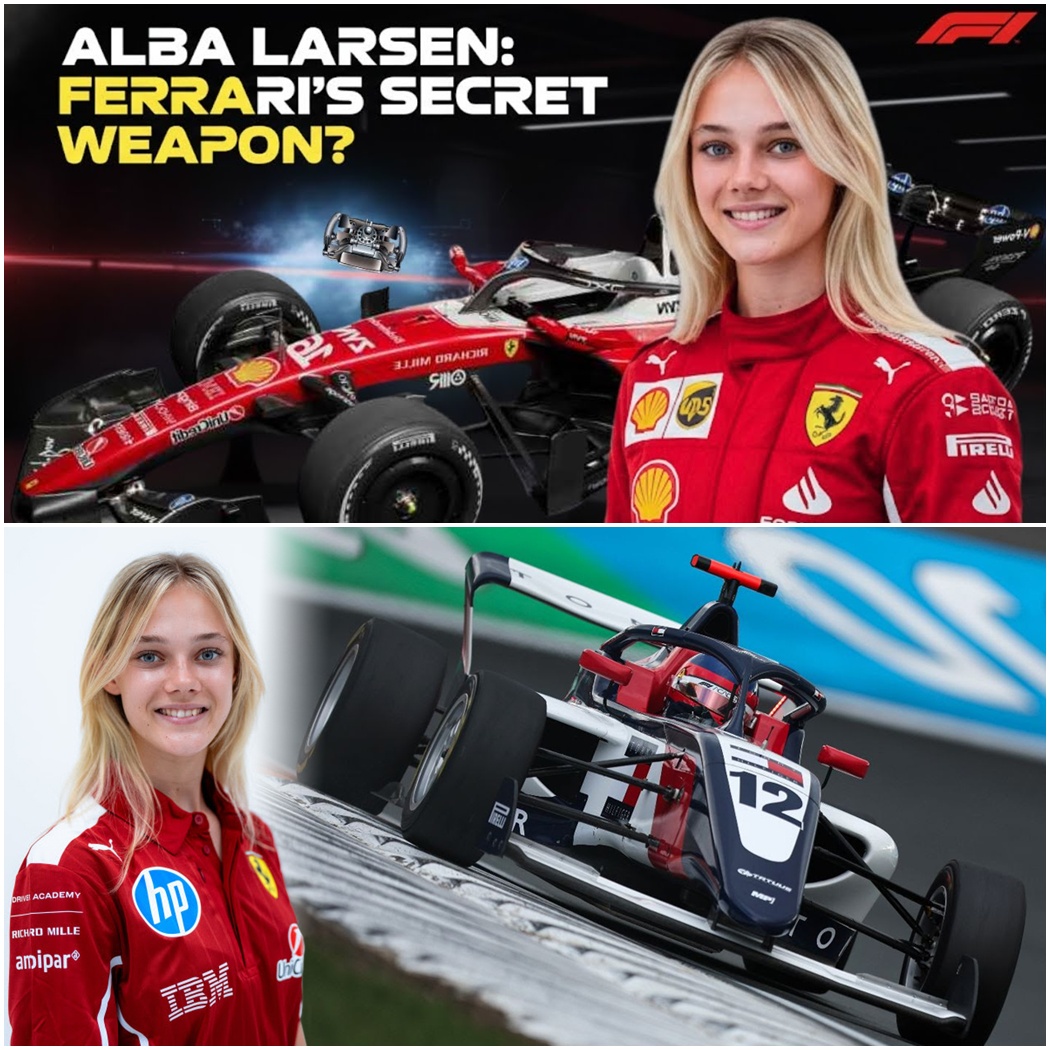
    At 16 years old, this Danish phenomenon has just achieved what most drivers spend a lifetime chasing: a spot in the Ferrari Driver Academy. For the 2026 F1 Academy season, she won’t just be another driver on the grid; she will be the face of the Prancing Horse, carrying the weight of the most iconic brand in motorsport history on her shoulders. But the truly shocking part isn’t where she is—it’s how fast she got there.

    The Three-Year Miracle

    To understand the magnitude of Larsen’s achievement, you have to rewind to 2020. The world was in lockdown. While most of us were learning to bake sourdough bread or binge-watching TV series, Alba Larsen decided to try karting. She wasn’t a toddler with a racing lineage; she was a pre-teen starting from scratch.

    In a sport where experience is the only currency that matters, she was technically bankrupt. Her rivals had been racing since they were four. They had thousands of laps, hundreds of race starts, and years of muscle memory banked away. Alba had none of that.

    Yet, by 2023, just three years after sitting in a kart for the first time, she entered the FIA Girls on Track shootout. The catch? She had zero experience in a single-seater car. None. It should have been a disaster. It should have been a humbling learning experience where she was outpaced by the veterans. Instead, within days, she was matching professional reference lap times.

    This wasn’t just talent; it was a freakish ability to adapt. While others struggled with the transition from karts to cars, struggling with the weight transfer and the braking points, Alba simply figured it out. It was this specific trait—this “adapt or die” mentality—that caught the eye of the scouts. Ferrari saw someone who didn’t need ten years to learn a track; she needed ten laps.

    The Raw Speed of a Rookie

    Fast forward to her rookie season in the 2025 F1 Academy. The expectations were managed; after all, she was still arguably the least experienced driver in the field. But the data told a different story.

    Alba Larsen proved to be a “Qualifying Queen.” In motorsport, Saturday pace is often considered the purest measure of a driver’s raw talent. You can learn racecraft, you can learn tire management, but raw, blistering speed over a single lap? You either have it, or you don’t. Alba has it.

    On her debut in Shanghai, a track known for its technical difficulty, she grabbed P3. It was a statement. Later, in the neon-lit streets of Las Vegas, she missed out on P2 by a microscopic 0.017 seconds. These aren’t the stats of a rookie finding her feet; these are the stats of a predator finding her range.

    However, raw speed comes with its own volatility. Her weakness, as exposed in that same Las Vegas weekend, has been race management under extreme pressure. While leading the race, a brush with the wall ended her day. It was a heart-stopping moment, a reminder of the razor-thin margins of street circuits. But even in that failure, there was a silver lining. Ferrari doesn’t mind a driver who crashes while pushing for the win; they worry about the driver who is slow and safe. You can teach a fast driver to stop crashing, but you can’t teach a slow driver to be fast.

    The Magnussen Connection

    No driver makes it to the top alone, and Alba has a weapon in her arsenal that few others can claim: Kevin Magnussen. The F1 veteran and fellow Dane isn’t just a distant figurehead; he is an active mentor.

    This relationship goes beyond simple PR photos. Magnussen, known for being one of the grittiest, hardest-to-pass drivers on the Formula 1 grid, is teaching Alba the “dark arts” of racecraft. How to defend when your tires are gone, how to position your car to make yourself wide, how to psychologically break the driver behind you—these are lessons you can’t learn from a simulator.

    Speaking of simulators, Alba’s induction into the Ferrari Driver Academy grants her access to the hallowed grounds of Maranello. She is now plugging into the same data streams, the same engineers, and the same simulator technology used by Charles Leclerc and Lewis Hamilton. This is an education that money literally cannot buy. It turns a trendy, raw talent into a lethal, driven weapon.

    The Pressure of the Red Suit

    The transition to 2026 is not just a change of year; it’s a change of identity. In 2025, Alba raced under the developmental branding of Tommy Hilfiger. It was prestigious, sure, but it wasn’t Ferrari.

    In 2026, the car turns red. The suit turns red. The expectations turn heavy.

    Ferrari is not a team that celebrates participation. They celebrate victory. The P4 finishes that were impressive in her rookie year will no longer be enough. The roadmap is clear and brutal: dominate the F1 Academy, graduate to Formula 3, and keep climbing toward the ultimate ceiling that has held firm for decades.

    The last time a woman entered a Formula 1 Grand Prix weekend was in 1992. That is a drought of nearly half a century. Ferrari, a team that loves history more than any other, wants to be the one to break that streak. They have placed their bet on Alba Larsen.

    The Road Ahead

    Alba knows that 2026 is the “make or break” year. To prepare, she is undertaking a punishing winter schedule. She is racing in the F4 UAE championship and returning to the brutal proving grounds of the British F4 championship. She is quite literally doing double the work of her peers, logging more miles, facing more starts, and experiencing more chaos to ensure that when the lights go out for the F1 Academy season, she is ready.

    This is a high-stakes gamble. Ferrari is banking on the idea that her steep learning curve hasn’t plateaued. They believe that the girl who went from lockdown hobbyist to pro racer in three years has another gear left to find.

    Is the pressure of the Prancing Horse too much, too soon? Perhaps. But if there is one thing we have learned about Alba Larsen, it’s that she doesn’t care about timelines. She doesn’t care about how long it’s supposed to take. She only cares about how fast she can go. And right now, she looks unstoppable.

  • Inside world of F1 psychologists used by Lando Norris, George Russell and other stars

    Inside world of F1 psychologists used by Lando Norris, George Russell and other stars

    In the cut-throat world of F1, mental health is often overlooked, but there is a new generation of drivers tapping into the power of psychology to unlock performance on the racetrack.

    View Image

    Lando Norris and George Russell both make use of sports psychologists(Image: Mario Renzi – Formula 1 via Getty Images)

    When Lando Norris crossed the line in Abu Dhabi to seal his maiden F1 Drivers’ Championship title, he did so having recovered from a frustrating first half of the season with the help of his McLaren team and the help of a psychologist behind the scenes.

    The 26-year-old Brit, who has been open in the past about his struggles with mental health and coping with the pressure of F1 earlier in his career, spent much of the first half of the campaign berating his mistakes and struggling to contain his frustration when in front of the TV cameras.

    In the second half of the year, Norris was much more measured, never getting carried away when things went against him, and staying grounded at his peaks, even after putting one hand on the World Championship trophy with back-to-back wins in Mexico and Brazil.

    In a global sporting landscape where the one per cent matters and marginal gains are everything, harnessing the power of the mind is now an invaluable key to F1 success, and some of F1’s biggest stars are turning on to the potential benefits.

    Norris is far from the only star seeking help from mental health professionals. Mercedes star George Russell has been vocal about his approach, telling Men’s Health in 2023: “I haven’t always been into my mental health. I only started getting into it about a year and a half, two years ago, when I started to speak with a psychologist, mainly for my on-track personal performance.

    “It was only through those conversations that I felt like this is giving me more than just the on-track benefits. I’m coming away from these sessions feeling better about myself, feeling like there had been a weight lifted off my shoulders.

    “Sometimes I went into these sessions with not a lot to talk about, thinking it would only last five or 10 minutes, and I was there well over an hour, and since then it has been something I have felt strongly about.”

    Yuki Tsunoda, who was axed by Red Bull at the end of the season, also benefited from the services of a sports psychologist. The Japanese racer admitted that he was prone to getting “overheated, especially in my brain”, while driving. Working with a mental specialist allowed him to develop a better temperament behind the wheel.

    According to former Haas racer Romain Grosjean, the work of psychologists can have far-reaching benefits, too. “I’ve been seeing a psychologist since September 2012 and Spa-Francorchamps,” he said, looking back at the lap-one crash that saw him receive a one-race ban from the FIA.

    “It has helped me a lot to become a better driver, a better father and a better man. We use engineers to set up the car, and we use coaches to improve our physical performance. Why wouldn’t you use a psychologist to improve your brain and the way it works? That’s why I did it.”

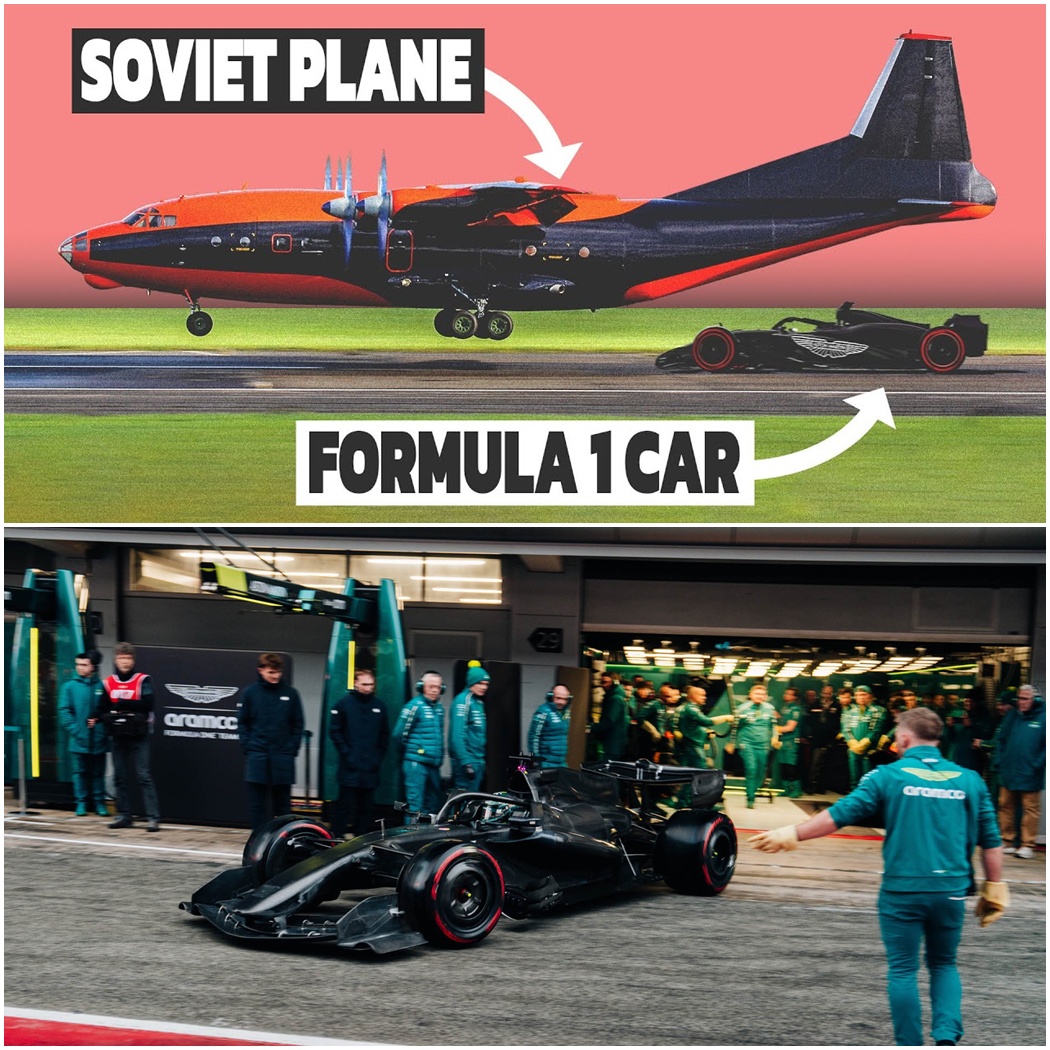
  • Aston Martin’s Nuclear Option: Adrian Newey Takes the Throne as Team Principal in Historic F1 Shakeup

    Aston Martin’s Nuclear Option: Adrian Newey Takes the Throne as Team Principal in Historic F1 Shakeup

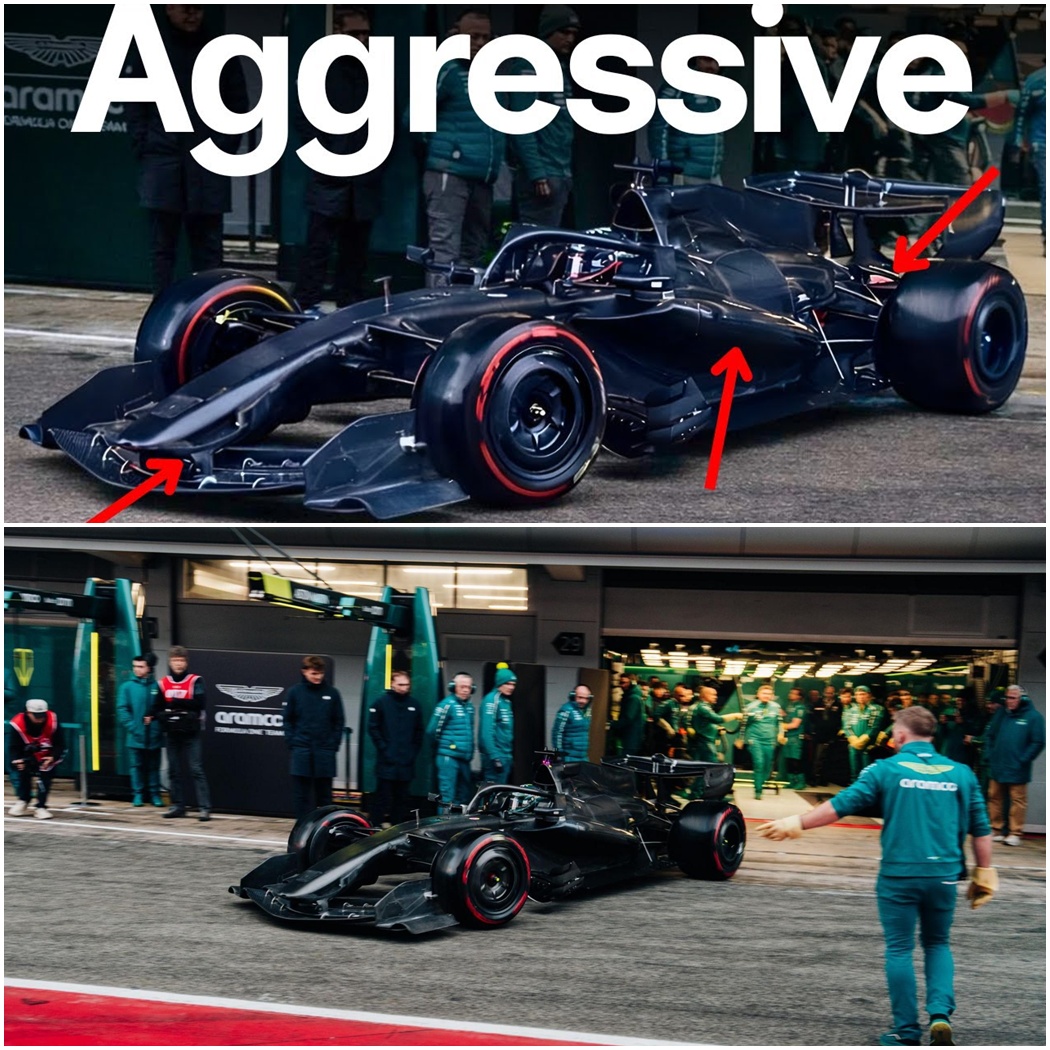
    In a move that has sent shockwaves through the Formula 1 paddock and left rival teams scrambling to reassess their future strategies, Aston Martin has officially declared war on the grid. The Silverstone-based outfit has announced that Adrian Newey, widely regarded as the greatest technical mind in the history of the sport, will not merely be designing their cars—he is taking over. As of the 2026 season, Adrian Newey will serve as Team Principal, assuming full leadership of the team in a restructuring that promises to redefine the competitive landscape of Formula 1.

    The Keys to the Kingdom

    This announcement is far more than a simple title change or a corporate reshuffle; it is a fundamental shift in the philosophy of running a Formula 1 team. Newey, who joined the team as Managing Technical Partner, will now hold the reins of the entire operation. He replaces Andy Cowell, the man famous for his engine mastery at Mercedes, who will transition into a new, crucial role as Chief Strategy Officer. Cowell’s focus will shift specifically to the integration of the incoming Honda power unit and the management of key supplier relationships.

    But make no mistake: the headline is Newey. Aston Martin owner Lawrence Stroll has effectively handed the keys to the kingdom—design, development, budget allocation, and on-track performance—to one man. It is a level of consolidated power rarely seen in modern Formula 1, harking back to an era where singular visionaries led teams to glory. The message from Silverstone is crystal clear: Aston Martin is no longer just participating; they are plotting a hostile takeover of the podium.

    Panic in the Paddock

    When the news broke, the reaction across the sport was palpable. Sources report that the paddock “paused then buzzed,” a testament to the sheer gravity of Newey’s new position. For established giants like Ferrari, Mercedes-AMG Petronas, and McLaren, the ground has shifted beneath their feet.

    The fear among rivals is well-founded. Adrian Newey did not build his legendary reputation simply by refining fast cars; he built it by dominating eras of change. His career is defined by an uncanny ability to decode complex regulation shifts faster and more effectively than anyone else. From the active suspension Williams cars of the early 90s to the blown-diffuser Red Bulls, every time Formula 1 hits a “reset” button on the rules, Newey emerges with a machine that is often seconds, not tenths, ahead of the competition.

    With the sweeping 2026 regulation changes on the horizon—changes that involve major overhauls to both chassis and power unit regulations—placing Newey in the Team Principal seat is akin to unleashing a grandmaster on a chessboard where everyone else is still learning the rules. Rival engineers are reportedly already losing sleep, fully aware that Newey’s mandate now extends beyond aerodynamics to the holistic construction of a championship contender.

    A Technical Revolution, Not Just a Shakeup

    This restructuring addresses a critical question that has hovered over Aston Martin: how to transition from an ambitious midfield team to a genuine world power. The team explicitly stated that this move is about “optimizing individual strengths.” While Cowell is an exceptional leader, his specific expertise lies in powertrains—a critical component for 2026 as Aston Martin becomes a works team with Honda. By moving Cowell to focus on the Honda integration, Aston Martin ensures that the engine partnership is seamless.

    Meanwhile, Newey’s elevation to Team Principal ensures that the car’s design philosophy is not diluted by bureaucratic hurdles. In this new structure, the car design, aero philosophy, chassis suspension geometry, and even the layout of the 2026 budget will run directly through Newey’s vision. There will be no “too many cooks” in the kitchen regarding the car’s concept; Newey is now both the head chef and the restaurant manager.

    This move also definitively silences the rumor mill regarding Red Bull’s Christian Horner. Speculation had been rife that Horner might be eyeing a top job at Aston Martin, but Newey’s promotion slams that door shut. Lawrence Stroll has made his choice, and it appears the team is committing to a future where technical brilliance leads the charge, rather than traditional team management.

    The 2026 Vision: Rocket Ships and Championships

    The timeline for this “technical revolution” is aggressive. The goal is not just to be competitive; it is to dominate. If the pieces fall into place—if Newey nails the 2026 regulations and the Honda power unit delivers the expected performance—the synergy between chassis, aero, engine, fuel, and tires could be devastatingly effective.

    The team’s internal projections are ambitious: podiums from race one in 2026, establishing themselves as a regular front-runner by 2027, and becoming a genuine title contender by 2028. For drivers like Fernando Alonso and Lance Stroll (or whoever occupies the seats in the new era), the prospect is tantalizing. They could find themselves strapped into a “rocket from Silverstone,” a car that benefits from the same “Newey effect” that powered Sebastian Vettel and Max Verstappen to multiple world championships.

    The Risks of a One-Man Show

    However, the strategy is not without its perils. Critics and skeptics argue that the “Team Principal” role requires a skillset vastly different from that of a Technical Director. There is a risk of leadership overload. Managing the political, logistical, and human resource aspects of a massive F1 organization could distract Newey from what he does best: drawing fast cars.

    There is a “worst-case scenario” whispered in the corners of the paddock: Newey’s radical ideas could become unchecked without a traditional team boss to rein them in, leading to reliability issues or concepts that are fast but fragile. If the Honda integration stumbles, or if the burden of leadership stifles Newey’s creativity, Aston Martin could end up as the “most expensive midfield team ever built.”

    The Verdict

    Yet, history favors the brave, and it certainly favors Adrian Newey. His track record of turning underfunded or struggling teams into powerhouses is unmatched. He has consistently delivered when it matters most, thriving under the pressure of regulatory upheaval.

    The smart money, according to insiders, is on the first scenario: success. Aston Martin has stripped away the layers of middle management and empowered their greatest asset to reshape the team in his image. This is a gamble of the highest order, but with the highest possible reward.

    As the F1 world looks toward the 2026 shakedown, one thing is certain: the war has just begun. Aston Martin has mobilized its forces, and with Adrian Newey at the helm, they are no longer asking for a seat at the table—they are coming to take the head of it.

  • The Lionheart’s Scars: The 5 Men Who Declared War on Nigel Mansell

    The Lionheart’s Scars: The 5 Men Who Declared War on Nigel Mansell

    In the high-octane history of Formula 1, legends are often defined by their stats—wins, poles, and championships. But Nigel Mansell was never just a statistic. He was “The Lionheart,” a driver who didn’t just race cars; he wrestled them into submission, bleeding for every inch of tarmac. Fans adored him for his unfiltered bravery and raw emotion. However, inside the exclusive and often cutthroat Paddock, that same intensity painted a target on his back.

    Mansell wasn’t just fighting the laws of physics; he was fighting a multi-front war against some of the most formidable personalities the sport has ever seen. Behind the glory of his 1992 World Championship lies a darker narrative of toxic garages, psychological warfare, and personal betrayals. Today, we peel back the visor to reveal the five giants who didn’t just want to beat Mansell—they wanted to break him.

    1. Nelson Piquet: The Enemy Within

    If you want to define “hostility,” look no further than the Williams garage in 1986. When Mansell was paired with Nelson Piquet, the team expected a “dream team.” What they got was a nightmare. Piquet, a double World Champion, arrived expecting to be the undisputed number one. He didn’t account for Mansell’s refusal to bow down.

    This wasn’t just a sporting rivalry; it was personal viciousness. Piquet, threatened by Mansell’s rising speed and popularity, resorted to psychological torture. He publicly mocked Mansell, calling him “thick-headed” and, in a moment of pure toxicity, made vile “swine” remarks about Mansell’s family. The garage was split down the middle, with engineers forced to pick sides. They stole points from each other, refused to share data, and ultimately handed the title to Alain Prost. For Mansell, Piquet wasn’t just a teammate; he was the embodiment of disrespect—a man who tried to humiliate him at every turn.

    2. Alain Prost: The Master of Mind Games

    If Piquet attacked Mansell emotionally, Alain Prost dismantled him intellectually. Known as “The Professor,” Prost was the antithesis of Mansell. Where Nigel was all heart and instinct, Prost was ice-cold calculation. Their rivalry simmered for years, notably when Prost snatched the 1986 title as Mansell’s tire exploded in Adelaide. But the real knife in the back came later.

    When they united at Ferrari in 1990, Mansell expected a fair fight. Instead, he walked into a political ambush. Prost, fluent in Italian and a master of charm, quickly wrapped the team around his finger. Mansell found himself isolated, accusing Prost of manipulating the team to secure better equipment. But the ultimate betrayal came in 1993. After Mansell finally won his championship with Williams, he discovered Prost had been secretly negotiating to replace him, famously refusing to sign the contract if Mansell remained in the team. Mansell, the reigning champion, was effectively forced out of the sport by the political maneuvering of the Frenchman.

    3. Ayrton Senna: The Clash of Titans

    Nigel Mansell and Ayrton Senna were two unstoppable forces who, by the laws of nature, had to collide. This wasn’t a rivalry built on hatred, like with Piquet, but on terrifying intensity. Senna was spiritual focus; Mansell was raw fire.

    Their battles are the stuff of legend. The 1991 Spanish Grand Prix, where they went wheel-to-wheel down the straight at 200 mph with sparks flying, remains one of the sport’s most iconic images. But the respect they held was forged in violence. The tension boiled over at the 1987 Belgian Grand Prix when, furious after a collision, Mansell famously grabbed Senna by the throat in the pits. They were two alphas who physically and mentally bruised each other every time they met. While they respected each other’s greatness, peace was never an option.

    4. Frank Williams: The Business of Betrayal

    Perhaps the most complicated figure in Mansell’s life wasn’t a driver, but the man who gave him the keys to the car. Frank Williams was the pragmatic team boss who valued constructors’ points over drivers’ egos. He was the architect of Mansell’s success, but also the author of his greatest heartbreak.

    It was Frank who allowed the Piquet-Mansell war to fester, believing the chaos would breed speed. But the crushing blow came after Mansell delivered the 1992 championship—a season of dominance that British fans had waited decades for. Instead of a hero’s reward, Mansell was met with a cold business decision. Frank had already signed Prost for the next season. Feeling betrayed by the team he had bled for, Mansell walked away. It was a relationship defined by a cruel irony: the man who made Mansell a champion was the same man who made him feel he had no home in F1.

    5. Michael Schumacher: The End of an Era

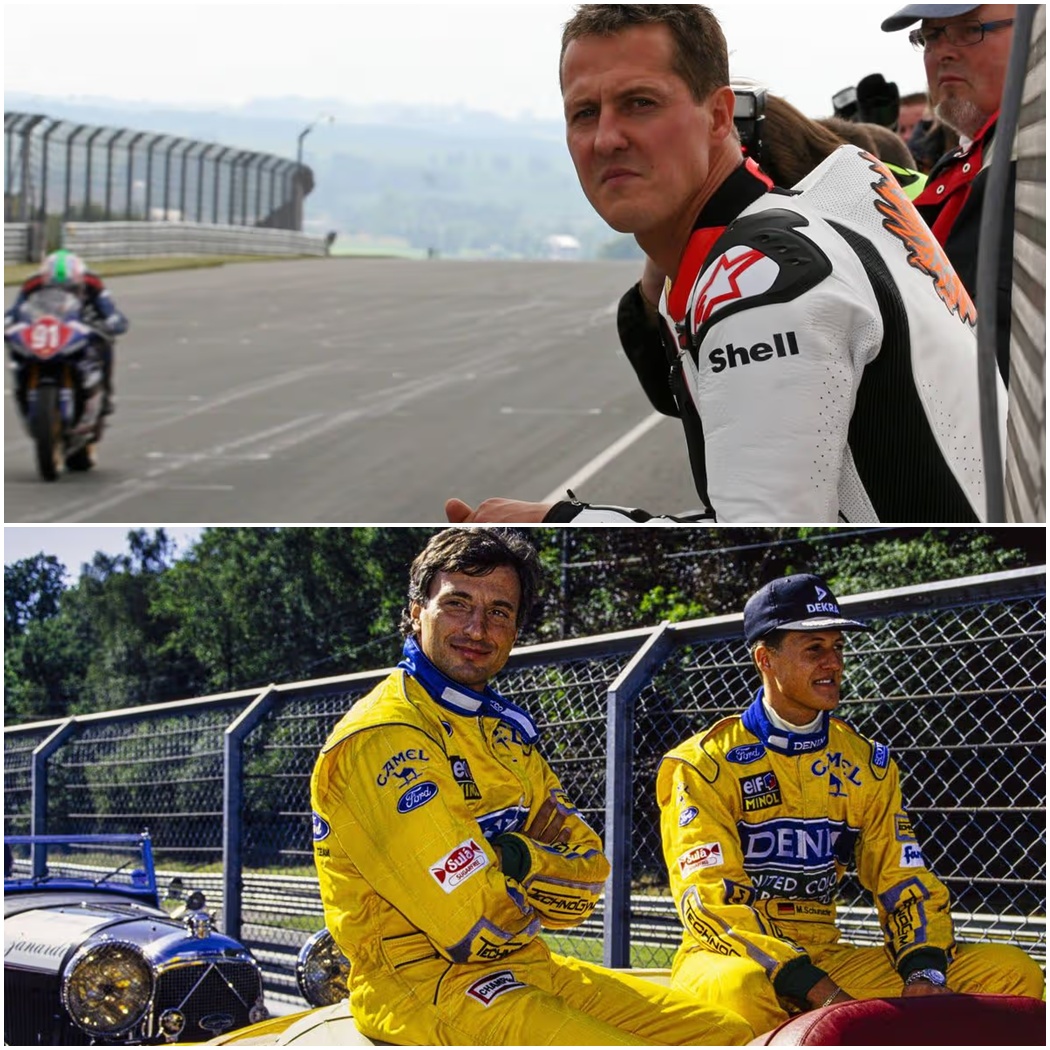
    By 1994, the sport was changing. The romantic era of the “garagista” racers was dying, replaced by the dawn of the super-athlete. Michael Schumacher was the face of this new world—analytical, ruthless, and devoid of the “honor” Mansell held dear.

    When Mansell returned to F1 briefly in 1994, he didn’t find a peer; he found a shock to the system. Schumacher didn’t just race hard; he raced with a surgical brutality that Mansell found disrespectful. From aggressive blocks to the controversial collision with Damon Hill in Adelaide, Schumacher represented a future Mansell didn’t understand. To Nigel, Schumacher was the signal that his time was up. The German wasn’t an enemy in the personal sense, but he was the final, unyielding wall that the Lionheart could not break through.

    The Legacy of Conflict

    Nigel Mansell’s career was not a smooth drive on a Sunday afternoon. It was a brawl. Piquet tested his pride, Prost tested his mind, Senna tested his courage, Williams tested his loyalty, and Schumacher tested his relevance. He may not have liked them—he certainly didn’t forgive all of them—but these five men forged the steel of the legend we celebrate today. They pushed him to the edge, and in doing so, they ensured that the Lionheart would roar louder than any of them could have imagined.