Author: bang7

  • ‘I b******ed him and thought ‘what have I done?” – Top Gear chief recalls wild behind-the-scenes bust-up with F1 star

    ‘I b******ed him and thought ‘what have I done?” – Top Gear chief recalls wild behind-the-scenes bust-up with F1 star

    Some inclement weather was to blame for unfortunate showdown

    A TOP GEAR chief has recalled the moment he “b*******d” Formula One legend Kimi Raikkonen before thinking: “What have I done?!”

    The 2007 F1 world champion appeared on the popular BBC show ahead of his second spell in the sport.
    A Top Gear chief blasted F1 legend Kimi Raikkonen in an argument when he appeared on the showCredit: AFP

    Raikkonen had been less than impressive on his drive around the Top Gear trackCredit: Getty – Contributor
    Raikkonen left Ferrari in 2009 before returning three years later with Lotus.

    And during that gap, he killed time racing in the World Rally Championship and NASCAR Truck Series.

    It also saw Raikkonen take to UK screens with Top Gear, where he chatted with former host Jeremy Clarkson while also racing timed laps in the show’s iconic celebrity driving segment.

    However, Raikkonen failed to impress while behind the wheel.

    Due to wet weather, the Finland native was unable to rack up a quick time.

    It saw producers pray for the track to dry out.

    But Raikkonen had no interest in going back out for another go after conditions improved.

    It led to a Top Gear chief confronting the ace in his trailer.

    Yet as soon as he unleashed his tirade against Raikkonen, he quickly regretted it.

    Speaking on the Midweek F1 podcast, former Top Gear executive producer Andy Wilman said: “Raikkonen came on the show. So everyone is doing their lap. His was a wet day.

    “And we were like, ‘Oh, he’s not going to do it’. He’s like, ‘OK’. But he’ll give it some, because it’s Kimi.

    “It was when he came back with Lotus. And we were all like, ‘Oh, we are not worthy. You’re here. You’re here!’

    “I went down to see the guy with the timer, Nick Dalton, who had the watch out. I was like, ‘How’s he doing? How’s he doing?’ He went, ‘Not great.’

    “So he goes into his motorhome, and he’s like, ‘I’ve done enough laps now’. He wasn’t unfriendly, but he’s just like, ‘It’s a rainy day’.

    “I go into the motorhome after him. He’s in the, like, Lazy Boy chair, and it’s warm, and he’s fully sort of stretched out, like Joey from Friends.

    “I went, ‘Kimi, you know, it’s drying out now. I can’t tell you your time, but it wasn’t brilliant. We know you could go faster.’

    “And he went, ‘No, I can’t’. And we were like, ‘No, Kimi, it really is dry now’, and I said, ‘If you look out of the window, you’ll see it’s definitely getting drier’.

    “And he, with hugely bad grace, upped himself to the window, and he went, ‘No, it isn’t’.

    “I lost it with him a bit, and b*******d him, like, ‘There’s so many people here waiting to see you make a comeback, and that’ll be on you if you don’t do something!’

    “Then I thought, ‘What have I done?’ And then he got out, and he went and did a couple more laps and went a bit faster. But that was the day I told Kimi off.”

  • F1 ERUPTS IN CHAOS: The ‘Thermal Loophole’ Threatening to Crown the 2026 Champion Before a Wheel Turns

    F1 ERUPTS IN CHAOS: The ‘Thermal Loophole’ Threatening to Crown the 2026 Champion Before a Wheel Turns

    The world of Formula 1, often described as a high-speed chess match played at 200 miles per hour, has officially exploded into controversy long before the first car of the next generation has even hit the tarmac. While the grandstands remain empty and the paddocks quiet, a silent war is raging behind the closed doors of the sport’s most secretive engineering facilities. At the heart of this storm is a revelation that threatens to shatter the competitive balance of the 2026 season and beyond: a technical loophole so ingenious, and potentially so devastating, that it has left rivals like Ferrari, Honda, and Audi fuming and the FIA scrambling for a solution.

    The Invisible War for 2026

    For the casual observer, the 2026 regulation changes were marketed as a “reset”—a golden opportunity to level the playing field, reduce costs, and attract new manufacturers like Audi to the sport. The FIA’s blueprint was clear: simplify the engines, cap the performance ceiling, and let the drivers make the difference. However, reports emerging from the depths of the paddock suggest that two of the sport’s juggernauts, Mercedes and Red Bull, may have found a way to tear that blueprint to shreds.

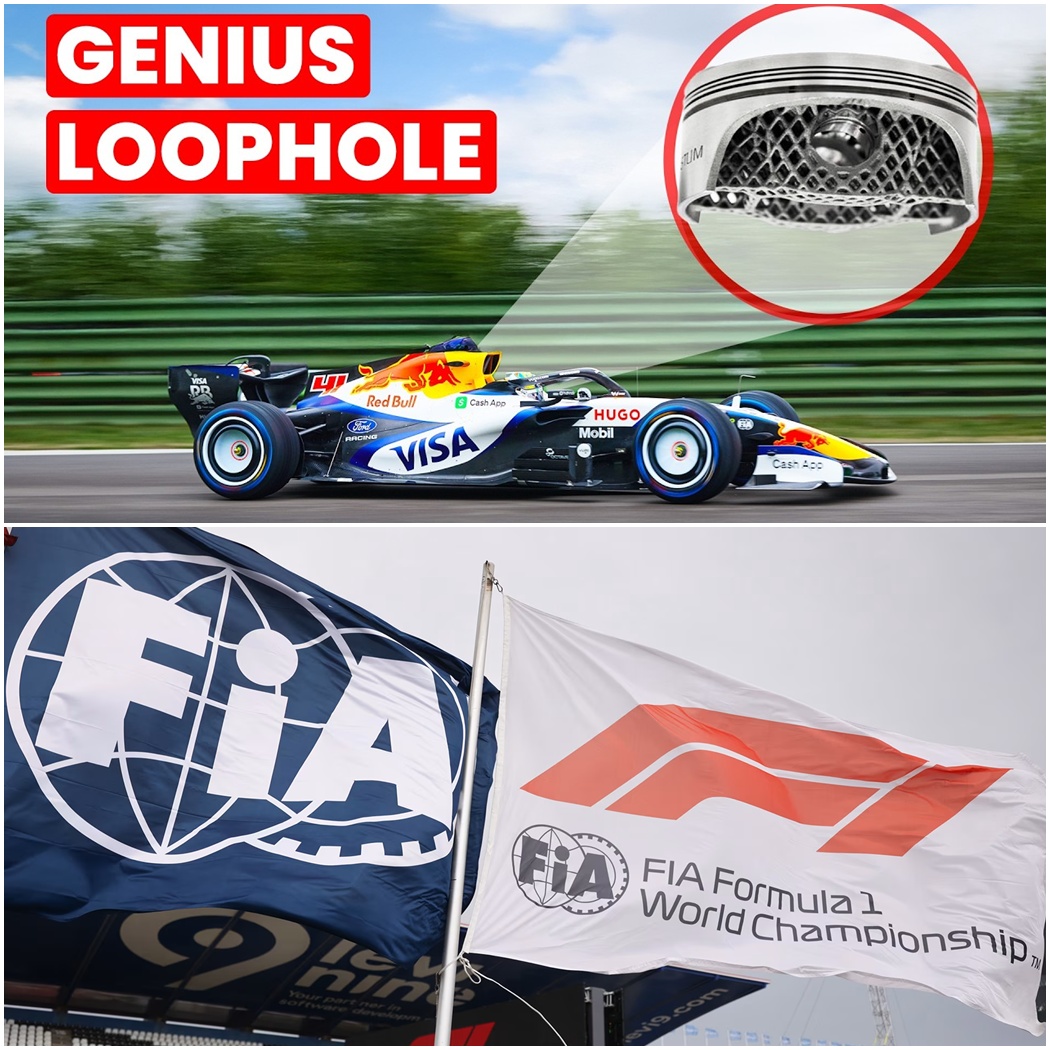
    The controversy centers on a specific, highly technical regulation regarding the engine’s “compression ratio.” In an effort to curb extreme performance advantages and keep development costs from spiraling, the FIA lowered the maximum allowable compression ratio from 18.0 to 16.0 for the upcoming engine cycle. On paper, this rule is absolute. It is a hard ceiling designed to ensure that no single manufacturer can build a power unit vastly superior to the rest. But in Formula 1, rules are merely challenges waiting to be solved, and it appears the engineers at Brackley and Milton Keynes have found a solution that is as brilliant as it is controversial.

    The “Thermal Expansion” Masterstroke

    To understand the panic spreading through the rival camps, one must understand the physics of the loophole. The regulations state that the compression ratio must not exceed 16.0 when measured “statically” in the garage. This is the key phrase. In the cool, controlled environment of an FIA inspection bay, the engines from Mercedes and Red Bull reportedly comply perfectly with the letter of the law. They measure exactly 16.0.

    However, a Formula 1 engine does not live in a garage. It lives on the track, screaming at high revs and generating immense heat. It is alleged that Mercedes and Red Bull have designed their engine components with specific materials and tolerances that utilize “thermal expansion” to their advantage. As the engine heats up to racing temperatures, the metal expands in a calculated manner, effectively shrinking the combustion chamber volume and driving the compression ratio back up toward the old 18.0 limit.

    In layman’s terms? They have built an engine that is legal when parked but transforms into a beast when raced. This isn’t just a marginal gain; in a sport where victory is measured in thousandths of a second, a jump in compression ratio of that magnitude represents a massive horsepower advantage. It is the difference between fighting in the midfield and disappearing into the distance.

    Rivals “Blindsided” and Furious

    The reaction from the rest of the grid has been immediate and visceral. Manufacturers like Ferrari, Honda, and the incoming giant Audi committed hundreds of millions of dollars to their 2026 projects based on the “spirit” of the regulations. They designed engines assuming the 16.0 limit was a hard physical reality, not a variable to be manipulated.

    From their perspective, this is not innovation; it is a fundamental threat to the fairness of the sport. If Mercedes and Red Bull start the new era with a significant power advantage that is “baked in” to the physics of their engine blocks, the 2026 championship—and potentially the 2027 and 2028 titles—could be decided before the lights go out in Bahrain. The fear is palpable: have these teams spent years preparing for a fight, only to bring a knife to a gunfight?

    Did Mercedes Sacrifice for This?

    This revelation also casts a new light on the struggles of the Mercedes team over the past few seasons. Fans and pundits alike have questioned the team’s direction, wondering if the dominant force of the hybrid era had lost its way. But this news suggests a different narrative: strategic sacrifice.

    While others were burning resources chasing short-term fixes for their current cars, Mercedes may have quietly shifted their focus and immense resources to the 2026 project much earlier than anyone realized. It echoes their preparation for the 2014 hybrid era, where they arrived with an engine so superior it secured them eight consecutive Constructors’ Championships. If they have indeed “cracked the code” again, their recent years of mediocrity might just be the price they willingly paid for another dynasty.

    Red Bull, too, seems to be benefiting from this aggressive approach. Their powertrain division, now a massive operation bolstered by hundreds of engineers poached directly from Mercedes, seems to have inherited not just the talent but the “institutional knowledge” of how to exploit such regulations.

    The FIA’s Impossible Choice

    The ball is now firmly in the court of the FIA, and there are no easy answers. The governing body faces a nightmare scenario that strikes at the core of Formula 1’s identity.

    If they stick to the strict “letter of the law,” they may be forced to allow the design. After all, if the rulebook only specifies static checks, and the engines pass those checks, banning them now could be seen as punishing engineering brilliance and “moving the goalposts.” It sets a dangerous precedent for a sport built on technical creativity.

    However, if they choose to uphold the “spirit of the law,” they must intervene. Allowing two teams to bypass the primary intent of the cost-cap and performance-leveling rules renders the regulations meaningless. It risks alienating new manufacturers like Audi, who entered the sport under the promise of a level playing field, only to find themselves outmaneuvered by a loophole they didn’t see coming.

    A Season of Deception

    As we inch closer to 2026, this controversy serves as a stark warning: do not trust what you see. The upcoming preseason testing is shaping up to be a massive game of poker. Teams with this advantage will likely sandbag, hiding their true pace to avoid attracting further scrutiny or immediate technical directives. Meanwhile, teams effectively “out” of the running may push harder to find speed that simply isn’t there.

    The 2026 season was promised as a revolution. It appears that revolution has already begun, not on the asphalt, but in the meeting rooms and design offices where the true battles of Formula 1 are won and lost. Whether this “thermal loophole” becomes the defining genius of the next decade or is stamped out as an illegal trick remains to be seen. One thing is certain: the chaos has only just begun.

  • Crisis at Milton Keynes: Leaked Talks Reveal Aston Martin’s “Masterstroke” to Poach Max Verstappen’s Most Trusted Ally

    Crisis at Milton Keynes: Leaked Talks Reveal Aston Martin’s “Masterstroke” to Poach Max Verstappen’s Most Trusted Ally

    The festive calm of the Formula 1 off-season has been shattered by reports of escalating tension within Red Bull Racing. As the dust settles on the 2025 season, the team finds itself staring into the precipice of a potential crisis that threatens to unravel nearly a decade of dominance. New evidence has emerged linking Gianpiero Lambiase, Max Verstappen’s long-time race engineer and closest confidant, to a shock move to Aston Martin—a maneuver that insiders believe is a calculated strike to lure the World Champion himself away from Red Bull.

    The “Secret Weapon” Targeted

    For fans of Formula 1, the voice of Gianpiero Lambiase—affectionately known as “GP”—is as iconic as Verstappen’s aggressive driving style. Since 2016, Lambiase has been the calm in the eye of the Verstappen storm, a figure who commands the Dutchman’s absolute respect. Their relationship transcends the typical driver-engineer dynamic; it is built on blunt honesty, emotional management, and an almost telepathic understanding of race strategy.

    However, alarming reports suggest that this bond is now the primary target of Aston Martin’s aggressive recruitment drive. Sources indicate that the Silverstone-based outfit has opened direct lines of communication with Lambiase, not merely for an engineering post, but for a senior management role. This offer, rumored to be effectively a “blank check” regarding influence and culture-building, represents a level of ambition that Red Bull may struggle to match.

    For Red Bull, Lambiase is irreplaceable. He knows exactly when to challenge Verstappen, when to soothe him, and crucially, when to tell him to shut up and drive. Losing him would be akin to removing the rudder from a high-speed vessel, especially with the sport heading into the unknown waters of the 2026 regulation overhaul.

    Aston Martin’s “Super Team” Strategy

    The interest in Lambiase is not an isolated headhunting exercise; it appears to be the final piece of a grand puzzle being assembled by Lawrence Stroll. With design genius Adrian Newey already committed to Aston Martin to lead their technical charge for the new era, the addition of Lambiase would effectively recreate the “inner circle” that facilitated Verstappen’s rise to glory.

    Paddock insiders view this as a transparent yet brilliant strategy: by assembling the people Verstappen trusts most, Aston Martin is removing the risks associated with changing teams. The prospect of walking into a new factory that features a state-of-the-art wind tunnel, the legendary Adrian Newey, and his own trusted race engineer in a leadership role makes the switch from a destabilized Red Bull to a rising Aston Martin an incredibly compelling proposition for Verstappen.

    Red Bull’s Crumbling Fortress

    The timing of these revelations could not be worse for the reigning champions. The last 18 months have seen an unprecedented exodus of talent from Milton Keynes. The departure of Adrian Newey was the first domino, followed by the loss of sporting director Jonathan Wheatley. Reports from the paddock even suggest a wider vacuum in leadership, with figures like Christian Horner and Helmut Marko part of a narrative of internal upheaval that has stripped the team of its once-bulletproof continuity.

    This “brain drain” has left Red Bull vulnerable. The team is no longer the immovable force of the early 2020s. Instead, they appear fragile, with rivals actively probing for weaknesses in their armor. The fear within the factory is palpable: if the structure supporting Verstappen continues to erode, the performance on track will inevitably follow.

    The 2026 Factor: Why Stability is King

    The stakes are raised exponentially by the looming 2026 regulations. The sport is preparing for its most complex technical era yet, with power units split 50/50 between internal combustion and electrical energy. In this new world, energy management will be the difference between winning and losing.

    Drivers will need to rely on constant, precise guidance from the pit wall to manage deployment and recovery strategies. Any hesitation or miscommunication could cost tenths of a second per lap—margins that decide championships. Red Bull knows that severing the Verstappen-Lambiase connection right before this reset is a recipe for disaster. Even a capable replacement like Simon Rennie, who stepped in briefly during 2025, cannot replicate a decade of shared intuition overnight.

    Verstappen’s Exit Clause: The Ticking Bomb

    Ultimately, all roads lead back to Max Verstappen. While the Dutchman is contractually tied to Red Bull until 2028, it is an open secret that his deal contains performance-related exit clauses. Specifically, should the team fail to provide him with a car capable of fighting for the top two in the championship during key phases of the 2026 season, he is free to walk.

    Red Bull is acutely aware that personnel losses often precede performance dips. If Lambiase departs, and the car struggles in the new regulation cycle, the conditions for Verstappen’s exit could be met sooner than anyone expected. Lawrence Stroll is banking on this momentum effect. By presenting Aston Martin as a project on the rise—stable, ambitious, and familiar—he is positioning his team as the only logical lifeboat for Verstappen should the Red Bull ship continue to take on water.

    As the off-season progresses, the silence from Milton Keynes is deafening. What began as paddock whispers has evolved into a genuine existential threat. Red Bull is fighting a war on two fronts: trying to build a car for the future while desperately trying to hold onto the people who make it fast. If they lose Gianpiero Lambiase, they may well lose Max Verstappen—and with him, their era of supremacy.

  • Zak Brown must fulfil Lando Norris deal after promising Brit supercar from another brand

    Zak Brown must fulfil Lando Norris deal after promising Brit supercar from another brand

    Zak Brown made a costly arrangement with Lando Norris, and after the Brit clinched the World Championship title in 2025, the time has come to pay up and fulfil his end of the deal

    View Image

    Lando Norris completed his half of the deal in Abu Dhabi(Image: Nicolas Economou/NurPhoto via Getty Images)

    When Lando Norris crossed the line in third place at the Abu Dhabi Grand Prix earlier this month, he clinched the greatest prize in Formula One, becoming just the 11th British driver to be crowned world champion, and McLaren’s first since Lewis Hamilton ’s triumph in 2008.

    However, the 26-year-old also lucked out on another front, completing his half of an agreement that will prove extremely costly for McLaren Racing CEO Zak Brown.

    The deal in question was made public in 2024 as Norris battled Red Bull ’s Max Verstappen for the Drivers’ Championship title. “I’ve got a deal with Zak that if I win the championship, he has to get me a car,” the Brit explained. “I’ve specified which car. We shook on it, but that’s all I’m saying. There’s a long way to go; it’s still a lot of points. But who knows?”

    Norris ultimately came up short in 2024, finishing 63 points behind Verstappen, but he got his turn in the spotlight in 2025 when McLaren started the campaign with the dominant car. The Bristol-born racer pipped his friend and rival to the crown by two points, completing his bet with Brown.

    While in his initial interview with The Telegraph , Norris refused to specify which car he was talking about, the machine of his dreams was later revealed as he chatted with fans at a Grand Prix in 2025. The 26-year-old has his sights set on a Pagani Zonda, which can cost upwards of £1million, depending on the model.

    Should he succeed in convincing Brown to part ways with his cash for a sports car outside of the McLaren family, Norris will add the Zonda to his impressive car collection. The Brit already counts a Ferrari F40, a McLaren 765LT Spider, and a Lamborghini Miura among his burgeoning collection.

    Norris isn’t the only F1 star to express his love for Pagani’s flagship model. Seven-time F1 world champion Lewis Hamilton owned a Zonda 760 LH for roughly seven years before selling it in 2021 as part of a downsizing effort inspired by his deepening concern for environmental issues.

    Hamilton’s custom-built Zonda was next spotted in unfortunate circumstances in 2023. The unnamed new owner crashed the purple supercar inside the Penmaenbach Tunnel in Conwy, Wales, colliding hard with the wall and leaving the multi-million-pound beast in ruins.

    Norris will surely be more careful if he gets his hands on his dream car on Brown’s dime. However, if he wants to retain his title in 2026, he will need to watch out for his team-mate, Oscar Piastri, who will be seeking to avenge his late-season collapse.

    “When I look at this season compared to my first two years in F1, this year has been head and shoulders above the first two,” he said after finishing third in the standings. “Ultimately, whilst the end result is not quite what I wanted, there’s a lot of optimism and a lot of strength that I’ve gained from proving to myself what I can achieve through this season.”

  • Ferrari’s “Silent Revolution”: The Secret Suspension Tech That Could Hand Hamilton and Leclerc the 2026 Title

    Ferrari’s “Silent Revolution”: The Secret Suspension Tech That Could Hand Hamilton and Leclerc the 2026 Title

    In the high-stakes world of Formula 1, silence is often louder than the roar of an engine. While the rest of the paddock is busy issuing press releases and obsessing over the minutiae of future power units, a quiet revolution is brewing behind the closed doors of Maranello. Ferrari is up to something—something dangerous, ambitious, and potentially game-changing for the 2026 season.

    The team has reportedly made a calculated bet that could rewrite the rulebook, moving away from the traditional obsession with theoretical aerodynamic numbers to chase something far more tangible: mechanical perfection. At the heart of this gamble is a suspension concept that teeters on the razor’s edge between engineering genius and regulatory controversy.

    The “Impossible” Loophole

    The 2026 regulations were drafted to level the playing field, introducing tighter aerodynamic restrictions and explicitly banning active suspension systems—those complex hydraulic or electronic aids that adapt a car’s ride height on the fly. To the letter of the law, the rules are crystal clear. But under the technical leadership of Loic Serra, Ferrari’s engineers didn’t see a wall; they saw a window.

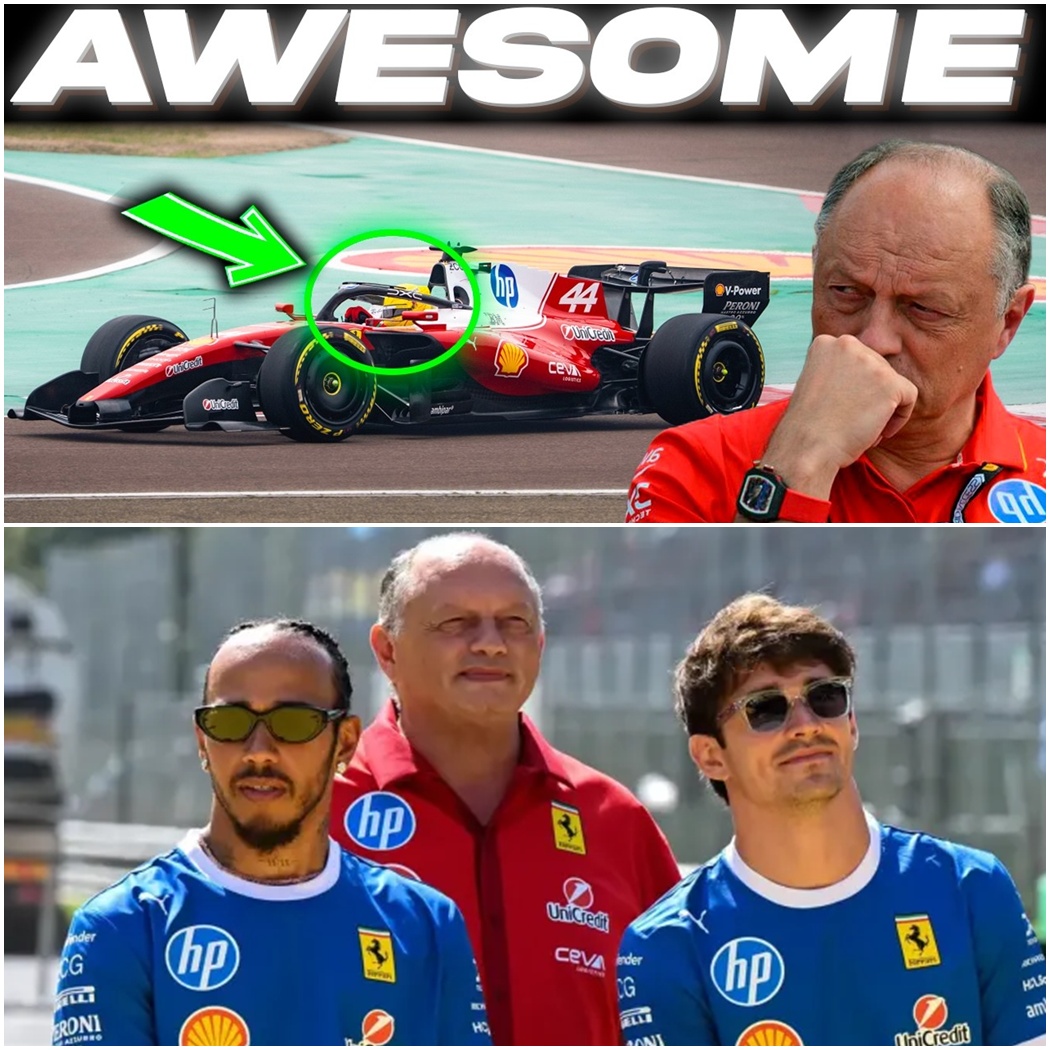
    Reports suggest Ferrari has developed a suspension system that behaves like active suspension without actually being active. The concept relies on “controlled flexibility” within the carbon fiber components themselves. By utilizing sophisticated carbon fiber layups, where every fiber orientation and load path is calculated to the molecule, the suspension arms are designed to deform precisely under specific loads and speeds.

    This means that while the car is stationary—during the FIA’s static load tests—the components remain rigid and perfectly legal. However, once the car hits the track and aerodynamic loads build up, the suspension subtly alters its geometry. This passive adaptation allows for surgical camber recovery, keeping the tires in their optimal contact patch through corners, braking zones, and acceleration phases.

    Why This Changes Everything

    To the casual observer, a flexing suspension arm might sound like a recipe for disaster or structural failure. But in the hands of Ferrari’s top engineers, it is a weapon. The objective is simple yet devastating: tire management.

    In modern F1, no amount of downforce can save a driver if their tires are overheating or sliding. By creating a suspension that naturally adapts to the track’s demands, Ferrari aims to keep their tires in the “goldilocks” operating window for longer than any rival. This translates to better grip on entry, mid-corner stability, and superior traction on exit.

    For drivers like Lewis Hamilton and Charles Leclerc, who rely on precise feedback to extract maximum performance, this could be the difference between fighting for a podium and dominating a championship. The new system is reportedly paired with a return to a double push-rod layout at both the front and rear—a configuration Ferrari hasn’t utilized since 2010—giving them unprecedented authority over ride height and platform control.

    A Gamble on Glory

    This philosophical shift stems from the hard lessons learned during the 2024 season, where the Ferrari car was trapped in an extremely narrow operating window. Minor changes in track temperature or ride height often threw the car’s balance off a cliff. The 2026 project is the antithesis of that fragility; it is built to be robust, adaptable, and forgiving.

    However, the path to perfection is paved with risks. Designing carbon fiber that flexes reliably lap after lap without succumbing to fatigue or creating unpredictable oscillations is one of the hardest engineering challenges imaginable. If Ferrari gets the math wrong, they could face catastrophic failures or a car that is impossible to drive. Furthermore, if the FIA deems the flexibility to be against the “spirit” of the regulations, the team could face a technical directive that bans their innovation overnight.

    The Verdict

    As the 2026 season approaches, the eyes of the motorsport world will be fixed on the scarlet cars. If Maranello’s gamble pays off, they won’t just be winning races; they will be rendering the competition obsolete with a piece of engineering that rivals simply cannot copy in time.

    Ferrari has stopped chasing the pack and started hunting for perfection. Whether this bold innovation leads to a new era of dominance or a high-profile failure remains to be seen, but one thing is certain: the Prancing Horse is no longer content to just gallop—it is ready to charge.

  • The “Thermal Loophole” Scandal: How Mercedes and Red Bull May Have Already Won the 2026 F1 Championship

    The “Thermal Loophole” Scandal: How Mercedes and Red Bull May Have Already Won the 2026 F1 Championship

    The world of Formula 1 is no stranger to controversy, but the storm currently brewing over the 2026 regulations threatens to overshadow the racing before a single car has even hit the tarmac. As teams prepare for the most significant technical overhaul in the sport’s recent history, a bombshell revelation has emerged: two of the grid’s titans, Mercedes and Red Bull, have allegedly found a way to circumvent a critical engine rule, potentially locking in a dominant advantage that could last for years.

    This isn’t just a minor tweak or a clever aerodynamic flick; this is a fundamental exploitation of the power unit regulations that has left rival manufacturers scrambling and the FIA in a precarious position. At the heart of the dispute is a battle between the “spirit of the rules” and the ruthless pursuit of engineering perfection—a gray area where championships are often won and lost.

    The Rule Change: A Level Playing Field?

    To understand the magnitude of this controversy, one must first look at what the FIA intended to achieve with the 2026 engine regulations. The governing body mandated a reduction in the geometric compression ratio of the internal combustion engine (ICE) from 18.0 down to 16.0.

    On paper, the logic was sound. Lowering the compression ratio reduces the thermal and structural stress on the engine, theoretically making it easier and cheaper for new manufacturers—like Audi—to enter the sport without their power units detonating on the main straight. It was a move designed to decrease the reliance on pure combustion efficiency and shift the focus toward the increased electrical power output that defines the new era of F1 sustainability.

    However, in Formula 1, every regulation is viewed not as a limit, but as a challenge to be overcome.

    The “Thermal Expansion” Loophole

    The controversy stems from how the FIA polices this 16.0 compression limit. Due to the physical impossibility of strapping measurement devices to pistons spinning at 10,000 RPM during a Grand Prix, the FIA’s technical delegates inspect the engines when the cars are static and at “ambient temperature”—essentially, when the engine is cold and turned off.

    This procedural necessity opened a door that Mercedes and Red Bull have reportedly kicked wide open.

    According to emerging reports, these two power unit heavyweights have developed materials or mechanisms that allow their cylinders to thermally expand significantly once the engine reaches race temperatures. While the engine sits cold in the garage, it complies perfectly with the 16.0 ratio. But out on the track, under the immense heat of competition, the cylinders expand, effectively increasing the compression ratio back toward the old 18.0 limit.

    This “variable compression” via thermal expansion allows them to run a more efficient, powerful engine than the rules intended, while legally passing every static test the FIA throws at them.

    The Prize: A Massive Performance Gap

    To the casual observer, a slight difference in compression ratio might seem negligible. In the world of Formula 1, however, it is an eternity. Experts estimate that running near the 18.0 ratio instead of the mandated 16.0 could yield an additional 13 horsepower.

    While 13 horsepower sounds modest in a 1,000-horsepower machine, its effect on lap time is profound. Depending on the circuit’s layout and power sensitivity, this advantage translates to roughly 0.4 seconds per lap. In a sport where qualifying sessions are often decided by thousandths of a second, a four-tenths advantage is not just a gap; it is a canyon.

    If these reports are accurate, Mercedes and Red Bull could start the 2026 season with a performance buffer that other teams—specifically those playing by the “spirit” of the 16.0 rule—cannot overcome through aerodynamics or driver skill alone. With six of the ten teams on the grid set to use either Mercedes or Red Bull powertrains, the paddock is effectively being split into the “haves” and the “have-nots” before the first light goes out.

    Industrial Espionage or Corporate Headhunting?

    Adding a layer of dramatic intrigue to the technical scandal is the rumor of how this technology spread. It is widely believed that Mercedes was the originator of this clever workaround. However, the knowledge didn’t stay in Brackley.

    Whispers in the paddock suggest that a high-ranking engineer, poached from Mercedes by the nascent Red Bull Powertrains division, brought the secret of the thermal expansion trick with them. This “knowledge transfer” allowed Red Bull to fast-track their own development of the solution, ensuring they wouldn’t be left behind by their German rivals.

    This narrative adds a bitter irony to the situation. Years ago, Mercedes Team Principal Toto Wolff downplayed the exodus of staff to Red Bull, suggesting that losing a few engineers wouldn’t crumble their empire. Yet, it appears that one specific hire may have handed Red Bull the keys to the 2026 kingdom, leveling the playing field between the two arch-rivals while leaving everyone else in the cold.

    The FIA’s Dilemma: Too Late to Stop It?

    The response from the FIA has been tepid, frustrating many onlookers. The governing body has issued technical clarifications reiterating that checks are done at ambient temperature, tacitly acknowledging that they currently lack the means to police dynamic compression ratios during a race.

    Crucially, it appears to be too late to ban the innovation for the start of the 2026 season. Engine architectures for the new regulations have been locked in for months, if not years. Forcing a redesign now would be logistically impossible and arguably unfair to the teams that invested millions into finding a legal solution to the problem presented.

    However, the FIA has left the door open for a regulatory crackdown in 2027. If the performance disparity proves to be as large as predicted—damaging the sport’s entertainment value—rules could be rewritten to close the loophole. But for 2026, the die is cast.

    Conclusion: Innovation or unfair play?

    As we look toward the new era of Formula 1, the “Thermal Loophole” serves as a stark reminder of the sport’s ruthless nature. Is it cheating? Strictly speaking, no. The car passes the tests as written in the rulebook. Is it against the spirit of the rules? Almost certainly.

    For fans, the prospect of a two-horse race between Mercedes and Red Bull might feel like déjà vu. But for the engineers involved, this is the ultimate victory—defeating the rulebook before defeating the competition. As the cars prepare for their first shakedowns in January, the rest of the grid faces a terrifying reality: they might be racing for third place before the season even begins.

  • Ferrari’s “Philosophical Reset”: Why the 2026 Engine Revolution is the Biggest Gamble in F1 History

    Ferrari’s “Philosophical Reset”: Why the 2026 Engine Revolution is the Biggest Gamble in F1 History

    In the high-octane world of Formula 1, “revolution” is a word often thrown around, but rarely does it carry the weight it holds for the upcoming 2026 season. While the grandstands buzz with driver transfers and aerodynamic tweaks, a far more significant tectonic shift is occurring behind the closed doors of Maranello. Ferrari has quietly admitted to a complete “philosophical reset” regarding their power unit development, a move that signals the 2026 regulations aren’t just a rule change—they are a fundamental rewriting of how speed is created, sustained, and potentially lost.

    The End of the Aerodynamic Era?

    For years, Formula 1 has been dominated by the dark art of aerodynamics. The phrase “downforce is king” has been the guiding mantra for every championship-winning team. However, Ferrari’s latest technical revelations suggest a startling pivot. The Italian giants are openly stating that the power unit will retake the throne, sitting at the very center of competitiveness.

    This isn’t merely marketing bluster. The 2026 regulations enforce a near-perfect 50/50 split between power derived from the internal combustion engine (ICE) and electrical energy. Electricity is no longer just a “boost” or a support system; it is an equal partner. This seemingly simple numerical shift has forced Ferrari to rethink their entire architecture, suggesting that the team that unlocks the secrets of this new hybrid balance first will dictate the competitive order for years to come. If you get the engine wrong in 2026, no amount of aerodynamic brilliance will save you.

    The MGU-H Shock: Rewriting the Energy Equation

    Perhaps the most “shocking twist” in the technical regulations is the complete removal of the MGU-H (Motor Generator Unit – Heat). For over a decade, this component quietly did the heavy lifting, harvesting energy from the turbocharger and stabilizing power delivery. It was the invisible safety net that kept batteries charged and turbo lag at bay.

    Its removal changes the game entirely.

    Without the MGU-H, energy recovery becomes solely the job of the MGU-K (Kinetic), meaning the car now “lives and dies” by its braking efficiency. Every braking zone, every lift-off, and every corner entry becomes a critical strategic moment. Ferrari has highlighted that energy regeneration can no longer happen in the background; it must be actively designed into the chassis. This creates a brutal new reality where the engine influences braking, braking influences tires, and tires influence the car’s balance—a vicious cycle where one weak link can collapse the entire performance window.

    The Terrifying Reality: Energy Will Run Out

    One of the most sobering admissions from Ferrari’s development team is the acknowledgement of a new kind of deficit: the battery simply cannot provide full electric power for an entire lap on every circuit. On tracks with long straights, like Monza or Spa, there is a very real possibility of energy running out before the braking zone.

    This introduces a layer of tactical complexity never seen before. Racing will no longer be about maximum output from lights out to the checkered flag. Instead, it becomes a game of “timing.” Drivers and strategists will have to choose exactly where to spend their energy. A defensive move on lap 10 might leave a driver defenseless on lap 11. The days of endless “lift and coast” might be replaced by dynamic, lap-by-lap compromises where aggression in one sector forces restraint in another.

    The Cognitive Challenge: Man vs. Machine

    This shift brings us to the “human factor,” which Ferrari believes will be the ultimate differentiator. With energy no longer virtually infinite, the software algorithms controlling deployment become just as valuable as the carbon fiber on the wings. But algorithms can only do so much.

    Ferrari has confirmed that drivers will need to be active participants in this energy management. They won’t just be driving; they will be adjusting modes, reacting to battery states, and making split-second decisions on energy deployment via the steering wheel. The 2026 power unit represents a “cognitive challenge” as much as a physical one. The driver who can best mentally process this system—trusting the software while instinctively knowing when to override it—will gain a massive advantage. It raises the question: will the raw speedsters of today be able to adapt to the cerebral demands of tomorrow?

    The Hidden Danger: Biofuels and Reliability

    While the performance implications are fascinating, the specter of reliability looms large. The 2026 rules mandate 100% sustainable fuels, a change that introduces volatile new variables into the combustion chamber. While some rivals are leaning toward synthetic fuels, Ferrari has opted for advanced biofuels derived from organic waste. They claim this choice has delivered more stable combustion in testing, avoiding the ignition inconsistencies plaguing other manufacturers.

    However, the pressure to reduce weight while handling these new fuels is pushing components to their absolute limit. Ferrari—and likely every other manufacturer—is facing a reliability crisis in the dyno room. The choice of materials, such as the debate between steel (thermal advantage) and aluminum (weight advantage) for cylinder heads, is still being evaluated. One wrong choice here doesn’t just cost a tenth of a second; it could lead to catastrophic failures on race day.

    A System-Based Future

    Ultimately, Ferrari’s “reset” reveals that the 2026 car is an interconnected organism. You cannot design an engine in isolation anymore. The power unit is the spine of the car, influencing everything from suspension geometry to tire wear. Ferrari is betting that “systems-based thinking” will triumph over brute force engineering.

    Their tone is notably different from years past. There is no arrogance, only a cautious acknowledgment of the massive risks and complexities ahead. By admitting that they are entering the unknown, Ferrari displays a maturity that might finally align their legendary ambition with on-track execution.

    As the sport hurdles toward this new era, one thing is clear: the 2026 season won’t just be won by the fastest car. It will be won by the smartest team and the most adaptable driver. The “twist” isn’t a dramatic exit or a scandal—it’s the realization that Formula 1 is about to become harder, smarter, and more ruthless than ever before.

  • Guenther Steiner’s Brutal Reality Check: Why McLaren’s 2025 Title “Success” Was Actually a Structural Failure

    Guenther Steiner’s Brutal Reality Check: Why McLaren’s 2025 Title “Success” Was Actually a Structural Failure

    The confetti has barely settled on the 2025 Formula 1 season, and while Woking celebrates Lando Norris’s maiden World Championship, one prominent voice is refusing to join the applause. Guenther Steiner, the former Haas team principal turned unfiltered pundit, has issued a stark warning to McLaren: you didn’t win this championship; you survived it.

    In a season defined by its razor-thin margins, Lando Norris secured the crown by a mere two points—the closest finish the sport has seen since the heart-stopping showdowns of 2007 and 2008. To the casual observer, the result is all that matters. The trophy is in the cabinet, the history books are updated, and the papaya team is back on top. But for Steiner, that two-point gap isn’t a badge of honor. It is undeniable proof of a “structural failure” that nearly cost them everything.

    The High Cost of Equality

    At the heart of Steiner’s critique is McLaren’s staunch refusal to establish a traditional hierarchy. Throughout 2025, the team maintained a strict “equal status” policy between Lando Norris and Oscar Piastri. On the surface, it was a triumph of modern sporting philosophy—two elite drivers, free to race, unburdened by the draconian team orders of the past. It kept morale high and seemingly doubled the team’s offensive capability.

    However, Steiner argues that this perceived strength was actually McLaren’s greatest liability. By refusing to consolidate their efforts behind a single title contender immediately after the summer break—the traditional “lockdown” period for championship campaigns—McLaren left the door ajar. They didn’t slam it shut on the competition; they left it open just wide enough for a predator to slip through.

    That predator, predictably, was Max Verstappen.

    “What worked once may be impossible to repeat,” Steiner warned, highlighting that the internal stalemate at McLaren allowed Red Bull Racing to remain in contention far longer than their pace should have allowed. In Steiner’s view, the championship should never have gone down to the final race. Had McLaren chosen a lead driver earlier, consolidating points and strategy around one spearhead, the title fight would have likely ended weeks in advance. Instead, they played with fire and survived by inches.

    The Red Bull Resurgence

    The danger of McLaren’s gamble was compounded by the fact that their rivals did not stand still. While McLaren was busy managing internal fairness, Red Bull was ruthlessly optimizing for survival. Steiner points to the post-summer resurgence of the Milton Keynes outfit, driven by a crucial Monza-spec floor upgrade and significant structural changes under Laurent Mekies.

    These improvements pulled Verstappen back into race-winning form at the most critical juncture of the season. Momentum, as Steiner notes, shifted precisely when McLaren needed control the most. By splitting strategies and allowing Norris and Piastri to take points off one another, McLaren effectively subsidized Red Bull’s recovery. Verstappen’s late-season charge, which brought him within a whisker of a fifth title, wasn’t just down to his brilliance; it was allowed to happen because McLaren failed to close ranks.

    “Red Bull didn’t force its way back into contention; it was invited,” Steiner asserts. Every race where McLaren prioritized “fairness” over “maximization” was a lifeline thrown to their rival. The “leakage” of points—scattered between two drivers rather than funneling toward one—created a false narrative that the fight was closer than the car performance dictated.

    A Controversial “What If”

    Perhaps the most provocative element of Steiner’s analysis is his take on who that lead driver should have been. In a comment that is sure to spark fierce debate among fans, Steiner suggests that had McLaren chosen a number one driver after the summer break, the logic of the season might have actually pointed toward Oscar Piastri.

    This isn’t an indictment of Norris, but rather a reflection on momentum and the cold calculus of strategy. Steiner implies that the refusal to make that hard choice didn’t just hurt Norris; it potentially stifled Piastri too. The indecision created a “chronic inefficiency” where neither driver could fully capitalize on the car’s dominance.

    Steiner frames the situation not as a personality clash, but as a failure of governance. When you have two drivers operating at such an elite level, “neutrality becomes paralysis.” Every pit stop, every overtake, every defensive move carries championship weight. By refusing to designate a primary beneficiary, McLaren forced their drivers to operate in a strategic grey zone, while Red Bull’s singular focus on Verstappen provided a clarity of purpose that nearly overturned the points deficit.

    Winning the Wrong Way?

    The uncomfortable truth Steiner forces us to confront is that winning can sometimes teach the wrong lessons. “Success becomes proof of concept instead of a warning sign,” he argues. Because Norris won, McLaren can now tell themselves that their system works. They can point to the trophies and say that equality is the future.

    But Steiner believes this is a dangerous delusion. A two-point margin in a season where they often had the fastest car suggests they underachieved relative to their potential. “Margins like that don’t signal balance; they signal leakage.”

    The warning for 2026 is clear: luck is not a strategy. The conditions that made the 2025 season so perilous—two top-tier drivers, a competitive rival, and high stakes—are not going away. If anything, they will intensify. Norris and Piastri are no longer developing prospects; they are finished products, both capable of winning world titles. The tension between them will naturally grow, and the “brotherhood” that survived 2025 may not survive the pressure of a second title fight.

    The Inevitable Choice

    Steiner’s final conclusion is grim but pragmatic. Formula 1 history rewards optimization, not democracy. The teams that build dynasties—Schumacher’s Ferrari, Hamilton’s Mercedes, Verstappen’s Red Bull—are almost always defined by a clear, ruthless hierarchy.

    “Time won’t solve this,” Steiner declares. Unless one driver decisively separates himself on pure pace, McLaren’s management will eventually be forced to intervene. The fantasy of two equal number ones is sustainable when you are fighting for fourth place. When you are fighting for championships, it is a recipe for disaster.

    In 2025, McLaren absorbed the cost of their philosophy. They paid for their fairness with lost points, frayed nerves, and a finale that was far too close for comfort. They survived, but as Steiner reminds us, survival is not dominance.

    The question now hanging over Woking is whether they have the courage to fix a system that, on paper, just delivered them the world. Next time, Red Bull might not be so forgiving, and a two-point swing could easily go the other way. McLaren has been warned: the “fair” way might just be the losing way in 2026.

  • The 0.4-Second Loophole: How a Secret Engine Trick Could Decide the 2026 F1 Championship Before the Lights Go Out

    The 0.4-Second Loophole: How a Secret Engine Trick Could Decide the 2026 F1 Championship Before the Lights Go Out

    Formula 1 is standing on the precipice of its most significant revolution in years. As the sport prepares to hit the reset button for the 2026 season, a storm is brewing behind the closed doors of team factories—a storm that threatens to decide the championship before a single wheel turns in anger. With sweeping changes to engines, aerodynamics, and technical regulations, the entire grid is braced for a shuffle. But new reports suggest that the playing field may be anything but level.

    The “Thermal Expansion” Controversy

    At the heart of the paddock chatter is a brewing scandal involving the new engine regulations. A massive controversy has erupted surrounding a technical loophole that could gift savvy teams an insurmountable advantage. Reports indicate that both Mercedes and Red Bull have identified a method to bypass the strict new compression ratio limits set by the FIA.

    The trick relies on the laws of physics rather than digital manipulation. By utilizing “thermal expansion”—the natural heating and expanding of engine components during operation—teams can effectively alter their engine’s compression ratio while the car is on track. When the engine is cold and undergoing FIA scrutiny, it is perfectly legal. However, once the heat of competition kicks in, the parts expand, increasing the compression ratio and unlocking significantly more power.

    The numbers being whispered in the paddock are nothing short of terrifying for the competition. Insiders suggest this exploit could be worth up to 0.4 seconds per lap. In a sport where pole positions are decided by thousandths of a second, a four-tenths advantage is not just a gap; it is a chasm.

    Rivals including Ferrari, Honda, and Audi have reportedly lodged complaints with the FIA, furious that this “grey area” is being exploited. However, the governing body finds itself in a bind: the current regulations do not explicitly ban the use of thermal expansion in this manner. The talk of the town is a potential compromise where the trick remains legal for 2026 but faces a ban from 2027 onwards. If this holds, 2026 could become a two-horse race before pre-season testing even begins.

    Mercedes: The Returning Giants?

    If there is one team poised to capitalize on this chaos, it is Mercedes. Historically, the Silver Arrows have thrived during major regulatory overhauls, and their expertise in hybrid technology is unmatched. The 2026 rules place a heavy emphasis on electrical power, playing directly into the hands of the German manufacturer.

    While Team Principal Toto Wolff remains publicly cautious, refusing to compare the current atmosphere to the pre-dominance days of 2013, insiders paint a different picture. The mood at Brackley is described as “very positive.” If the reported 0.4-second advantage is real, Mercedes could be effectively unbeatable.

    Bolstering their campaign is a refreshed lineup featuring the proven George Russell and the highly-rated rookie Andrea Kimi Antonelli. Furthermore, Mercedes’ potential dominance has a ripple effect; as an engine supplier, their performance could lift customers McLaren, Williams, and Alpine up the grid as well.

    Red Bull’s Huge Gamble

    Conversely, the reigning titans, Red Bull Racing, face their most uncertain winter in a decade. 2026 marks the debut of the Red Bull Powertrains-Ford unit, the team’s first-ever in-house engine. Building a power unit from scratch is a monumental task, and reports suggest the project is facing significant struggles.

    While Red Bull is aware of the Mercedes compression trick—allegedly thanks to a Mercedes engineer who defected to Milton Keynes—they have reportedly been unable to replicate it effectively themselves. Compounding their issues is the retirement of long-time advisor Helmut Marko and a driver lineup gamble that places rookie Isack Hadjar alongside Max Verstappen. Even Verstappen has publicly admitted that their era of dominance is at risk. If the engine is a disaster, 2026 could be a long, painful year for the champions.

    Ferrari and Aston Martin: The Wild Cards

    Ferrari, always the enigma of Formula 1, has gone “all in” on 2026. The Scuderia reportedly halted development on their 2025 car early to focus entirely on the new regulations. With a dream lineup of Charles Leclerc and seven-time world champion Lewis Hamilton, Maranello has no excuses left. Hamilton will be under immense pressure to secure a record-breaking eighth title in what could be his final campaign. However, Ferrari’s historical Achilles’ heel—strategy and operations—remains a looming concern.

    Meanwhile, Aston Martin is shaping up to be the season’s dark horse. With a state-of-the-art factory, a new wind tunnel, and the genius of Adrian Newey designing the car, the ingredients for success are present. Their works partnership with Honda, a manufacturer renowned for engineering excellence, could provide the power needed to fight at the front. For Lance Stroll, driving alongside Fernando Alonso in a Newey-designed car will be the ultimate test of his credentials.

    The Rest of the Grid

    The midfield sees Williams hoping to leverage their Mercedes power and a strong lineup of Carlos Sainz and Alex Albon to challenge for podiums. Audi, taking over Sauber, enters as a new works team but faces the steep learning curve typical of new manufacturers. Alpine hopes the switch to Mercedes power will salvage their competitive status, while the brand-new American entry, Cadillac, prepares for a learning year with veterans Sergio Perez and Valtteri Bottas.

    As the 2026 season approaches, the question remains: Will the “thermal expansion” trick define the era, or can the FIA close the loophole in time? One thing is certain—the engineering war has already begun, and the casualties could be heavy.

  • The End of a Dynasty: Red Bull Racing Faces Total Collapse as Key Figures Exit and Rivals Circle

    The End of a Dynasty: Red Bull Racing Faces Total Collapse as Key Figures Exit and Rivals Circle

    The Formula 1 world is no stranger to dramatic shifts in power, but what is currently unfolding at Red Bull Racing feels less like a shift and more like a landslide. The team that has dominated the grid with ruthless efficiency for the past few years appears to be dismantling piece by piece, leaving fans and analysts questioning the future of the reigning champions. The latest and perhaps most personal blow to the team’s structure centers on Gianpiero Lambiase, Max Verstappen’s trusted race engineer, whose potential departure signals the end of an era.

    The Breaking Point: Gianpiero Lambiase on the Move?

    For years, the voice of Gianpiero Lambiase, affectionately known as “GP,” has been a constant presence in Max Verstappen’s ear. Their relationship, often described as resembling an “old married couple” due to their bickering yet deeply effective communication, has been a cornerstone of Verstappen’s success. However, recent reports from the Italian press suggest that this partnership is nearing its conclusion. Lambiase is reportedly looking to leave Red Bull Racing ahead of the 2026 season, with his eyes set on a role that offers not just a change of scenery, but a fundamental shift in lifestyle.

    The rumor mill has gone into overdrive with news that Lambiase has received serious offers from rival teams. Aston Martin, a team already making waves with their aggressive recruitment, has reportedly put a substantial offer on the table. But they are not alone; Williams, led by the ambitious James Vowles, is also entering the fray, creating a high-stakes bidding war for one of the sport’s most respected engineering minds.

    A Personal Battle Behind the Scenes

    While the allure of a new challenge and a higher salary is always a factor in Formula 1, the driving force behind Lambiase’s potential exit appears to be deeply personal. It has recently come to light that his wife, Eloise, has been battling breast cancer. In a courageous public post, she revealed that while the worst of the treatment is hopefully behind them, the journey has been arduous.

    This heartbreaking context sheds new light on Lambiase’s motivations. The grueling 24-race calendar of modern Formula 1 demands significant time away from home, a sacrifice that becomes increasingly difficult when family health is a priority. Reports indicate that Lambiase has informed Red Bull of his desire to step back from traveling to every race next year. He is seeking a role that allows him to remain influential without the relentless travel demands of a race engineer.

    The offers from Aston Martin and Williams are rumored to cater specifically to this need. Aston Martin, in particular, is said to be proposing a senior management role that would not require trackside attendance at every Grand Prix. This level of flexibility, combined with a lucrative financial package, makes the prospect of leaving Red Bull incredibly difficult to turn down.

    The Great Red Bull Exodus

    Lambiase’s potential departure is not an isolated incident; rather, it is the latest chapter in what can only be described as a mass exodus of talent from Red Bull Racing. The “Dream Team” that built the car dominating the current regulation cycle is rapidly dissolving.

    The list of departures is staggering. Rob Marshall, a top engineer, has already moved to McLaren and played a pivotal role in their resurgence. Jonathan Wheatley, the sporting director and a key pillar of the team’s operational success, has left to lead the Sauber/Audi project. Will Courtenay, the head of race strategy, is also set to join McLaren. Perhaps most significantly, the legendary Adrian Newey, the design genius responsible for Red Bull’s aerodynamic supremacy, departed the team earlier in the season and has since joined Aston Martin.

    Adding to the chaos are reports that Helmut Marko, the team’s long-standing advisor and the man responsible for its driver development program, is officially out of the team as of just before Christmas. Marko’s exit would mark a severance of one of the last remaining links to the team’s original leadership structure under Dietrich Mateschitz. With Christian Horner now standing effectively alone amidst the ruins of the old guard, questions about the team’s internal stability and future direction are louder than ever.

    Rivals Capitalize on the Chaos

    As Red Bull struggles to plug the leaks, their rivals are sensing blood in the water. The involvement of Williams in the pursuit of Lambiase is particularly interesting. Under James Vowles, Williams is attempting to reclaim its historic prestige, and acquiring a talent like GP would be a massive coup. While they may not have the bottomless pockets of Aston Martin, the fact that they are even in the conversation suggests a serious intent to compete at the highest level.

    Aston Martin, however, remains the most potent threat. With Lawrence Stroll’s limitless resources and the recent acquisition of Adrian Newey, reuniting Newey with Lambiase would create a technical super-team capable of dominating the grid. The long-term implication is clear: Aston Martin is building an environment that would be incredibly attractive to Max Verstappen himself, should he ever decide to leave Red Bull.

    Technical Drama: The Engine Compression Loophole

    Away from the personnel drama, technical controversies are brewing that could impact the competitive order in 2025. Ferrari, Honda, and Audi have reportedly written to the FIA seeking clarification on a “gray area” regarding engine compression testing.

    The rumor is that Mercedes has found a way to increase engine compression—and thus performance—when the engine is hot, a condition that current testing methods (done at ambient temperatures) fail to catch. If true, this trick could give Mercedes-powered teams, including McLaren and Williams, a significant advantage.

    The FIA faces a dilemma: ban the trick immediately and risk leaving Mercedes teams without legal engines for the start of the season, or allow it temporarily while introducing tougher tests later in the year. This political battle highlights the intense technical warfare that defines Formula 1, with Ferrari and others desperate to close the gap before the lights go out in Australia.

    Ferrari’s “Now or Never” Moment

    Meanwhile, at Maranello, the pressure is mounting. Charles Leclerc has made it clear that 2025 is a “now or never” year for Ferrari. With Lewis Hamilton joining the team, the dynamic is set to shift dramatically. Hamilton, despite his age, brings a wealth of experience, but questions remain about how quickly he can adapt to a car that may not perfectly suit his preferred driving style.

    Ferrari’s inconsistent performance in the previous season, where they fluctuated between brilliance and mediocrity, has left the team searching for answers. The arrival of Hamilton is seen by many as a catalyst for change, but former Ferrari engineers have warned that the team’s operational flaws must be addressed if they hope to challenge for the title.

    Conclusion: Verstappen in Isolation

    Ultimately, all roads lead back to Max Verstappen. The departure of Gianpiero Lambiase would strip him of his most trusted confidant and technical ally. With his mentor Helmut Marko gone, his designer Adrian Newey at a rival team, and the operational backbone of Red Bull crumbling, Verstappen finds himself increasingly isolated.

    The 2026 regulation changes loom large, and with Red Bull’s powertrain project still an unproven quantity, the stability and expertise of the team are more critical than ever. If Red Bull cannot stem the tide of departures, they risk not only losing their dominance but potentially losing their star driver to a rival team that has successfully reassembled the pieces of the Red Bull dynasty elsewhere. The coming months will be decisive, but for now, the once-unshakeable Red Bull empire looks more fragile than ever.