Author: bang7

  • When an F1 team signed three drivers for one season sparking messy legal battle

    When an F1 team signed three drivers for one season sparking messy legal battle

    F1 seats are among the most highly-coveted in motorsport, and one of the series’ most historic organisations made a critical error when deciding on their driver line-up

    Circuito de Jerez, Jerez de la Frontera, Spain Wednesday 6th February 2013 Guido Van Der Garde, Caterham CT03 Renault. Charles Pic, Caterham CT03 Renault. (Photo by Alastair Staley/LAT Images)

    Guido van der Garde did not get to race for Sauber after signing his deal(Image: Alastair Staley/LAT Images)

    Everything you need to know about the 2015 Sauber driver line-up controversy, as Felipe Nasr, Marcus Ericsson and Guido van der Garde were all signed for just two open seats.

    Sauber’s Crisis: Sauber faced a critical driver crisis ahead of the 2015 Formula 1 season, having signed three drivers for only two available race seats. The team had hired Marcus Ericsson and Felipe Nasr to replace their previous drivers, but failed to account for a contractual obligation to a third driver.
    Van der Garde’s nightmare: The third driver at the centre of the conflict was Dutchman Giedo van der Garde, who had served as the team’s test and reserve driver the year before. He alleged that Sauber had guaranteed him a full-time race seat for the upcoming 2015 campaign.
    Legal action begins: Feeling unfairly pushed aside, Van der Garde initiated legal proceedings by filing an international arbitration complaint in Swiss courts in December 2014. This action began a stressful legal battle that played out over the winter break.
    The court ruling: The legal dispute escalated dramatically just before the season-opening Australian Grand Prix. A national court ultimately ruled in Van der Garde’s favour, confirming his enforceable right to a race seat at the event.
    Ready to race: Following the ruling, Van der Garde arrived at the Albert Park Circuit in Australia prepared to race, even appearing in the Sauber garage with his equipment. This created a highly visible and awkward confrontation for the team on the eve of the new season.
    Resolution reached: Despite the favourable court ruling, Van der Garde ultimately agreed to waive his right to race at the Australian Grand Prix. This decision was part of a final agreement that included a financial settlement between the driver and the team.
    The final line-up: As a result of the settlement, Sauber was able to officially begin the 2015 season with the intended driver pairing of Marcus Ericsson and Felipe Nasr. This resolved the immediate crisis, allowing the team to participate in the opening race without further legal intervention.
    Van der Garde’s regret: Van der Garde publicly expressed deep sadness and disappointment over the outcome, noting: “This dream has been taken away from me, and I know that my future in Formula One is probably over.” He added: “The team principal was adamant not to let me drive, notwithstanding my legal rights to do so and a series of rulings and court orders in my favour, and despite my race driving abilities.”

  • Red Bull and Ford Drop ‘Bombshell’ Admission: Why Agreeing with Mercedes on the “Mount Everest” of 2026 Changes Everything

    Red Bull and Ford Drop ‘Bombshell’ Admission: Why Agreeing with Mercedes on the “Mount Everest” of 2026 Changes Everything

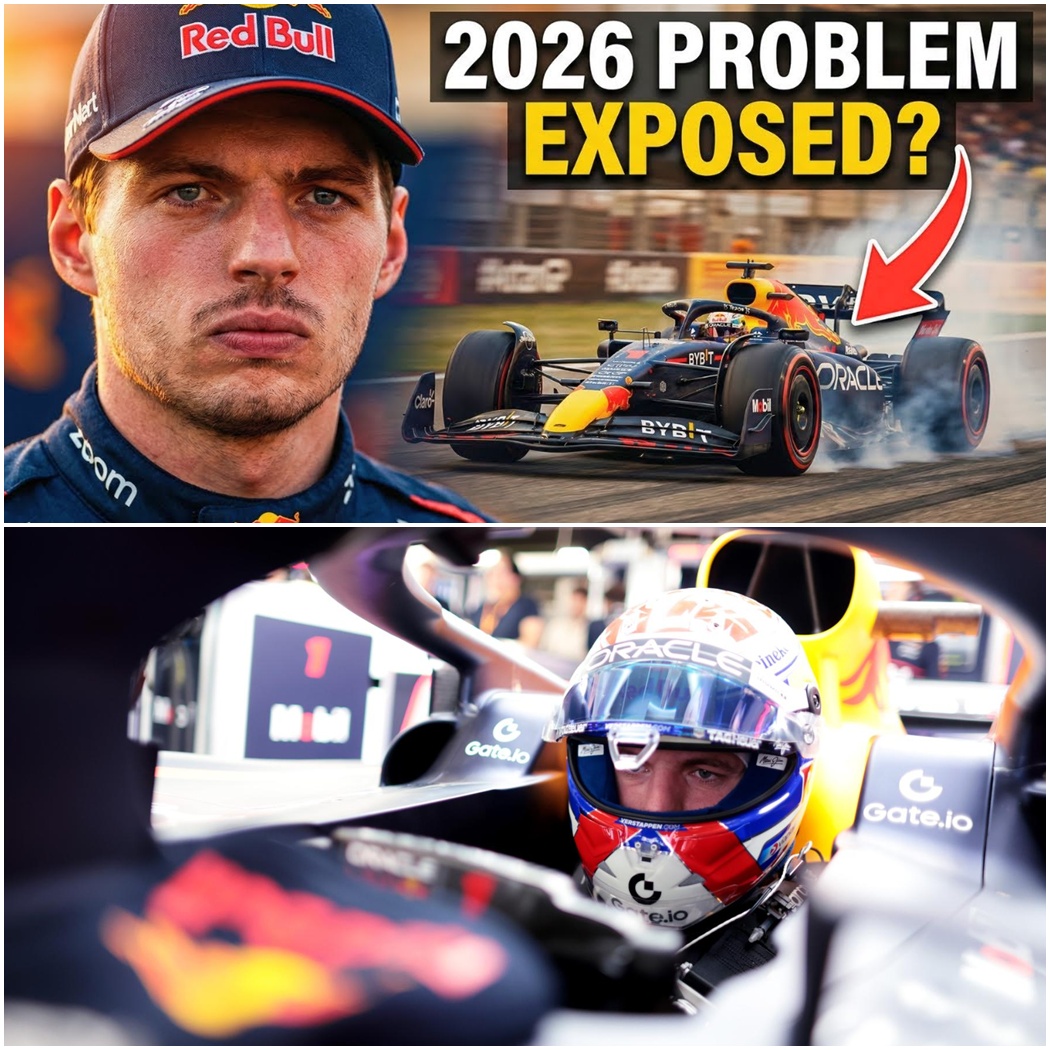
    In the high-stakes, adrenaline-fueled world of Formula 1, admitting vulnerability is often seen as a fatal weakness. It is a sport built on bravado, psychological warfare, and the unwavering projection of dominance. Teams rarely concede an inch to their rivals, especially when the microphone is on. Yet, in a move that has sent shockwaves through the paddock and stunned analysts, Red Bull and their strategic partner Ford have done the unthinkable: they have publicly agreed with Mercedes.

    The subject of this unprecedented alignment? The colossal, terrifying challenge of the 2026 engine regulations.

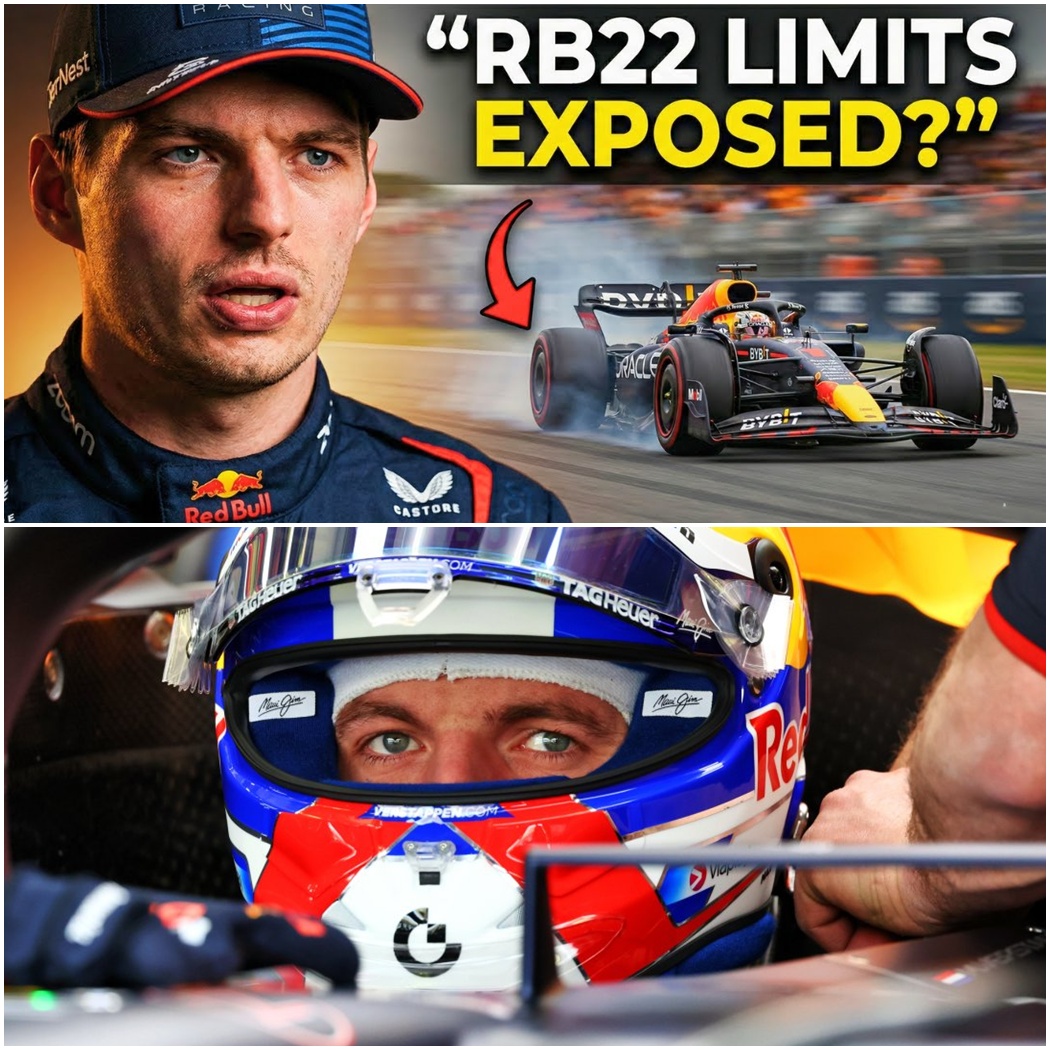
    For months, skepticism has swirled around Red Bull Powertrains. Can an energy drink company really build a competitive Formula 1 hybrid power unit from scratch, going toe-to-toe with automotive giants like Ferrari and Mercedes? Toto Wolff, the Team Principal of Mercedes, famously described the task as akin to “climbing Mount Everest,” a comment widely interpreted as a warning—perhaps even a subtle dig—at Red Bull’s audacity.

    Most expected Red Bull to fire back with their trademark defiance. We expected Christian Horner to dismiss the concerns or for Ford to issue a vague, corporate statement about “innovation” and “excellence.” Instead, the response was a bombshell of honesty that has completely reframed the narrative heading into the sport’s new era.

    The Shock of Transparency

    Mark Rushbrook, the global director of Ford Performance, did not hide behind PR spin. In a calm, precise, and unusually transparent address, he confirmed that Toto Wolff’s assessment was fundamentally accurate.

    “It is an enormous task,” the sentiment echoed, acknowledging that becoming an engine manufacturer at this mature stage of the sport’s evolution is fraught with peril. By openly agreeing with Wolff rather than pushing back, Ford and Red Bull have changed the tone of the entire engine debate.

    This moment is significant not because it shows weakness, but because it reveals a terrifying level of self-awareness. In Formula 1, arrogance kills performance. Teams that underestimate a challenge are usually the ones left languishing at the back of the grid (witness McLaren’s Honda years or the early struggles of Renault). By validating the “Mount Everest” analogy, Ford has made it clear: they know exactly how high the mountain is, and they have brought the right gear to climb it.

    The “Radical Reset” of 2026

    To understand why this admission is so pivotal, one must understand the sheer magnitude of the technical revolution arriving in 2026. These new regulations are not merely a “tweak” or a “refinement” of the current V6 turbo-hybrid era. They represent a fundamental reset of what a Formula 1 car is.

    The new power units will feature a strict 50/50 split between internal combustion power and electrical energy. The MGU-H (Motor Generator Unit-Heat) is being scrapped, placing a massive burden on the kinetic recovery systems and the battery. Efficiency, energy management, and software control will define competitiveness far more than peak horsepower figures on a dyno.

    Mercedes’ confidence stems from over a decade of mastery in hybrid integration. They have the scars and the trophies to prove they understand how these complex systems interact. Wolff’s comments were rooted in this deep well of experience. He was effectively saying that you cannot replicate decades of institutional knowledge overnight.

    However, Ford’s response challenges the assumption that history will dictate the future.

    Diluting the Advantage

    Rushbrook’s counter-argument—delivered with the confidence of a manufacturer that understands hybrid tech from the road car world—is that the 2026 rules change so many variables that the “incumbency advantage” is significantly diluted.

    Because the combustion concepts, energy recovery behaviors, and deployment strategies are all being rewritten simultaneously, everyone is effectively starting from a clean sheet of paper. While Mercedes and Ferrari have years of data, much of that data becomes irrelevant when the fundamental architecture of the engine changes.

    Red Bull believes the playing field is far more level than the skeptics assume. Even if there is a slight deficit in the pure combustion engine (ICE) initially, the cost cap era allows for that gap to be managed and erased. The real battleground will be in the software—how the car decides when to harvest energy and when to deploy it—and in thermal management. These are areas where Ford’s broader engineering background becomes a potent weapon, potentially neutralizing the historical lead of the traditional F1 manufacturers.

    The Red Bull “DNA” Advantage

    Perhaps the most compelling argument for Red Bull’s success lies in their philosophy of integration. For decades, traditional manufacturers often operated in silos: the engine department in one location (or country) and the chassis department in another. The engine arrives in a crate, and the chassis team has to figure out how to fit it in.

    Red Bull has never operated like that. Their success, particularly in the aerodynamics era, has been built on the seamless optimization of the entire package.

    The 2026 cars will feature active aerodynamics on both the front and rear axles. They will be lighter and smaller, making them incredibly sensitive to balance and energy flow. In this environment, a power unit cannot be evaluated in isolation. It must function as an integrated organ of a highly dynamic organism.

    This is precisely where Red Bull’s design DNA gives them an edge. By developing the engine in-house, on the same campus in Milton Keynes as the chassis team, they can ensure that cooling architecture, energy deployment, and aerodynamic concepts are developed as a single, unified concept. While Mercedes and Ferrari also have this capability, Red Bull’s agility and “racer’s mentality” could allow them to adapt faster to the teething problems of the new regulations.

    A Recruitment Strategy Like No Other

    Underpinning this technical ambition is an aggressive and targeted recruitment strategy. While fellow newcomer Audi has relied heavily on expertise from other motorsport disciplines (like Le Mans or Rally), Red Bull has gone straight to the source.

    They have headhunted over 600 people, prioritizing engineers and technicians with direct, recent experience from their primary rivals: Mercedes, Ferrari, and Honda.

    This is a critical distinction. Theoretical knowledge is one thing; knowing how a modern F1 hybrid system behaves under the extreme G-forces of a qualifying lap is another. By hiring the people who built the current dominant engines, Red Bull accelerates their learning curve. They are buying the “institutional knowledge” that Toto Wolff claims they lack.

    This workforce scale proves that Red Bull Powertrains is no longer a “startup.” It is a major manufacturer in its own right. The fact that they had a combustion engine running on the dyno before Ford officially joined demonstrates that this project was never a desperate gamble—it was a calculated, well-funded invasion of the engine market.

    The Verstappen Factor

    Hovering over this entire technical endeavor is the figure of Max Verstappen. As the dominant driver of his generation, Verstappen’s future is inextricably linked to the success of this engine.

    Verstappen’s driving style is unique and demanding. He relies on immediate throttle response and predictable torque delivery to rotate the car and attack corners. In the 2026 era, where the electrical motor provides half the power, any “lag” or inconsistency in energy deployment could be catastrophic for a driver who relies on precision.

    Ford’s assurance that the project is “on schedule” and “structurally health” is a direct message to Verstappen. It signals that there are no panic stations, no hidden disasters, and no fundamental flaws. For a driver facing the uncertainty of a new regulation set, this stability is more valuable than promised horsepower figures.

    Confronting Risk, Not Hiding From It

    The “bombshell” of Ford agreeing with Mercedes is ultimately a story of confidence. By acknowledging the difficulty of the task, Red Bull and Ford have positioned themselves as the realists of the 2026 grid. They are not selling a dream; they are executing a plan.

    The competitive landscape is terrifying. Audi is arriving with massive resources. Honda is returning fully with Aston Martin. Mercedes and Ferrari are digging in to defend their territory. A poor start in 2026 could consign a team to the midfield for years.

    But by stripping away the arrogance and facing the “Mount Everest” of engineering head-on, Red Bull has proven they are ready for the climb. They are not relying on their past reputation to carry them to the summit. They are relying on execution, integration, and a refusal to accept conservative limitations.

    As the paddock looks toward the future, the silence of the offseason has been broken by a refreshing burst of honesty. The mountain is high, the air is thin, and the climb will be brutal. But for the first time, Red Bull and Ford have looked us in the eye and said: “We know. And we’re climbing it anyway.”

  • The Private Dinner That Saved a Partnership: Why Ferrari’s Shock Decision to Keep Ricardo Adami Changes Everything for Lewis Hamilton’s 2026 Title Fight

    The Private Dinner That Saved a Partnership: Why Ferrari’s Shock Decision to Keep Ricardo Adami Changes Everything for Lewis Hamilton’s 2026 Title Fight

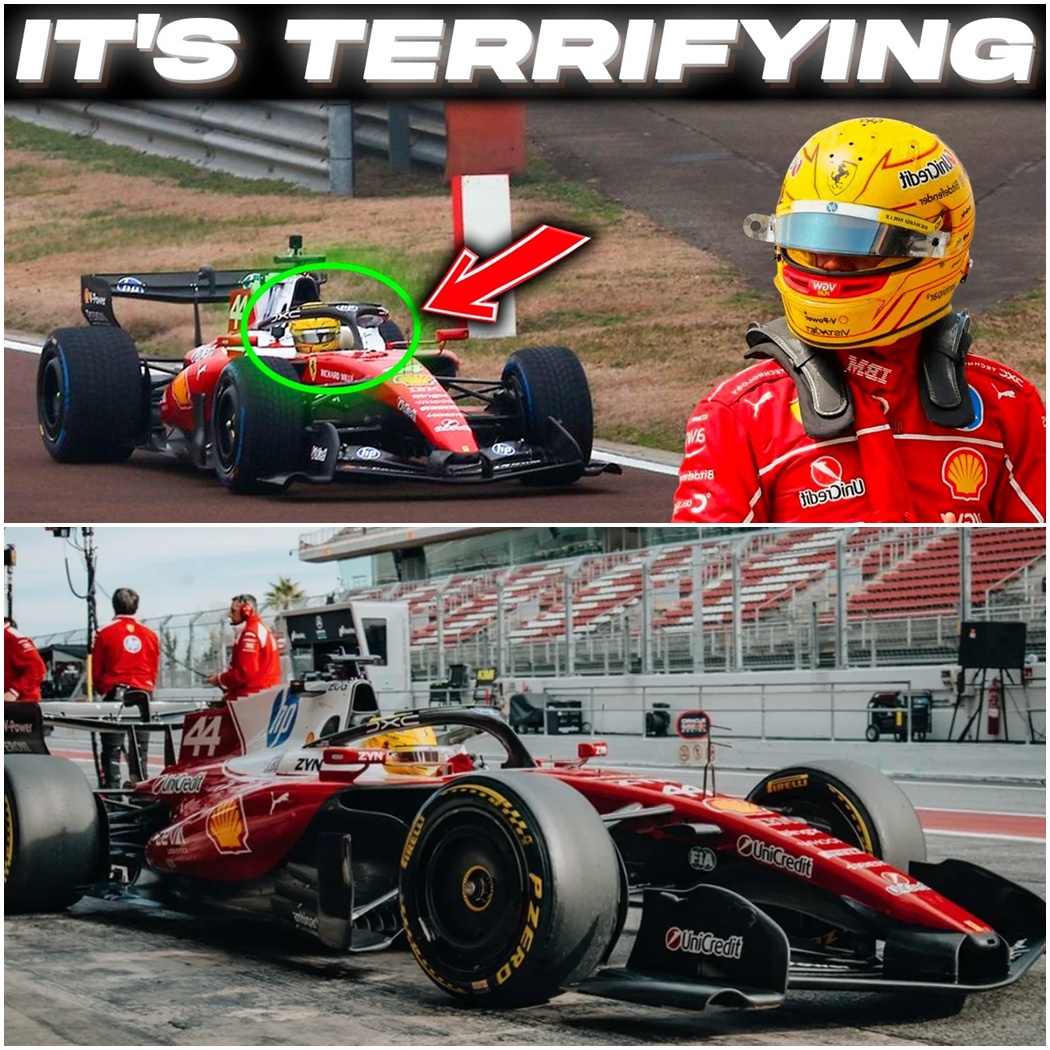
    In the high-stakes theater of Formula 1, silence is often louder than words. But throughout Lewis Hamilton’s debut season with Ferrari in 2025, the noise was deafening. It wasn’t the roar of victory; it was the crackle of tension on the team radio, the frenzied speculation of the Italian press, and the collective gasp of a fanbase watching a dream partnership seemingly crumble.

    By the time the checkered flag waved on the 2025 finale, the narrative was written in stone: The experiment had failed. Hamilton was frustrated, the car was uncooperative, and his relationship with race engineer Ricardo Adami appeared fractured beyond repair. In the ruthless world of Maranello, where scapegoats are found as quickly as lap times are lost, the exit door seemed wide open for Adami. It was the “Ferrari way”—when things go wrong, change the personnel.

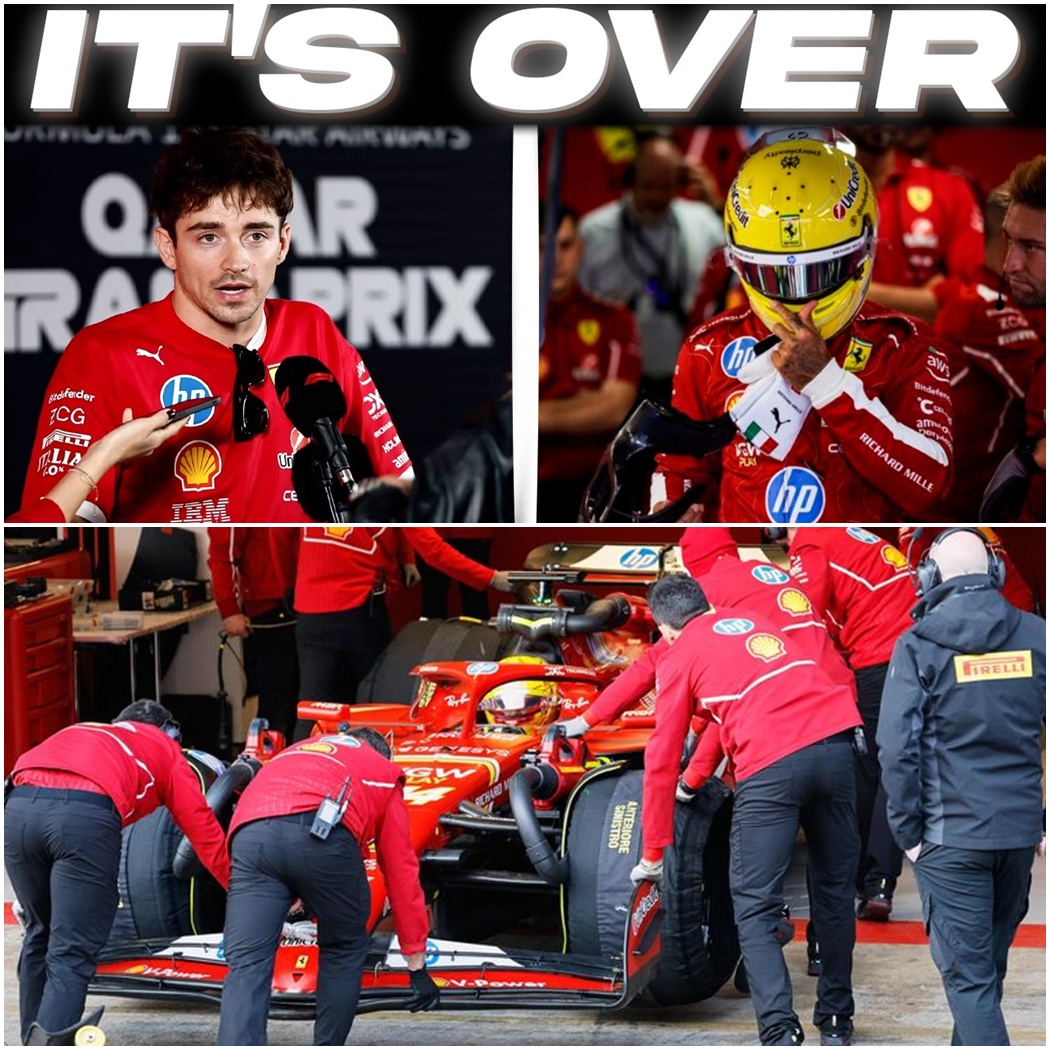
    But then, Ferrari did something unprecedented. They didn’t fire anyone. They didn’t panic. Instead, they doubled down. The decision to keep Ricardo Adami alongside Lewis Hamilton for the critical 2026 regulation overhaul isn’t just a staffing update; it is a fundamental rewriting of Ferrari’s DNA. It signals a shift from a culture of blame to a culture of building, and it hinges on a story that happened far away from the cameras and the chaos of the pit lane.

    The Breakdown That Wasn’t

    To understand the magnitude of this decision, we must first revisit the atmosphere of late 2025. Lewis Hamilton’s arrival in red was billed as a coronation, but the reality was a grueling test of patience. There were no podiums to celebrate, only visible frustration bleeding through viral radio clips where driver and engineer seemed to be speaking different languages.

    For decades, this level of public dysfunction at Ferrari would have triggered an immediate purge. The pressure cooker of the Italian media usually demands a sacrifice. The expectation was clear: Hamilton would demand a new voice in his ear, someone fresh to navigate the massive changes of 2026. Team Principal Fred Vasseur had even publicly stated that “all options were being evaluated,” leaving the door explicitly open for a change.

    However, the “breakdown” was a mirage. While the world saw a struggling driver, Ferrari saw a seven-time champion adapting under fire. The tension wasn’t a sign of failure; it was the friction of progress. Sources close to the team revealed that the turning point wasn’t a race result, but a private dinner between Hamilton and Adami. Away from the telemetry screens and the prying eyes of the paddock, the two reset the tone of their professional marriage.

    That conversation transformed the narrative. Suddenly, the difficulties of 2025 weren’t evidence of incompatibility; they were viewed as “unfinished business.” This wasn’t a partnership hitting a dead end; it was a partnership forging a foundation in the fire.

    The 2026 Reset: Why Stability is a Weapon

    Critics might argue that keeping Adami is a “safe” move, a refusal to take risks. But in the context of the 2026 regulation changes—the most complex technical reset in the modern history of Formula 1—stability is not a safety net; it is a weapon.

    The 2026 cars will be beasts of a different nature. With new aerodynamics, new weight distribution, and a power unit overhaul that splits internal combustion and electrical power 50/50, the cognitive load on the driver will be immense. The driving style will no longer be just about raw speed; it will be about “tactical warfare.”

    Reports on Ferrari’s new engine project, codenamed “Project 678,” suggest the hybrid system is performing exceptionally well on the test bench. But the operational reality of this engine is where the driver-engineer bond becomes critical. In 2026, battery deployment won’t be continuous. Drivers will have to constantly choose when to spend energy and when to harvest it, corner by corner, lap by lap.

    This is where the relationship with Adami becomes invaluable. Adami knows the internal workflows of Maranello inside out. He understands how engineering feedback translates into car changes within the specific bureaucracy of Ferrari. In a season where everything else is new—the car, the tires, the rules—having a constant voice on the radio eliminates a massive layer of uncertainty.

    Ferrari recognizes this complexity to such a degree that they aren’t just relying on Adami; they are reinforcing him. The team is hiring a dedicated Energy Recovery System (ERS) specialist to sit on the pit wall. This person will manage the deployment windows like a second strategist, feeding information to Adami, who will then filter it to Hamilton. If Hamilton were learning a new engineer’s communication style while simultaneously learning this complex new energy management game, it would be a recipe for disaster. By keeping Adami, Ferrari is prioritizing efficiency over optics.

    The Sacrifice of 2025

    Perhaps the most revealing aspect of this saga is the retrospective view of Hamilton’s performance in 2025. It has emerged that Hamilton wasn’t just struggling with the SF-25; he was actively sabotaging its development for the greater good.

    Hamilton was the one pushing hardest to shut down development on the 2025 car early, redirecting every ounce of the team’s focus toward 2026. He didn’t give up on the season; he sacrificed it. Every awkward radio call and every missed strategy call in 2025 was converted into data. They weren’t discarding the wreckage of a bad season; they were studying it.

    This changes the lens through which we view those viral moments of frustration. They weren’t signs of a driver checking out. They were the growing pains of a team and driver stress-testing their communication protocols before the real war begins. In high-functioning teams, conflict is a feedback loop, not a warning sign. Ferrari, under Vasseur, has finally learned to distinguish between the two.

    A New Era of Patience?

    Ferrari’s decision to retain Adami reveals a maturity that has been missing from the Scuderia for years. In the past, short-term reactions to external pressure often undermined long-term success. By ignoring the headlines and resisting the urge to “fix” the problem with a firing, Ferrari is signaling that they are building a foundation, not chasing a quick fix.

    This “Project 678” era is about more than just an engine; it’s about structure. Hamilton’s winter schedule reflects this intensity: immediate simulator work, post-season tire testing, and zero downtime. It is a relentless preparation for a car that doesn’t exist yet, built on a relationship that refused to break.

    The Three Scenarios

    So, where does this story go? We are looking at three distinct possibilities for 2026.

    In the first scenario, Ferrari’s gamble pays off immediately. The Project 678 engine is competitive from the first test in Barcelona, Hamilton and Adami find their rhythm using the shorthand they developed during the painful 2025 season, and continuity becomes the bedrock of a championship charge. The “failed” 2025 season is rewritten as the necessary prologue to glory.

    In the second scenario, the car struggles, and the tension returns. If the radio gets ugly again, Ferrari will face brutal questions. Did they wait too long to act? Did loyalty become stubbornness? If they are forced to change engineers mid-season in 2026, the pressure will be catastrophic, and the time to rebuild trust will be non-existent.

    But it is the third scenario that is most intriguing. Hamilton and Adami don’t just survive; they dominate. The partnership that looked broken becomes the case study every other team points to when explaining why patience matters more than headlines.

    The Verdict

    Ultimately, Ferrari is betting on a simple truth: In a sport defined by razor-thin margins, accumulated understanding is just as valuable as raw engineering data.

    Is keeping Ricardo Adami the smartest move Ferrari has made in years, or the gamble that will cost them everything? The answer lies in the silence of the winter break, soon to be broken by the scream of the new 2026 power units. But one thing is certain: Ferrari has finally chosen to build something properly instead of tearing it down the moment it looked fragile. For Lewis Hamilton, that vote of confidence might be worth more than a thousand new engineers.

  • F1 icon snubbed knighthood and shared controversial reason for decision

    F1 icon snubbed knighthood and shared controversial reason for decision

    F1 legend Bernie Ecclestone previously explained why he refused a knighthood

    View 2 Images

    Bernie Ecclestone turned down a knighthood in the past(Image: Zak Mauger, LAT Imagesvia Getty Images)

    Formula One legend Bernie Ecclestone turned down a knighthood from Queen Elizabeth II after insisting he hadn’t done enough to deserve the honour. While the 2026 New Year’s Honours List was published on Monday, Ecclestone previously explained why he rejected the prestigious title.

    The 95-year-old is widely regarded as one of the most influential figures in Formula 1 history. Beginning his career as a driver, he went on to become a team manager and remained involved in the sport for decades.

    Ecclestone notably established the Formula One Group in 1987, which controlled the sport’s commercial rights. Despite his motorsport achievements, the F1 supremo believed his accomplishments didn’t merit a knighthood and was remarkably honest when explaining his decision to decline the honour in the 1990s.

    “Whatever I did, I did for myself,” he told The Telegraph earlier this year. “If somebody benefited from that, good. But it was never my intention.

    “I thought these awards should only be for people who had captured a country, gone back to the Queen and given her the keys. ‘There you go, we’ve captured India.’”

    While Ecclestone felt he didn’t deserve a knighthood because he had acted in his own interests, his association of the honours system with Britain’s colonial past would likely have caused some discomfort. He previously made a similar argument in 2017, arguing that only those who served their country should receive such recognition.

    “If England benefited from it, then good, I didn’t go out particularly to do that,” Ecclestone said. “I think the whole system is wrong.

    “I think if somebody actually dedicates themselves to do something for the country and is proud to do it, they should be recognised for that.”

    Four F1 drivers have previously been knighted, with Lewis Hamilton joining the ranks of Sir Jackie Stewart, Sir Stirling Moss and Sir Jack Brabham in 2021. Former McLaren team principal Ron Dennis also received a knighthood last year, though his honour was for contributions to industry and charity.

    View 2 Images

    Lewis Hamilton previously opened up about being knighted(Image: Getty)

    Reflecting on his own knighthood, seven-time world champion Hamilton shared an unexpected anecdote about Prince Charles. The pair had met when Hamilton was just a teenager and the future King remembered their paths crossing.

    “I was 13. I went to McLaren when I was 13 years old. I went to the factory and he [King Charles] came to open the factory up,” Hamilton revealed on Jimmy Kimmel Live. “I was sitting in my go-kart where they have all the cars and I sat there and he came in, he knelt down and asked me what I wanted to do and what my dreams were, and told him one day I wanted to be a Formula One world champion.

    “So coming to all the way down the line, I’m at the palace, and you have to take these certain steps to get to the prince, very, very, very formal. You walk in, like take three steps, turn 90 degrees, take another four steps and then turn left, bow, two steps and then take the knee, and I took the knee and he puts the sword on your shoulders.

    “But when I go back off, he’s like, you’ve come a long way. So he said he remembered speaking and we had a real short chat.”

  • The End of “Petty” Warfare? FIA Triples Down with €20,000 Rule Change After Red Bull’s Controversial 2025 Protest Spree

    The End of “Petty” Warfare? FIA Triples Down with €20,000 Rule Change After Red Bull’s Controversial 2025 Protest Spree

    As the Formula 1 community takes a collective breath after a whirlwind 2025 season, the eyes of the paddock are already firmly fixed on the horizon. The year 2026 has long been circled on the calendar as the dawn of a new era—a revolution of technical regulations, sustainable fuels, and radically redesign power units. But while engineers in Milton Keynes and Brackley toil away in wind tunnels and dyno labs, the FIA has quietly dropped a regulatory bombshell that promises to change the political landscape of the sport just as drastically as the technical one.

    In a move widely interpreted as a direct response to the “gamesmanship” and tactical protests that marred the 2025 season—specifically the friction between Red Bull Racing and Mercedes driver George Russell—the governing body has announced a massive hike in the financial threshold for lodging protests. The message is clear: the days of throwing “cheap” protests at the wall to see what sticks are over.

    The Spark: A Season of “Frivolous” Disputes

    To understand why the FIA felt compelled to act, we have to look back at the flashpoints of 2025. It was a year where the tension between Red Bull and their rivals, particularly the Mercedes camp led on-track by George Russell, spilled over from the tarmac into the stewards’ office with exhausting regularity.

    The friction reached a boiling point at two specific events: the Miami Grand Prix and the Canadian Grand Prix. In both instances, Red Bull launched official protests against Russell, seeking to have the British driver penalized or disqualified. And in both instances, the protests were dismissed, leaving a bitter aftertaste of tactical maneuvering rather than genuine sporting concern.

    In Miami, the dispute centered on yellow flags. Red Bull alleged that Russell had failed to slow sufficiently when passing a hazard zone, a breach that, if proven, would have stripped him of a podium finish and promoted Max Verstappen. The data, however, told a different story. The stewards found that while Russell’s absolute speed might have been high, his relative lift of the throttle was significant and compliant with the regulations. The protest was thrown out, but not before hours of uncertainty clouded the race result.

    Then came Canada, where the “bad blood” truly surfaced. Following a chaotic race ending under the Safety Car, Red Bull accused Russell of “erratic driving” and leaving an excessive gap to the Safety Car. Max Verstappen, never one to mince words, was vocal on the radio, calling Russell’s braking on the back straight “blatant” and dangerous. The team argued that Russell was trying to “game” the restart to disadvantage Verstappen. Again, the stewards investigated. Again, they found that Russell’s actions—warming tires and brakes—were standard procedure. The protest was rejected.

    “Put Your Money Where Your Mouth Is”

    It wasn’t just the failure of these protests that rankled the paddock; it was the low barrier to entry. Under the regulations at the time, lodging a protest required a deposit of just €2,000. In the multi-million dollar world of Formula 1, €2,000 is effectively a rounding error—less than the cost of a single front wing endplate.

    This created a perverse incentive structure. As George Russell pointed out with frustration during the 2025 season, the fee was so negligible that it acted as an “insurance policy” rather than a deterrent. “€2,000 for a team making nine-number profits is not even going to touch the sides,” Russell told the press after the Miami debacle. “If it was a six-number sum, maybe they’d think twice.”

    McLaren CEO Zak Brown, never one to shy away from a political scrap with Red Bull, echoed these sentiments. He accused teams of “playing games in the background” and using the low protest fee to disrupt rivals and delay race results without any real financial risk. “If someone genuinely believes something is technically not right, you are free to lodge a protest,” Brown argued. “But then put your money where your mouth is.”

    The FIA Strikes Back: The €20,000 Threshold

    The FIA clearly listened. In the newly published updates to the International Sporting Code and F1 regulations for 2026, the deposit fee for protests, rights of review, and appeals has been raised from €2,000 to a staggering €20,000.

    This ten-fold increase changes the calculus entirely. While €20,000 is still affordable for a team like Red Bull or Ferrari, it is no longer an amount that can be casually discarded on a “hail mary” attempt to annoy a rival. Furthermore, and perhaps most critically, under the tightened financial regulations, unsuccessful protest fees are likely to count against a team’s cost cap. In an era where every dollar spent on catering or travel is scrutinized to ensure it doesn’t eat into the car development budget, throwing away €20,000 on a failed protest is a strategic error that team principals will now have to justify to their accountants.

    The new structure significantly raises the stakes. It forces teams to perform their own rigorous internal due diligence before walking to the stewards’ office. They must be 99% sure they have a winning case, or they risk burning cash that could have been spent on a new floor upgrade or wind tunnel time. It effectively kills the “tactical protest”—the act of protesting just to put pressure on a rival or the race director.

    The Great Engine Unknown: Red Bull’s “Nervous Anticipation”

    While the legal teams at Red Bull negotiate these new hurdles, the engineering team faces a challenge of even greater magnitude. 2026 marks the year Red Bull finally cuts the cord with Honda completely, debuting their first-ever in-house power unit developed in partnership with Ford.

    For a team that has won championships with Renault and Honda, becoming a manufacturer is the final frontier of independence. But as Ford Performance Director Mark Rushbrook admitted in a recent update, venturing into the unknown brings “nervousness.”

    Speaking to the motorsport press, Rushbrook offered a candid assessment of the Red Bull Ford Powertrains project. “We are to plan, so where we need to be,” he stated, projecting confidence. “But it all comes together when it’s actually in the car and on track.”

    The quote reveals the inherent anxiety of the 2026 regulation reset. Computer simulations and dyno runs are sophisticated, but they cannot perfectly replicate the chaotic harmonics and G-forces of a race track. Rushbrook noted that the team feels a “level of nervousness or anticipation” ahead of the first real-world tests, likely scheduled for Barcelona in early 2026. “Until you get it all together on an actual racetrack, you haven’t seen everything,” he cautioned.

    A Potential Deficit?

    Perhaps the most intriguing takeaway from the Ford camp is the management of expectations regarding the Internal Combustion Engine (ICE). With the 2026 rules splitting power output 50/50 between the combustion engine and the electrical system, the reliance on raw fuel-burning horsepower is reduced—but not eliminated.

    Rushbrook and Red Bull have hinted that, as a newcomer to engine manufacturing, they might face a “slight deficit” to established giants like Ferrari and Mercedes on the combustion side. These legacy manufacturers have decades of data on combustion efficiency that Red Bull simply does not possess. However, the team is banking on their expertise in energy recovery and the electrical side—areas where the playing field is more level—to bridge that gap.

    This admission adds a layer of vulnerability to Red Bull that hasn’t been seen in years. If the engine is even 2% down on power, the chassis—likely designed under the guidance of a post-Newey technical structure—will have to work overtime to compensate.

    2026: The Year of High Stakes

    As we transition into 2026, the narrative of Formula 1 is shifting. The cheap political shots of 2025 are being priced out of the market by the FIA’s new €20,000 fee, forcing teams to fight their battles on the track rather than in the courtroom. Meanwhile, the dominant force of the last era, Red Bull, is entering a period of maximum exposure, betting their future on an engine built from scratch.

    For fans, this is the perfect storm. The “games” are over, the costs are real, and for the first time in a long time, no one knows for sure who will have the fastest car—or the most reliable engine—when the lights go out. The “Red Bull Drama” of 2025 may have been annoying, but it has paved the way for a 2026 season where everyone has to put their money where their mouth is.

  • Beyond the Smile: The 5 Rivals Who Pushed Sebastian Vettel to the Edge of Sanity and Greatness

    Beyond the Smile: The 5 Rivals Who Pushed Sebastian Vettel to the Edge of Sanity and Greatness

    In the high-octane, carbon-fiber theater of modern Formula 1, Sebastian Vettel crafted a legacy that few can rival. To the cameras and the legions of adoring fans in the grandstands, he was the “calm one.” He was the witty German prodigy with the crooked finger celebration, the man who named his cars, and the driver who famously brought a sense of humor to the often sterile paddock. He was the nice guy who didn’t raise his voice unless the situation absolutely demanded it.

    But scratch beneath that polished, polite veneer, and you find a history written in adrenaline, burnt rubber, and psychological warfare. Even the kindest man on the grid carries a hit list—a mental catalog of the rivals who didn’t just race him, but who pushed him to his absolute limits, tested his patience, and forced him to sharpen his edges until they could cut glass.

    For Vettel, greatness wasn’t forged in the easy Sunday drives or the pole-to-flag victories where he disappeared into the distance. It was forged in the fire of five specific rivalries. These were the five men who made his blood boil, who invaded his headspace, and who defined his career not by the trophies he won, but by the wars he survived.

    5. Mark Webber: The Collapsing Trust

    At number five sits Mark Webber, a figure who represents perhaps the most complicated chapter in Vettel’s early dominance. On paper, they were the dream team for Red Bull Racing: the gritty, experienced Australian veteran paired with the lightning-fast German wunderkind. They were the engine behind Red Bull’s meteoric rise to the top of the constructor’s standings.

    But inside the garage, the air was thick with a tension that simmered long before the public caught a whiff of the smoke. It was a clash of cultures and personalities. Webber, hardened by years of fighting for survival in the cutthroat world of mid-field F1, carried a chip on his shoulder and a suspicion that the team naturally favored the golden boy, Vettel. Vettel, relaxed and precise, sensed this resentment.

    The friction wasn’t just about lap times; it was about trust. And in Malaysia 2013, that trust didn’t just crack—it shattered.

    The race was effectively secured. The call came down from the pit wall: “Multi-21.” It was a coded instruction to freeze positions, with Webber leading and Vettel in second. It was meant to bring the cars home safely. Webber turned his engine down, trusting the pact. Vettel did not. In a move that remains one of the most controversial in the sport’s history, Vettel attacked. He ignored the order, overtook a furious Webber, and claimed the win.

    In the cool-down room, the silence was deafening until Webber dropped the words that would become infamous: “Multi-21, Seb. Multi-21.” It wasn’t just a complaint; it was the sound of a partnership dying. Vettel walked away with the trophy, but he also walked away with the heavy burden of a teammate who would never truly watch his back again. Webber became a rival not through pure speed, but through the sheer, exhausting weight of a toxic workplace where peace was just a fairytale.

    4. Nico Rosberg: The Childhood Grudge

    If Webber was a professional rival, Nico Rosberg was personal. Their story didn’t begin under the lights of Singapore or the streets of Monaco; it began on the go-kart tracks of their youth. They were two prodigies growing up together, eating pizza together, and dreaming of the same future.

    But even then, the seeds of conflict were sown. Vettel was the analytical joker, the kid who loved the sport. Rosberg was different—intense, calculated, always looking for that psychological upper hand. As they graduated to the pinnacle of motorsport, that childhood dynamic didn’t fade; it mutated.

    Rosberg evolved into a master of mind games. While he is most famous for his war with Lewis Hamilton, his battles with Vettel were laced with a unique, lingering tension. Every time they shared a piece of tarmac, it felt like an unspoken competition for validation. Who had grown more? Who had become the driver they promised they would be?

    Rosberg had a knack for making every defeat sting. Whether it was a perfectly timed comment in a press conference or a clinical overtake on track, he knew exactly how to get under Vettel’s skin. In 2016, during Rosberg’s championship charge, the tension peaked. Even with a Ferrari that wasn’t quite up to par, Vettel drove with a desperate pride to beat Nico. It wasn’t just about points; it was about not losing to the kid he used to beat in karts. Rosberg was the rival Vettel could never completely escape because he represented a past that refused to stay buried.

    3. Lewis Hamilton: The Defining Era

    At number three is the man who arguably defined the entire generation of racing alongside Vettel: Lewis Hamilton. Their careers are inextricably linked—two forces of nature that rose in parallel. But their approaches couldn’t have been more different.

    Vettel was all about rhythm, precision, and emotional equilibrium. He needed the car to sing to him. Hamilton, on the other hand, thrived in chaos. He could dance on the edge of disaster, seemingly immune to pressure. To beat Lewis, you couldn’t just be fast; you had to be flawless, every single lap, every single corner.

    The rivalry truly ignited during Vettel’s years in scarlet red. Ferrari had built a fast car, but the Mercedes machine operated by Hamilton was a juggernaut of reliability and speed. This imbalance created a pressure cooker for Vettel. He felt he had to overdrive, to take risks that Lewis never needed to take.

    The breaking point arrived in Baku, 2017. Under the safety car, adrenaline coursing through his veins, Vettel believed Hamilton had “brake-tested” him. In a flash of uncharacteristic red mist, Vettel pulled alongside and banged wheels with the Mercedes. It was a rare, shocking eruption from a man known for his control. It was the moment the world saw just how much real estate Hamilton occupied in Vettel’s head.

    Despite the controversies, a deep current of respect ran beneath the surface. Hamilton admired Vettel’s integrity; Vettel admired Hamilton’s resilience. But respect doesn’t soften the blows. Hamilton was the rival who exposed Vettel’s limits, the relentless force that pushed him into fights he didn’t want, making him one of the most exhausting adversaries of Vettel’s life.

    2. Charles Leclerc: The Passage of Time

    The number two spot belongs to a rival who represented something far more terrifying than just another fast driver: Charles Leclerc represented the end.

    When the young Monegasque walked into Maranello in 2019, he didn’t just step into a race seat; he stepped into Vettel’s kingdom. Ferrari had spent years building the team around Sebastian as their undisputed number one. But Leclerc, with his raw speed, fearlessness, and boyish charm, changed the atmosphere overnight.

    Leclerc was a mirror, reflecting what Vettel had once been: the brilliant young challenger with nothing to lose. Vettel didn’t dislike Charles—in fact, he admired his talent—but he struggled mightily with what Charles symbolized. The team began to re-evaluate its priorities. The “Vettel’s Ferrari” narrative subtly shifted to “The Future Belongs to Charles.”

    The pressure was suffocating. Leclerc began outqualifying the four-time champion, often by margins that were impossible to dismiss as luck. Every Saturday was a stark reminder that time was marching on. In the politically complex shark tank of Ferrari, momentum is everything, and Vettel was losing his.

    The defining catastrophe happened at the 2019 Brazilian Grand Prix. Fighting for position, the two Ferraris collided. It was a minor contact with major consequences—a double DNF (Did Not Finish) that laid the team’s internal fractures bare for the world to see. It wasn’t hatred that caused the crash; it was two competing realities slamming into each other. Vettel, the established king, and Leclerc, the rising heir. Leclerc unintentionally pushed Vettel into the most difficult chapter of his career: the chapter where he had to accept that he was no longer the future.

    1. Fernando Alonso: The Relentless Shadow

    And finally, at number one, stands the rival who challenged Sebastian Vettel more fiercely, more consistently, and more brutally than anyone else: Fernando Alonso.

    If Hamilton exposed Vettel’s weaknesses, Alonso was the predator who never allowed him to hide them. Throughout the early 2010s, whenever Vettel checked his mirrors, that distinctive helmet of Alonso was there. It didn’t matter if the Ferrari was slower. It didn’t matter if the odds were impossible. Alonso simply refused to stop fighting.

    He competed with an intensity that bordered on the supernatural. In 2010 and 2012, Alonso dragged inferior machinery into championship contention through sheer force of will. Vettel knew that one slip-up, one locked brake, one wide corner, and Alonso would be there to punish him.

    The 2012 season stands as the peak of this titanic struggle. Alonso’s campaign was the stuff of legend, pushing Vettel to the very final race in Brazil. Vettel won the title, but the emotional and psychological cost was enormous. He emerged victorious, but he was drained, shaken, and forever changed by the experience.

    What made Alonso the ultimate rival wasn’t anger or hostility—it was a heavy, terrifying respect. Vettel knew exactly how good Alonso was. He knew that Alonso was the shadow that would never stop following him, the presence that forced him to dig deeper than he thought possible every single weekend. Alonso pushed Vettel the farthest, challenged him the hardest, and left a mark on his career that will never fade.

    Conclusion: The Fire That Refined Him

    In the end, these five men—Webber, Rosberg, Hamilton, Leclerc, and Alonso—were never just enemies. They were the architects of Sebastian Vettel’s greatness. They were the pressure that shaped the diamond.

    Vettel’s legacy isn’t built on the easy Sundays. It is built on the fact that he survived the psychological collapse of a teammate, the mind games of a childhood friend, the dominance of a British knight, the usurpation by a young prodigy, and the relentless hunting of a Spanish matador.

    As Vettel drove into the sunset of his career, he likely realized a simple, profound truth: The people who drive you crazy, who push you to the edge of your sanity, are often the ones who make you who you are. Their battles became his lessons. Their rivalry became his history. And without them, Sebastian Vettel would just be a man who drove fast cars—instead of the legend who survived the fire.

  • Lando Norris given simple reason he’s not on Lewis Hamilton and Max Verstappen’s level

    Lando Norris given simple reason he’s not on Lewis Hamilton and Max Verstappen’s level

    Lando Norris won his first F1 world championship in 2025, but a former racing driver reckons that the McLaren star still isn’t on the same level as Lewis Hamilton and Max Verstappen.

    View 2 Images

    Lando Norris won the Formula 1 drivers’ championship earlier this month.(Image: Getty Images)

    Lando Norris, despite clinching his first Formula 1 world title earlier this month, has been told he is not quite up to the standard of Lewis Hamilton or Max Verstappen.

    The McLaren star pipped four-time champion Verstappen – and teammate Oscar Piastri – at the post to secure his inaugural Drivers’ Championship in the season’s final race in Abu Dhabi.

    However, ex-F1 racer Michael Bleekemolen reckons 26-year-old Norris hasn’t yet reached Verstappen’s heights. He pointed out a few mishaps during the 2025 season that cost the Brit valuable points, including colliding with Piastri in Canada and another crash in Austin, Texas.

    When quizzed by RacingNews365 if Norris was a deserving 2025 champion, Bleekemolen responded: “Not if I compare him to Max Verstappen. In Canada, was it Canada? There, he just drove at the back (of Piastri).

    “I definitely think driving at the back of Piastri, if I compare him to Max, was a dramatic thing. And the crash at the Circuit of the Americas, those are things that just happen. You can go into all that in great detail, but it is what it is. Then I’d say; he’s not on the level of Hamilton and [Michael] Schumacher.”

    While Norris has some distance to cover to match the feats of Verstappen, Hamilton and Schumacher in F1, his 2025 world title win has certainly set the stage for him to carve out his own legacy.

    Speaking about securing the world title following the Abu Dhabi Grand Prix, Norris revealed: “I feel like I have just managed to win it the way I wanted to win it, which was not by being someone I’m not.

    “Not trying to be as aggressive as Max or as forceful as other champions might have been in the past, I’m happy. I just won it my way – by being a fair driver, by trying to be an honest driver.

    View 2 Images

    Lando Norris has been told he’s not quite at the level of Max Verstappen.(Image: ATTILA KISBENEDEK, AFP via Getty Images)

    “At times, could I have been more aggressive and got off the brakes and had a few people over? I certainly could have done. Is that the way I want to go racing? Is that me? It’s not.”

    Norris also revealed messages of encouragement he had received from Hamilton and another ex-world champion Sebastian Vettel during the season.

    “I’ve had some great words and great text messages and conversations with some incredible people, people that have won World Championships in different sports, Lewis and others like Seb,” Norris told F1.com. “A lot of people don’t know I speak to Seb about things. A lot of these people, [former MotoGP champion Casey] Stoner, who, when I needed it most, sent me that little text message and said; ‘Think of this, believe in yourself, do this, do that’, and just help me along.”

    Norris believes those comments, along with the broader backing from his inner circle, as pivotal in his world title triumph over Red Bull’s Verstappen by a mere two points.

    “When you win the championship by two points, I would certainly say having these moments of faith from others around me got me those two points,” Norris continued.

    “And therefore, that’s why I’ve got to thank everyone around me because two points is also what you need.”

  • F1 in Chaos: The “Stop Crying” Ultimatum to Ferrari, Lewis Hamilton’s Final Gamble, and the Season That Changed Everything

    F1 in Chaos: The “Stop Crying” Ultimatum to Ferrari, Lewis Hamilton’s Final Gamble, and the Season That Changed Everything

    The checkered flag has fallen on the 2025 Formula 1 season, and if you are still catching your breath, you are not alone. This wasn’t just another year of racing; it was a seismic shift in the very soul of the sport. We witnessed a championship that refused to be decided until the final laps, a three-way brawl for supremacy that shattered the predictability of previous years, and a paddock that is currently vibrating with the tension of the unknown.

    But beneath the celebration of a “phenomenal” season, as F1 CEO Stefano Domenicali described it, lies a darker, more urgent narrative. It is a story of heavy ultimatums delivered to the sport’s most historic team, a redefining of what a modern champion looks like, and a massive American shadow looming over the grid. The chaos isn’t over just because the engines have stopped; in fact, the real storm is just beginning.

    The Death of Predictability

    For years, Formula 1 fans fought a battle against boredom. We tuned in hoping for a fight but often settled for a procession. That era is officially dead. As Domenicali recently noted with poorly hidden satisfaction, this season was a quiet reminder of why F1 is the pinnacle of motorsport. We didn’t just have a winner; we had a war.

    From the moment the summer break ended, the momentum swung violently like a pendulum. One week, Oscar Piastri looked like the untouchable future of the sport, driving with a maturity that belied his age. The next, Lando Norris was thrust into the title conversation, forcing us to rethink the standings. And through it all, Max Verstappen remained the inevitable force, reminding the world that he is never truly out of the fight.

    This constant evolution kept fans glued to their screens. There was no script. There was no foregone conclusion. This unpredictability is exactly what Domenicali and the commercial partners have been desperate for. It pulls in the casual viewer, the person who never cared about tire compounds or DRS zones but understands the universal language of tension. The sport feels alive in a way that goes beyond lap times. It’s growing, it’s evolving, and it’s dragging everyone into the deep end of the excitement.

    The Lando Effect: A New Kind of Hero

    Amidst this chaos, a new archetype of the F1 superstar has emerged, and its face is Lando Norris. When Domenicali speaks about the McLaren driver, he isn’t just talking about lap times or overtakes; he is describing the future image of Formula 1.

    For decades, the sport was built on mystery. Champions were often distant, god-like figures—Lauda’s calculated coldness, Senna’s intense spirituality, Schumacher’s robotic perfection. They were admired, but they weren’t always understood. Lando Norris represents the antithesis of that legacy. He is the champion of the “always online” generation. He is accessible, vulnerable, and unapologetically human.

    Domenicali’s fascination with Norris centers on one word: positivity. But this isn’t a marketing slogan; it’s a shift in responsibility. In a world where millions of young fans dissect every move on social media, Lando’s ability to keep smiling, to handle crushing criticism with openness, and to show genuine emotion is a superpower. He represents a break from the “ice man” persona. He laughs, he jokes, he admits when he’s struggling mentally, and then he puts his visor down and drives like a demon.

    This signals a wider shift in the sport’s philosophy. F1 is moving from a sport of distance to a sport of connection. Fans no longer just want to see who wins; they want to know who the driver is. Lando’s legacy, potentially different from the ruthless dominance of the past, is built on authenticity. He is proving that you don’t have to be a machine to be a champion.

    The Ultimatum: “Stop Crying, Ferrari”

    While Lando represents the bright future, the situation at Maranello is far more complex and fraught with tension. As we head toward the massive regulation changes of 2026, the spotlight on Ferrari is burning hotter than ever. And here, the tone of the conversation changes drastically.

    Domenicali, a man who knows the inner workings of Ferrari intimately, has offered a piece of advice that sounds more like a warning: Stop crying.

    It is a brutal assessment, but a necessary one. For too long, Ferrari has been synonymous with emotional volatility. When things go wrong, there is panic. When things go right, there is hysteria. Domenicali’s message is that this cycle must end. Ferrari doesn’t need more drama; they need a plan. They need to stop mourning their failures and start executing a strategy for the future.

    This is where the arrival of Lewis Hamilton becomes the most critical storyline in the sport. The image of “Lewis smiling again in red” is being floated not just as a romantic notion, but as a barometer for the team’s health. Can Ferrari create an environment where a seven-time world champion can thrive, or will the weight of the “Scuderia pressure cooker” crush the joy out of him?

    Domenicali seems convinced that there is a shared vision between Team Principal Fred Vasseur, Charles Leclerc, and Hamilton. This unity is crucial because Ferrari’s historic enemy hasn’t been a lack of speed—it’s been a lack of clarity. When the direction is lost, confidence collapses.

    The 2026 regulations act as a massive reset button. It is a terrifying precipice. Nobody knows who will nail the new rules. It could be the start of a new Ferrari dynasty, or it could expose the same old weaknesses. The “unknown” is the scariest opponent Ferrari faces. They cannot afford to wait and see. They have to react with intelligence, not emotion. The “Stop Crying” mantra is the only way forward. If they panic now, the Hamilton era could be over before it truly begins.

    The American Invasion: Cadillac and the Cultural Shift

    While Ferrari wrestles with its ghosts, Formula 1 as a business is aggressively looking forward, specifically to the West. The entry of Cadillac is not just another team joining the grid; it is a symbol of F1’s conquest of the American market.

    Domenicali is clear: this is a serious game. Cadillac isn’t here to make up the numbers. Stepping into F1 without preparation is a death sentence for credibility, and the American giant knows it. But what makes this move fascinating is the strategy. Launching a livery during the Super Bowl? That isn’t about appealing to the hardcore petrolhead in Silverstone; it’s about cultural relevance. It’s about putting the F1 brand in front of millions who may never watch a Grand Prix but will instantly recognize the badge.

    This is the new F1. It’s a sport that understands it is also an entertainment juggernaut. The success of the recent F1 movie projects proves that the audience is there if the storytelling is authentic. Cadillac doesn’t need to win their first race to be successful; they need to show professionalism, identity, and that they belong.

    The Future is Now

    As we look toward the horizon, the landscape of Formula 1 is unrecognizable from where it was just a few years ago. We have new tracks confirmed, like the street circuit in Madrid, and whispers of more projects quietly in motion. The goal isn’t just “more”—it’s “better.” Better energy, stronger connections, and a grid that feels competitive from P1 to P20.

    The 2025 season gave us a taste of perfection, but it also set the stage for the chaos to come. We have a new generation of relatable heroes led by Lando Norris. We have the sleeping giant of Ferrari trying to wake up before the nightmare of 2026 consumes them. We have Lewis Hamilton stepping into the red unknown. And we have Cadillac crashing the party with American swagger.

    The paddock has to stay sharp. The teams are on edge. And for us fans? We are the winners. The story isn’t written yet, and that is exactly how it should be. Formula 1 is chaotic, it is brutal, and it is absolutely unmissable. Buckle up. The real race has only just begun.

  • Chaos in the Paddock: Ferrari’s “Steel” Gamble, Aston’s Crash Test Nightmares, and Horner’s £665M Power Play for Alpine

    Chaos in the Paddock: Ferrari’s “Steel” Gamble, Aston’s Crash Test Nightmares, and Horner’s £665M Power Play for Alpine

    The Formula 1 paddock is rarely quiet, even in the depths of winter. But as the sport barrels toward the seismic regulatory shift of 2026, the usual hum of development has been replaced by the deafening roar of panic, ambition, and high-stakes gambling. Reports emerging from Maranello, Silverstone, and Enstone paint a picture of a sport on the brink of chaos, with teams scrambling to master completely new physics, billionaire power plays reshaping the grid, and technical secrets leaking that could decide the championship before a single wheel turns.

    The 2026 regulations were promised to be a reset—a cleaner, greener, and more competitive future for the sport. Instead, they have unleashed a technical war where weight is the enemy, reliability is a myth, and innovation is bordering on madness. From Ferrari’s unprecedented engine metallurgy to Aston Martin’s reported failures to even pass basic safety tests, the “chaos behind the scenes” is no longer just a rumor; it is the defining story of the next era of Formula 1.

    The Weight Crisis: F1’s Heavy New Reality

    The most immediate and alarming headline is a simple, brutal fact: Every single 2026 car is currently overweight.

    According to leaked reports from within the engineering departments, the new regulations, which demand a 50/50 split between internal combustion and electrical power, have created a physics problem that teams are struggling to solve. The battery packs required to deliver the massive 350kW electrical boost are significantly heavier than their predecessors. When combined with the new chassis requirements, teams are finding it nearly impossible to hit the FIA’s minimum weight target.

    This isn’t just a matter of shedding a few grams of paint or using lighter screws. We are talking about substantial deficits that affect handling, tire wear, and lap time. It echoes the struggles of 2022, where teams like Red Bull and Mercedes arrived with cars well over the limit, forcing them into expensive and desperate weight-saving programs. But for 2026, the challenge is magnified by the complexity of the power units. The panic is real, and it is hitting some teams harder than others.

    Aston Martin: A Billion-Dollar Nightmare?

    Nowhere is the alarm ringing louder than at Aston Martin. The Silverstone-based outfit, funded by Lawrence Stroll’s limitless ambition and bolstered by the arrival of design genius Adrian Newey, was supposed to be the “superteam” of 2026. However, reliable sources indicate the team is “significantly behind the curve.”

    Reports suggest that Aston Martin has not yet passed the mandatory FIA crash tests for its 2026 chassis—a critical milestone that allows teams to proceed with final manufacturing. Even more concerning are whispers that the team has not even mounted the engine into the chassis yet, a delay that suggests fundamental integration issues.

    For a team that has poached top talent like Enrico Cardile from Ferrari to work alongside Newey, these delays are catastrophic. The 2026 crash tests are more rigorous than ever, demanding improved side-impact safety, which adds structure—and therefore weight—to the car. If Aston Martin is failing these tests, they must reinforce the chassis, adding even more weight to a car that is likely already heavy.

    Adrian Newey recently spoke about his “fear of failure” driving him, but one has to wonder if that fear is now becoming a reality. With the factory shutting down for the mandatory winter break, the team is losing precious days. While Red Bull proved in the past that failing a crash test isn’t a death sentence, the combination of being overweight, failing safety checks, and lagging in integration is the perfect storm for a difficult season opener.

    Ferrari’s “Steel” Heart: A Stroke of Genius or Madness?

    While Aston Martin struggles with the chassis, Ferrari has gone rogue with its engine. In a move that has stunned the paddock, insiders have confirmed that the Scuderia has approved a steel alloy cylinder head for its 2026 power unit.

    In modern Formula 1, aluminum is the gold standard for engines—it is light, predictable, and sufficient for current power loads. Steel is heavy. In a sport where engineers would sell their grandmothers to save 10 grams, voluntarily adding kilos to the engine seems insane. But Ferrari’s engineers, led by Enrico Gualtieri, are playing a deeper game.

    The new regulations require engines to run on 100% sustainable fuels, which behave differently under combustion. To extract maximum power, Ferrari wants to run the engine at “unprecedented” combustion pressures and temperatures. Aluminum would simply melt or crack under these extreme loads. The new steel alloy, reinforced with copper and ceramics, is virtually indestructible.

    The gamble is simple: The steel engine is heavier, yes. But it is so strong that Ferrari can push the power output far beyond what an aluminum engine can survive. To compensate for the added weight, Ferrari has designed a radical “compact” packaging system. The battery is smaller and lighter, and the radiators—the “radiating masses”—have been shrunk down significantly.

    This allows the aerodynamicists to wrap the bodywork incredibly tight around the engine, reducing drag and improving top speed. It is a holistic trade-off: a heavier, bomb-proof engine heart that allows for a sleeker, faster body. If it works, Ferrari will have a power unit that can run harder and longer than anyone else. If it fails, they will have a heavy, slow tractor. It is the kind of romantic, high-risk engineering that Ferrari is famous for, and it has the Tifosi holding their breath.

    Mercedes and the “Compression Trick”

    Not to be outdone, Mercedes is rumored to have its own secret weapon. Whispers in the pit lane suggest the Silver Arrows have developed a variable compression system, a “trick” that allows them to alter the compression ratio of the engine dynamically.

    If true, this would be a game-changer worth up to 0.25 seconds per lap—a massive margin in F1. This technology would allow the engine to be efficient when cruising and explosive when attacking, effectively giving Mercedes the best of both worlds. Rival teams are already suspicious, calling it “smoke and mirrors” to distract from their own struggles, but given Mercedes’ history of mastering new engine eras (remember 2014?), no one is dismissing the threat.

    James Vowles of Williams, a Mercedes customer, has downplayed the rumors, but the anxiety from Red Bull and Ferrari is palpable. If Mercedes has found a legal way to vary compression, they could dominate the early phase of the 2026 regulations just as they did a decade ago.

    Horner’s £665 Million Power Play

    While the engineers fight over steel and aluminum, the biggest battle is happening in the boardroom. Christian Horner, the man who built the Red Bull dynasty, is reportedly plotting a sensational return to the sport—not as an employee, but as an owner.

    Dutch media and German outlets have corroborated reports that Horner is leading a consortium to buy a controlling stake in the Alpine F1 Team. The offer? A staggering £665 million ($840 million) to buy out the shares currently held by Otro Capital (the group involving Ryan Reynolds and other celebrities) and potentially more from Renault Group.

    Horner’s exit from Red Bull was messy, involving power struggles and scandal. Now, he wants what he never had at Red Bull: total control. By owning a stake, he effectively becomes unsackable. The plan involves teaming up with his old friend—and controversial figure—Flavio Briatore, who is currently advising Alpine.

    However, there is a catch. Horner is reportedly bound by a “gardening leave” clause in his Red Bull exit package that bans him from working for a rival team until April 2026. This means he could buy the team but would be forced to watch the first few races of the new era from his sofa.

    The prospect of Horner and Briatore running Alpine—a team currently in disarray, using Mercedes engines from 2026—is a storyline straight out of a soap opera. It would pit Horner directly against his old nemesis Toto Wolff (as a customer!) and his former team Red Bull. For Alpine, a team that has been a revolving door of management failures, Horner’s ruthless efficiency might be exactly what they need, even if it comes with a heavy dose of controversy.

    Red Bull’s Quiet Confidence?

    Amidst the noise, Red Bull is surprisingly optimistic. Despite reports of delays in their own combustion engine development, the team insists that the arrival of 150 Honda technicians and staff from Mercedes has turned the tide. They admit to being behind on the combustion side but claim their electrical systems and packaging are ahead of schedule.

    However, a cryptic social media move by Carlos Sainz Sr.—liking a tweet about Red Bull looking “pretty good”—has fueled speculation. Does the rally legend know something we don’t? Or is it just more smoke in a hall of mirrors?

    The Calm Before the Storm

    As the factories shut down for the winter break, the silence is deceptive. Inside the servers and simulation rooms, the war is already raging. Ferrari is betting on steel physics; Mercedes is betting on combustion tricks; Aston Martin is fighting to build a car that is safe to drive; and Christian Horner is fighting to buy his way back onto the grid.

    2026 was supposed to be a fresh start. Instead, it is shaping up to be a survival of the fittest. The cars are overweight, the engines are experimental, and the politics are as vicious as ever. When the covers finally come off these machines, we won’t just be looking at race cars; we’ll be looking at the results of the biggest gambles in motorsport history.

    Buckle up. The chaos has only just begun.

  • Mick Schumacher shared photo with dad Michael amid F1 legend’s health battle

    Mick Schumacher shared photo with dad Michael amid F1 legend’s health battle

    It’s the 12-year anniversary of Michael Schumacher’s tragic skiing accident

    View 5 Images

    Mick Schumacher paid tribute to his legendary father on social media(Image: Getty Images)

    Mick Schumacher posted a photo of his father Michael in a heartwarming tribute to the F1 icon on his birthday. It was on Schumacher’s 55th birthday last January that his son, Mick, and daughter, Gina, took to social media to show their love for him.

    The seven-time world champion, now 56, hasn’t been seen in public since his life-altering skiing accident 12 years ago in December 2013. Schumacher suffered severe head trauma after hitting his head on a rock in the French Alps and was subsequently placed in a medically induced coma.

    Updates on his health since have been scarce with his wife Corinna staunchly protecting him and the privacy of their family. However, it is understood that the German great requires constant care from his wife and medical professionals.

    Despite the lack of information surrounding Schumacher’s state, it was last year when he was showered with love on social media from his two children. Mick, who formerly raced in F1 for two years with Haas and now competes in the IndyCar Series, posted a photo of himself as a child with his father on Instagram.

    In the snap, they were both wearing racing helmet with Mick captioning the post with the message: “Happy birthday to the best Dad ever. Love you!” Gina, Schumacher’s first-born, also took to the platform to post a picture of herself, her brother and their father smiling with her caption reading: “Happy Birthday Papa! throwback to one of many of our adventures.”

    At the height of his legendary F1 career, Schumacher won a record five consecutive titles with Ferrari from 2000 to 2004. The team’s former boss Jean Todt built a close relationship with the German during their time working together and Todt, 79, is one of very few select individuals allowed to visit him.

    View 5 Images

    The former Haas driver paid tribute to his father with the throwback post(Image: mickschumacher / Instagram)

    View 5 Images

    Corinna Schumacher has remained steadfast in her mission to keep her husband’s privacy intact(Image: Pool Interagences, Gamma-Rapho via Getty Images)

    Speaking recently about his Schumacher’s condition in an interview with Italian outlet La Repubblica, the Frenchman said: “The family has decided not to answer the question [about Schumacher’s health], a choice that I respect.

    “I see him regularly and with affection, him and his family. Our bond goes beyond the past work. It is part of my life which today is very far from Formula 1.” In 2023, Todt revealed that the German is “no longer” the same man that dominated the race track in F1.

    “Michael is here, so I don’t miss him,” Todt said. “He is different and is wonderfully guided by his wife and children who protect him. His life is different now and I have the privilege of sharing moments with him. That’s all there is to say.

    View 5 Images

    Gina Schumacher posted this photo to her Instagram with her dad Michael and brother Mick(Image: Instagram/Gina Schumacher)

    “Unfortunately, fate struck him ten years ago. He is no longer the Michael we knew in Formula 1.” Todt is reportedly one of nine people allowed to see Schumacher, with that short list being controlled by Corinna.

    Richard Hopkins, formerly head of operations at Red Bull, struck up a friendship with Schumacher during their careers as the Brit detailed the visiting arrangements set by Corinna to see the racing icon in his Lake Geneva home.

    Speaking to SPORTbible, Hopkins said: “I think it’s fairly clear. There are only two, three, four people that we know of. There are probably others. Michael had friendships with people who weren’t owners of Formula One teams or racing drivers.

    View 5 Images

    It’s been 12 years since his tragic skiing accident(Image: Formula 1 / Netflix)

    “So I’m sure there are people who probably see him that we just don’t know about, because we don’t know their names. But there are fairly strict rules, and we don’t talk about those rules.

    “I’m not going to try and visit Michael, because I know that’s not going to happen, and I’m one of thousands in that position of knowing it’s not possible. If you’re Jean Todt, your friendship is at the point where that’s okay. I don’t think there’s a written rule or a list of names. It’s just one of those known things.”