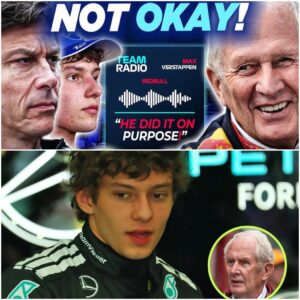
A switch to Mercedes for Max Verstappen alongside George Russell has been given the green light by F1 champion Jenson Button.
Following the Austrian Grand Prix, where both Russell and Toto Wolff confirmed that Mercedes had approached Verstappen, speculation has been rife about the four-time world champion’s future.
However, alongside discussions over whether Verstappen should move to Mercedes, there has also been concerns over Russell’s own future. The pair have become entangled in a feud over the past year, starting in Qatar and most recently rearing its head again in Barcelona.
Despite their feud, Button believes that Mercedes should field two strong drivers, and that Russell and Verstappen would be the strongest partnership for the F1 team.
“I mean, the best in the world should be able to make that work for him,” Button said on Radio X’s The Chris Moyles Show.
“It’s a tough one on George, because George is at the top of his game. I think he’s been so competitive. When you see what he did against Lewis [Hamilton] in the last few years, he is world championship material.
“So, to replace Max with him, it just seems like a strange move. I know they’ve got the young Kimi Antonelli, who’s 18, who could be a future star. But we still don’t know that.
“Whereas George is there, he is good, and you need two very competitive drivers with this new era of the sport. Next year, obviously lots of regulation changes, car change, engine change. So, for me, George and Max would be a better line-up.”
Jenson Button has backed George Russell and Max Verstappen at Mercedes
Will Verstappen move to Mercedes?
Regardless of Red Bull’s decline in performance, Button still believes Verstappen has a tough decision to weigh up, and that arriving at Mercedes does not necessarily guarantee the Dutchman championship success.
“It’s a tricky one for Max, because he’s in a position where he’s doing so well with Red Bull – they’ve given him so much over the years,” the champion continued.
“They’ve designed this car around him, and he’s extremely good at it. Nobody can match him in that car.
“They’re so far off him. I mean, him qualifying third or fourth, and them qualifying 18th. If he goes to Mercedes, it’s a different thing altogether. You know, that car is not going to be designed around him. So, is it going to work for him? I don’t know.”
Lewis Hamilton’s Silent Storm at Mugello: Ferrari’s Hidden Weapon for 2025?
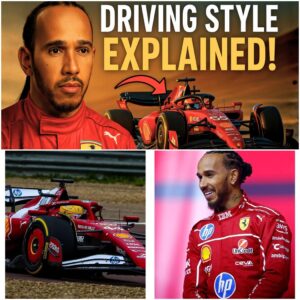
In the high-stakes world of Formula 1, where every millisecond counts and secrets are often hidden under layers of complex engineering, Lewis Hamilton’s unexpected performance at Mugello sent shockwaves through the paddock. Ferrari’s engineers were left stunned after Hamilton took the wheel of their SF25 for a routine filming day, exposing a hidden rear suspension innovation that could change the F1 grid dynamics. Let’s dive into the heart-pounding drama that is unfolding in Maranello, with the 2025 season hanging in the balance.
The Setting: Mugello’s Unforgiving Terrain
Mugello, nestled in the rolling hills of Tuscany, is a track known for its challenging high-speed corners and unforgiving braking zones. It’s a place where cars are pushed to the limit, making it the perfect venue for a quiet test session. Ferrari’s SF25, despite showing promise at the start of 2025, had turned into a disappointment, with Ferrari still struggling to clinch a win while trailing McLaren in the standings. The test day, designed to be a calm and uneventful filming session with no media or crowds, turned into a revelation that would send ripples across the F1 world.
Hamilton, the seven-time world champion, was behind the wheel of the SF25, running the car through 200 km on demo tires, in compliance with Formula 1’s regulations for filming days. But what was meant to be a low-key day suddenly turned into a game-changer, as Hamilton’s telemetry data lit up with unexpected readings.
The Discovery: A Hidden Rear Suspension Innovation
Ferrari’s SF25 was already a solid contender for 2025, but it was clear that they were struggling with stability and grip, particularly in high-speed corners. The car had struggled to match the pace of McLaren, which had been consistently outperforming Ferrari in the early races. However, Hamilton’s laps at Mugello told a different story. The data revealed a staggering 6 to 7 km/h improvement in cornering speeds, with barely any plank wear and rear axle shifts as low as 1 to 4 mm, which is practically unheard of on demo tires. Brake temperatures remained in a near-perfect 12°C range, and the stability of the car was, to put it simply, unprecedented.
This was no ordinary test result. The car’s rear suspension had been configured with a new pull-rod design, which is a radical shift from Ferrari’s traditional push-rod setup. The result? A newfound stability that improved grip, reduced rear bouncing, and enhanced braking stability. These are the kinds of gains that could be the difference between finishing on the podium and staying in the midfield.
Ferrari’s Dilemma: 2025 or 2026?
Ferrari’s engineering team was left grappling with the implications of Hamilton’s discovery. The pull-rod rear suspension could be the missing link that transforms the SF25 into a championship contender. However, Ferrari is facing a dilemma: should they pour resources into developing the 2025 car and chase immediate glory, or should they shift their focus to the 2026 season, where a major shift in engine regulations is expected with the introduction of 50% electric power?
The 2025 season has already been a disappointment for Ferrari. They have yet to secure a win, and despite being in a competitive position, they trail McLaren by 112 points. Some in the Ferrari camp are arguing that the team should prioritize preparing for 2026, as the new regulations could offer a clean slate and the potential for more drastic performance improvements. Others believe that Ferrari must seize this opportunity now and fully commit to developing the SF25 in the hope of clinching victories and perhaps even a championship in 2025.
The Pull-Rod Suspension: A Game-Changer?
The pull-rod rear suspension is a concept that has been gaining traction in F1, inspired by the dominant Red Bull cars. This design works by lowering the upper wishbone and pulling the rear suspension towards the car’s floor. The result is a more stable platform, better ground effect, and a noticeable increase in downforce and grip. This setup addresses issues like rear bouncing and longitudinal rebound, which often plague high-speed cars.
Ferrari’s adoption of this suspension, as seen in the SF25 during Hamilton’s test, seems to have addressed many of the issues that have plagued the car throughout the season. The result is a much more stable car that is able to push harder without sacrificing tire wear or losing stability in corners. However, the team’s engineers are divided on whether they should continue pushing for 2025 developments or redirect resources to preparing for the 2026 season. The financial constraints imposed by the sport’s budget caps further complicate this decision.
The Stakes: 2025 Glory or 2026 Victory?
With Ferrari’s 2025 season already showing signs of struggle, the temptation to focus on the upcoming 2026 regulations is strong. The new power units, which will incorporate a 50% electric engine, promise to change the way cars perform, and many teams are already redirecting resources to prepare for the shift. But the data from Hamilton’s test is undeniable: the SF25 has potential, and if Ferrari can refine the car’s performance in time for the remaining races of the season, they could challenge for podiums and perhaps even a win.
Ferrari is at a crossroads. The SF25 has already proven itself to be a formidable machine in the right hands. Hamilton’s genius behind the wheel revealed the car’s true potential, and the pull-rod suspension may just be the key to unlocking that potential. But with the 2026 regulations looming, the question remains: should Ferrari go all in for 2025 glory, or should they focus their efforts on the future?
The Upcoming Tests: Spa and Beyond
The upcoming races, especially the high-speed corners of Spa, will be crucial in testing the new suspension. If the SF25 can perform under the pressures of such demanding tracks, Ferrari could very well have a competitive car on their hands for the rest of the 2025 season. A successful upgrade could mean more podiums and a stronger championship challenge, but failure could signal another year of what-ifs in Ferrari’s storied history.
As the drama unfolds, F1 fans are left wondering: Did Hamilton just unlock Ferrari’s hidden weapon for 2025, or is 2026 the real prize? The next few months will be crucial in shaping Ferrari’s future, and all eyes are on Maranello to see if they can capitalize on this unexpected breakthrough. For now, it’s a waiting game—one where the stakes couldn’t be higher.
Conclusion: A Turning Point in Ferrari’s 2025 Campaign?
Mugello’s unexpected revelation has given Ferrari a chance to reshape their 2025 season. With Hamilton’s silent storm exposing a secret weapon in the form of a pull-rod rear suspension, the team must now decide whether to push for a quick fix and chase immediate success or invest in the future with an eye on the 2026 regulations. Either way, Ferrari stands at a pivotal moment, and the drama surrounding their next moves is sure to captivate F1 fans worldwide.
F1 News: Max Verstappen, Red Bull, Driver Market, and 2026 Regulations
Formula 1 continues to stir up excitement as various stories surrounding driver moves and future regulations make waves. From Max Verstappen’s potential shift to Mercedes, to the ongoing challenges facing teams like Ferrari and Alpine, there is plenty of drama behind the scenes. Additionally, with the 2026 regulations drawing closer, teams are already thinking ahead to a major overhaul in the sport.
Max Verstappen and Mercedes: A Growing Rumor?
The recent news surrounding Max Verstappen’s potential move to Mercedes has captured much attention. After Christian Horner’s departure from the media spotlight, Helmet Marco has taken charge, fueling speculations on the future of Red Bull’s star driver. According to recent reports, Verstappen met with Toto Wolff in Sardinia—a meeting that has stirred up further rumors of a possible transfer.
While there is no official confirmation yet, the mere possibility of Verstappen joining Mercedes is a game-changer. The racing world is rife with speculation, particularly after Verstappen’s jet was seen landing in Sardinia just hours before Wolff was also spotted in the area. The intrigue around this meeting has only intensified, leading to debates on whether a formal deal is being negotiated.
However, Red Bull’s Marco has remained coy about the situation, stating that Verstappen is free to meet with whoever he likes. Despite this, the team remains confident about their contract with Verstappen, which runs through 2028. This openness, while diplomatic, hints at the complexities behind closed doors. The meeting in Sardinia may have been a casual chat, but it certainly has the paddock buzzing with speculation about what’s to come.
Alpine’s Driver Market Turmoil
Moving away from Verstappen’s future, Alpine faces its own challenges with its driver market. Franco Colapinto is reportedly at risk of losing his seat, with rumors swirling that his performance may not be enough to keep him in the team. Despite Alpine’s underperformance in the current season—sitting at the bottom of the standings with just 19 points—the team is hopeful for an improvement in the coming seasons, especially with the prospect of gaining Mercedes power next year.
Alpine, despite its current struggles, is seen as an attractive team for drivers, with a chance to become more competitive in the 2026 season. The team’s decision-making process will be crucial over the next few weeks as rumors continue to surround other seats, including those at Cadillac, where multiple names have been mentioned as potential candidates.
Cadillac’s Driver Search: Who’s In the Running?
Cadillac has joined the fray with a series of intriguing driver market rumors, eyeing potential talent for a new Formula 1 project. Names like Mick Schumacher, Valtteri Bottas, and even Sergio Perez have been linked to Cadillac. There’s also talk of the team targeting an American driver—possibly from Mexico—to boost their identity in the sport. However, while the team is exploring all options, there are differing opinions on whether they will go for an experienced driver or a younger, potentially raw talent.
Mick Schumacher, who has been in negotiations, has expressed his interest, though it’s unclear whether he will make the cut. Cadillac must decide whether to prioritize experience or future potential as they prepare for their entry into F1. This decision will be key to their future success and how quickly they can become competitive in the sport.
Aston Martin’s Driver Stability
Aston Martin, on the other hand, is committed to their current drivers, with both Fernando Alonso and Lance Stroll under contract through 2026. Andy Cowell, the team principal, has confirmed this stability, which signals that there’s no immediate concern about driver changes at the team. However, with the potential entry of Max Verstappen into the driver market, there could be some unexpected twists. If Mercedes doesn’t secure Verstappen, Aston Martin might look to make a move.
However, Cowell remains optimistic about the team’s future, citing their partnership with Honda for the 2026 engine regulations. While some rumors suggested Honda might be falling behind, Cowell reassured the paddock that the team’s engine would fit perfectly with their car. Aston Martin has ambitious goals, and their aerodynamic expertise, led by Adrian Newey, could make them a serious threat, provided their power unit performs as expected.
Red Bull’s Changing Dynamics
Red Bull, ever the dominant force in Formula 1, is undergoing its own internal shifts. With Christian Horner’s exit from the public spotlight, Helm Marco has taken the reins, and the team’s internal politics are being closely watched. Verstappen’s status at the team remains a point of intrigue, especially with the rumor that Marco was behind Horner’s departure from the media.
Marco, known for his outspoken nature, has tempered his comments regarding Verstappen’s future, indicating that Max has a contract until 2028, and any potential changes are still a long way off. However, behind the scenes, the influence of Verstappen and his camp, led by his father Jos, is likely significant, and any potential changes will be carefully considered.
The 2026 Car Regulations: A New Era
As we approach the 2026 Formula 1 season, the cars will undergo significant changes. The 2026 regulations are expected to bring a reduction in ground effect, with the cars adopting a flatter floor design compared to the current generation. This shift will lead to a dramatic overhaul in how teams design their cars and extract downforce. The new regulations are already causing a stir, as they promise to level the playing field and potentially open up opportunities for teams like Aston Martin and McLaren, who are eager to capitalize on this change.
While the specifics of the floor designs are still being finalized, the shift away from the Venturi tunnels that have dominated the current design will impact how teams approach aerodynamics. This change is expected to lead to more consistent racing, with less reliance on complex aero parts that have sometimes led to unpredictable performance. The 2026 regulations will undoubtedly change the dynamics of Formula 1 and could make for an exciting new era in the sport.
Ferrari’s Struggles and Future Outlook
Lastly, Ferrari continues to grapple with ongoing issues, particularly with their car’s understeer during qualifying. Despite significant upgrades in recent years, the team has struggled to resolve these issues, which have affected their overall performance. Team principal Fred Vasseur has been urged to “let them cook” by Toto Wolff, acknowledging the complexity of turning around Ferrari’s fortunes. However, with the 2026 regulations on the horizon, there is hope that Ferrari can regain its competitive edge.
Conclusion
The Formula 1 driver market is as volatile as ever, with major moves potentially on the horizon, especially concerning Max Verstappen’s future. As teams prepare for the 2026 regulations, the landscape of the sport is shifting. New opportunities are emerging for drivers and teams, and the next few months will be crucial in determining which teams emerge as contenders for the future.
With new regulations, team dynamics shifting, and driver moves in the air, Formula 1 fans are in for an exciting few seasons ahead.
Ferrari’s Bold Move: Can New SF25 Upgrades Challenge McLaren’s Dominance in F1?
As the Formula 1 season heats up, Ferrari finds itself in the spotlight once again with a dramatic and unexpected development. A leak from Maranello has revealed that Lewis Hamilton has been secretly testing a component that could significantly affect the 2025 season, with the Belgian Grand Prix being the stage where the world will witness the potential impact of these upgrades. The key question on everyone’s mind is whether the major upgrades to the SF25 will be enough to challenge McLaren’s current dominance. Let’s dive into the details and explore whether Ferrari’s gamble will pay off.
Ferrari’s Early Season Struggles
From the very beginning of the 2025 season, Ferrari’s performance has been marked by inconsistency. The SF25, while blisteringly fast in qualifying sessions, has struggled to maintain that pace during the races. The root cause of this issue is the car’s rear suspension, which has proven to be a significant Achilles’ heel.
Ferrari’s engineers took a bold approach in the SF25’s design, opting for a radical shift in weight distribution. The cockpit was moved rearward, leading to the repositioning of the engine and fuel tank as well. While this aggressive move was aimed at improving the car’s balance and performance, it came with unintended consequences. The gearbox space was reduced, and the car’s pull-rod rear suspension proved to be a compromise that ultimately led to instability.
The Suspension Woes and Their Impact
The rear suspension’s issues became glaringly apparent, especially when the car hit high speeds at the end of straights or entered heavy braking zones. Ferrari was forced to use rear dampers that couldn’t fully control the car’s vertical movements. This instability had more than just a superficial effect—it disrupted the car’s aerodynamics, particularly its ground effect, which is crucial under current F1 regulations.
Ground effect relies on a smooth flow of air underneath the car to create downforce, and any oscillations or disruptions in the car’s height above the track surface can significantly impact this. When suspension oscillations disrupt this airflow, it leads to a phenomenon known as “porpoising.” This issue causes the car to bounce up and down uncontrollably, creating unpredictable driving behavior and excessive tire wear. In addition to the handling problems, it accelerates tire degradation and can even damage the car’s undercarriage.
To manage these issues, Ferrari was forced to set the car into what is known as “Leo mode,” a more conservative setup that reduces vertical stress but also significantly sacrifices aerodynamic efficiency. This costs Ferrari as much as 0.3 seconds per lap, a steep price to pay just to keep the car intact.
Ferrari’s Strategic Response
Despite these challenges, Ferrari’s engineers were quick to act, developing a bold solution to address the rear suspension problems. They designed a modification to the rear suspension structure aimed at increasing the antilift effect on the upper wishbone. This change was intended to keep the rear of the car low during braking, providing more stability when entering corners and maximizing ground effect.
However, rather than announcing these changes publicly, Ferrari chose to test them in secrecy. At the Mubell circuit, they held a private 200 km test, which was disguised as a filming day. During this test, both Lewis Hamilton and Charles Leclerc were tasked with testing the new suspension prototype. Alongside them were two key figures from Ferrari—team principal Fred Vasseur and chief car performance architect Laurent Ménié—who closely monitored the data to evaluate the success of the upgrades.
Mixed Reactions: Hamilton Optimistic, Leclerc Cautious
The test results were mixed. Lewis Hamilton, always a keen and experienced tester, responded positively to the new suspension setup. He provided detailed feedback, particularly focusing on the car’s behavior under braking and mid-corner stability. His experience in handling such challenges was crucial, and he seemed convinced that the upgrades were moving the SF25 in the right direction.
Charles Leclerc, on the other hand, was less enthusiastic. While he acknowledged some improvements, he reportedly wasn’t as convinced by the changes, and his feedback suggested that the adjustments were not as revolutionary as Ferrari had hoped. His cautious approach indicated that there was still much work to be done before Ferrari could challenge the top teams consistently.
An anonymous source from Motorsport Italia stated that this new suspension setup is far from the groundbreaking innovation that Mercedes introduced a few seasons ago. Instead, it seems more like a stepping stone—a significant but not revolutionary improvement.
Silverstone and Optimism
Before the Belgian Grand Prix, Ferrari had experienced a small glimmer of hope at Silverstone. A series of upgrades to the car’s floor helped mitigate the SF25’s sensitivity to ride height. The adjustments made the car more forgiving, allowing Ferrari to perform well in qualifying and stay competitive with McLaren during several stints of the race. However, these upgrades weren’t a magic bullet. F1 analyst Matteo Bobby emphasized that while the SF25 showed potential, it was not a revolutionary leap. It was, however, an important step toward achieving more stable aerodynamics.
In addition to the suspension improvements, Ferrari also faced challenges related to fuel distribution problems, particularly when the tank was nearly empty. These issues became evident at Silverstone and showed that, despite some progress, the SF25 still has several unresolved problems.
Spa: The Crucial Test
All eyes now turn to the Belgian Grand Prix at the iconic Spa-Francorchamps circuit. This race will be more than just another weekend—it is a crucial test for Ferrari’s progress. Spa, with its fast and unforgiving corners like Eau Rouge, Radillon, and Blanchimont, will provide the ultimate proving ground for the SF25’s new suspension.
If the new components perform as expected, Ferrari will be in a strong position to challenge McLaren for the front-running positions once again. However, if the improvements fail to produce tangible results, it could signal the beginning of a shift in focus towards the 2026 car project. With major regulatory changes coming for the 2026 season, Ferrari cannot afford to waste too much time on a car that is no longer competitive.
Hamilton, Leclerc, and the Fight for the Title
Lewis Hamilton, at 40 years old, is still a formidable force in Formula 1. His desire to win an eighth world title burns as strongly as ever, but with only a few seasons left in his career, time is running out. This season could be his last real opportunity to fight for that elusive eighth title before the major shake-up of the 2026 regulations.
On the other hand, Charles Leclerc has a different set of challenges. While he is one of the fastest drivers on the grid, this season represents a pivotal moment in his career. If he is to become a world champion, he must prove himself not only in terms of raw speed but also as a mature leader capable of guiding Ferrari back to the top.
McLaren’s Unstoppable Momentum
Meanwhile, McLaren has emerged as the team to beat in 2025. Their consistency, pace, and near-perfect execution have made them the clear frontrunners for this season’s title. McLaren’s dominance is formidable, and for Ferrari, the road to closing the gap looks steep. To realistically challenge McLaren, Ferrari needs more than just performance upgrades—they need a combination of strategic luck and flawless execution over the next few races.
The Road Ahead
As Ferrari prepares for the Belgian Grand Prix, the hope is that the new suspension upgrades will cut lap times by up to 0.3 seconds, enough to get them back into podium contention. This is vital if they want to stay in the fight for both the Constructors’ and Drivers’ Championships. But the real question is whether these upgrades will mark the beginning of Ferrari’s revival or if Spa will reveal the truth: Ferrari is still a step behind. All will be revealed at Spa, and it is here that the future of Ferrari’s 2025 season will be decided.
Max Verstappen’s future in Formula 1 has become one of the hottest topics in the motorsport world, especially following Christian Horner’s departure from his position as team principal of Red Bull Racing. Verstappen, the four-time world champion, has been the cornerstone of Red Bull’s success in recent years, but with the team’s internal dynamics shifting and the car’s development seemingly facing challenges, could the Dutch driver look to leave in 2026 or 2027?
The current state of Red Bull Racing is one of uncertainty. While they’ve dominated Formula 1 over the past few seasons, the future of their team—particularly in light of Horner’s sacking and the uncertainty around the 2026 regulations—leaves many questions about Verstappen’s future with the Austrian squad. The team’s internal struggles, including a complex power struggle, have not gone unnoticed by Verstappen, who has always made it clear that his primary motivation is to compete for victories and titles, not to simply be part of a successful team for the sake of it. If the car fails to deliver the performance he needs, could Verstappen be looking at other options for 2027? Or is his connection with Red Bull deep enough that he will stay despite these challenges?
The Changing Dynamics at Red Bull
Christian Horner’s exit from Red Bull is a critical turning point. Horner has been with the team since 2005 and has been instrumental in leading them to success, most notably with Verstappen at the helm. However, with the departure of Horner, Verstappen is now facing a team without the leadership he has grown accustomed to. This raises the question: how will the team adjust? Will they continue to provide the car that can allow Verstappen to fight for championships, or will they falter under new leadership?
Internal team changes are always tricky, particularly when a driver like Verstappen has become so integral to the team’s performance. Reports suggest that Verstappen was not particularly pleased with the internal drama at Red Bull, including some internal investigations and management struggles that ultimately led to Horner’s downfall. The reshuffling of team leadership, along with shareholder changes, could indicate that Red Bull is trying to reset and focus on the future. But will Verstappen be willing to wait and see how the team recovers?
2026: A Crucial Year for Max
Looking ahead, 2026 will be a significant year not just for Red Bull but for all Formula 1 teams. The introduction of new car regulations, particularly changes to aerodynamics and power units, will have a massive impact on the competitive landscape. Teams like Mercedes, Ferrari, and possibly Honda are expected to benefit from these changes, having established a strong track record in engine development. Red Bull, on the other hand, is entering a new phase with their own powertrain, Red Bull Powertrains, which is still relatively unproven.
Max Verstappen has always been a driver who thrives when he has a competitive car. His success with Red Bull has largely been due to the team’s ability to produce a winning machine. However, if the new regulations result in a car that cannot perform at the level he expects, Verstappen might not be willing to wait long to make a change. Verstappen has expressed that he doesn’t intend to stick around in F1 for much longer than his early 30s, which further complicates the situation for any team looking to secure him for the long term.
With his current contract running until 2028, Verstappen has the flexibility to move should the team’s performance falter. But while 2026 might not be the year for a dramatic move, 2027 could be a different story. Teams like Mercedes and Aston Martin are already making moves to build teams that could challenge Red Bull in the near future. In particular, Mercedes, having restructured their team and introduced new leadership, could be a viable option for Verstappen.
The Mercedes and Aston Martin Speculation
Mercedes has long been seen as one of the potential suitors for Verstappen, and recent rumors about a possible move have fueled speculation. Mercedes has been able to develop strong engines, and with their recent changes, including the departure of Toto Wolff and the addition of new management, they could be a team in a better position to compete with Red Bull. A move to Mercedes would also allow Verstappen to team up with another top-tier driver like George Russell, which could offer an exciting challenge.
Aston Martin is another team to keep an eye on. The British team has made significant strides in recent years, investing in new staff and resources, including hiring key figures like Adrian Newey and securing an engine deal with Honda. These developments suggest that Aston Martin is preparing to challenge for championships, and Verstappen might see this as an opportunity to be part of a rising team with strong potential. The presence of Newey, who played a crucial role in Red Bull’s dominance, could be particularly appealing to Verstappen, as he has built a strong relationship with the renowned designer.
A Personal Choice: The Max Verstappen Factor
For Max Verstappen, his decision will ultimately come down to which team provides the best opportunity for him to continue winning championships. Verstappen has made it clear that he is motivated by performance, not just loyalty to a brand. While he has expressed his desire to finish his career with Red Bull, he has also shown that he will not hesitate to move if the team fails to deliver.
There is no doubt that Verstappen’s decision will be influenced by how the 2026 season plays out. If Red Bull fails to produce a competitive car, Verstappen will likely explore his options. The new regulations will shake up the pecking order, and Verstappen will want to be in a position to win, not just race. His management, led by his father Jos Verstappen and his manager Raymond Vermeulen, has already indicated that performance will be the deciding factor in any future negotiations.
Conclusion: The Road Ahead for Max Verstappen
As we move closer to the 2026 season, Max Verstappen’s future in Formula 1 remains one of the sport’s most intriguing questions. While it is unlikely that Verstappen will leave Red Bull in 2026, the possibility of him switching teams in 2027 is very real. Mercedes and Aston Martin are both viable options, with their own strengths and strategies to lure the Dutch driver.
Verstappen’s decision will depend on many factors, including Red Bull’s ability to develop a competitive car under the new regulations. If they fail to meet his expectations, the 2027 season could see him make a move to a new team. For now, Verstappen is in a position of power, able to choose the best opportunity that will allow him to continue his dominance in Formula 1. The next few years will be critical for both Red Bull and Verstappen as they navigate the changing landscape of F1.
Horner also ‘hurt and betrayed’ as lid lifted on brutal exit talks
TEARFUL staff rocked by Red Bull chief Christian Horner’s axing have been ordered to “smile more” by their new Austrian and German bosses.
Loyal workers were stunned when the British Formula One team’s supremo Horner, 51, was ousted following a stellar 20-year reign.
2
Red Bull staff have been told to ‘smile more’ despite being upset over Christian Horner’s exitCredit: AFP
2
The ace was brutally fired earlier this month in a surprise meetingCredit: AP
He helped Red Bull win eight drivers’ championships and six constructors’ crowns.
And sources told SunSport new Austrian boss Helmut Marko upset staff who gathered to meet him at the team’s HQ in Milton Keynes — with some now threatening to quit.
A female Red Bull worker revealed: “It was only a day after Christian was sacked and a lot of the team were still upset when Mr Marko addressed us.
“But he just made a joke of it and told us to cheer up — he said, ‘You need to smile more’.
“It didn’t endear him to anyone as what is there to smile about?”
Horner’s roles as chief executive officer and team principal have been usurped by Austrian team adviser Marko, 82, and German ex-football official Oliver Mintzlaff, 49.
While French engineer and motorsport exec Laurent Mekies, 48, was quickly unveiled as Horner’s replacement last week.
But insiders have insisted Mintzlaff and Marko are now the men in the driving seat — and revealed their first address to staff at Milton Keynes was a “car crash”.
Mintzlaff sparked more anger when he joked about the brutal axing of senior staff including Horner, chief marketing officer Oliver Hughes and director of communications Paul Smith.
Horner was summoned to London on July 9 believing he was attending a regular team meeting.
But he was then relieved of his duties on the spot and put on gardening leave.
Hughes and Smith were called into an office and also told they were no longer part of Red Bull’s future.
They were escorted out of the building after having their company devices taken from them — leaving hundreds of staff with no bosses to answer to.
And another staff member told SunSport: “Mintzlaff also said, ‘If you have any problems, just text your line manager’.
“Then he added, ‘Oh, and if you don’t have a line manager any more, just text me!’ and started laughing.”
Red Bull supremo Horner knew nothing of the plans to get rid of him, 18 months after he was accused of a sexting scandal which broke the heart of his Spice Girl wife Geri, 52.
And the £12million-a-year chief was replaced within 24 hours by Marko and Mintzlaff, who arrived to address staff members, 90 per cent of whom are British.
Emotional Red Bull insiders spoke in depth for the first time yesterday over their shock at the loss of their boss.
They also laid bare the chaos that is now gripping this once all-conquering F1 team.
And long-standing family friends who have spoken to Horner admitted he was left stunned by his ruthless removal.
One told SunSport: “Christian told me how hurt and betrayed he felt after all that he and Geri and their family have been through over the past 18 months.
“He was cleared twice over the texting scandal but is now on gardening leave and has still been given no explanation why he’s lost the job he loved.
“Red Bull’s Austrian bosses have always resented the fact that so much of their F1 success was down to a team that Christian built in Britain.
“That is what lies behind this — as well as the hangover from the terrible headlines last year.
“Christian was called to a London meeting and had no idea what it was about.
“He was just told, ‘You have to be there’ and was dumbfounded when he was ushered into a room and effectively sacked on the spot.
“It left him totally blindsided — he thought he’d been called in to speak about another issue.
“But the staff are nearly all Brits and are fiercely loyal to him and are now talking about walking out.
“It was a targeted attack for control of the race team because Red Bull’s Austrian HQ didn’t like a British man running their race team.
“But now the team is in chaos — Red Bull at Milton Keynes has hit the skids.”
Red Bull’s Austrian-based HQ was approached for comment yesterday.
Red Bull will enter a new era in a new technical partnership
MAX VERSTAPPEN revealed he is “very open-minded” about Formula One’s massive regulation reset next season.
Teams are now solely focusing on the biggest regulation change in F1 history with nearly every technical classification being ripped up.
4
Max Verstappen revealed he is ‘open-minded’ about next season’s regulation changesCredit: Shutterstock Editorial
The last big reset happened after Verstappen pipped Lewis Hamilton to the 2021 world title in the most dramatic season finale of all time.
And Red Bull came out best again, rising from the ashes of the controversy to replace Mercedes as the team to beat in the Constructors championship.
The new and bigger changes are set to establish a brand new pecking order with the rumour mill predicting Mercedes could regain their old supremacy in 2026.
For Verstappen and Red Bull, the new package creates a chance to re-establish itself as the benchmark in F1 after being dethroned by McLaren this time last year.
There has been speculation that Verstappen could defect to Mercedes, with team principal Toto Wolff confirming that talks had gone on behind closed doors.
But Verstappen remained coy when asked about his plans for next season, insisting that he’ll “figure it out” no matter the team.
The four time world champion told RacingNews365: “I’m in the middle. Maybe it’ll be good, maybe it’ll be bad – we’ll see.
“I’m very open-minded, honestly. I don’t even think about it too much – I’m just enjoying the moment.
4
Mercedes team principal Toto Wolff is reportedly readying a scoop for VerstappenCredit: PA
“When I sit in the car next year, we’ll figure it out. I’m not making the rules anyway.
“Even if I have my concerns, it’s not going to change anything.
“So I’ll just jump in and drive it, and then we’ll, along the way, get better at it, understand it better, like any regulation in the past.
“You keep optimising, keep improving, and then just go from there, really.”
Mercedes are yet to offer No1 driver George Russell, 27, a new contract to his deal that expires at the end of the season, but the Brit could yet stay to maybe partner Verstappen in 2026.
Red Bull will enter a new era in a technical partnership with Ford as they build their own Red Bull Powertrains engine.
The Milton-Keynes based outfit sensationally sacked boss Christian Horner after 20 years in charge last week.
Laurent Mekies has been appointed as the new CEO, stepping up from the Racing Bulls team.
Drivers are currently enjoying a mini summer break, with the next race due to commence in Belgium on July 27.
Verstappen currently sits 69 points behind Drivers Championship leader Oscar Piastri, who only sits eight points above team-mate Lando Norris.
Carlos Sainz was suddenly dropped by Ferrari as they announced the signing of Lewis Hamilton in February 2024, with the Spaniard blindsided and left lacking an explanation
Carlos Sainz Jr believes he wasn’t given sufficient reasoning for losing his Ferrari seat(Image: Kym Illman, Getty Images)
Carlos Sainz has revealed that Ferrari didn’t explain why when they told him he would be replaced by Lewis Hamilton. The Formula One world was rocked in February 2024 when it emerged that the seven-time world champion would be joining the iconic Italian team, partnering up with Charles Leclerc.
Sainz, who was caught completely off guard by the announcement, had been under the impression that his future at Maranello was secure. The Spanish driver, 30, was in the midst of contract renewal talks, with his deal set to run out after the 2024 season.
He finished the season with the Scuderia before joining Williams for the current 2025 campaign, while Hamilton bid farewell to Mercedes, where he had enjoyed the most successful driver-team partnership in F1 history.
Sainz has now opened up about the shocking moment he was told of Fred Vasseur’s decision over a phone call, voicing his disbelief and noting the lack of answers he was given by the team regarding his axing.
He explained on the High Performance Podcast: “I received a phone call and I suddenly received the news. I was completely shocked. I went from believing I was going to be in Ferrari for a while to, ‘What am I going to do now?’
“It never occurred to me that that could happen.” When asked whether they gave him any reasons, he added: “No, not really. There weren’t many reasons.
“I’m not going to go a lot into the detail of those conversations but I was like, ‘Okay now it’s my time to shine and to prove to everyone what I’m worth. It’s the most important moment of my life now.’
Lewis Hamilton unexpectedly took Sainz’s seat(Image: Getty)
“I went into that late February and March period with the mentality of I’m just going to go for it. That gave me a bit of a kick and I think it made me a better driver.”
Sainz’s previous season had ended in a disappointing seventh placed finish in the drivers’ championship, which may have been one reason for Ferrari reconsidering his future.
Sainz then entered talks with Sauber, Alpine and even Mercedes, potentially replacing Hamilton in a dramatic swap. But despite lengthy discussions with Toto Wolff, he admits it was never a serious possibility.
Sainz discussed the possibility of replacing Hamilton with Mercedes(Image: Formula 1 via Getty Images)
Asked whether he was on the verge of securing a contract offer, he said: “Not really. We spoke a lot with Toto and everyone else at the time and I was certainly one of the options that was considered. But how close was I? You can ask Toto that. But I think he is very happy with Kimi Antonelli.”
Both Sainz and Hamilton have faced challenges adapting to their new teams this season. Despite being halfway through the campaign, Hamilton is yet to clinch a podium finish and sits sixth in the standings, while Sainz finds himself in a disappointing 15th place.
Yuki Tsunoda could be sacked by Red Bull before the end of the 2025 season according to a former F1 team boss.
The Japanese driver replaced Liam Lawson at the team in March, with Red Bull hoping that Tsunoda would be able to consistently deliver points in the second seat alongside Max Verstappen.
However, Tsunoda has only been able to score points in three grands prix so far this season, and currently languishes below both Isack Hadjar and Lawson in the drivers’ standings.
Speaking on a recent episode of the Red Flags Podcast, former Haas team principal Guenther Steiner discussed the Red Bull star’s future, and said: “Yuki Tsunoda needs to make points.”
“Otherwise, I really think latest end of the year he’s out of there, but it could be before.”
“As much as we love Yuki, because I love him as well, he needs to bring the performance. I think this is saying ‘we let Christian Horner go, we changed Liam Lawson, so it’s one of those things, if he doesn’t shape up, he will not be there for a long time anymore.”
Will Red Bull drop Tsunoda?
Steiner worries for Tsunoda’s future
Red Bull have not been afraid to make major changes to ensure their success in 2025, and announced after Silverstone that their team principal Christian Horner had been sacked.
The decision comes after increased speculation about Verstappen’s place at the team, following interest from rivals Mercedes and Red Bull’s decline in performance.
Verstappen has slipped 69 points behind championship leader Oscar Piastri in the drivers’ championship, as Red Bull have failed to find answers for their poor pace in 2025.
Red Bull’s second car in particular has struggled to become a top 10 finisher in the past year, regardless of whether it was Sergio Perez, Lawson or Tsunoda behind the wheel.
Nevertheless, Verstappen’s ability to put the RB21 on pole at Silverstone and remain in the fight for podium positions most weekends, highlights Tsunoda’s weaknesses in the car – particularly as the likes of Hadjar continue to impress with Racing Bulls.
Lewis Hamilton and Ferrari. Two of the biggest names in F1, who finally joined forces in 2025. But, which of the pair has the final say?
The 40-year-old’s commercial impact on the team was apparent from the start, with Hamilton’s signing announcement in 2024 causing an almost $7 billion increase in Ferrari’s value through market capitalisation, and the champion’s first Instagram post with the team becoming the most liked F1 Instagram post in history.
However, as Hamilton’s Ferrari fairytale transpires into a nightmare in scarlet, at what point do the team take a step back and listen to the expertise of a seven-time world champion?
Former Haas team principal Guenther Steiner wrestled with the question over whether Hamilton is bigger than Ferrari during an appearance on the Business of Sport podcast, suggesting there was a conflict between the huge names.
“I think in Formula 1 the only one above a team is Lewis Hamilton,” Steiner said. “His presence, his stature, it is like it’s very big outside of the sport as well.
“Because that’s how it goes, you’re big in the sport but then when you get big outside of the sport you’re bigger than the actual team.
“I think in Formula 1, the only one which can claim that is Lewis. I think Max [Verstappen] is very big in the sport but he doesn’t work on being somebody outside of the sport because for him, his life is racing cars.
“You know Lewis has got another thing as well, what he wants to achieve in life. I think we see it now with Lewis and Ferrari there are two huge brands together and it’s almost sometimes a conflict you know, who is bigger Ferrari or Lewis?”
Lewis Hamilton is the biggest name in F1
Should Ferrari listen to Hamilton?
Hamilton’s struggles at Ferrari in 2025 can in part be attributed to the champion driving a car he has had no role in developing, and he has been largely out-paced by team-mate Charles Leclerc.
The Monegasque driver has had more experience evolving and developing a car with Ferrari, but Hamilton asserted at Silverstone that he wants his ‘DNA’ in the 2026 challenger.
“It’s still tough. It’s a tough balance to drive and it’s not a comfortable one. It’s not one that I want to have in future,” he said to the media after the British Grand Prix.
“So I’m working with Loic [Serra] and all the guys at the factory to make sure that the next car will have some of my DNA, and hopefully we’ll be able to get some of the characteristics that I’m hoping to have in it next year.”
Whether Hamilton’s input can transform Ferrari’s prospects is unknown, but it is clear the champion needs a car he is comfortable with driving and plays to his strengths should he be in a position to fight for a title in 2026.