Author: bang7

  • F1 2026 Analysis: High-Tech Simulation Reveals Why the New Era Could Resurrect Formula 1’s “Dirty Air” Nightmare

    F1 2026 Analysis: High-Tech Simulation Reveals Why the New Era Could Resurrect Formula 1’s “Dirty Air” Nightmare

    The world of Formula 1 is perpetually in motion, not just on the track, but in the sterile, silent wind tunnels and digital landscapes where the future of the sport is forged. With the 2026 regulations looming on the horizon, promising a new dawn of sustainability and spectacle, fans and teams alike are scrambling to understand what these machines will actually look like—and more importantly, how they will race.

    Until now, much of the conversation has been theoretical. We’ve seen regulation boxes, read dense technical documents, and speculated on the impact of active aerodynamics. But thanks to a groundbreaking collaboration between talented car designer Emir and the simulation experts at Airshaper, we now have something far more tangible: a fully designed, three-dimensional representation of a 2026 Formula 1 car, subjected to a rigorous Computational Fluid Dynamics (CFD) analysis.

    The results? They are as fascinating as they are worrying. While the car is a visual stunner, blending futuristic aggression with retro cues, the aerodynamic data suggests that Formula 1 might be sleepwalking back into a problem it spent years trying to solve: the dreaded “dirty air.”

    The Experiment: 100 Million Cells of Truth

    Before diving into the alarming conclusions, it is vital to appreciate the scale of this analysis. This wasn’t a quick sketch thrown into a basic wind tunnel app. Emir, a designer who has poured over a year into interpreting the 2026 rulebook, created a model that is arguably the most accurate public representation of the next generation of F1 machinery.

    To validate this design, the model was processed by Airshaper, a cloud-based CFD platform. They didn’t cut corners. They utilized an “adaptive mesh refinement” technique—the same high-level simulation settings used by engineers like Lucas di Grassi for the Generation 5 Formula E cars. The simulation crunched data across 100 million individual cells. In layman’s terms, this is a heavy-duty, industrial-grade virtual wind tunnel test. It allows us to see the invisible: the pressure zones, the chaotic vortices, and the energy streams that will define the 2026 World Championship.

    A Blast from the Past: The Visual Identity

    At first glance, the 2026 car feels eerily familiar. If you’ve been following the sport for a decade, you might feel a pang of nostalgia. The design language seems to echo the pre-2019 era of Formula 1.

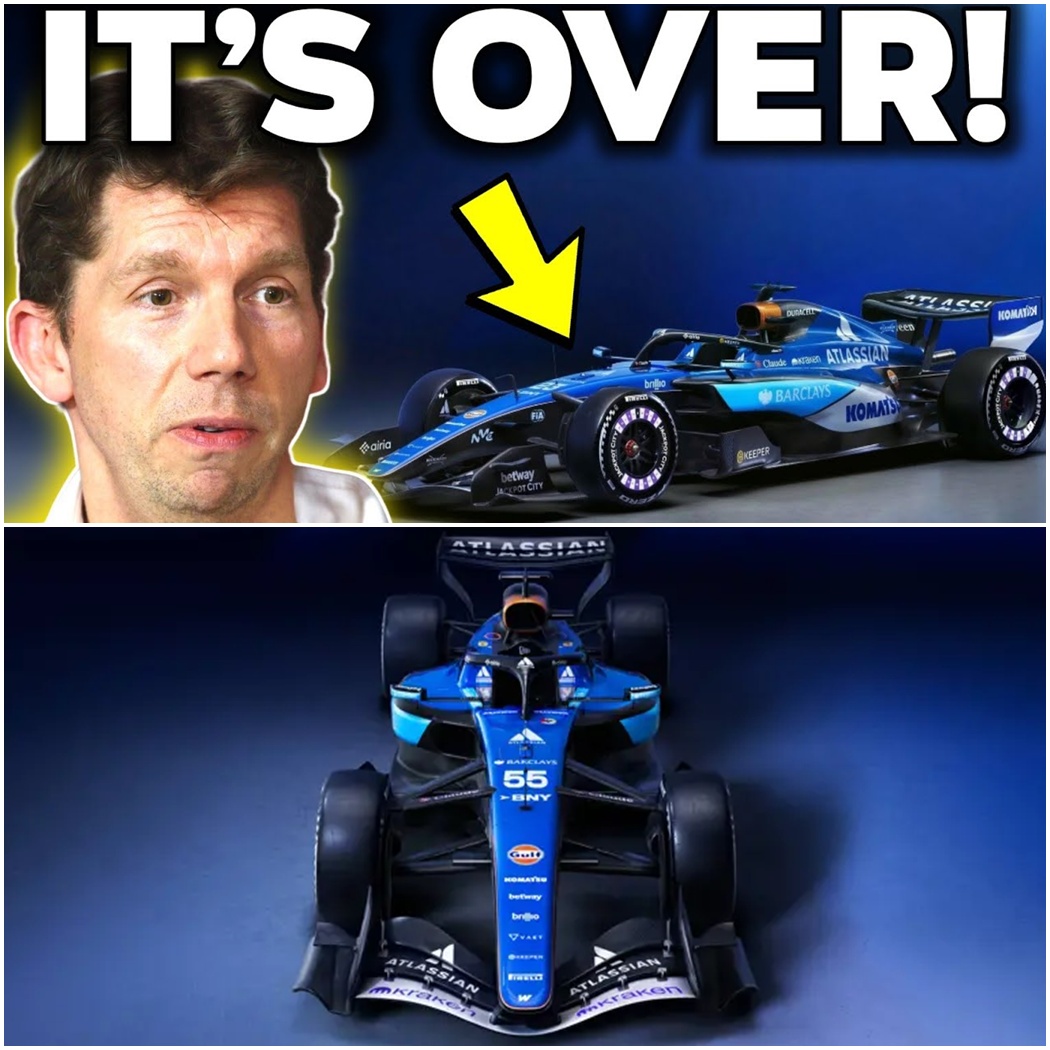
    The front wing is a prime example. It returns to a three-element design, where the top two elements are adjustable, allowing them to change angle on the straights—a key part of the new active aero ethos. The complex “upper deflectors” over the wheels, which define the current grid, are gone. In their place, we see the return of “strakes” on the front wing and specific elements on the endplates designed to desperately guide air around the massive obstruction of the front tires.

    The suspension layout on this concept utilizes a push-rod configuration at both the front and the rear. Moving further back, the floor concept has shifted again. We are looking at a flat floor equipped with multiple vanes and a “floorboard” featuring intricate vertical and horizontal elements. It’s a departure from the pure ground-effect tunnels of today, blending old philosophies with new restrictions.

    The sidepods are wide, featuring a massive undercut—a sculptured area beneath the air intake intended to channel clean air to the rear of the car. The rear wing sports traditional endplates again, and the cooling exits are wrapped tightly around the exhaust pipe. It looks fast, it looks aggressive, and it looks like a Formula 1 car. But as any aerodynamicist will tell you, looking fast and racing well are two very different things.

    The Front Wheel Problem

    The simulation begins at the front, where the air is “red”—meaning it is full of high energy, undisturbed and ready to be used to generate downforce. But as soon as the car punches a hole in this air, the chaos begins.

    The biggest enemy of aerodynamic efficiency in open-wheel racing is the front tire. It is essentially a spinning wall of turbulence. The simulation clearly shows how the wake—the disturbed air—from the front wheels is a massive headache. If this “dirty” low-energy air hits the floor or the rear wing, the car loses grip instantly.

    In the current ground-effect era, teams use powerful “out-washing” aerodynamic devices (like the now-banned bargeboards) to punch this tire wake far away from the car body. The 2026 rules, however, have removed many of these tools. There is no bargeboard area. Instead, the car features an “in-washing” floorboard.

    The CFD analysis highlights a struggle here. The vane behind the front wheel attempts to push the middle section of the tire wake outward. The floorboard tries to pressurize the air to help this process. In the simulation, it works reasonably well for the middle part of the wake, but the upper and lower sections are problematic. The lower wake crashes into the outboard part of the floor, and the upper wake stays stubbornly close to the bodywork. Teams will have to work overtime to fix this, because if that wake isn’t managed, the car becomes unpredictable.

    The “Bleeding” Car: Energy Losses and Separations

    Designers use “X-cuts”—cross-sectional slices of the air pressure around the car—to diagnose health. In an ideal world, you want to maintain high energy (red colors) as far back as possible. This 2026 simulation, however, shows a car that is “bleeding” energy in worrying places.

    We see flow separation (where the air stops sticking to the car and becomes turbulent) occurring at several key points:

    The Front Wing Mountings: Creating immediate losses that flow downstream.

    The DRS Actuator: A necessary evil that disrupts the airflow in the center.

    The Sidepod Inlets: The simulation picked up a separation from the outboard side of the inlet, suggesting that teams will need to refine the radius and shape of these openings to keep the air attached.

    The Floorboard: The lower horizontal element creates a “big separation,” essentially a pocket of dead air that causes trouble further down the car.

    These might sound like minor technical quibbles, but in F1, they are the difference between pole position and P10. The bodywork drags these losses down into the diffuser area—exactly where you don’t want them. The goal is to create a clear path for “bad” air to exit between the beam wing and the rear wing, but the simulation shows it’s a messy process.

    The Return of the “Dirty Air” Nightmare?

    This is the bombshell of the analysis. The most critical takeaway from this 100-million-cell simulation is the quality of the wake left behind the car.

    Since 2022, Formula 1 has been on a crusade to clean up the wake. The goal was to throw the turbulent air upwards (the “mushroom” effect) so the car behind drives through clean air. This simulation suggests 2026 might undo that hard work.

    The analysis reveals that the car generates a “huge and dirty wake.” The tip vortices from the rear wing do support some upwash, but the center of the wake is dominated by two large separation bubbles caused by the rear wing mountings.

    The narrator delivers a sobering verdict: “It seems like F1 will introduce old problems again.”

    Ideally, the air behind the car should be red (high energy). But the simulation shows a massive blue zone (low energy/turbulence). For a trailing car, this is a disaster. The 2026 cars are set to rely more on downforce generated by the wings (rather than just the floor). Wings are notoriously sensitive to dirty air. If you put a wing-dependent car into a dirty wake, it loses a huge percentage of its grip.

    This creates a vicious cycle:

    The lead car creates a dirtier wake than current cars.

    The following car relies more on wings for grip.

    The following car loses more grip when it enters the wake.

    Following becomes harder, and overtaking becomes a struggle.

    It paints a picture of a formula that might be physically faster on the straights due to active aero, but potentially much worse for wheel-to-wheel combat in the corners.

    The Cornering Crisis

    The simulation was conducted in a straight line, which is the “best case scenario” for aerodynamics. The analysis points out a terrifying prospect for cornering.

    The upper wake from the front wheels sits dangerously close to the rear wing. In a straight line, it just misses it. But as soon as the driver turns the steering wheel entering a corner, that wake could swing sideways and smash directly into the rear wing.

    Imagine driving a car at 180 mph. You turn in, relying on your rear wing to stick the back of the car to the road. Suddenly, a burst of turbulent air from your own front tires hits the wing, and you lose 20% of your downforce in a split second. The rear snaps, the driver loses confidence, and they have to back off. This “instability” could make the 2026 cars incredibly tricky to drive on the limit, forcing teams to play it safe with setup and driving styles.

    The Engineering Battleground

    Of course, this is a “generic” design based on the rules. It represents the starting point. The genius of engineers like Adrian Newey or James Allison lies in solving these exact problems.

    The video identifies the key battlegrounds for the teams:

    Pushing the Wake Outboard: Teams will use every millimeter of the mirrors, mirror stalks, and suspension arms to shove that dirty front-tire wake away from the car.

    Sidepod Shaping: Expect to see wider sidepods used as shields, keeping the floor clean by pushing losses outboard for longer.

    The “Clean Ditch”: There is a promising channel of clean air going down to the top of the diffuser. Protecting this channel will be the number one priority for aerodynamicists.

    Conclusion: A Warning Sign?

    This complex CFD simulation serves as a fascinating, if slightly alarming, window into the future. Thanks to Emir’s meticulous design and Airshaper’s computing power, we can see that the 2026 regulations are not a magic bullet. They present a car that looks more traditional but brings with it the aerodynamic baggage of the past.

    If the simulation holds true, the sport faces a paradox: advanced active aerodynamics and sustainable engines packaged in a chassis that might struggle to race closely. The “dirty wake” is back, and it looks bigger and badder than before.

    As we inch closer to 2026, the question remains: Can the teams engineer their way out of these regulations, or are we destined for a return to the “processional” races of the past? Only time—and perhaps a few more hundred million CFD cells—will tell. But for now, the warning lights are flashing red in the virtual wind tunnel.

  • The Abu Dhabi Bombshell: How Lewis Hamilton Uncovered the “Silent Scandal” That Nearly Broke Charles Leclerc

    The Abu Dhabi Bombshell: How Lewis Hamilton Uncovered the “Silent Scandal” That Nearly Broke Charles Leclerc

    The 2025 Formula 1 season was supposed to end with fireworks, champagne, and the usual farewells under the Yas Marina lights. But for Scuderia Ferrari, the real story didn’t end at the checkered flag. It began two days later, in the eerie quiet of a post-season test, with a revelation so shocking it has fundamentally fractured the trust between the team and its beloved star, Charles Leclerc.

    It is a story of gaslighting, technical blindness, and ultimate vindication. For an entire year, Charles Leclerc believed he was the problem. He believed his talent was fading, his instincts were wrong, and his ability to tame the Prancing Horse was gone. But as the sun set on the Abu Dhabi test, a horrifying truth emerged from the telemetry screens: the Ferrari SF25 wasn’t just difficult to drive—it was broken at its core. And it took the arrival of Lewis Hamilton to finally expose the secret that had been bleeding the team dry all season.

    The deceptive Calm of Yas Marina

    The atmosphere in the paddock on December 9th was supposed to be relaxed. The championship battles were settled, the media frenzy had died down, and the teams were officially in “shutdown mode,” looking ahead to 2026. The post-season test is traditionally a mundane affair—a chance for rookies to get mileage and for teams to gather data on next year’s Pirelli tire compounds.

    For Ferrari, the plan was simple: gather data, run through the motions, and close the book on a frustrating 2025 campaign. But Lewis Hamilton, fresh in his red overalls and eager to understand his new machinery, had other ideas. He wasn’t there just to cruise. He was there to understand why a car that looked so fast on paper had been so inconsistent on tarmac.

    Throughout the day, the garage atmosphere shifted from routine to frantic. Additional sensors were strapped to the car—load recorders, vibration measurement systems, and aero rakes that are usually reserved for pre-season testing, not the end of the year. Something was wrong. Hamilton, with the sensitivity that has defined his seven-time world champion career, was reporting something that the engineers couldn’t see on their standard monitors.

    “Something bends in the front and breaks in the back,” Hamilton reportedly said over the radio. To the engineers, it initially sounded like the frustration of a driver adapting to a new car. But Hamilton insisted. He wasn’t talking about balance; he was talking about structure.

    The “Broken Spine” of the SF25

    When the engineers finally downloaded the high-fidelity data from the extra sensors, the room went silent. The telemetry confirmed what Hamilton’s hands had felt and what Leclerc had been subconsciously fighting for months.

    The SF25 had a structural defect in its monocoque. Specifically, there was an abnormal, unexpected flexing at the junction where the chassis meets the front axle. In the high-stakes world of F1 aerodynamics, rigidity is everything. The car’s floor relies on a stable platform to generate downforce. But the SF25 was effectively “breathing” in the wrong places.

    Under prolonged, high-intensity lateral loads—the kind generated in Yas Marina’s sweeping high-speed corners—the carbon fiber connection was giving way. It wasn’t breaking in a catastrophic snap, but it was deforming enough to alter the car’s geometry in real-time. This micro-deformation triggered a chain reaction: as the front flexed, the aerodynamic center of pressure shifted unpredictably, destabilizing the rear suspension and breaking the aerodynamic seal of the floor.

    In layman’s terms? The car was transforming mid-corner. It would enter a turn feeling stable, only to suddenly lose grip in the rear without warning as the chassis twisted. It was, as one insider described it, “like driving on ice without knowing when you were going to slip.”

    A Season of Psychological Warfare

    The technical implications of this failure are massive for Ferrari’s design department, exposing a fatal disconnect between their wind tunnel simulations (which assume a perfectly rigid chassis) and the reality of the track. But the human cost of this failure is far more devastating, and it squarely falls on the shoulders of Charles Leclerc.

    Retrospectively, the 2025 season now reads like a tragedy for the Monegasque driver. Week after week, Leclerc reported that the car felt erratic. He described vibrations, sudden losses of grip, and a feeling of disconnection from the asphalt.

    And week after week, he was told, effectively, that he was wrong.

    The data engineers, looking at their “perfect” simulation numbers, couldn’t see the structural flex because they weren’t looking for it. They assumed the chassis was rigid—a constant in their equations. So, when Leclerc complained, they pointed to the setup. They told him the car was aggressive. They told him the track conditions were changing. They hinted, perhaps unintentionally but hurtfully, that he needed to adapt faster.

    Leclerc, a driver known for his brutal self-criticism, internalized this. This is the “emotional trap” of the elite athlete. When the tool is presumed perfect, the user assumes the fault is theirs. Leclerc spent 2025 questioning his own reflexes. Every time the car snapped on him in a fast corner, he didn’t blame the carbon fiber; he blamed his own lack of concentration. He thought he was over-driving. He thought he was losing his edge.

    The press, smelling blood, joined in. Narratives about Leclerc’s “decline” began to circulate. Articles were written about his inability to lead the team, his “mistake-prone” nature, and his mental fragility. He absorbed it all, unable to defend himself because he had no proof. He was fighting a ghost.

    The Hamilton Revelation

    It is a bitter irony that the vindication Leclerc so desperately needed came not from his own team, but from his former rival and new teammate. Lewis Hamilton’s role in this cannot be overstated. As an outsider entering the Ferrari ecosystem, he wasn’t blinded by the internal narratives that had taken hold in Maranello. He didn’t have the baggage of a season’s worth of “setup excuses.” He just drove the car and felt the flaw immediately.

    When Hamilton sat down with the engineers and pointed to the data, he didn’t just expose a technical glitch; he exposed an institutional failure. He proved that the car Leclerc had defended, wrestled with, and suffered in was, in reality, a “broken machine.”

    The shockwave that went through Maranello on that evening was existential. This wasn’t a missed calculation on a wing angle or a cooling issue. This was a failure of the car’s skeleton, the very spine of the project. And worse, the team had lacked the tools or the humility to detect it, leaving their lead driver to risk his physical integrity in a car that was fundamentally unsafe.

    The Broken Trust

    For Charles Leclerc, the news must have been a cocktail of relief and fury.

    Relief, because he finally knew he wasn’t crazy. The inexplicable vibrations, the sudden snaps of oversteer, the days where the car just wouldn’t work—it was all real. He hadn’t lost his talent. He had been trying to tame a wild animal that was injured and lashing out unpredictably.

    But the fury is where the danger lies for Ferrari’s future. This revelation confirms that for a full year, the team unintentionally gaslit their driver. They sent him out to battle with a dull sword and blamed him when he couldn’t cut through the armor of the competition.

    The emotional fracture this has caused “was sealed at that moment,” as reports suggest. Leclerc’s loyalty to Ferrari has always been his defining trait. He is the boy who dreamed of the Red Car, the Prince of Maranello who would suffer anything to bring the title back to Italy. But blind loyalty requires trust that the team is doing its part. That trust has been decimated.

    He now knows that while he was risking his life in high-speed corners like Copse or Eau Rouge, driving a car that could structurally collapse, the team was analyzing data that had no basis in reality. The institutional silence—whether born of incompetence or arrogance—left him isolated and vulnerable.

    The Road Ahead: 2026 and Beyond

    As the dust settles in the desert and the teams head into the winter break, Ferrari faces a crisis that is far bigger than lap times. They have to redesign their car for 2026, yes. They have to fix the correlation issues between their wind tunnel and the track, certainly. But their biggest challenge will be repairing the soul of their team.

    Lewis Hamilton has arrived not just as a driver, but as a catalyst for truth. His presence has already forced Ferrari to look in the mirror. But for Charles Leclerc, the Charles who left Abu Dhabi is not the same Charles who arrived. The innocence is gone. The blind faith is shattered.

    He is now a driver who knows that in Formula 1, the most dangerous enemy isn’t always the car in the other lane—sometimes, it’s the silence in your own garage.

    The question now hanging over Maranello is haunting: Can this relationship be saved? Or has the “Silent Scandal” of the SF25 planted the seeds for Leclerc’s eventual departure? With the driver market more volatile than ever, and Leclerc’s stock suddenly revitalized by the proof that it was the car all along, Ferrari is on notice. They almost broke their driver. Now, they have to pray they haven’t lost him forever.

  • FIA Admits “Big Mistakes” in Regulatory Era as Ben Sulayem Secures Controversial Second Term

    FIA Admits “Big Mistakes” in Regulatory Era as Ben Sulayem Secures Controversial Second Term

    The Ground Effect Experiment: A Rough Ride Ends with a Shocking Admission

    As the dust settles on the 2025 Formula 1 season and the sport braces for the dawn of the 2026 regulations, the FIA has done something truly extraordinary: they have admitted they got it wrong.

    For four years, teams, drivers, and fans have endured the “Ground Effect” era—a period defined as much by the chaotic, spark-throwing spectacle of “porpoising” as it was by the racing itself. Introduced in 2022 with the noble aim of reducing dirty air and fostering closer wheel-to-wheel combat, the regulations were heralded as a new golden age. Instead, they often delivered physical agony for drivers, confusing disqualifications for teams, and a product that, while occasionally thrilling, fell significantly short of its promises.

    Now, as we stand on the precipice of a new era, the governing body has offered a rare mea culpa. But with the controversial re-election of President Mohammed Ben Sulayem looming large over the sport, the question remains: has the FIA truly learned its lesson, or are we destined for another cycle of turbulence?

    The Broken Promise of 2022

    Cast your mind back to the pre-season excitement of 2022. The sport was saying goodbye to the complex barge boards and over-body aerodynamics of the previous generation, replacing them with venturi tunnels and under-floor downforce. The theory was sound: generate grip from the ground, throw the “dirty” turbulent air upwards, and allow cars to follow one another closely without sliding around helplessly.

    “It was meant to be a new dawn,” recalls one paddock insider. “But physics had other plans.”

    While the racing did improve in pockets, the overarching goal of eliminating the “dirty air” problem was, by the FIA’s own admission, a failure. The front wings of the new generation still produced significant “outwash,” disrupting the air for the car behind and negating the benefits of the ground effect tunnels. Overtaking remained heavily reliant on the Drag Reduction System (DRS), and the “close following” we were promised often evaporated after a few laps of tire-shredding turbulence.

    The “Low Rider” Nightmare and Physical Toll

    However, the defining image of this era wasn’t close racing; it was bouncing. “Porpoising”—a term that became part of the vernacular overnight—turned high-tech precision machines into uncontrollable jackhammers.

    The cars needed to be run as low to the ground as possible to seal the floor and generate downforce. The result was a violent aerodynamic oscillation that saw drivers’ heads bobbing furiously on straights. It looked almost comical from the outside—like F1 had done a crossover with low-rider culture—but inside the cockpit, it was torture.

    Max Verstappen, the dominant force of the era, didn’t mince words. During the Las Vegas Grand Prix, he was heard remarking over the radio, “At times, my whole back is falling apart.” He wasn’t alone. Lewis Hamilton was seen struggling to exit his Mercedes in Baku in 2022, clutching his spine in visible agony.

    Nicholas Tombazis, the FIA’s Single Seater Director, has now publicly acknowledged that the governing body completely underestimated this phenomenon. “The fact that the optimum ride height of the cars moved so much lower was a miss in the 2022 regulations,” Tombazis admitted recently. “It’s something that we missed, and not only us but also the teams. In all discussions, nobody raised that issue.”

    It is a staggering admission of collective blindness. The brightest minds in motorsport failed to predict that sealing a car to the tarmac at 200 mph might cause it to bounce.

    The Era of Disqualification

    The FIA’s reaction to the porpoising crisis was to police ride heights and plank wear with draconian strictness. If they couldn’t stop the teams from running the cars low, they would punish them for grinding the floor away.

    This approach led to some of the most embarrassing moments in recent F1 history. The “Skid Block” became the most talked-about component on the car. Who could forget the 2023 United States Grand Prix, where both Lewis Hamilton and Charles Leclerc were stripped of their hard-earned results hours after the champagne had dried?

    But the nadir of this policing strategy surely came at the 2025 Chinese Grand Prix. In a shocking twist that stunned the paddock, both Ferraris were disqualified post-race. Charles Leclerc, who had fought valiantly on a one-stop strategy, was found to be underweight—the result of excessive tire and plank wear grinding the car down. Lewis Hamilton, in his first season with the Scuderia, fell foul of the skid block measurements.

    It was a humiliation for the Prancing Horse, but it was also a symptom of a regulatory framework that forced teams to dance on the edge of a razor blade. Even as recently as the Las Vegas Grand Prix, McLaren faced similar scrutiny, proving that four years into the regulations, the fundamental flaw had not been solved.

    Tombazis argues that simplifying the suspension rules wouldn’t have had a “first-order effect” on fixing this, a claim many technical directors privately dispute. The result was a sport where fans often had to wait hours after the checkered flag to know who actually won.

    Hope for 2026?

    So, what changes next? The 2026 regulations promise a departure from the extreme ground effect philosophy. The new cars will feature flatter floors, reducing the suction effect that demands ultra-low ride heights.

    “We believe it is very unlikely to have similar characteristics because of a much flatter floor,” Tombazis stated, offering a glimmer of hope. “The chance of porpoising should be reduced.”

    In theory, this means cars can run higher, saving drivers’ backs and reducing the risk of post-race disqualifications. But as we learned in 2022, theory and reality in Formula 1 are often miles apart. We won’t truly know until the cars hit the tarmac in Spain for pre-season testing at the end of January.

    The Unopposed President

    While the technical regulations are shifting, the political landscape remains stubbornly static. Amidst the admissions of regulatory failure, Mohammed Ben Sulayem has been re-elected as FIA President for a second four-year term, ending in 2029.

    The election itself has drawn sharp criticism for its lack of democratic vigor. Ben Sulayem ran unopposed—a situation brought about by a quirk in the FIA’s statutes that requires candidates to name a slate of vice-presidents from every global region. With key figures already aligned with the incumbent, potential challengers like American Tim Mayer and Swiss Laura Villas found it mathematically impossible to form a ticket.

    Despite running alone, Ben Sulayem secured only 91.51% of the vote. That nearly 9% of eligible clubs chose to abstain rather than endorse the only candidate speaks volumes about the underlying tensions within the federation.

    A “FIFA-Style” Governance?

    Ben Sulayem’s first term was characterized by what critics call an “interventionist” style. From public spats with drivers over jewelry and underwear to accused interference in race results, his tenure has rarely been quiet. His administration has seen a purging of internal opponents and a restructuring of power that some observers have darkly compared to the FIFA corruption scandals of 2015—consolidation of power under the guise of “reform.”

    The FIA’s official statement following his re-election praised his “wide-ranging transformation” and “improved transparency.” Yet, for many in the paddock, these claims ring hollow against a backdrop of constant friction between the governing body and the commercial rights holders (FOM), as well as the teams themselves.

    The Road Ahead

    As we look toward 2026, Formula 1 finds itself at a crossroads. On the track, we have a new set of rules designed to fix the “big mistakes” of the past four years. We have the promise of cars that don’t destroy drivers’ spines and a regulatory environment that hopefully relies less on the measuring tape and more on the stopwatch.

    But off the track, the re-election of a polarizing figure suggests that the drama is far from over. The FIA has admitted its technical faults, but whether it can address its governance issues remains to be seen.

    For the fans, the hope is simple: let the 2026 headlines be about the racing, not the rulebook. After four years of “dodgy” regulations and political infighting, the sport deserves a clean slate. Whether the FIA can deliver one, however, is the biggest question of all.

  • From Silver Arrows to Broken Dreams: The Inside Story of Mercedes’ Four-Year F1 Nightmare and The 2026 Gamble That Could Save Them

    From Silver Arrows to Broken Dreams: The Inside Story of Mercedes’ Four-Year F1 Nightmare and The 2026 Gamble That Could Save Them

    The Silence After the Storm

    As the paddock dust settles and the Formula 1 world holds its collective breath for the dawn of the 2026 season, a strange mix of trepidation and quiet optimism hangs over the Brackley headquarters. For a team that once treated winning World Championships as a birthright, the last four years have been a humbling, bruising, and often confusing journey through the wilderness.

    It is January 2026. The slate has technically been wiped clean. New regulations, new power units, and a redefined aerodynamic philosophy promise a fresh start. But to understand where Mercedes is going, we must first unflinchingly examine where they have been. The “Ground Effect” era of 2022 to 2025 will go down in history not as another chapter of Silver Arrows dominance, but as a period of stubbornness, “false dawns,” and technical missteps that saw the mighty manufacturer finish behind its own customer teams.

    How did a team with the best personnel, the best facilities, and the deepest pockets get it so wrong, for so long? And more importantly, have they truly exorcised the ghosts of the W13, W14, W15, and W16?

    The “Zero Sidepod” Trap: Innovation vs. Reality

    The story of Mercedes’ fall begins with a single, bold decision: the “Zero Sidepod” concept. When the 2022 regulations were announced, reintroducing ground effect cars to F1, Mercedes swung for the fences. Their simulation tools—state-of-the-art systems that had helped Lewis Hamilton secure six of his seven titles—predicted eye-watering levels of downforce. In the virtual world, the car was a rocket ship.

    But F1 is not raced in a simulator.

    When the car hit the asphalt, the reality was a violent, physical rejection of their theory. The car didn’t just drive; it bounced. The phenomenon known as “porpoising” became the defining image of Mercedes’ 2022 campaign. Drivers were rattled—physically and mentally—as the car slammed into the track surface at high speeds. While rival teams like Red Bull and Ferrari quickly identified the problem and adapted, Mercedes found themselves trapped in a prison of their own making.

    The tragedy wasn’t just the error; it was the duration of the denial. Because the wind tunnel numbers promised such immense potential, the engineering team, led by brilliant minds who had rarely failed before, became convinced that if they could just “unlock” the performance, they would blow the field away. They spent precious months chasing a ghost, tweaking a concept that was fundamentally flawed for the real world, while their rivals simply built faster, more stable cars.

    The Cruel Mirage of the “False Dawn”

    What made the last four years so agonizing for Mercedes fans wasn’t just the lack of pace—it was the cruelty of hope. Time and again, the team would find a glimmer of speed, only for it to be snuffed out weeks later.

    Take the 2022 season. Updates brought to Miami and Spain seemed to cure the bouncing. George Russell finished third; Lewis Hamilton charged through the field. James Vowles, then the team’s strategy director, boldly claimed they had a car that could fight for the championship. It was a mirage. As soon as they pushed the car lower to find that theoretical performance, the bouncing returned, or the car refused to rotate in slow corners.

    The ultimate deception came in Brazil, late in 2022. George Russell took a commanding victory. It felt like the breakthrough. It felt like proof that the “Zero Pod” concept worked. In hindsight, this victory was the worst thing that could have happened to them. It convinced the team to double down on an evolution of the flawed car for 2023.

    The result? The W14 was a disaster that failed to win a single race—the first winless season for the team in over a decade. They had been tricked by a specific set of track conditions in Brazil, leading them down another blind alley of development.

    2024 and 2025: One Step Forward, Two Steps Back

    By 2024, the “Zero Sidepods” were gone, but the confusion remained. The team introduced a flexi-wing that brought a sudden, searing hot streak in the summer, winning three out of four races. For a moment, it seemed the empire had struck back. But the inherent weakness of the ground effect regulations bit them again: the car had a setup window so narrow it was like walking a tightrope.

    If they set the car up for fast corners, it wouldn’t turn in the slow ones. If they fixed the slow corners, the rear end became unstable at high speed. The drivers were forced into unnatural driving styles, using the throttle to rotate the car, shredding their rear tires in the process.

    The low point—and perhaps the most concerning for their 2026 prospects—came in 2025. With rookie sensation Kimi Antonelli now in the seat alongside Russell, the team needed stability. Instead, they delivered a suspension “upgrade” at Imola that made the car objectively worse.

    It was intended to work with a new, softer suspension setup, but dynamically, it destabilized the entire platform. Antonelli, trying to find his footing in F1, was fighting a car that was unpredictable and spiteful. It took the team months—until the Hungarian Grand Prix—to fully admit the mistake and remove the parts. For a team of Mercedes’ caliber to spend half a season validating that an “upgrade” was actually a “downgrade” speaks to a fundamental disconnect between their simulation tools and the track—a legacy problem that has plagued them for four years.

    The “Soul Searching” at Brackley

    So, why should we believe 2026 will be different?

    According to insiders, the atmosphere at Brackley has shifted. The arrogance of the dominance era is gone, replaced by a gritty, “soul-searching” humility. Toto Wolff, the team principal who guided them through the golden years, is now famously cautious. “I’m never confident,” Wolff says regarding the new season. It’s a defense mechanism, a shield against the complacency that perhaps blinded them in 2021.

    Andrew Shovlin, the Trackside Engineering Director, has admitted that the team was too rigid. They held onto their unique designs long after it was clear that the rest of the grid was converging on a different solution. “You don’t win world championships simply by copying,” Shovlin argued in 2022. By late 2025, the tune had changed to an admission that they should have been more adaptable.

    This cultural reset is vital. The team has spent the last year refining their tools, trying to understand why their virtual models lied to them. They’ve moved to push-rod rear suspension (following the trend) and have seemingly accepted that sometimes, the simple solution is the effective one.

    The 2026 Power Unit: A Secret Weapon?

    If there is a beacon of genuine hope for the Silver Arrows, it lies under the engine cover. The 2026 regulations mark the biggest shake-up in engine rules since 2014—the year Mercedes began their original streak of dominance. The new power units, with a 50/50 split between internal combustion and electric power, are a brand-new engineering challenge.

    Rumors in the paddock suggest that Mercedes High Performance Powertrains (HPP) has done it again. There is talk of a breakthrough in compression ratios that could give them a significant horsepower advantage over Ferrari, Red Bull-Ford, and Audi. While Hywel Thomas, head of the power unit project, plays his cards close to his chest, the paddock rumor mill is rarely entirely wrong about engine hierarchies.

    If Mercedes has a power advantage, it could mask any lingering deficiencies in the chassis. It was a horsepower advantage that launched their dynasty in 2014; could history be repeating itself?

    The Verdict: A Dangerous Competitor Wakes Up

    As we stand on the brink of the new season, Mercedes is an enigma. They are a team bruised by failure but hardened by it. They have spent four years learning exactly what not to do.

    The 2026 car will feature a return to higher ride heights and a step-plane floor—concepts that move away from the sensitive ground-effect venturi tunnels that tripped Mercedes up so badly. This “clean slate” removes the baked-in disadvantages of the W13 lineage.

    Past failure is no guarantee of future success, but it is a powerful motivator. If the team has truly sharpened its tools, fixed the correlation issues between factory and track, and delivered the monster engine that everyone fears they have, the rest of the grid should be worried.

    Mercedes has been asleep at the wheel for four years. But if they have truly woken up, the 2026 season won’t just be a comeback; it will be a reckoning. For George Russell and Kimi Antonelli, the time for excuses is over. The Silver Arrows are polished. The engine is fired up. Now, we wait to see if they fly or fall.

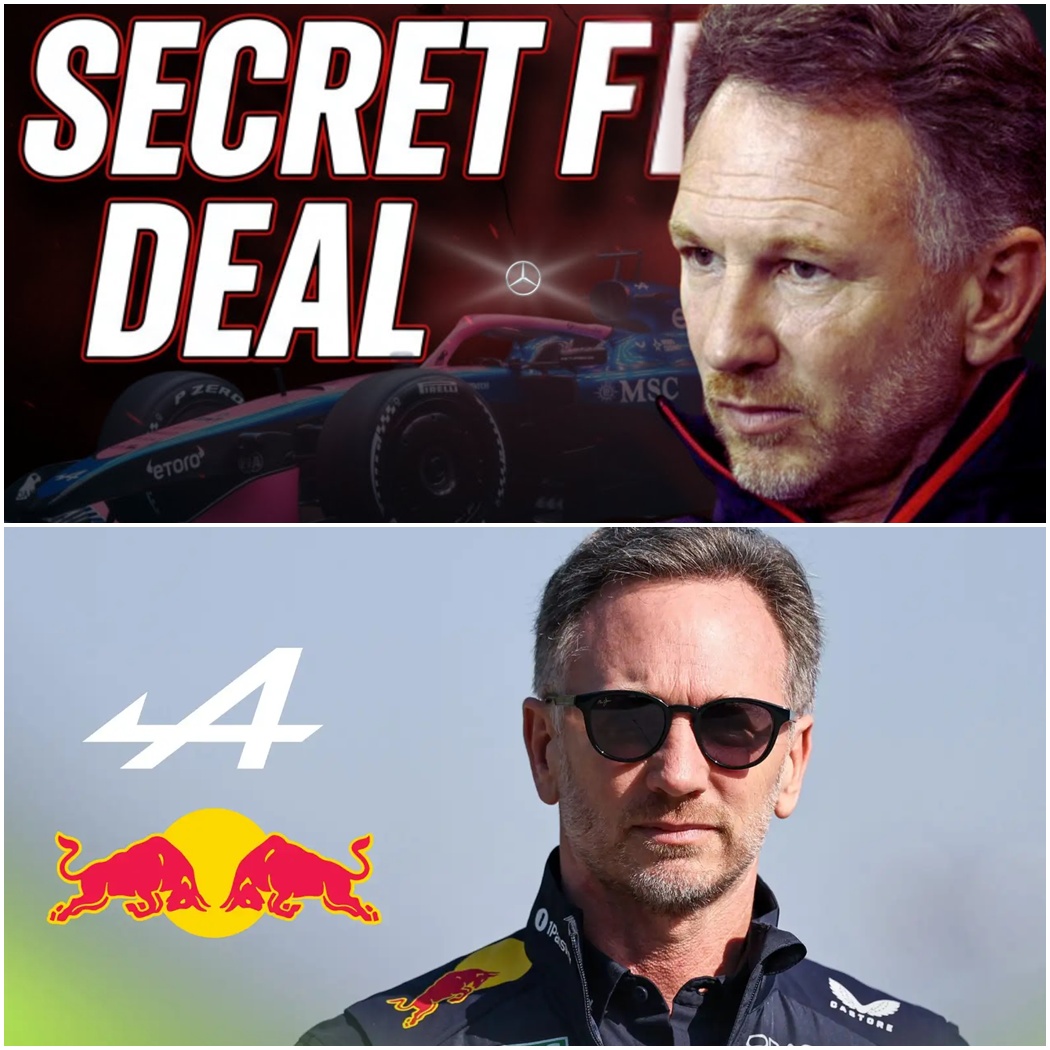
  • From Red Bull Exile to Alpine Owner? Inside Christian Horner’s Audacious $700M Bid to Return to the Grid

    From Red Bull Exile to Alpine Owner? Inside Christian Horner’s Audacious $700M Bid to Return to the Grid

    In the high-octane world of Formula 1, silence is rarely just silence; it is usually the sound of an engine revving before the lights go out. For nearly six months, the paddock has been unusually quiet regarding one of its most titanic figures. But if the rumors swirling through the motorsport world this week are to be believed, that silence is about to be shattered by the roar of the most audacious comeback in modern racing history.

    Christian Horner, the man who built the Red Bull Racing dynasty and was unceremoniously removed from it in July 2025, is reportedly not planning to retire to the English countryside with his millions. Instead, he is plotting a takeover that could shake the sport to its foundations.

    The Fall of an Empire

    To understand the magnitude of this potential return, we must first revisit the seismic events of last summer. On July 9, 2025, the unthinkable happened. Red Bull Racing, the team that had crushed the opposition with unprecedented ruthlessness just two seasons prior, issued a terse statement releasing Horner from his duties.

    It was a brutal end to a 20-year reign. Under Horner’s stewardship, the team had evolved from the chaotic remnants of Jaguar Racing into a juggernaut, claiming six Constructors’ Championships and eight Drivers’ titles. The metrics of his success were staggering: 124 Grand Prix victories and a 2023 season that borders on statistical absurdity, winning 21 out of 22 races.

    But in F1, history is written in pencil, and results are the only ink that matters. By mid-2025, the “Blue Wall” had crumbled. The team had plummeted to fourth in the Constructors’ Championship—a catastrophic decline for an operation accustomed to perfection. Legendary designer Adrian Newey had departed for Aston Martin, and Sporting Director Jonathan Wheatley had left for Sauber. The pillars of the temple were collapsing, and the lingering cloud of internal investigations from 2024 finally brought the roof down.

    Horner didn’t leave empty-handed, of course. Reports suggest his exit package was one for the record books, with estimates ranging from $60 million to a staggering $100 million. Sky Sports reporter Craig Slater revealed a fascinating detail: Horner allegedly accepted a lower payout in exchange for a shorter non-compete clause, effectively “buying” his freedom to return to the sport he loves.

    That freedom, however, came with a catch—a “paddock ban” that bars him from entering the F1 inner sanctum until roughly April 2026. But as we are learning, you don’t need a paddock pass to buy a racing team; you just need a phone and a lot of capital.

    The Alpine Gamble: Why Buy the “Wooden Spoon”?

    The target of Horner’s ambition is as surprising as the move itself: BWT Alpine F1 Team.

    On paper, Alpine looks less like an opportunity and more like a warning sign. The French outfit, once a proud works team, endured a nightmare 2025 campaign, finishing dead last in the Constructors’ Championship. They scraped together a pathetic 22 points, all scored by Pierre Gasly, while rookie drivers Jack Doohan and Franco Colapinto failed to score a single point between them.

    The team is currently in the throes of an identity crisis. In September 2024, Renault Group CEO Luca de Meo made the heart-wrenching decision to shut down the team’s engine program at Viry-Châtillon. After nearly 50 years of engine manufacturing heritage, Alpine will become a customer team in 2026, running Mercedes power units and gearboxes. They are effectively stripping themselves down to the chassis, cutting costs, and swallowing their pride for the sake of survival.

    So, why would the most successful team principal of his generation want to buy into a team that is seemingly in freefall?

    The answer lies in potential and precedent. Horner has done this before. When he took over Jaguar in 2005, it was a laughing stock—a team that burned money for mediocre results. He turned that mess into Red Bull Racing. Alpine, despite its current woes, possesses infrastructure at Enstone that is world-class. With the looming 2026 regulation changes and a reliable Mercedes engine in the back, the ingredients for a resurgence are there. Horner doesn’t see a shipwreck; he sees a hull that just needs a new captain.

    The “Hollywood” Deal

    The specific mechanics of Horner’s rumored entry are fascinating. He is reportedly leading a consortium to acquire the 24% stake in Alpine currently owned by Otro Capital.

    You may remember Otro Capital from their flashy entry into the sport in late 2023. They brought with them a glittering roster of celebrity investors including Ryan Reynolds, Rob McElhenney, Patrick Mahomes, Travis Kelce, Rory McIlroy, and Anthony Joshua. They paid €200 million for that stake, valuing the team at around $900 million.

    Fast forward to today, and F1 team valuations have exploded. Even for a last-place team, the franchise value is immense. Estimates suggest Otro’s stake could now be worth upwards of £700 million—a potential 400% return on investment in just two years. For a private equity firm, that is the kind of “exit strategy” dreams are made of.

    Horner’s goal appears to be a structure similar to the one Toto Wolff enjoys at Mercedes: serving as both Team Principal and a significant shareholder. It provides the ultimate job security and autonomy. If you own the team, you can’t be sacked by a board that panic-reacts to a bad season. It is a level of control Horner never truly had at Red Bull, where he was ultimately an employee of the energy drink giant.

    The “Mafia Reunion”: Horner vs. Briatore

    However, there is a chaotic, flamboyant, and distinctly Italian elephant in the room: Flavio Briatore.

    The 74-year-old former Benetton and Renault boss returned to Enstone in June 2024 as an “Executive Advisor,” but insiders know the truth: Flavio is the boss. He has been given carte blanche by Renault to hire, fire, and restructure.

    The prospect of Christian Horner and Flavio Briatore working together is enough to make a scriptwriter blush. They are two of the strongest, most Machiavellian personalities the sport has ever seen. Toto Wolff recently joked that an Alpine led by Horner, Briatore, and perhaps even Bernie Ecclestone would be a “Mafia reunion.”

    Briatore has already fired shots across the bow. When asked in August about the possibility of Horner joining, he was dismissive: “He’s not in Formula 1 anymore.” It was a cold reminder of the pecking order. Briatore is currently the king of the castle at Enstone, and history suggests he does not share power easily.

    Former Haas boss Guenther Steiner weighed in with a blunt assessment: “Flavio and Horner in the top position together wouldn’t work.” It is a valid concern. Can a team have two alpha dogs? Horner wants autonomy; Briatore demands total obedience. It is a recipe for either spectacular success or a nuclear meltdown.

    The Road Ahead

    There are significant hurdles to clear before this deal can happen.

    First, the money. Even with a $100 million severance package, Horner cannot fund a €700 million buy-in alone. He is reportedly courting investors in the Middle East and the US, though no specific names have been confirmed.

    Second, the politics. Renault Group still owns 76% of the team and holds a “right of first refusal” on any sale of Otro’s shares. If they don’t want Horner, they can block the deal or buy the shares back themselves.

    Third, the timing. Horner’s ban runs until April. He cannot legally work in an operational role until then. The likely scenario is a phased entry: finalize the purchase as a silent investor now, and walk through the factory gates as the boss the moment the clock strikes midnight on his ban.

    A Legacy on the Line

    Ultimately, this story is about more than money or business; it is about redemption.

    Christian Horner could have walked away. He has the money, the trophies, and the history books on his side. But the manner of his exit clearly stings. Being discarded by the team he built from scratch has lit a fire. He doesn’t just want to return; he wants to prove Red Bull wrong. He wants to take the worst team on the grid and beat his former employers with it.

    It is a narrative arc that feels almost too perfect for Formula 1. The fallen king, exiled from his kingdom, raising an army from the broken remnants of a fallen rival to wage war on his past.

    As we stand at the beginning of 2026, with the new season looming and the April deadline approaching, one thing is certain: the paddock may be quiet now, but the storm is coming. And if Christian Horner has his way, the Alpine garage is about to become the most interesting place on Earth.

  • Red Bull’s Secret Weapon for 2026 Exposed: How a “Broken” Season Became the Ultimate Trap for F1 Rivals

    Red Bull’s Secret Weapon for 2026 Exposed: How a “Broken” Season Became the Ultimate Trap for F1 Rivals

    In the high-octane world of Formula 1, secrets are the currency of champions. Usually, these secrets are guarded by carbon fiber walls and encrypted servers—a revolutionary diffuser, a loophole in the suspension regulations, or a clever engine mapping trick. But as the sport barrels toward the monumental regulation overhaul of 2026, the biggest secret in the paddock has just been exposed. Surprisingly, it isn’t a piece of technology at all. It is a mindset shift, a calculated risk, and a terrifying message to every other team on the grid: Red Bull is not done yet.

    To understand the magnitude of this revelation, we have to rewind the tape to the first half of the 2025 season. At that point, the narrative seemed written in stone. The Red Bull dynasty appeared to be crumbling. Max Verstappen, the man who had dominated the sport with robotic precision, was visibly fuming. The RB21, Red Bull’s challenger for the year, was not just slower than its rivals; it was fundamentally flawed. It dragged around the same persistent issues that had plagued the team the previous year, leaving their star driver frustrated and the team looking lost.

    As the season progressed, the writing was on the wall. McLaren’s Lando Norris was surging, capitalizing on a car that was arguably the class of the field. Oscar Piastri was looking like a legitimate threat. The championship, once a foregone conclusion for the energy drink giant, was slipping away.

    Then came the summer break—the traditional pivot point in a Formula 1 season. With a massive regulation change looming in 2026, the standard playbook for a team in Red Bull’s position would be simple: cut your losses. Logic dictated that they should abandon the troubled RB21, accept a bruised ego for 2025, and pour every ounce of resource, wind tunnel time, and brainpower into the 2026 car. That is what nearly every other team would have done. It is the safe bet. It is the “smart” move.

    Red Bull did the unthinkable. They doubled down.

    Instead of turning the page, they stayed in the trenches. They refused to give up on a car that clearly wasn’t championship-worthy at the start of the year. This decision baffled pundits and fans alike. Why waste precious development time on a losing cause when a revolution was just around the corner?

    The answer, provided by Team Principal Laurent Mekies, reveals the genius behind the madness. “We didn’t want to simply turn the page and have the wishful thinking that whilst the 2025 car had not been at the required level to fight for the title, we would then be okay doing so in 2026,” Mekies explained.

    This quote is the key to unlocking Red Bull’s “new trick.” It wasn’t about the RB21’s lap times; it was about the tools that built it. The team realized that if they didn’t understand why their 2025 car was failing, they would simply carry those same failures into the new era. The problem wasn’t just the car; it was the process. The same brains, the same wind tunnel, the same simulation methods that produced the flawed RB21 would be designing the 2026 car. If the methodology was broken, a new set of regulations wouldn’t fix it.

    So, instead of chasing the dream of a fresh start, they chased the brutal truth of their current failure. Mekies described it as a need to “get to the bottom of the 2025 project.” They engaged in painful, honest digging. They dissected their failures not to save the season, but to save their future. They sacrificed time—the most precious commodity in F1—to validate their engineering philosophy.

    This was a massive gamble. In a sport where development wars are won by millimeters and milliseconds, voluntarily staying behind to fix a “broken” mindset is unheard of. But the results were nothing short of spectacular.

    As the 2025 season entered its final stretch, something shifted. The Red Bull car, which had been a handful to drive for months, began to find its rhythm. Max Verstappen, seemingly out of contention, clawed his way back into the fight with a ferocity that reminded everyone why he is a multi-time champion. He won in Abu Dhabi. He surged through the field, race after race, turning what should have been a coronation for Norris into a nail-biting thriller.

    In the end, Verstappen fell agonizingly short, finishing just two points behind Lando Norris in the Drivers’ Championship. On paper, it was a loss. It was the end of a streak. But in the paddock, the mood was very different. While the headlines screamed about Norris’s first world title—a well-deserved victory for the Briton—the whispers in the garages were focused on the terrifying momentum of Red Bull.

    Verstappen’s late-season form was so impressive that despite losing the title, the F1 team bosses voted him the best driver of the year. He ranked ahead of the actual world champion. This accolade is more than just a consolation prize; it is a testament to the quality of his driving and the recovery of his team.

    But the most chilling aspect for Red Bull’s rivals is what this means for 2026.

    By fixing the RB21, Red Bull didn’t just make a car faster; they validated their entire engineering process. They proved that their tools work. They proved that when they identify a problem, they can solve it. Mekies noted that this success gave the technical department a massive confidence boost—not just in their people, but in their methodologies and KPIs.

    “We already had that confidence in our people, but this gives confidence into the methodologies, into the tools, into the KPIs that you are using,” Mekies stated.

    Translated from corporate speak, this means Red Bull has built a playbook they trust. While other teams are heading into the 2026 regulations with hope and theories, Red Bull is entering with “real-time validation.” They have stress-tested their design philosophy in the heat of battle and emerged with a solution that works.

    This creates a psychological paradox. Red Bull lost the 2025 battle, but they may have already won the 2026 war.

    The “trick” everyone is talking about is essentially psychological warfare. It is the weaponization of resilience. Nothing terrifies a rival more than a competitor who is humble enough to admit they are wrong and hungry enough to do the hard work to fix it. Red Bull didn’t just patch up a car; they rebuilt their culture. They fostered an environment where “wishful thinking” is replaced by hard data and honest reflection.

    And then there is the Max Verstappen factor.

    The Dutchman is no longer just the angry young man fuming about a slow car. He is a driver who has seen the bottom, trusted his team to dig their way out, and stood on the top step of the podium in Abu Dhabi as proof that the process works. Verstappen admitted he felt better after this season than he did the previous year when he won the championship. Let that sink in. A season that began with frustration and ended in defeat has left him more confident than a season of dominance.

    He enters 2026 with a chip on his shoulder and absolute faith in the machine behind him. He knows that his team sacrifices for the long game. He knows they are capable of turning a disaster into a near-victory. That kind of belief makes a driver dangerous. It makes him patient, calculated, and lethal.

    The question now echoing through the factories of Mercedes, Ferrari, and McLaren is haunting: If Red Bull could come within two points of the title with a flawed car and a late start, what will they do when they get it right from day one?

    The 2026 regulations are the biggest reset since the turbo-hybrid era began. New power units, new aero rules, sustainability mandates—it is a perfect storm that usually reshuffles the pecking order. In such storms, it is the strongest cultures that survive. Red Bull has spent the last year fortifying exactly that.

    Critics might argue that the time lost on the RB21 could hurt their initial development for the 2026 car. It is a valid concern. While Red Bull was fixing “yesterday,” McLaren and Ferrari were working on “tomorrow.” There is a possibility that Red Bull shows up to pre-season testing slightly behind on raw development hours.

    However, Red Bull sees it differently. Mekies argues that the work on the RB21 laid the technical foundation for the 2026 beast. The learning regarding methodologies—where to add performance, how to correlate wind tunnel data with track reality—is directly transferable. They haven’t been wasting time; they’ve been sharpening their sword.

    Lando Norris and McLaren celebrate their triumph, and rightly so. They toppled a giant. But even in victory, there must be a sense of unease. They know they beat a Red Bull operating at 80%. They know they barely scraped by against a team in crisis mode. Now, they face a Red Bull team that has exorcised its demons and is operating with renewed clarity.

    The narrative of the “Red Bull trick” is a story of a culture war. It challenges the very ethos of modern Formula 1, which often prioritizes the next update over the long-term health of the engineering process. Red Bull chose the hard path. They chose the painful path. And in doing so, they may have secured their future.

    As the F1 circus prepares for the dawn of a new era, the secret is out. Red Bull isn’t relying on magic. They aren’t relying on a singular genius design. They are relying on a battle-hardened process that refuses to lie to itself.

    So, as we look toward the first race of 2026, ask yourself this: Is this the end of the Red Bull dominance, or was 2025 just the darkness before the dawn? The war for 2026 has already begun, and while the rest of the grid is hoping for a good car, Red Bull has spent the last year ensuring they can build one. The dynasty might not be over; it might just be getting started.

  • Sabotage in the Paddock: Did One Team Manipulate the 2026 Regulations to Create a “Camel” Engine?

    Sabotage in the Paddock: Did One Team Manipulate the 2026 Regulations to Create a “Camel” Engine?

    The world of Formula 1 is no stranger to political maneuvering, backroom deals, and the relentless pursuit of competitive advantage. However, as the sport barrels toward the massive regulatory overhaul of 2026, a new controversy has erupted that suggests the very foundations of the next era might be compromised before a single car hits the track. In a candid and explosive revelation, Pat Symonds, the former Chief Technical Officer of Formula 1 Management (FOM) who recently defected to the Cadillac Andretti project, has described the upcoming 2026 power unit regulations as a “camel”—a racehorse designed by a committee.

    This scathing assessment is not merely a critique of bureaucratic inefficiency; it is a direct accusation that the FIA allowed one specific, powerful engine manufacturer to dictate the rules, resulting in a compromised technical package that could negatively impact the quality of racing for years to come.

    The “Camel” Theory: How a Committee Ruined the Racehorse

    The phrase “a camel is a horse designed by a committee” is a classic idiom describing how group decision-making often leads to disjointed, ill-conceived outcomes. According to Symonds, this is exactly what happened with the 2026 engine rules. The primary objective for the new regulations was clear: modernize the sport, attract new manufacturers like Audi and Ford, and increase sustainability. To achieve this, the FIA decided to remove the MGU-H (Motor Generator Unit-Heat), a complex and expensive piece of technology that recovered energy from exhaust gases. While the MGU-H was a marvel of efficiency, it was irrelevant to road cars and acted as a barrier to entry for new brands.

    However, removing the MGU-H created a massive energy deficit. To compensate, the electrical power output from the hybrid system was nearly tripled to 350kW. The critical engineering challenge became: where does this extra energy come from?

    Symonds and his team at FOM proposed a logical, engineering-led solution: allow cars to recover energy from the front axle. Currently, F1 cars only recover energy from the rear axle via the MGU-K. Implementing front-axle regeneration would have balanced the car’s energy profile, allowed for more efficient braking, and ensured the battery remained charged throughout a lap. It was a solution that prioritized the “show” and the quality of the racing product.

    “If you did that, everything balanced out quite nicely,” Symonds noted. “You weren’t short of energy; you could have a lot more electrification on the car.”

    But that is not what happened. instead of a balanced, high-tech racehorse, the sport got a camel.

    The Mystery Manufacturer: Who Blocked the Solution?

    The refusal to adopt front-axle energy recovery wasn’t due to technical impossibility or safety concerns. It was a political block. Symonds explicitly stated that the FIA rejected the proposal due to “objections to one team.”

    Who is this mystery team? While Symonds did not name names, the deductive process leaves us with very few suspects. It is highly unlikely to be one of the newcomers like Audi or Red Bull Ford, as they would have benefited from a more straightforward, standardized solution. It is equally unlikely to be Renault (Alpine), who holds less political sway and is currently in disarray regarding their engine program.

    The finger of suspicion points squarely at the two giants of the sport: Mercedes or Ferrari.

    The prevailing theory among paddock insiders suggests Mercedes is the most likely culprit. Why would a manufacturer want to block a regulation that makes the engine better? The answer lies in the dark art of “competitive advantage.”

    The removal of the MGU-H was already a concession to new manufacturers, stripping away an area where Mercedes had enjoyed a decade of dominance. If the FIA had then introduced a standardized, simple solution for energy recovery like front-axle regen, it would have leveled the playing field even further. By blocking the “easy” fix, the dissenting manufacturer ensured that the 2026 engines would be “sparse on energy.”

    This scarcity of energy forces teams to find “gray area” solutions—complex, resource-intensive workarounds to manage energy deployment and combustion efficiency. Who benefits from a complex, resource-heavy engineering war? The established giants with the deepest pockets and the most experienced engine departments. By intentionally breaking the regulations to create a difficult engineering puzzle, the mystery team likely gambled that they could solve the puzzle better than the newcomers, thereby baking in a new era of dominance.

    The Consequences: A “Sparse” Power Unit

    The fallout from this decision is significant. Without front-axle recovery, the 2026 cars risk running out of battery power halfway down the long straights of tracks like Monza or Spa. This phenomenon, known as “clipping,” forces drivers to lift off the throttle and downshift on straightaways to regenerate power—a bizarre and counter-intuitive style of racing that no fan wants to see.

    Symonds lamented the outcome, stating, “We ended up with a power unit that is sparse on energy. Okay, there are ways around it, but they are not good ways around it.”

    We are already seeing the effects of this. Reports indicate that Mercedes is currently pushing the boundaries of compression ratios in their new internal combustion engine (ICE) to claw back performance. This suggests an intense, expensive arms race is underway to fix a problem that could have been solved with a simple rule change. The “camel” is already proving difficult to ride.

    Cadillac and the Mystery of Number 24

    While the engine wars heat up in Europe, the American entry, Cadillac, has been busy teasing its future lineup. A recent social media post from the General Motors-backed team set the internet ablaze with speculation regarding their driver choices for their debut season.

    The image in question featured the Cadillac logo alongside a stylized graphic of a cat with a wry smile. But the smoking gun was tucked away in the bottom left corner: the number “24.”

    In the current F1 grid, the number 24 belongs to one man: Zhou Guanyu.

    The Chinese driver, who recently departed the Sauber/Stake team, is widely known for his affection for cats—a detail that makes the teaser’s imagery undeniable. With Cadillac’s 2026 seats likely filled by experienced veterans (rumors persist of a Perez/Bottas pairing), the addition of Zhou would likely be in a reserve or development role.

    Connecting Zhou to Cadillac makes strategic sense. The team will be powered by Ferrari engines in their initial seasons before transitioning to their own GM power unit in 2028. Zhou has deep historical ties to the Ferrari Driver Academy. Furthermore, his commercial appeal in the Asian market would be a massive asset for a new American team looking to build a global fanbase. While Cadillac has officially captioned the image with a date referencing early January 2026, the inclusion of the specific driver number effectively confirms that Zhou has found a new home in the paddock.

    The Blade of Qiddiya: A Track from the Future

    As teams squabble over engines and drivers, the venues of the future are literally rising from the desert sands. New images have surfaced of the Qiddiya Speed Park Track in Saudi Arabia, and they are nothing short of science fiction.

    The centerpiece of the circuit is the “Blade”—a terrifying first corner elevated 20 stories (over 70 meters) above the ground. The track layout integrates seamlessly with a massive Six Flags theme park currently under construction. Recent construction photos show the track surface weaving directly alongside the world’s fastest rollercoaster, “Falcon’s Flight.”

    While traditionalists may scoff at the “Mario Kart” aesthetic, the sheer ambition of the Qiddiya project is undeniable. The circuit is designed to be a permanent facility that blends motorsport with entertainment, moving away from the temporary street circuit model that has dominated recent calendar additions. The progress on the ground is rapid, and with Saudi Arabia eager to showcase its “Vision 2030,” the pressure is on to complete this futuristic complex. Whether the “Blade” provides good racing or just good Instagram photos remains to be seen, but it represents a bold new philosophy in track design.

    Visual Identity: A Return to Roots

    Closer to the present, teams are beginning to unveil their new looks for the upcoming season. In a move that will delight nostalgia hunters, Red Bull Racing has updated its logo to return to a design not seen since 2015.

    The key change is the reintroduction of the white outline around the “Red Bull” text on the car livery. This specific aesthetic was last used on the RB11—the “Cammo Bull” that famously ran a black and white testing livery before switching to the purple-inflected Infiniti branding. For the last decade, Red Bull has stuck to a rigid, matte-finish design that has become iconic but arguably stale. The return of the white outline suggests a slight visual refresh is incoming, potentially opening the door for special one-off liveries that pop more on television.

    Similarly, Williams has unveiled a new “W” logo that harkens back to their championship-winning heritage, while Mercedes is refining its branding to reflect a new era post-Lewis Hamilton. These changes may seem cosmetic, but in a sport built on marketing and perception, a fresh coat of paint can often signal a fresh operational philosophy.

    The Road Ahead

    As the factories reopen their doors after the winter shutdown, the atmosphere in Formula 1 is one of frantic intensity. Staff are working 60-hour weeks. Aston Martin is reportedly behind schedule and failing crash tests. Mercedes is confident but secretive. And hovering over it all is Pat Symonds’ warning about the “camel.”

    The 2026 regulations were supposed to be a clean slate—a chance to correct the sins of the past and create a perfectly balanced sport. Instead, it appears that the same old forces of self-interest and political lobbying have once again complicated the picture. If the “mystery team” truly did sabotage the regulations to gain an edge, they may have won the political battle, but the war for the fans’ entertainment is far from decided. The concern now is that we are heading into an era defined not by wheel-to-wheel battles, but by energy management, clipping, and engineering loopholes.

    In Formula 1, you rarely get what you wish for; you get what you negotiate. And it seems one team negotiated very well indeed.

  • Lance Stroll in Critical Danger: New Evidence and Rising Pressures Threaten His Future at Aston Martin Ahead of 2026

    Lance Stroll in Critical Danger: New Evidence and Rising Pressures Threaten His Future at Aston Martin Ahead of 2026

    The Uncomfortable Truth Behind Aston Martin’s Ambition

    In the high-octane world of Formula 1, silence is often louder than words. For years, Lance Stroll’s position at Aston Martin has been viewed as the most secure seat on the grid, shielded by the impenetrable armor of his father’s ownership. Lawrence Stroll’s vision turned a midfield team into a potential powerhouse, and his son was always the designated beneficiary of that rise. However, the winds in the paddock are shifting. What was once a project built on patience has transformed into a ruthless pursuit of championships, and according to emerging reports and expert analysis, Lance Stroll’s tenure is facing its gravest threat yet.

    The narrative surrounding Stroll has dramatically darkened as we approach the 2026 season—a year marked as a “ground zero” for the sport with sweeping regulation changes. New evidence, not in the form of a smoking gun but in the undeniable shape of data and expert testimony, suggests that the Canadian driver is no longer just underperforming; he may be fundamentally incompatible with the team’s trajectory.

    The Piquet Verdict: A Structural Weakness Exposed

    The latest wave of scrutiny was catalyzed by biting comments from former F1 driver Nelson Piquet Jr. While criticism of Stroll is not new, Piquet’s assessment struck a nerve because it bypassed the usual complaints about lap times and went straight to the psychology of elite performance. He identified a “structural problem” that money cannot solve: the absence of genuine pressure.

    In Formula 1, pressure is the diamond maker. It is the force that sharpens reflexes, heightens focus, and forces drivers to extract the impossible from their machinery. Drivers like Fernando Alonso, Lewis Hamilton, and Max Verstappen operate in a constant state of “perform or perish.” Piquet argues that Stroll, insulated by his father’s ownership, lacks this existential threat. Without the fear of losing his seat, the evolutionary drive to adapt and improve dulls.

    This diagnosis aligns uncomfortably with Stroll’s 2025 campaign. After a promising start in Australia, his season disintegrated into a familiar haze of anonymity. While his teammate Fernando Alonso was wrestling a difficult car into points-paying positions through sheer force of will, Stroll often faded into the midfield, his performances lacking the bite and urgency required of a top-tier driver. This wasn’t just a bad patch of form; it was a demonstration of stagnation in a sport that demands constant evolution.

    The Alonso Factor: A Brutal Mirror

    If Piquet provided the theory, Fernando Alonso provided the proof. The disparity between the two Aston Martin drivers in 2025 was not just a gap; it was a chasm. Alonso, deep into his 40s, continues to drive with the hunger of a rookie fighting for his first contract. His ability to provide precise technical feedback and drag results out of a suboptimal car highlights exactly what Stroll is missing.

    The contrast has become impossible for the team to ignore. When the car is difficult to drive, Alonso adapts. When the strategy is compromised, Alonso improvises. Stroll, by comparison, appears passive. His driving style, often described as smooth but safe, does not correlate with the jagged, aggressive demands of modern F1 machinery.

    This gap creates a nightmare scenario for Aston Martin’s engineers. To develop a championship-winning car, a team needs two drivers pushing the equipment to its absolute limit, providing consistent data from the edge of performance. If one driver is constantly two-tenths off the pace not because of the car, but because of a lack of intensity, the data becomes corrupted. The team cannot tell if an upgrade failed or if the driver simply didn’t exploit it.

    2026: The Year of No Excuses

    Why is this coming to a head now? The answer lies in the year 2026. This is not just another season; it is the dawn of a new era for Aston Martin. The team has shed its underdog skin and is arming itself with the most potent weapons in motorsport history.

    First, there is the arrival of Adrian Newey, the greatest designer in F1 history. Newey’s cars are legendary for their speed, but they are also known for being “on the nose”—twitchy, responsive, and demanding absolute bravery from the driver. They punish hesitation. A passive driver in a Newey car is a wasted opportunity.

    Second, the team becomes the Honda factory works team. Honda does not spend hundreds of millions of dollars to participate; they spend it to dominate. Manufacturers of this caliber demand accountability. They expect their drivers to be extensions of the engineering department. If a Honda engine fails, they want to know why. If the energy deployment is inefficient, they need a driver who can manage complex hybrid systems while battling wheel-to-wheel at 200 mph.

    This is where the “New Shocking Evidence” narrative truly takes hold. It is the realization that the specific technical demands of the 2026 regulations—active aerodynamics, lighter chassis, and complex power units—will place an unprecedented cognitive load on drivers. It requires a level of adaptability and technical savvy that Stroll has rarely demonstrated. The fear inside Silverstone is that while they are building a rocket ship, they might still be employing a pilot who only knows how to fly a commercial jet.

    The End of Sentimentality

    For years, the question was, “Will Lawrence Stroll ever fire his son?” The answer was always assumed to be “No.” But the stakes have changed. Aston Martin is no longer a family vanity project; it is a multi-billion-dollar enterprise with external investors and global partners.

    Continuing with a driver widely perceived as a “liability” undermines the entire project. It affects morale in the garage—mechanics work 18-hour days to build a car that they know is being underutilized. It affects sponsorship—brands want to be associated with winners, not also-rans. And crucially, it affects credibility. You cannot claim to be chasing Red Bull and Ferrari while fielding a driver who would struggle to find a seat at Haas or Williams on merit alone.

    The arrival of Newey and Honda signals a shift from “patience” to “performance.” Decisions are now driven by data, not blood. If the telemetry shows that Stroll is leaving half a second on the table in every braking zone, Adrian Newey will not hesitate to point it out. Honda executives will not smile politely at a P14 finish. The insulation is being stripped away, layer by layer.

    A Final Crossroads

    Lance Stroll is not without talent. He has shown flashes of brilliance, particularly in wet conditions, and has secured podiums in the past. But flashes are no longer enough currency to buy a seat at a top team. The 2026 reset is a magnifying glass. It will expose every weakness, every hesitation, and every lack of commitment.

    The conclusion drawn from the emerging evidence is stark: Stroll is running out of time. The narrative that he is “learning” or “developing” is dead. He is now a veteran of the sport. The stagnation of his performance curve is more dangerous than a crash, because a crash can be fixed; mediocrity is a state of mind.

    As Aston Martin gears up for the most ambitious chapter in its history, the question is no longer whether they can afford to wait for Lance. The question is whether they can afford the consequences of keeping him. In a sport governed by the stopwatch, the numbers are finally starting to outweigh the name. Lance Stroll is in serious trouble, and for the first time, his father’s checkbook might not be enough to save him.

  • Reviewing the Grid: Christian Horner Launches Shocking €763 Million Bid for Alpine Takeover as Ferrari Gambles on Radical ‘Heavy’ Engine Tech for 2026

    Reviewing the Grid: Christian Horner Launches Shocking €763 Million Bid for Alpine Takeover as Ferrari Gambles on Radical ‘Heavy’ Engine Tech for 2026

    The silence of the Formula 1 winter break has been shattered in the most spectacular fashion imaginable. As we welcome the dawn of 2026, the paddock is already ablaze with two stories that promise to define the upcoming season before a single wheel has even turned in anger. From the corridors of power in France to the engine test beds in Maranello, the race for supremacy has begun, and the stakes have never been higher.

    In what is shaping up to be one of the most dramatic comeback stories in the history of the sport, former Red Bull Racing team principal Christian Horner is reportedly on the verge of a sensational return to the Formula 1 grid. Simultaneously, Ferrari is turning heads with a technical philosophy for their 2026 power unit that seemingly defies the laws of modern lightweight racing. These developments are not just rumors; they are seismic shifts that could alter the competitive landscape of the sport for years to come.

    The Return of the King? Horner’s €763 Million Play

    The most explosive news coming out of the winter break concerns a man who dominated the headlines throughout the summer of 2025. Christian Horner, the architect of Red Bull Racing’s modern dynasty, was unceremoniously sacked as team boss and CEO following the British Grand Prix in July 2025. The move, which became official last September, left a void in the paddock and sparked endless speculation about his future. Many assumed he would take a sabbatical or retire into the background. However, reports emerging from the Netherlands and Germany suggest that Horner has been plotting his revenge—or rather, his redemption—with meticulous precision.

    According to the Dutch publication De Telegraaf, and corroborated by German outlet Auto Motor und Sport, Horner is not just looking for a job; he is looking for ownership. The reports indicate that Horner has assembled a “financially strong investor consortium” with the specific aim of purchasing a controlling stake in the Alpine F1 Team. The figures being bandied about are eye-watering. The consortium is reportedly prepared to offer a staggering €763 million to acquire majority shares in the French-British racing outfit.

    This is a power move of the highest order. The deal allegedly involves taking over the shares currently held by the American investment group, often referred to as the “Capital” consortium (likely a reference to Otro Capital and their partners), alongside other investors. If successful, this acquisition would transform Horner from a hired team principal into a team owner and operator, granting him a level of control he arguably never fully possessed even at the height of his powers at Red Bull.

    A Clash of Titans: Horner vs. Briatore

    The implications of a Horner takeover at Alpine are fascinating, particularly regarding the team’s internal dynamics. Currently, the Enstone-based squad is operating under the watchful eye of the legendary and controversial Flavio Briatore, with Steve Nielsen serving as Sporting Director. Briatore, a figure as large as life as Horner himself, was brought back to steady the ship at Alpine. The prospect of these two behemoths of Formula 1 management working together—or perhaps against one another—is a narrative writer’s dream.

    If the deal goes through in the “coming days,” as the reports suggest, it could trigger an immediate and sweeping reshuffle of the Alpine leadership structure. Would Briatore step aside for the new majority owner? Would they form a formidable, if volatile, “dream team”? Or are we witnessing the first shots of a boardroom civil war? Alpine has struggled to find consistent form and stability in recent years. The injection of Horner’s proven championship-winning acumen, backed by nearly a billion Euros in investment, could be the catalyst the team needs to finally bridge the gap to the frontrunners. However, it also brings a level of scrutiny and pressure that the team must be prepared to handle.

    Ferrari’s Engineering Gamble: The Case for Steel

    While the corporate drama unfolds at Alpine, Scuderia Ferrari has been busy rewriting the rulebook on engine design. The 2026 regulations herald a new era of power units, with a greater focus on electrification and sustainable fuels. In this high-stakes environment, every manufacturer is looking for a “silver bullet”—a unique innovation that provides a decisive advantage. For Ferrari, that innovation appears to come in the form of a surprising material choice: steel.

    According to reports from the Italian edition of motorsport.com, Ferrari’s 2026 power unit will feature a steel alloy cylinder head. In the world of Formula 1, where “lightweight” is usually synonymous with “fast,” this decision initially seems counterintuitive. Steel is significantly heavier than the aluminum alloys traditionally used in engine construction. In a sport where teams spend millions to shave grams off their cars, voluntarily adding weight to the engine is a bold, almost heretical, concept.

    However, the engineers at Maranello have a clear rationale for this madness. The new engine regulations demand higher efficiency and will subject the internal combustion engine (ICE) to extreme pressures. Ferrari has determined that a steel alloy, while heavier, offers superior durability and resistance to these immense combustion loads compared to aluminum. This robustness allows the team to run the engine at higher parameters for longer periods without the risk of failure. It is a classic trade-off: accepting a weight penalty in the engine block to unlock greater raw power and reliability.

    Aerodynamics Over Everything

    The brilliance of Ferrari’s strategy may not lie in the engine block itself, but in what the engine allows the rest of the car to do. The reports detail that the 2026 Ferrari power unit features a “compact lightweight battery” and, crucially, “smaller radiators.”

    This is where the engineering puzzle pieces fit together. By designing a more robust engine that can perhaps handle higher temperatures or relies on a more efficient cooling architecture, Ferrari can reduce the size of the radiators. Smaller radiators mean the car’s sidepods can be packaged more tightly. Tighter packaging leads to better aerodynamics.

    In modern Formula 1, aerodynamic efficiency is king. If the “heavy” steel engine allows the aerodynamicists to sculpt a sleeker, lower-drag car body because the cooling requirements are reduced or better packaged, the lap time gained from the aero improvements could far outweigh the lap time lost from the heavier engine block. It is a holistic approach to car design that suggests Ferrari is thinking about the package as a whole, rather than just chasing peak horsepower numbers on a dyno.

    A “compact team” at Maranello is currently refining the reliability of this new unit, pushing the steel components to their limits to ensure that the gamble pays off. If they are right, Ferrari could have a car that is bulletproof in reliability and slippery in the air. If they are wrong, they could be hauling around “dead weight” that leaves them vulnerable in the corners and sluggish off the line.

    The 2026 Landscape

    As we look ahead to the new season, the narrative threads are already incredibly rich. We have the potential return of one of the sport’s most polarizing and successful figures in Christian Horner, armed with a war chest of funds and a point to prove. His arrival at Alpine would instantly make them the most talked-about team on the grid, shifting the spotlight away from his former employers at Red Bull.

    On the technical front, we have Ferrari diverging from the pack with a philosophy that prioritizes structural integrity and aerodynamic packaging over pure lightweight engine construction. It is a divergence that highlights the beauty of Formula 1: different teams solving the same problem in radically different ways.

    The 2026 season promises to be a year of answers. Can a steel engine beat an aluminum one? Can Christian Horner rebuild a midfield team into a champion? Can Alpine survive another leadership change? The winter break may be quiet on the track, but behind the scenes, the engines are roaring and the deals are being struck. Buckle up, because this year is going to be a classic.

    Summary of Key Updates:

    Christian Horner: Linked with a return to F1 via Alpine.

    The Deal: A consortium led by Horner is preparing a €763 million bid for majority shares.

    The Timeline: The acquisition could be finalized in the coming days.

    Ferrari Engine: 2026 Power Unit to feature a steel alloy cylinder head.

    The Trade-off: Steel is heavier but more durable, allowing for higher combustion pressures.

    Aero Benefit: The design allows for smaller radiators and better aerodynamic packaging.

    As the countdown to the first lights out continues, fans around the world will be watching these developments with bated breath. The chessboard has been reset, and the first moves have been aggressive. Welcome to Formula 1 2026.

  • The Billion-Dollar Snub: Why Lamborghini Will Never Enter Formula 1

    The Billion-Dollar Snub: Why Lamborghini Will Never Enter Formula 1

    In the high-octane world of motorsport, the Formula 1 grid is the ultimate altar. It is the place where legends are forged, where engineering limits are shattered, and where automotive giants spend billions to prove their supremacy. Ferrari has reigned there for 75 years. Mercedes, McLaren, and Renault have built dynasties. Even newcomers like Audi and Cadillac are scrambling to claim their spot on the starting line for 2026.

    But amidst the roar of V6 hybrids and the flash of pit lane cameras, there is a deafening silence. The Raging Bull is missing.

    Lamborghini, the brand synonymous with excess, speed, and Italian passion, is nowhere to be found. They are not in the paddock. They are not in the wind tunnels. And according to their leadership, they never will be. This isn’t a case of missed opportunity; it is a deliberate, calculated, and somewhat controversial refusal to play the game. To understand why one of the world’s most powerful supercar manufacturers would shun the world’s biggest racing stage, we have to look past the balance sheets and into a history defined by pride, insults, and a specific kind of fear.

    The Grudge That Started It All

    The story of Lamborghini’s absence from F1 doesn’t begin in a corporate boardroom in 2026; it begins on a dusty road in Maranello in 1963.

    Ferruccio Lamborghini was not a racing driver. He was a wildly successful tractor manufacturer, a man of industry who enjoyed the fruits of his labor—specifically, his collection of Ferraris. However, Ferruccio had a mechanic’s ear and an engineer’s mind, and he was plagued by a nagging problem: the clutches on his Ferraris kept breaking.

    Frustrated, he did what any pragmatic billionaire would do. He drove to the neighboring village to speak to the man in charge. He walked into the factory of Enzo Ferrari, the imperious patriarch of Italian racing, to offer some constructive criticism.

    The meeting is the stuff of automotive legend. Instead of listening to his customer, Enzo Ferrari dismissed him with a cutting insult that would echo through history: “Stick to making tractors. Leave the sports cars to those who understand them.”

    Ferruccio drove home humiliated. But in that humiliation, a fire was lit. He didn’t want to beat Enzo Ferrari on the racetrack—a domain Enzo viewed as the only thing that mattered. Ferruccio decided to beat him on the road. He would build cars that were faster, more luxurious, and better engineered than anything leaving the Maranello factory gates.

    This fundamental difference in philosophy birthed the Lamborghini identity. Ferrari was a racing team that sold road cars to fund its track obsession. Lamborghini was a road car manufacturer that viewed racing as a distraction. Ferruccio’s goal was the perfect Grand Touring experience, not the fastest lap time at Monza.

    The “Moderna” Experiment and the Senna Heartbreak

    However, the allure of F1 is powerful, and even Lamborghini couldn’t resist it forever. In the late 1980s, under the ownership of Chrysler, the company made its only serious attempt to enter the circus. Flush with American cash, they hired legendary ex-Ferrari engineer Mauro Forghieri to build a V12 engine.

    In 1991, they went all in. They built an entire car, the “Lambo 291,” a radical dark blue machine with triangular side pods that looked like a spaceship compared to the grid. But here, the brand’s deep-seated anxiety revealed itself. Terrified that a failure on the track would tarnish their image as the ultimate supercar builder, the company refused to put the name “Lamborghini” on the chassis. They entered the team as “Modena.”

    The fear was justified. The car was a disaster. It failed to qualify for most races, scored zero points, and the team folded after a single season.

    But the engine lived on, leading to one of the most agonizing “what ifs” in F1 history. In 1993, McLaren, looking for a new engine partner, bolted a Lamborghini V12 into the back of Ayrton Senna’s car. The results were shocking.

    Senna, arguably the greatest driver who ever lived, was mesmerized. The Lamborghini engine produced 750 horsepower—far more than the Ford engines McLaren was using. Senna was faster, the car was more stable, and he reportedly begged the team to let him race with the Lamborghini engine immediately.

    Imagine the timeline where Ayrton Senna wins a championship in a Lamborghini-powered McLaren. It could have changed everything. But politics intervened. McLaren boss Ron Dennis had already signed a deal with Peugeot. The Lamborghini engine was scrapped. The dream died, and Lamborghini walked away from the sport, seemingly for good.

    The Modern Calculation: Why Risk the Myth?

    Fast forward to 2026. The landscape of Formula 1 has exploded. The sport is a global entertainment juggernaut. The Volkswagen Group, which now owns Lamborghini, is finally entering the fray—but they are sending Audi, not the Bull.

    Why? The answer lies in a brutally honest assessment of brand identity and risk.

    Stefan Winkelmann, Lamborghini’s CEO, has been explicit: F1 does not fit their business model. But the reasons go deeper than just “business.”

    1. The Corporate Lane: Within the VW Group, every brand has a role. Audi is the technological pioneer; they get the F1 slot to showcase hybrid innovation. Porsche is the heritage racer; they dominate Le Mans and GT racing. Lamborghini is the “rebel.” Their brand is built on emotion, theater, and design. You buy a Lamborghini to stop traffic in Miami or London, not because it has the most efficient energy recovery system.

    2. The Ferrari Problem: This is the quiet truth that few executives will say out loud. If Lamborghini enters F1, they are stepping into Enzo’s house. Ferrari has 75 years of data, infrastructure, and political influence in the sport.

    New teams, no matter how well-funded, take years to become competitive. If Lamborghini joined the grid, they would almost certainly spend three to five years losing. Every Sunday, millions of viewers would see a red Ferrari lapping a Lamborghini. The narrative would be devastating: Ferrari is the real Italian master; Lamborghini is the pretender.

    Why would they pay $500 million a year to prove their rival is better?

    Marketing is built on perception. Right now, Lamborghini exists as the “anti-Ferrari.” They are the cool, jagged, aggressive alternative. In the absence of direct competition, they can claim to be superior. On a racetrack, the stopwatch doesn’t lie. By staying away, Lamborghini preserves the mystique.

    Success is the Best Revenge

    The most compelling argument against F1, however, is simply that Lamborghini doesn’t need it.

    While Ferrari’s brand health is often tied to their Sunday performance—witness the panic in Italy after Ferrari’s winless 2025 season despite signing Lewis Hamilton—Lamborghini operates in a blissfully different reality.

    In 2024, Lamborghini sold over 10,000 cars. They generated over €3 billion in revenue. Their new hybrid flagship, the Revuelto, is sold out for years. The Urus SUV prints money. They have achieved record-breaking operating income without spending a dime on F1 entry fees.

    Instead of F1, they built a “customer racing” empire. The Super Trofeo series allows wealthy clients to race Lamborghini cars against other Lamborghini cars. It is an enclosed ecosystem where the brand always wins. It generates profit, engages customers, and creates lifestyle content without the risk of public failure.

    When a Lamborghini GT3 car wins a race, it’s a triumph of engineering. When it loses, it’s just a “private team” having a bad day. The factory is insulated from the shame of defeat.

    The Verdict

    In a world where relevance is often chased through exposure, Lamborghini has found power in absence. They have realized that their customers don’t care about Constructor Championships. They care about drama, noise, and being seen.

    Ferruccio Lamborghini’s ghost seems to be nodding in approval. He never wanted to play by Enzo’s rules. He wanted to change the game. By refusing to enter Formula 1, Lamborghini has made the ultimate power move. They have looked at the most prestigious trophy in the world and said, “We don’t need it.”

    Ferrari is forced to race to maintain its legend. Lamborghini simply is the legend. And as the sales figures climb while the Scuderia struggles in the midfield, one has to wonder: Who really won that argument in 1963?