Gabby Logan previously recalled her fury after a “well-known male presenter” made a shocking misogynistic comment at her.
The TV favourite, 52, has been a regular on screens for years, hosting shows like Match of the Day, the 2024 Summer Olympics and the Women’s Euros final – which airs today (July 27).
However, it wasn’t always plain sailing for Gabby – especially at the start of her career in a then-predominantly male industry.
She was left fuming after a vile comment from a presenter (Credit: Lorraine/YouTube)
Gabby Logan on sexist remark from presenter
In 2022, Gabby revealed that she was previously subjected to a vile remark from a “well-known presenter” who remains unnamed.
Reflecting on her time at Sky Sports, Gabby called it a “tough school” and shared that she was “occasionally” the “butt of comments and scenarios that my male peers might not have had to endure”.
The TV star then went on to recall the sexual jibe that left her “dying inside.”
Gabby said: “As I wandered through the office one afternoon, one well-known male presenter shouted: ‘Oi, Yorath! How many Premier League footballers have you notched up on your bedpost?’”
The TV star clapped back at one sexist man (Credit: U/YouTube)
‘Inside, I was dying’
In a section of her book, published in the Daily Mail, Gabby added: “At 23 years old, I lacked the verbal elasticity to knock him out with a witty retort. His gang of cronies giggled. I smiled and carried on walking. Inside, I was dying.”
However, that was not the only ordeal she had to face.
Gabby revealed: “An older rugby league presenter stopped me in the corridor one day and said: ‘Your [bleep] is amazing right now, but sadly for you, it’s one of those [bleep]s that will be by your knees when you hit 30.’”
She fired back: ”’Well you might find out – if you’re even still around when I’m 30.’ That was the best I could do.”
Gabby and husband
Away from the TV shows, Gabby is happily married to retired Scottish rugby player Kenny. The pair tied the knot way back in 2000.
And over the years, Gabby and Kenny have endured a variety of challenges. These include IVF, her menopause struggles and his battle with prostate cancer.
Gabby has previously opened up on the diagnosis and revealed that it was Davina McCall who inspired him to get checked out.
The England women’s national football team, better known as the Lionesses, are defending their title as European champions this year after beating Italy in a tense semifinal match – but who are the partners they’ll be celebrating with if they win?
With standout performances from Chloe Kelly, Hannah Hampton, Leah Williamson, Michelle Agyemang, and just about every other member of the squad, this year’s Euros tournament has been a nail biter.
But what do we know about the Lionesses’ lives behind the scenes?
From Leah Williamson breaking her silence on the so-called Spanish “kiss-gate” scandal to Chloe Kelly looking “so beautiful” at her star-studded Cheshire marriage to Everton groundsman Scott Moore, here’s the lowdown on the Lionesses’ love lives.
The Lionesses are the perfect role models in this social media-crazed world (Credit: Splash News)
Lionesses captain Leah Williamson
In May this year, Leah Williamson and the rest of Arsenal celebrated a remarkable win over Barcelona, getting their hands on the Champions League trophy for the second time.
Leah posted on social media that it was “Magic. Pure Magic. What a weekend, see you at the Emirates Gooners.”
Among those joining Leah in celebrating the win was American journalist and former Miss USA, Elle Smith. She shared a black-and-white photo of herself and Leah cosying up, trophy in hand, with four crown emojis. Rumours online – and social media comments on their posts – suggest they’re a couple.
Born 1998 in Springfield, Ohio, Elle studied at the University of Kentucky and earned the title of Miss USA in 2021. She was the vice president of her university’s National Association of Black Journalists chapter, and has worked as an on-air reporter for a regional TV station in Kentucky.
Chloe Kelly met her husband Scott Moore on the Everton grounds
As Chloe prepared to come off the bench in the Lionesses’ quarter-final against Sweden, the BBC cameras caught a glimpse of her shin pads. They feature a photo of her and her husband on their wedding day.
Chloe and Scott Moore first met while she was playing for Everton. He had a job as a groundsman, per the Sun, and sparks flew after she held a door open for him.
He went on to sent her a missive on Instagram, and one thing led to another.
They became engaged in December 2023, on a trip to Finnish Lapland, with the Northern Lights for a romantic backdrop.
Scott proposed during a private husky ride. She called it the “easiest yes ever”. They tied the knot at Merrydale Manor in Cheshire in July last year.
He still works as a greensman. But Chloe left Everton in 2020. She spent five years at Manchester City and joined Arsenal in 2025.
Chloe Kelly and her husband Scott Moore tied the knot in July 2024 (Credit: Splash News)
Lionesses’ partners – Lauren Hemp celebrated by footballer girlfriend after MBE honour
In 2024, Lauren Hemp received an MBE for her services to football – including her role in the Lionesses’ victory at the 2022 European Championship.
The Manchester City footballer paid a visit to Windsor Castle for the investiture, as featured in a social media post by her partner, fellow footballer Ashley Hodson.
Born in Prescot, Merseyside in 1995, Ashley played for Liverpool, Birmingham City and Sheffield United. However, she announced her retirement from football last summer.
She has been in Switzerland this year watching Lauren help push the Lionesses through to the final, cheering from the stands and soaking up the “vibes, views and football”.
Meet Ella Toone’s partner – Celtic footballer Joe Bunney
Manchester United midfielder Ella Toone is dating (awkwardly) Manchester City devotee Joe Bunney. But he maintains that he is her biggest cheerleader.
They are both from Manchester, and met through mutual friends. Joe plays for Stalybridge Celtic, and has two children from a previous partner.
Over the years, Joe has put in stints with Bolton Wanderers, Matlock Town, Hartlepool United, Altrincham, Macclesfield, Ashton United and Hyde United, among others.
Lionesses’ partners – Jess Carter is in a relationship with German goalkeeper Ann-Katrin Berger
Jess and Ann-Katrin Berger first met while playing for Birmingham City in 2016. They became housemates and good friends and, ultimately, partners, moving to Chelsea together three years later.
“I had broken up with my boyfriend when I moved in, but as far as I knew I was straight,” the Sun quotes Jess as saying.
Ann-Katrin took her out for a dinner date in August 2017, and things moved along quickly afterwards.
“I was quite nervous because I didn’t know what her reaction would be,” she said later. “I always knew she was quite an open person, and she’d never ruled out being with a woman. At the same time, I heard her talk about guys, so I wasn’t sure.”
They have been together since, and this year celebrate eight years together. Berger has been among the standout players this tournament, making some mind-bending saves for the German team.
Jess, meanwhile, has made headlines for the amount of racist abuse she says she has received over the last few weeks. Not ideal: she is a star.
Behind the rumoured ‘romance’ between Lioness teammates Bronze and Walsh
The year the Lionesses won the UEFA European Championships, the Metro reported that there were rumours about an off-pitch partnership between teammates Lucy Bronze and Keira Walsh.
They played together at Manchester City, then transferred together to Barcelona during the summer of 2022. The paper notes that they have spent time with each other’s families and enjoyed a trip to Los Angeles together in May 2022.
However, neither has confirmed the rumours, so for now, they remain just that. Maybe something happened, maybe it didn’t. Maybe it did but they have since parted ways.
Either way, as defender and midfielder, they form the backbone of the England squad. And they will be hoping they can hold the trophy up once again after Sunday’s final.
Emma and Matt Willis are one of the UK’s most loved showbiz couples – but the pair have had a hard past few months.
They first started dating in 2004, and went on to tie the knot in 2008. Fast forward to now, and Emma and Matt are proud parents to three children – Isabelle, born in June 2009, Ace, born in November 2011, and, Trixie, born in May 2016.
However, 2025 hasn’t exactly been plain sailing for Emma and Matt. Here, ED! is taking a look at their difficult past few months.
Emma has heart surgery this year (Credit: ITV)
Emma Willis’ heart surgery
In April, Emma revealed that she underwent keyhole heart surgery to repair a hole in her heart.
She explained it was discovered that she had a hole in her heart since she was born. And so the ex-Big Brother host had surgery at the Royal Brompton Hospital in London.
While exclusively speaking to The Sun, Emma opened up about finding out she needed surgery.
“It’s a bit of a head scramble when you find out something like that, that you’ve had something there your whole life, and you had no idea about it,” she said.
“I’m a brilliant overthinker, and my mind will go in every possible direction and scenario, so going into something like surgery, I really got myself at it, I get really anxious and nervous.”
She also discussed how she’s been recovering since the operation.
Emma described her recovery as “smooth”, insisting it’s been “much more of a psychological adjustment” due to not having “a wound that you can see”.
The pair have been open about going to therapy (Credit: ITV/ YouTube)
Matt on going to therapy with Emma
In April this year, Matt revealed that his relationship with his wife Emma has been ‘transformed’ thanks to couples therapy.
“I don’t think [therapy] is for everyone but I think you’d be surprised with how much you can benefit from it,” he told MailOnline.
Matt added: “Emma was definitely not up for it when I mentioned it, but she’s really pleased we did. It’s been transformative.
“I think people instantly jump to the fact that you need therapy because you’re in trouble, that’s the pre-conceived notion. But we weren’t in trouble, we just had certain things that we couldn’t get past.”
Matt and Emma even hosted a powerful new show this year, called Change Your Mind, Change Your Life. The four-part series explored mental health and modern-day challenges.
The pair are said to no longer hosting a hit podcast (Credit: BBC/ YouTube)
Sad Love is Blind news
This week, it was reported that Emma and Matt quit the Love Is Blind UK spin-off podcast.
Since 2024, Emma and Matt have hosted the UK edition of the reality show on Netflix, and are set to return for another round. However, as far as the podcast is concerned, they have allegedly already been replaced.
The second series of Love Is Blind UK is scheduled to debut on Netflix next month on August 13. With the podcast also returning, The Sun has revealed that TikToker Sarel will be taking over.
The Lionesses are playing Spain in the Women’s Euros final
Prince William is supporting the Lionesses alongside his daughter, Princess Charlotte, at the Women’s Euros final.
The Prince of Wales, 43, travelled to Basel, Switzerland, with Charlotte, 10, to cheer on the England women’s team.
The Lionesses are facing Spain in the finale on Sunday (July 27). Kensington Palace confirmed earlier this week that William would be attending the match.
However, it was a pleasant surprise for fans to see Charlotte join him! Prince William attended the Women’s Euros final on Sunday with Princess Charlotte (Credit: Jesus Hellin/AFP7/Shutterstock)
Prince William cheers on Lionesses with Princess Charlotte at Euros final
In a statement on Saturday, William said: “Good luck to the @Lionesses tomorrow. The nation is so proud you are through to the final after some stunning comebacks! We are all cheering you on! W.”
Meanwhile, on Sunday, a photo of William and Charlotte was shared to the Prince and Princess of Wales’ Instagram page.
It showed Charlotte smiling as she cuddled her dad. The young royal looked cute in a navy polka dot dress while William wore a black suit.
The post read: “Let’s go, @lionesses!”
Royal fans loved seeing Charlotte at the game alongside her dad. One person gushed: “Such a beautiful picture and it’s wonderful to see Charlotte with her dad.”
Another wrote: “Charlotte takes after her dad so much! The genes are strong. Looks like a lovely day, go Lionesses!”
The nation is so proud you are through to the final after some stunning comebacks!
Someone else added: “Aww, what a beautiful picture. It’s so good to see Princess Charlotte attending this important match with her beloved dad today! Thank you for this wonderful surprise.”
It’s usually Prince George, 12, who attends football matches with Prince William. So Charlotte’s attendance was a lovely surprise for fans! Prince William and Princess Charlotte looked animated as they watched the Lionesses (Credit: Jesus Hellin/AFP7/Shutterstock)
Princess Charlotte is a fan of Lionesses
But it isn’t Charlotte’s first rodeo of supporting the Lionesses.
In 2023, Prince William and Charlotte appeared in a social media video as they cheered on the Lionesses ahead of the Women’s World Cup final.
In the video, the future king said: “Lionesses, want to send you a huge good luck for tomorrow. We’re sorry we can’t be there in person but we’re so proud of everything you have achieved and the millions you have inspired here and around the world.”
He added: “So go out there tomorrow and really enjoy yourselves.”
Meanwhile, Charlotte, whilst holding a football, said: “Good luck Lionesses!”
Prince William is often seen at football matches, especially when his favourite team, Aston Villa, plays. In 2024, William became patron of the Football Association.
The FIA vs. Red Bull: Is This the End of a Formula 1 Empire?
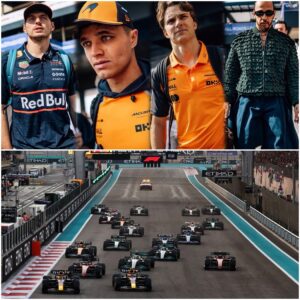
In a sport defined by ruthless precision and microscopic margins, Red Bull Racing has long stood at the summit of Formula 1, a juggernaut of engineering brilliance, strategic cunning, and sheer dominance. But now, after years of dictating the tempo of the grid, Red Bull finds itself under siege — and not from its traditional rivals like Mercedes or Ferrari, but from within the very fabric of the sport itself: the FIA.
A political storm has erupted in the wake of a series of high-profile upheavals, none more shocking than the ousting of team principal Christian Horner — a stalwart who not only orchestrated Red Bull’s rise but defended its empire against wave after wave of scrutiny. And with Dietrich Mateschitz, Red Bull’s founder and spiritual godfather, no longer pulling the strings from behind the curtain, the timing for an attack on Red Bull’s power structure couldn’t be more opportune. The FIA appears ready to strike — and strike hard.
A Targeted Rule Change
Insiders suggest a tailor-made regulatory offensive is brewing, one that could upend Red Bull’s operational foundation. The key issue? The contentious dual ownership model — Red Bull Racing and its so-called “sister team,” formerly Toro Rosso and now rebranded as Racing Bulls.
While dual ownership in Formula 1 isn’t technically illegal, it’s a glaring anomaly in modern global sports. In football, basketball, and nearly every major competitive league, it’s unthinkable that one entity could control two franchises. In F1, it has been tolerated — until now.
The Cracks Begin to Show
The signs of shifting tides began subtly. When Racing Bulls moved large chunks of its operations to the UK — and more pointedly, within Red Bull’s own campus — eyebrows were raised. But it wasn’t until the sudden, seamless transition of Laurent Mekies from Racing Bulls to Red Bull Racing, without so much as a day of “gardening leave,” that the alarm bells truly rang.
Normally, such a move would involve legal wrangling, transition periods, and internal reshuffles. Instead, it unfolded like a carefully orchestrated handover within the same company — which, as it turns out, it effectively was. Both Mekies and his predecessor Horner were under contract not with their individual teams, but with Red Bull GmbH in Austria. One corporate umbrella, two supposedly independent outfits.
This move, more than any prior, has reignited concerns over how separate the two teams really are. The FIA, once hesitant to interfere, is now reportedly preparing new legislation to ensure that “A and B teams” cannot collaborate or share intellectual property in a way that compromises sporting integrity.
The History: A Rescue or a Power Grab?
To understand the gravity of this situation, we must rewind to 2005. Following a mass exodus of manufacturers and the collapse of multiple new entries in 2010, Formula 1 was facing an existential crisis. Red Bull stepped in — not just as a constructor, but as a lifeline. When Minardi, a legendary but struggling privateer team, was on the brink, Red Bull bought it and rebranded it as Toro Rosso.
What was pitched as a noble rescue mission quickly evolved into a formidable power structure. With two teams under one roof, Red Bull gained advantages no other team could dream of: two driver pipelines, two data streams, and most importantly, double the voting power on the influential F1 Commission.
The Critics: Fair Play or Foul?
That influence has never sat comfortably with everyone. McLaren CEO Zak Brown has been especially vocal, calling the AB-team setup a “major conflict of interest.” He argues that Formula 1 — now governed by a strict budget cap and aiming for parity — should ban any form of dual ownership, just as every other sport does.
“We need to be really a sport of total fairness,” Brown told Sky Sports. “Anytime you have an entity that owns two teams or an A and B relationship, it really starts to compromise the integrity of sporting fairness.”
The concern isn’t just hypothetical. In a world where constructors are required to develop their own intellectual property and cannot share critical components, even the perception of coordinated development between two teams under one corporate banner is damaging. And with Racing Bulls and Red Bull Racing now sharing facilities and, seemingly, personnel without boundaries, the perception has become reality.
The Legal Gray Areas
F1 has long had workarounds for smaller teams: Haas, for instance, buys non-listed parts from Ferrari and outsources its chassis to Dallara. But the FIA strictly forbids that same supplier from working with other teams, to avoid intellectual overlap. The problem with Red Bull’s setup is more insidious — it’s not third-party outsourcing but intra-corporate alignment.
The FIA’s Nicholas Tombazis confirmed that the governing body is “working on clarifying more how teams… operate in terms of putting in provisions that stop those that have some sort of close relationship from helping each other.” Translation: the days of Red Bull running a two-team empire may be numbered.
Red Bull’s Political Shield Is Gone
For nearly two decades, Christian Horner acted as the firewall between Red Bull and regulation. Whether spinning public narratives or navigating backroom politics, he was the architect and defender of the empire. With his sudden departure — reportedly under murky internal circumstances — Red Bull is left politically vulnerable for the first time in recent memory.
This, combined with the loss of Mateschitz, has left a power vacuum, and the vultures are circling. Rivals, regulators, and critics are more emboldened than ever, sensing an opportunity to bring the empire to heel.
A Reckoning Ahead?
What happens next could define the next era of Formula 1. If the FIA moves forward with restrictions on shared ownership or collaborative operations, Red Bull may be forced to divest Racing Bulls or completely sever operational ties. That could mean new leadership, new infrastructure, and a complete strategic realignment.
It would also represent a massive blow to their influence in the sport — politically, commercially, and competitively. Years of finely-tuned synergy could be unraveled by a single regulatory stroke.
Conclusion: Masterclass or Manipulation?
Red Bull’s dual-team model has long walked the fine line between innovation and manipulation. For years, it was celebrated as a masterclass in maximizing resources. Today, under the microscope, it looks more like a structural loophole that challenges the very ethos of fair competition.
Whether this is a justified course correction or a political hit job will depend on your perspective. But one thing is clear: the age of untouchability is over.
Red Bull, once the predator, now finds itself prey. The empire that once redefined Formula 1 may soon be forced to rebuild — not on its own terms, but by the rulebook of a reawakened FIA.
Hamilton’s Q1 Exit at Spa: A Shock That Ripples Beyond One Session
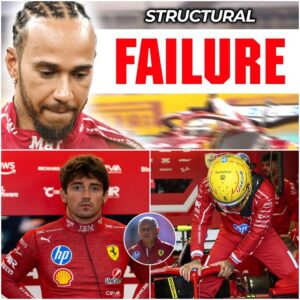
In a sport defined by precision and expectation, Formula 1 rarely offers moments that truly surprise seasoned followers. But the 2025 Belgian Grand Prix qualifying delivered one of those rare instances: Lewis Hamilton—seven-time world champion, legend of the sport—eliminated in Q1. And while shock exits happen, it was the way Hamilton responded that made this moment resonate far beyond just a bad Saturday.
In his own words, the result was “unacceptable.” That wasn’t a PR-filtered explanation. It was raw. Honest. And it painted a bigger picture—not just of one bad lap or one deleted time, but of a season in flux, a champion in transition, and a team facing stark decisions about its present and future.
A Moment That Stopped the Paddock
To see Hamilton exit in Q1 at Spa felt wrong. This is a driver who’s spent nearly two decades locked into Q3 battles. To go out in the first session raised more than eyebrows—it raised questions.
And the timing couldn’t have been more compelling. Hamilton is confirmed to drive for Ferrari in 2025 and 2026. His exit from his current team was already setting the backdrop for a year of high emotional stakes. But this Q1 shock threw the situation into sharper relief.
Brutal Self-Reflection
What stood out wasn’t just the result—but Hamilton’s reaction. He didn’t blame the car. He didn’t dodge responsibility. He said it clearly: “It was a very, very bad performance for me.” He apologized to his team. He framed the moment not as a team-wide failure, but as a personal one.
Such openness is rare in F1. Most drivers walk a line between honesty and damage control. Hamilton tore through that line, laying bare the level of frustration and the intensity of his own expectations. This wasn’t just a veteran having a bad day—this was a driver still demanding excellence of himself, even as the season slips away.
A Car That Can Deliver—But Not Always
The contrast between Hamilton and teammate Charles Leclerc was striking. Leclerc qualified P3, right behind the McLarens and ahead of Verstappen’s Red Bull. Same car, same session, completely different result.
That disparity tells us a lot. The car had potential. Leclerc found it. Hamilton didn’t. Why? As with most things in F1, it comes down to setup, confidence, and margins. Spa is a track where the smallest differences in setup can produce huge gaps. Elevation changes, high-speed compressions, and long straights test a car’s and driver’s trust in equal measure. Get one element wrong—ride height, wing angle, tire pressures—and you’re off the pace.
Hamilton hinted at this himself, saying they made changes, and “the car wasn’t so bad,” but also “it was even difficult for us.” The real red flag? They had to use a second set of soft tires in Q1 just to try and progress—a clear sign the team was struggling to find consistency and confidence.
Strategic Fallout: Tire Usage and Track Limits
Burning an extra set of tires in Q1 isn’t just a short-term inconvenience—it’s a weekend-altering decision. Tire allocations are limited, and front-running teams rely on having multiple fresh sets for both qualifying and race strategy. Sacrificing that early narrows your Sunday options significantly, especially if safety cars or rain come into play (which, at Spa, they often do).
Then came the final blow: Hamilton’s fastest lap deleted for track limits. Specifically, at Eau Rouge-Raidillon, a section where the fastest line pushes every driver to use the exit curb. Hamilton insisted it was the same line he’d used all weekend and that “everybody takes that curb.” But F1’s rules are clear: all four wheels over the white line, and the lap is gone.
Still, it’s a mental and emotional punch. For a driver who’s used to operating on instinct and muscle memory, suddenly being penalized for something that’s felt “normal” can throw you off balance. It can damage rhythm, confidence, and crucially, the strategic outlook for the race ahead.
What Might Have Been
If that deleted lap had stood, Hamilton likely would’ve squeaked through to Q2—maybe P14 or P15. And once into Q2, the weekend changes. Another shot at pace, a better grid slot, and most importantly, a preserved tire strategy.
Starting P12 instead of P16 at Spa can mean the difference between points and irrelevance. It changes the entire race complexion. And in a season like this, Hamilton needs every small win he can get.
A Bigger Shift: Factory Focus Turns to 2025
Hamilton’s post-session comments painted an even more telling picture. He admitted, “I don’t think there’s much more we can do… we’ve had improvements, but I think that’s probably about it for the rest of the year.” In F1 speak, that’s code for: development has stopped.
Indeed, Hamilton confirmed the team’s factory is now focused on the 2025 car. For drivers still racing the 2024 machine, that’s a tough pill. No more major upgrades. No more expectations of closing the gap. Just racing for pride, points, and professionalism.
And for Hamilton, who’s Ferrari-bound next season, the implications are deeper. While the team won’t deliberately sabotage his year, it’s only logical that development begins to skew toward Leclerc—the driver who is staying.
The Psychological Battle
How does a champion stay motivated when the title fight is out of reach, the car won’t improve, and the garage is already planning for a future he won’t be part of?
This is where true greatness is measured—not just in trophies but in how you carry yourself when they’re no longer within reach. Hamilton has to dig deep. To compete on pride, to prove to himself and to Ferrari that he’s still one of the best. That even in a tough season, he brings value, experience, perspective.
And yes, he’ll want to beat Leclerc wherever possible—if only to remind everyone what he’s capable of.
Ferrari’s Perspective
Ferrari, watching all this, likely isn’t panicking. They know F1. They know this car has limitations. They know Hamilton’s class. They’re betting on the long game—on what he can bring to their 2025 project. His deep feedback. His winning experience. His hunger.
Ironically, this tough season may even bolster their decision. If Hamilton can endure a frustrating year with this level of professionalism and self-accountability, imagine what he could do with a car worthy of his talents.
What Comes Next
From P16, Spa still offers Hamilton a fighting chance. Long straights, strategic windows, and weather unpredictability all mean points are within reach. But it’ll require something special—a smart gamble on tire strategy, clean overtakes, and maybe a bit of luck.
Longer term, the story is far more compelling. This Q1 exit wasn’t just a blip—it was a magnifying glass on a season of struggle and a looming transition. Hamilton is navigating unfamiliar territory: not leading the charge, not in the title fight, not the team’s long-term focus.
Yet his response shows why he remains one of the sport’s greats. In defeat, in disappointment, in a tough season—he’s still all in.
And perhaps, in 2025, in red, that fire will pay off.
Formula 1 in 2026: Resistance, Reinvention, and the Future of the Grid
As Formula 1 prepares to embrace a bold new set of technical regulations in 2026, a deep divide has emerged among drivers. What should be a collective evolution into a more sustainable and forward-looking sport has instead become a battleground of philosophies, fears, and ambitions. At the heart of the controversy lies a fundamental question: is the resistance to change rooted in legitimate concerns, or is it merely a fear of the unknown?
The Coming Revolution
In 2026, Formula 1 will shift to a hybrid power unit format that puts equal emphasis on electric and internal combustion propulsion. While the concept sounds simple — more electric power and smarter energy use — the ramifications are monumental. The new power units will feature a tripled electric output (from 120 kW to 350 kW), but with the same energy harvesting limitations. This is where the tension begins.
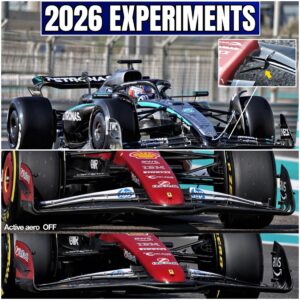
These changes are not limited to what’s under the hood. The cars themselves will have smaller tires and more compact builds, though their weight will remain roughly the same. Aerodynamic downforce is expected to decrease by up to 30%, which means less grip and slower cornering speeds. In short: these new machines will require a completely different approach from drivers and engineers alike.
Concerns from the Drivers
Several drivers have openly criticized the direction of these changes. Oscar Piastri of McLaren described the new regulations as introducing “unnecessary obstacles” that neither enhance competition nor entertainment. Charles Leclerc, after testing the 2026 Ferrari simulator, called the experience disappointing. Lance Stroll was even more blunt, likening the concept to a “scientific experiment focused on batteries.”
Their concerns center around two main themes: aerodynamic degradation and energy complexity. With less downforce and smaller tires, the cars will have less grip — particularly in the technical sections of circuits that showcase driver skill. Meanwhile, managing the limited electric energy per lap adds a new layer of cognitive demand. Drivers fear they will spend more time playing engineer with steering wheel controls than racing at their limits.
The International Automobile Federation (FIA) has responded by tweaking the rules. A gradual power reduction system has been proposed, and the fixed energy cap of 8.5 megajoules per lap has been replaced with a variable limit depending on circuit layout. These efforts have mitigated some fears, but not all.
A Divided Grid
The 2026 regulations highlight a significant generational and psychological divide on the grid. While most drivers have voiced varying levels of concern or skepticism, one man stands apart in his optimism: Lewis Hamilton.
The seven-time world champion — now driving for Ferrari — views the 2026 changes not as an obstacle, but an opportunity. He sees a future where driver input into car development, especially regarding power deployment, will be more critical than ever. For Hamilton, the prospect of developing the future car while racing in the present is “fascinating.”
This divergence in mindset reveals a deeper truth about the sport: Formula 1 rewards those who evolve. Hamilton’s history of mastering changes in regulations — from tire suppliers to turbo hybrids — supports his belief that adaptability is as important as raw speed.
The Risk of Resetting the Hierarchy
One of the most compelling implications of the new rules is that they could upend the existing order of the grid. Drivers who have spent years mastering the nuances of the current cars may find themselves starting over. Leclerc noted that he will need to “abandon much of the knowledge” he’s built over his career — a daunting prospect for any elite athlete.
Younger drivers, theoretically, may have an edge. With less ingrained muscle memory and more neural plasticity, they might adapt quicker. The flip side is that their lack of experience with deep developmental cycles could hinder them. Still, this shift could lead to a surprising shake-up: newcomers rising fast, veterans stumbling, and mid-tier drivers closing the gap.
Despite all the concern, top speeds may actually increase due to more efficient power units and active aerodynamics. Acceleration could be improved, even if cornering is slower. This rebalancing of performance attributes means the stopwatch may tell a different story than the one drivers fear.
A Historical Perspective
Change has always been part of Formula 1. The sport began 75 years ago with front-engine cars, wooden steering wheels, and no seat belts. In those days, it was considered safer to be thrown from the car in an accident. Since then, F1 has transitioned through wings, turbos, carbon fiber, hybrid engines, and halo devices. Each time, drivers complained. And each time, the best adapted.
In 2022, the introduction of ground-effect cars brought its own share of criticism — notably due to porpoising issues — but the grid eventually adjusted. The upcoming 2026 changes are perhaps more radical, but not without precedent.
Carlos Sainz, who will be driving for Williams by then, summed it up best: “Drivers will adjust to whatever is available. If they need to make six or seven button changes per lap, they will.” His statement cuts through the noise. F1 drivers are professionals. They evolve, or they are replaced.
The True Battle: Adaptation
What’s truly at stake is not whether the 2026 cars will be “better” or “worse.” It’s a question of who will adapt fastest. Max Verstappen, now a four-time champion with Red Bull, will have to prove that his dominance extends beyond the current regulations. Hamilton, seeking his eighth title, sees this as a final frontier to prove his versatility. And rising stars like Piastri and Leclerc must decide whether to cling to their current skillsets or leap into the unknown.
In this sense, 2026 is not just a new era of car design — it’s a new era of driver psychology. The metrics for greatness may shift from precision under pressure to the capacity for reinvention.
Conclusion: The Birth of a New Formula 1
As the 2026 season looms, the tension within the paddock is palpable. Resistance to change is expected. But the greatest drivers in history have always found ways to thrive when the ground beneath them shifted.
This transition may feel disruptive now, but it could ultimately reshape Formula 1 into a more dynamic, strategic, and sustainable sport. The question is not whether the sport will survive — it will. The question is who will thrive in its next incarnation, and who will be left clinging to a vanishing past.
The clock is ticking. A new Formula 1 is being born. The grid is no longer just a lineup of fast drivers — it’s a test of who can reinvent themselves when it matters most.
Max Verstappen, Mercedes, and the 2026 Conundrum: What Toto Wolff’s Decision Really Means
Formula 1’s driver market is always a chessboard of strategy, loyalty, and long-term vision. But few moves have stirred as much speculation and drama as the recent developments surrounding Max Verstappen and his potential link to Mercedes. The intrigue began when Mercedes Team Principal Toto Wolff officially stated that Verstappen wouldn’t be joining the Silver Arrows for the 2026 season—at least not yet. However, Wolff’s comments didn’t entirely close the door, leaving open the tantalizing possibility for 2027. This ambiguity has fueled a whirlwind of rumors, reactions, and potential career pivots for the reigning world champion.
Toto Wolff’s Clear Message… With a Caveat
Wolff made headlines when he confirmed that Mercedes would be sticking with their current lineup—George Russell and young sensation Kimi Antonelli—for the 2026 season. This announcement seemingly put an end to speculation that Max Verstappen might be considering a switch from Red Bull. However, Wolff’s comments included a key nuance: “You can’t ignore someone like Max and what he’s planning for the future… I don’t think there will be any big surprises, and if you think about it, this makes the most sense.”
This statement suggests that while the team’s short-term focus is set, Verstappen remains very much on Mercedes’ radar for the longer term. With Lewis Hamilton’s departure shaking up the team dynamics, Mercedes is clearly in a transitional phase, and Wolff’s forward-thinking leadership leaves room for future realignment.
Verstappen’s Reaction: Unbothered But Watchful
Max Verstappen, a four-time world champion and arguably the most dominant driver of the current era, responded to the situation with a sense of calm—at least on the surface. When asked about the coincidental vacation overlap with Wolff in Sardinia, Max downplayed the media frenzy: “I was swimming in the ocean… when other people are also there at the same time, that can happen.” His nonchalant response, however, masks deeper concerns brewing under the surface—particularly Red Bull’s engine situation for 2026 and beyond.
Despite his long-term contract with Red Bull, Verstappen has shown signs of keeping his options open. His now-famous remark—“There’s a chance I might not wake up tomorrow and won’t race in the sport anymore”—highlighted not only his unpredictability but also his increasing disillusionment with the off-track drama.
Red Bull’s Uncertain Future
The firing of longtime Team Principal Christian Horner sent shockwaves through Red Bull Racing. As a figure closely associated with the team’s identity and success, Horner’s exit was more than a personnel change—it was a symbolic fracture. While Verstappen insisted that this didn’t influence his thoughts about leaving, insiders and pundits believe otherwise. The timing of these changes, combined with unconvincing developments in Red Bull’s powertrain division, has led to speculation that Verstappen may be quietly assessing the strength of the team’s foundation.
With new technical regulations coming in 2026, Red Bull’s ability to produce a competitive car and engine will be critical. So far, the signs aren’t promising. Reports suggest that the Red Bull Powertrains department may be falling behind in developing a viable unit for the next era. This directly threatens Verstappen’s aspirations for continued dominance.
Mercedes’ Long Game: Betting on Youth and Stability
Mercedes’ current focus is clear. With Russell showing increasing leadership and performance, and 18-year-old Andrea Kimi Antonelli making a strong impression—highlighted by a podium in Canada and fastest laps in Miami—the team sees 2026 as a year of internal development. The goal is to capitalize on the new regulations with a fresh, well-integrated lineup that grows together.
Yet, despite the public commitment to their current duo, sources close to Mercedes indicate that Ola Källenius, the CEO of Daimler (Mercedes-Benz’s parent company), may have different priorities. Reports suggest Källenius is pushing for a Verstappen acquisition, recognizing the immense marketing and performance value of having F1’s top driver on board. Whether he’ll override Wolff’s decision remains to be seen, but his influence should not be underestimated.
What About Aston Martin?
If Mercedes is temporarily off the table and Red Bull falters, Aston Martin might just be the most realistic destination for Verstappen. The Silverstone-based team, bolstered by massive investment and technical support from Honda (starting in 2026), is positioning itself as a serious contender. With a rapidly improving infrastructure and strong ambition, Aston Martin could offer Verstappen the performance environment he demands.
Their close ties with Honda, the same engine supplier that propelled Verstappen to multiple titles at Red Bull, could also make the transition smoother. The presence of Fernando Alonso may complicate things, but if the team wants to go all-in on a championship bid, Verstappen would be the obvious choice.
Looking Ahead: The 2026 Season and Beyond
While all signs currently point to Verstappen staying with Red Bull through at least 2026, the situation remains fluid. If Red Bull’s engine underperforms or if internal instability worsens, the Dutch driver may activate his much-discussed exit clause. Notably, this clause reportedly allows him to leave if he trails George Russell in the standings over the next two races—an unusual but telling detail that underscores his focus on performance.
As the 2026 season approaches and the new regulations come into effect, all eyes will be on the performance of Red Bull, Mercedes, and Aston Martin. If Red Bull’s car fails to deliver, expect the Verstappen rumors to resurface with even more intensity. In fact, discussions could reopen as early as the first few races of 2026.
Conclusion: A Game of Patience and Power
Max Verstappen’s future is anything but settled. While Mercedes has taken a step back—for now—their long-term interest in Verstappen remains. Red Bull, meanwhile, is at a crossroads. They must prove that they can still deliver a championship-winning package amid internal upheaval and technical uncertainty.
Aston Martin is the wildcard in this narrative, possibly holding the keys to Verstappen’s next chapter if the stars align.
For now, Verstappen remains Red Bull’s crown jewel, but the clock is ticking. As the 2026 engine era looms and internal dynamics continue to evolve, the next 12 months will be crucial in determining where the sport’s most prized driver chooses to call home.
Where do you think Verstappen will be in 2026—and will Toto Wolff stick to his current plan or make a stunning late move? The drama is far from over.
Is Lance Stroll Holding Aston Martin Back? A Deep Dive Into His Future in Formula 1
Lance Stroll’s recent performance slump has brought intense scrutiny to his place in Formula 1 and the long-term prospects of the Aston Martin team. While his father, Lawrence Stroll, continues to back him as the team’s owner, the mounting pressure from sponsors, fans, and team stakeholders may soon force a reevaluation of his role. Especially as Aston Martin transitions into a more ambitious future—with Honda engines on the way and top-tier ambitions—questions swirl about whether Lance remains a fit for a team that can no longer afford underperformance.
A Promising Start Turned Unsteady
The 2023 F1 season started with high hopes for Aston Martin. Fernando Alonso consistently delivered strong performances in the first half of the season, including six podium finishes in the first eight races. With Alonso fighting for second place in the Drivers’ Championship and Aston Martin sitting among the top three teams, it appeared the Silverstone-based outfit was finally making its mark.
But the dream began to unravel after the British Grand Prix at Silverstone. McLaren’s mid-season upgrade to their MCL60 injected new life into their campaign, while Mercedes found a level of consistency that Aston Martin couldn’t match. As the AMR23 fell behind in pace and development, Aston Martin’s fortunes declined, threatening their grip on fourth in the Constructors’ Championship.
The Lance Stroll Problem
While Alonso kept salvaging points and bringing home occasional podiums, Lance Stroll struggled to make an impact. The Canadian driver has been plagued by poor qualifying performances, including a particularly dismal outing in Qatar where he was knocked out in Q1, threw his steering wheel, and physically shoved his trainer in frustration.
That moment was emblematic of a larger trend. Stroll failed to finish inside the top ten in multiple races during the season’s second half. His best result—a fourth place—came in a sprint race in Austria rather than a full Grand Prix. Over the season, Stroll collected just 47 points compared to Alonso’s 183, a staggering 136-point gap.
This disparity has become a glaring issue. In a sport where constructor points are directly tied to financial rewards and prestige, having one car underperforming can cripple a team’s momentum. When that underperformance comes from the team owner’s son, the optics—and implications—are even worse.
The Sponsorship Squeeze and Ownership Rumors
Compounding the performance issues is the departure of Cognizant as a title sponsor. Aston Martin now leans heavily on Saudi oil giant Aramco, which has been rumored to be interested in purchasing the team outright. With a reported $800 million offer already on the table, Lawrence Stroll’s resolve is being tested.
While Lawrence has publicly denied interest in selling, he’s also acknowledged the financial strain of operating an F1 team, even when results are improving. Behind closed doors, insiders suggest that his commitment is deeply tied to Lance’s presence in the sport. If Lance continues to underdeliver, that emotional tether may not be enough to justify keeping the team—or his son—in their current roles.
Honda’s Arrival: The 2026 Gamechanger
Aston Martin’s partnership with Honda, beginning in 2026, signals a major strategic shift. Honda’s recent split with Red Bull opened the door for new alliances, and Aston Martin sees the Japanese manufacturer as a path to becoming a top-tier team.
But Honda has its own interests, particularly in promoting Japanese driver Yuki Tsunoda, currently racing for AlphaTauri. Honda executives, including Koji Watanabe, have hinted at their desire to place Tsunoda in a more competitive team as early as 2024. Given Aston Martin’s upward trajectory, they present a natural destination.
This presents a conflict. Keeping Lance in the team while partnering with Honda could limit the benefits of the deal. Honda would likely prefer a more competitive, marketable, and internationally supported driver pairing. The idea of Alonso mentoring Tsunoda, a fast and hungry young driver, is far more appealing from both performance and marketing perspectives.
Is Family Favoritism Holding Aston Martin Back?
The elephant in the room is the perception of nepotism. While Lance has shown flashes of talent—most notably during his early years with Williams and Racing Point—he’s never developed into a consistent front-runner. As the F1 field gets tighter and teams like McLaren, Alpine, and even Williams grow stronger, Aston Martin cannot afford to carry a driver who isn’t pulling his weight.
Many F1 insiders argue that Aston Martin’s current Achilles heel is their driver lineup imbalance. Alonso continues to fight with grit and experience, while Lance remains inconsistent and error-prone. Sponsors, engineers, and strategic partners may eventually demand change, regardless of familial ties.
Even Lawrence Stroll, a seasoned businessman, may be forced to put sentiment aside. After all, running a Formula 1 team is a multimillion-dollar enterprise, not a personal project. For Aston Martin to become a championship contender, hard decisions are inevitable.
The Future: A New Driver Era?
The writing on the wall suggests that Lance Stroll’s future with Aston Martin is uncertain, perhaps for the first time since his father acquired the team. With external pressure growing and new opportunities on the horizon, Lawrence must decide whether keeping his son in the second seat is worth the performance and financial trade-offs.
If the sale to Aramco proceeds or Honda begins exerting more influence, a driver change could come as soon as 2024. Tsunoda is a likely candidate, but other drivers—like Felipe Drugovich, the team’s reserve driver and 2022 F2 champion—are waiting in the wings.
In a sport as cutthroat as Formula 1, sentiment rarely trumps results. For Aston Martin to climb from hopeful contender to true powerhouse, the team needs two strong drivers. If Lawrence Stroll truly wants to see his investment succeed, he may need to make the toughest call of all—replacing his own son.
Oscar Piastri’s Masterclass Pole, Ferrari’s Growing Pains, and Red Bull’s Quiet Chaos: Inside the Latest F1 Drama
Welcome to F1 News: Inside the F1, your deep-dive destination for the real stories and subtle shifts defining the current Formula 1 landscape. From Oscar Piastri’s mind-bending pole lap to Ferrari’s persistent struggles and Red Bull’s veiled turmoil, we’re unpacking the performance, politics, and pressure shaping this season.
Oscar Piastri’s “Absurd” Pole Lap: Precision Meets Courage
Let’s start with what is arguably one of the most spectacular laps we’ve seen this season — Oscar Piastri’s astonishing pole. Labelled “absurd” for good reason, it was a lap that defied norms, expectations, and margins. While many pole laps are won with tenths of a second, Piastri found seven tenths over teammate Lando Norris and left even Verstappen scratching his head.
So what made it so special?
Telemetry tells the tale. Through turns 9 and especially the brutal 12-15 complex, Piastri not only found speed — he created it through sheer confidence and mechanical trust. Where Verstappen dabbed the brakes at Turn 9, Piastri went flat out. Where others lifted slightly through Turn 14, he rocketed through with unwavering traction. It wasn’t a one-corner miracle. It was sustained perfection across the sector where risk and bravery reign.
Critically, this wasn’t a fluke. The smooth throttle inputs, the stability mid-corner, and the timing of his reaccleration tell us he has unlocked a deep synergy with the McLaren package — especially in those knife-edge high-speed zones. That’s what makes his performance repeatable, not just remarkable.
This is no longer a rookie. This is a driver on the verge of elite form.
Ferrari’s Troubles: Hamilton’s Error and Leclerc’s Lingering Frustration
Over at Ferrari, things are far murkier. Their much-anticipated upgrade package — particularly the new rear suspension aimed at boosting mechanical grip — showed promise on paper. But the reality? A tale of two frustrations.
Lewis Hamilton, now in red, made a rare and costly unforced error in SQ1, locking the rear axle under braking into the Bus Stop chicane. Sporting director Frederic Vasseur quickly clarified: this wasn’t the car. It was driver error.
For a seven-time world champion to make such a mistake, particularly in qualifying, raises flags. Either he hasn’t found trust in the rear-end stability, or the Ferrari’s behavior under load is still unpredictable to him. That lack of harmony showed — and it cost him dearly. While he’s known for majestic recovery drives, this one might be more about data collection than a podium push.
Charles Leclerc, meanwhile, endorsed the new package, saying it improved feel and mechanical grip. But his tone post-session said otherwise. Despite improved confidence, he was 0.7 seconds off Piastri — a chasm in F1 terms.
So where’s the disconnect?
Ferrari’s upgrade helped, but perhaps not enough. The feeling is there, but the grip ceiling hasn’t shifted significantly. They’re in a limbo where the car is easier to drive but still not fast enough. In dry conditions, they may fall into that “best of the rest” zone. In rain? It’s anyone’s guess.
Ferrari need more time to tune this package — and fast — before rivals like McLaren and Red Bull stretch the performance gap further.
Red Bull: Improvement on Track, Instability Behind the Scenes?
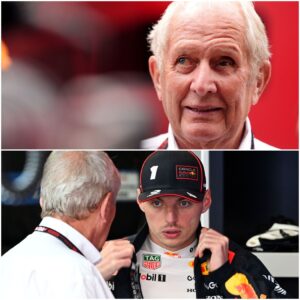
Red Bull, ever the benchmark, had a strange weekend narrative. On paper, being 0.4s off pole isn’t a disaster — unless you’re Red Bull. Yet Helmut Marko claimed satisfaction.
Why?
Because if you remove Piastri’s alien lap from the mix, Verstappen was right up there with Norris and ahead of Ferrari. That’s the context. Red Bull felt they made a genuine step forward with their upgrade — more stable, better balanced, less compromise between straight-line speed and cornering performance.
But there’s a catch: consistency. Can this improvement stick across circuits, or was this a track-specific uptick?
More pressing, though, are the off-track murmurs. Toto Wolff dropped a cryptic bombshell, suggesting unresolved issues within Red Bull’s leadership. Referring slyly to the Christian Horner controversy and the broader internal politics (including rumored share restructures), Toto hinted at cracks still widening behind the curtain.
That’s a problem. Even with a fast car, unstable leadership and internal distrust can derail momentum. In F1, harmony isn’t just a buzzword — it’s performance currency.
Why All This Matters: Margins, Mindsets, and the Mental Game
This weekend was a masterclass in what truly defines Formula 1: the margins.
A single braking error from Hamilton cost a whole session.
A few degrees of throttle angle gave Piastri seven tenths.
An opaque statement from a rival boss might signal the next power struggle.
And it all adds up. Confidence isn’t abstract in F1 — it’s measurable in tenths. Piastri’s ability to trust his McLaren through Turn 9, where Verstappen tapped the brakes, shows not just skill but mental clarity. Hamilton’s lock-up reflects a driver still learning the limits of his new machine. And Red Bull’s internal dynamics may shape the trajectory of their whole season.
F1 is about engineering — yes. But it’s just as much about the human element: instincts, confidence, and how drivers respond under pressure. One weekend can set off a chain reaction of technical pivots and political consequences.
Looking Ahead: Is Piastri the New Benchmark?
Oscar Piastri’s pole wasn’t just a show of speed — it was a warning shot. He’s not just catching up to the elite. He’s staking a claim among them.
If he can replicate this confidence in different conditions, under race pressure, and over full stints — not just single laps — McLaren may have a new ace. And the rest of the grid? They’ll have to adapt.
Will Red Bull’s upgrades and team unity hold under scrutiny? Can Ferrari unlock that elusive final tenth of mechanical grip? And will Lewis Hamilton find his rhythm in red before the championship math closes the window?
The only certainty in F1 is that nothing stays still — not the cars, not the drivers, and definitely not the drama.
Stay with Inside the F1 for every twist, turn, and telemetry trace that shapes the most thrilling sport on Earth.