Author: bang7

  • Holly Ramsay and Adam Peaty ‘ban’ his mum from their wedding following hen do ‘snub’

    Holly Ramsay and Adam Peaty ‘ban’ his mum from their wedding following hen do ‘snub’

    His mum Caroline has shared a number of heartbreaking cryptic posts

    Adam Peaty has reportedly ‘banned’ his mother from his wedding to Holly Ramsay.

    The former Olympic swimmer popped the question to Gordon Ramsay’s daughter last September. Earlier this year, the chef legend confirmed they would be having a Christmas wedding.

    However, according to reports, there is now a feud bubbling behind the scenes as Adam’s mother Caroline has allegedly been cut from the guest list.


    Holly Ramsay and Adam Peaty are due to tie the knot later this year (Credit: Cover Images)

    Holly Ramsay in hen do ‘snub’

    As per the Daily Mail, the mother and son have fallen out over Holly’s hen do.

    The influencer documented her glitzy bachelorette celebrations on social media over the weekend, sharing photos of herself with family and friends, including her mum Tana, sister Tilly, close family friend Victoria Beckham and Adam’s sister, Bethany.

    However, there appeared to be no sign of the groom’s mum, who, according to the newspaper, stayed at home looking after Adam’s young son, George.

    Following the celebrations, Caroline Peaty appears to have shared a series of cryptic posts on her public Instagram.

    One declared: “The ones I love are the people who hurt me the most.”

    Another read: “Crying is a way your eyes speak when your mouth can’t explain how broken your heart is.”

    The post was soon flooded with messages of support from Caroline’s followers. One user, reported to be Adam’s aunt, told her: “Don’t let them drag you down Caroline. Neither Adam or the Ramsays are worth it.”

    Another said: “No good begging to go to this wedding making yourself sick. Let them get on with it. Your son will soon come crawling back if any sign trouble with his wife.”


    Adam Peaty’s parents have supported him throughout his swimming career (Credit: Michael Kappeler/DPA/Cover Images)

    Adam Peaty ‘bans’ mum from wedding to Holly Ramsay

    A source, said to be close to the Peaty family, reportedly told the Daily Mail that Adam’s parents “feel that Adam started to grow distant from his family after he met Holly and they started to become more serious”.

    “His family are working class and proud. It’s a stark contrast to the Ramsay family and some members of the family have said it feels like Adam is ashamed of them.”

    They went on: “Adam’s relationship with his mum and dad Mark are at an all-time low, and now she’s not coming to the wedding.”

    ED! has contacted reps for Holly and Adam for comment on this story.

  • Strictly Come Dancing star Vicky Pattison gives baby update as husband Ercan ‘thrilled’

    Strictly Come Dancing star Vicky Pattison gives baby update as husband Ercan ‘thrilled’

    Vicky has spoken about her wishes to be a mum

    Strictly Come Dancing star Vicky Pattison has given an update on when she and her husband, Ercan, are hoping to have kids.

    Vicky has very quickly become a fan favourite on Strictly this year, scoring her first 10 last weekend with pro partner Kai Widdrington.

    But away from the show, Vicky has been open about her hopes for a family as she began the process of freezing her eggs in 2023, and her struggles over the years with PMDD. And it seems the time is quickly approaching for her and Ercan to try for their own kids.


    Vicky is appearing on Strictly this year (Credit: Brett D. Cove / SplashNews.com)

    Vicky Pattison on when she will have kids with husband Ercan

    While Vicky is thrilled to be on Strictly Come Dancing this year, it seems things almost went in a different direction as she made a promise to herself and Ercan at the start of the year.

    Speaking to OK!, Vicky admitted she told Ercan she was either going to Strictly, a second season of Honesty Box, or they were going to have a baby this year. And when she got the call for Strictly, she was “over the moon”.

    This meant, Vicky and Ercan had to put their baby plans on hold for a little while. But it seems once Strictly is over, that’s when they are going to try for a family.

    She revealed: “Kids are definitely on the cards next year. I think he is looking forward to it now. He probably thinks I will be at home a bit more, which he is thrilled about.”

    Vicky praises Ercan for being at home waiting for her with their dogs while she is training a lot for Strictly but the one week he missed her performing live as he went away to Cyprus to visit his family, Vicky realised how much she needed him.

    “I told him to go. I said: ‘All I am doing is coming home and whining that I am tired.’ But the minute he left, I realised how much I missed him and needed him. He is my anchor and he spoils me rotten.”

    While Vicky has been at rehearsals, Ercan has been stepping up at home. She described it as a “role reversal” forcing him to make the dinner and “be the best dog dad”.


    Vicky wants kids next year (Credit: JP/TM/RV / SplashNews.com)

    What has Vicky previously said about becoming a mum?

    Previously, Vicky has opened up on how her PMDD could affect her becoming a mum. And that it is something she worries about.

    According to Mind, PMDD is a “severe form of premenstrual syndrome (PMS)”. The charity explained: “It causes a range of emotional and physical symptoms every month during the week or two before your period.”

    Vicky previously spoke to The Sun. She said: “I am a woman of a certain age who would love to have kids. But my fear is that my condition will make it very difficult to be the mum that I want to be.

    “You want to be this lovely, patient mother. But I do worry what I will be like with PMDD – because you are short-tempered and you’re exhausted.”

  • Katie Price risks feud with Myleene Klass following her MBE honour: ‘Why has she got one?!’

    Katie Price risks feud with Myleene Klass following her MBE honour: ‘Why has she got one?!’

    Myleene received the honour in recognition of her services to women’s health earlier this year

    Katie Price appears to have risked igniting a feud with Myleene Klass, after slamming the former Hear’Say star’s MBE honour.

    Myleene was appointed a Member of the Order of the British Empire in the 2025 New Year Honours, in recognition of her services to women’s health, miscarriage awareness and charity.

    Now, Katie has let rip on the matter…


    Katie Price has criticised the decision to make Myleene Klass an MBE (Credit: John Rainford/Cover Images)

    Katie Price criticises Myleene Klass MBE

    “I’m not against this for her, but why the [bleep] has Myleene Klass got an MBE? For playing the classical piano?” she said to Closer.

    Turning her attention to the entertainment industry, Katie continued: “This industry is so corrupt. They have the same managers, they’re all clones – they all win MBEs and are fronting TV. But behind the scenes, they’re worse than we are. Turds are what they are!”


    Myleene Klass was awarded an MBE earlier this year (Credit: CelebrityPhotosUK/Cover Images)
    47-year-old Myleene has bravely spoken out about her four experiences with miscarriage, using her platform to campaign for better miscarriage support and awareness in the UK.

    In 2023, she teamed up with MP Olivia Blake to successfully advocate for changes to the UK’s Women’s Health Strategy, including extending paid bereavement leave to those who experience pregnancy loss.

    Following news of her MBE, Myleene told the BBC:  “When I think back to how all of this started, it all came from a very dark place, and I certainly didn’t have it in mind to become a campaigner at the time. Anyone who has experienced baby loss will know how personal and difficult it is to vocalise this level of trauma.”

    She added powerfully: “A miscarriage is not a dark secret that women have to hide away and I won’t stop campaigning until every woman and family has the support they need.”

  • “Do You Have Any Expired Cake” The Homeless Girl Begged… And The Billionaire Who Saw Her Had His Lif

    “Do You Have Any Expired Cake” The Homeless Girl Begged… And The Billionaire Who Saw Her Had His Lif

    It was raining, the kind of rain that didn’t just fall, but wept from the sky. On a busy New York street, everyone rushed past a little girl sitting by a bakery window, drenched, shivering, her tiny hands clutching an empty paper cup. “Do you have any expired cake?” she asked softly to anyone who’d listen. Most didn’t even look at her.
    But one man stopped. A man who had everything. And in that moment, he realized maybe he had nothing at all. This is the story of how a billionaire’s heart was changed forever by a girl who only wanted a piece of expired cake. Ethan Cole had been named Forbesman of the year three times. He owned skyscrapers, tech companies, luxury resorts, everything that money could buy.
    Yet behind his custom-made suits and bodyguards, there was an emptiness that success couldn’t fill. His days were a blur of meetings, his nights filled with silence. That evening, he was driving through downtown in his black Rolls-Royce. Frustrated after losing another board deal, the city lights flickered on the wet asphalt like broken stars.


    His driver slowed near a small bakery, the kind of cozy corner shop that smelled like memories. And there she was, a thin girl, no older than eight, sitting cross-legged on the sidewalk, wearing a torn hoodie two sizes too big. Her lips trembled as she looked through the bakery window at a cake, old, untouched, pushed to the side.
    Ethan didn’t know why, but something inside him stirred. “Stop the car,” he said. The driver hesitated. “Sir, this isn’t.” “Stop the car.” Ethan stepped out, the rain soaking his expensive shoes. The girl looked up, startled. Her eyes were gray, not lifeless, but tired, like someone who had seen too much for her age. “Hey,” Ethan said gently.
    “Are you okay?” She looked down quickly, embarrassed. “I’m sorry, sir. I wasn’t begging from you. I just asked the bakery lady if she had any expired cake. I haven’t eaten since yesterday.” Her voice cracked mid-sentence. For a moment, Ethan couldn’t speak. He was used to people asking for business deals, investments, favors, but never expired cake.
    The bakery owner came out annoyed. She sits there every evening. Sir, I told her we don’t give away free food. She should go to a shelter. Ethan’s jaw tightened. He reached for his wallet, but then stopped himself. Something about this moment felt different. It wasn’t about giving money. It was about understanding. “What’s your name?” he asked softly.
    “Lila,” she whispered. “Layla Grace.” “Do you have family, Laya?” She hesitated. “I did.” “My mom, she used to bake cakes like those. She passed away 2 months ago. I ran away from the foster home because they were mean. I just wanted to find her old bakery.” She used to say, “There’s always sweetness left, even in what’s expired.
    ” Her words pierced him. Ethan looked at the bakery window again at that one old cake nobody wanted. Something about it felt symbolic, forgotten, like her. He bought the whole cake. The baker looked confused, but Ethan simply said, “It’s for her.” They sat under the awning, sharing it by hand.
    The girl’s small fingers clutched each bite like it was treasure. She smiled for the first time, and that smile, that one innocent smile, broke something open in Ethan’s heart. He didn’t know it yet, but that night would be the beginning of a journey that would change both of their lives forever. The next morning, Ethan couldn’t focus on his business meetings.
    The image of Laya’s thin hands and trembling voice haunted him. He tried to push it away. He had bigger things to worry about. Yet, for the first time, the bigger things didn’t feel important. He went back to the bakery. She wasn’t there. Panic rushed through him in a way he couldn’t explain. He told himself it wasn’t his responsibility, but his heart refused to listen.
    He searched the nearby streets until he found her sleeping under a bridge, clutching a damp blanket. He knelt beside her, careful not to wake her. She looked so small, so fragile. When she opened her eyes, she looked scared. Did I do something wrong? No, Ethan said. You did everything right, but I can’t just walk away. He brought her to his penthouse, a world away from the cold streets.
    She stared at everything like she was in a dream. The marble floors, the chandeliers, the endless city view. But instead of excitement, she whispered, “It’s too big. I don’t belong here.” Ethan smiled sadly. “Neither do I sometimes.” Over the next few weeks, Ethan made arrangements, legal guardianship, schooling, therapy.
    But more than that, he began to change. He canceled meetings to have breakfast with Laya. He started visiting children’s shelters, funding programs to help orphans. The press called it the billionaire’s redemption. But to Ethan, it wasn’t redemption, it was love rediscovered. Then one evening, Laya gave him a small box.
    Inside was a charm, a tiny piece of an old cake mold, the one her mother used to own. I found it in the old bakery,” she said softly. “You helped me remember that even old things can still make something new.” Tears filled Ethan’s eyes. Lla, you didn’t just find sweetness in the expired. You brought sweetness back into my life. Years later, that same bakery reopened, restored by Ethan, and named Laya’s Grace.
    Every evening, it gave out free cakes to children who couldn’t afford them. Above the door, a sign read, “There’s always sweetness left, even in what’s expired.” And every time Ethan saw a child smile as they bit into a warm slice of cake, he remembered that rainy night, the night a homeless girl asked for expired cake, and a billionaire found his heart again.
    Sometimes the richest people are the ones with nothing, and sometimes the poorest are the ones who forgotten how to love. Kindness costs nothing but can change everything.

  • Emmerdale’s Jaye Griffiths opens up about emotional farewell as Celia’s exit looms

    Emmerdale’s Jaye Griffiths opens up about emotional farewell as Celia’s exit looms

    There’s not much more of Celia to come

    Emmerdale star Jaye Griffiths has spoken out about her emotional farewell to Celia Daniels, as the villainous character prepares to exit the soap.

    Celia made her debut earlier this year as Moira’s seemingly harmless farming neighbour. But it didn’t take long for her true colours to emerge. She was secretly running a dangerous criminal empire, with ties to drug trafficking and modern slavery.

    Now, as the storyline reaches its climax, Griffiths has confirmed that Celia’s time in the village is coming to an end. Like many of Emmerdale’s most notorious antagonists, Celia’s reign was never built to last, and her exit promises to be anything but quiet.

    Celia will be leaving the soap (Credit: ITV/Mark Bruce)

    Jaye Griffiths reveals Celia exit news

    Speaking about her character’s exit, Jaye confirmed that she knew it was coming. She said: “I knew it was finite, which I am very sad about, because I would like to stay forever, but it’s such a strong arc.”

    She described working at Emmerdale as ‘heaven,’ adding: “It’s one of the nicest places I’ve ever worked, and I’ve done a little bit of work before! It is gentle and kind and professional and funny, and people care that it’s good. People care that we tell the story properly. It’s a joy to come to work.”

    Jaye also shared her joy at being able to play a character like Celia. She explained: “I usually get the upstanding, morally robust people. Doctors, police officers, lawyers – not that they’re all morally robust, but you get my drift. Whereas Celia, her compass is buried. She doesn’t need one, she just needs to make money.

    “It’s just so wonderful to explore someone who doesn’t mind whether you like them or not, because your opinion is of less than no value.”

    However, despite her exit, she hopes her character has left a mark in terms of raising awareness to modern day slavery. “It’s not happening somewhere far, far away, it’s happening next door,” she said. “It’s horrendous. Hopefully, maybe conversations will start to be heard. Maybe a question will run through people’s minds.”


    Celia’s running a whole criminal operation (Credit: ITV)

    Celia’s time in the Dales

    From the moment Celia Daniels set foot in Emmerdale, it was clear she wasn’t there to make friends. She wasted no time ruffling feathers, offending Moira within minutes and showing little remorse when her dog attacked Paddy.

    But viewers were blindsided by just how dark Celia’s true nature was. In a jaw-dropping twist, she lashed out at April. And, exposed herself as the ruthless mastermind behind a county-lines drug network.

    Alongside her son Ray, Celia ran a chilling operation, coercing vulnerable teens like April and Dylan into trafficking drugs and pushing April Windsor toward disturbing encounters with clients. The scale of her manipulation left fans reeling. Celia’s villainy reached depths no one saw coming.

    More recently it was revealed that they were keeping people – including Paddy’s dad Bear Wolf – as slaves. Speaking about the storyline, Jaye added: “She has a line to Ray, ‘we never take local.’ You don’t take people who will be missed, you take the waifs and strays, and you give them purpose. You give them routine, and that lulls them, and you don’t give them any options.”

    Will taking ‘local’ man Bear Wolf prove to be Celia’s downfall?

  • Andrew Mountbatten Windsor’s name could ‘undergo another change’

    Andrew Mountbatten Windsor’s name could ‘undergo another change’

    Andrew may have a hyphen added to his name

    There could reportedly be another change made to Andrew Mountbatten Windsor’s name, in accordance to the late Queen Elizabeth II’s wishes.

    In a formal 1960 declaration by Queen Elizabeth II, she confirmed the royal family’s surname as Mountbatten-Windsor.

    After Andrew’s loss of his prince title and other royal titles and honours recently, the palace announced his name as Andrew Mountbatten Windsor. However, the hyphen wasn’t included.

    Now, according to reports, that could change.


    Andrew Mountbatten Windsor may have a hyphen added to his name, in accordance with a declaration signed by the late queen (Credit: Tayfun Salci/ZUMA Press/Cover Images)

    Andrew Mountbatten Windsor may have subtle name change in line with Queen Elizabeth II’s ‘wish’

    Days before Andrew’s birth in 1960, Queen Elizabeth II issued a formal notice through the Privy Council stating that her descendants who were not princes or princesses would bear the surname Mountbatten-Windsor.

    According to The London Gazette, the UK’s official public record, at the time, the document read: “While I and My children shall continue to be styled and known as the House and Family of Windsor, My descendants other than descendants enjoying the style, title or attribute of royal highness and the titular dignity of Prince or Princess and female descendants who marry and their descendants shall bear the name of Mountbatten-Windsor.”


    Queen Elizabeth II once signed a declaration stating that all her descendants without royal titles should go by Mountbatten-Windsor (Credit: SplashNews.com)

    Andrew name ‘change’

    According to The Times, “Andrew Mountbatten Windsor” was the version of the name agreed upon with him personally and the version he preferred. But that may now be under review.

    Mountbatten-Windsor, hyphenated, could become the standard for all future references. The shift would not restore titles or alter Andrew’s royal standing. However, it would bring his name in line with the rest of his family.

    The reconsideration of Andrew’s name styling comes amid continued public scrutiny.

    The former prince had his royal titles stripped amid scrutiny regarding his association with late convicted sex offender Jeffrey Epstein.

    Allegations against Andrew

    In recent weeks, a leaked 2011 email allegedly showed Andrew telling Epstein, “we’ll play some more soon”. However, in his 2019 Newsnight interview, Andrew claimed he had cut ties with the financier in December 2010.

    Meanwhile, the royal’s accuser Virginia Giuffre’s posthumous memoir published last month following her tragic death in April. Ms Giuffre accused Andrew of sexual assault.

    Ms Giuffre alleged she was made to have sex with Andrew on three occasions at 17 after being trafficked by Epstein.

    Andrew vehemently denied all allegations. He has also insisted he has “no recollection” of ever meeting her. He reached a 2022 out-of-court settlement with Ms Giuffre in her US civil lawsuit against him, without admitting liability.

  • Carol McGiffin claims she was ‘forced out’ of Loose Women as she blames ‘fake pandemic’ for ‘changing’ show

    Carol McGiffin claims she was ‘forced out’ of Loose Women as she blames ‘fake pandemic’ for ‘changing’ show

    Carol was on the show for 18 years

    Former Loose Women star Carol McGiffin has launched a scathing rant against the show and ITV, as she claims she was “forced out” due to contract changes.

    The 65-year-old TV star appeared on Loose Women from 2000 until 2013. Then she returned in 2018 and stayed until 2023. But it seems during her time on the show, she saw a lot of changes, and some of them she really didn’t like.

    And now, two years after her final departure, Carol has claimed that, while she chose to leave, she left because she was “forced out” by logistics.


    Carol McGiffin believes Loose Women changed following the pandemic (Credit: Grant Buchanan / SplashNews.com)

    Carol McGiffin ‘forced out’ of Loose Women

    Speaking on Andrew Gold’s Heretics podcast, Carol admitted she didn’t like the way the show changed following the Covid-19 pandemic.

    She explained: “For a long time, since the pandemic, the ‘fake pandemic’ as I call it, it changed a lot. The narrative had to be steered toward the government lines and it never did that before that. ITV was always a little bit woke before people even knew things were woke. But they understood they needed to have a show where people disagreed.”

    Carol admitted the changes got “exhausting” and “tiring” but that’s “not the reason” she left. Instead, she feels that ITV “forced” her out.

    “They forced me out with contract issues. I live in France, I don’t even live in the UK. So, they were trying to force me onto the ITV payroll. But when they did that, most of the people on that show were self-employed and had limited companies, so it’s for personal service companies.

    “They wanted everybody to be on the payroll. But they knew full well that I didn’t really need to be. I didn’t do that many shows, I lived in France and I wasn’t a British taxpayer. But they forced it. They said: ‘Well, you’ve got to be on the payroll otherwise you can’t do it,’” she claimed.

    ‘It wasn’t worth it’

    Carol clarified that she had a limited company which she paid tax for but she wasn’t a personal taxpayer and the changes would have been “too complicated and too difficult”.

    She continued: “They weren’t offering anything else. They were offering a contract that wasn’t a contract. And they kept saying: ‘You’re not employed by ITV but you are on an employment contract.’ None of it made sense and I just thought it wasn’t worth it.”


    She hasn’t been on the ITV daytime show in two years (Credit: YouTube)

    The show became ‘censored’

    Carol went on to praise the Loose Women “back in the day”, which she believes was when it was “brilliant”.

    Revealing when she began noticing the changes, Carol said: “I got censored so many times. We would be sitting in the meeting talking about the show and I would say something and be told I couldn’t say that.

    “Everybody had to agree with each other. And they still do it now. But I am pretty certain there are people on that show who don’t think like that but they do because they want to keep their job.”

    When asked what had changed in all those years, Carol stated it was the pandemic – which she doesn’t believe was real.

    She said: “Well, we didn’t have the fake pandemic back then. And that was the straw that broke the camel’s back really.”

    Carol continued: “You couldn’t have a different opinion. I was anti-mask, anti-lockdown. I was anti all of those things. The day they locked down, we were talking about it on the show. And we were all talking about if we thought it was a good idea to lock everything down and everyone said yes. But I said no, absolutely not.”


    ITV ‘forced’ Carol out (Credit: YouTube)

    Loose Women now – Carol’s take

    Later on the podcast, Carol was asked if there was anything that would “shock” the audiences about how the show is set up. But she admitted she doesn’t “think people care” about the show any more.

    She said: “I don’t know why people watch it now. They used to watch it to have a laugh and get involved. We used to be able to do really stupid things all of the time. That’s why people used to watch it then.

    “I’m not really sure why people watch it now. But it probably has something to do with having nothing better to do.”

    When asked if she thinks she would ever be “allowed” to go back to TV, Carol admitted: “No, I don’t think so.”

  • ‘Focus on Driving and Talk Less’: Ferrari Chairman Blasts Hamilton and Leclerc as $50 Million Dream Turns to Public Nightmare

    ‘Focus on Driving and Talk Less’: Ferrari Chairman Blasts Hamilton and Leclerc as $50 Million Dream Turns to Public Nightmare

    The Brazilian Grand Prix was a brutal and humiliating affair for Scuderia Ferrari, a weekend that will likely be remembered not for the racing action, but for the shocking and visceral public implosion of Formula 1’s most storied team. For Ferrari, the double DNF (Did Not Finish) delivered an immediate and painful loss of points, but the true disaster came later when the team’s highest authority delivered a stinging, unprecedented rebuke to its two star drivers, Lewis Hamilton and Charles Leclerc.

    Ferrari Chairman John Elkann, speaking at an Olympic sponsorship event in Rome, publicly and unequivocally blamed his drivers for the team’s abysmal performance and catastrophic decline, telling them they must “focus on driving and talk less.” This staggering statement, aimed squarely at the seven-time World Champion and the team’s golden boy, has instantly ignited a firestorm of speculation, revealing the deep, perhaps irreparable, cracks forming within the walls of Maranello. What started as the dream combination of the sport’s most successful driver joining the most legendary team has officially soured into a public nightmare of internal friction and dwindling hope.

    The Brazilian Catastrophe: A Double DNF and a Season’s Collapse

    The Brazilian Grand Prix had all the hallmarks of a bad sign from the outset. Throughout the sprint qualifying and the main event’s qualifying sessions, both Hamilton and Leclerc struggled for pace, culminating in a main event where disaster was inevitable.

    Leclerc’s day ended through unfortunate circumstances, retiring after getting caught up in a midfield battle. He sustained damage when hit, forcing him out of contention. However, it was Lewis Hamilton’s retirement that truly symbolized the team’s struggles and the immense pressure currently weighing down the British legend. After tumbling down the order on the first lap, Hamilton attempted a recovery drive, only to make a completely uncharacteristic mistake by rear-ending the Alpine of Franco Colapinto. The collision destroyed his front wing and floor, eventually forcing him to retire before the finish.

    For a driver of Hamilton’s caliber, such an error is almost unheard of. It wasn’t a mechanical failure or a strategy blunder; it was a pure driving error that speaks volumes about the palpable frustration and tension surrounding the team. This mistake should be seen as a direct consequence of the pressure and poor performances that have characterized his season.

    The immediate consequences were devastating: Ferrari dropped to fourth in the constructor’s championship, falling 36 points behind Mercedes. For a team of Ferrari’s stature, finishing outside the top three for only the second time in a decade is a crisis, amplified by the significant financial implications. Each position gained closer to the top is estimated to be worth approximately $10 million over the place below, making the decline an extremely costly affair both in prestige and monetary value. The performance decline is stark: McLaren, who finished just 14 points ahead of Ferrari last year, won the title this season, underscoring the astonishing drop-off at Maranello.

    Elkann’s Public Scolding: The Unprecedented Attack

    The anger within the Ferrari hierarchy reached its tipping point after the Brazilian Grand Prix. John Elkann’s public statements were not merely a critique; they were a declaration of war against the drivers, holding them directly responsible for the team’s current predicament.

    Elkann was clear about where he saw the problem lying: “The team’s mechanics and engineers were performing well but if we look at the rest, it is not up to scratch.” He then delivered the hammer blow: “We definitely have drivers who need to focus on driving and talk less because we still have important races ahead of us and getting second place is not impossible.”

    For the chairman to step up and publicly call out his drivers is a massive, unprecedented deal. While internal conversations would have been happening behind the scenes, this move to the media is a clear defense of the factory team and a direct rebuttal to the drivers who have been voicing their frustrations all season long.

    The main target of Elkann’s ire is widely believed to be Lewis Hamilton, whose comments after his retirement from the Brazilian race were intensely negative. Hamilton described his first season at Ferrari in crushing terms, stating, “This is a nightmare and I’ve been living it for a while. The flip between the dream of driving for this amazing team and the nightmare of the results we’ve had the ups and downs is challenging.” He followed this up by calling the race “obviously a disaster for us, a disappointment for everyone in the team.”

    These remarks clearly crossed a line for the Ferrari chairman. Hamilton commands a record-breaking contract, reportedly costing the team $50 million a year. Elkann is undoubtedly expecting a commensurate return on this huge investment, and Hamilton’s current performance—and public complaints—are failing to deliver. While Hamilton’s complaints about the car were a feature of his final seasons at Mercedes, the current relationship dynamic shows Elkann’s extreme impatience, contrasting sharply with how his former boss, Toto Wolff, often defended his driver.

    The Unintended Casualty: Charles Leclerc

    While Hamilton appears to be the primary target of the chairman’s frustration, Elkann’s blanket criticism of the drivers has disastrously “caught Charles Leclerc in the crossfire,” creating a far bigger problem for the team’s future.

    The Monégasque driver has arguably been the better of the two Ferrari drivers this season and has been the team’s best driver for approximately half a decade. Leclerc has been sacrificing the prime years of his F1 career for Ferrari, consistently proving himself worthy of a championship-challenging car, yet receiving little in return. If a lesser driver were paired with the current car, Ferrari could have gone the entire season without a podium. Leclerc is not the problem; he is the solution. He is Ferrari’s “prized asset.”

    Elkann’s attempt to frame his comments as motivational—a suggestion reportedly pushed through Italian media—is viewed by critics as perhaps the “worst motivational speech in the history of sport.” Telling drivers who have already demonstrated immense commitment and talent to “stop talking” is not a recipe for encouraging them to try harder. Instead, it serves to upset and alienate Leclerc, who is quite clearly the better-performing driver right now.

    Leclerc’s patience is wearing thin; he has voiced his frustration multiple times this season, and critically, he has a potential break point in his current contract. By issuing a public scolding that targets him alongside the underperforming Hamilton, Elkann risks driving away the one talent capable of leading the team back to championship glory.

    Cracks Showing: The Total Collapse of the Ferrari Dream

    The events following the Brazilian Grand Prix represent more than just a bad weekend; they signal a deep, organizational fault line within Scuderia Ferrari. The team has invested a massive amount of capital and prestige into securing Lewis Hamilton, only to see the dream quickly devolve into a nightmare season of costly errors and public feuding. Hamilton’s immense salary is currently yielding poor results, and in response, the chairman has chosen to deflect responsibility for the car and strategy onto the drivers.

    This bizarre situation—where the drivers have been instructed to “talk less” after an internal meltdown—is a clear indication that “the cracks are showing after a very disappointing season.” The team’s traditional problems, such as race operation failures that have plagued them historically, continue to fester, but the leadership has pivoted to blame the talent.

    The fundamental question remains: Can a team salvage its season, let alone its future, when its chairman and its star drivers are engaged in a vicious public feud? The decision to publicly admonish Hamilton and Leclerc has placed unbearable pressure on the team’s internal dynamic, particularly alienating the consistently performing Charles Leclerc.

    The ‘dream of driving for this amazing team,’ as Hamilton put it, has turned into a brutal reality of poor performance and public humiliation. Unless John Elkann and the team leadership can repair this disastrous rift, the internal fallout from Brazil could mark the beginning of a total and irreversible collapse for the most iconic name in Formula 1.

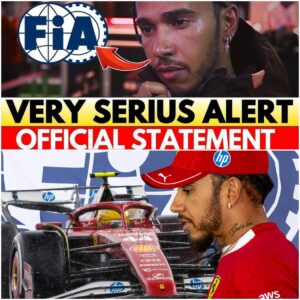
  • The ‘Media Fairness’ Bombshell: Leaked Hamilton Penalty Report Exposes FIA’s Stunning Sacrifice of F1 Integrity

    The ‘Media Fairness’ Bombshell: Leaked Hamilton Penalty Report Exposes FIA’s Stunning Sacrifice of F1 Integrity

    The Line in the Sand: Leaked FIA Report Exposes the Shocking ‘Media Fairness’ Agenda Threatening Formula 1’s Soul

    The Interlagos Circuit in Brazil has long been hallowed ground for Formula 1, a stage where legends are born and championships are decided in a flurry of emotion and strategic brilliance. But the edition of the Brazilian Grand Prix discussed here has etched a new, dark chapter into the sport’s history—one defined not by the roar of engines, but by the devastating whisper of a leaked internal report. The controversy surrounding Lewis Hamilton’s penalties during his inaugural season with Ferrari has exploded into what many are calling one of the biggest governance scandals in Formula 1 history: a systemic betrayal of impartiality where the political and media context appear to have fatally eclipsed the rulebook.

    This is more than a sporting grievance; it is a full-blown crisis of confidence. The core accusation is devastatingly simple: Did the Federation Internationale de l’Automobile (FIA) deliberately protect one of its biggest stars, not out of malice, but out of a calculated desire to safeguard a marketable, media-friendly narrative? The answer, according to two damning leaks from the stewards’ internal documents, seems to be a resounding and unsettling “Yes.”

    The Yellow Flag Conundrum: A Warning Shot, Not a Sanction

    The storm began during the high-stakes qualifying session for the Sprint Race. The atmosphere in the paddock was electric, with every eye trained on Lewis Hamilton, recently signed to the Scuderia, as he desperately sought a strong result to cement his place as the team’s new talisman.

    The first major incident unfolded when his teammate, Charles Leclerc, lost control of his SF25 and spun out at Turn 10, leaving the car precariously stopped on the edge of the track. Immediately, race management activated the double yellow flags—the most stringent safety procedure, demanding all drivers drastically reduce speed and prepare to stop. Any failure to comply is not a grey area; it is an automatic, objective sanction, typically resulting in a five-place grid penalty for the subsequent race.

    Hamilton, on a blisteringly fast lap, passed through the yellow flag sector just moments after Leclerc’s mishap. Initial telemetry suggested a clear violation: the British champion did not reduce his speed sufficiently to meet the mandated regulatory threshold. The facts, on paper, demanded a five-place grid demotion. The tension was palpable as the stewards summoned Hamilton to the office to review the data.

    While Hamilton argued he hadn’t seen the visual yellow light, citing its activation for only a fraction of a second, the telemetry data told a more complex story. The data showed an “ambiguous response”; he hadn’t accelerated normally, but nor did he clearly lift off the accelerator pedal as required. This was, in regulatory terms, a textbook scenario for a formal sanction.

    Yet, astonishingly, the stewards chose not to impose the expected penalty. Instead, Hamilton was issued only an official warning—the first of the season. The explanation provided was a flimsy reference to “consistency,” claiming that in a few previous similar cases, the FIA had also only issued a warning, thus striving to maintain consistency in the application of the regulations. This reasoning, however, only amplified the outrage. Many analysts argued that the supposed “consistency” applied only to a handful of minor incidents and had never been extended to a driver of Hamilton’s colossal media and political stature.

    The First Leak: Protecting the Golden Narrative

    The simmering skepticism quickly boiled over when internal FIA documents detailing the debate over the penalty were leaked. The exact phrase, now the focus of global scrutiny, was devastating and laid bare the true nature of the decision-making process.

    “A greater sanction could have a negative media impact given Hamilton’s transition to Ferrari.”

    This line, reportedly written by one of the commissioners in the penalty evaluation document, was a smoking gun. It confirmed the darkest whispers circulating in the paddock: impartiality had been sidelined in favor of “media calculation.” The stewards were apparently concerned that a strong, punitive sanction would “ruin the narrative” that the sport desperately wanted to sell—the romantic ‘rebirth’ of a seven-time champion in the scarlet uniform of Ferrari.

    At this point, the question immediately shifted from “Did Hamilton break the rule?” to a far more serious, existential crisis: “Is the FIA manipulating sporting decisions to serve the narrative of spectacle and commercial interests?” The sanctity of the sport had been called into question, transforming what should have been a high-octane race weekend into an office scandal brewing in the shadows.

    Race Day Chaos: The Collision and ‘Compassionate’ Justice

    Race day dawned under a cloud of controversy. Hamilton, starting from mid-pack and reeling from the previous day’s turmoil, needed a miraculous comeback. But the race was destined to be a catalogue of woes. Early contact with Carlos Sainz Jr.’s Williams slightly damaged the diffuser of the Ferrari, compromising its aerodynamic flow and turning the car into a “time bomb.”

    Then, the inevitable collision occurred. Determined to gain ground, Hamilton attempted an aggressive overtake on the outside of Franco Kalapinto’s Alpine. In a split second, the Ferrari’s front-right tyre touched the Alpine’s left-rear, resulting in a disastrous loss of the Ferrari’s front wing. The car became unstable, shedding carbon fiber and forcing a frantic pit-stop for repairs that effectively ended his race.

    The stewards immediately announced an investigation. According to standard F1 protocol, an avoidable collision where one driver is deemed fully responsible is traditionally penalized with a 10-second stop-and-go or time penalty.

    The commissioners concluded that Hamilton was, in fact, “fully responsible for the contact.” Yet again, the expected penalty was drastically reduced. The sanction was a mere 5-second penalty, half of what the regulations typically established for such an incident.

    The official explanation for this unprecedented leniency was a perplexing and dangerous new regulatory interpretation: “the extenuating circumstances and the loss of performance of the car already represented significant harm to the offending driver.” In essence, the logic suggested that because the driver had already suffered a costly loss (the damaged car and the lost race), the punishment should be mitigated. Hamilton’s fury was evident over the radio: “This is a joke, a complete joke… The car moved and now they say ‘It’s my fault’.” His voice was broken, reflecting the crushing sense that the outcome had been predetermined.

    The Final Leak: The Rise of ‘Media Equity’

    The final, and most damning, fragment of the internal stewards’ report regarding the race day collision was leaked hours after the Grand Prix, and it introduced a chilling new term into the Formula 1 lexicon: “media fairness.”

    The internal document stated that the standard 10-second penalty was avoided because:

    “The 10-second penalty would be excessive considering the magnitude of the damage suffered by car 44 and the need to maintain media fairness before the international public.”

    This term, ‘media equity’ or ‘media fairness,’ unleashed an earthquake. Since when did the application of objective, black-and-white sporting rules depend on the need to manage public perception? The phrase suggests that the stewards were no longer acting as impartial judges of the rulebook, but as brand managers, weighing the potential damage of a harsh penalty to the sport’s global image against the necessity of upholding fair play.

    Retired drivers, specialized journalists, and legal experts were unanimous in their condemnation. The FIA, they argued, had crossed an invisible, foundational line. Their decisions were being dispensed not based on objective adherence to the regulations, but on the narrative impact they would have on the public perception of the sport. The inconsistency between the earlier leniency (protecting the Ferrari debut narrative) and the half-penalty (applying ‘media fairness’ to a clear mistake) demonstrated a dangerous pattern of improvisation based entirely on media context.

    An Integrity Crisis: The Price of Silence

    The fallout from the leaks is profound. It suggests that the sporting decisions that determine millions of dollars in prize money, global reputations, and the very credibility of the Formula 1 world championship are being influenced by political calculus and media management.

    Ferrari, despite the leniency shown to their driver, remained silent, their internal atmosphere reportedly one of absolute disbelief and quiet frustration. The most critical aspect of this entire ordeal, however, is the reaction of the governing body itself.

    Despite the global clamor, the tidal wave of indignation across social media, and the public demand for clarity, the FIA chose the path of omission. They did not issue a statement denying the authenticity of the leaks. They did not deny the quotes attributed to their own commissioners. They did not announce an internal investigation to restore faith. Their silence was, in itself, a powerful communication—a tacit acknowledgment of the validity of the explosive content.

    The saga of the Brazilian Grand Prix will not be remembered for the winner on the day, but for the day the concept of “media fairness” was introduced into the sporting lexicon, exposing a stunning willingness to sacrifice objective rule application for the sake of narrative control. Formula 1’s appeal has always rested on the promise of a fair fight where the fastest car and best driver win. Now, the sport faces a difficult question: When the rules can be bent to manage the media, what is the true price of integrity, and can the damage to the sport’s soul ever be undone?

  • From Heartbreak to Hilarity: How Franco Colapinto’s 10-Word Roast Saved Gabriel Bortoleto’s Toughest Weekend

    From Heartbreak to Hilarity: How Franco Colapinto’s 10-Word Roast Saved Gabriel Bortoleto’s Toughest Weekend

    The world of Formula 1, and its feeder series, is a relentless, unforgiving, high-stakes environment where the lines between triumph and catastrophe are measured in millimeters and milliseconds. Every weekend is a crucible, but none is more intensely emotional than a home Grand Prix. For Brazilian rookie Gabriel Bortoleto, the 2025 São Paulo Grand Prix was supposed to be a joyous homecoming, a triumphant debut in front of his family, friends, and legions of passionate fans waving flags and holding ‘tifos’ in his honor. Instead, it spiraled into what he himself would label “one of the toughest weekends of my whole career.” Yet, from the depths of that disappointment, a moment of pure, unscripted, and viral comedy emerged, courtesy of his friend and on-track rival, Franco Colapinto. This single, perfectly timed joke didn’t just break the tension; it provided a much-needed glimpse into the human heart beating beneath the carbon-fiber shells and high-tech telemetry.

    The drama began long before the main event. During the Sprint race, Bortoleto suffered an enormous crash, a 57g impact that was visually shocking and left his team, Kick Sauber, scrambling to repair the significantly damaged car. To endure such a massive shunt and watch his home weekend begin in ruins was a psychological blow. Miraculously, the team managed to get him out for qualifying, but the damage had been done, leaving him to start the main race from the back of the grid. Any hopes of recovery, of giving the Brazilian crowd the spectacle they deserved, rested on a monumental effort.

    The Sunday race was meant to be the redemption arc. At the lights out, Bortoleto reacted well, showing immediate fighting spirit by recovering a few positions in the opening corners. He was driving with the desperate energy of a man trying to claw back dignity and points. It was during an aggressive push on the first lap, attempting a move on the outside, that disaster struck again. He made contact with Lance Stroll, a collision that sent his car into the barriers, resulting in a heartbreaking second DNF of the weekend. For a young driver, especially one racing at home, this sequence of events is demoralizing, bordering on crushing. The cameras panned to his family, whose disappointed expressions mirrored the feelings of a nation.

    Emerging from the medical center and the team garage, Bortoleto faced the media pen—the gauntlet where drivers must immediately process and articulate their raw emotions for the world. He was visibly upset, calling the weekend a combination of factors and admitting, “I’m just very upset because it’s my first home race so you always expect to do a good job, or at least race a little bit.” He went on to give a detailed, forensic breakdown of the Lap 1 incident with Stroll. He explained his strong start, the positions he gained, the move he was attempting, and his perspective on the contact. The need to justify, to analyze, and to process the sheer weight of disappointment led him to talk, and talk, and talk.

    It was in this moment of intense, detailed explanation that the genius of Franco Colapinto intervened. The Argentinian driver, hearing his contemporary pouring his heart out, couldn’t resist a spontaneous interjection that cut through the seriousness like a razor-sharp apex. Colapinto leaned in, smiled, and delivered the legendary jab:

    “I’ve never seen anyone talk so much. He’s been talking for five minutes, and he’s only done one lap!”

    The effect was instantaneous. The sheer audacity and perfect comedic timing of the remark—delivered in a moment where Bortoleto was at his most vulnerable and frustrated—caused the entire media pen, including journalists, camera operators, and even Bortoleto himself, to dissolve into laughter. The Brazilian driver, seconds before agonizing over his “toughest weekend,” cracked a genuine smile. The emotional tension that had been building for three days vanished in a flash of camaraderie.

    This moment wasn’t just funny; it was journalistically significant and emotionally profound. It highlighted a crucial element of the new generation of motorsport talent. While they are intensely competitive and fiercely professional on the track, they maintain a level of genuine human connection and self-awareness off it. In a world often criticized for its corporate polish, this spontaneous “roast” was authentic, real, and utterly relatable. It reminded fans that these drivers, despite their immense talent and pressure, are still young men with friendships, rivalries, and a shared, dark sense of humor necessary to cope with the absurdity of their profession.

    The media coverage of Formula 1 has, in recent years, pivoted toward showcasing these candid, behind-the-scenes moments. The Franco-Bortoleto exchange is a perfect example of why this shift resonates. Fans watch the race for the drama of speed, but they engage with the drivers for the drama of personality. This simple, hilarious exchange provided a cathartic release for everyone involved. For Bortoleto, it was an immediate reminder that even the biggest failures are temporary and can be softened by friendship. Colapinto, by contrast, emerged as a quick-witted, personable figure, cementing his own reputation for having a formidable presence not just on the racing line, but also in the paddock.

    Furthermore, this incident offers a subtle but important commentary on the nature of post-race interviews. Under the intense scrutiny of the media, drivers often feel compelled to provide complex, technical explanations for failure, believing that a detailed analysis somehow lessens the sting of the result. Bortoleto’s lengthy explanation, while entirely sincere and understandable given the pain of his double DNF, was exactly the kind of over-analysis that Colapinto’s joke brilliantly lampooned. Sometimes, in the face of failure, the best response is a laugh, a shrug, and a promise to do better. Colapinto’s remark was the universal voice of the spectator, affectionately urging his friend to stop dwelling on the technicalities and just move on.

    The shared history of these young drivers only amplifies the moment. They have raced against and alongside each other through the junior categories, battling for every championship, every seat, and every inch of track. Their rivalry is intense, yet their bond, forged in the pressurized atmosphere of the motorsport ladder, is genuine. This wasn’t a malicious jab; it was a friendly, brutal assessment delivered with the implicit understanding of a shared struggle.

    In the end, while the 2025 São Paulo Grand Prix will be remembered by Gabriel Bortoleto as a weekend of accidents and agony, the global racing community will remember it for the one minute in the media pen that encapsulated the true spirit of the sport’s rising stars: fiercely competitive, yet undeniably human. Bortoleto himself stated his intention to “just want to move on and go for the next race,” a necessary shift in focus that was undoubtedly made easier by the wave of laughter that followed Colapinto’s perfectly delivered punchline. In a sport where millions are spent on split-second advantages, this spontaneous moment of humanity proved that sometimes, the most valuable commodity is a well-timed joke between friends. It turns out, you don’t need a perfect finish to win over the fans; sometimes all you need is a spectacular crash, an emotional interview, and a legendary, hilarious roast.