Author: bang7

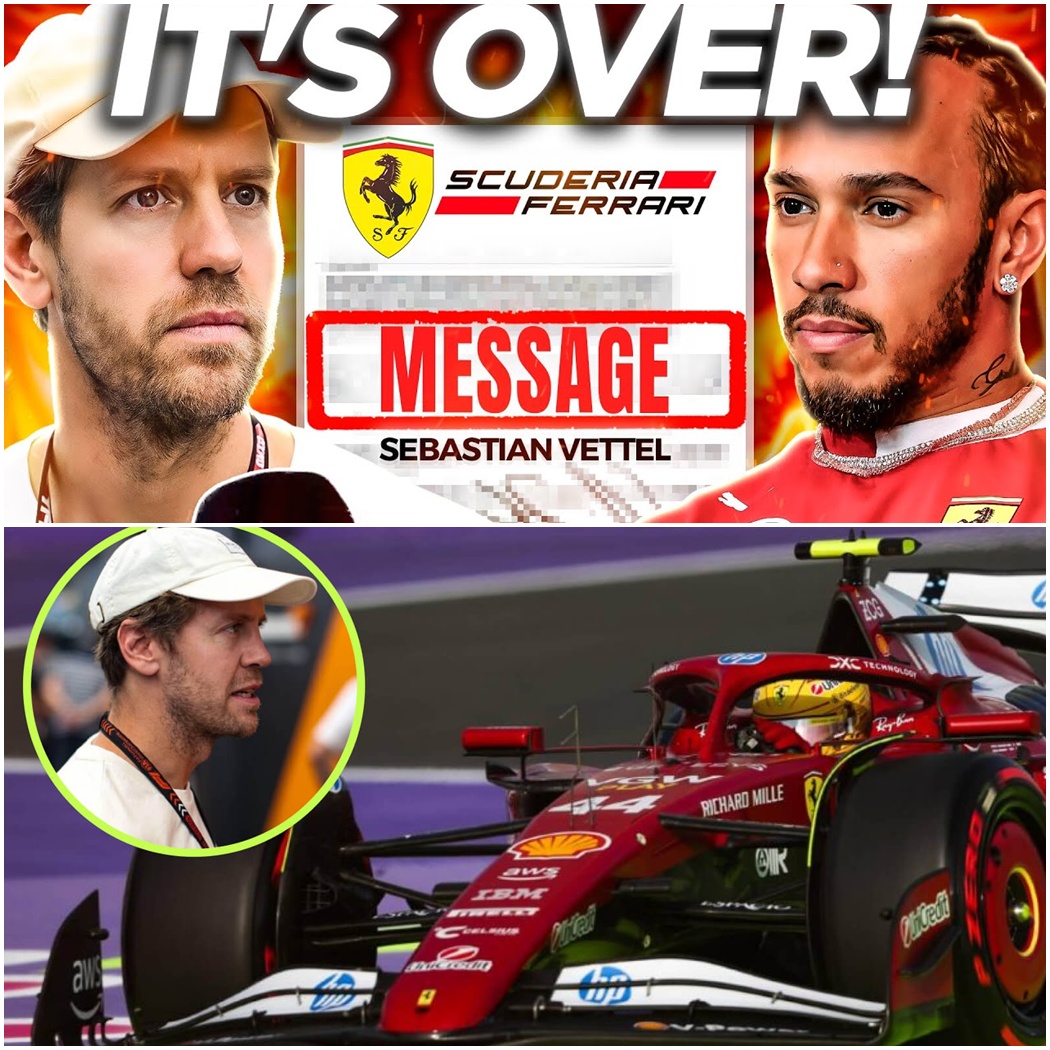
  • REVEALED: The “Phantom” Red Light and the Split-Second Misjudgment That Condemned Lewis Hamilton to Last Place in Las Vegas

    REVEALED: The “Phantom” Red Light and the Split-Second Misjudgment That Condemned Lewis Hamilton to Last Place in Las Vegas

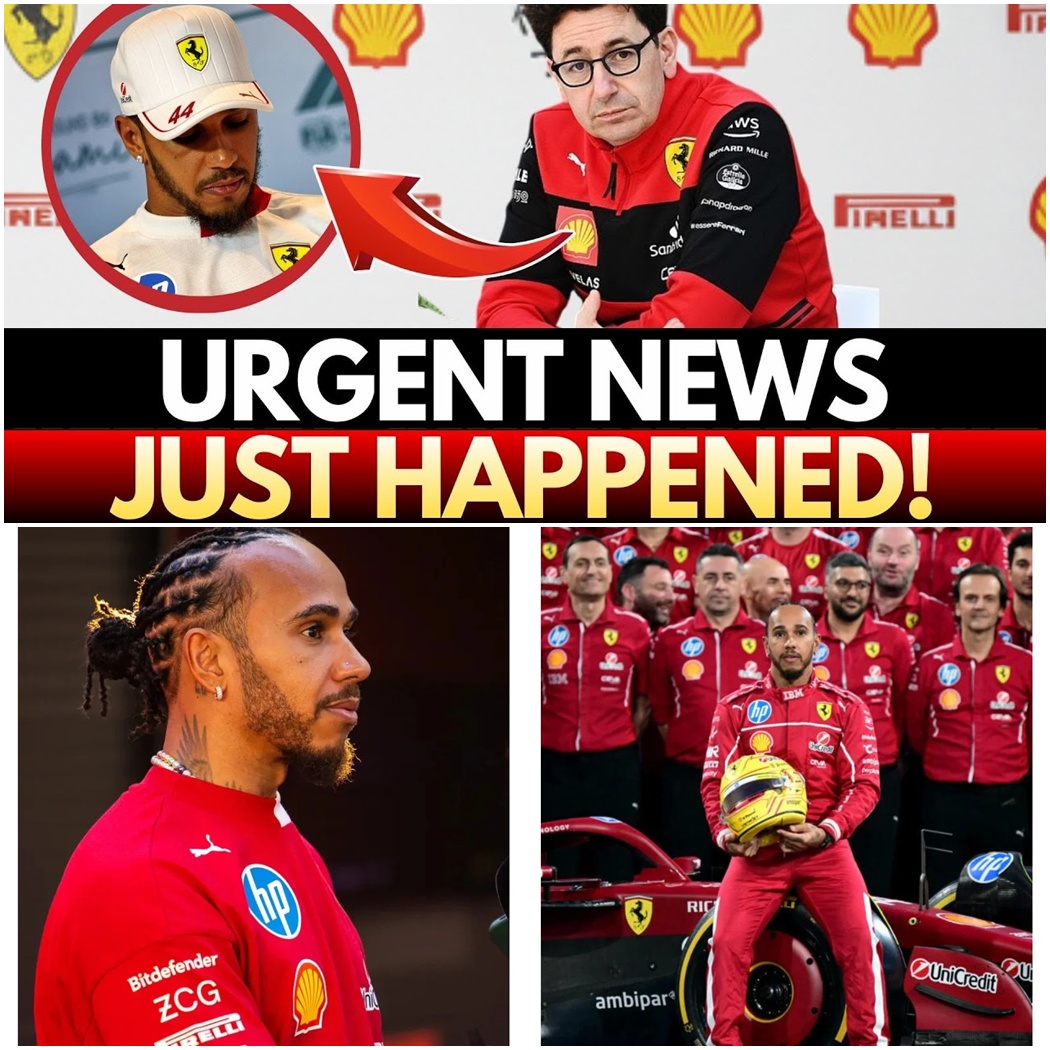
    Under the dazzling neon glow of the Las Vegas Strip, a city synonymous with high stakes and gambling, Lewis Hamilton and Ferrari took a gamble that backfired in spectacular, heartbreaking fashion. The seven-time World Champion, a master of wet conditions throughout his illustrious career, found himself in uncharted territory on Friday night: starting from the very back of the grid. P20. Dead last.

    It was a result that sent shockwaves through the paddock. Hamilton, who had looked imperious in dry practice earlier in the day, saw his qualifying session unravel in a chaotic blend of treacherous weather, technical struggles, and a bizarre moment of confusion that has sparked intense debate among fans and experts alike.

    While the headline is the shock exit, the real story lies in the final seconds of Q1—a moment where perception clashed with reality, costing Hamilton a chance to fight for his survival.

    The “Red Light” Illusion

    As the clock ticked down on the first qualifying segment, the track was evolving, but conditions were perilous. Rain had swept across the Nevada circuit, leaving the asphalt slick and temperatures plummeting. Hamilton, struggling for grip and confidence, was on a desperate final push to escape the drop zone.

    As he approached the main straight to start what would have been his final flying lap, disaster struck—or so he thought.

    “As I came across the line, it was red,” Hamilton explained to Sky Sports in the immediate aftermath, his demeanor one of resignation. “The light indicating that… I hadn’t reached the line in time to attempt another lap.”

    To the naked eye, and specifically from the low, spray-filled vantage point of the cockpit, it looked like game over. Hamilton lifted off the throttle, abandoning the lap. But the data tells a different, far more painful story.

    Detailed telemetry and onboard footage confirmed that Hamilton had, in fact, crossed the official timing line before the session timer hit zero. He had made the cut with approximately half a second to spare. The red lights on the overhead gantry illuminated only after he had legally begun his final attempt.

    The Tale of Two Lines

    How could a driver of Hamilton’s experience make such a fundamental misjudgment? Sky Sports F1 analyst Anthony Davidson provided a forensic breakdown of the incident, pointing to a quirk of the Las Vegas circuit that likely tricked the Ferrari driver.

    “He gets to the checkered line, which is the timing line, and the green lights are still there,” Davidson observed, analyzing the slow-motion footage. “But as he passes the line, it immediately goes red.”

    The critical issue is the physical distance between the timing line (where the lap officially starts and ends) and the start/finish gantry (where the lights are displayed). In Las Vegas, as at many modern circuits, these two points are not identical.

    “I wonder if he’s looking at the start line instead of the finish line,” Davidson mused. “There are two different lines at this track… It’s very hard to judge at the speeds you’re doing inside the car.”

    Essentially, Hamilton crossed the invisible timing line while the session was still live. But a fraction of a second later, as his eyes scanned the gantry further down the track, the lights turned red. Assuming the gantry was the cut-off point, he believed he had missed the flag. He backed off, unaware that he had actually successfully triggered a new lap.

    “He Should Know Every Regulation”

    While Davidson offered a sympathetic view based on the visual confusion, former World Champion Jensen Button was less forgiving in the commentary box. For Button, this was a lapse in focus that a driver of Hamilton’s caliber shouldn’t make.

    “Keep going until they tell you to slow down,” Button argued, his critique sharp. “I guess you should know every regulation. It’s really tricky… but the timing line is obviously before that [the lights], and he knows that.”

    Button suggested that the chaos of the session contributed to a mental error. “When it’s that tricky and there’s so much going on, I think he’s lost focus on what is correct for starting the next lap. He’s not the first one who has probably made this mistake… but you should know that through practice sessions.”

    It is a harsh assessment, but it underscores the margins in Formula 1. In a sport measured in thousandths of a second, a momentary lapse in situational awareness can be the difference between a front-row start and the back of the grid.

    Breakdowns in Communication

    If the driver was confused, where was the team? The radio exchange between Hamilton and the Ferrari pit wall paints a picture of frantic uncertainty.

    On the previous lap, Hamilton was warned that time was tight and urged to push. As he crossed the line for the final time, he explicitly asked his race engineer if he was safe. The response was to “push.”

    However, Hamilton countered, stating he had already seen the red light. The engineer reiterated the instruction to push, but by then, the momentum was gone. Hamilton had lifted.

    “At that stage, it’s too late,” explained strategy expert Bernie Collins. “As soon as a driver lifts off, there’s no point in telling him to push again because you’ve already lost the lap.”

    Collins defended the pit wall, noting that the information was technically available to Hamilton, but the delay in processing the “safe” confirmation amidst the driver’s visual confirmation of the red light created a fatal hesitation.

    A Perfect Storm: Glazed Brakes and Cold Tires

    While the red light incident was the final nail in the coffin, Hamilton’s qualifying session was already on life support before that moment. The Ferrari SF-25 looked completely at sea in the damp conditions.

    “I just don’t really have words for it,” a dejected Hamilton admitted. “It’s obviously not good enough… I couldn’t get any temperature into the tires. I just had a lot of understeer.”

    He also revealed a mechanical hindrance: “I think one of my front brakes was glazed, so I was really struggling to stop in the corners.”

    The contrast was stark. In FP3, the car felt “awesome,” and Hamilton expected a great day. But as soon as the rain fell, the performance evaporated. This wasn’t just a driver error; it was a collapse of the car’s operating window.

    Ferrari’s “Massive” Wet Weather Struggle

    The disaster wasn’t isolated to Hamilton. On the other side of the garage, Charles Leclerc managed to scrape into Q3 but finished a distant ninth, nearly two seconds off the pace of pole-sitter Lando Norris.

    Leclerc’s post-session comments were alarming for the Scuderia faithful. He described the team as struggling “like crazy” whenever the rain arrives.

    “Unfortunately, at Ferrari, we are struggling massively in the wet,” Leclerc confessed bluntly. “We don’t quite have the solution. It’s not a fault that we are not trying… but it just doesn’t work.”

    For a team with championship aspirations, admitting that they have “very, very poor grip” and no solution to tire warm-up issues in the wet is a damning indictment. Leclerc noted that this weakness has persisted despite numerous attempts to fix it, suggesting a fundamental flaw in the car’s philosophy or setup for damp tracks.

    Historic Lows

    The statistics emerging from this session are grim. This marks the first time in Lewis Hamilton’s career that he has qualified 20th on pure pace (excluding penalties). For Ferrari, it is the first time since the 2009 Abu Dhabi Grand Prix that they have recorded the slowest time in a qualifying session.

    As the paddock packs up for race day, Hamilton faces a mountain to climb. Starting from P20 on a street circuit—even one with long straights like Las Vegas—is a nightmare scenario. The “phantom” red light may have been the moment the door slammed shut, but the problems for Hamilton and Ferrari run much deeper than a single split-second decision. They are battling the elements, the tires, and seemingly, their own understanding of the car in the rain.

    For now, the neon lights of Vegas shine bright, but for Lewis Hamilton, the weekend has gone pitch dark.

  • When Hollywood Meets Horsepower: The Day F1 Drivers Broke the World’s Biggest Stars

    When Hollywood Meets Horsepower: The Day F1 Drivers Broke the World’s Biggest Stars

    In the high-octane world of Formula 1, speed is a religion, and the drivers are its high priests. For the millions of fans watching from the safety of their living rooms, the sport is a mesmerizing display of precision engineering and tactical brilliance. But what happens when you strip away the TV screens and strap a novice into the passenger seat of a supercar piloted by a professional racer? The result is a chaotic, hilarious, and deeply human experiment that proves one undeniable truth: no amount of fame, wealth, or on-screen bravery can prepare you for the raw violence of G-force.

    A recent compilation of “Hot Lap” moments has peeled back the curtain on this exact scenario, pitting some of the world’s most recognizable faces against the laws of physics. From the Mother of Dragons to the fastest man in history, these celebrities thought they were signing up for a fun publicity stunt. Instead, they found themselves at the mercy of drivers like Lewis Hamilton, Lando Norris, and George Russell—men who view 200 mph not as a death wish, but as a casual Tuesday at the office.

    The Dragon Queen vs. The McLaren Beast

    The experiment began with Emilia Clarke, an actress known for commanding armies and riding dragons in Game of Thrones. Yet, the fire-breathing beast she encountered on the track was of a different breed entirely: a McLaren 750S. This engineering marvel, capable of rocketing from 0 to 60 mph in a blistering two seconds, was piloted by racing driver Sam Bird.

    Before the engine even roared to life, Clarke’s demeanor was a mix of bubbly excitement and palpable dread. She confessed to being accustomed to the sluggish crawl of London traffic, making the carbon-fiber cockpit of the McLaren feel like an alien spacecraft. As Bird flashed a signature grin—the universal sign that a driver is about to do something wicked—the car launched.

    Clarke’s reaction was instantaneous and unfiltered. It wasn’t just a scream; it was a visceral release of shock that seemed to originate from her very soul. As the car tore through the asphalt, her terror morphed into a hysterical, uncontrollable laughter. It was the sound of a human brain short-circuiting, unable to decide whether it was having the time of its life or facing imminent doom. While she alternated between shrieks of “Oh my God!” and white-knuckled gripping of the dashboard, the vehicle hit its top speeds, leaving the actress in a state of absolute, adrenaline-fueled elation.

    The Outlier: Michelle Rodriguez

    If Emilia Clarke represented the average person’s reaction to extreme speed, Michelle Rodriguez was the glorious exception. Best known for her role as Letty in the Fast & Furious franchise, Rodriguez proved that her on-screen persona isn’t just acting. She is a genuine petrolhead, and her pairing with McLaren star Lando Norris was a match made in automotive heaven.

    Most passengers spend their hot lap praying for the brakes; Rodriguez spent hers analyzing the mechanics. From the moment she slid into the seat, the dynamic shifted. This wasn’t a driver scaring a victim; it was two enthusiasts speaking the secret language of horsepower. As Norris pushed the car to its limits, drifting through corners at 120 mph, Rodriguez didn’t flinch. Instead, she vibed with the car, her excitement growing with every gear shift.

    By the time they pulled back into the pits, the script had been completely flipped. While others crawled out of the cars trembling, Rodriguez was practically bouncing, hugging Norris and begging for “one more lap.” Her only critique? She probably would have preferred it if he had gone even faster. It was a rare moment where Hollywood stunt work met real-world racing reality, and for Rodriguez, the line between the two blurred perfectly.

    Model vs. Machine: Kendall Jenner and Lewis Hamilton

    The mood shifted dramatically when high fashion met high speed. Kendall Jenner, a woman who has walked the world’s most exclusive runways and lived a life of supreme luxury, stepped onto the track with seven-time world champion Lewis Hamilton. On the surface, Jenner projects an image of unflappable cool. But the laws of aerodynamics care little for social status.

    Before the seatbelt clicked shut, Jenner’s composure cracked. She admitted to being “super scared,” a confession that Hamilton, a certified “speed whisperer,” likely took as a challenge. Hamilton didn’t just drive; he orchestrated a symphony of chaos. As he tapped the accelerator, Jenner’s scream was immediate. Her knuckles turned white as she gripped the seat, her body tense with the sheer force of the vehicle’s movement.

    The highlight of their run was the “speed reveal,” where Hamilton calmly updated her on their velocity while navigating a corner. Jenner’s face was a portrait of disbelief. The transition from fear to awe and back to panic was seamless. By the end of the ride, her heart was pounding louder than the engine. Hamilton had accomplished his mission: he had taken someone who has seen everything money can buy and given her a feeling that cannot be purchased—pure, unadulterated terror mixed with thrill.

    The Fastest Man Alive Meets His Match

    Perhaps the most ironic and entertaining segment featured Usain Bolt, the fastest man in human history. Bolt built a legendary career on outrunning time itself. When he climbed into the car with Lewis Hamilton, he carried the swagger of an Olympian—calm, confident, and perhaps a bit smug. After all, he knows speed better than anyone, right?

    Wrong. Hamilton, ever the showman, decided to play a “traction control prank.” He unleashed the car into a series of aggressive, smoking drifts that sent the vehicle sliding sideways. Bolt, the man who glides down tracks with effortless grace, was suddenly clinging to the dashboard like a frightened child.

    When the car finally came to a halt, Bolt was slumped in his seat, half-laughing and half-traumatized. His first words were an accusation: “He tried to kill me! He tried to kill me, bro!” The irony was delicious. The man who made speed look easy was completely undone by a machine that defied his understanding of motion. Hamilton just laughed, asking, “You dead?” It was a humbling, hilarious reminder that there is fast, and then there is Formula 1 fast.

    The Shape of Fear: Ed Sheeran and George Russell

    Finally, the compilation brought us Ed Sheeran, the world’s favorite crooner, paired with Mercedes driver George Russell. This segment began as a wholesome fan meeting. Sheeran, a national treasure known for his gentle acoustic ballads, looked starry-eyed to meet his hero. He was smiling, relaxed, and genuinely happy.

    That lasted exactly three seconds.

    As Russell floored it, Sheeran’s face went through a metamorphosis. The admiration vanished, replaced by a look of sheer desperation. While Russell chatted casually about the track conditions—as if discussing the weather—Sheeran was emitting yelps of terror. The contrast was comedy gold: Russell, cool and collected; Sheeran, pale and shaking.

    In a moment of painful honesty amidst the chaos, Sheeran uttered the line of the day: “It’s not a good time. It’s not a good time.” The adrenaline had clearly short-circuited his brain. By the final lap, he looked like he had just performed a three-hour concert in a hurricane. He later admitted he was on the verge of passing out. It was a stark reminder that the forces these drivers withstand for two hours every Sunday are enough to break even the most composed entertainers.

    The Great Equalizer

    These hot laps serve as a fascinating social experiment. They strip away the carefully curated personas of celebrities, leaving behind raw, human reaction. Whether it was Emilia Clarke’s laughter, Usain Bolt’s fear, or Ed Sheeran’s regret, the outcome was the same: a newfound respect for the insanity of motorsport.

    For a few glorious minutes, fame meant nothing. The G-force didn’t care about Instagram followers or box office numbers. In the passenger seat of an F1 driver’s car, everyone is equal—equally terrified, equally thrilled, and equally grateful to simply survive the ride.

  • “I Have No Explanation”: Verstappen Baffled by Piastri’s “Bizarre” Collapse as Norris Seizes Control

    “I Have No Explanation”: Verstappen Baffled by Piastri’s “Bizarre” Collapse as Norris Seizes Control

    In the high-octane world of Formula 1, momentum is everything. It is the invisible force that turns contenders into legends and champions into forgotten footnotes. But rarely in the sport’s history have we witnessed a momentum shift as violent, as sudden, and as inexplicably strange as the one currently tearing through the McLaren garage. It is a reversal of fortune so dramatic that even Max Verstappen, the newly crowned four-time world champion, admits he is left scratching his head.

    “I have no explanation for that, to be honest. I find it very bizarre,” Verstappen confessed recently, his eyes narrowing as he discussed the situation unfolding at his rival team. When a driver known for his clinical precision and lack of sentiment calls a situation “bizarre,” the paddock listens. And what he is watching is nothing short of a psychological thriller.

    The Storybook That Went Wrong

    Rewind the clock just a few months, and the narrative seemed written in the stars. Oscar Piastri, the cool-headed Australian prodigy, looked poised to secure his first World Championship. Following a dominant victory at Zandvoort—his seventh of the season—Piastri was flying. He held a commanding 34-point lead in the standings, his driving was flawless, and the F1 world was ready to crown its new king. Lando Norris, his teammate, seemed lost in the wilderness, struggling with a car that didn’t suit him and a mindset that appeared fragile.

    But somewhere between the Dutch dunes and the neon lights of the final rounds, the script was shredded.

    “From one angle, it looked like a storybook rise,” observers noted. “But now that narrative has flipped dramatically.”

    Since that day in Zandvoort, Oscar Piastri has not won a single race. He has been outscored by Norris in six consecutive weekends. The gap that once cushioned him has evaporated, replaced by a 24-point deficit to a rejuvenated Norris. It is a collapse of catastrophic proportions, the kind that usually signals a mechanical failure or an injury. Yet, the car is fast, and Piastri is physically fine. So, what happened?

    The Silent War Within McLaren

    Verstappen, a veteran of high-pressure internal battles, sees something unsettling in the team dynamics. He pointed specifically to the recent drama in Brazil, a flashpoint that many believe exposed the cracks in Piastri’s support system. When Piastri received a controversial penalty that pundits and rivals alike called “unacceptable,” the response from the McLaren pit wall was eerily silent.

    “I don’t know why they handled it like that,” Verstappen observed with a hint of criticism. “That’s not how I operate. I would probably have been a bit more annoyed.”

    The implication is clear: When you are fighting for a title, you roar. You fight for every inch, every point, and every decision. Yet, Piastri’s camp “tiptoed” where they should have stormed the stewards’ office. Verstappen noted that if such a thing happened at Red Bull, the team would have slammed the table. The silence from McLaren suggests a team that has either lost faith in its former leader or has made a calculated political decision to shift its weight behind Norris.

    The Reinvention of Lando Norris

    While Piastri has faded into the background, Lando Norris has staged one of the most impressive comebacks in modern F1 history. Admitting openly that he “struggled” in the early season, Norris used the adversity to sharpen his mental blade.

    “Those difficult times certainly allowed me to be a little bit more positive about myself, allowed me to focus,” Norris revealed. He didn’t just wait for luck; he went to work. A key suspension update in Canada helped align the car with his aggressive driving style, but the real change was internal. Norris stopped racing to not lose and started racing to conquer.

    “I come here this weekend to try and win. I still treat it as if I’m not in a championship,” Norris said, displaying a terrifying clarity of purpose. He isn’t crunching numbers; he is driving flat out. It is a “tunnel vision” that Verstappen recognizes well—the mindset of a driver who has stopped caring about the consequences and is operating on pure instinct.

    The “Bizarre” Reality

    The contrast between the two sides of the McLaren garage could not be starker. On one side, you have Piastri: stressed, questioning, and seemingly abandoned by the momentum that once carried him. On the other, Norris: methodical, reinvented, and ruthless.

    Verstappen’s assessment of the situation as “bizarre” underlines the rarity of this dynamic. Drivers lose form, yes. But for a championship leader to completely crumble while his teammate finds a new gear in the same machinery is an anomaly. It begs the question: Did Norris simply unlock speed that Piastri couldn’t find, or did the pressure finally crack the Australian’s famous composure?

    “It’s hard not to do a better job than what I was doing at the beginning of the season,” Norris said with humble brutality, acknowledging his rise while twisting the knife in his teammate’s faltering campaign.

    The Final Countdown

    With only three rounds left, the math is simple but the psychological toll is immeasurable. Even if Piastri wins every remaining race, Norris can take the title by finishing second—a strategy Nico Rosberg famously used to defeat Lewis Hamilton in 2016. But Norris claims he doesn’t want to “cruise.” He wants to dominate.

    For Piastri, the challenge is no longer just about points. It is about survival. He is fighting against “invisible forces”—morale, team unity, and the crushing weight of a lost lead. Verstappen is watching from the sidelines, his own title secured (or at least his legacy cemented), observing the chaos with a knowing calm. He knows that the moment you assume you’ve won is the moment you lose.

    As the engines fire up for the final showdown, the question isn’t just who will lift the trophy. It is whether Oscar Piastri can recover his soul from the depths of this slump, or if Lando Norris has permanently shattered the confidence of the man who was supposed to be king.

    In the words of the four-time champ: “I honestly don’t know how this is possible.” And right now, neither does Oscar Piastri.

  • Hamilton’s Las Vegas Catastrophe: The Radio Meltdown, The “Invisible” Cone, and The Broken Trust That Left a Legend Dead Last

    Hamilton’s Las Vegas Catastrophe: The Radio Meltdown, The “Invisible” Cone, and The Broken Trust That Left a Legend Dead Last

    The neon lights of the Las Vegas Strip were supposed to illuminate a spectacle of speed and glamour, a crowning jewel in the 2025 Formula 1 calendar. Instead, for Lewis Hamilton and the legions of fans adorned in Ferrari scarlet, the desert night delivered a cold, harsh reality check. In a turn of events that can only be described as a sporting catastrophe, the seven-time world champion was eliminated in Q1, resigning him to start the Grand Prix from 20th place—dead last.

    There were no smoking engines, no twisted carbon fiber from a wall impact, and no grid penalties to blame. The disaster was far more alarming: a complete and total lack of performance, compounded by a chaotic breakdown in communication that has exposed deep, structural fractures within the Scuderia Ferrari garage.

    The “Awkward Silence” in the Garage

    As the checkered flag waved on the first qualifying session, the timing screens told a story that seemed almost glitch-like. Lewis Hamilton, the most successful qualifier in the history of the sport, was languishing at the bottom of the order.

    The onboard footage painted a grim picture. From the very first lap, Hamilton was fighting a losing battle against his own machine. The SF25, a car that has shown flashes of brilliance but maddening inconsistency throughout the season, looked undriveable. Hamilton was wrestling the steering wheel, correcting slides, and missing apexes, not through a lack of skill, but through a sheer lack of grip.

    When the confirmation finally came over the radio that his session was over, the response was chillingly devoid of anger. “Couldn’t get the tires to work,” Hamilton said. His voice was flat, resigned, and dangerously calm.

    Inside the Ferrari garage, sources described the atmosphere as an “awkward silence.” It was the silence of a team that had no answers. Engineers stared at monitors, and team principal Fred Vasseur’s face betrayed a mixture of disbelief and horror. When your star driver finishes last without a mechanical failure, it isn’t just a bad day; it’s a loss of technical authority. It’s a signal that the trust between man and machine has been severed.

    The Radio Chaos: “Are We Safe?”

    While the lack of pace was the headline, the forensic analysis of the team radio reveals a operational collapse that is perhaps even more worrying for the Italian outfit.

    In the dying moments of the session, with track evolution ramping up and the threat of elimination looming, Hamilton asked a simple, critical question: “Are we safe?”

    It was a plea for guidance. In the cockpit, with visibility limited and adrenaline spiking, a driver relies on the pit wall to be their eyes and ears. They need clarity. Instead, Hamilton received ambiguity.

    “Keep pushing,” came the initial reply from his engineer, implying that he was not safe and needed to improve. But moments later, as Hamilton prepared to launch what could have been a savior lap, the message changed. “No, push… wait.”

    Hamilton, relying on the visual cues of the track lights and the garbled feedback, believed the session was effectively over. “I got the light,” he radioed, thinking he had missed the cutoff to start a final timed lap. By the time the pit wall urgently corrected themselves with a forceful “Push!”, the hesitation had already done the damage. Hamilton had backed off, the tire temperatures had plummeted, and the window of opportunity had slammed shut.

    This wasn’t just a misunderstanding; it was a systemic failure of information management. The team had all the data—the traffic, the deltas, the countdown clock. Yet, they failed to convey the one thing Hamilton needed: certainty. It is a recurring nightmare for Ferrari, a team whose history is peppered with strategic hesitations that leave their drivers drifting in the wind.

    The “Invisible” Enemy: A Cone and a Crisis

    To add insult to injury, post-session analysis revealed a stroke of misfortune that bordered on the absurd. On his penultimate preparation lap, exiting Turn 14, Hamilton struck a signaling cone that had been displaced by a car ahead.

    The impact was minor to the naked eye, barely a blip on the broadcast feed. But for a Formula 1 car operating on the knife-edge of performance, it was devastating. The impact destabilized the car during the critical phase of tire preparation. In conditions where the asphalt was slippery and the air temperature was plummeting, the “out-lap” is sacred. It is a millimeter-perfect ritual of generating heat into the tire carcass without destroying the surface grip.

    The jolt from the cone forced Hamilton to correct his line, disrupting his flow and, crucially, his tire warm-up procedure. He arrived at the start of his flying lap with tires that were simply too cold. In the high-stakes world of F1, that is a death sentence. Without temperature, there is no grip; without grip, there is no lap time.

    However, blaming a cone would be a convenient excuse for a much larger problem. A championship-caliber team and car should have the margin to survive a minor track imperfection. The fact that this incident was enough to knock Hamilton out of qualifying entirely speaks volumes about the fragility of the SF25’s performance window.

    The SF25’s Fatal Flaw

    The Las Vegas debacle has shone a harsh spotlight on the fundamental weakness of Ferrari’s 2025 challenger: its inability to generate tire energy.

    The SF25 is a “diva” in the truest sense. It requires a Goldilocks set of conditions to perform. When the track is hot and the grip is high, it can be a rocket ship. But on a smooth, low-grip street circuit in the middle of a desert night, it becomes a sled.

    Technical analysis suggests the car struggles to transfer energy through the tires—both vertically (downforce) and laterally (cornering). Drivers like Hamilton rely on being able to “switch on” the tires immediately. If the car cannot generate that heat cycle naturally, the driver is left helpless. No amount of late braking or aggressive steering can force a cold tire to stick to the road.

    This is not a new problem for the Scuderia, but seeing it manifest so brutally with a driver of Hamilton’s caliber behind the wheel is a wake-up call. Hamilton didn’t forget how to drive overnight. His talent is intact. What failed him was a tool that was blunt when it needed to be sharp.

    A Relationship Tested

    The partnership between Lewis Hamilton and Ferrari was billed as the romantic culmination of a legendary career. It was supposed to be the final crusade for an eighth world title. But nights like this in Las Vegas threaten to turn that dream into a nightmare.

    The “awkward silence” in the garage is the sound of reality setting in. Trust is built in drops and lost in buckets. When a team fails to provide a competitive car, fails to communicate basic strategy, and fails to protect its driver from the chaos of qualifying, that trust erodes rapidly.

    As Hamilton lines up P20 on the grid, staring at the gearboxes of cars he should be lapping, the question isn’t just about how he can salvage points from this race. The real question is whether Ferrari can fix the deep-rooted systemic issues that continue to plague them.

    For now, the image of the most successful driver in history sitting in his car, confused and defeated by his own team’s incompetence, is the defining image of the weekend. Las Vegas is a city of gamblers, but right now, betting on Ferrari feels like playing roulette with a rigged wheel.

  • The $6 Billion Masterstroke: Why Toto Wolff’s Shocking Sale Is Mercedes’ Secret Weapon for 2026

    The $6 Billion Masterstroke: Why Toto Wolff’s Shocking Sale Is Mercedes’ Secret Weapon for 2026

    In a sport defined by milliseconds and carbon fiber, the most significant moves often happen far away from the asphalt, in the quiet corners of boardrooms where the future is written not in lap times, but in contracts. This week, the Formula 1 paddock was rocked by a seismic shift that no one predicted, a maneuver so calculated and strategically profound that it has forced every rival team principal to reassess their long-term plans. Toto Wolff, the architect of Mercedes’ decade of dominance and a man renowned for his iron-clad grip on power, has sold a portion of his personal stake in the Mercedes-AMG Petronas F1 Team.

    At first glance, the headlines scream of a cash-out. Critics and casual observers might whisper that Wolff, after three seasons of grueling struggles against the Red Bull juggernaut, is looking for an exit strategy. They couldn’t be more wrong. This isn’t a retreat; it is a fortification. By peeling back the layers of this transaction, we discover a masterclass in modern sports management that doesn’t just secure Wolff’s bank account—it secures Mercedes’ future in a rapidly evolving digital landscape.

    The Unlikely Partner: A Racer in the Boardroom

    The shock factor stems not just from the sale, but from the buyer. Wolff didn’t sell to a faceless sovereign wealth fund or a distant investment banking consortium looking for a vanity project. He handed a slice of the Silver Arrows to George Kurtz. For those outside the tech sphere, the name might not ring a bell, but in the corridors of Silicon Valley and the pits of GT racing, Kurtz is a titan. As the co-founder and CEO of CrowdStrike, a global leader in cybersecurity, Kurtz sits at the bleeding edge of digital defense. But unlike most tech moguls, he knows what it feels like to wrestle a race car to the limit; he is a class winner at the 24 Hours of Le Mans and a dedicated racer.

    This is the “intersection of racing technology and cybersecurity” that the paddock is buzzing about. Wolff hasn’t just brought in capital; he has brought in a specialist. In an era where Formula 1 cars are effectively servers on wheels, processing terabytes of data in real-time, the addition of a cybersecurity visionary to the ownership group signals a philosophical pivot. Mercedes is no longer just a racing team; it is evolving into a high-tech fortress.

    The 2026 Battlefield: Data Over Aerodynamics

    To understand the brilliance of this move, one must look past the current season and focus on the horizon: 2026. The upcoming regulatory overhaul will introduce a new breed of power units, demanding an unprecedented synchronization between internal combustion, battery deployment, and energy recovery. The complexity of these systems means that the difference between winning and losing will likely move from the wind tunnel to the simulator.

    The team that can best protect, analyze, and optimize its data will hold the keys to the kingdom. By aligning with Kurtz, Wolff is effectively installing a “digital shield” around Mercedes. The future of F1 will be decided by simulation stability, predictive algorithms, and robust data architecture. While Ferrari and Aston Martin continue to refine their physical infrastructure, Mercedes is quietly reinforcing its digital backbone. This is a clear signal that Wolff believes the next competitive advantage lies in the invisible zeros and ones that govern car performance.

    The $6 Billion Valuation: Winning Off the Track

    Beyond the technical implications, the financial dimensions of this deal are staggering. The transaction implies a valuation for the Mercedes F1 team hovering around the $6 billion mark. To put that in perspective, it places a racing team based in Brackley, UK, among the most valuable sports franchises on the planet, rivaling NFL giants and NBA dynasties.

    For Toto Wolff, this is a personal triumph of epic proportions. It vindicates his original investment and proves that despite the on-track droughts of the ground-effect era, the brand of Mercedes F1 remains bulletproof. Crucially, the deal is structured so that Wolff retains his voting rights and operational control. He has managed to unlock massive liquidity—cash that can be reinvested into the team’s infrastructure or global brand expansion—without diluting his authority. In a world where team principals are often the first casualties of poor performance, Wolff has cemented his position as the immovable kingpin of the organization.

    The American Connection

    There is also a geopolitical layer to this alliance. Formula 1 is currently obsessed with cracking the American market, a mission led by liberty Media. By bringing in a high-profile American tech entrepreneur as a co-owner, Mercedes is deepening its roots in the United States.

    This is about more than just selling t-shirts in Miami or Las Vegas. It opens doors to Silicon Valley partnerships, American corporate sponsors, and a new demographic of fans who view sport through the lens of technology and innovation. George Kurtz acts as a bridge between the European heritage of Mercedes and the commercial power of the American market. It positions the team to capitalize on the sport’s booming popularity in the States in a way that their rivals simply cannot match.

    A Warning to Rivals

    Ultimately, this move is a message. It is a warning shot fired across the bows of Red Bull, McLaren, and Ferrari. It says that Mercedes is not panicking. They are not throwing money at quick fixes. Instead, they are building a structure designed to dominate the next decade, not just the next race.

    While Christian Horner and Red Bull grapple with internal power struggles and questions over their engine program, Mercedes is stabilizing its leadership and expanding its intellectual capital. They are blending the racer’s instinct with the technologist’s foresight.

    The “faceless” nature of typical investment has been replaced by a partnership with a face that understands the visor-down mentality. Toto Wolff has played a long game here. He has recognized that the days of winning on pure mechanical grip are fading, replaced by an era of digital resilience.

    As the dust settles on this announcement, the paddock is left with a realization that is both terrifying and awe-inspiring: Mercedes is not just trying to catch up. With George Kurtz on board and a war chest valued at billions, they are preparing to change the game entirely. The Silver Arrows are rebooting, and if this strategic masterstroke is anything to go by, their version 2.0 might be unstoppable.

  • Gavel Drops on “Crashgate”: Court Clears Way for Felipe Massa’s Explosive $64 Million Lawsuit Against F1

    Gavel Drops on “Crashgate”: Court Clears Way for Felipe Massa’s Explosive $64 Million Lawsuit Against F1

    The Ghost of Singapore Returns

    It was a humid night under the dazzling floodlights of Marina Bay on September 28, 2008. Formula 1 was making history with its first-ever night race, a glittering spectacle meant to showcase the pinnacle of motorsport. But beneath the glamour, a dark chain of events was set in motion—one that would rob a driver of his dreams, stain the sport’s reputation, and ignite a legal firestorm that is still raging 17 years later.

    For Felipe Massa, that night was the beginning of a nightmare. And now, in a stunning turn of events, a London High Court judge has ruled that the Brazilian driver finally has the right to wake up and fight back. On November 20, 2025, Mr. Justice Jay delivered a ruling that sent shockwaves through the paddock: Felipe Massa’s $64 million lawsuit against the FIA, Formula 1 Management, and Bernie Ecclestone can proceed to a full trial.

    The Crash That Changed Everything

    To understand the magnitude of this ruling, we have to rewind to that fateful 2008 season. It was a titan clash between Ferrari’s Felipe Massa and McLaren’s rising star, Lewis Hamilton. Every point mattered. Every lap counted.

    On lap 14 of the Singapore Grand Prix, Renault’s Nelson Piquet Jr. slammed his car into the wall. At the time, it looked like a driver error—a simple, albeit violent, mistake. But the safety car that followed triggered chaos. Massa, leading the race, pitted. In the frantic scramble, he was released with the fuel hose still attached to his Ferrari. The botched stop dropped him to the back of the grid. He finished 13th, scoring zero points. Lewis Hamilton finished third, bagging six crucial points.

    At the end of the season in Brazil, Hamilton won the World Championship by a single point. Just one.

    The Conspiracy Unraveled

    For months, Massa believed he was simply the victim of bad luck and a mechanic’s error. But the truth was far more sinister. In 2009, Nelson Piquet Jr. dropped a bombshell: he had been ordered to crash deliberately by his team bosses, Flavio Briatore and Pat Symonds, to help his teammate Fernando Alonso win the race. The scandal, dubbed “Crashgate,” resulted in bans for the conspirators, but the race results stood. The FIA claimed it was too late to change history.

    Massa was left with the bitter taste of “what if.” If the race had been nullified, or if the crash hadn’t happened, he likely would have been the 2008 World Champion.

    The Ecclestone Admission

    The wound remained open, but it was salt poured by former F1 supremo Bernie Ecclestone in 2023 that truly reignited the fury. In an interview, Ecclestone suggested that he and then-FIA President Max Mosley knew about the deliberate crash before the 2008 season ended.

    This was the smoking gun Massa needed. If the sport’s governors knew about the cheating in real-time, they had a duty to investigate and potentially annul the race results immediately. Instead, they allegedly stayed silent to protect the sport’s image, allowing the “tainted” championship to be decided on the track.

    The $64 Million Fight for Justice

    Fuelled by this revelation, Massa launched a colossal legal battle. His claim? A staggering $64 million. This figure isn’t just a random number; it represents the estimated loss of earnings, bonuses, and sponsorship deals that come with the title of “Formula 1 World Champion.” It is the financial gap between being a nearly-man and a legend.

    The defendants—the titans of the sport—fought back hard. Their high-powered legal teams argued that Massa’s claim was “misguided,” “torturous,” and crucially, filed too late. They pointed to Massa’s own pit stop error as the cause of his loss, trying to dismiss the case before it could ever see a courtroom.

    A Victory for Vindication

    But Justice Jay saw it differently. In his November 2025 ruling, he acknowledged that while Massa cannot force the FIA to rewrite the history books (meaning Lewis Hamilton’s title is safe), he does have a “real prospect” of proving an “unlawful means conspiracy.”

    The judge’s decision is a masterclass in threading the needle. He dismissed Massa’s request for a declaration that he is the rightful champion, stating clearly that a court cannot overturn sporting results. “The court cannot rewrite sporting history,” he noted. However, he allowed the claim for financial damages to move forward. This means the court believes there is enough evidence to suggest a conspiracy to cover up “Crashgate” may have existed, and that this conspiracy directly harmed Massa financially.

    What Happens Next?

    We are now looking down the barrel of a spectacular trial, likely to take place in 2026. It promises to be one of the most high-profile legal battles in sports history. Imagine the scenes: former executives, team principals, and perhaps even drivers taking the stand, cross-examined about the dark inner workings of Formula 1 almost two decades ago.

    For Felipe Massa, now 44 and long retired, this isn’t about the money—though $64 million is hardly pocket change. It’s about principle. It’s about looking the world in the eye and proving that the game was rigged.

    “I am not doing this for money,” Massa has maintained. “I am doing this for justice.”

    The Ripple Effect

    The implications of this case extend far beyond one driver’s bank account. If Massa wins, it sets a precarious precedent. Could other athletes who feel wronged by governing bodies sue for lost earnings? It forces organizations like the FIA to be more transparent and accountable. It strips away the veil of invincibility that often surrounds sports governance.

    On the other hand, a loss for Massa would reinforce the finality of sport—that once the trophy is lifted, it cannot be touched by a judge’s gavel, no matter what secrets are unearthed years later.

    As we wait for the trial, one thing is certain: The 2008 Singapore Grand Prix is the race that refuses to end. The checkered flag may have waved 17 years ago, but for Felipe Massa, the final lap is just beginning.

  • Civil War in Vegas: Piastri’s Deleted Post Ignites Favoritism Scandal at McLaren

    Civil War in Vegas: Piastri’s Deleted Post Ignites Favoritism Scandal at McLaren

    The 2025 Formula 1 season, already teeming with high-speed drama and relentless competition, has suddenly veered off the track and into a storm of internal conflict. Under the blinding neon lights of the Las Vegas Grand Prix, the narrative has shifted away from lap times and tire degradation to a singular, explosive moment on social media. A controversy has erupted within the McLaren garage, sparked not by a collision or an engine failure, but by a single tap on a smartphone screen. Oscar Piastri, the usually ice-cool Australian ace, has found himself at the center of a media hurricane after appearing to endorse a scathing accusation against his own team.

    The incident in question involves a repost on Piastri’s official Instagram account—a post that was up for only a few hours before being hastily deleted. However, in the digital age, nothing is truly gone. Screenshots captured the moment Piastri shared a graphic featuring a quote from none other than the outspoken former F1 supremo, Bernie Ecclestone. The 95-year-old’s words were blunt and inflammatory, accusing McLaren of blatantly favoring Lando Norris. The reasoning? Ecclestone claimed the team prioritizes Norris because he is English, possesses more “star quality,” and is arguably better for the brand’s marketing machine.

    By sharing this sentiment, even momentarily, Piastri—or perhaps a member of his management team—inadvertently poured gasoline on a fire that has been smoldering for months. The implication was clear: the accusations of favoritism are not just fan theories; they are sentiments being felt, or at least acknowledged, by the driver himself. The Las Vegas night sky, intended to be the backdrop for a sporting spectacle, has instead become the setting for a renewed wave of suspicion regarding McLaren’s integrity and the true nature of their internal “Papaya Rules.”

    To understand the gravity of this social media slip-up, one must look at the trajectory of the 2025 championship. Just a few months ago, following a dominant victory at the Dutch Grand Prix in August, Piastri seemed poised to take the world title. He held a commanding 34-point lead and drove with a ruthless efficiency that terrified his rivals. He looked unstoppable. Yet, in a twist that has baffled analysts and infuriated his fanbase, that lead has evaporated. Entering the Vegas weekend, Piastri found himself staring at a 24-point deficit to his teammate.

    This dramatic 58-point swing has not occurred in a vacuum. It has been accompanied by a series of questionable strategic decisions, perplexing pit calls, and on-track scenarios that have mysteriously and consistently worked against the Australian while benefiting the Briton. Norris, now sitting atop the standings with 390 points, has undeniably driven well, but the manner in which the momentum shifted has led to the current outcry. Fans and pundits alike have begun to scrutinize every radio message and every tire change, looking for evidence of the “sabotage” that Ecclestone’s quote so boldly alleges.

    The timing of the repost could not have been more damaging. It arrived amidst a qualifying session that only served to reinforce the conspiracy theories. In the treacherous wet conditions of the Las Vegas strip, Lando Norris executed a brilliant lap to secure pole position, placing himself in the perfect spot to extend his championship lead. Conversely, Piastri’s session ended in frustration. On his final run, a crucial moment to salvage a grid position, he was compromised by Charles Leclerc spinning directly in front of him. While this was an unfortunate racing incident, for those already convinced of a conspiracy, it was just another entry in a growing list of misfortunes plaguing the Australian driver.

    The psychological aspect of this rivalry is becoming the season’s most compelling storyline. Piastri, known for his stoic demeanor and lack of emotional outbursts, has begun to show cracks in his armor. Those close to the paddock have noted a change in his behavior: shorter, terser interviews, sharper retorts over the team radio, and a visible dip in his usually unshakeable confidence. Whether the repost was a deliberate cry for help, a moment of vented frustration, or a genuine social media management error is almost irrelevant. The damage is done because it confirms the public’s suspicion that tension is bubbling violently beneath the surface.

    Voices from within the Formula 1 community are now weighing in, adding validity to the concerns. Guenther Steiner, never one to mince words, has publicly encouraged Piastri to look for an exit strategy, suggesting that a driver of his caliber could thrive anywhere else if he feels restricted by team politics. Similarly, veteran broadcaster and former driver Martin Brundle has issued a stark warning to McLaren CEO Zak Brown and Team Principal Andrea Stella. Brundle argues that attempting to micromanage such a fierce rivalry with artificial rules risks destroying the team’s harmony permanently and could derail both drivers’ campaigns.

    Despite the swirling storm, McLaren’s leadership continues to issue denials. Brown and Stella maintain the party line in every interview: McLaren has two “number one” drivers, and fair play is the ethos of the team. However, in the court of public opinion, they are losing the case. Perception in high-stakes sports is often as powerful as reality. Once the seed of doubt is planted—once fans believe that a team is engineering results—every error looks intentional. A slow pit stop is no longer just a mistake; it’s a tactic. A poor strategy call is no longer incompetence; it’s sabotage.

    The repost has transformed the Las Vegas Grand Prix from a race into a referendum on McLaren’s ethics. The world is watching not just to see who takes the checkered flag, but to see how the team manages the dynamic between their two stars. Will Norris be protected again? Will Piastri be left vulnerable to the pack? Or will the team, stung by the backlash, attempt to prove their neutrality by letting them fight without interference?

    As the cars line up on the grid, the atmosphere is heavy with unresolved tension. The deleted post serves as a symbol of a partnership that may be fraying beyond repair. Whether it was a slip of the thumb or a calculated signal, the message has been received loud and clear: the harmony at McLaren is a façade, and the fight for the 2025 title is as much about internal politics as it is about speed.

    For Oscar Piastri, the path forward is fraught with difficulty. If he keeps his head cool, a podium is still possible, but the trust—that essential bond between driver and team—appears fractured. For Lando Norris, the pressure is now twofold: he must win on the track while battling the narrative that his success is being manufactured by the team’s preference for a British champion. The Las Vegas Grand Prix promises to be unpredictable, but one thing is certain: the fallout from this weekend will resonate long after the engines are turned off. The “Papaya Rules” are under the microscope, and the world is waiting to see if they will finally break.

  • Déjà Vu in Sin City: Loose Drain Covers Halt Las Vegas GP Practice, Reigniting Safety Fears and Driver Fury

    Déjà Vu in Sin City: Loose Drain Covers Halt Las Vegas GP Practice, Reigniting Safety Fears and Driver Fury

    For the second time in just three years, the glitz, glamour, and neon-soaked spectacle of the Las Vegas Grand Prix have been overshadowed by a humble, yet incredibly dangerous piece of infrastructure: a loose drain cover.

    As the Formula 1 circus descended upon the Las Vegas Strip for the 2025 edition of the race, anticipation was at a fever pitch. The “sin city” circuit, designed to be the jewel in Liberty Media’s crown, promised high speeds and high drama. But as the cars took to the track for the critical second free practice session (FP2), the drama that unfolded was not of the wheel-to-wheel variety fans had hoped for. Instead, it was a frustrating and concerning reprise of the 2023 debacle, raising fresh questions about the viability of racing 200mph machines on temporary street circuits.

    The Incident: A Thursday Night Nightmare

    The drama began to unfold under the bright artificial lights of the Nevada evening. The session, vital for teams to gather data on the soft compound tires ahead of qualifying, was interrupted by a red flag that sent a collective shiver down the paddock’s spine.

    A trackside marshal, demonstrating commendable vigilance, reported that a maintenance cover near the high-speed Turn 17 appeared to be loose. In the world of modern Formula 1, where cars rely on “ground effect” aerodynamics to suck themselves to the tarmac, a loose metal cover is effectively a projectile waiting to happen.

    Race control, with the catastrophic memories of 2023 still fresh, hesitated for mere seconds before suspending the session. Officials swarmed the location, inspecting the rogue cover. After a tense 15-minute delay, the FIA—the sport’s governing body—issued a statement expressing confidence that the track was “in a suitable condition to resume.”

    The engines fired up, the cars returned to the asphalt, and for a moment, it seemed the crisis had been averted. But the story was far from over.

    Double Trouble at Turn 17

    As the session entered its closing stages, teams began bolting on their softest rubber for “qualifying simulation” runs—the most critical laps of the day. Suddenly, the red flags waved again.

    Race control personnel, who had wisely remained stationed at Turn 17, reported that the very same manhole cover was visibly moving as the cars thundered over it. The immense suction generated by the cars’ floors was lifting the heavy metal plate, threatening to turn it into a devastating weapon. With time ticking away, officials made the difficult call: the session would not be restarted.

    The premature end to the day’s running left the paddock in a state of confusion and frustration. While Lando Norris technically topped the timesheets for McLaren, the result was largely meaningless. The leaderboard was a jumbled mess of incomplete data, with many top contenders, including Ferrari’s Carlos Sainz, unable to set a representative lap time on the fast tires.

    Sainz’s “Bad Memories”

    For one driver, this wasn’t just a disruption; it was psychological warfare. Carlos Sainz, the unfortunate victim of the infamous 2023 incident where a loose water valve cover destroyed his Ferrari chassis, engine, and battery, was understandably shaken.

    “Let’s see what was the issue with the drain cover… whatever that was,” Sainz remarked to reporters after the session, his tone laced with resignation. “It doesn’t bring me very good memories, so hopefully they’re sorting it.”

    His concern is valid. Two years ago, on the main straight approaching Turn 14, his car struck a cover at over 200 mph. The impact was violent enough to crack the survival cell of his car. To add insult to injury, he was handed a grid penalty that weekend for replacing the destroyed components—a penalty for a situation entirely out of his control.

    “Unfortunately, it took away very valuable timing for everyone, especially for me,” Sainz added regarding the 2025 disruption. “I went out a bit late in the session and didn’t manage to put a lap on softs in the end.”

    The Physics of Failure

    Why does this keep happening? The answer lies in the unique engineering of the current generation of F1 cars. Introduced in 2022, these “ground effect” cars generate a massive proportion of their downforce via the floor. They work by creating an area of extremely low pressure underneath the vehicle, effectively vacuum-sealing the car to the road.

    This suction is so powerful it can lift heavy objects that are not perfectly secured or welded down. It is a problem specific to street circuits, where infrastructure is designed for civilian traffic, not the extreme forces of aerospace-grade race cars. Las Vegas joins a list of venues including Baku and Montreal that have struggled with this specific issue.

    The challenge for organizers is immense. It involves inspecting, securing, and often welding shut hundreds of covers around a multi-mile public road. The fact that the cover at Turn 17 passed inspection, only to fail minutes later under the stress of the cars, highlights just how difficult this task is.

    Progress Amidst the Chaos

    Despite the frustration, there is a silver lining. Comparing the 2025 incident to the 2023 disaster reveals significant progress in crisis management.

    In 2023, a car was destroyed, the session was canceled, and fans were sent home in the middle of the night as officials scrambled to check every single cover on the track. In 2025, the response was proactive. The marshals spotted the issue before a car was damaged. The delay was managed efficiently, and the subsequent F1 Academy session started with only a two-minute delay.

    This shift from “reactionary disaster” to “precautionary stoppage” shows that lessons have been learned. The safety-first approach undoubtedly saved teams millions of dollars in damage and potentially prevented a serious injury.

    The Weekend Ahead: A Guessing Game

    However, the immediate impact on the sporting competition cannot be ignored. Formula 1 teams are driven organizations. They rely on the hundreds of laps turned during practice to fine-tune suspension settings, tire pressures, and aerodynamic balances.

    By losing the end of FP2, teams are now flying blind into the rest of the weekend. They must now attempt to cram both qualifying simulations and long-run race simulations into the single one-hour practice session remaining on Friday.

    “This will put a huge amount of pressure on the drivers and engineers to get their programs right,” noted one paddock insider. “Any mistakes or further disruptions could have a major impact on their weekend.”

    Preparation for qualifying and the race has now become a guessing game. Who has the true pace? Will the tires last in the cold desert night? Nobody truly knows.

    As the sun rises over the Nevada desert, engineers will be crunching what little numbers they have, while track workers will likely be spending the day welding down every piece of metal on the 3.8-mile circuit. The 2025 Las Vegas Grand Prix has once again proven that while you can build a billion-dollar spectacle, you can’t always tame the streets. The warning has been sounded; now the world watches to see if the track can hold itself together for the main event.

  • “LEAVE US ALONE, DAD”: Mel Owens’ Children BEG Parents to Finalize NASTY Divorce Money Battle, Confessing the Legal War is DESTROYING the Family Again Amidst Their Father’s TV Fame

    “LEAVE US ALONE, DAD”: Mel Owens’ Children BEG Parents to Finalize NASTY Divorce Money Battle, Confessing the Legal War is DESTROYING the Family Again Amidst Their Father’s TV Fame

    The supposed journey to find “Golden Love” for former NFL star Mel Owens has been completely overshadowed by the real-life drama of his incredibly messy, drawn-out divorce from his ex-wife, Fabiana Pimentel. Now, sources close to the family confirm that the couple’s two grown sons, Lucas and Andre, are at their wit’s end, reportedly BEGGING their parents to finally finalize the nasty money battle, confessing the long-running legal war is DESTROYING the family again—a crisis intensified by their father’s new, highly public TV fame.

    Mel’s public image as a sensitive, commitment-ready bachelor stands in stark contrast to the court documents that detail his nearly five-year legal battle with Fabiana, which involved him being ordered to pay nearly $1 MILLION in unpaid support, property division, and fees.

    The Plea: Destroying the Family Again

    Mel and Fabiana’s divorce was not finalized until December 2024, nearly five years after Fabiana filed in February 2020. The ongoing legal hostilities and the massive financial settlement—which Mel was ordered to pay Fabiana in a single equalization payment of nearly $980,000—have kept the family in a constant state of turmoil, with Fabiana recently demanding that Mel’s multimillion-dollar home be sold immediately because he had allegedly failed to pay the full sum on time.

    The children, Lucas and Andre, have been forced to witness this financial and emotional warfare play out across half a decade.

    Sources suggest the sons have made direct pleas to both parents: “They are exhausted. They feel like every time they think it’s over, another filing comes out, and it drags the whole family back into the mud. They’ve begged them to take the drama private, especially now that their father is a public figure and the details are being exposed everywhere. They confessed the constant legal fighting is destroying the family all over again, years after the initial separation.”

    Mel himself hinted at the strain, saying he had to focus on his children immediately after the split. His children reportedly told him their mother would not be watching The Golden Bachelor, indicating a clear divide and a desire to distance themselves from their father’s newfound fame, which only brings unwanted attention to the financial mess.

    TV Fame vs. Financial Reality

    Mel’s stint on The Golden Bachelor has provided a massive platform, but it has backfired spectacularly by putting the gory details of his financial reality on display.

    Public Scrutiny: His narrative of being heartbroken but ready to love contrasts sharply with court documents showing a reluctance to meet his financial obligations to his ex-wife, including alleged unpaid child and spousal support that accumulated over time.

    The Home Threat: Fabiana’s recent court filing, demanding the sale of the Orange County home where Mel currently resides (valued at over $2 million), is a direct and public threat to his life and stability—a final, painful act in a long-running saga of financial mistrust.

    The sons’ desperate request highlights the personal cost of their parents’ protracted, costly legal battle, which their father’s TV fame has only magnified for the entire world to see.

    “THE MILLIONAIRE MAFIA”: Paige DeSorbo EXPOSES Patricia Altschul’s POST-BREAKUP ATTACK, Alleging Southern Charm Matriarch is BLACKLISTING Her from Bravo and Threatening to BUY OUT Her Joint Project

    The drama between Summer House star Paige DeSorbo and her former Southern Charm partner Craig Conover has escalated into a frightening feud involving the franchise’s ultimate power broker: Patricia Altschul. Sources close to Paige claim she is now EXPLOSING the matriarch’s ruthless tactics, alleging that Patricia is using her MILLIONAIRE INFLUENCE and network connections to launch a post-breakup attack, actively attempting to BLACKLIST Paige from all Bravo shows and even THREATENING TO BUY OUT the popular joint business project Paige shares with Craig.

  • Jane McDonald leaves fans in tears of joy with surprise emotional announcement — the radiant moment instantly ignites a wave of happiness on social media, with thousands sending choked-up congratulations and calling it “the best news” they’ve heard all year.

    Jane McDonald leaves fans in tears of joy with surprise emotional announcement — the radiant moment instantly ignites a wave of happiness on social media, with thousands sending choked-up congratulations and calling it “the best news” they’ve heard all year.

    In a moment that felt like a warm hug from an old friend, Jane McDonald, the 62-year-old national treasure and beloved cruiser queen, sent shockwaves of pure joy across Britain on the evening of November 15, 2025. During a surprise live stream from her cozy Wakefield home—surrounded by fairy lights, a steaming mug of Yorkshire Tea, and her rescue cat Bingo on her lap—Jane revealed the news fans had been secretly dreaming of for years: **she is officially engaged to her long-time partner, musician Walter “Wally” Thompson, 58, and they are planning a small, heartfelt wedding in spring 2026.

    But the announcement wasn’t just about rings and vows.
    It was raw, tear-streaked, and gloriously Jane—a 12-minute outpouring of gratitude, love, and second chances that left 2.8 million viewers sobbing, laughing, and flooding her socials with messages like “This is the best news EVER!” and “Your happiness feels like OUR happiness!”

    The Stream: A Love Letter to Life

    Jane went live on Instagram and Facebook at 8:00 p.m. GMT, titled simply: “A Little Catch-Up with Jane 🍵❤️”.
    Wearing a soft pink jumper and her signature glowing smile, she began casually—thanking fans for supporting her “Christmas with Jane” tour, joking about Bingo stealing her mince pies.

    Then, at the 7:42 mark, her voice cracked.

    “You know, I’ve been through the mill, haven’t I? Lost my Eddie [husband Ed Rothe, who passed in 2021], thought my heart would never sing again. But life… it’s funny, innit? It gives you second verses when you least expect it.”

    She held up her left hand.
    delicate rose-gold ring with a tiny diamond sparkled.

    “Wally asked me to marry him last week—on the pier in Cleethorpes, of all places! Wind in me hair, chips in me hand, and he gets down on one knee like a proper romantic. I said yes before he finished the sentence!”

    The chat exploded.
    #JaneSaidYes trended in under 9 minutes.

    The Proposal: Chips, Tears, and a Ring

    Wally, Jane’s partner of four years and the drummer in her touring band, had been planning for months.
    He chose Cleethorpes Pier—where Jane performed her first-ever gig in 1987.
    On November 8, under a cloudy sky, he waited until the sun broke through, then dropped to one knee with a ring he’d designed himself: rose gold (Jane’s favorite), a diamond from Eddie’s old watch, and engraved inside: “Sing Loud, Love Louder.”

    Jane’s reaction?

    “I bawled me eyes out! Mascara everywhere. A seagull nearly nicked me chips!”

    She said yes, hugged him, then sang “You’re My World” to a crowd of confused tourists who started filming.
    The moment went viral locally—“Woman proposes to seagull on Cleethorpes Pier”—before anyone knew it was Jane McDonald.

    The Reaction: A Nation in Happy Tears

    Within 30 minutes, Jane’s post had 1.1 million likes.
    By midnight#JaneAndWally was global #1.
    Fans shared:

    “I’m 74 and sobbing into me Horlicks. Jane deserves this!”

    “Wally’s been her rock since Eddie. This is HEALING.”

    “Best news since the Queen’s jubilee!”

    Celebrities flooded in:

    Loose Women panel“Jane, we’re all crying at the telly!”

    Rylan Clark“Auntie Jane, I’m DJing the wedding FOR FREE!”

    Cruising legend Captain Kate McCue“I’ll marry you at sea, darling!”

    Jane’s official fan clubThe McDonaldites, launched a “Love for Jane” fundraiser—raised £88,000 in 24 hours for bereavement charities, in Eddie’s memory.

    The Wedding: Small, Sparkly, and So Jane

    The couple wants “nowt fancy”—a spring ceremony in Yorkshire50 guests max, at a converted barn near Wakefield.

    Dress: Jane’s designing it herself—“something I can dance in!”

    Music: Wally’s band, plus Jane singing “I Will Always Love You” as her vow.

    Cake: A three-tier Victoria sponge with edible glitter.

    Honeymoon: A P&O cruise“Where else?!”

    Jane promised:

    “I’ll live-stream the first dance. You’re all invited in spirit.”

    The Heart: A Love That Heals

    Jane’s joy is hard-won.
    After losing Eddie to lung cancer in 2021, she withdrew from public life for six months.
    Wally—Eddie’s best mate and former bandmate—became her quiet anchor.
    They’d known each other 30 years, but love bloomed in grief.

    “Wally held me when I couldn’t stand,” Jane said, tears falling. “He never tried to replace Eddie. He just… made space for joy again.”

    She ended the stream with a message to fans:

    “If you’re hurting, hold on. Love finds you—sometimes in the same voice that’s been there all along. Thank you for letting me share this. I’m the luckiest lass in Wakefield.”

    The Legacy: Joy Is Contagious

    By November 16 morning#JaneSaidYes had 32 million posts.
    Florists reported a 400% surge in rose-gold engagement ring inquiries.
    P&O Cruises offered the couple a free world cruise—“on the condition Jane sings at the captain’s dinner.”

    Jane, ever humble, replied:

    “I’m just a girl from Wakefield who got a second chance. If me happiness makes you smile, then we’ve all won.”

    As Yorkshire wakes to a frosty dawn, a cruiser queen prepares to sail into her next chapter—hand in hand with love, old and new.

    And somewhere, Eddie smiles.

    One yes. One ring. One nation overjoyed.