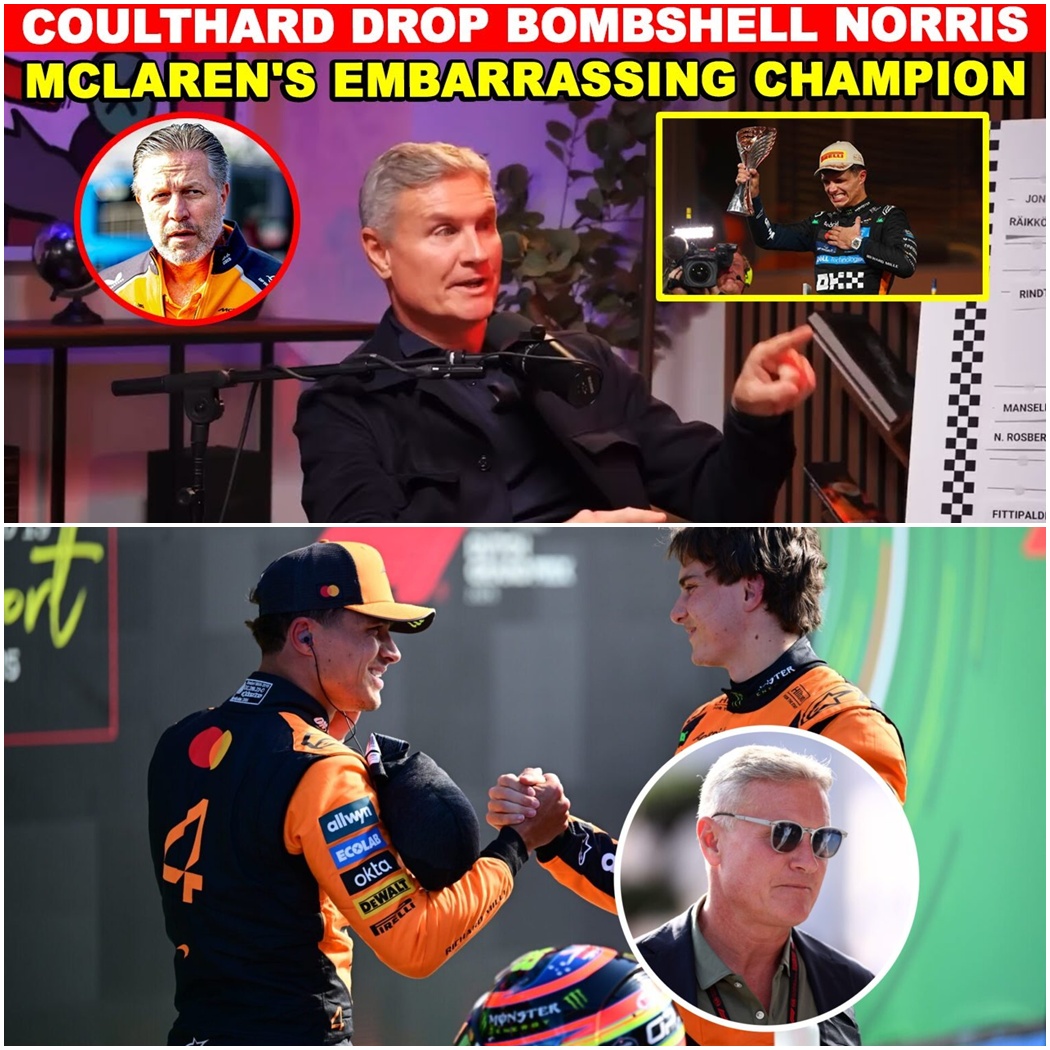
In the high-octane world of Formula 1, where split-second decisions define legacies and championships are won on the razor’s edge of performance, the narrative is often written by the victors. Trophies are hoisted, champagne is sprayed, and history books are updated with the names of the triumphant. However, beneath the polished veneer of success often lies a murkier reality, one composed of ruthless politics, strategic sacrifices, and uncomfortable compromises. The 2025 Formula 1 season, which saw Lando Norris ascend to the pinnacle of the sport, appeared on the surface to be a fairytale conclusion to years of hard work. Yet, a quiet firestorm ignited by former F1 driver David Coulthard threatens to cast a long, dark shadow over that achievement, raising questions that strike at the very heart of sporting fairness.
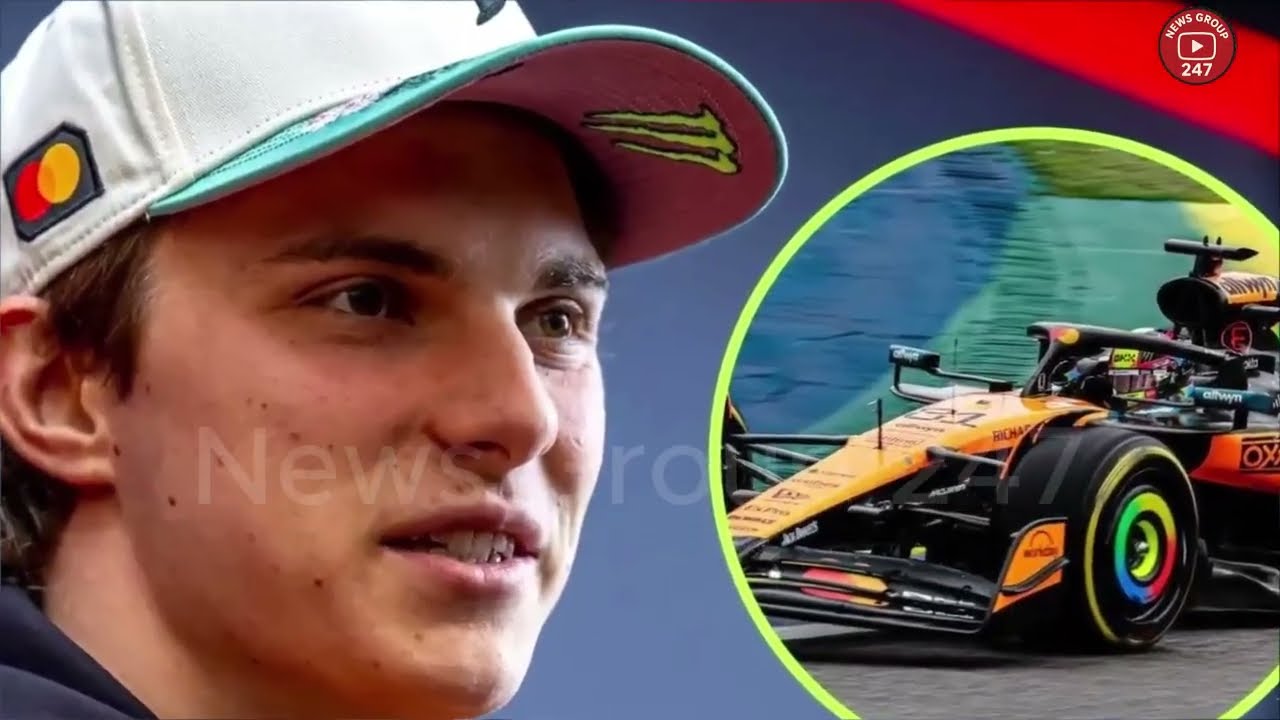
The Bombshell Accusation
David Coulthard, a veteran of the sport with a keen understanding of its internal mechanics, has unleashed a critique that is sending shockwaves through the paddock. His target is not the technical legality of the car or the driving ability of the champion, but something far more insidious: the legitimacy of the environment in which the championship was won. Without directly using the word “rigged,” Coulthard has effectively dismantled the perception of a fair fight within the McLaren garage, suggesting that the “machinery of favoritism” was working overtime to ensure a specific outcome.
The crux of Coulthard’s argument revolves around the sanctity of the relationship between a driver and their race engineer. In the chaotic, adrenaline-fueled theater of a Grand Prix, this bond is the lifeline. It is a connection that Coulthard describes in almost militaristic terms. “You are in the trenches together,” he explains, evoking an image of two soldiers standing shoulder-to-shoulder, facing the enemy fire. In this analogy, there is no room for doubt, no space for hidden agendas. When the whistle blows to go over the top, you must know, with absolute certainty, that the person beside you is fully committed to your survival and success.
The Poisoned Chalice of Team Orders
Coulthard’s contention is that McLaren violated this sacred trust. His criticism focuses on the specific manner in which team orders—instructions to “hold position” or “don’t race”—were delivered. In Formula 1, team orders are an ugly but accepted reality. Teams invest billions and expect a return, often necessitating the management of their drivers to maximize points. However, Coulthard insists that the source of the order matters just as much as the order itself.
When a race engineer, whose sole purported job is to maximize their specific driver’s performance, becomes the mouthpiece for team politics, the relationship is arguably poisoned. “That bond… has to be unbreakable,” Coulthard argues. If an engineer, the one person supposed to be fighting for the driver’s win, tells them to stand down, doubt begins to creep in. Is this advice for my tires? Is this strategy for my race? Or am I being sacrificed for someone else?
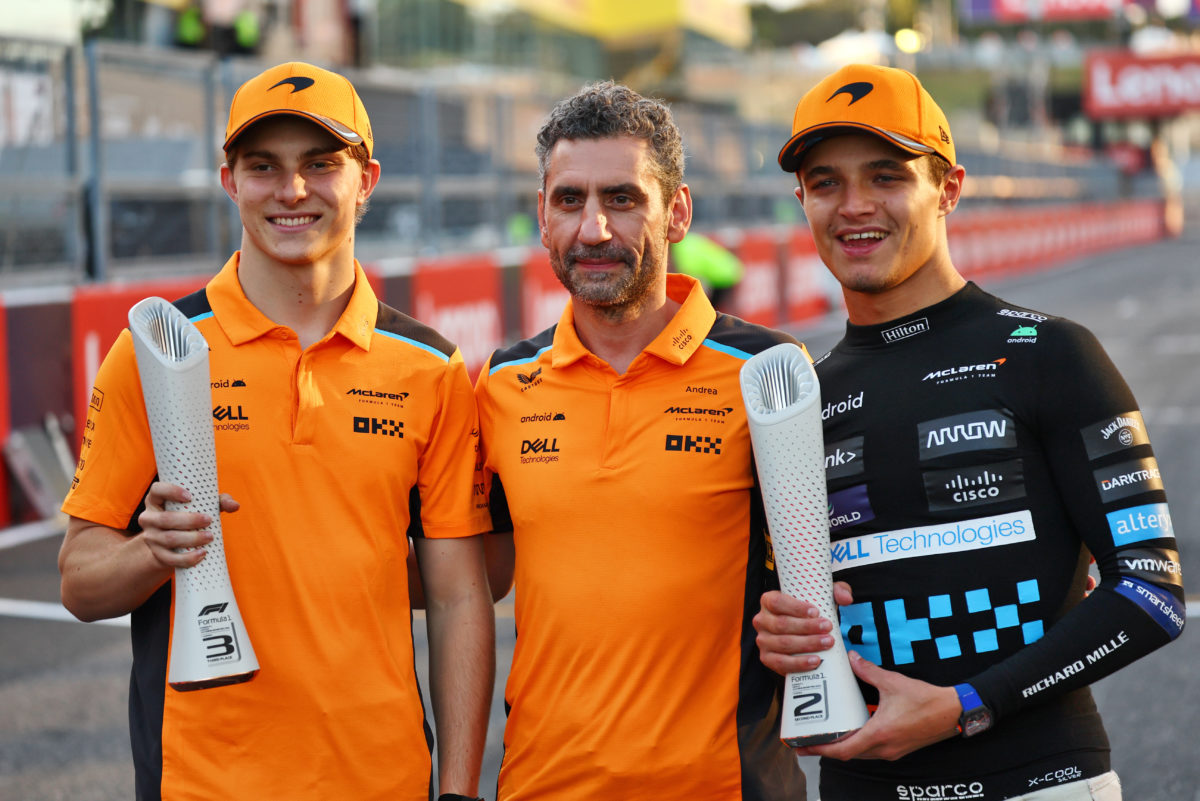
Coulthard believes that such dirty work should be the domain of the Team Principal or the Sporting Director—figures who represent the corporate entity. When the race engineer delivers the kill order, they cease to be a confidant and become a corporate shill. In the 2025 season, this dynamic played out repeatedly, with Lando Norris on the receiving end of the benefits, and his teammate, Oscar Piastri, often finding his wings clipped by the very voice in his ear that was supposed to help him fly.
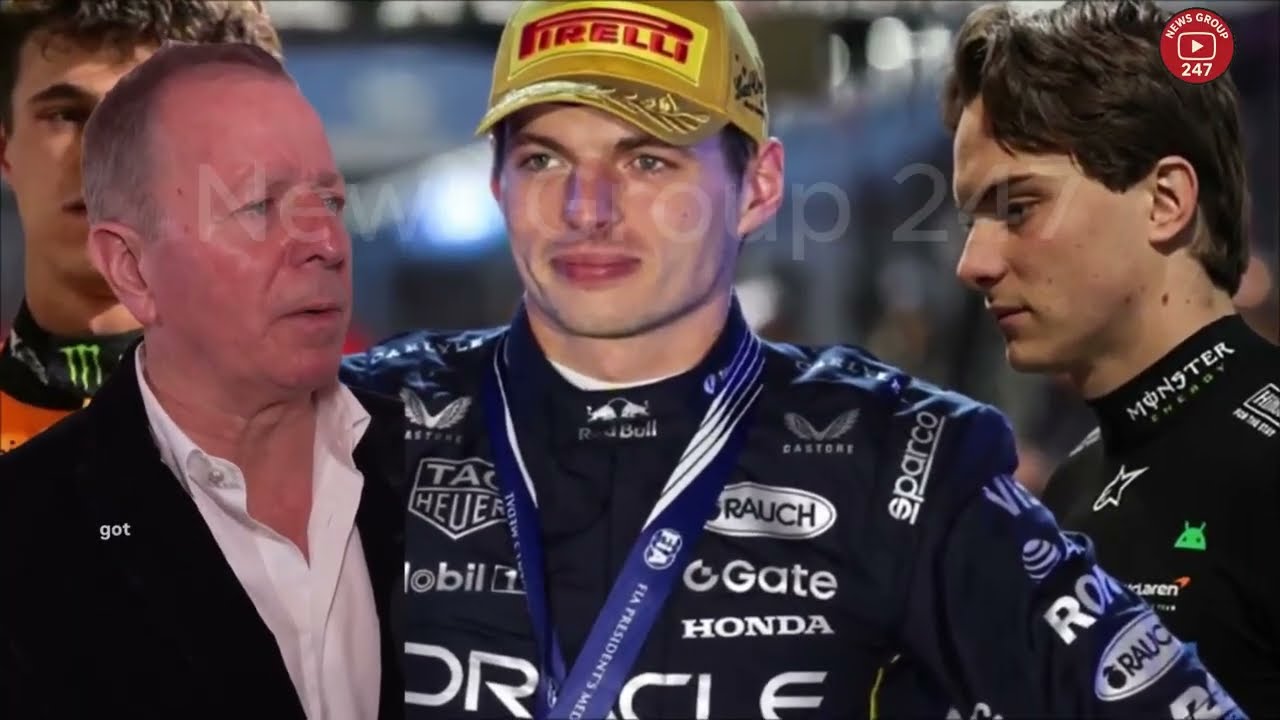
Oscar Piastri: The Pawn in the Shadows
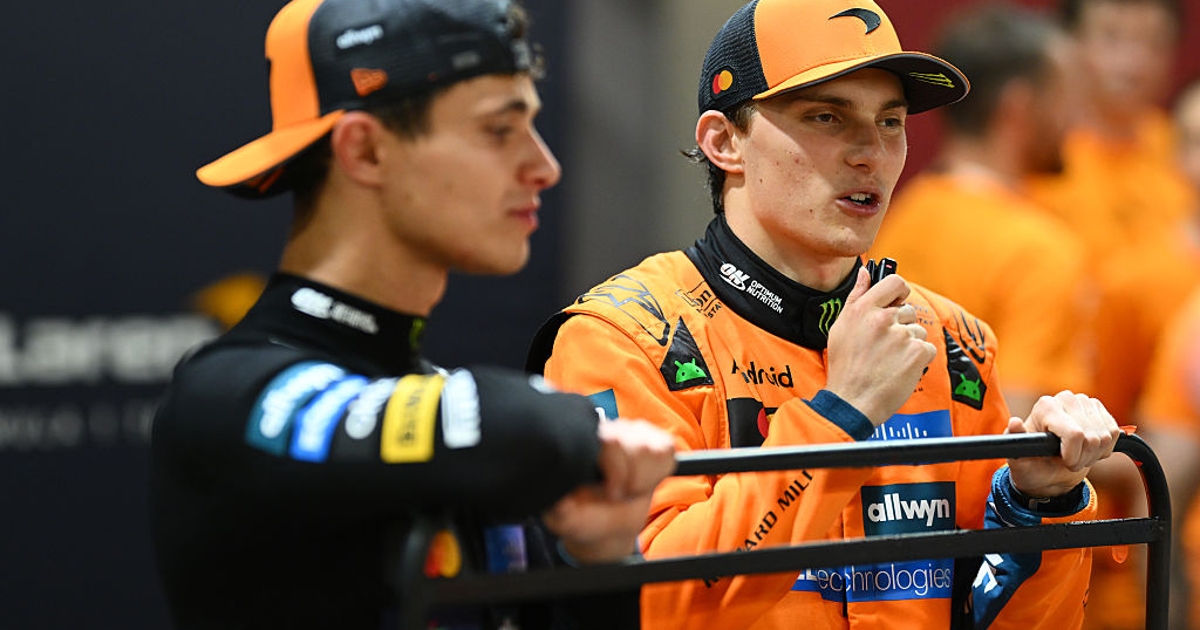
If Lando Norris was the chosen king of the 2025 season, Oscar Piastri was, according to this narrative, the pawn sacrificed to keep him on the throne. The retrospective analysis of Piastri’s season paints a grim picture of a young talent systematically restrained. Martin Brundle, another legendary voice in the sport, adds weight to this perspective, suggesting that Piastri’s campaign was shaped not by a lack of speed, but by “quiet obedience.”
From the opening rounds in Melbourne and Baku, fate seemed to conspire against the Australian. But what looked like bad luck on the surface may have been the early tightening of a strategic noose. As the season progressed and the title fight with Max Verstappen intensified, the strategy hardened. Brundle suggests that behind closed doors, a decision was made. Piastri ceased to be a competitor and became an “insurance policy.”
The psychological toll of this role cannot be overstated. A racing driver is wired to win. Their entire existence is predicated on being faster than the person next to them. To be told, repeatedly, to suppress that instinct is to be asked to deny one’s nature. Piastri found himself in a position where resistance would mean isolation, and compliance meant humiliation. He swallowed his pride, yielded track position, and absorbed the frustration of compromised races, all to service a championship that would not bear his name.
The “Chess in the Shadows”
What makes this critique so damning is the comparison to McLaren’s rivals. Red Bull Racing has never been shy about prioritizing their lead driver; their battles are often fought in the open, with brutal transparency. In contrast, Brundle argues that McLaren played a more cunning game—”chess in the shadows.”
The team spoke publicly of harmony, of two number-one drivers, of fair play. Yet, the pattern of the season suggests a cold, calculated ruthlessness that was perhaps even more effective than Red Bull’s overt methods because it was disguised as cooperation. By using the race engineers to enforce this hierarchy, McLaren effectively neutralized Piastri without the public spectacle of a team principal shouting orders. It was a silent suffocation of one driver’s ambitions to ensure the survival of another’s.
This “precision” is what unsettles observers like Brundle. It implies a level of premeditation that strips the sport of its romantic uncertainty. If the outcome is engineered from the pit wall, if the “don’t race” call is pre-loaded into the strategy, then the spectacle we watch on Sunday is less of a sport and more of a scripted drama.
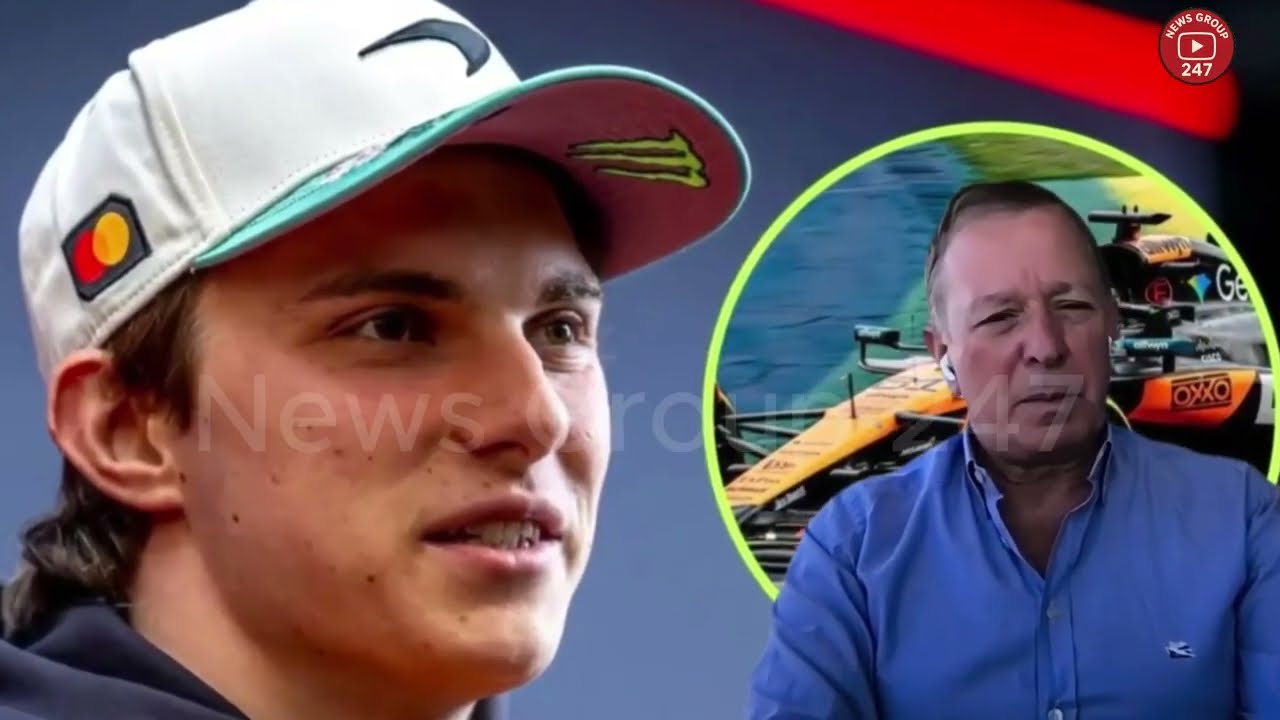
A Tainted Legacy?
The most uncomfortable question raised by Coulthard’s and Brundle’s comments concerns Lando Norris himself. Norris is undeniably a talent of the highest order. His driving in 2025 was often spectacular, characterized by moments of dominance that few in the history of the sport could match. Coulthard acknowledges this, praising Norris for driving “beautifully” and getting “really strong in the head.”
However, in Formula 1, perception is reality. Once the seed of doubt is planted—the idea that a champion was “protected” rather than “proven”—it is incredibly difficult to uproot. If the widespread belief becomes that Norris was allowed to win rather than having to fight for every inch against an unshackled teammate, the shine comes off the trophy.
History has a long memory. Fans and historians will re-examine the key moments of the season. They will listen to the radio messages with fresh skepticism. Every time Piastri held station, every time Norris was gifted a strategic advantage, it will be viewed not as a team maximizing points, but as a team manufacturing a champion. The question “Was he racing Norris or protecting him?” will hang over every replay of their wheel-to-wheel encounters.
The Unanswered Question
Ultimately, the 2025 season leaves us with a paradox. We have a worthy champion in Lando Norris, a driver who delivered when it counted. Yet, we also have a deep sense of unease about the cost of that victory. The “sacred bond” between driver and engineer, once broken, is not easily repaired. For Piastri, the scars of 2025 may linger long into his career. He has learned a brutal lesson about the ruthlessness of F1, a lesson that says talent is not enough if the politics aren’t in your favor.
David Coulthard’s “insult” to the champion is not a critique of his skill, but an exposure of the machinery behind him. It forces us to confront the uncomfortable reality that in modern Formula 1, the definition of a “team sport” can sometimes mean the systematic dismantling of one individual to build a monument to another.
As the dust settles on the season, the record books will show Lando Norris as the World Champion. But in the quiet corners of the paddock, and in the minds of fans who listened closely to the radio waves, the truth remains ambiguous. Oscar Piastri survived the season, but the question of whether he was ever truly allowed to race remains the haunting, unanswered riddle of 2025. And as Coulthard bluntly put it, despite the trophy in Norris’s cabinet, many might still look at the grid and say, “Max is still the best driver.” That, perhaps, is the cruelest cut of all.