Blog

  • F1 2026 Predictions Revealed: Mercedes Returns to Glory, Ferrari Faces Crisis, and a Shocking 11-Team Grid Order Shakes the Sport

    F1 2026 Predictions Revealed: Mercedes Returns to Glory, Ferrari Faces Crisis, and a Shocking 11-Team Grid Order Shakes the Sport

    The anticipation for the 2026 Formula 1 season is already reaching a fever pitch, despite the fact that the engines have barely cooled on the current era. With sweeping new regulations, the introduction of fresh manufacturers, and a grid expanded to eleven teams, the sport is bracing for one of the most significant shake-ups in its history. A new, bold analysis has dropped, predicting the pecking order for this revolutionary season, and if these forecasts hold true, fans are in for a year of dramatic resurrections, heartbreaking failures, and historic debuts.

    From the potential collapse of Ferrari’s “Super Team” dream to the triumphant return of Mercedes supremacy, here is an in-depth look at how the 2026 grid is expected to stack up, based on the latest insights and “head canons” from the F1 community.
    The Struggle at the Back: A Harsh Reality for Rookies and Veterans Alike

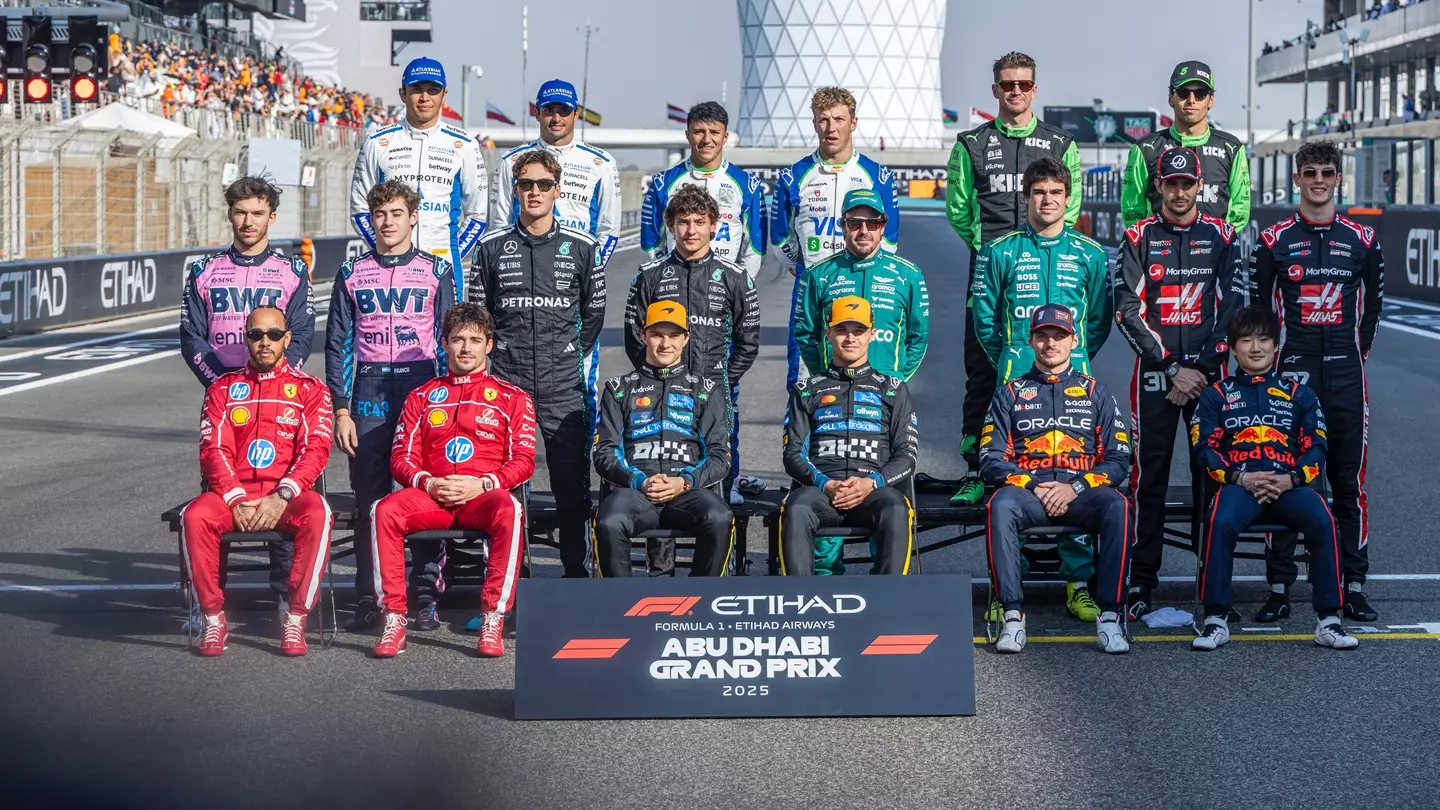
    The 2026 season marks a pivotal moment with the entry of automotive giants Cadillac and Audi, expanding the grid and increasing the competition. However, the prediction for the back of the field contains a surprising twist: the slowest team might not be a rookie.

    11. Visa Cash App RB (The Slowest) In a shocking turn of events, the team historically known as Toro Rosso—and currently racing under the VCARB moniker—is predicted to prop up the field in last place. History appears to be the primary enemy here. The team has notoriously struggled to adapt quickly to major regulation changes, often stumbling out of the gate in pivotal years like 2022 and 2017. Despite rumors of a technical loophole shared with their sister team Red Bull that could offer a three-tenths advantage, the analysis suggests their car design will fundamentally negate any engine gains, leaving them to languish at the very back.

    10. Cadillac (The Rookie Hurdles) Making their highly anticipated debut, the American giant Cadillac is expected to finish 10th. While the romantic heart of motorsport fans wants to see them succeed immediately, the brutal reality of F1 suggests a “nothing year” for the newcomers. Unlike a family-owned entry, Cadillac brings massive organizational clout, but they lack the years of preparation that rivals like Audi have enjoyed. The prediction describes their 2026 challenger as likely “basic, uninspired, perhaps safe,” a necessary step to find their footing before becoming proper midfield contenders by 2028.

    9. Audi (The Sleeping Giant) Audi, taking over the Sauber entry, is predicted to finish 9th, a position that might seem disappointing given the brand’s pedigree. However, this placement is framed as a “surprise” in the positive sense—defying the doom-mongers who expect them to be dead last. While 2026 won’t be a year of dominance, the massive investment and hiring of a “super team” of engineers suggests they will be a solid, respectable outfit capable of scoring casual points and perhaps pulling off a shock result at tracks like Silverstone.

    The Midfield Battleground: Partnerships and Powers

    The midfield in 2026 is shaping up to be a chaotic warzone, featuring a mix of legendary names trying to climb back up and bold new partnerships aiming to disrupt the status quo.

    8. Haas-Toyota (TGR Haas) One of the most exciting storylines for 2026 is the technical alliance between Haas and Toyota Gazoo Racing (TGR). This partnership is predicted to vault the American team to 8th fastest. The “Toyota buff” is expected to bring significant technical advantages, particularly in tire wear management, which could be among the best on the grid. The boldest prediction for this team? They will secure their first-ever podium in the first half of the season, a historic moment that would validate the return of the Japanese manufacturer to the pinnacle of motorsport.

    7. Alpine (The Engine Merchant) Alpine is forecasted to be the biggest improver, jumping to the 7th fastest team. The secret weapon? A customer engine deal with Mercedes. Abandoning their own power unit program to utilize what is widely expected to be the class-leading Mercedes engine gives them an instant performance boost. However, the team is described as lacking true innovation. They are “not pioneers,” but rather a team that adapts existing concepts well enough to be consistent midfielders. They are destined for the middle of the pack—a safe, if uninspiring, improvement.

    6. Williams (The Long Road Back) The historic Williams team is placed 6th. Despite the charismatic leadership of James Vowles and the talent of Alex Albon (and potentially Carlos Sainz), the prediction is a reality check for those dreaming of immediate title contention. They are still playing on “hard mode” with infrastructure that lags behind the top teams. While they will be faster and better, a specific technical weakness—predicted to be rear braking—might act as their “Achilles heel,” preventing them from breaking into the elite tier just yet.

    5. Aston Martin (The Pressure Cooker) Rounding out the midfield in 5th place is Aston Martin. With Adrian Newey now at the design helm and a Honda engine partnership, expectations are sky-high. However, the analysis warns that Newey’s genius is not an overnight fix. The team will be competitive, but they are expected to fall short of championship contention, potentially disappointing fans who believe Fernando Alonso will be fighting for wins immediately. The pressure to deliver on their massive investment could be their biggest struggle, though the foundation is being laid for future dominance.

    The Top Four: Crisis and Conquest

    The sharp end of the grid offers the most explosive narratives, including the potential implosion of the sport’s most famous team and a shift in the balance of power.

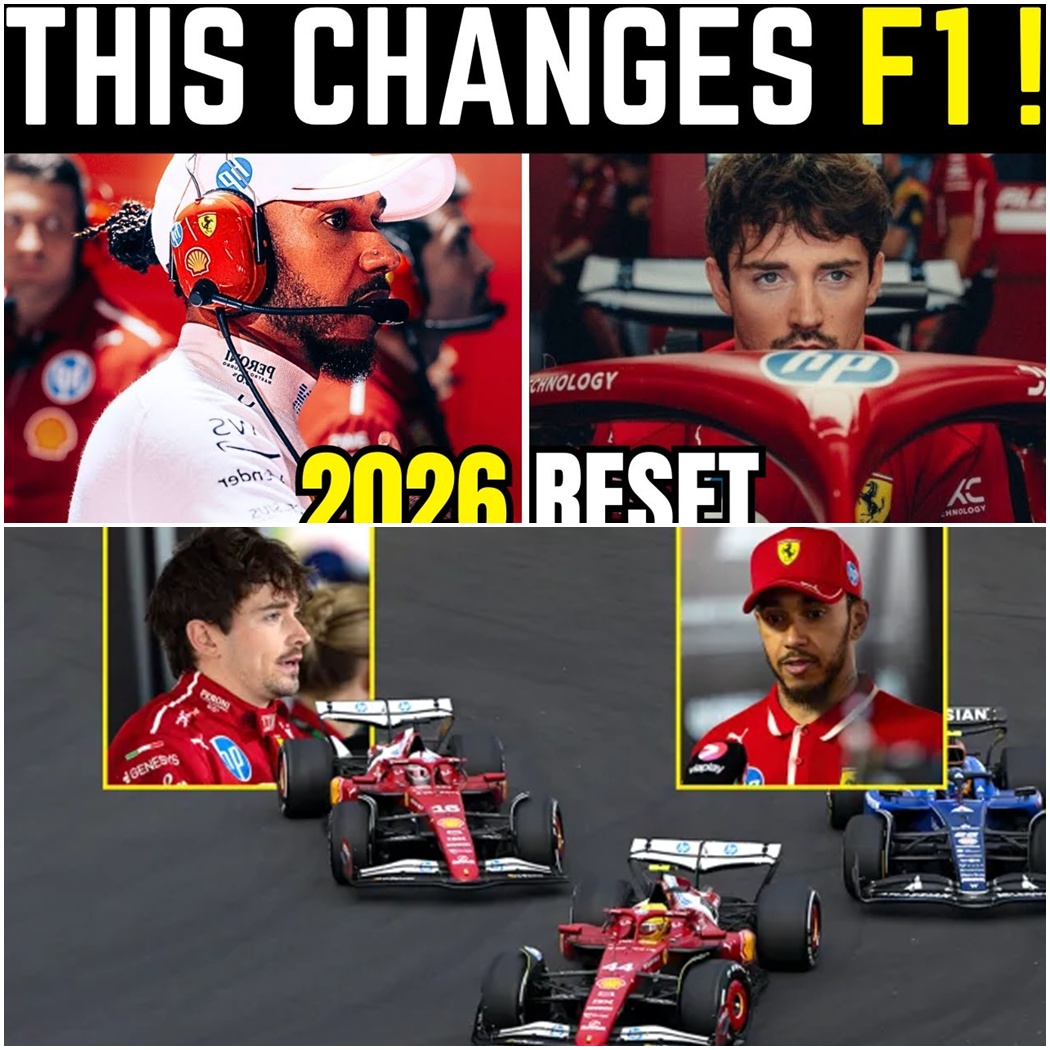
    4. Ferrari (The Great Disappointment) In a prediction that will send shivers down the spine of the Tifosi, Ferrari is expected to be only the 4th fastest team. Despite the arrival of Lewis Hamilton, the forecast is grim: the car will simply not be good enough. The analysis suggests that while the engine will be competitive, Ferrari’s chronic inability to build a versatile chassis will haunt them again. The SF26 might be fast in qualifying but chew through tires, or vice versa, never finding the sweet spot.

    The consequences of this failure could be catastrophic. The prediction explicitly mentions that both Charles Leclerc and Lewis Hamilton could be looking for an exit as early as the end of the season. There is even a bold claim that young talent Ollie Bearman could be drafted in for 2027 as the superstars jump ship to better projects, potentially seeing Leclerc move to Aston Martin to replace Alonso.

    3. Red Bull (The End of an Era) The dominant force of the ground-effect era, Red Bull, is predicted to slip to 3rd. The loss of Adrian Newey and the transition to a Red Bull-Ford powertrain brings uncertainty. While there are rumors of an engine loophole giving them an advantage, the analysis is skeptical, suggesting the FIA will likely clamp down on any “tricks” early in the season.

    Furthermore, the team dynamics are shifting. With a more balanced driver lineup predicted (hinting at a stronger teammate for Verstappen, potentially Isack Hadjar), the car may no longer be tailored exclusively to Max Verstappen’s unique driving style, potentially compromising his ultimate pace. It marks the end of their undisputed supremacy.

    2. McLaren (Fast but Flawed) McLaren is projected to be the 2nd fastest team. They will possess a rocket of a car, powered by the mighty Mercedes engine and designed by a talented engineering core at Woking. However, they are held back by one critical factor: “Competency.”

    The analysis describes McLaren as an “incompetent organization” when compared to the ruthlessness of Mercedes. From questionable strategy calls to operational errors, the team is expected to squander their performance advantage. While Lando Norris and Oscar Piastri will fight for wins, the team’s tendency to “bottle” crucial moments will likely cost them the title against a more polished rival.

    1. Mercedes (The Return of the Kings) Sitting at the top of the pile is Mercedes. The prediction is clear: the Silver Arrows will master the 2026 regulations better than anyone else. Historically dominant during major engine regulation changes, Mercedes is expected to produce the best power unit on the grid, a fact that will also benefit their customers, McLaren and Alpine.

    But it’s not just the engine; it’s the operation. Mercedes is praised for their strategic sharpness and operational excellence—traits that McLaren reportedly lacks. With a lineup of George Russell and Kimi Antonelli rated highly on pure skill, Mercedes is poised to reclaim their throne. The prediction envisions them as the “competent” powerhouse that simply gets the job done, capitalizing on the mistakes of others to secure the championship.
    Conclusion: A Season of Unpredictability

    If these predictions hold water, 2026 will be a season of fascinating contrasts. We may see the tragic stalling of Lewis Hamilton’s Ferrari fairytale before it even truly begins, contrasted with the rise of his former team back to the summit of the sport. The introduction of Cadillac and the influence of Toyota add layers of intrigue to the back and midfield, ensuring that every battle on the track has high stakes.

    While this is “head canon” and speculation for now, the logic is grounded in the history of the sport: manufacturers with engine expertise rule new eras, and operational efficiency wins championships. As the countdown to 2026 begins, one thing is certain—Formula 1 is about to change forever.
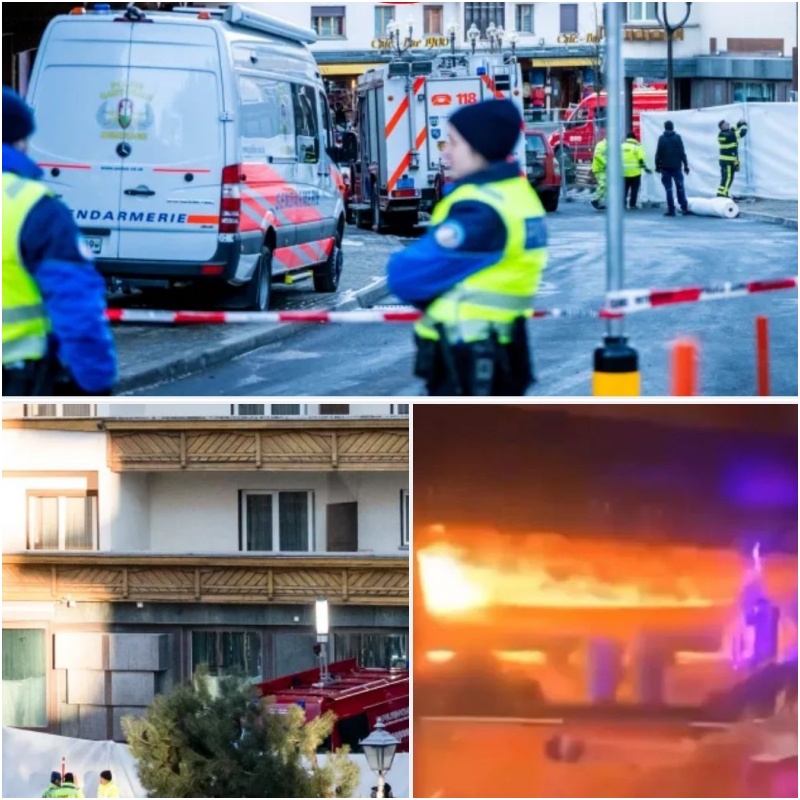
  • HORROH MOMENT CAUGHT ON CAMERA.  The chilling second a ceiling suddenly catches fire inside a packed ski bar — triggering a “hσrrσr mσvie” blaze that killed several dozen people during New Year celebrations in Switzerland DD

    HORROH MOMENT CAUGHT ON CAMERA.  The chilling second a ceiling suddenly catches fire inside a packed ski bar — triggering a “hσrrσr mσvie” blaze that killed several dozen people during New Year celebrations in Switzerland DD

    HORROH MOMENT CAUGHT ON CAMERA. The chilling second a ceiling suddenly catches fire inside a packed ski bar — triggering a “hσrrσr mσvie” blaze that killed several dozen people during New Year celebrations in Switzerland

    Dozens of people are presumed dead after a fire broke out at a bar in Switzerland during a New Year’s Eve celebration.

    An explosion was heard in the basement of Le Constellation in Crans-Montana, a ski resort in Valais, at 1.30am local time before the blaze.

    Around 200 people, including minors, were inside the nightclub at the time, according to Swiss news outlet Blick.

    The exact death toll is unclear, but officials have said it could be up to 40.

    As many as 100 people were also injured, many with severe burns, police chief Frédéric Gisler said at a press conference earlier this morning.

    He added that it is ‘probable’ that people of different nationalities were involved in the incident.

    At least two were French and none are known to be British nationals, the Foreign Office told Metro.


    The ski resort is about 40 miles south of the Swiss capital, Bern (Picture: Metro)
    Nine hours after the fire began, hospitals in French-speaking Switzerland were overwhelmed with burn victims, an insider told broadcaster RTS.

    The youngest of the 22 burn victims being treated at the University Hospital of Lausanne was 16.

    ‘We all ran out screaming and running’

    The cause of the explosion and resulting fire is unclear but terrorism has been ruled out.

    Witnesses have claimed the fire occurred after a waitress put candles on top of champagne bottles, one of which was then held up to the ‘wooden’ ceiling.

    French national Emma told French broadcaster BFM: ‘In a matter of seconds, the entire ceiling was ablaze. Everything was made of wood.’

    Escape was difficult, locals told Metro, as a ‘stampede’ of dozens of people were trying to get out from the same narrow staircase.


    Social media video appeared to show the moment the ceiling went up in flames (Picture: X)


    The inside of the bar in the aftermath of the fire (Picture: AP)


    An official cause of the blaze has not been revealed (Picture: AP)
    A passer-by told the BBC that they broke inside the building to see people ‘burning from head to foot, no clothes anymore’.

    Photographs posted to TripAdvisor show that the staircase leading out of the basement nightclub is narrow and appears wooden.

    Two other locals told Metro that ‘sparklers’ were behind the blaze.

    ‘How did this happen? I heard screaming after. People ran out everywhere and then fire engines came,’ one said.

    ‘It was like a horror movie. People are crying. It’s a disaster.’

    One bus driver suggested the inferno was caused by fireworks, which officials had banned over New Year’s, citing fire risks.


    Survivors described people struggling to escape the nightclub (Picture: Le Constellation/TripAdvisor)
    A resident added: ‘I heard a number of massive bangs which sounded like bombs going off. It was crazy.

    ‘…We will be in mourning for days. We will never get over this. How did it happen?’

    The area around the bar remains closed and a no-fly zone has been imposed over Crans-Montana.

    Crans-Montana is a popular destination in the Alps, particularly among British skiers, known for its views of the Matterhorn and Mont Blanc.

    Le Constellation, sometimes called the Constellation Bar, has been open since 2015. It can accommodate up to 300 people and a further 40 in its lounge.

    According to 20 Minutes, it is owned by a couple from Corsica.


    The death toll is largely expected to rise, officials have warned (Picture: 2026 Getty Images)


    Police, fire and ambulance services are at the scene (Picture: EPA)


    The exact death toll is unclear (Picture: AFP)


    A fire was seen on the ground floor of the building (Picture: AFP)
    The bar’s social media channels were taken down in the early hours today and it is listed on Google as ‘temporarily closed’.

    Swiss president Guy Parmelin wrote on X that he has cancelled his New Year’s engagements.

    ‘What should have been a moment of joy turned into a night of mourning in Crans-Montana, affecting the whole of Switzerland and abroad,’ he said.

    French President Emmanuel Macron, meanwhile, said his thoughts are with the ‘bereaved families and the injured’.

    Bars and clubs are more vulnerable to fires

    Several fires have torn through nightclubs, bars and other similar venues in recent years.

    Such entertainment spaces are particularly vulnerable to fire, safety experts say. They can be small and crammed with people unfamiliar with the layout, while alcohol may impair judgement.

    Some recent fires include:

    March 2025: A fire and resulting stampede at the crowded Pulse club in Kocani, North Macedonia, killed 63 people.

    April 2024: Twenty-nine people die after an inferno tore through the Masquerade nightclub in Istanbul, Turkey.

    October 2023: A fire erupted in a club in Murcia, Spain, that spread to two other clubs, killing 13 people.

    January 2022: Nineteen people died in a fire sparked by two rival gangs scuffling that gutted a nightclub in Sorong, Indonesia.

    That same month, a fire killed 17 people after fireworks set the roof of a club in Yaounde, Cameroon.

    For more stories like this, check our news page.

    Comments

    Add as preferred source

  • “We Only Run Two Cars Because We Have To”: Sergio Perez’s Explosive “Day One” Revelation Shatters the Red Bull Myth

    “We Only Run Two Cars Because We Have To”: Sergio Perez’s Explosive “Day One” Revelation Shatters the Red Bull Myth

    It is often said that history is written by the victors, but in the high-octane, ruthless world of Formula 1, the truth often waits until the contracts expire. That moment has finally arrived.

    On January 5, 2026, the motorsport world was rocked to its core when former Red Bull Racing driver Sergio “Checo” Perez broke his silence in a feature-length interview on the Spanish podcast Cracks, hosted by Oso Trava. Released just days ago, the conversation—recorded back in November 2025—serves as a devastating post-mortem of Perez’s four-year tenure at the Milton Keynes squad. With Christian Horner and Helmut Marko having famously departed the team late last year, and Perez himself now secure in a landmark seat with the newly formed Cadillac F1 team, the Mexican veteran had no reason to hold back.

    And he didn’t.

    What Perez revealed goes far beyond the typical “driver excuses” or complaints about strategy. Instead, he painted a picture of a team that, from his very first day in the factory, explicitly told him he was a regulatory necessity, not a competitive asset. The claims, backed by technical nuance and corroborated by years of data, suggest that the “second seat” at Red Bull wasn’t just difficult—it was structurally designed to fail.

    The “Day One” Confession

    The most explosive takeaway from the interview—and the one currently setting social media ablaze—is a conversation Perez claims took place during his very first meeting with Team Principal Christian Horner.

    According to Perez, the transparency was brutal. He alleges Horner told him directly: “We race with two cars because we have to race with two cars. But this project was created for Max. Max is our talent.”

    For any elite athlete, hearing that your presence is merely a bureaucratic check-box would be a career-ending demoralizer. Most drivers might have walked away then and there. Perez, however, stayed. He accepted the terms, believing he could carve out a role as the ultimate team player—a belief that was validated, at least initially. His heroic defense against Lewis Hamilton in Abu Dhabi 2021, which played a pivotal role in securing Max Verstappen’s first World Championship, cemented his status as a “legend” in Verstappen’s own words.

    But beneath the champagne and podium celebrations, Perez describes an environment where success was a double-edged sword. “At Red Bull, everything was a problem,” Perez told Cracks. “If I was very fast, it created tension. If I was faster than Max, that was a problem. If I was slower than Max, that was also a problem.”

    This paradox created a psychological trap: there was no “winning” scenario. Outperforming the golden child disrupted the team’s carefully curated equilibrium, while underperforming confirmed the pre-existing bias that he was merely a placeholder.

    The Physics of Failure: “Mental Resilience Cannot Override Physics”

    For years, pundits and fans have debated why highly rated drivers like Pierre Gasly, Alexander Albon, and Sergio Perez seem to “forget” how to drive the moment they step into a Red Bull cockpit. The prevailing narrative—often pushed by the team itself—was that the pressure of being Verstappen’s teammate broke them mentally.

    Perez’s interview dismantles this narrative with cold, hard technical precision. He argues that the issue wasn’t in his head, but in the wind tunnel.

    The technical divergence began in earnest in 2022 with the introduction of the ground-effect regulations. The RB18 launched significantly overweight—estimates put it at 10 to 15 kilograms over the minimum limit. This excess weight, largely at the front, created a car with a stable understeer balance. It was predictable. It was planted. And crucially, it suited Perez’s smooth, preservation-focused driving style perfectly. During this period, Perez claims simulator data often showed him matching or beating Verstappen.

    Then came the upgrades.

    As Red Bull aggressively shed weight to find lap time, the car’s characteristics shifted fundamentally. The development path moved toward a “sharp,” incredibly responsive front end—a characteristic that Verstappen, a generational talent with a unique ability to handle unstable rear ends, thrives on. Conversely, for a driver like Perez who relies on feeling the car “settle” into a corner, this evolution was catastrophic.

    “Mental resilience cannot override physics,” Perez stated, a line that is sure to become iconic in F1 lore. “You cannot outthink an unpredictable rear axle at 300 km/h.”

    This isn’t just a driver’s excuse. Tech analysts like Mark Hughes have long noted that Red Bull’s development philosophy naturally converges around Verstappen’s extraterrestrial ability to cope with instability. Even Pierre Waché, Red Bull’s Technical Director, is cited in the video as admitting that while they didn’t intentionally build the car only for Max, the pursuit of pure theoretical speed leads to a handling balance that only Max can exploit.

    By Barcelona 2023, the turning point was complete. An underbody upgrade introduced there shattered Perez’s confidence. He went from trading wins with Verstappen to languishing a second per lap behind. He lost the intuitive connection with the machine, and hesitation in Formula 1 is measured in tenths of a second.

    Gaslighting and the £6,000 Psychologist

    Perhaps the most damaging allegation regarding the team’s culture is how they handled these technical struggles. Rather than acknowledging that the car had drifted away from Perez’s operating window, the team insisted the problem was psychological.

    Perez revealed that when his results dipped, the immediate response was to send him to therapy. Helmut Marko, the team’s stern advisor, arranged sessions with a sports psychologist.

    “£6,000,” Perez recalled. “That’s what a single call cost. I sent the bill to Marco, he paid it, and that’s how it went for three years.”

    While Perez admits that confidence issues eventually did set in—focusing on “not crashing” rather than “going fast”—he maintains that the root cause was mechanical. Treating a handling imbalance with psychotherapy is, in his view, a fundamental misunderstanding of the sport. It paints a picture of corporate gaslighting: convincing a driver they are mentally broken to avoid admitting the car has become undriveable for anyone but the lead pilot.

    The Graveyard of the “Second Seat”

    Perez’s testimony provides a unifying theory for the struggles of every teammate Verstappen has had since Daniel Ricciardo left.

    Pierre Gasly (2019): Lasted 12 races. Demoted. Called the environment “negative and unfair.”

    Alexander Albon (2019-2020): Described a “snowball effect” where the car became sharper and sharper to suit Max, leaving him with “no mental energy left” and feeling “completely destroyed.”

    Liam Lawson & Yuki Tsunoda: Looking at the “future” context provided by the video (2024-2025 seasons), Perez points out that his replacements fared no better. Lawson lasted two races. Tsunoda managed a meager seven points in a full season.

    The pattern is undeniable. The system is efficient at winning championships with one car, but it is a meat grinder for the driver in the other. As Perez notes, the seat he occupied is arguably the “worst job in Formula 1,” a position that has now chewed through multiple careers in quick succession.

    Vindication and a New Beginning

    Despite the bitterness of the professional environment, one relationship seems to have survived the turmoil: the one between the drivers themselves.

    Perez went out of his way to clarify that his grievances are with the system, not with Max Verstappen. In a touching detail, he revealed that after the podcast aired, Verstappen publicly expressed his respect, and the two exchanged helmets. Verstappen’s message on the visor read: “Thank you for being a great teammate and friend.”

    It is a crucial distinction. Perez acknowledges Verstappen’s greatness. He isn’t claiming he is faster than Max; he is claiming that no driver on earth could be competitive in a team so singularly obsessed with one man’s specific geometric preferences.

    Now, as the 2026 season dawns, Perez has moved on. In a historic move, he has joined the newly entered Cadillac F1 team alongside Valtteri Bottas. It is a fresh start, a multi-year deal with equal status—something he never possessed at Red Bull.

    “I have nothing left to prove,” Perez said, citing his contribution to two Constructor’s Championships and five victories during his Red Bull stint.

    The Verdict

    As Red Bull Racing faces a new era without its longtime leadership of Horner and Marko, and with the championship having narrowly slipped away in 2025, Perez’s words serve as a stark warning. The philosophy of putting all eggs in one basket worked spectacularly for a time, but it has left the team structurally vulnerable.

    For four years, fans wondered why Sergio Perez—a driver known for his tire management and midfield heroics—looked so lost in the fastest car on the grid. Now we know. He wasn’t lost; he was fighting a battle he was told on Day One he was never meant to win.

    The revelation that the second Red Bull car was considered a “legal requirement” rather than a competitive entry changes how we look at the history of this dominant era. It vindicates Perez, Albon, and Gasly, and it casts a long, dark shadow over the legacy of a team that may have sacrificed everything—including the careers of world-class drivers—at the altar of Max Verstappen.

    Sergio Perez may not have won the World Championship at Red Bull, but by speaking out, he may have just won the argument.

  • Ferrari’s 2026 “Steel Heart” Gamble: The Radical Engine Revolution That Could Finally Restore The Prancing Horse’s Glory

    Ferrari’s 2026 “Steel Heart” Gamble: The Radical Engine Revolution That Could Finally Restore The Prancing Horse’s Glory

    In the high-octane world of Formula 1, standing still is equivalent to moving backward. But every few decades, the sport doesn’t just move forward; it undergoes a metamorphosis. The upcoming 2026 season represents one of these seismic shifts—a complete reset of the technical regulations that promises to level the playing field and redefine what it means to build a racing car. At the center of this storm is the most iconic team in motorsport history: Ferrari.

    For the Tifosi, the legion of passionate fans who bleed red, the last few years have been a rollercoaster of hope and heartbreak. But whispers from Maranello suggest that for 2026, the Prancing Horse is not just preparing to compete; they are preparing to dominate. Ferrari is taking bold, calculated risks with their new power unit design—choices so unconventional that they have left rivals scratching their heads. From switching materials to redefining energy management, Ferrari is building a “steel heart” for their future challenger.

    The Great Reset: Why 2026 Changes Everything

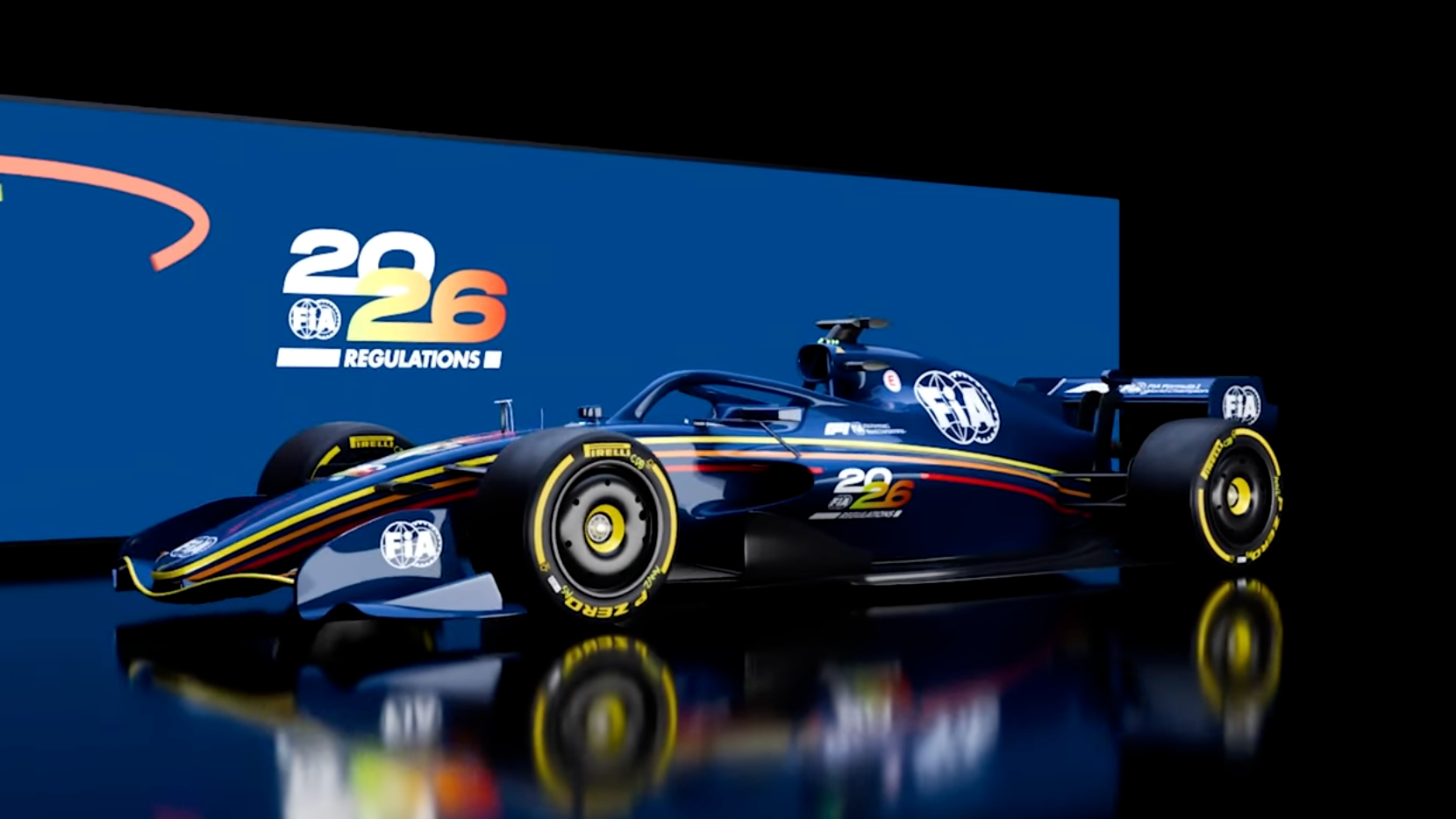
    To understand the magnitude of Ferrari’s gamble, one must first grasp the sheer scale of the challenge facing every team on the grid. The 2026 regulations are not merely a tweak; they are a revolution. The sport is pivoting aggressively towards sustainability, aiming to marry the raw speed of F1 with the environmental responsibility of the modern age.

    The headline change is the powertrain. While the familiar 1.6-liter V6 internal combustion engine (ICE) remains, its role has been fundamentally altered. For the first time in history, electric power will stand shoulder-to-shoulder with gasoline horsepower. The power distribution is shifting to a near 50/50 split. The internal combustion engine will produce roughly 500 horsepower, and the electric system—driven by a vastly uprated MGUK (Motor Generator Unit-Kinetic)—will match it.

    This massively increases the burden on the electrical systems. The MGUK alone will churn out approximately 350 kilowatts (around 470 horsepower), a staggering leap from the current generation. But here lies the trap: the regulations have removed the MGH (Motor Generator Unit-Heat), the complex component that recycled energy from exhaust gases. In today’s cars, the MGH is the safety net that keeps the battery topped up. In 2026, that safety net is gone.

    This removal creates a terrifying scenario for drivers: the risk of “clipping,” or running out of electrical boost halfway down a straight. Without the MGH, the only way to recharge the battery is through braking. If a team cannot harvest energy efficiently enough under braking, their car will effectively become a sitting duck, losing hundreds of horsepower when it matters most. It is a puzzle that could decide championships, and it is exactly where Ferrari believes they have found an edge.

    The Steel Gamble: A Heavyweight Solution to a Heavy Problem

    In a sport obsessed with shedding every gram of weight, Ferrari has made a decision that seems, at first glance, counter-intuitive. While the majority of the grid is expected to stick with lightweight aluminum for their engine cylinder heads and blocks, Ferrari has chosen a different path: a specialized steel alloy.

    Why would the most storied team in F1 choose a heavier material? The answer lies in the extreme demands of the new regulations. To compensate for the reduced fuel flow and the increased reliance on electrical power, the combustion engine must work harder than ever before. Turbo pressures are expected to skyrocket to a crushing 4.8 bar. Aluminum, while light, struggles to maintain structural integrity under such immense heat and pressure over the course of a race distance.

    Ferrari’s engineers have calculated that the trade-off is worth it. Steel is significantly stronger and more robust. It can withstand the punishing thermal and mechanical stresses of the new era without warping or failing. By using a steel alloy, Ferrari can push their engine to higher boost levels for longer periods, extracting maximum performance without the looming fear of catastrophic failure.

    To mitigate the weight penalty, the team is utilizing advanced manufacturing techniques and integrating other exotic materials, such as copper and ceramic components, into the cylinder head. This hybrid of materials is designed to optimize thermal conductivity and durability. It is a classic Ferrari move: trading the “safe” conventional wisdom for a high-risk, high-reward engineering solution. If they are right, they will have a bulletproof engine capable of being pushed to the limit while others nurse their fragile aluminum blocks.

    The Hidden Battle: Energy as a Tactical Weapon

    The 2026 regulations will transform F1 drivers from pure sprinters into high-speed chess masters. With the removal of the MGH, energy management becomes the single most critical factor in a race. It is no longer just about who has the fastest car over one lap; it is about who can deploy their energy most intelligently over 70 laps.

    Ferrari’s initial dyno tests have reportedly sent a wave of relief and optimism through Maranello. The data suggests that their new system is harvesting energy far more efficiently than their conservative early targets predicted. This is a massive development. In the absence of the MGH exhaust recovery, the ability to snatch every joule of energy during braking becomes the difference between winning and losing.

    The braking zones in 2026 will be the new battlegrounds. Every time a driver hits the brake pedal, the MGUK engages to harvest power. Ferrari is focusing heavily on the software that controls this interaction. The goal is to make the harvesting process seamless, so the driver doesn’t feel a sudden drag or instability.

    If Ferrari’s data holds true, their drivers—Charles Leclerc and Lewis Hamilton—will have a distinct strategic advantage. A more efficient recovery system means they can deploy their 470-horsepower electric boost for longer durations on the straights. While rivals might have to lift and coast to save energy, the Ferrari could essentially stay “on the throttle,” using its superior reserves to attack or defend. It turns the battery from a simple power source into a tactical weapon that can be wielded to break the spirit of the competition.

    Drivability: Taming the Beast

    Raw power is useless if the driver cannot control it. This maxim becomes even more pertinent in 2026, where the cars will have reduced downforce, making them skittish and harder to handle in the corners. A jerky, unpredictable engine delivery would be a nightmare for drivers already wrestling with less grip.

    Ferrari has placed a massive emphasis on “drivability.” The new engine isn’t just designed to be a brute; it’s designed to be a partner to the driver. The team is employing advanced combustion technologies, including direct injection and pre-chamber ignition systems. These technologies allow for a faster, more complete burn of the fuel-air mixture.

    The result is a smoother, more predictable power delivery. When a driver steps on the gas at the exit of a corner, they need to know exactly how the engine will respond. If the power arrives in a sudden, violent spike, it destroys the tires and unsettles the car. If it arrives too slowly, they lose time. Ferrari’s pre-chamber ignition ensures that the combustion is consistent, giving the driver the confidence to push the limits of traction.

    This focus on the “feel” of the engine highlights Ferrari’s driver-centric philosophy. They understand that a confident driver is a fast driver. By providing a power unit that behaves predictably, they allow their talent to extract that final tenth of a second that often separates pole position from second place.

    The Fuel Frontier

    Another often-overlooked aspect of the 2026 revolution is the fuel itself. The sport is moving to 100% sustainable fuels, a major step for the environment but a headache for engineers. These new fuels have different chemical properties compared to traditional fossil fuels. They burn differently, they release energy differently, and they interact with the engine components differently.

    Ferrari’s long-standing partnership with their fuel and oil supplier is proving to be a critical asset. This relationship is far more than just a sponsorship sticker on the side of the car; it is a technical collaboration. The team has been working for years to formulate a sustainable fuel that complements their specific engine architecture. This “race within a race” is happening in chemistry labs long before the cars hit the track. Optimizing the fuel to the engine (and vice versa) can unlock free horsepower—performance gains that don’t cost any extra weight or energy.

    The Tifosi’s Hope

    As the 2026 deadline approaches, the atmosphere in Maranello is one of quiet intensity. Gone are the days of bombastic pre-season predictions that often led to disappointment. Instead, there is a sense of methodical preparation. The team knows the stakes. They are up against titans like Mercedes, the powerhouse of the hybrid era; Red Bull, who are building their own engine with Ford; and new entrant Audi, who will be desperate to make a mark.

    However, Ferrari has something the others do not: a unique burden of history and a unique passion. The 2026 project is being treated as a chance for redemption. The “steel heart” concept is a symbol of a tougher, more resilient Ferrari. They are building a machine designed to survive the wars of attrition, to out-think the opposition with superior energy management, and to out-pace them with a radical combustion philosophy.

    The road to 2026 is long, and the true test will only come when the lights go out at the first Grand Prix. But for now, the signs are promising. Ferrari is not following the herd; they are forging their own path, literally and figuratively with steel. If this gamble pays off, the roar of the V6 engine mixed with the whine of the electric motor might just sound like victory. The Prancing Horse is ready to run again, and this time, it has a heart of steel.

  • “STRICTLY WILL NEVER BE THE SAME AGAIN.” BBC CROWNS Rylan Clark as New Face of the Show — But It’s the SHOCK Partner Reveal That Sent Britain Into TOTAL MELTDOWN Producers stayed silent. Insiders didn’t dare leak it. Then the announcement dropped — and within seconds, social media EXPLODED. Gasps, tears, disbelief… even hardcore Strictly fans admit: “We did NOT see this coming.” One bold decision. One once-in-a-decade twist. And a moment that could change Strictly forever.

    “STRICTLY WILL NEVER BE THE SAME AGAIN.” BBC CROWNS Rylan Clark as New Face of the Show — But It’s the SHOCK Partner Reveal That Sent Britain Into TOTAL MELTDOWN Producers stayed silent. Insiders didn’t dare leak it. Then the announcement dropped — and within seconds, social media EXPLODED. Gasps, tears, disbelief… even hardcore Strictly fans admit: “We did NOT see this coming.” One bold decision. One once-in-a-decade twist. And a moment that could change Strictly forever.

    “STRICTLY WILL NEVER BE THE SAME AGAIN.” BBC CROWNS Rylan Clark as New Face of the Show — But It’s the SHOCK Partner Reveal That Sent Britain Into TOTAL MELTDOWN Producers stayed silent. Insiders didn’t dare leak it. Then the announcement dropped — and within seconds, social media EXPLODED. Gasps, tears, disbelief… even hardcore Strictly fans admit: “We did NOT see this coming.” One bold decision. One once-in-a-decade twist. And a moment that could change Strictly forever.

    In a move that has sent shockwaves through the glittering world of ballroom dancing, the BBC has officially announced Rylan Clark as the new host of *Strictly Come Dancing*, stepping into the formidable shoes left vacant by long-time presenters Tess Daly and Claudia Winkleman. The revelation, dropped like a bombshell during a prime-time special on November 26, 2025, confirms what insiders have been whispering for weeks: the charismatic former *X Factor* star and beloved radio personality will lead the show’s 2026 series. But the real jaw-dropper? His co-host is none other than Emma Willis, the no-nonsense presenter known for her work on *Big Brother* and *The Voice UK*—a choice that has left fans reeling, divided, and utterly surprised.
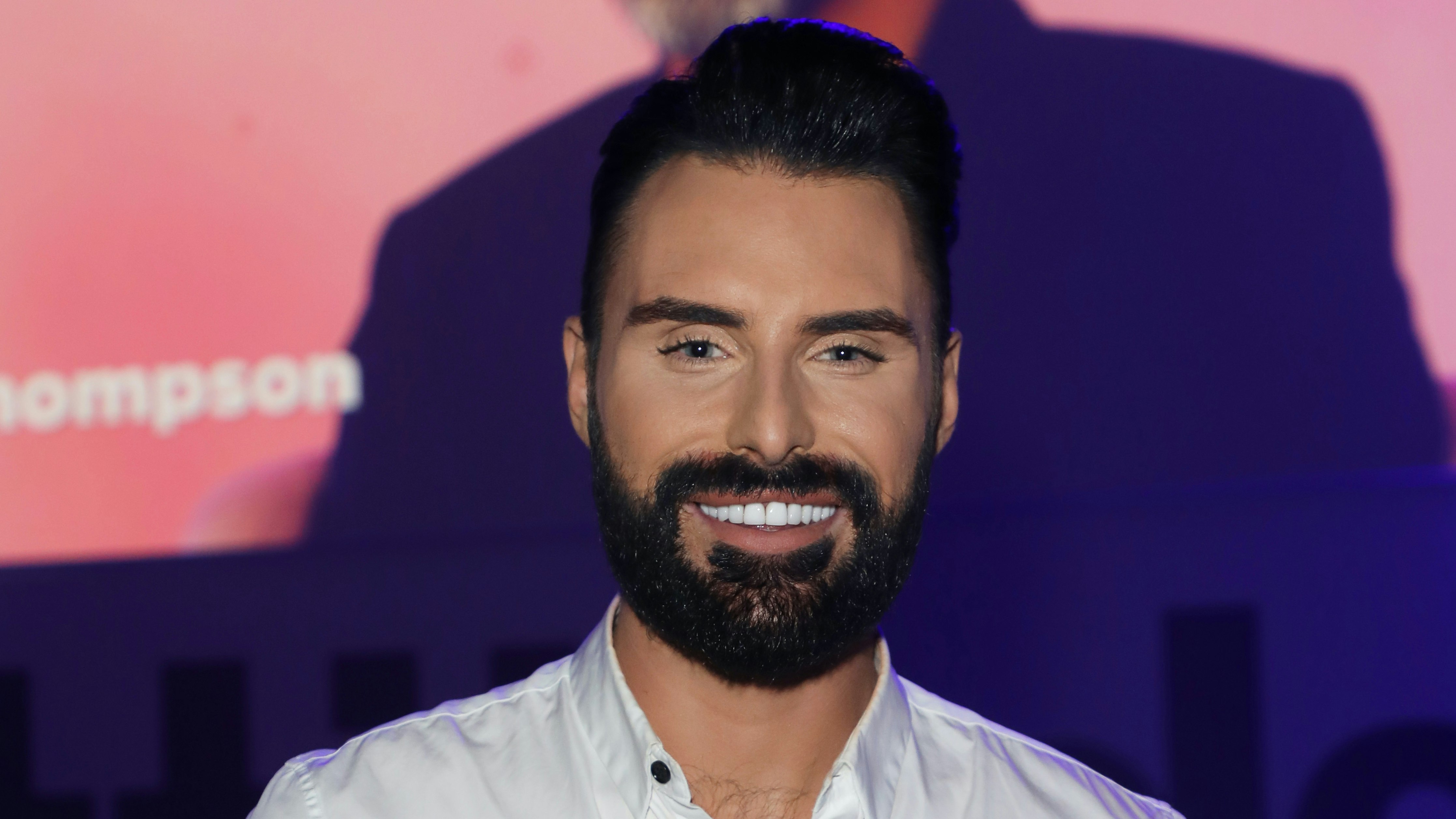

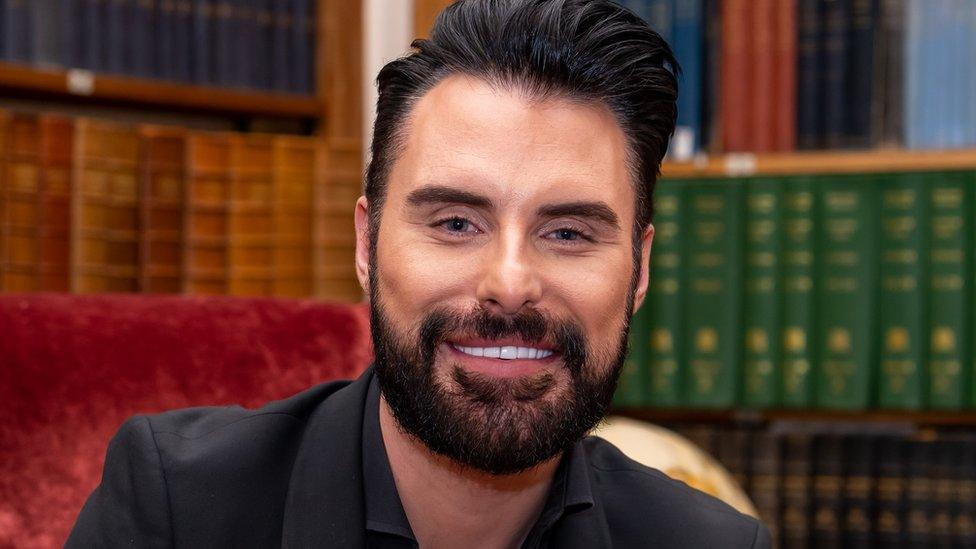
    The announcement comes hot on the heels of Tess and Claudia’s emotional exit, revealed just last month in a joint Instagram video that caught even the show’s insiders off guard. The duo, who have helmed *Strictly* since 2004 and 2014 respectively, cited a desire for more family time and new projects as their reasons for bowing out after the current series wraps. “It’s been an incredible ride, but it’s time to hang up our sequins,” Tess said in the video, her voice cracking with emotion. Claudia, ever the witty counterpart, added, “We’ve laughed, cried, and glitter-bombed our way through two decades. What a sparkle!” Their departure marks the end of an era for the BBC’s flagship entertainment program, which has dazzled audiences with its mix of celebrity glamour, professional prowess, and occasional controversy.

    Rylan Clark, 37, is no stranger to the *Strictly* family. Rising to fame on *The X Factor* in 2012, where his larger-than-life personality and infectious energy won over Simon Cowell and the nation, Rylan transitioned seamlessly into presenting. He hosted *Strictly Come Dancing: It Takes Two* from 2019 to 2023, earning rave reviews for his empathetic interviews and cheeky banter with contestants. Fans remember his heartfelt moments, like consoling tearful dancers after tough critiques or hyping up underdogs before live shows. His departure from *It Takes Two* in 2023 to focus on other ventures, including his BBC Radio 2 show and various  TV gigs, left a void—but now, he’s back in a bigger role than ever.

    “Rylan’s the perfect fit,” a BBC insider told us exclusively. “He’s got that sparkle, that warmth, and he knows the show inside out. Plus, he’s adored by the viewers.” Betting odds had pegged him as a frontrunner alongside names like Bill Bailey and Alan Carr, but the official nod still feels like a triumph for the Essex boy done good. Rylan himself reacted with trademark humility and excitement on social media shortly after the announcement: “Pinch me! Hosting *Strictly*? Dream come true. Can’t wait to bring the glitz with my fabulous co-host. Let’s dance!”

    But it’s the choice of Emma Willis as his co-host that’s truly raised eyebrows. At 49, Emma brings a wealth of experience from reality TV heavyweights, where her poised demeanor and sharp interviewing skills have made her a household name. Yet, her pairing with Rylan is unexpected—fans had speculated duos like Rylan with Fleur East (who replaced him on *It Takes Two*) or even a solo host shake-up. “Emma? Really?” one fan tweeted in disbelief. “Love her on *Big Brother*, but *Strictly* is all about fun and flair. This feels like a curveball.” Others praised the move: “Fresh energy! Emma’s class and Rylan’s charm—genius combo.”

    Sources close to the production reveal that Emma was a last-minute contender, edging out other favorites after impressing in screen tests. “The chemistry was electric,” our insider dished. “Rylan’s bubbly, Emma’s grounded—they balance each other like Tess and Claudia did.” Emma, married to Busted’s Matt Willis and a mother of three, has spoken openly about her love for dance shows. In a past interview, she confessed, “I’d kill to be part of *Strictly*—the glamour, the stories, it’s TV magic.” Her addition signals the BBC’s intent to evolve the format, perhaps injecting more in-depth contestant chats amid the tango and tango.

    The shake-up couldn’t come at a more pivotal time for *Strictly*. The 2025 series has been marred by scandals, from judge walkout rumors to contestant injuries, prompting calls for a refresh. Tess and Claudia’s exit, while voluntary, was influenced by the show’s grueling schedule—weekends dominated by live broadcasts, leaving little room for personal life. BBC chief content officer Kate Phillips addressed the changes in a statement: “Tess and Claudia have been the heart of *Strictly*, but we’re thrilled to welcome Rylan and Emma. They’ll honor the legacy while bringing new vibrancy.”

    Reactions from the *Strictly* alumni have poured in. Former winner Bill Bailey, who was tipped for the role, tweeted his support: “Rylan? Brilliant choice! And Emma—unexpected but spot on. Can’t wait to watch.” Judge Craig Revel Horwood, known for his acerbic wit, dropped a hint on air last week: “Darlings, big changes ahead—fabulous!” Fans speculate this could mean more judge involvement, perhaps even guest spots.

    Rylan’s journey to this pinnacle is a testament to his resilience. After *X Factor*, he navigated personal highs and lows, including his 2021 divorce from Dan Neal and mental health battles, which he shared candidly in his memoir *Ten: The Decade That Changed My Future*. His advocacy for LGBTQ+ rights and mental health has endeared him to millions, making him more than just a presenter—he’s a role model. “I’ve grown so much,” Rylan reflected in a recent Radio 2 broadcast. “Hosting *Strictly*? It’s full circle.”

    Emma, too, brings depth. Her no-frills style contrasts Rylan’s flamboyance, promising dynamic on-screen moments. Imagine her grilling judges on scores while Rylan rallies the crowd—pure entertainment gold. But not everyone’s convinced. A Reddit thread exploded with debates: “Why not keep it in the family? Rylan yes, but Emma feels like a mismatch.” Others worry about gender balance, with two hosts again but a fresh dynamic.

    As *Strictly* gears up for 2026, producers promise innovations: more diverse celebrities, interactive viewer votes, and perhaps themed weeks honoring the show’s history. Rylan and Emma’s debut will be scrutinized, but if their past successes are any indication, they’ll waltz through the pressure.

    Tess and Claudia’s final bow from Blackpool Tower Ballroom last weekend was tearful, with tributes from stars like Rose Ayling-Ellis and Hamza Yassin. “You’ve been our guiding lights,” Rose signed in a video message. Now, the torch passes to Rylan and Emma—a hot new era for *Strictly*, full of surprises, sequins, and steps into the unknown.

    In the end, this announcement isn’t just about hosts; it’s about reinvention. *Strictly Come Dancing* has survived scandals, pandemics, and shifting tastes. With Rylan at the helm and Emma by his side, the show is poised to shine brighter than ever. As Rylan might say: “Keep dancing!”

  •  “YOU ARE MY LIFE.”  Sir David Beckham and Victoria Beckham have extended their biggest olive branch yet to estranged son Brooklyn Beckham in an emotional New Year’s Eve tribute DD

     “YOU ARE MY LIFE.”  Sir David Beckham and Victoria Beckham have extended their biggest olive branch yet to estranged son Brooklyn Beckham in an emotional New Year’s Eve tribute DD

    “YOU ARE MY LIFE.” Sir David Beckham and Victoria Beckham have extended their biggest olive branch yet to estranged son Brooklyn Beckham in an emotional New Year’s Eve tribute

    Sir David Beckham has described wife Lady Victoria and their children as his ‘life’ in an emotional address to Instagram followers  – and his absent eldest son.

    In what appears to be another attempt to resolve their ongoing estrangement, the former Manchester United and England footballer included Brooklyn Beckham in his latest round-up of family photos on New Year’s Eve.

    Brooklyn has been absent from every significant family event over the course of the year, including his father’s milestone 50th birthday celebration and long awaited investiture at Windsor Castle.

    The cooking influencer also missed the launch of his mother’s hit Netflix series, while her annual catwalk shows in Paris, New York and London were also skipped, with Brooklyn spending much of his year in the United States with American wife Nicola Peltz.

    Arguably the most hurtful snub, Sir David and his family were excluded from Brooklyn and Nicola’s marriage renewal ceremony in August, conducted at her wealthy father’s estate in upstate New York.

    Conversely, the young couple also chose to miss close family friend Holly Ramsay’s wedding to Olympic swimmer Adam Peaty at Bath Cathedral on December 27.

    Sir David Beckham has described Victoria and their children as his ‘life’ in an emotional address to Instagram followers – and his absent eldest son

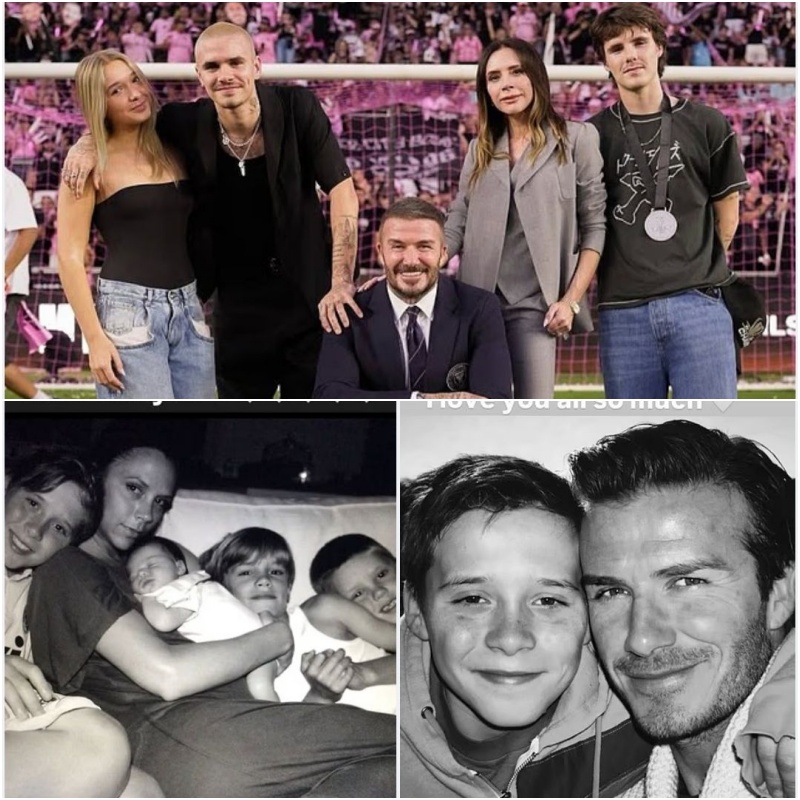
    But Sir David, 50, was evidently keen to build a bridge over troubled water while sharing a series of family photos with Instagram followers, among them a shot of Brooklyn as a teenager.

    Captioning the shot, he wrote: ‘I love you all so much.’

    Further shots included the retired footballer with sons Romeo, Cruz and daughter Harper, while a final image featured wife Victoria and all for four of her children, with the caption: ‘You are my life.’

    The post was promptly re-shared by wife Victoria, 51, who accompanied the image of Sir David and Brooklyn with an affectionate love heart.

    Earlier that day, the former footballer reflected on the past year and spoke of how ‘grateful’ he was for moments such as his 50th birthday and receiving his knighthood while admitting it is a year he’ll ‘remember forever’.

    Sir David shared an Instagram carousel of 20 monument moments from 2025, none of which included Brooklyn.

    However, he did include photos with Romeo, 22, Cruz, 20 and Harper, 14, enjoying family holidays and celebrations together over the past 12 months.

    Alongside the images, he wrote: ‘I feel very lucky to have had the year I’ve had in 2025 full of moments that I will never forget from my 50th to my knighthood (still pinching myself) and then finishing with winning the MLS as an owner.’

    Sir David’s post was later shared by his wife, Lady Victoria, with an accompanying love heart

    Join the debate

    How should families handle public rifts when personal grievances spill into the spotlight?

    Go to comments

    Brooklyn and his wife Nicola Peltz Brooklyn have been absent from every significant Beckham family event over the course of the year, including his father’s long awaited investiture

    Brooklyn has been at the centre of a feud with the Beckham family that has pitted the influencer and his wife Nicola against his parents and brothers (Brooklyn, David and Victoria in 2020)

    Sir David was evidently keen to build a bridge over troubled water while sharing a series of family photos with Instagram followers

    The collection of images also featured a shot of Sir David with daughter Harper as an infant

    Brooklyn and Nicola have been together since October 2019, going on to announce their engagement in July 2020 (pictured)

    Read More

    Brooklyn Beckham calls wife Nicola Peltz his ‘sweetie pie’ amid family feud

    Sir David thanked his wife and their children in the post, but did not name check them individually as he has done in the past

    Referencing his former Manchester United manager, he added: ‘I’m so grateful to my incredible wife, my amazing children, my friends and team I work with every single day nothing would have been possible without you all…

    ‘But as Sir Alex Ferguson would say “onto the the next”. Thank you for the incredible memories I will forever remember 2025. @victoriabeckham I love you & our kids.’

    The post included pictures with David’s four family dogs, cocker spaniels Fig, Sage, and Olive, plus a Cockapoo named Simba.

    Lady Victoria also showed support for her husband by resharing his post, and writing: ‘We are all so proud of you (and love you so much!).’

    It comes after Brooklyn and Nicola decided to snub the Beckham’s Christmas in the Cotswolds and spend it in the US instead.

    Sir David’s ‘incredible year’ was tinged with sadness due to his fallout with son Brooklyn (pictured L-R Harper, Romeo, David, Victoria and Cruz)

    Earlier on Wednesday, he spoke of how ‘grateful’ he was for moments such as his 50th birthday and receiving his knighthood, while admitting it is a year he’ll ‘remember forever’

    The post was largely a tribute to his wife Victoria who he is pictured with at his 50th birthday in the Cotswolds which was not attended by Brooklyn

    Sir David included photos with his other three children Romeo, (pictured), Cruz, and Harper enjoying family holidays and celebrations together over the past 12 months

    The actress revealed how much she ‘loved being home’ over the weekend after wrapping filming for the thriller Pretty Ugly.

    The couple have continued to put on a united display amid mounting backlash from fans urging him to him to heal the rift with his family.

    It was recently confirmed by younger brother Cruz that Brooklyn had blocked his entire family on social media following reports they had unfollowed him.

    ‘My mum and dad would never unfollow their son… Let’s get the facts right. They woke up blocked… as did I,’ Cruz wrote.

    And while his parents, Sir David, Kadt Victoria, and his siblings celebrated Holly Ramsay’s wedding to Adam Peaty in Bath on December 27, Brooklyn opted to share a Grinch-themed post thousands of miles away at his Los Angeles home.

    The influencer and his wife have been absent from countless Beckham family occasions over the past year including birthdays, parties and holidays.

    The former footballer spent this summer on the family yacht – Seven – with his three younger children (pictured with Cruz)

    He also shared a picture with Harper from one of his 50th birthday celebrations

  • HORROR ATTACK REVEAEED: A nurse has spoken out after being “𝙗𝙚𝙖𝙩𝙚𝙣 𝙣𝙚𝙖𝙧𝙡𝙮 𝙩𝙤 𝙙𝙚𝙖𝙩𝙝” in an alleged crowbar rampage — revealing the gruesome injuries she says were inflicted on her DD

    HORROR ATTACK REVEAEED: A nurse has spoken out after being “𝙗𝙚𝙖𝙩𝙚𝙣 𝙣𝙚𝙖𝙧𝙡𝙮 𝙩𝙤 𝙙𝙚𝙖𝙩𝙝” in an alleged crowbar rampage — revealing the gruesome injuries she says were inflicted on her DD

    HORROR ATTACK REVEAEED: A nurse has spoken out after being “𝙗𝙚𝙖𝙩𝙚𝙣 𝙣𝙚𝙖𝙧𝙡𝙮 𝙩𝙤 𝙙𝙚𝙖𝙩𝙝” in an alleged crowbar rampage — revealing the gruesome injuries she says were inflicted on her

    A nurse who claims she survived being attacked by a man armed with a crowbar in a hospital waiting room declared today: ‘I’m so, so, so lucky I’m still alive and I’m so lucky I ran when I did.’

    Meg Lynch, 28, said she was ‘nearly beaten to death’ while stood getting a drink from a vending machine.

    The district nurse, who suffered ‘a few blows to the head’ before running and hiding from her alleged attacker, told how she was left bloodied and bruised.
    She had to go to a nearby accident and emergency unit for a CT scan and to have ‘my head sewn back together’.

    A 20-year-old Afghan man allegedly launched the attack after he was refused an appointment, and was arrested at the scene at Newton Community Hospital in Newton-Le-Willows, Merseyside, on suspicion of six counts of Section 18 wounding, affray and criminal damage.

    In an update this morning, Merseyside Police said he had been detained under the Mental Health Act, and officers would be carrying out high-visibility patrols in the area.

    But Ms Lynch, one of six people injured in yesterday’s horrific attack, added: ‘I honestly don’t know why this man did this to me and other workers of the hospital.’

    All of the injured are in a stable condition. Their injuries included head lacerations, injuries to their arms and hands, and bruising.

    Nurse Meg Lynch said she was ‘nearly beaten to death’ by an Afghan migrant while stood getting a drink from a vending machine

    The district nurse, who suffered ‘a few blows to the head’ before running and hiding, told how she was left bloodied and bruised

    In a Facebook post, she wrote: ‘Just an update to everyone who’s been concerned, as I’ve not had the chance to reply to everyone.

    ‘As a district nurse, around 12:00 I was attacked at work, at the hospital I am based at.

    ‘I was beaten nearly to death with a crowbar by an unknown man, who started attacking me from behind with the crowbar, as I stood getting a drink from a vending machine.

    ‘After a few blows to the head, I ran, I hid and did what I could do, to get a door between me and him.

    ‘I’ve been to Whiston A&E, who was absolutely amazing to me.

    ‘My CT scans and X ray have come back clear and I’ve had my head sewn back together, after cutting all the matted blood out.

    ‘I honestly don’t know why this man did this to me and other workers of the hospital, but I’m so so so lucky I’m still alive and I’m so lucky I ran when I did, otherwise I wouldn’t be here right now.’

    Merseyside Police said the weapon believed to have been used – a metal bar – has been recovered for forensic examination, while ‘witnesses are being spoken to and all available CCTV footage is being analysed’.

    She had to go to a nearby accident and emergency unit for a CT scan and to have ‘my head sewn back together’

    A 20-year-old Afghan man allegedly launched the attack after he was refused an appointment, and was arrested at the scene at Newton Community Hospital in Newton-Le-Willows, Merseyside

    Ms Lynch, who only recently completed her first year of nursing, added: ‘I’m home and safe with my family taking care of me’

    A spokesperson said: ‘The 20-year-old suspect, who lives in Newton-le-Willows and is originally from Afghanistan, was arrested on suspicion of six counts of Section 18 wounding, affray and criminal damage. He was taken to a police station in Merseyside and has now been detained under Section 136 of the Mental Health Act.

    ‘A scene remains in place at the community hospital while enquiries into the incident continue. A mobile police station is also on site and people are encouraged to speak to officers with any worries or concerns.

    Read More

    BREAKING NEWS
    Woman ‘ran from hospital covered in blood during crowbar rampage’: Afghan man, 20, is arrested

    ‘There will be high visibility policing patrols in the local area and officers will continue to engage with staff and patients at the hospital as well as people living and working locally.’

    St Helens Local Policing Superintendent Sarah Rotherham said: ‘We understand that this incident would have caused concern for the local community and I hope the public feel reassured by the increased police presence.

    ‘I would ask anyone with concerns to speak to one of our officers or contact their local police station.’

    Ms Lynch, who only recently completed her first year of nursing, added: ‘I’m home and safe with my family taking care of me.’

    She revealed she was ‘very sore and in a state of shock but okay’ following her ordeal yesterday.

    On Facebook, Ms Lynch received a flood of messages of support.

    Andrea Vickers, a fellow nurse, said: ‘I’m so glad you’re ok sweety… For this to happen to one of the kindest, cheeriest souls I have the pleasure of knowing is absolutely gutting! Sending hugs and lots of love.’

    Jessica Shaw, a nursing student who has been on a placement with Ms Lynch, said: ‘You’re the nicest girl I’ve had the pleasure of meeting and you have shown me such warmth and kindness whilst on placement with you.

    ‘It angers me to see that somebody has done this to you. Wishing you all the greatest healing, strength and love possible.’

  • TRAGIC LOSS: A 12-year-old schoolboy was found ɗєaɗ by his cousin after an alleged “Squid Game prank” went horribly wrong, an inquest has heard DD

    TRAGIC LOSS: A 12-year-old schoolboy was found ɗєaɗ by his cousin after an alleged “Squid Game prank” went horribly wrong, an inquest has heard DD

    TRAGIC LOSS: A 12-year-old schoolboy was found ɗєaɗ by his cousin after an alleged “Squid Game prank” went horribly wrong, an inquest has heard

    A schoolboy was found dead by his cousin after attempting to replicate a scene from Squid Games as a prank, an inquest heard.

    Sebastian Cizman, 12, was found unresponsive at his family’s home in Glasshoughton, West Yorkshire, during his younger brother’s First Holy Communion celebrations.

    He is believed to have been imitating a challenge that encourages youngsters to choke themselves until they pass out, and which has been linked to multiple child deaths around the world.

    Health experts have warned it can cause permanent brain damage or death in under five minutes.

    Sebastian was discovered with a sheet around his neck, lying motionless on the stairs of the family’s terraced home on the evening of June 27.

    Despite desperate efforts by paramedics to revive him, he was tragically pronounced dead at hospital.

    Sebastian was a fan of a game based on Netflix dystopian thriller Squid Game and police found an image on his phone of a character from the show who was found hanging, the inquest heard.

    He was described as a popular boy and a ‘prankster’ who enjoyed making his friends laugh.

    Sebastian Cizman, 12, was found unresponsive at his family’s home in Glasshoughton, West Yorkshire, during his younger brother’s First Holy Communion celebrations

    Sebastian’s heartbroken parents Marcin (right) and Kasia (left) spoke out to urge other families to wake up to the dangers lurking on their children’s phones

    The inquest at Wakefield Coroner’s Court also heard how Sebastian had previously pretended to be unconscious while play fighting.

    After speaking to his family, police believed he may have been attempting to recreate what he had seen on Squid Game but things had gone wrong.

    Sebastian had shared an image of the hanged Squid Game character on a WhatsApp group on the day of his death.

    A police investigation found no evidence he had searched for any dangerous challenges on TikTok, but he had viewed Squid Games and had also searched YouTube for a first-aid video about ‘surviving choking alone.’

    The ‘speculation’ surrounding dangerous challenges had been put forward shortly after his death but police had found no evidence to support it, the inquest heard.

    Sebastian’s family had previously talked to him about the dangers of such online challenges and he said that he wouldn’t try them.

    Detective Sergeant Paul Bayliss, who investigated the circumstances around Sebastian’s death, told the inquest hearing that boy was interested in Squid Game, and the character who took their own life whose image was found on his phone, coupled with his ‘prankster nature’, had led to the hypothesis to explain his death.

    Dr Philip Dore, headteacher at St Wilfred’s Catholic High School, said Sebastian had been a popular, happy and funny pupil who was good at making his class laugh.

    He had been a form rep and had garnered more than 200 positive comments from staff and had previously been named ‘star of the class’.

    Sebastian’s parents, Marcin and Katarzyna, said that Sebastian was a happy boy who had no mental health problems.

    In a statement, they said that they believed his death was caused by a tragic accident.

    Ruling a verdict of death by misadventure, assistant coroner John Hobson described Sebastian’s death as a ‘very tragic set of circumstances’.

    Earlier this year, in an interview with the Daily Mail, they called for urgent action to hold tech giants accountable for the dangerous videos being uploaded to their platforms and pushed on to their feeds.

    He is believed to have been imitating a challenge that encourages youngsters to choke themselves until they pass out, and which has been linked to multiple child deaths around the world

    Kasia (left) said: ‘They should take the people who are promoting these challenges and put them in prison, so no other child dies’

    Kasia, 37, an office clerk, said: ‘They should take the people who are promoting these challenges and put them in prison, so no other child dies.

    ‘These platforms don’t do anything. It is completely unchecked. They make money and they don’t care.

    ‘It’s hard what I’m going to say, but I hope that the loss of my child is going to help some other children to understand.

    ‘And for the people that run these social media platforms to do something, to stop it from happening.

    ‘How many kids have to die until they will do something?

    ‘My message to other parents is check your children’s phones before it is too late.’

    Sebastian was found fatally injured on a staircase at the family’s end-of-terraced home during an ‘absolutely happy’ day with his family and cousins from Poland for the communion of younger brother Mike, nine.

    Kasia said: ‘We were cooking downstairs, and the kids had all been playing on the trampoline.

    ‘Marcin brought out ice creams and called the kids. Then the kids came downstairs without Sebastian.

    ‘So Marcin asked “where’s Sebastian?”. His cousin said they were tired from jumping on the trampoline and that he went upstairs for a rest.

    ‘He told them to go and fetch him, and they came back after a few seconds and said “I don’t know if Sebastian’s joking or not, but he’s lying on the stairs”.

    ‘We ran upstairs and found him. He had taken a sheet from the duvet, which wrapped around his neck but not tightly.

    ‘We called for an ambulance straight away and started to resuscitate him. We didn’t stop until the paramedics arrived.’

    Sebastian, a self-taught classical pianist, was able to access social media despite platforms requiring their users to be at least 13 years old.

    Sebastian had no history of self-harm, and his parents say he would never knowingly risk his life.

    Marcin said: ‘He was able to sign up for them with no questions asked. He was smart enough to do it. Smart enough to wriggle around it.’

    It comes after the parents of four British teenagers filed a lawsuit against TikTok in February over the deaths of their children, which they claim were the result of a similar challenge.

    The lawsuit related to the 2022 deaths of Isaac Kenevan, 13, Archie Battersbee, 12, Julian ‘Jools’ Sweeney, 14, and Maia Walsh, 13.

    The lethal trends, which have been widely condemned by experts, often show up in users’ social media feeds without being directly searched for.

  • The Darkest Lap: How Politics, Betrayal, and Revenge Fueled Ayrton Senna’s Deliberate Crash at Suzuka

    The Darkest Lap: How Politics, Betrayal, and Revenge Fueled Ayrton Senna’s Deliberate Crash at Suzuka

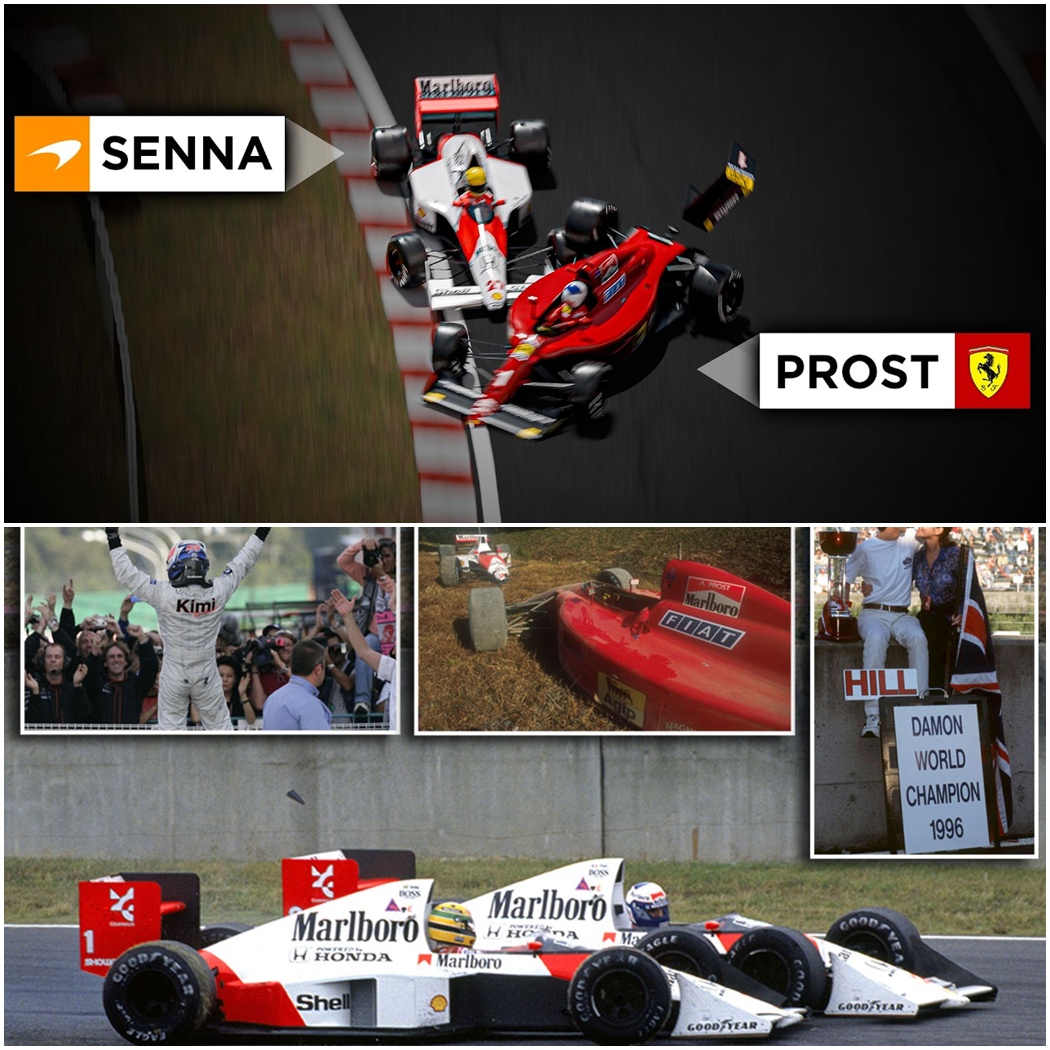
    The gravel trap at the first corner of the Suzuka Circuit is perhaps the most famous patch of dirt in the history of motorsport. It is a silent witness to a moment that transcended sport and entered the realm of mythology. On October 21, 1990, two cars, a McLaren-Honda and a Ferrari, barreled toward Turn 1 at breakneck speeds. Moments later, they were intertwined in a cloud of dust, their suspensions shattered, their wheels askew.

    To the millions watching around the globe, it looked like a desperate racing incident—a collision between two titans refusing to yield an inch. But beneath the twisted carbon fiber lay a story far darker and more complex than a simple error in judgment. It was the climax of a toxic feud involving political conspiracy, personal betrayal, and a burning desire for revenge that had consumed one of the greatest athletes the world has ever seen: Ayrton Senna.

    For decades, the crash at the 1990 Japanese Grand Prix has been debated, analyzed, and romanticized. But to truly understand why Ayrton Senna drove his car into Alain Prost that day, we must peel back the layers of the “Senna vs. Prost” rivalry. It wasn’t just about speed; it was about a man who felt the entire system was rigged against him, and the extreme measures he took to balance the scales.

    The Roots of the War

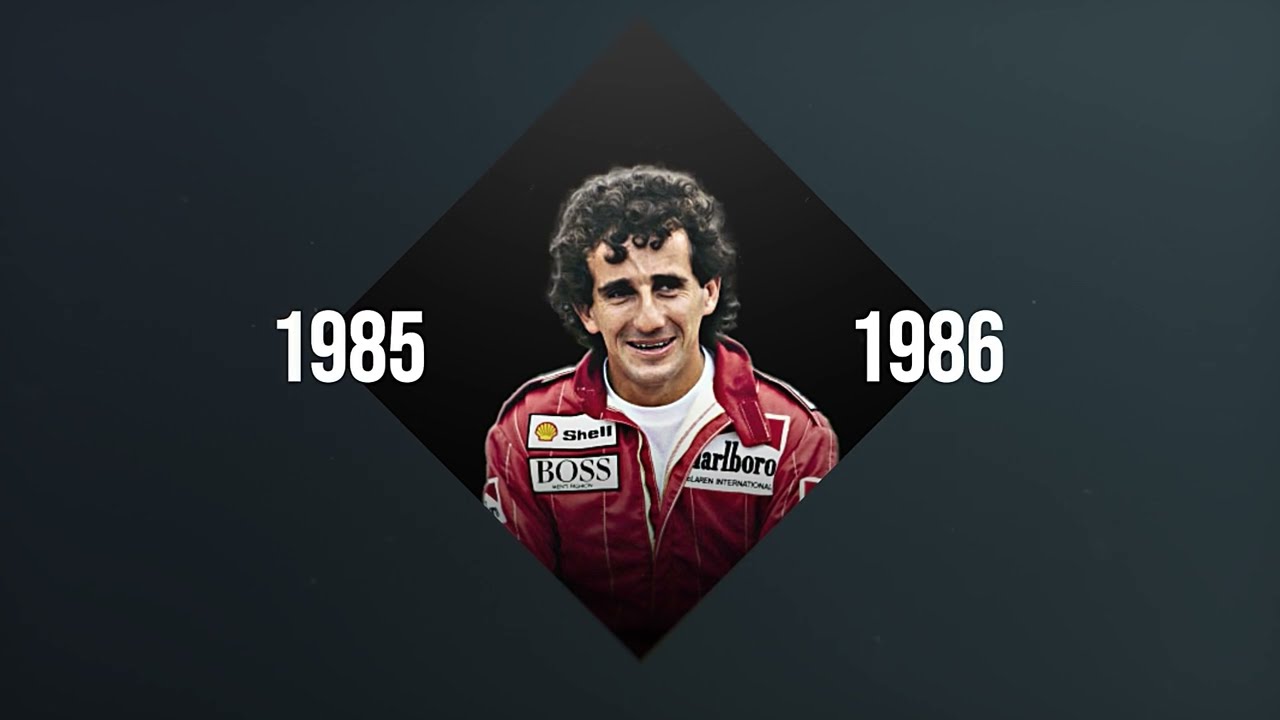
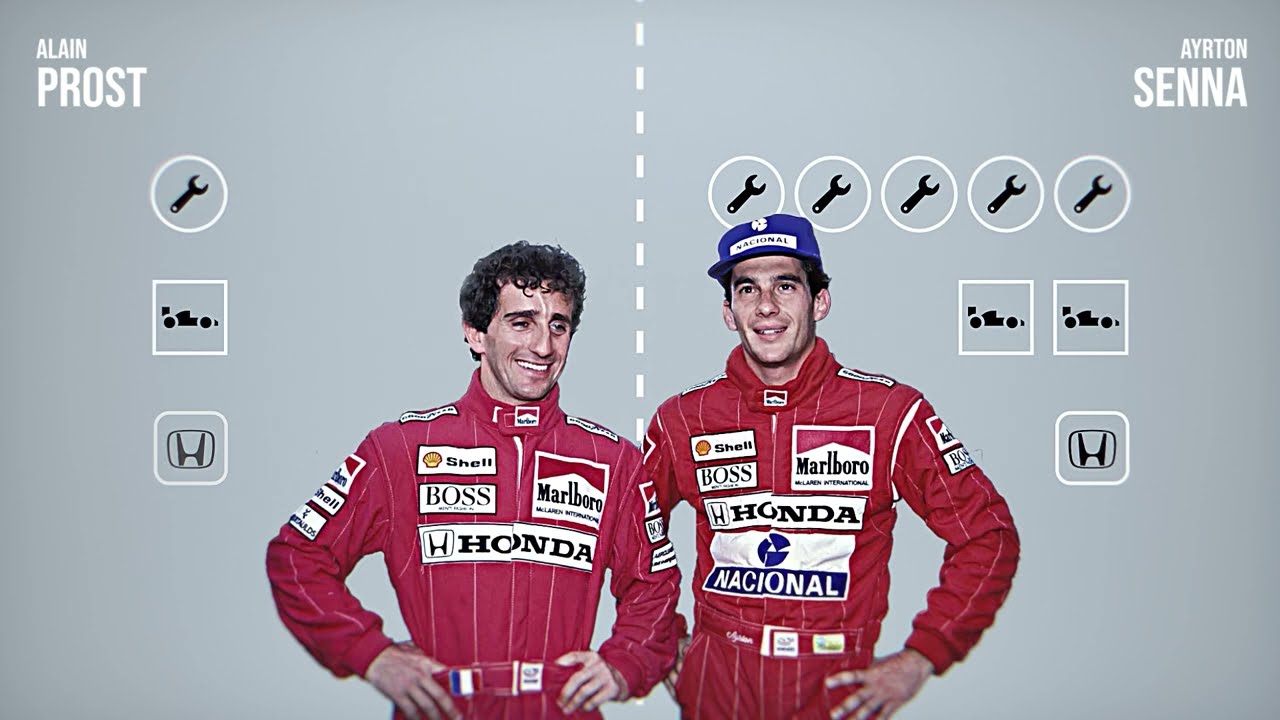
    To understand the violence of 1990, we must rewind to the genesis of the conflict. In 1988, Ayrton Senna joined Alain Prost at McLaren. On paper, it was a dream team. Prost, the “Professor,” was the established double world champion—calculated, political, and methodical. Senna, the challenger, was raw, spiritual, and possessed a speed that seemed to defy physics.

    Initially, the relationship was cordial. Prost had even blessed Senna’s signing, telling team boss Ron Dennis that Senna was the best option for the team. They dominated the 1988 season, winning 15 out of 16 races. But the honeymoon was short-lived. The cracks appeared at the Portuguese Grand Prix when Senna, in a moment of ruthless aggression, squeezed Prost toward the pit wall at 180 mph. Prost won the race but was shaken. “If he wants the championship that badly, he can have it,” Prost famously remarked, signaling the end of their friendship and the beginning of a war.

    By 1989, the tension had metastasized into pure hatred. They were no longer just teammates; they were enemies sharing a garage. The psychological warfare was constant, dividing the McLaren team into two hostile camps. But it was the 1989 Japanese Grand Prix that would light the fuse for the explosion that followed a year later.

    The Injustice of 1989

    The 1989 title decider at Suzuka is etched in infamy. Senna needed to win to keep his championship hopes alive. Late in the race, he dove down the inside of Prost at the chicane. True to his word, Prost closed the door. The two cars locked wheels and slid to a halt. Prost unbuckled and walked away, thinking he was the world champion.

    But Senna didn’t give up. Marshals pushed his McLaren back onto the track, and he bump-started the engine. With a broken front wing, he pitted, rejoined, and drove like a man possessed to win the race on the road. It was a miraculous recovery, a testament to his refusal to accept defeat.

    However, the miracle was short-lived. In the steward’s room, politics took over. Jean-Marie Balestre, the authoritarian French president of FISA (the sport’s governing body), intervened. Senna was disqualified not for the crash, but for “cutting the chicane” when rejoining. The decision handed the championship to Prost.

    Senna was apoplectic. He didn’t just lose a title; he felt he was the victim of a conspiracy orchestrated by Balestre to ensure a French driver won. The aftermath was brutal. Senna was fined $100,000 and handed a suspended six-month ban. He was labeled a dangerous driver. For a man of Senna’s intense sense of justice and religious conviction, this was a wound that would not heal. He felt persecuted, targeted, and robbed.

    He carried that anger through the winter, into the 1990 season, and all the way back to Japan.

    The Setup: Suzuka 1990

    Fast forward to October 1990. The landscape had changed. Prost had moved to Ferrari, taking the number 1 on his car. Senna remained at McLaren, determined to reclaim his crown. The equation was simple: if Prost didn’t finish the race, Senna would be champion.

    Senna was in blistering form, putting his McLaren on pole position. But immediately, the old ghosts of politics resurfaced. Pole position at Suzuka was located on the “dirty” side of the track—the side where the asphalt had less rubber and grip. The second-place slot, where Prost would start, was on the “clean” racing line.

    Senna, recognizing the disadvantage, asked officials to move pole position to the clean side. The race stewards agreed that it was a logical request. But then, an executive order came down from the top. Jean-Marie Balestre denied the request. Pole would stay on the dirty side.

    For Senna, this was the final straw. It wasn’t just a grid slot; it was confirmation in his mind that Balestre and the establishment were trying to screw him again. He was the fastest man, yet he was being penalized. The sense of injustice that had festered since 1989 boiled over into a cold, hard resolve.

    Senna stormed out of the drivers’ briefing. He told his team and the media: “If pole is on the dirty side, I will get a bad start. If I get a bad start, and Prost gets the jump, I will not lift at the first corner. If he turns in, we crash.”

    It was a warning that few took seriously. Surely, a driver wouldn’t deliberately crash a Formula 1 car at 160 mph?

    The Crash

    Race day. The lights went green. As predicted, Senna struggled for traction on the dirty dust. Prost, on the clean side, launched his Ferrari perfectly and surged ahead. By the time they reached the braking zone for the high-speed Turn 1, Prost was half a car length ahead and had the racing line.

    Normally, the driver behind yields. They tuck in, fight another lap. But Senna was not driving normally. He was driving with the weight of a year’s worth of anger. He kept his foot pinned to the throttle. He didn’t brake where he normally would. He placed his car on a trajectory that intersected perfectly with the apex Prost was aiming for.

    Prost turned in, expecting Senna to back out. Senna did not.

    Bam.

    The McLaren slammed into the rear wheel of the Ferrari. Both cars careened off the circuit at terrifying speed, plowing through the gravel trap and slamming into the tire wall. Dust billowed into the air. The crowd gasped.

    In the cockpit of the Ferrari, Prost was furious. He knew immediately what had happened. He didn’t even look at Senna. In the McLaren, Senna unbuckled, walked back to the pits, and watched the rest of the race. He was the World Champion.

    The Lie That Became Legend

    In the immediate aftermath, the world demanded answers. Did he do it on purpose? Was it a mistake?

    Senna put on a masterclass of deflection. He blamed Prost for “closing the door.” He blamed the dirty side of the grid. When legendary driver Jackie Stewart interviewed him and asked if he had crashed intentionally, Senna became defensive.

    “I am very surprised that you, a world champion, would ask such a question,” Senna retorted. He then delivered the line that would become the most misused quote in racing history: “If you no longer go for a gap that exists, you are no longer a racing driver.”

    It was a brilliant soundbite. It painted him as a pure racer, a gladiator who simply saw an opening and took it. It turned his aggression into a philosophy. Fans ate it up. The quote was plastered on t-shirts, posters, and in documentaries. It became the mantra for aggressive drivers everywhere.

    But it was a lie.

    The Confession

    The truth remained buried for a year. It wasn’t until 1991, after Senna had secured his third world title, that the dam broke. At the press conference in Suzuka—the scene of the crime—Senna finally dropped the mask.

    In a moment of raw honesty, he admitted everything. He told the stunned room of journalists that the 1990 crash had been premeditated.

    “I said to myself, ‘Okay, you try to work cleanly and get screwed by the system, so I will do it the other way,’” Senna confessed. “I told myself, if I don’t get into the first corner first, I’m not backing off. I didn’t care if we crashed. I went for it.”

    He revealed that the refusal to move the pole position was the trigger. “It was the result of a bad decision by the politicians,” he said. “I felt that I had to fight for what I thought was right.”

    The revelation shattered the “racing incident” narrative. The famous “gap” quote was revealed to be a fabrication, a shield used to protect himself from the backlash of a deliberate act of violence on track.

    The Legacy of the Move

    The 1990 crash remains the most polarizing moment in Ayrton Senna’s career. To his detractors, it was a moment of madness, a dangerous and unsportsmanlike act that endangered lives. Prost would later say, “He wanted to beat me, but he also wanted to destroy me. That was his motivation.” Prost felt that Senna believed he had a divine right to win, and that anyone who stood in his way was not just an opponent, but an obstacle to God’s will.

    To his supporters, however, it was a moment of ultimate justice. It was a lone warrior standing up against a corrupt system. Senna wasn’t just crashing into Prost; he was crashing into Jean-Marie Balestre and the politics of FISA. It was a violent protest, a refusal to be bullied.

    Regardless of where one stands on the morality of the move, it highlighted the terrifying intensity that made Senna unique. He was a man of extremes. He could be incredibly gentle, pulling his car over to save the life of a fellow driver (as he did for Érik Comas), yet he could also ram his rival off the road at 160 mph to settle a score.

    Conclusion

    Thirty-five years later, the dust has settled at Suzuka, but the story retains its power. The 1990 Japanese Grand Prix serves as a reminder that Formula 1 is never just about cars going in circles. It is a human drama played out at the limit of adhesion.

    Ayrton Senna’s decision to crash into Alain Prost was not the action of a robot or a simple sportsman. It was the action of a man pushed to his emotional limit, driven by a complex cocktail of pride, persecution, and genius. It stripped away the veneer of civility and showed the world the raw, ruthless desire required to be the absolute best.

    When we watch the replay today, we don’t just see a crash. We see the culmination of a Greek tragedy in fireproof overalls. We see the moment where the “Magic” turned dark, and the “Professor” learned that logic has no power against a man who believes he is on a mission from above. It remains the most controversial, dangerous, and unforgettable few seconds in the history of the sport.

  • HEARTBREAKING: Kate Beckinsale breaks down in tears as she fires back at body-shaming trolls — and reveals the 𝔱𝔯𝔞𝔤𝔦𝔠 reason behind her sudden weight loss DD

    HEARTBREAKING: Kate Beckinsale breaks down in tears as she fires back at body-shaming trolls — and reveals the 𝔱𝔯𝔞𝔤𝔦𝔠 reason behind her sudden weight loss DD

    HEARTBREAKING: Kate Beckinsale breaks down in tears as she fires back at body-shaming trolls — and reveals the 𝔱𝔯𝔞𝔤𝔦𝔠 reason behind her sudden weight loss

    Kate Beckinsale broke down in tears in a newly-shared clip as she hit back at body shaming trolls, while revealing the tragic reason behind her dramatic weight-loss.

    The English actress, 52, took to her Instagram page on Wednesday as she reflected on her ‘really, really hard year’.

    Kate lost her mum Judy Loe earlier this year, who passed away at the age of 73 after a long battle with cancer.

    Recording herself for her new post, the Click star explained how the loss of her mum and her stepfather the year before, led her ‘body to close down’.

    Kate looked visibly emotional as she wiped away her tears, and said: ‘2025 was a really really hard year. It was also the last year that my incredible mum was on this planet.

    ‘So I feel really torn about letting go of it as well.’

    Kate Beckinsale, 52, broke down in tears in a newly-shared clip as she hit back at body shaming trolls, while revealing the tragic reason behind her dramatic weight-loss

    The English actress took to her Instagram page on Wednesday as she reflected on her ‘really really hard year’

    She went on: ‘But I just wanted to address the fact that I lost my stepfather a while ago, a couple years ago.

    ‘And I already watched my father die because my mum was in hospital and it was just me at the age of five.

    ‘I watched my 31-year-old father die of a huge heart attack, and then I watched my stepfather die and I watched my mother degenerate and die.’

    ‘Such an incredible amount of suffering and what I will say, it doesn’t make you feel very hungry,’ Kate said candidly about her weight-loss.

    ‘And I don’t know if there’s some kind of survivor guilt because it started after my stepdad died and it’s not like anorexia where you’re starving and it’s a kind of willpower thing.

    ‘It’s like your body has closed down.

    ‘I think it’s shock and trauma.

    She concluded: ‘I think watching, especially alone the people you love the most dearly suffer and have horrific and sometimes violent and awful deaths, really makes you not hungry.’

    Join the debate

    How should celebrities respond to public criticism when they’re coping with deep personal grief?

    Go to comments

    The Click star explained how the loss of her mum and her stepfather the year previously, led her ‘body to close down’

    Kate lost her mum Judy Loe earlier this year, who passed away at 73 after a long battle with cancer (pitured with Kate)

    Kate took to Instagram to share that her mother had died in her arms on July 15 after ‘immeasurable suffering’ and admitted she is ‘paralysed’ with grief.

    Judy’s cause of death wasn’t confirmed however Kate previously revealed her mother been battling stage four cancer for the last two years.

    For the funeral ceremony, which took place at Chiswick House, she was joined by her daughter Lily, 26, who she shares with her ex Michael Sheen – who also attended to support her.

    Lily and Michael were seen sweetly hugging in one of the snaps Kate shared.

    Kate and Michael were a couple from the mid-1990s to 2003.

    In the caption Kate said she still felt ‘blindsided and devastated’ by her death and heartbreakingly admitted she often still goes to call her before realising that no one will answer.

    Kate also shared that her mother hadn’t wanted people to wear black at her funeral and that she wished for a ‘celebration of her life’.

    In her lengthy and emotional caption Kate said: ‘Dearest Mama. The fact that you have had to have a funeral at all is wrong and ludicrous. You are the biggest lover of life, the most energetic, the most vital, the most joyous.

    Judy’s cause of death wasn’t confirmed however Kate previously revealed her mother been battling stage four cancerfor the last two years

    Judy’s death came 18 months after the death of her second husband, and Kate’s stepfather Roy (pictured), who died in January 2024

    Read More

    Kate Beckinsale feels ‘blindsided’ by her mother’s death and shares snaps from her funeral

    ‘The only mandate you gave me over the years was that you wanted a celebration of your life and that no one was to wear black so no one did.

    ‘What I did not anticipate, particularly the night before the funeral where I got two hours sleep on a hard sofa and very much considered not being able to attend because I was afraid I couldn’t handle it, was that someone would be able to have a funeral that was so full of love and happiness and joy, which is all because of you and who you are and what you brought.

    ‘You are a bridge builder, a hoarder of love, an archiver of precious history ,of respect for years of friendship and my God that showed..

    ‘I think the hardest thing I have ever had to do was say goodbye to you and I haven’t managed it yet, I still reach for my phone in the early hours of the morning to text you and then realise that I won’t get a response.

    ‘The funeral and the party which I will not call a wake afterwards, and which I very much feel you attended in some vaporous way blew the f***ing roof off Chiswick House.

    Kate’s biological father, actor Richard Beckinsale, famed for his roles in popular shows Rising Damp and Porridge, suddenly died on March 19, 1979 at the age of just 31

    Richard’s tragic death came as a shock to the young family as he died in his sleep from a heart attack, which was later revealed to be a congenital defect (pictured with a young Kate and his wife, Judy Loe)

    ‘Everybody danced – from the age of 3 to their mid 80s. Your school friends attended, my school friends attended, Lily’s school friends attended. The love you inspired, quietly and generously was awe-inspiring and still is.’

    Her death came 18 months after the death of Judy’s second husband and Kate’s stepfather Roy, who died in January 2024.

    He was hospitalised in Los Angeles in December 2023 after suffering ‘a massive stroke’ while battling two forms of cancer, which he was diagnosed with in the summer prior.

    Kate’s biological father, actor Richard Beckinsale, famed for his roles in popular shows Rising Damp and Porridge, suddenly died on March 19, 1979 at the age of just 31, leaving behind his devastated wife Judy Loe and young daughters Kate and Samantha.

    Richard’s tragic death came as a shock to the young family as he died in his sleep from a heart attack, which was later revealed to be a congenital defect.

    There had been no real indication of what was to come, and it was in fact Judy who was the family’s focus then, as she was in hospital recovering from an operation.

    Richard left behind daughters Kate (left) and Samantha who he shared with his first wife Margaret. She was raised by her stepfather and did not know Richard was her father until she was 11

    The evening before his death, Richard attended a party for The Two Ronnies before returning to the family home in Sunningdale, Berks (pictured, left, on Porridge with co-star Ronnie Barker)

    The day before his death, Richard had taken Kate – who was just five-years-old at the time – to visit her mother in hospital and had no physical complaints, simply saying he felt tired.

    That evening, Richard attended a party for The Two Ronnies before returning to the family home in Sunningdale, Berks.

    The last anyone heard from the rising comedy star was in a phone call he made to friends before going to bed, in which he noted he had pains in his arms and chest but made light of it.

    Tragically, Richard never woke up.

    While his devastated friends and loved ones struggled to come to terms with the loss, just three days later the BAFTA Awards honoured Sydney Lotterby, producer of Porridge follow up Going Straight, and Richard’s friend and co-star Ronnie Barker.

    At the ceremony, Sydney was too upset to speak.

    There had been no real indication of what was to come, and it was in fact Judy who was the family’s focus then, as she was in hospital recovering from an operation

    Meanwhile, Ronnie broke down in tears as he paid tribute, saying: ‘The death of my friend Richard Beckinsale has robbed me of the joy of this award but the pride of winning it still remains.’

    That summer saw the release of the film version of Porridge, in which Richard was seen in his role as Lennie Godber.

    He continues to be seen on TVs across the nation on reruns of his popular shows.

    Yet for his daughter Kate, the memories of losing her father are too distressing to contemplate.

    Of losing her father, the Hollywood actress said in 2013: ‘It was a terrible loss. It’s so weird as a five-year-old to look out in the street and see people reading the paper and crying while you’re crying and your mum is crying and your granny’s crying.

    ‘Even though it was the worst loss that I have experienced I was able to share it with people who genuinely, even if they didn’t know him, really seemed to love him.

    ‘I feel not many people are in that position – to have lost somebody and also to feel like that’s something really relevant to other people.’