Blog

  • Ferrari’s “Steel Heart” Gamble: The Secret Weapon That Could Save—or Sink—the Prancing Horse in 2026

    Ferrari’s “Steel Heart” Gamble: The Secret Weapon That Could Save—or Sink—the Prancing Horse in 2026

    In the high-octane world of Formula 1, silence is often the loudest sound. But recently, the silence coming from Maranello has been broken by a roar—not from an engine on the track, but from a leak that has sent shockwaves through the paddock. It has been nearly two decades since Ferrari truly ruled the sport. The days of Michael Schumacher’s dominance and Kimi Räikkönen’s 2007 title feel like ancient legends, gathering dust in the trophy cabinet. The Constructor’s Championship has eluded them since 2008, a painful drought for a team that defines itself by winning.

    But 2026 promises a new dawn. With the sport undergoing a massive regulatory overhaul, the playing field is being leveled. And in the shadows of their Maranello factory, Ferrari has been forging a weapon that defies convention, logic, and perhaps even safety. They call it Project 678, but the world is about to know it as the “Steel Heart” of Ferrari.

    The Impossible Choice: Why Steel?

    For years, the formula for a winning F1 engine has been lightness above all else. Aluminium has been the gold standard for critical components like cylinder heads—light, effective enough, and predictable. But Ferrari, staring down the barrel of another decade of mediocrity, has decided that “predictable” doesn’t win championships.

    In a move that has baffled rival engineers and delighted tech nerds, Ferrari’s 2026 power unit will reportedly feature cylinder heads made from a newly developed steel alloy.

    On the surface, this sounds like madness. Steel is heavy. In a sport where every gram is shaved off with obsessive precision, voluntarily adding weight to the engine seems counterintuitive. However, the 2026 regulations have changed the math. Power units are getting heavier anyway—up to 150kg—and the emphasis is shifting from pure lightweight materials to combustion efficiency and durability.

    The new rules mandate a 50/50 split between electric power and the internal combustion engine (ICE). To get the most out of that combustion side, you need heat. Extreme heat. You need pressures that would melt standard aluminium components into slag. That is where steel enters the picture. Steel can withstand thermal punishment that aluminium simply cannot. It allows for more aggressive ignition strategies, higher compression ratios, and ultimately, more explosive power from every drop of fuel.

    The Struggle Behind the Scenes

    This innovation didn’t come easily. In fact, it almost didn’t happen at all. Reports from inside the team suggest that the road to Project 678 was paved with failure. Early prototypes of the steel heads were a disaster. They suffered from thermal cracking and fatigue, unable to survive the brutal vibrations and heat cycles of an F1 simulation.

    Wolf Zimmerman, the mastermind behind Ferrari’s combustion technology, reportedly faced a wall of skepticism. There were whispers that the project was too extreme, too risky, and that the team should retreat to the safety of aluminium. The fear was palpable: in 2026, teams are strictly limited to just four internal combustion engines per driver for the entire 24-race season. If your fancy steel engine cracks in race three, your championship hopes are effectively over.

    Facing a technical dead end, Ferrari did something rare for the proud Italian outfit: they asked for help. They brought in AVL, an Austrian powertrain consultancy famous for making the impossible possible. AVL’s experts didn’t just advise; they reportedly rescued the project. Through their collaboration, they managed to turn the fragile steel concept into a reliable weapon.

    Late in 2025, a quiet confidence began to spread through the factory. The aluminium backup plan was scrapped. Ferrari was all in on steel.

    A Dangerous Game of Risk vs. Reward

    The implications of this decision are staggering. If the reports are true, Ferrari’s new engine is producing pressures and temperatures never before seen in Formula 1. While rivals like Mercedes are reportedly chasing complex compression ratio tricks and Red Bull is focusing on battery energy cycling, Ferrari has chosen a path of brute engineering strength.

    It is a high-stakes gamble. The extra weight of the steel must be compensated for elsewhere. Ferrari has reportedly developed new compact radiators, a lighter battery system, and a tighter packaging layout to offset the engine’s mass. They are also reintroducing a push-rod rear suspension—a layout they haven’t used since 2010—mimicking a geometry that Red Bull is rumored to be pursuing. This allows for better aerodynamics and a lower center of gravity, crucial for handling the heavier 2026 cars.

    But the risks remain massive. “Reliability” is the watchword for 2026. A single failure can ruin a weekend; a pattern of failures ruins a season. Ferrari is betting that their Austrian-aided steel alloy can hold together while screaming at 12,000 RPM for two hours straight, Sunday after Sunday.

    The Human Element: Hamilton and Leclerc

    Beyond the nuts and bolts, this story is deeply human. It is about redemption.

    Charles Leclerc, the prince of Maranello, has waited years for a car capable of fighting for the title on merit, not just luck. After a 2025 season where he scraped together seven podiums but zero wins, his patience is undoubtedly wearing thin. He needs a machine that matches his talent.

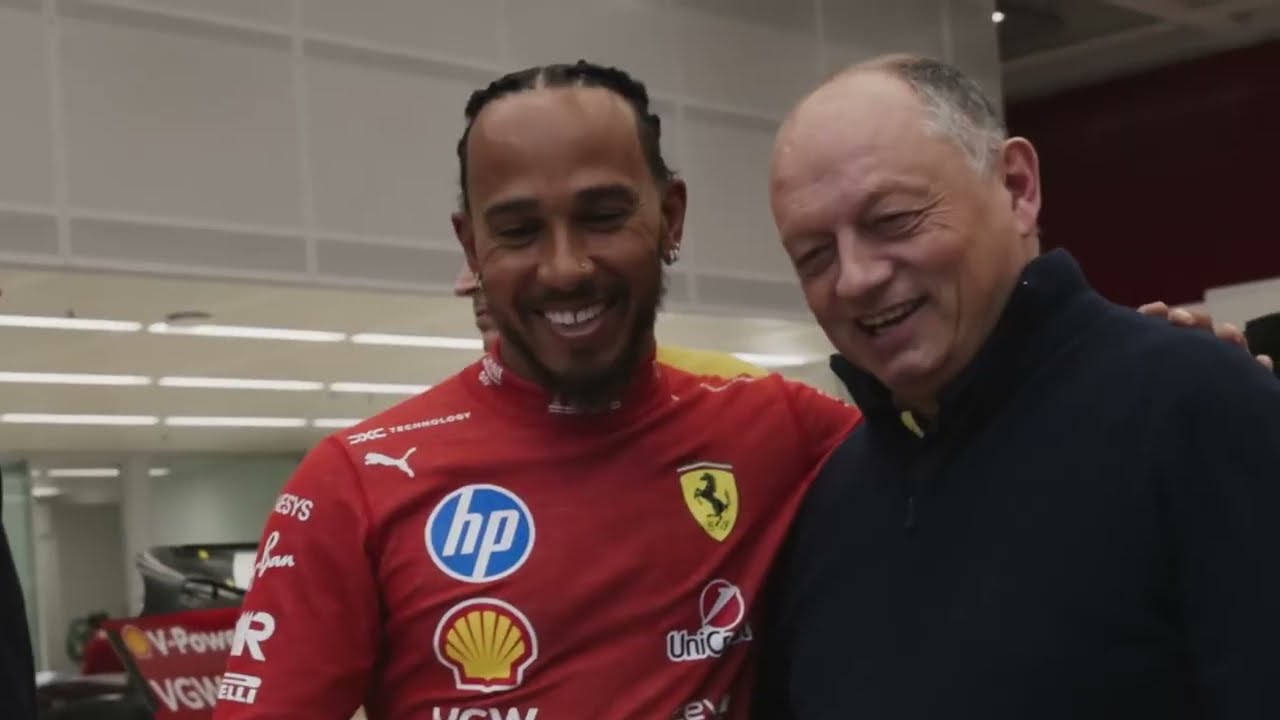
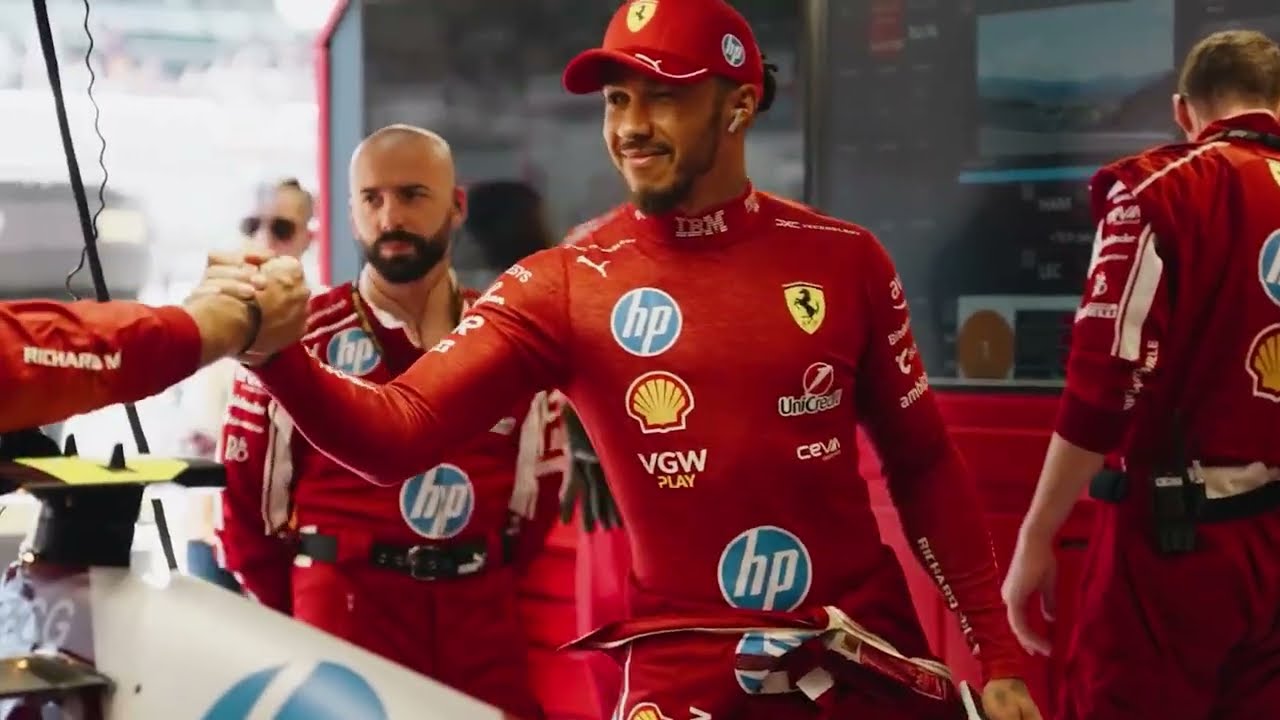
    And then there is Lewis Hamilton. The seven-time world champion made the shock move to Ferrari not to drive in the midfield, but to cement his legacy with an eighth title in red. His 2025 season was a statistical low point—zero podiums for the first time in his illustrious career. Hamilton has seen enough failed projects to know the difference between hype and reality. Yet, insiders suggest he is “locked in” and hopeful. If Project 678 delivers on its promise, Hamilton might just have the machinery to challenge the younger generation one last time.

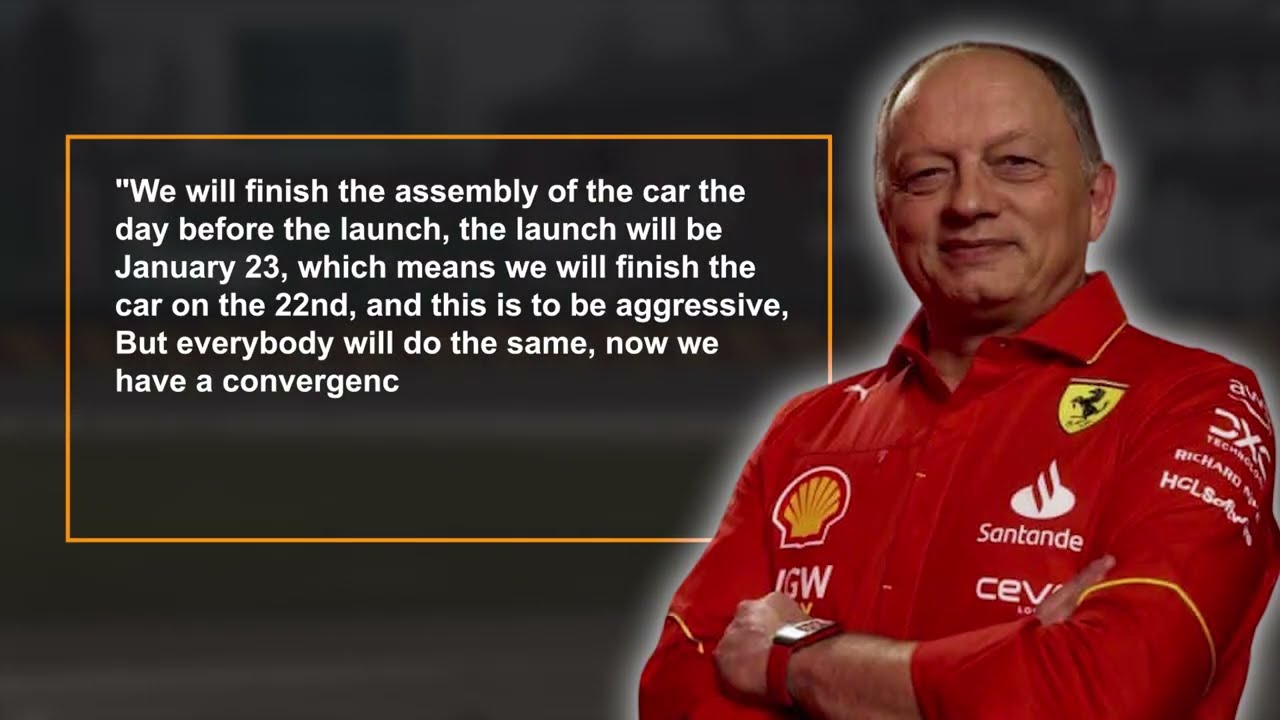
    The pressure on Team Principal Fred Vasseur is suffocating. He knows that Ferrari cannot afford another false dawn. The decision to unveil the car on January 23rd—just days before the pre-season test in Barcelona—shows a team that is eager, perhaps even desperate, to prove its worth. Vasseur has even revealed a “two-spec” strategy: a launch car designed to verify the reliability of the new steel engine, and a “B-spec” performance version that will arrive later for the Bahrain race. This aggressive development plan signals that Ferrari is no longer content to play it safe.

    The Verdict: A New Era or a Final Failure?

    The 2026 season represents a hard reset for Formula 1. Everyone starts from zero. In this environment, the team that takes the biggest risk often reaps the biggest reward. Mercedes dominated the hybrid era because they nailed the engine regulations better than anyone else. Ferrari is hoping that their “Steel Heart” will be the defining innovation of this new era.

    Rumors in the paddock already place Ferrari’s engine readiness as second only to Mercedes, and potentially ahead of Red Bull Ford. For a team that looked lost in 2025, that is a seismic leap.

    But until the lights go out in Bahrain, it is all just simulation data and hopeful whispers. The steel heads could be the masterstroke that brings the world title back to Maranello after 18 years. Or, they could be the Achilles’ heel that leaves Leclerc and Hamilton stranded on the side of the track in a cloud of smoke.

    One thing is certain: Ferrari is done with half-measures. They have looked at the future, saw the challenges, and decided to build something dangerous. In a sport that often rewards the brave, Ferrari has made the bravest call of all. Now, the world waits to see if the gamble pays off.

  • “I’m Not Even Close”: Lando Norris’s Shocking Admission of ‘Embarrassment’ After Being Crowned Formula 1 World Champion Sparks Debate on Authenticity and Legacy

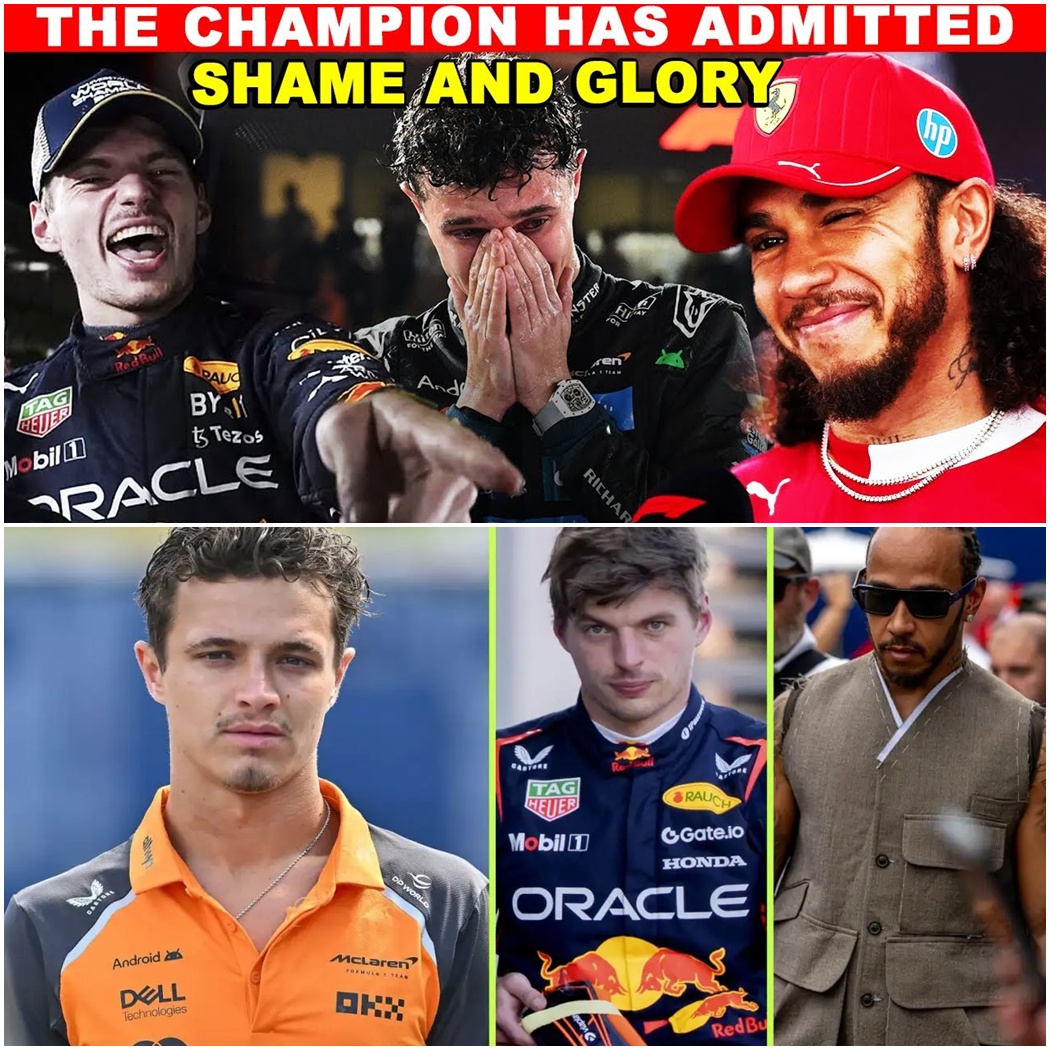
    “I’m Not Even Close”: Lando Norris’s Shocking Admission of ‘Embarrassment’ After Being Crowned Formula 1 World Champion Sparks Debate on Authenticity and Legacy

    In the high-octane world of Formula 1, where ego is often the fuel that powers the fastest machines on the planet, a new kind of champion has emerged—and he is baffling the establishment. Lando Norris, the 26-year-old McLaren superstar, has officially etched his name in history as the 11th British Formula 1 World Champion. It is a moment that should be defined by champagne-soaked roars of conquest and unbridled arrogance. Yet, as the confetti settles and the history books are updated, the narrative surrounding Norris’s victory is taking a startlingly introspective turn.

    Addressing the world media not as a conqueror, but as a young man seemingly overwhelmed by the weight of his own achievement, Norris dropped a bombshell that has set the paddock ablaze. Instead of claiming his place on the throne with the ruthlessness of a Max Verstappen or the calculated precision of a Michael Schumacher, Norris offered a confession that bordered on embarrassment. He admitted, with a raw vulnerability rarely seen in elite sports, that he feels “not even close” to the legends he is now statistically compared to, specifically referencing his childhood hero, Lewis Hamilton.

    The “Imposter” Champion?

    “To be crowned for the first time… and to be the 11th British champion, it’s incredible,” Norris began, his voice measuring the gravity of the situation rather than riding the high of it. “But just the fact I get to see my name next to [Lewis Hamilton] is something that’s pretty, pretty nuts.”

    For fans who have watched Norris grow from a playful rookie into a title contender, this humility is characteristic. But for the shark tank that is Formula 1, it presents a complex dilemma. The sport is conditioned to believe in the “Killer Instinct”—the idea that a true champion must psychologically dismantle their rivals before beating them on the track. Norris, however, is openly rejecting that archetype.

    “Lewis proved himself to be probably the best of all time,” Norris said, deflecting praise away from himself. “You compare him to Schumacher… I’m not even close to that. I might never be.”

    This admission has polarized the F1 community. To his legions of supporters, it is a refreshing display of “human” authenticity in a robotic corporate world. To the skeptics, however, it smells of blood in the water. Is this the mindset of a long-term dominant force, or is Norris simply happy to have “gotten one” before the Titans of the sport reclaim their territory?

    The Secret Texts from a Legend

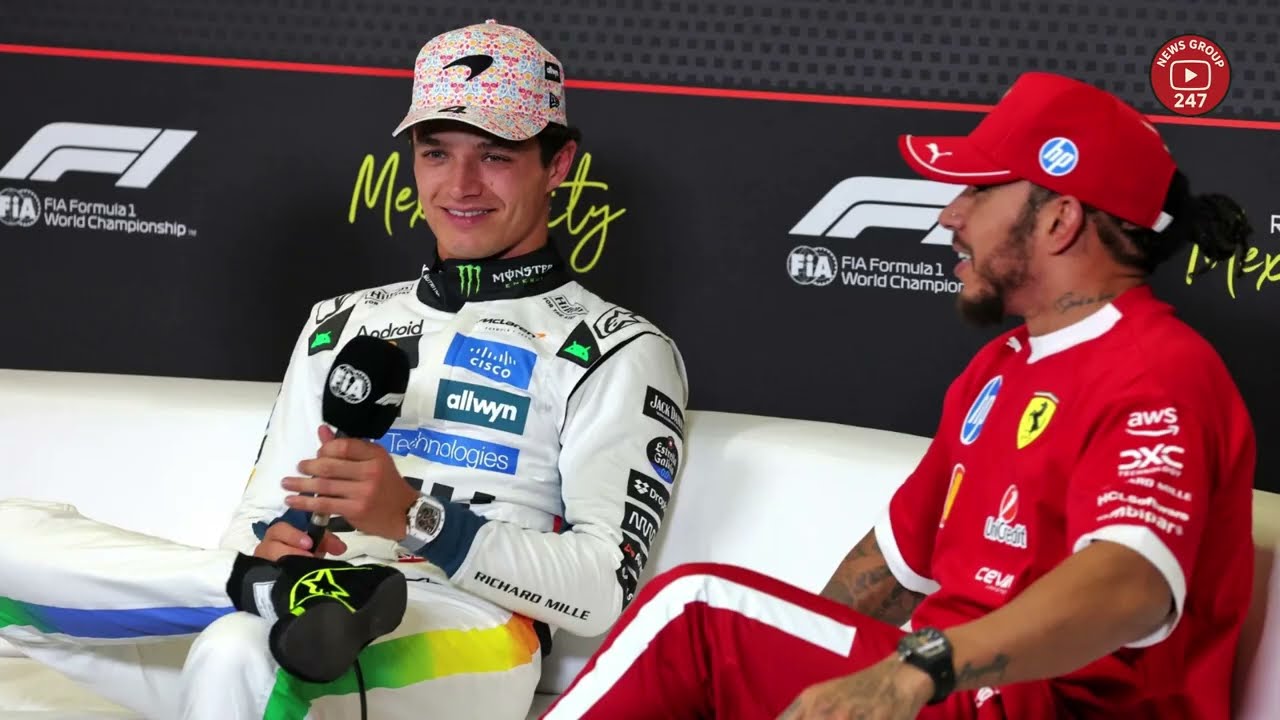
    Adding a layer of profound emotional depth to Norris’s coronation is the revelation of a private mentorship between him and the man he has effectively dethroned, Lewis Hamilton. The relationship between the two Britons has had its icy moments in the past, fueled by on-track collisions and media misinterpretations. However, Norris revealed that in the heat of the title battle, it was Hamilton who reached out.

    “I grew up watching Lewis, and I love the guy,” Norris shared, his admiration evident. “I text him, and he sent me some words of wisdom on Thursday night after the dinner… just to try to help me out a little bit.”

    The image of the seven-time champion, in the twilight of his own career, privately guiding the young challenger is poignant. It suggests a passing of the torch that is more cooperative than combative—a stark contrast to the bitter rivalries of the past, such as Hamilton vs. Rosberg or Senna vs. Prost. Norris cherishes this dynamic, noting, “The fact I now get to race against him and he helps me out at times… I love it. I feel like the kid in me is coming out again.”

    But this “kid-like” wonder is precisely what worries the purists. Can you truly be the alpha predator of the pack if you are still looking up to the other wolves with stars in your eyes?

    Winning “Lando’s Way” vs. The Expectation of Ruthlessness

    The core of the current debate lies in the method of Norris’s victory. The 2025 season (leading into this 2026 crowning) was chaotic, with Red Bull struggling unexpectedly and Mercedes fighting their own inconsistencies. This left the door open for McLaren, and Norris walked through it—not by bludgeoning his opponents off the track, but by maintaining a cool, consistent, and arguably “soft” approach.

    “I won it my way,” Norris declared. Simple words, but in the context of F1 history, they are a provocation. “I didn’t try to be someone I wasn’t. I didn’t try to be the villain.”

    Critics argue that this insistence on being “nice” is a defense mechanism. By refusing to engage in the dark arts of psychological warfare, Norris protects himself from the scrutiny that comes with being a “monster.” If he loses next year, he can claim he “played fair.” If he wins, he is the “good guy.” It is a safe strategy, but is it a champion’s strategy?

    The commentary surrounding his win has been laced with whispers that he didn’t truly “fight” for the title in the traditional sense. Theories abound that he floated to the top in a season where balance and internal harmony were rewarded over brute force. While Verstappen fought chaos and Hamilton fought the passage of time, Norris, some claim, fought nothing at all. He simply existed in the right car at the right time.

    “Could I have gone out and been more of that person [a ruthless driver]? I could have done,” Norris mused. “But I would have been less proud.”

    The Shadow of Conspiracy and “Dark Theories”

    Perhaps the most sensational aspect of the fallout is the quiet, persistent theory that Formula 1 needed a Lando Norris championship. After years of the polarizing dominance of Verstappen and the entrenched legacy of Hamilton, the sport’s commercial owners have been desperate for a new face—one that appeals to the younger, “Drive to Survive” generation.

    Norris, with his streaming background, relatability, and refusal to be controversial, is the perfect marketing product. This has led to cynical mutterings in the paddock: Was this victory a triumph of talent, or a triumph of orchestration?

    Norris himself seems acutely aware of these ghosts haunting his celebration. His retrospective comments on his past behavior—”I know at times I say some stupid things… some things I regret”—read like a man trying to scrub his record clean, to present a spotless image that justifies his new status.

    In the hyper-politicized ecosystem of modern F1, even remorse becomes evidence. Some view his apologies and humility as a calculated “PR Masterclass”—a way to disarm criticism before it can even form. If you tell the world you aren’t as good as Hamilton before they can say it, you take away their weapon. It is a psychological tactic, conscious or not, that reframes the championship not as a coronation of supremacy, but as a lucky alignment of stars.

    The “Embarrassment” Factor

    Why use the word “embarrassed”? While Norris didn’t scream the word from the podium, the sentiment drips from every sentence of his post-championship interviews. He is embarrassed to be elevated to the pantheon of gods like Schumacher when he still feels like a mortal. He is embarrassed by the suggestion that he has conquered the sport when he knows he merely survived a favorable season.

    “I feel always a privilege that I get to race against someone that is the best in the world,” he said of Hamilton, sounding more like a fan with a paddock pass than the man who just beat him.

    This lack of “champion’s ego” is dangerous. In Formula 1, doubt is a virus. If Norris doesn’t believe he belongs on that pedestal, his rivals—hungry, ruthless, and devoid of such humility—will tear him down the moment the lights go out in 2026. The sharks smell blood. Oscar Piastri, his own teammate, is already lurking in the wings, unburdened by the same level of reverence for the old guard.

    Conclusion: The Burden of Proof

    Lando Norris is the World Champion. The trophy is in his cabinet, and the record books are inked. That fact is unchangeable. But the meaning of his title is still being written.

    History is rarely kind to those who don’t fit the mold. We remember the tyrants of the track—Senna, Schumacher, Vettel, Hamilton, Verstappen. We remember them because they forced us to. They demanded submission from the sport. Norris has requested acceptance instead.

    As the celebrations fade and the reality of the #1 on his car sets in, Norris faces a challenge far greater than winning the title: proving he deserves to keep it. As the old paddock saying goes, “Winning once proves talent; winning again proves truth.”

    Right now, Lando Norris has the talent. But does he have the truth? His own words suggest he isn’t quite sure yet. And until he is, the ghost of imposter syndrome will ride shotgun in that McLaren, waiting for the first crack in the armor to expose the “nice guy” champion to a field of wolves who have forgotten how to be kind.

  • The 2026 Revolution: Why F1’s Radical New Rules Could Create an Unstoppable “Monster” in Max Verstappen

    The 2026 Revolution: Why F1’s Radical New Rules Could Create an Unstoppable “Monster” in Max Verstappen

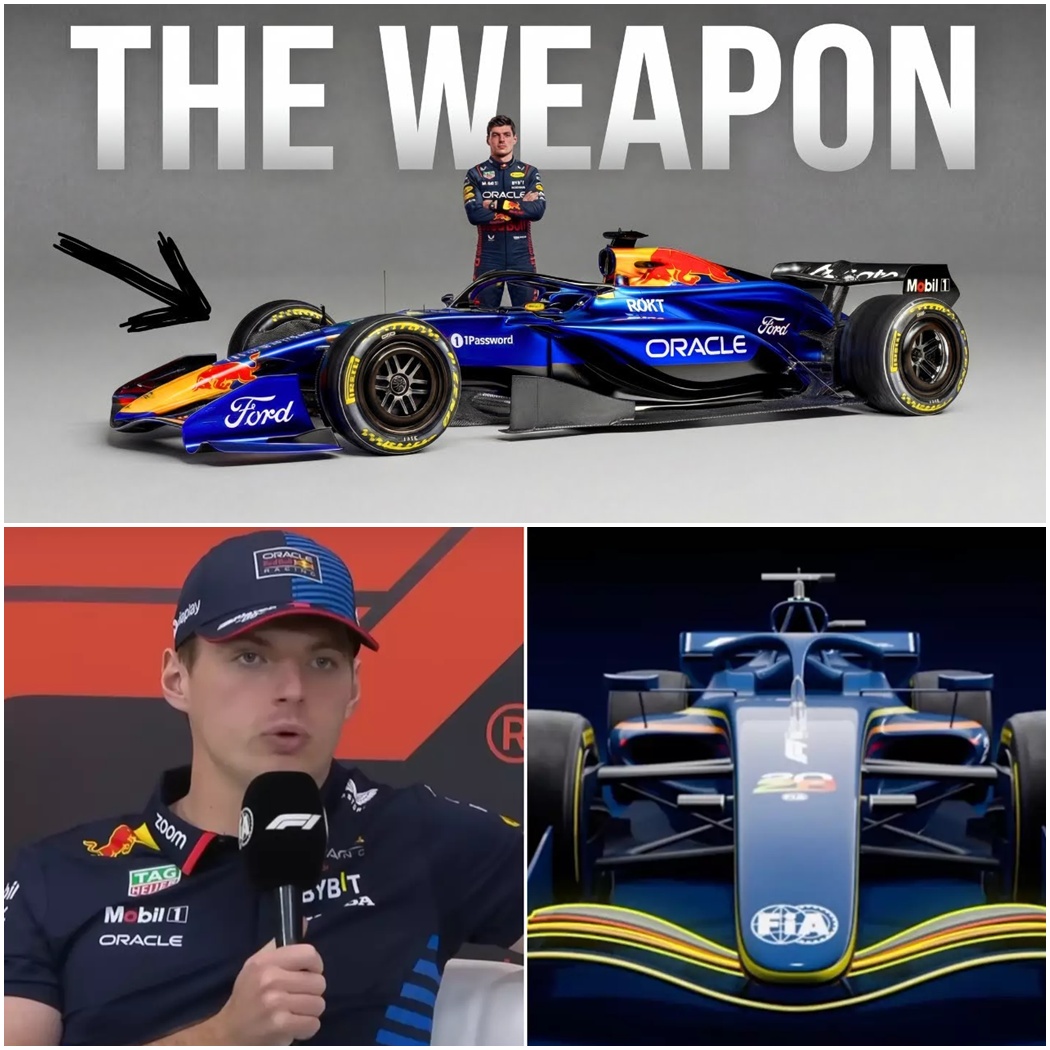
    Formula 1 is standing on the precipice of its most significant transformation in over a decade. The looming 2026 regulations are not merely a facelift or a tweak to the aerodynamic packages; they represent a fundamental reimagining of what a Grand Prix car is and how it behaves. The FIA is introducing a formula that demands 50% electrical power, active aerodynamics to replace the drag reduction system (DRS), and machines that are significantly lighter and more agile than the current heavyweights of the grid. But while teams scramble to interpret the technical directives, a quieter, more alarming narrative is emerging among paddock insiders.

    What nobody seems to be discussing openly is how every single one of these radical changes seems to play directly into the hands of one man: Max Verstappen. The specific demands of the 2026 cars—instability, cognitive load, and energy management—align so perfectly with the Dutchman’s unique skill set that experts are predicting he could evolve from a dominant champion into an unstoppable force.

    The Return of the “Pointy” Car

    To understand why Verstappen is poised to dominate, one must first look at the physical characteristics of the 2026 machinery. The new cars will be 30 kilograms lighter, 200 millimeters shorter in wheelbase, and 100 millimeters narrower than the current generation. Critically, they will generate between 15% to 30% less downforce. The FIA’s stated goal is to make the cars more responsive, nimble, and arguably, much harder to drive at the limit. They want to put the emphasis back on the driver’s hands, removing the “on-rails” feeling of the high-downforce ground-effect era.

    This shift toward instability is where Verstappen thrives. His driving style has been analyzed extensively, and the consensus is clear: he prefers a car that is “on the nose” or “pointy.” While most drivers, even World Champions, prefer a stable rear end that allows them to confidently attack corners (understeer), Verstappen wants the front end to bite immediately, even if it makes the rear loose.

    Former teammate Alex Albon provided a vivid description of this phenomenon, comparing Verstappen’s preferred setup to cranking the “mouse sensitivity” to maximum in a video game. For most drivers, that level of responsiveness results in a car that darts unpredictably across the track, leading to spins and a loss of confidence. For Verstappen, it allows him to rotate the car instantly. Technical analysis reveals he often enters corners a full car length deeper than rivals like Lewis Hamilton, using a late apex technique combined with aggressive rotation to fire the car out of the turn. The 2026 cars, by design, will be naturally unstable and “pointy.” While the rest of the grid fights to tame the rear end, Verstappen will likely find himself in a machine that finally behaves exactly the way he wants it to naturally.

    The Cognitive Driver: Racing at 200 MPH While Playing Chess

    The second pillar of Verstappen’s potential dominance lies in the powertrain regulations. The 2026 power units will see a massive shift in how energy is deployed. The internal combustion engine’s output will drop, while the electrical system’s contribution will skyrocket by nearly 200%, jumping from 120 kW to 350 kW. Crucially, the MGU-H (Motor Generator Unit-Heat), a complex device that recovered energy from exhaust gases and smoothed out power delivery, has been banned to reduce costs and attract new manufacturers.

    Without the MGU-H, the seamless wave of torque drivers have enjoyed in the hybrid era is gone. Instead, they will face the task of manually managing a massive electrical reserve. The new “Overtake Mode” replaces traditional DRS, allowing drivers to deploy extra energy strategically. This energy can be dumped all at once for a massive speed boost or spread out intelligently across a lap.

    This change transforms the cockpit into a high-speed strategy room. Drivers will need to make real-time decisions on energy deployment while battling wheel-to-wheel. Helmut Marko, Red Bull’s motorsport advisor, put it bluntly: “The driver has to be smart and clever about using power… and one driver exists who can drive fast and think simultaneously.”

    Toto Wolff of Mercedes echoed this sentiment, noting that the “simulator generation”—drivers who grew up managing complex systems in virtual environments—will have a distinct advantage. Verstappen, who famously spends his free time sim racing with Team Redline, treats these cognitive loads as recreation. While older drivers might struggle to adapt to the mental bandwidth required to manage battery profiles while defending a position, Verstappen has been training for this exact scenario his entire digital life. He is arguably the most adaptable driver on the grid, as proven by his seamless transition during the 2022 regulation changes when others struggled with “porpoising.”

    The Great Red Bull Gamble: Ford and the Homegrown Engine

    However, there is a massive “wild card” that could derail this perfect storm. For the first time in its history, Red Bull is not a customer team. They are becoming a full-fledged manufacturer, building their own engine from scratch at a purpose-built facility in Milton Keynes. This project, Red Bull Powertrains, was born out of necessity after Honda announced their (temporary) withdrawal in 2021.

    Partnering with American giant Ford, who brings expertise in battery technology and turbochargers, Red Bull faces a “mountain to climb.” They are competing against Mercedes, who have over a decade of hybrid dominance; Ferrari, who have reportedly pioneered a new alloy technology for their engine; and Honda, who returns to partner with Aston Martin.

    If the Red Bull-Ford power unit is reliable and competitive, Verstappen’s skill advantage will likely make him untouchable. But if the engine is a dud—unreliable or underpowered—no amount of talent can bridge the gap. Recent reports from Ford’s global director of motorsport, Mark Rushbrook, suggest the project is on schedule, with the engine already running at full stress levels on the dyno. Verstappen himself has heard it, describing the sound as “good and crisp.” Yet, team principal Laurent Mekies has warned that expecting to match Ferrari or Mercedes immediately would be “silly.”

    The “Fun” Factor: A Threat to Quit?

    Looming over all this technical analysis is the enigma of Verstappen’s motivation. Unlike Hamilton or Schumacher, he has expressed zero interest in chasing statistical records or winning seven or eight titles for the sake of legacy. His contract runs through 2028, but he has been candid: if the cars aren’t fun, he’s gone.

    “If the cars are not fun to drive, I does not see myself hanging around,” he admitted ahead of the 2025 Qatar Grand Prix. This is the tension that defines the 2026 story. The new rules are built to reward exactly what Verstappen does best—adaptability, car control, and cognitive capacity. But if the machinery feels artificial or if the engine fails to deliver the visceral excitement he craves, the sport’s most dominant figure is perfectly willing to walk away.

    Conclusion

    The 2026 season is shaping up to be a binary outcome for Red Bull and Max Verstappen. The regulations have inadvertently designed a formula that acts as a force multiplier for his specific talents. Lighter, twitchier cars and complex energy management systems are the environments in which he excels. If Red Bull’s ambitious engine project delivers even a competitive baseline, we may witness a level of dominance that makes the 2023 season look like a close fight. The “monster” is ready to be unleashed; the only question is whether his car will have the heart to keep up with him.

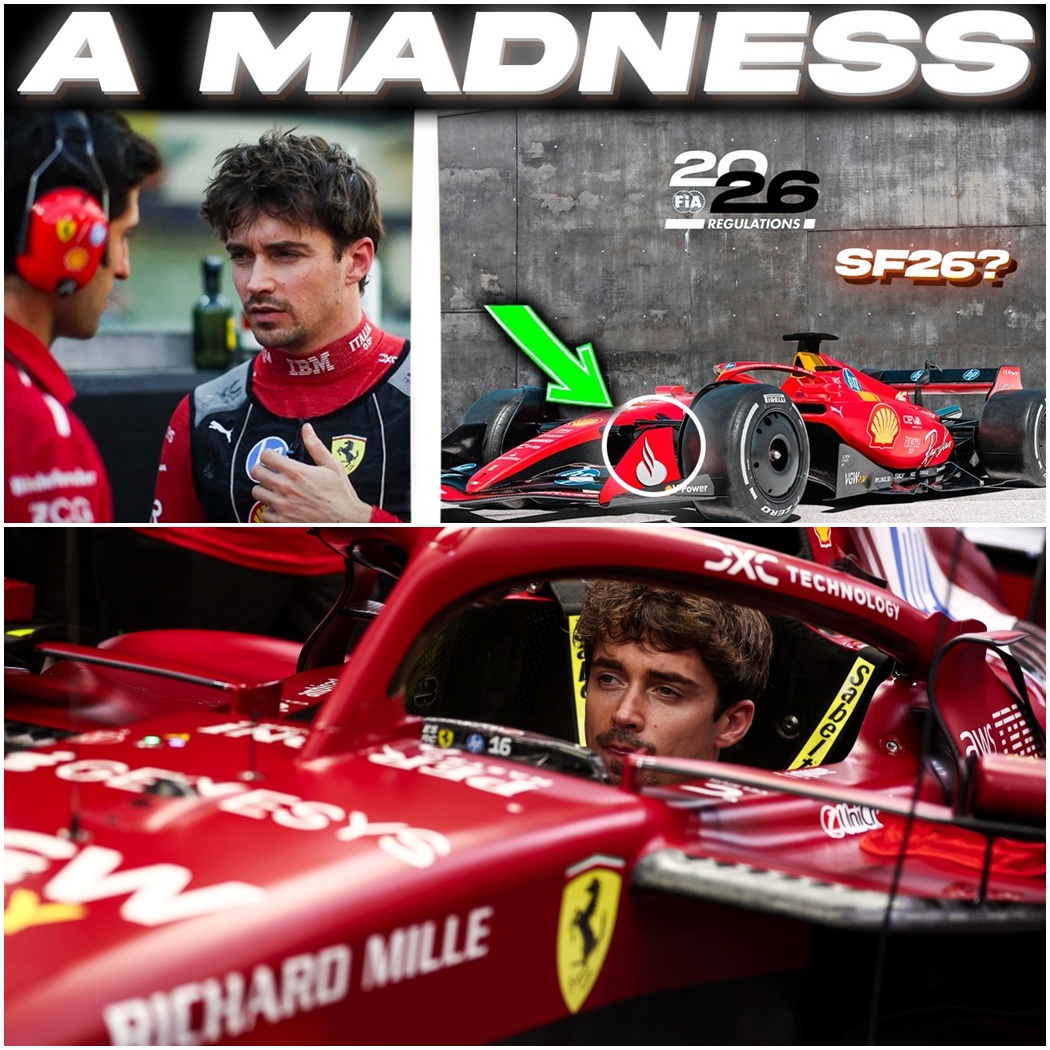
  • Ferrari’s Secret Weapon: The “Breathing” SF26 Suspension Revolution That Could Dominate 2026

    Ferrari’s Secret Weapon: The “Breathing” SF26 Suspension Revolution That Could Dominate 2026

    In the high-stakes world of Formula 1, where races are often won by milliseconds and championships are decided by the stroke of a designer’s pen, a quiet revolution has been brewing in Maranello. While the global motorsport community has been fixated on the upcoming 2026 engine regulations—focusing on the shift toward 50% electrical power and sustainable fuels—Ferrari has been playing a different game entirely. Hidden behind closed doors, deep within the Scuderia’s technical headquarters, a rogue team of engineers has been crafting a weapon that could render their rivals’ designs obsolete before they even hit the track.

    The story of the SF26 is not one of simple evolution; it is a story of rewriting the genetic code of a Formula 1 car. At the heart of this innovation lies a groundbreaking front suspension system, a technical marvel that challenges the very definitions of rigidity and aerodynamics. This is not just a new part; it is a new philosophy, one that interprets the rulebook not as a cage, but as a canvas.

    The Hidden War for 2026

    To understand the magnitude of Ferrari’s gamble, one must first understand the battlefield of 2026. The new regulations introduce a drastic change in the aerodynamic profile of the cars. With strict limitations on diffusers and the “flat bottom” floor area, teams are facing a significant reduction in downforce. Grip—the invisible hand that holds a car to the asphalt at 200 mph—is becoming a scarce commodity.

    Most teams approached this problem conventionally, looking for ways to claw back downforce through traditional aerodynamic surfaces. Ferrari, however, saw an opportunity in the grey areas of the rulebook. In mid-2024, during obscure sessions of the FIA Technical Committee, Ferrari representatives began quietly pushing for a specific regulatory change. They didn’t ask for faster engines or bigger wings. Instead, they argued for “safety” and “mechanical efficiency,” proposing a framework that allowed for greater kinematic freedom in suspension geometry.

    It was a masterclass in political maneuvering. By framing their request around the new energy limits and tire wear concerns, Ferrari convinced the FIA to approve a “legal reinterpretation” of suspension dynamics. The new wording meant that suspension arms and anchor points no longer had to be strictly rigid static elements. Under certain controlled limits, materials were now allowed to possess deformation properties.

    To the casual observer, and perhaps even to some rival teams, this seemed like a minor technical adjustment. But for Ferrari, it was the key to the kingdom. They had essentially legalized a “flexible” car.

    The “Breathing” Suspension

    The SF26, Ferrari’s challenger for the new era, is built entirely around this new suspension concept. Unlike traditional designs where the suspension is bolted onto an existing chassis, the SF26’s chassis was conceived to exist in symbiosis with its suspension.

    The core technology relies on an inverted push-rod configuration utilizing “dual-core” carbon arms. These arms are a composite masterpiece: a rigid outer layer supports the immense structural loads of racing, while an inner layer made of a specialized elastomeric material provides carefully calibrated viscoelastic properties.

    This design allows for intentional, controlled micro-deformations. In simple terms, the suspension “breathes.” It doesn’t just absorb bumps; it reacts to the forces acting upon the car to change its shape in real-time.

    Crucially, this system achieves the “Holy Grail” of modern F1 engineering: active aerodynamics without active parts. Active suspension systems (which use computers to adjust ride height) have been banned for decades. Ferrari has found a way to mimic their effects using only the laws of physics and material science.

    How It Works on the Track

    The genius of the system reveals itself in the two most critical phases of a lap: braking and cornering.

    When a driver hits the brakes at the end of a long straight, the immense longitudinal force compresses the front suspension. In a normal car, the nose dives. In the SF26, the suspension’s kinematic design ensures that as the nose lowers, it does so in a specific range that opens a favorable “air window” towards the side channels and diffuser. The car physically morphs to maximize cooling and downforce exactly when it is needed most.

    During cornering, the benefits are even more profound. As the car rolls laterally, the suspension allows for a calculated inclination that keeps the angle of airflow under the flat bottom constant. Typically, body roll disrupts the ground effect—the suction that pulls the car down—causing a loss of grip mid-corner. The SF26 counters this. It maintains the ground effect even under high lateral loads, effectively giving the car a “skirt” of air that seals it to the track.

    The result is a vehicle that offers the driver a linear, predictable feeling of grip. It reduces drag on the straights (as the car settles into a streamlined shape) and generates massive downforce in the corners. It is, in aerodynamic terms, like having a front wing that changes shape on its own, powered only by the “breathing” of the materials.

    A Strategic Checkmate?

    The implications of this development extend far beyond the racetrack. They reach into the boardrooms of Mercedes, Red Bull, and McLaren.

    By starting this project in 2023—long before the regulations were finalized—Ferrari has gained an insurmountable head start. While other teams were refining their 2025 cars or beginning tentative work on 2026 concepts based on standard assumptions, Ferrari was already simulating a radically different architecture.

    This puts rivals in a “double bind.” If they ignore Ferrari’s innovation, they risk fielding a car that is fundamentally inferior in 2026. If they try to copy it, they face a nightmare scenario. The SF26’s suspension isn’t a bolt-on part; it requires the entire car—sidepods, floor, rear wing, and chassis—to be designed around it. To copy Ferrari now, teams would have to scrap their existing 2026 plans and start from scratch, wasting millions of dollars and precious months of development time.

    In a budget-capped sport, throwing away a year’s worth of work is devastating. Ferrari has effectively forced their competition into a game of catch-up before the season has even begun.

    The Risks of Revolution

    Of course, innovation carries risk. The complexity of the SF26 requires absolute precision. The “micro-deformations” must be consistent; if the material fatigues or reacts unpredictably to temperature changes, the car could become undrivable. Furthermore, while the FIA has approved the current wording, the line between “legal flexible materials” and “illegal movable aerodynamic devices” is razor-thin. Ferrari will likely face intense scrutiny and protests from rivals who realize they have been outmaneuvered.

    However, the mood in Maranello is not one of fear, but of aggressive confidence. For too long, the Scuderia has been reacting to the innovations of others. With the SF26, they have decided to stop chasing and start leading.

    This is a Ferrari team that is tired of “next year.” They have built a machine that doesn’t just adapt to the 2026 rules—it exploits the space between the rules. By understanding the emptiness of the regulations before anyone else, they have created a car that breathes with the circuit, a machine that feels alive.

    As the F1 world prepares for the dawn of a new era, one question hangs in the air: Has Ferrari just built the most dominant car of the next generation? Or have they flown too close to the sun? One thing is certain: when the lights go out in 2026, all eyes will be on the front axle of the red cars. The revolution has already begun, and it is happening right under our noses.

  • Katie Price confirms JJ Slater relationship status with rare post together DD

    Katie Price confirms JJ Slater relationship status with rare post together DD

    Katie Price confirms JJ Slater relationship status with rare post together


    Katie Price has confirmed her relationship ahead of the New Year (Picture: YouTube)
    Katie Price is seeing out 2025 by making sure everyone knows she’s a taken woman.

    In true Pricey fashion, the former glamour model’s love life has made plenty of headlines this year, from rumoured breakups to engagement speculation.

    And while she and JJ Slater, 33, have been noticeably absent from one another’s social media feeds for half a year, she’s ending the year with defiant confirmation of her relationship status for any cynics out there.

    Taking to her YouTube channel over the Twixmas period, the reality star, 47, documented her Christmas celebrations with her loved ones.

    This included mum Amy, children Harvey, 23, Junior, 20, and Princess, 18, and, to many viewers’ surprise, JJ.

    The Married At First Sight star was a prominent feature in Katie’s latest vlog as he mixed with her family, no awkwardness or frostiness in sight.


    The reality star was joined by boyfriend JJ Slater for the festive period with her family (Picture: YouTube)


    Katie also teased big things to come in 2026 (Picture: YouTube)
    In one sweet moment, he is filmed sitting at the dining table next to Katie, smiling, clapping, and making silly noises for Harvey – who has the rare genetic condition known as Prader-Willi syndrome – to make him laugh.

    JJ remains close with Harvey throughout the vlog, helping him while travelling to his nan’s on the Isle of Wight via ferry and getting down the stairs to her house.

    From behind the camera, Katie is asked: ‘Is it nice to be all together at Christmas?’

    ‘Love it. It’s nice that we’re all together here. Like, all of us,’ she said. ‘Considering how many people are here, it’s quite calm, isn’t it?’

    She goes on to say she feels that she has a ‘new lease of life’ ahead of 2026, also declaring it a ‘new start’ for her mum, 73, after reducing her to tears with the gift of a motorised scooter to help her get around with her incurable lung condition.

    Katie also promised fans a ‘banging’ year for her own career, teasing, ‘When you know what I’ve got coming up…’ before winking and smirking.

    And it seems JJ is sticking around too, with Katie recently hitting out on her podcast, The Katie Price Show, at people assuming they had broken up.

    ‘I literally spoke to JJ two days ago about him coming to the Isle of Wight. I’m like, f**k off. Just because I have some things in my life private, it’s no one’s business,’ she vented.

    Katie began dating TV personality JJ in late 2023 after she split from Carl Woods, with whom she had been for three years.

    The I’m A Celebrity icon is said to have reached out to JJ after he appeared on E4, although he’d already got in there first by messaging years prior, calling her ‘fit’.

    By February last year, they had publicly confirmed their romance and become very public, having said ‘I love you’ to one another after just five months together.

    Although, the last time JJ posted Katie on his Insta was in November 2024, sharing a snap of him carrying her on the beach with the caption: ‘Smiles all round 


    The mum-of-five has admitted she’s constantly ‘broody’ for more kids (Picture: Backgrid)


    Katie and JJ have been dating since late 2023 (Picture: Alan Chapman/Dave Benett/Getty Images)
    Despite this, Katie has made no secret of how serious the relationship is for her, confessing just weeks ago that she feels ‘broody’.

    Sharing an image of two baby dolls, the mum-of-five captioned the image on her Instagram story: ‘Sooo broody these are perfect @dollysdolls7’.

    As well as Harvey from her romance with footballer Dwight Yorke and Junior and Princess from her marriage to Peter Andre, Katie is a mum to Jett, 12, and Bunny, 10, whom she welcomed with ex-husband Kieran Hayler.

    What do you predict Katie Price has in store for 2026?Comment Now
    She has long expressed her desire to have more kids, though, telling a crowd in September during her nationwide tour with pal Kerry Katona: ‘I’m going through it. I had a blood test – so I still want more kids – but my eggs are f***ed now. To cut a long story short, it happens to all of us.

    ‘Just because your eggs are old and they won’t really give you, like, a baby. I can still carry a baby, so there’s still ways that I can have babies, and I will have more.

    ‘I’ll have as many as I can still, and I will, so you’ve heard it, I’m gonna have lots of babies.’

    Katie did undergo IVF treatment while with Carl, which was documented for Channel 4, but it was unsuccessful.

  • The Phantom Loophole: How Ferrari’s “Active” Carbon Suspension Could Crown the 2026 Champion Before the First Race

    The Phantom Loophole: How Ferrari’s “Active” Carbon Suspension Could Crown the 2026 Champion Before the First Race

    In the high-octane world of Formula 1, the line between victory and defeat is often measured in thousandths of a second. But every once in a generation, a team finds something more than just a marginal gain. They find a “magic bullet”—an innovation so profound, so technically audacious, that it renders the competition obsolete before the season even begins. We saw it with the Brawn GP double diffuser in 2009, the blown diffusers of the Red Bull era, and the split turbo of the Mercedes dynasty.

    Now, as the sport braces for the monumental regulatory overhaul of 2026, whispers from Maranello suggest that the sleeping giant has awakened. Ferrari, the team that has spent over a decade chasing shadows, may have just rewritten the laws of physics—or at least, the laws of the FIA rulebook.

    The innovation? A “Phantom Suspension” system driven by anisotropic carbon fiber, a piece of engineering wizardry that promises to solve the Scuderia’s oldest weakness and hand Lewis Hamilton and Charles Leclerc a machine capable of dominating the new era.

    The Desperate Gamble of 2025

    To understand the magnitude of this breakthrough, one must first look at the wreckage of the recent past. The 2025 season was supposed to be Ferrari’s renaissance. Instead, it became a tomb for their ambitions. The SF25, launched with immense fanfare, was a beautiful disaster. It was a car that devoured its tires, suffered from unpredictable instability in high-speed corners, and left its star-studded driver lineup fighting for scraps.

    By April 2025, the writing was on the wall. While the Tifosi cried out for updates and fixes, Team Principal Frédéric Vasseur made a decision that chilled the blood of the Italian press: he pulled the plug. Development on the SF25 was halted. The season was effectively written off. It was a sacrificial lamb, a painful concession that to win the war, Ferrari had to lose the battle.

    But this was not a surrender; it was a siege. Behind the closed doors of Maranello, a covert operation codenamed “Project 678” was born. This was not about evolution; it was about revolution. The mandate given to the technical team was clear: do not build a car that competes with Red Bull or McLaren. Build a car that makes them irrelevant.

    Enter the Architect: Loic Serra’s Vision

    Central to this new philosophy is Loic Serra, the former Mercedes performance director who joined Ferrari with a reputation for understanding vehicle dynamics better than anyone in the paddock. Serra, often referred to within the team as “The Professor” of suspension, identified that modern F1 regulations had become a cage for creativity—but every cage has a key.

    Serra’s analysis of Ferrari’s decade-long drought pointed to a singular, chronic failure: tire management. While Mercedes and McLaren could execute long stints with consistent lap times, Ferrari’s cars would inevitably overheat their rubber, losing traction and pace. The traditional solution—stiffer suspension for aero stability—killed the tires. Softer suspension saved the tires but killed the aerodynamics. It was a zero-sum game.

    Unless, of course, the suspension could change its mind.

    The “Phantom” Suspension Explained

    Active suspension—systems that use electronics or hydraulics to adjust the car’s ride height and stiffness in real-time—has been banned in F1 for decades. It is the “forbidden fruit” of motorsport engineering. But what if you could achieve the effect of active suspension without using a single sensor, wire, or hydraulic pump?

    This is the brilliance of the SF26’s “Phantom Suspension.”

    The secret lies in the material itself: Anisotropic Carbon Fiber.

    Traditional carbon fiber components are isotropic, meaning they offer roughly the same rigidity regardless of where force is applied. They are predictable, static, and “dumb” materials. Anisotropic fiber, however, is designed with a specific grain orientation that allows it to react differently depending on the direction and type of load it encounters.

    In the FIA’s homologation garage, the car undergoes static load tests. Weights are applied, measurements are taken, and the SF26’s suspension arms remain rock-solid. They pass every rigidity test with flying colors. It is perfectly legal.

    But out on the track, the physics change. When the car enters a high-speed corner, it is subjected to immense lateral G-forces, torque, and vibration—forces that a static test bench simply cannot replicate. Under these specific dynamic conditions, the anisotropic fibers are engineered to “relax” slightly. This controlled flexibility allows the suspension geometry to morph in real-time, effectively altering the camber angle of the wheels mid-corner.

    The Benefits: A “Living” Car

    The implications of this system are staggering.

    1. Infinite Tire Life: By dynamically adjusting the camber (the angle of the wheels relative to the road), the SF26 ensures the tire contact patch is always optimal. In a straight line, the suspension is rigid for minimal drag. In a corner, it flexes to plant the tire flat against the asphalt. This eliminates the scrubbing and overheating that has plagued Ferrari for years. It turns the SF26 into a tire whisperer, allowing Hamilton and Leclerc to push harder for longer.

    2. Aero Stability: The “flex” also works under braking and acceleration, helping to maintain a stable aerodynamic platform. The car acts as if it has active ride-height control, keeping the floor in the perfect window to generate downforce without stalling or bouncing.

    3. The Invisible Advantage: Perhaps the greatest strength of this innovation is its stealth. There are no moving parts to ban. There are no hydraulic lines to cut. To the naked eye—and to the scrutineers’ lasers—it looks like a standard wishbone suspension. It is a “ghost” system, visible only in the lap times.

    The Political Firestorm

    News of Project 678 has already begun to leak, and the reaction from rivals has been a mix of skepticism and panic. Engineers at Mercedes and Red Bull are reportedly scrambling to simulate the properties of anisotropic materials, but they are playing catch-up. Ferrari has a head start of months, perhaps a whole year.

    The political battleground is already taking shape. The FIA admits that the car is legal under the current text of the regulations. The rules govern the geometry and construction of the parts, which Ferrari has followed to the letter. They do not explicitly regulate how the molecular structure of the material behaves under 5G of lateral load.

    It is the classic “Spirit of the Regulations” vs. “Letter of the Law” debate. Rivals will argue that this violates the spirit of the ban on active suspension. Ferrari will argue, quite rightly, that they are simply using smarter materials. It is a loophole the size of a truck, and Ferrari has driven a Formula 1 car right through it.

    A Cultural Revolution in Maranello

    Beyond the nuts and bolts, this innovation signals a profound shift in the culture of Scuderia Ferrari. For years, the team was paralyzed by a fear of failure. Decisions were slow, conservative, and often made by committee.

    Under Frédéric Vasseur, that fear has been replaced by a calculated aggression. The decision to sacrifice the 2025 season was a gamble that could have cost Vasseur his job. Instead, it may secure his legacy. The team is no longer playing “not to lose”; they are playing to win. They are willing to push the boundaries of legality, to invite controversy, and to be the villains of the paddock if it means standing on the top step of the podium.

    The Hamilton Factor

    For Lewis Hamilton, this technical revolution is the vindication of his shock move to Ferrari. Critics whispered that he had joined a sinking ship, a team in decline. But if the simulations of Project 678 are accurate, Hamilton has not walked into a retirement home—he has walked into the cockpit of the most advanced F1 car of the decade.

    The SF26 seems tailor-made for Hamilton’s driving style, which relies heavily on rear-end stability and late braking. With a suspension system that actively stabilizes the car, we could see a return of the “Hammer Time” dominance that defined the last era of the sport.

    Conclusion: The Inevitable Dominance?

    Of course, simulations are not reality. The true test will come when the SF26 hits the track for winter testing. There is always the risk that the system behaves unpredictably, or that the “flex” introduces a vagueness that drivers hate.

    But the mood in Maranello is not one of hope; it is one of quiet, terrifying confidence. They know what they have built. They know that while the rest of the grid is refining the concepts of 2025, Ferrari has leaped into the future.

    Formula 1 history is written by the risk-takers. By the teams that read the rulebook not as a set of restrictions, but as a challenge to be outsmarted. With the SF26 and its “Phantom Suspension,” Ferrari has not just built a new car. They have built a declaration of war. And for the first time in a long time, the Prancing Horse looks ready to lead the stampede.

  • EXPOSED: ‘ONE IN, ONE OUT’ DEAL WITH FRANCE CALLED A JOKE  Despite bold promises, figures show the UK has accepted more migrants than it has returned under the scheme. Anger is growing as critics accuse the government of selling an illusion instead of solutions. DD

    EXPOSED: ‘ONE IN, ONE OUT’ DEAL WITH FRANCE CALLED A JOKE  Despite bold promises, figures show the UK has accepted more migrants than it has returned under the scheme. Anger is growing as critics accuse the government of selling an illusion instead of solutions. DD

    EXPOSED: ‘ONE IN, ONE OUT’ DEAL WITH FRANCE CALLED A JOKE Despite bold promises, figures show the UK has accepted more migrants than it has returned under the scheme. Anger is growing as critics accuse the government of selling an illusion instead of solutions.

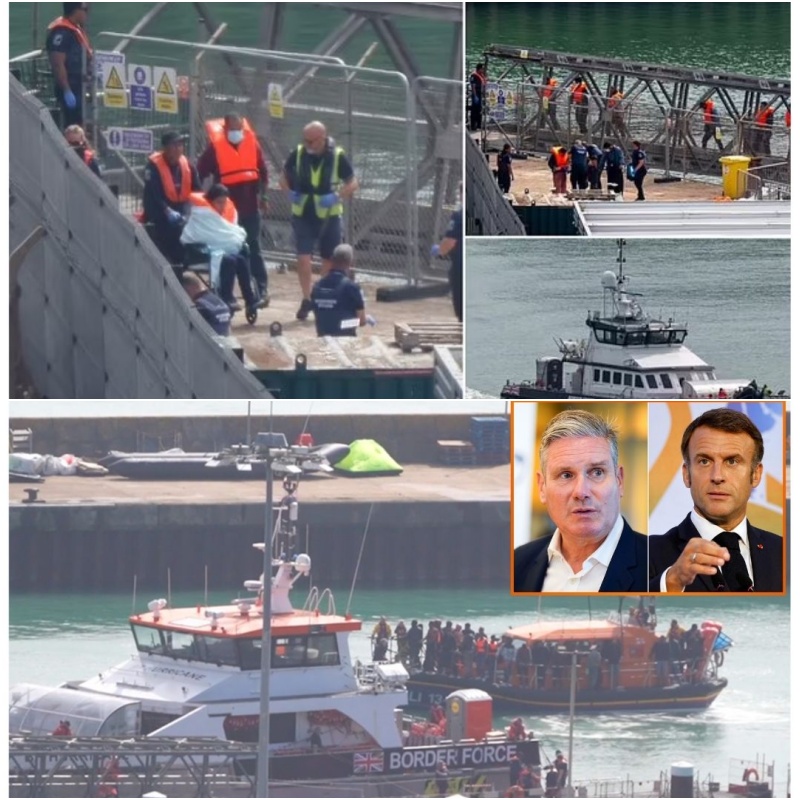
    Labour’s ‘one in, one out’ deal with France has been branded a joke after it emerged that Britain has so far accepted more migrants than it has sent back.

    Official figures show that the UK has returned 193 people who crossed the Channel in small boats in the first two months of the much-vaunted scheme.

    Yet over the same period, September to December, 195 asylum-seekers who have not previously tried to arrive illegally have been allowed to come here from France under the scheme. The Home Office originally said it would involve an ‘equal number’ travelling in each direction.

    It is the latest setback for the deal agreed by Sir Keir Starmer and Emmanuel Macron over the summer, following legal challenges and the farce of two men who were removed coming back in small boats soon afterwards.

    Ministers hoped the threat of being sent back to France would deter others from making the trip but the final tally for 2025 showed on Thursday it was the second-worst year so far for small boat crossings.

    A total of 41,472 migrants arrived in Britain in dinghies, only 9 per cent below the all-time record of 45,774 set in 2022.

    The total for 2025 was 13 per cent higher than for the previous year, when 36,816 crossed, as people-smugglers crammed ever more people into larger boats.

    However the pace slowed over the autumn, with poor weather at sea contributing to a 28-day run without any crossings and the last arrivals of the year recorded on December 20th.

    In total 64,714 people have now made it to Dover in 1,095 dinghies since Labour came to power in July 2024, with many still being put up in 200 costly hotels around the country where a spate of violent and sexual crimes have sparked angry protests.

    Migrants in France clambering into a small boat bound for Britain in July last year

    Shadow Home Secretary Chris Philp told the Daily Mail: ‘It is a joke that under Labour’s deal more immigrants have been let in than have been removed.

    ‘In any case, removing under 200 immigrants when over 40,000 have arrived so far this year is clearly no deterrent at all. No wonder the numbers have surged since the election.’

    He added: ‘We need to leave the European Convention on Human Rights and deport all illegal immigrants within a week of arrival. Then the crossings would soon stop.’

    Reform UK’s leader Nigel Farage said: ‘Smash the gangs is a complete disaster, the one in one out deal is a farce and the numbers coming over are huge.

    ‘Many of the young men that have arrived last year will do us great harm.’

    The Home Office admitted: ‘The number of small boat crossings are shameful and the British people deserve better.’

    But a spokesman insisted: ‘This Government is taking action. We have removed almost 50,000 people who were here illegally, and our historic deal with the French means those who arrive on small boats are now being sent back.

    ‘The Home Secretary has announced the most sweeping reforms to tackle illegal migration in decades, removing the incentives that bring illegal migrants to the UK and scaling up the return of those with no right to be here.’

    On the one in, one out deal, the spokesman said: ‘Under this landmark agreement, those who arrive on small boats are now being returned directly to France.

    ‘We are currently scaling up this pilot. As well as removing those who have arrived illegally, we are accepting applicants – subject to stringent security checks – through a new safe and legal route.’

    Migrants arriving in Dover after being rescued by a Border Force vessel in December

  • NEW YEAR’S EVE TURNS TO HORROR: Two people were killed by fireworks as celebrations spiralled into chaos — while a historic church was left gutted by fire. What was meant to be a night of joy ended in devastation. DD

    NEW YEAR’S EVE TURNS TO HORROR: Two people were killed by fireworks as celebrations spiralled into chaos — while a historic church was left gutted by fire. What was meant to be a night of joy ended in devastation. DD

    NEW YEAR’S EVE TURNS T0 HORROR: Two people were killed by fireworks as celebrations spiralled into chaos — while a historic church was left gutted by fire. What was meant to be a night of joy ended in devastation.


    Groups of residents from neighboring streets clash using fireworks in the Transvaal district in The Hague on New Year’s Eve (Picture: Getty Images Europe)
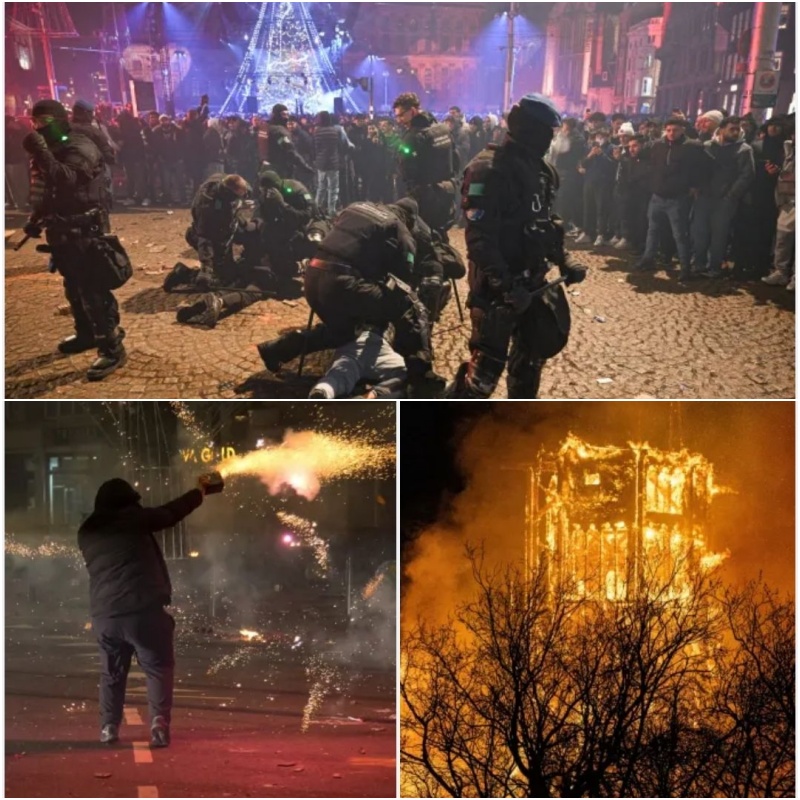
    Two people were killed by fireworks, police faced ‘unprecedented’ violence and a church was gutted by fire in a chaotic New Year’s Eve in the Netherlands.

    A 17-year-old boy from Nijmegen and a 38-year-old man from Aalsmeer died in separate fireworks incidents, while three other people were left seriously injured.

    Authorities said one person has been arrested in connection with the teenager’s death, with no more details given.

    Dutch Police Union head, Nine Kooiman, said there had been an ‘unprecedented amount of violence against police and emergency services’ on Wednesday night and early Thursday morning.

    Ms Koiiman added that she herself had been pelted three times by fireworks and other explosives as she worked a shift in Amsterdam.

    Meanwhile, a massive blaze ripped through the Vondelkerk, a 1872 church popular with tourists.

    The 50-metre-high (164-foot) tower collapsed and the roof was badly damaged but the structure was expected to remain intact, Amsterdam authorities said.


    The tower of the Vondelkerk in Amsterdam in flames (Picture: ANP/Shutterstock)


    The church is a popular tourist attraction (Picture: ANP/Shutterstock)
    Video footage shows the church engulfed in flames,

    Images show people fighting in the streets, launching fireworks towards buildings and clashing with police.

    There were reports of people throwing petrol bombs at officers in the southern city of Breda.

    Shortly after midnight, authorities released a rare country-wide alert on mobile phones warning people not to call overwhelmed emergency services unless lives were at risk.

    The Dutch had bought huge quantities of fireworks this year due to an expected ban of unofficial fireworks this year.

    According to the Dutch Pyrotechnics Association, a record €129 million euros (£25.4m) were spent on on fireworks.


    Police intervene at Dam Square, Amsterdam after disturbances broke out involving groups of youths setting off fireworks indiscriminately (Picture: Anadolu)


    People hide from fireworks being used by residents fighting in The Hague (Picture: Getty Images Europe)
    Some areas had been designated firework-free zones, but this reportedly had little effect.

    The eye hospital in Rotterdam said it had treated 14 patients, including 10 minors, for eye injuries. Two received surgery.

    Police in neighbouring Belgium were also targeted with fireworks, despite a New Year ban on their use. Scores of arrests were made.

    In Germany, meanwhile, two 18-year-olds died in the western city of Bielefeld when they set off home-made fireworks, local police said in a statement.

    For more stories like this, check our news page.

    Comments

    Add as preferred source

  • “WE CAN’T FIND OUR CHILDREN” … A ski resort is left shattered as parents search through ash and debris following a nightclub blaze that claimed 47 lives DD

    “WE CAN’T FIND OUR CHILDREN” … A ski resort is left shattered as parents search through ash and debris following a nightclub blaze that claimed 47 lives DD

    “WE CAN’T FIND OUR CHILDREN” … A ski resort is left shattered as parents search through ash and debris following a nightclub blaze that claimed 47 lives

    Heartbreak as parents scour devastated ski resort searching for children missing after nightclub inferno killed 47: Witnesses tell of desperate and heroic battles to rescue trapped revellers – while vigils are held for the dead

    Desperate parents have scoured a devastated Swiss ski resort after at least 47 people were killed and 115 injured in a deadly nightclub fire.

    Witnesses revealed how the horror blaze tore through the basement venue, Le Constellation, in the Alpine resort of Crans-Montana in the early hours of the morning.

    It is believed the fire began after a waitress holding a sparkler during champagne service ignited material on the ceiling above the packed bar shortly after 1.30am.

    Switzerland has announced it will enter five days of national mourning as survivors describe harrowing scenes inside and outside the club where revellers were burned and overcome with smoke.

    Tragic reports have now emerged of mothers calling all the hospitals in the area in the hope of finding their children – as well as parents taking it upon themselves to search the resort itself.

    One man, eighteen-year-old Rayan Guiren, said: ‘Many parents have been searching for their children.’

    Italy’s ambassador to Switzerland said identification of the victims could take weeks, with the country’s foreign minister adding the severe burns suffered would further complicate the process.

    The French foreign ministry said eight of its citizens were missing and it could not rule out that French nationals were among the dead.

    French media reported at least two of the injured were French nationals.

    A photo appears to show the moment champagne sparklers set fire to material on the ceiling of the Swiss nightclub

    Dramatic footage shows enormous flames rapidly spreading over the ceiling of the cramped bar, as heavy music blares out of the speakers

    People mourn outside ‘Le Constellation’ bar, after a fire and explosion during a New Year’s Eve party where several people died and others were injured, according to Swiss police, in the upscale ski resort of Crans-Montana in southwestern Switzerland, January 1, 2026

    Alexis, an eighteen-year-old who was outside the club when he first spotted the flames, told local media that people inside tried desperately to break the glass.

    He said: ‘It was a real flame coming out. It was coming out and… in fact, people were running through these flames.

    ‘You could see the shadows. People were trying to break the glass with chairs in the bar.’

    Another 18-year-old revealed: ‘I thought my little brother was inside so I came and tried to break the window to help people to exit, and after that I went in.’

    He said he was close to the bar when he heard a huge explosion and as others tried to escape, he went inside looking for his brother.

    Speaking to the BBC, he recalled: ‘I saw people burning… I found people burning from head to foot, no clothes anymore… It was very shocking. I went in this bar every day this week – the day I didn’t go, it burned.’ His brother was fortunately unharmed.

    As firefighters took over, the teenager heroically continued to help, offering water and clothes to the victims.

    One mother told how she had been desperately calling all the hospitals to find her missing 16-year-old son Giovanni – but added she had so far been unable to locate him.

    Another witness, 21-year-old Alex, said he was just outside when the first victims of the tragedy began rushing out: ‘I saw someone in their underwear, burned. That’s when I realised there was definitely something wrong.’

    He recalled a ‘smell of gas, of melted plastic, a very unpleasant mixture. And then half a dozen burned people came out.’

    Alex added: ‘It sent a chill down my spine to think that there were possibly still fifty people trapped inside’.

    Another person told Sky News that many people were so panicked that they did not even realise their own faces were severely burned.

    Oscar, 19, told the broadcaster that some people’s faces were ‘completely gone’.

    He said: ‘There was full panic. Many people tried running out. People were banging on the windows, screaming. It was like a horror movie.

    ‘I think the windows were too thick. Then people were falling on each other coming out.

    ‘Some people’s faces fully burned, like completely gone. People were asking me: “Am I burned? Is my face burned?”

    ‘I think the adrenaline must have made them not feel anything because they were completely, fully burned and they didn’t feel anything.’

    Two French women, Emma and Albane, told French media that they were in the club when the fire broke out, which they believe started after a waitress put ‘birthday candles’ on top of some champagne bottles.

    They said: ‘In a matter of seconds, the entire ceiling was ablaze. Everything was made of wood.’

    The pair added that the flames ‘started to rise very quickly’.

    They said evacuating from the venue was ‘very difficult’ as the escape route was ‘narrow’ and the stairs leading outside were ‘even narrower’.

    The women added they were ‘very lucky’ to escape as there were around ‘200 people trying to get out within 30 seconds through some very narrow steps’.

    The tragedy in Switzerland comes amid the revelation that the club had been rated just 6.5 out of 10 for safety, with a combination of flammable interiors and limited escape routes now emerging as key factors in the deadly blaze.

    Le Constellation was fitted with wooden furnishings and foam-style ceiling material and had only one narrow staircase for revellers trying to escape.

    Investigators said the fire rapidly intensified into a flashover, when extreme heat caused everything inside the enclosed space to ignite almost at once, leaving people little chance to flee.

    New footage shows the deadly flashover, when extreme heat caused everything inside the enclosed space to ignite almost at once, that left people little chance to flee

    Panicked partygoers can be seen rushing to escape the venue, while others seem to remain underground filming the blaze, evidently not yet realising its danger

    Rescuers and fire-fighters work at the site of an explosion that ripped through a bar in Crans-Montana on January 1, 2026

    Read More

    Video shows moment sparkler started Swiss NYE nightclub fire that killed 47 people

    One witness, Gianni, told Swiss outlet 20 Minuten that victims suffered severe burns, with faces ‘completely disfigured’ and hair burned away. He said many were left blackened by the flames, with their clothes fused to their skin.

    Images from inside the venue show what appears to be foam-style soundproofing fixed to the ceiling, alongside extensive wooden décor throughout the bar and stairwells.

    The nightclub had previously received a safety rating of just 6.5 out of 10 on a public review platform, a detail now drawing attention as investigators examine how the fire spread so quickly.

    The listing on the review website, Wheree, did not specify any particular areas for concern in the club. Wheree aggregates ratings for venues on a range of issues, including safety, location and prices, from people who visit.

    The bar is owned by a French couple aged 49 and 40, who have lived in the valley for almost a decade, according to French broadcaster BFMTV citing a source close to the investigation.

    The female owner was inside the bar when the fire broke out and suffered burns to her arm, while her partner was at one of their other establishments at the time. Both were described as ‘completely in shock’.

    The venue was hosting more than 100 people at the time and is licensed to hold up to 300, with a further 40 on its terrace.

    Sixteen Italians have been reported missing after the fire tore through the bar, while around a dozen more Italian nationals are being treated in hospital with serious burn injuries, Italy’s foreign minister said.

    Valais Canton police commander Frédéric Gisler said during a news conference that work is underway to identify the victims and inform their families, adding that the community is ‘devastated’.

    Beatrice Pilloud, Valais Canton attorney general, said it was too early to determine the cause of the fire. Experts have not yet been able to go inside the wreckage.

    ‘At no moment is there a question of any kind of attack,’ Pilloud said.

    Antonio Tajani said the situation remained highly confused in the hours following the blaze, as authorities worked to identify victims and trace those unaccounted for.

    ‘I hope there are no Italian victims, but we cannot rule anything out,’ he told Sky TG24 television, describing the aftermath as ‘chaotic’.

    The blast occurred at around 1.30am local time (12.30am GMT) in the  Le Constellation bar, a popular venue located in the centre of the Alpine town of Crans-Montana

    Rescuers are seen at the site of an explosion that ripped through a bar in Crans-Montana on January 1, 2026

    Tajani said he had been in regular contact with Swiss authorities throughout the day, as emergency crews continued search and recovery operations at the nightclub and hospitals across western Switzerland treated dozens of injured survivors.

    He added that the confirmed death toll had climbed to 47, with many of the injured suffering severe burns, underscoring the scale of the disaster at the packed New Year’s Eve venue.

    The blast occurred at around 1.30am local time (12.30am GMT) in the basement of ‘Le Constellation’, a popular venue located in the centre of the Alpine town of Crans-Montana.

    Dramatic footage shows enormous flames rapidly spreading over the ceiling of the cramped bar, as heavy music blares out of the speakers.

    Panicked partygoers can be seen rushing to escape the venue, while others seem to remain underground filming the blaze, evidently not yet realising its danger.

    Moments later, however, music turned to horrified screeches as the entire bar erupted in flames.

    Crowds of people can be seen piling out of the door as they run for their lives while others scream to find their friends amid the chaos.

    Police have not yet disclosed the cause of the fire, but several witnesses said it started when a waitress, dancing on a male colleague’s shoulders, held a sparkler too close to the wooden ceiling.

    People attend a vigil at a church after a fire and explosion at the ‘Le Constellation’ bar during a New Year’s Eve party, where several people died and others were injured, according to Swiss police, in the upscale ski resort of Crans-Montana in southwestern Switzerland, January 1, 2026

    A pair of people embrace near the site of the bar on January 1, 2026

    People console one another near the Le Constellation bar

    A promotional video for the club shows waitresses passing around champagne bottles fitted with sparklers

    Read More

    BREAKING NEWS
    ‘Waiter dancing with sparkler while on friend’s shoulders’ started NYE fire that killed up to 40

    The bar is owned by a French couple aged 49 and 40, who have lived in the valley for almost a decade.

    The couple own three establishments in the area, including Le Constellation. The female owner was inside the bar when the fire broke out and suffered burns to her arm, sources said.

    Her partner was at one of their other venues at the time. Both were described as ‘completely in shock’ following the disaster.

    France’s foreign ministry has confirmed that two French citizens were among those injured, though it is not yet known whether the owner is included in that figure.

    France’s president Emmanuel Macron said in a post to X following the tragedy: ‘I met with the President of the Swiss Confederation to express our solidarity. The toll is terrible. Our thoughts are with the families.

    ‘Our diplomatic and consular teams are following the situation and providing the necessary assistance to our compatriots affected by this tragedy.

    ‘France is welcoming the injured in its hospitals and stands ready to provide any assistance. Thank you to the teams and caregivers.’

    Ursula Von Der Leyen, president of the European Commission, meanwhile said on X: ‘Deeply saddened by the fire in Crans-Montana. My thoughts are with the victims, their families and all those affected.

    ‘We are liaising with Swiss authorities to provide medical assistance to the victims through the EU Civil Protection Mechanism. Europe stands in full solidarity with Switzerland.’

    And King Charles said in a statement today: ‘My wife and I were appalled, and greatly saddened, to learn of the devastating fire last night in Crans-Montana, in Switzerland.

    ‘It is utterly heartbreaking that a night of celebration for young people and families instead turned to such nightmarish tragedy. ‘While offering our admiration for the heroic first responders and the selfless emergency services, we wanted, above all, to convey our deepest possible sympathy to all those who have been so dreadfully affected by this horrific disaster.

    ‘Our most heartfelt thoughts and prayers are with the loved ones of all those who have so tragically lost their lives and with those who remain in a critical condition in hospital.’

    A promotional video for the club shows waitresses passing around champagne bottles fitted with sparklers, and carrying buckets full of several bottles also with sparklers inside.

    Images of the bar’s interior show what looks like soundproofing foam fitted on the ceiling – potentially flammable material that may have ignited in the blaze.

    The authorities said the fire had resulted in a flashover at the bar, leading to one or more explosions.

    A flashover is the sudden transition from a developing blaze to a fully developed fire in an enclosed space, when all flammable surfaces in the room ignite instantly.

    Tim Steffens, a 19-year-old ski instructor who witnessed the blaze, described scenes of panic as the fire broke out.

    A previous promotional video for a night out at Le Constellation

    The blast occurred at around 1.30am local time (12.30am GMT) at Le Constellation bar in Crans-Montana as revellers celebrated the New Year

    Read More

    Europe’s skiing ‘ghost resorts’: How hundreds of slopes lie abandoned due to lack of snow

    He heard a loud bang before ‘everything inside was engulfed in flames,’ he told 20 Minuten.

    ‘Everyone was pushing and shoving their way out of the stairwell,’ he continued. ‘It was awful. They were all burned. Their clothes were burned away. It really wasn’t a pretty sight. The screams… not pretty, not pretty.’

    Swiss daily Blick cited a doctor at the scene suggesting that the death toll could be in the ‘dozens’, while daily Le Nouvelliste said its sources were describing ‘a heavy toll’, with ‘around 40 dead and 100 injured’.

    ‘Several people lost their lives and others were injured,’ a police statement said, describing the incident as ‘serious’ and adding that ‘a major emergency response is underway’.

    ‘A large contingent of police, firefighters, and rescue workers immediately went to the scene to assist the numerous victims,’ it said.

    ‘The operation is still ongoing.’

    ‘More than a hundred people were in the building, and we are seeing many injured and many dead,’ said Gaetan Lathion, a police spokesman in Wallis canton in southwestern Switzerland.

    A survivor of the blaze told French news channel BFM: ‘During the evening, a waiter climbed onto another waiter’s shoulders.

    ‘He was holding a birthday candle, which was very close to the ceiling, and [the ceiling] caught fire in a couple of minutes.’

    Image from the scene shows emergency services scrambling to the bar in the early hours of this morning

    Read More

    BREAKING NEWS
    Australian injured in deadly inferno that killed 47 people at Swiss ski resort on New Year’s Eve

    Another women said: ‘The staircase leading out of the nightclub was extremely narrow. There was a huge surge in the crowd. We managed to escape just in time.’

    Police commander Frédéric Gisler confirmed the fire ‘started in the basement of the bar’ and there was a crush as people desperately tried to get out via the single staircase.

    Another witness, Emma, said the fire seemed to start after people celebrated with champagne bottles that contained candles.

    ‘Some of the bottles were near the ceiling and it caught fire. The whole ceiling was in flames and the fire spread really fast. It happened in seconds. We ran outside, screaming and crying,’ she told BFM.

    Victoria gave a similar testimony. ‘It was firework candles inside a champagne bottle that caused the explosion. The entire ceiling of the bar caught fire,’ she said.

    ‘All the windows were black and opaque with smoke,’ she added. She believes many of the victims suffocated.

    ‘Some people smashed windows to let in air,’ she said. ‘I’m still shaking; many were crying as they left. It was mass panic.’

    Albane, also at the bar, painted a picture of terrifying chaos as she described how people panicked and scrambled for the exit. ‘It was packed with people when the fire started,’ she said. ‘It was clearly accidental.’

    She added that she saw the ceiling catch fire after sparkler was lit in a bottle on a high table.

    Dalia Gubbay, a woman from Milan who has visited Crans-Montana over Christmas for the past 30 years, said her daughter-in-law ‘saw people burned, white sheets being placed over bodies’.

    Adrien was also at Le Constellation when chaos ensued. ‘We saw people smashing windows, running and screaming,’ he said. ‘Parents were racing up in their cars. It was like a horror movie.’

    Other reports suggest the blast may have been caused by fireworks – however police say this is yet to be confirmed.

    A witness added that ‘countless’ ambulances and several helicopters raced to the scene.

    A young Italian man said he is still anxiously waiting to hear from a friend who had been celebrating New Year’s Eve at the bar in Crans-Montana.

    He told Italian public broadcaster Rai News one of his friends was ‘was burned all over’ while another was taken to Zurich by helicopter.

    ‘Another friend of ours…last night we had no news, he couldn’t be found,’ he said.

    ‘My friends and I, we haven’t slept last night, we’ve barely eaten.’

    Swiss emergency services at scene

    A witness said ‘the staircase leading out of the nightclub was extremely narrow’ as people rushed to escape the deadly blaze

    Swiss Federal President Guy Parmelin and the President of Crans-Montana, Nicolas Feraud, left, inspect the area where a fire broke out

    Switzerland’s President, Guy Parmelin, said ‘a moment of joy turned into a tragedy that has touched the whole of Switzerland and abroad’ following the fire in the south-west of the country.

    He cancelled his traditional New Year’s Day message earlier today.

    ‘There has been an explosion of unknown origin,’ police spokesman Lathion said in an earlier statement.

    Around 100 people had gathered at the bar, which has a capacity of up to 300 and another 40 on its small terrace.

    A doctor in the Swiss air ambulance and rescue service said hospitals are ‘overwhelmed with burn victims’ in comments made to local media.

    A tourist from New York filmed bright orange flames pouring from the bar, and told AFP he saw people running and screaming in the dark.

    ‘Several people lost their lives and others were injured,’ a police statement said, describing the incident as ‘serious’ and adding that ‘a major emergency response is underway’.

    ‘A large contingent of police, firefighters, and rescue workers immediately went to the scene to assist the numerous victims,’ it said.

    ‘The operation is still ongoing.’

    The Italian foreign ​ministry said information from Swiss police indicated about 40 deaths, but police would not be ⁠more specific than ‘tens’ at a press conference on the incident.

    Two helicopters to assist rescue efforts after the fire

    Witnesses believe the blaze was caused by a birthday candle put inside a champagne bottle in the basement of the venue in the Alpine town of Crans-Montana.

    Inside Le Constellation following the blaze

    Several people were killed and others injured when an explosion ripped through a bar in the luxury Alpine ski resort town of Crans Montana

    A helpline has been set up for families seeking information about loved ones

    Read More

    LIVE

    RECAP: King Charles ‘heartbroken’ after Swiss resort NYE party turned into ‘nightmarish tragedy’

    Some of the victims are from other countries, said Stephane Ganzer, head of security for the Valais canton.

    Authorities ‍said 10 helicopters ‍and 40 ambulances had been mobilised.

    Ambulances were still parked outside the bar hours later, and broken windows could be seen. Local media described a ‘smell of burning still in the air’.

    Crans-Montana is a luxury ski resort town located in the heart of the Swiss Alps.

    It is approximately two hours from the Swiss capital of Bern and is popular with British tourists.

    Police said a no-fly zone is in place over the resort and the area remains completely cordoned off.

    ‘The party was in full swing… music and champagne flowing freely,’ a resident who said they lived nearby told 24 heures, a Lausanne newspaper.

    But as news of the fire broke, they said, the carefree mood vanished and people began gathering in the street.

    ‘We could hear the sirens in the distance. Around me, people were stunned, worried, silent.’

    Fire spread quickly at the venue, pictured above

    Le Constellation is popular among young Swiss people and tourists

    ‘We heard helicopters all night long,’ another neighbour told 24 heures.

    ‘With the fireworks, we didn’t understand what was going on at first. Then we saw the smoke. It’s terrible, a lot of young people go to that bar.’

    ‘The fire started around 1.30am this morning in a bar called Le Constellation,’ police spokesperson Lathion said.

    ‘More than a hundred people were in the building, and we are seeing many injured and many dead.’

    Most of those injured were in a serious condition, said Mathias Reynard, head of the cantonal government. ⁠

    Valais hospital intensive care unit was full and patients being transferred elsewhere, he said.

    Commuters coming into the town are breaking down in tears due to the horror of what has happened and locals expect the community to be in a ‘state of mourning’ for days to come.

    One bus driver told the Daily Mail: ‘We think it’s firecrackers or fireworks. They’re banned in a lot of clubs and they should never be allowed anywhere near crowded places. This is an absolute tragedy.’

    It is in the centre of the Alpine town of Crans-Montana

    Its normal closing time is 2.00am local time, which would have been 30 minutes after the fire began

    One resident, who lives in Crans-Montana, said: ‘I heard a number of massive bangs which sounded like bombs going off. It was crazy.

    ‘I live nearby. My heart felt like it jumped out of me. It was pounding.

    ‘I live hundreds of yards from the bar. I heard screaming and screaming and people running.

    ‘We will be in mourning for days. We will never get over this. How did it happen?’

    The explosion was being considered a fire and not an attack, prosecutor ‍Béatrice Pilloud confirmed, ⁠adding that authorities were trying to get the bodies of the victims to their families.

    A helpline and reception centre has been set up for families seeking information about loved ones.

    ‘We’re just at the beginning of our investigation, but this is an internationally renown ski resort with lots of tourists,’ Lathion added.

    Le Constellation’s normal closing time is 2.00am local time, which would have been 30 minutes after the fire began.

    It is unclear if it was due to stay open later for New Year’s Eve celebrations.

    Prosecutor Pilloud said: ‘We do not yet know the cause of the fire but we have ruled out terrorism.

    The bar is located in Crans-Montana, a large ski resort that is home to 87 miles of mountain trails

    Police officers walk at the site of an explosion that ripped through a bar in Crans-Montana on January 1, 2026

    ‘There was a fire followed by a flash-over, meaning the air heats up and causes detonations.’

    She continued: ‘Regarding fireworks, we cannot comment on this. It is too premature. I cannot give any more information on any possible causes. Out of respect to the victims and their families we ask that no speculation on the cause is made.’

    She said ‘several foreign offices have been contacted’ but refused to confirm if the UK was included.

    She added there was no information being released about victims’ nationalities and ages.

    The first call to emergency services was at 1.31am on New Years Day with reports of smoke.

    Four helicopters transported the injured to hospitals in Sion, Lausanne, Geneva and Zurich.

    There were 150 emergency workers in the scene.

    Police said it will take ‘multiple days’ to identify many of the victims.

    Rescue staffers and firefighters in the area where the fire broke out in Crans-Montana, Swiss Alps, Switzerland, Thursday, January 1, 2026

    There were 150 emergency workers in the scene

    The UK embassy in Berne said it has not been approached yet for assistance, but said that ‘nationals from multiple countries’ are likely impacted

    Read More

    BREAKING NEWS
    ‘Waiter dancing with sparkler while on friend’s shoulders’ started NYE fire that killed up to 40

    Pilloud appealed to locals and tourists to not put ‘extra pressure on emergency services because operating theatres and intensive care are saturated’.

    Reynard said: ‘A night that should have been a celebration turned into a tragic nightmare involving serious numbers of victims.’

    An eyewitnesses spoke of the horror in the aftermath of the explosion.

    Lara, 28, a Dutch tourist, arrived on the scene nine minutes after the blaze.

    She said: ‘It was mayhem. I was driving up the road. I saw horrendous things. I saw three young people carrying their friend. Desperately trying to get help. People were so burned.

    ‘No one knew what was happening.

    ‘It’s a young person bar. There are pool tables and a dart board. This is where the young hang out.

    ‘The ceilings are low. And it’s all wood. Wood everywhere.

    ‘And the stairs are narrow. Only three person-wide.

    ‘I just can’t imagine trying to get out.’

    Bastien Frema, 20, a French holidaymaker, said: ‘People were screaming. I saw people with burnt clothing shredded, hanging off them.

    ‘People were yelling. Trying to get help. We couldn’t do anything. We just had to let the emergency services do what they could.

    ‘There were helicopters all night, until 8.00am. So many police and ambulances.

    ‘I know the bar well. It’s where you go if you’re under age. I fear the victims are going to be teenagers and people in their 20s. It’s a fun place if you’re young.’

    Matthew, 28, a Swiss local, said: ‘It’s a really deep cavernous bar. You go down these narrow wooden stairs and then it goes on and on. There’s a smoking area at the back.

    ‘I was there the night before. My friend was in the Mexican opposite and he ran out and saw horrific injuries.’

    Marceau Fortune, 20, a French hotel worker, was standing by the police cordon waiting for news from friends.

    He said: ‘I heard a massive explosion. I thought it was a firework but I remember thinking it was just so loud. It was just one bang. I was down the street. I didn’t know what was happening.

    ‘I am worried for my friends. There are several I have not heard from yet. I’m waiting, waiting. Waiting on my phone. It’s just beyond horrific.’

    The UK embassy in Berne said it has not been approached yet for assistance, but said that ‘nationals from multiple countries’ are likely impacted.

    ‘Swiss emergency services are responding to a fire in Crans-Montana, with nationals from multiple countries likely affected. We continue to monitor the situation,’ it wrote on X.

    ‘Whilst we have not been approached for assistance, our staff stand ready to support British nationals abroad 24/7.’

    Hospitals in western Switzerland are under severe strain due to burn victims, and have released an appeal to the public: ‘Please show solidarity and refrain from risky activities on January 1.’

    Crans-Montana is a large ski resort that is home to 87 miles of mountain trails.

    It is one of the top-ranked ski destinations in Europe.

    The community is in the heart of the Swiss Alps, just 25 miles north of the Matterhorn.

    At the end of this month, it is due to host the FIS World Cup – a prestigious speed skiing competition.
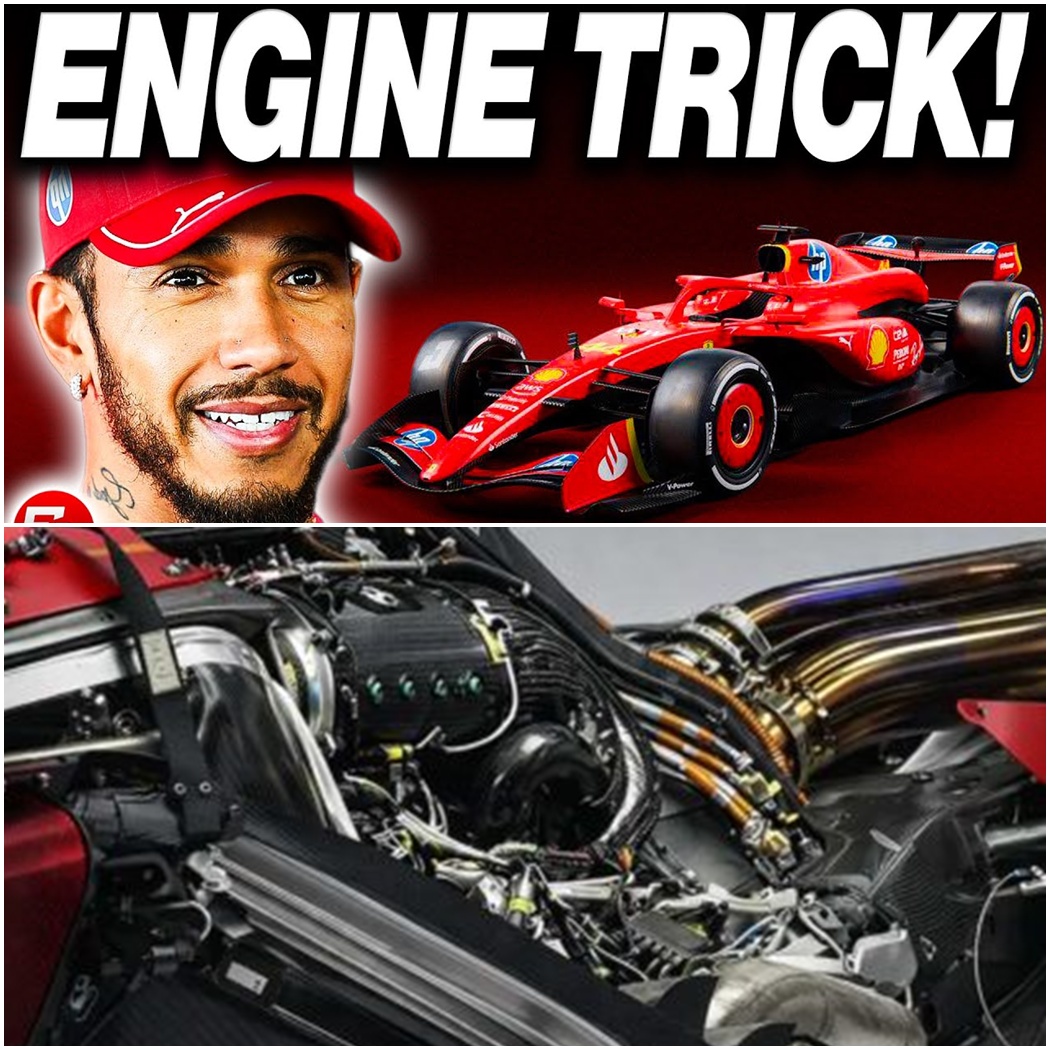
  • F1 2026 EXPLOSION: Red Bull’s “Loophole” Rumor, Cadillac’s Super Bowl Shock, and the Return of Toyota – The Ultimate Car Reveal Guide

    F1 2026 EXPLOSION: Red Bull’s “Loophole” Rumor, Cadillac’s Super Bowl Shock, and the Return of Toyota – The Ultimate Car Reveal Guide

    The silence of the winter break is about to be shattered by the roar of a new era. We are not just approaching another Formula 1 season; we are standing on the precipice of a revolution. As of today, January 9, 2026, the motorsport world is buzzing with an intensity we haven’t seen in decades. The 2026 regulations have arrived, bringing with them a transformed grid, brand-new power units, and an expanded field of 22 cars.

    For fans who have spent the holidays re-watching highlights and enduring the absence of racing action, the wait is over. “Car Reveal Season” is officially open, and the schedule is packed with more drama, corporate maneuvering, and technical intrigue than ever before. From the audacity of an American entry debuting at the Super Bowl to the whispers of a controversial engineering “loophole” that could hand the title to Red Bull before a wheel is turned, this is your essential guide to the chaos of the next few weeks.

    The 11th Team: Cadillac’s Super Bowl Power Play

    Perhaps the biggest headline of the 2026 season is the expansion of the grid. For years, the paddock was a closed shop, with existing teams resisting any dilution of the prize pot. But the resistance has crumbled. The Cadillac F1 Team, backed by the industrial might of General Motors and led by Graeme Lowdon, has officially arrived as the 11th constructor.

    This isn’t just a backmarker entry. Cadillac means business. They have secured a driver lineup boasting multiple Grand Prix wins: the experienced Valtteri Bottas and the Mexican veteran Sergio Perez. It is a statement of intent—experience over youth to develop a brand-new machine.

    In a move that perfectly encapsulates the Americanization of the sport, Cadillac has chosen the biggest stage on Earth for their reveal. They will pull the covers off their challenger on February 8th, during the coverage of the Super Bowl. While other teams choose quiet factories or racetracks, Cadillac is going for maximum eyeballs. Expect a livery dominated by black, gold, or yellow, dripping with GM branding, as they attempt to steal the thunder from the established European giants.

    Red Bull’s Detroit Gamble and the “15-Horsepower Loophole”

    If Cadillac is bringing the marketing noise, Red Bull is bringing the technical fear. The reigning champions are entering a brave new world as an independent engine manufacturer, launching the “Red Bull Ford Powertrains” era. The partnership with Ford is not just a branding exercise; it is a full technical collaboration.

    The team is set to launch their season on January 15th in Detroit, at the heart of Ford’s headquarters. It is a symbolic homecoming for the American auto giant, but the real story is what is happening inside the engine.

    Whispers in the paddock suggest that Red Bull engineers may have already outsmarted the rulebook. Rumors are circulating of a technical “loophole” involving expanding materials within the engine cylinders. If true, this innovation could yield a massive 15-horsepower advantage over the competition right out of the gate. In a sport where milliseconds matter, 15 horsepower is a lifetime.

    Laura Mekies, speaking on the launch, described it as a “bold step into the future.” If that step includes a legal cheat code for speed, Max Verstappen could be looking at another era of dominance while rivals scramble to catch up.

    The German Giant Awakens: Audi’s Aggressive Strategy

    While Red Bull heads to Detroit, all eyes today are on Barcelona. Audi, having completed its takeover of Sauber, is conducting a shakedown of its 2026 car today, January 9th, at the Circuit de Barcelona-Catalunya.

    This is a massive moment. It is reportedly the first time the Audi power unit has been run while installed in the chassis. Audi is using one of its allowed filming days to get a head start, meaning the first grainy “spy shots” of the new era could emerge on social media within hours.

    The official public reveal will follow on January 20th at a global launch event in Berlin. Audi is carrying the weight of German automotive reputation on its shoulders. They are not here to make up the numbers, and by hitting the track earlier than almost anyone else, they are signaling a confidence that should worry the midfield.

    The Toyota Shock: A Legend Returns with Haas

    In one of the most surprising twists of the off-season, the Haas F1 Team has undergone a transformation. No longer just the scrappy American underdog, they will race in 2026 as TGR Haas, marking the return of Toyota Gazoo Racing to Formula 1 as a technical partner.

    This is a game-changer for Haas. Toyota’s Gazoo Racing division is a juggernaut in world motorsport, dominating WEC and WRC. By tapping into Toyota’s hypercar expertise and wind tunnel resources, Haas is looking to shed its reputation for inconsistency.

    The team has sensibly moved its launch date to January 19th (online), avoiding a direct clash with Ferrari. Expect the familiar Haas colors to be overhauled with the red, black, and white of Gazoo Racing. For a team that has often struggled with development, the Toyota injection could be the rocket fuel they need to escape the bottom half of the grid.

    The Battle of January 23rd: Ferrari vs. Alpine

    January 23rd is shaping up to be the most chaotic day of the pre-season, featuring a clash of narratives between the sport’s most historic name and its current crisis case.

    Ferrari will unveil its challenger in Maranello on this date. Team Principal Fred Vasseur has promised an “aggressive” approach, with the car assembly finishing just 24 hours before the launch. The Prancing Horse is desperate to end its title drought, and Vasseur claims the car shown will be the real deal—though veteran fans know that Ferrari “real” often changes by the time they hit the track.

    On the same day, Alpine will launch their car in Barcelona. The contrast in mood could not be starker. Alpine is coming off a disastrous 2025 campaign where they finished dead last in the Constructors’ Championship. It was a humiliation for the French manufacturer, compounded by the fact that their second car (driven by Jack Doohan and Franco Colapinto) scored zero points.

    To make matters worse, rumors of a sale are intensifying. Reports suggest a consortium led by none other than Christian Horner is eyeing a significant portion of the team. Alpine’s January 23rd launch might be less of a celebration and more of a desperate plea for relevance. They have teased, “We’ve got something to show you,” but after last year, fans are skeptical.

    The “Newey Effect” at Aston Martin

    For technical purists, the most anticipated date is February 9th. This is when Aston Martin will reveal the AMR26, the first car to be fully influenced by the pen of the legendary Adrian Newey.

    Newey’s move to Aston Martin was the shock of the decade, and 2026 is when we see if the magic is still there. Partnered with the returning Honda (who are holding their own engine reveal in Tokyo on January 20th), Aston Martin has all the ingredients for a superteam. The reveal will likely take place at their state-of-the-art factory, showcasing a car that everyone expects to feature radical aerodynamic solutions. With the regulations resetting the playing field, betting against Newey is historically a bad idea.

    The Rest of the Grid: Hope and Silence

    Williams enters 2026 riding a wave of optimism. Under James Vowles, the team secured a fantastic 5th place in 2025, with Carlos Sainz delivering podiums. Their reveal on February 3rd at the Grove factory will showcase the FW48, a car they hope will bridge the gap to the “Big Four.” Vowles has turned the ship around, and 2026 is the year they aim to become regular podium contenders.

    Mercedes, looking to bounce back from a disappointing ground-effect era, is opting for a two-stage reveal. Renders of the W17 will drop on January 22nd, followed by a full launch on February 2nd. With rookie sensation Kimi Antonelli joining George Russell, it is the dawn of a post-Hamilton era for the Silver Arrows.

    And then there is McLaren. The former double world champions (as of 2024/2025 context) are the only team playing their cards completely close to the chest. No date. No location. Just the promise of papaya orange. Is this confidence or delay? In the high-stakes game of F1 poker, silence is often the loudest bluff.

    Conclusion: The Race Before the Race

    The 2026 pre-season is not just a parade of marketing events; it is the first skirmish of a war. From the loophole rumors at Red Bull to the desperate rebuilding at Alpine, every team is hiding something and fearing everything.

    As the covers come off in Detroit, Berlin, Maranello, and Tokyo, remember that what you see is only half the story. The real truth lies in the data, the lap times, and the 15 horsepower that might just decide the championship. Buckle up. The 2026 season hasn’t even started, and it’s already the most exciting show on Earth.