Blog

  • From 200 MPH to Zero in a Heartbeat: The Terrifying Physics of F1 Survival and the Invisible War Inside the Skull

    From 200 MPH to Zero in a Heartbeat: The Terrifying Physics of F1 Survival and the Invisible War Inside the Skull

    The silence after the crash is always louder than the impact itself.

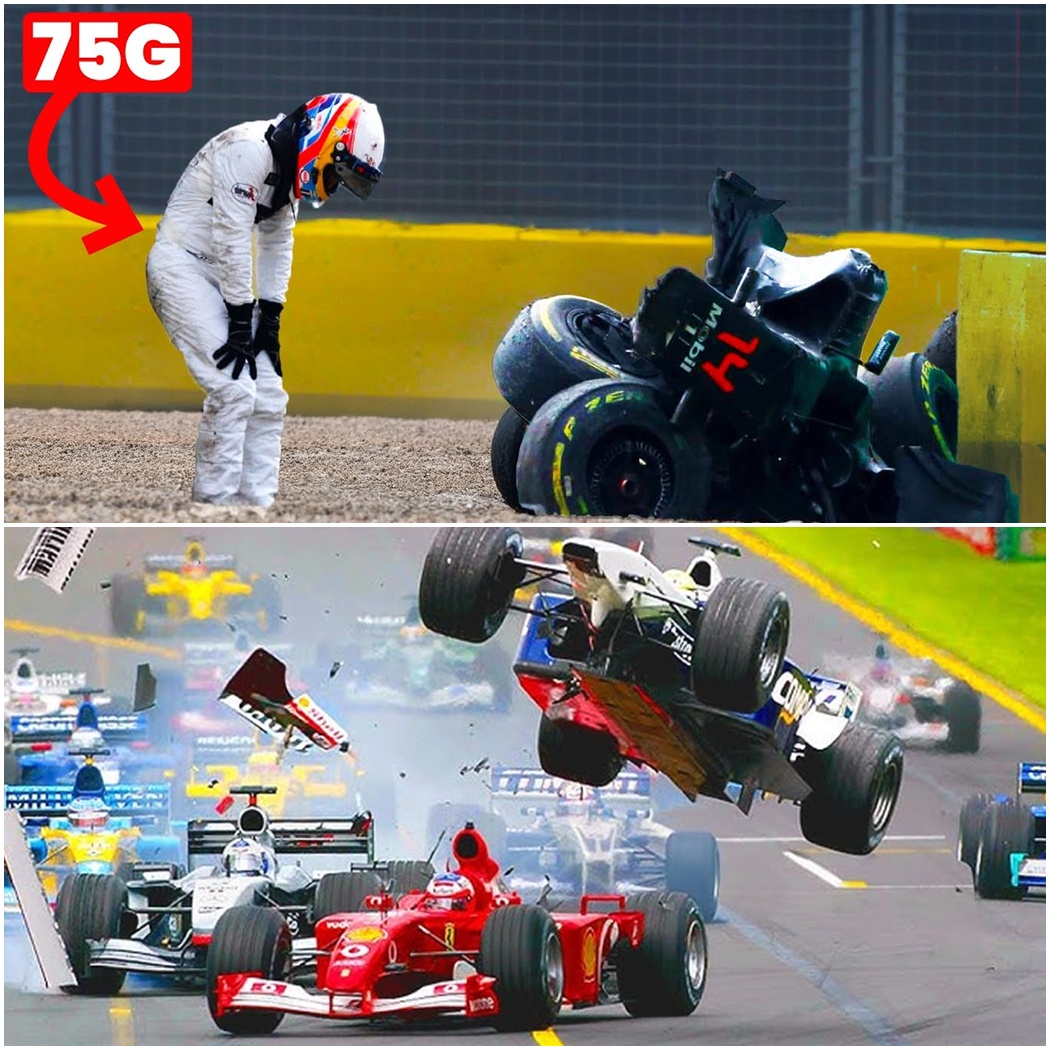
    For a spectator, a Formula 1 crash is a spectacle of flying carbon fiber and screeching tires. But for the driver trapped inside the cockpit, it is a violent, earth-shattering event that defies the laws of human physiology. We’ve seen the headlines: Romain Grosjean surviving a fireball and 67G in Bahrain; Max Verstappen walking away from a 51G impact at Silverstone; Robert Kubica enduring a bone-crushing 75G in Canada.

    These numbers are abstract to most of us. To put it in perspective, 75G means your body briefly weighs 75 times its normal weight. It is a force violent enough to tear organs from their moorings. Yet, miraculously, modern drivers often climb out of the wreckage, wave to the crowd, and walk away.

    But are they really “fine”?

    The truth is far more complex and terrifying. While the visible injuries—the broken legs, the burns—are treated immediately, a silent, invisible war is often raging inside the driver’s body. It is a battle between advanced engineering and the fragile limits of human biology, and it’s a story that every motorsport fan needs to understand.

    The Lie We Tell Ourselves: “I’m Fine”

    To understand the danger, we have to step into the cockpit. The narrator of our source material, a former racing driver, recounts a chilling personal experience from 2006 that highlights the insidious nature of crash trauma.

    He was racing Indy Lights at Watkins Glen, an old-school American circuit known for its punishing speed and lack of runoff areas. Minutes before his qualifying run, his team fixed a brake fluid leak. He went out, pushing hard for data. Then, disaster struck. Approaching the “Outer Loop”—a incredibly fast section of the track—he pressed the brake pedal. It went straight to the floor.

    “There was nothing,” he recalls.

    The car became a missile, slamming into the barrier with enough force to rip the entire gearbox clean off the chassis. He remembers sitting in the dazed aftermath, looking at his destroyed machine. But the scariest part wasn’t the impact; it was his reaction. Despite a fractured foot and hand, and a massive hit to the head, he told the medical team he was fine.

    He wasn’t trying to be a hero. He literally didn’t know he was concussed. His brain, swimming in a cocktail of adrenaline and trauma, couldn’t process its own injury. This is the “invisible enemy” of motorsport. In a culture where speed is king, the inability to self-diagnose a brain injury can be fatal.

    The Accordion Effect: How the Car Dies for You

    So, how do drivers physically survive the initial impact? The answer lies in the concept of “sacrificial engineering.”

    According to Nuno Costa, the FIA Safety Director, the goal of every crash structure is simple: extend the time of the crash. In physics, force equals mass times acceleration. If you can slow down the deceleration—even by a few milliseconds—you drastically reduce the G-force spike transferred to the human body.

    When you see an F1 car’s nose cone shatter and fold up “like an accordion,” it is doing exactly what it was designed to do. It is absorbing kinetic energy, destroying itself so that the survival cell (the monocoque) remains intact.

    But the challenge gets harder when you leave the pristine tarmac of Formula 1. Consider Rallying. There are no tire walls or Tecpro barriers in a forest. There are only trees, and as the experts drily note, “trees don’t like to move out of your way.”

    To solve this, engineers had to think outside the box. They created “rally door foam,” a specialized energy-absorbing material inserted between the door and the seat. It effectively decouples the driver from the chassis, creating a localized crumple zone inside the cockpit itself. It’s a brilliant adaptation for an environment where the track itself is the enemy.
    The Jelly in the Box: The Mechanics of Brain Trauma

    While the car protects the body, protecting the brain is a different beast entirely. Dr. Sean Petherbridge, President of the FIA Medical Commission, offers a haunting analogy: think of your brain as jelly inside a hard container.

    When a car hits a wall and stops, the driver’s body is restrained by six-point harnesses and the HANS (Head and Neck Support) device. But the brain isn’t strapped in. It continues to move, utilizing the small amount of intracranial space to slosh forward and slam into the inside of the skull. Then, it bounces back, hitting the rear of the skull.

    This “coup-contrecoup” action sends ripples and waves through the brain tissue. It’s not just the bruising that matters; it’s the shearing forces. Dr. Petherbridge explains that at racing speeds, these forces cause microscopic tears at the cellular level.

    The consequences are immediate and biological. The trauma causes neurons to release a flood of chemicals. These damaged cells become desperate for their two main fuel sources: oxygen and glucose. But the very injury that created the demand also disrupts the supply. The cells begin to starve.

    This is why a driver can look perfectly healthy on the outside but be suffering from significant cognitive decline on the inside. A “small” crash with a nasty rotational twist can often be more damaging to the brain than a spectacular, high-speed shunt where the energy is dissipated in a straight line.

    The Watchful Eye: Technology vs. The Invisible

    Detecting these invisible injuries has become the new frontier of motorsport safety. In Formula 1, the driver is constantly monitored. High-speed cameras record the cockpit at 400 frames per second, allowing medical teams to analyze the exact movement of the head during impact. Tiny accelerometers in the driver’s earplugs measure the G-forces experienced by the skull in real-time.

    However, this level of tech has historically been a luxury reserved for the elite. In grassroots racing—where the majority of accidents happen—drivers often lack these diagnostic tools.

    The FIA is changing that with a revolutionary new device: a 12-gram Impact Data Recorder. It’s a low-cost, “fit and forget” black box that can be installed in any race car. It measures crash forces and provides critical data that can help medical teams decide if a driver needs a hospital check-up, democratizing safety and potentially saving lives at the amateur level.

    The Evolution of Armor

    We cannot overlook the helmet, the driver’s final line of defense. The evolution from the leather caps of the 1950s to today’s carbon-fiber masterpieces is staggering. Modern helmets are not just hard shells; they are complex energy management systems.

    One specific innovation highlights how reactive safety engineering is. After Felipe Massa’s terrifying 2009 accident in Hungary, where a loose suspension spring struck his helmet and fractured his skull, manufacturers introduced a Zylon ballistic strip across the visor area. This reinforcement is designed to stop projectiles—a specific countermeasure to a freak accident, proving that safety is an ever-evolving pursuit.

    Furthermore, the testing ground has shifted from the physical to the virtual. Engineers now use advanced computer simulations to model countless crash scenarios. They can adjust the angle of impact, the weight of the driver, and the rigidity of the barrier, running thousands of “crashes” without risking a single human life or scrapping a single chassis. This virtual data then informs the physical design, creating a feedback loop that makes cars safer year after year.

    The Most Important Lesson: Speak Up

    Despite the millions of dollars spent on carbon fiber, high-speed cameras, and ballistic helmets, the most critical safety feature remains the driver’s honesty.

    The symptoms of a concussion—personality changes, aggression, amnesia, nausea—are easily masked by the chaos of race day. A driver might feel angry and attribute it to the crash, not realizing it’s a symptom of brain trauma. They might forget a simple detail and brush it off as distraction.

    But as our narrator emphasizes, there is always another race day—but only if you survive this one. The “gladiator” mentality of driving through the pain is outdated and dangerous when it comes to head injuries. The bravest thing a driver can do after a crash isn’t to get back in the car; it’s to tell their team, “I don’t feel right,” and step away.

    From the 400fps cameras capturing the violence of physics to the microscopic neurons struggling for oxygen, the science of surviving a crash is a testament to human ingenuity. But ultimately, it serves as a stark reminder: we can engineer cars to withstand 75G, but the human brain will always be just soft tissue in a hard world.

  • Hamilton’s Maranello Nightmare: Why Ferrari Is Already Preparing to Replace the Seven-Time Champion with a 20-Year-Old Prodigy

    Hamilton’s Maranello Nightmare: Why Ferrari Is Already Preparing to Replace the Seven-Time Champion with a 20-Year-Old Prodigy

    The script was supposed to be perfect. It was meant to be the glorious final act of the greatest career in Formula 1 history: Lewis Hamilton, the seven-time world champion, clad in the iconic scarlet of Ferrari, bringing the championship back to Maranello. It was the “dream move” that captured the imagination of the entire sporting world. But as we look back on the wreckage of the 2025 season and look ahead to an uncertain future, the dream has dissolved into a stark, brutal reality. The honeymoon is over, and the divorce papers might already be drafted in the minds of the Tifosi.
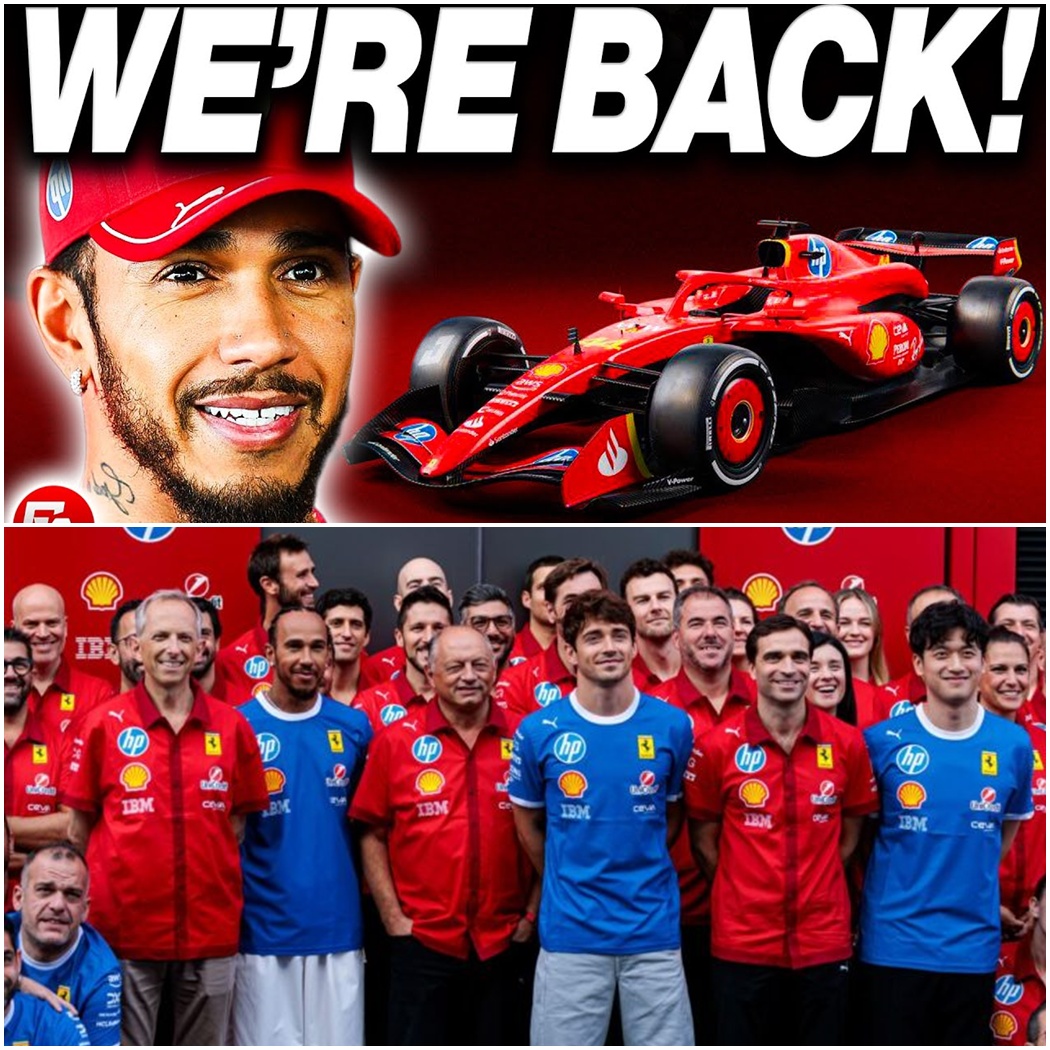
    Reports emerging from Italy suggest that the relationship between Hamilton and the Prancing Horse is straining under the weight of dashed expectations. More shockingly, whispers from the paddock indicate that Ferrari is not just looking for a solution to Hamilton’s struggles—they are already eyeing his replacement. And it’s not a seasoned veteran or a rival superstar. It is a 20-year-old homegrown sensation who has spent the last year proving he is ready to seize the throne.

    The Brutal Reality of the Stopwatch

    To understand why the panic button is being pressed so firmly in Maranello, one only needs to look at the scoreboard. The 2025 season was, by Hamilton’s own admission, a “nightmare.” For the first time in his illustrious career, the British legend completed a full season without standing on the top step of a Grand Prix podium. His solitary sprint race victory in China stands as a lonely beacon in a sea of mediocrity.

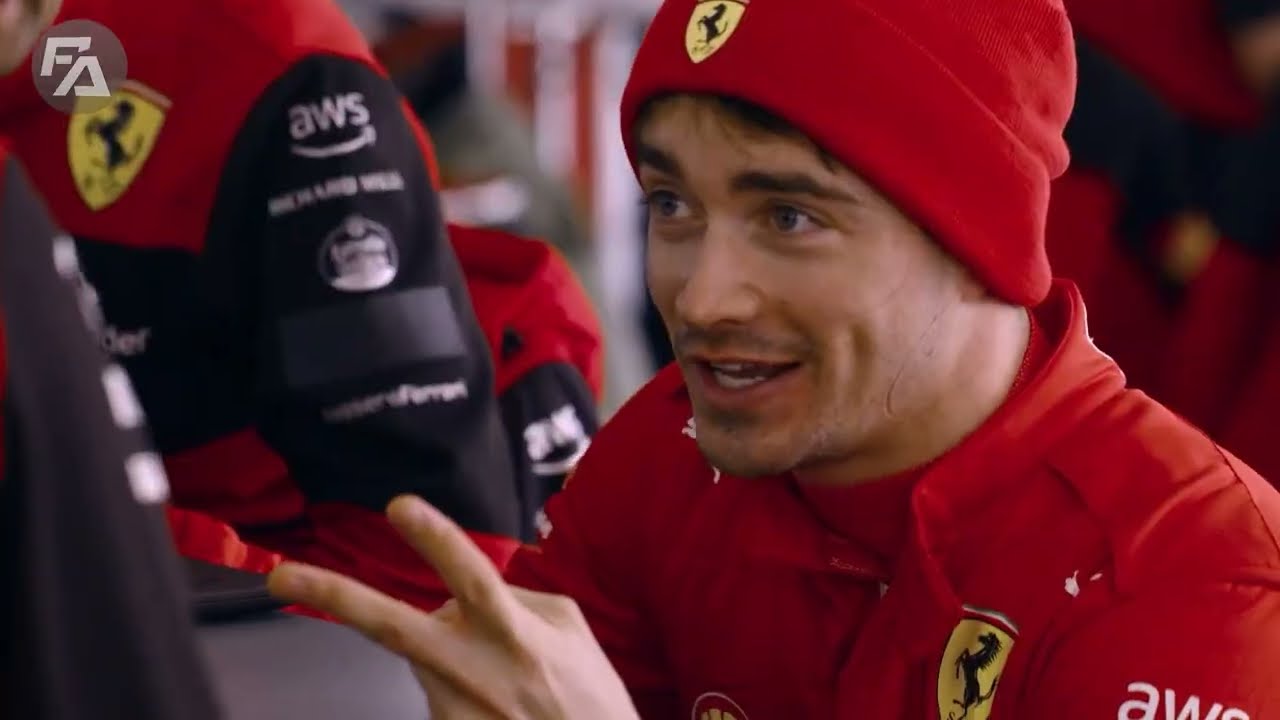
    Finishing a distant sixth in the Drivers’ Championship is one thing, but the internal battle is where reputations are truly forged or shattered. Charles Leclerc, driving the exact same machinery, ended the year with seven podiums and a staggering 86-point advantage over Hamilton. In the ruthless world of Formula 1, an 86-point gap to your teammate isn’t just a defeat; it’s a demolition.

    The performance deficit has sent the rumor mill into overdrive. While Team Principal Fred Vasseur has publicly attempted to calm the waters, stating, “We need to improve our collaboration with Lewis,” the silence behind closed doors is deafening. Sources inside Maranello suggest the strain is palpable. The car wasn’t perfect, yes, but Leclerc made it sing while Hamilton struggled to find the key.

    The Contract Bombshell vs. The Exit Strategy

    Until recently, the assumption was that Hamilton’s tenure was secure based on paper. Leaks from the respected German outlet Bild have revealed that Hamilton’s deal reportedly runs through the end of the 2027 season, with an option to extend to 2028. By that time, Hamilton would be 43 years old. The financial commitment from Ferrari is equally staggering, with a reported salary north of $55 million annually.

    However, in F1, contracts are often worth less than the paper they are printed on if the lap times don’t match the pay grade. Quiet whispers are growing louder that if the 2026 challenger isn’t an immediate front-runner, Hamilton could choose to walk away early, retiring at the end of this season rather than enduring another year of midfield obscurity.

    If that scenario unfolds—or if Ferrari decides to cut their losses—the team has a contingency plan that is rapidly becoming Plan A.

    Enter the Prodigy: Oliver Bearman

    Waiting in the wings is Oliver “Ollie” Bearman, the 20-year-old British sensation who has taken the F1 world by storm. A product of the Ferrari Driver Academy, Bearman represents the ideal future for the Scuderia: young, fast, and molded entirely within their system.

    Bearman’s rookie season in 2025 with Haas was nothing short of meteoric. While finishing 13th in the championship might not sound headline-grabbing to the casual observer, those in the know understand the magnitude of his achievement. Driving a midfield car, he scored 41 points and completely eclipsed his teammate, the Grand Prix winner Esteban Ocon.

    Bearman didn’t just learn; he evolved. He became the first Haas driver in history to score points in five consecutive races. But it was one specific Sunday in Mexico City that truly announced his arrival as a future world champion.

    The Mexican Masterclass

    If there was a moment that convinced the Ferrari brass that Bearman was ready, it was the Mexican Grand Prix. High altitude, low grip, and tire management critical—it is a circuit that punishes inexperience. Starting from ninth on the grid, Bearman drove a race that defied his age.

    He managed his tires with the touch of a veteran, executing a flawless strategy that saw him climb through the field. In the dying laps, he found himself in fourth place, with the Mercedes of George Russell breathing down his neck. The pressure was immense. A rookie in a Haas holding off a Mercedes is usually a short story.

    Instead, Bearman produced a defensive masterclass. Lap after lap, he placed his car exactly where it needed to be, making zero mistakes under withering pressure. He held off Russell to secure a P4 finish that felt like a victory. It was a drive defined by “race intelligence”—a quality that usually takes years to develop. Bearman showed he has it now.

    The Expert Verdict: “The Door Should Be Open”

    The hype around Bearman isn’t just fan speculation; it is backed by the most respected voices in the sport. Guenther Steiner, the former Haas boss known for his blunt honesty, didn’t hesitate when naming his Rookie of the Year.

    “For me, it’s Ollie Bearman,” Steiner said, noting how the young driver flipped a switch halfway through the season. “I think for him the door should be open to Ferrari for 2027… If Lewis hasn’t got the success he needs, I don’t think he continues. And then there is the obvious candidate.”

    But perhaps the most significant endorsement comes from Jock Clear. As the veteran engineer who headed the Ferrari Driver Academy and has worked with legends like Michael Schumacher, Jacques Villeneuve, and Hamilton himself, Clear knows exactly what a champion looks like.

    In a recent interview, when asked if Bearman could win at the highest level, Clear’s answer was chillingly confident: “At the moment, I see no reason why Ollie Bearman cannot become a World Champion.”

    Clear highlighted Bearman’s ceiling—or lack thereof. “With Ollie, I have not yet seen anything that makes me think he cannot make it.” For a man of Clear’s experience to speak with such certainty is rare. He pointed out that Bearman was “almost always just that little bit faster” than Ocon, proving he isn’t just beating weak opposition; he is outperforming established winners.

    A Homegrown Future

    The allure of Bearman for Ferrari goes beyond just speed. He represents a seamless transition. Unlike bringing in an external superstar like Max Verstappen or Lando Norris, there would be no culture shock with Bearman. He knows the team. He knows the systems. He speaks the language of Maranello.

    Pairing him with Charles Leclerc would create a lineup built entirely from within—a “super-team” of Ferrari Academy graduates. It would signal a long-term vision, a belief in their own pipeline, and a partnership that could dominate the next decade.

    The Clock is Ticking

    The pieces are falling into place with terrifying precision. Hamilton’s form is waning, his patience likely wearing thin. The “dream” is fading. Meanwhile, Bearman is ascending, endorsed by legends and proving his worth on the tarmac every race weekend.

    The question is no longer if Oliver Bearman will drive for Ferrari, but when. And if the whispers from Italy are true, the changing of the guard could happen much sooner than anyone expects. The 2026 season may well be Hamilton’s final lap, and waiting at the finish line is the 20-year-old who is ready to take the keys.

  • Enemies Within: The Most Explosive Teammate Rivalries and Crashes in Formula 1 History

    Enemies Within: The Most Explosive Teammate Rivalries and Crashes in Formula 1 History

    In the high-octane world of Formula 1, there is an old adage that every driver knows by heart: your teammate is your first rival. They are the only person on the grid driving the exact same machinery as you. If they beat you, there are no excuses—no blaming the engine, the aerodynamics, or the strategy. Because of this unique pressure cooker, the garage often transforms from a sanctuary of cooperation into a battlefield of psychological warfare and, occasionally, twisted metal.

    While fans tune in to see their favorite constructors battle for supremacy, the most electrifying drama invariably comes from within. When the camaraderie cracks and the visors go down, we have witnessed some of the most shocking moments in sporting history. From calculated revenge at 150 mph to radio meltdowns that echo through the ages, here is a deep dive into the times F1 teammates forgot the “team” part and chose violence instead.

    The Silver War: Hamilton vs. Rosberg

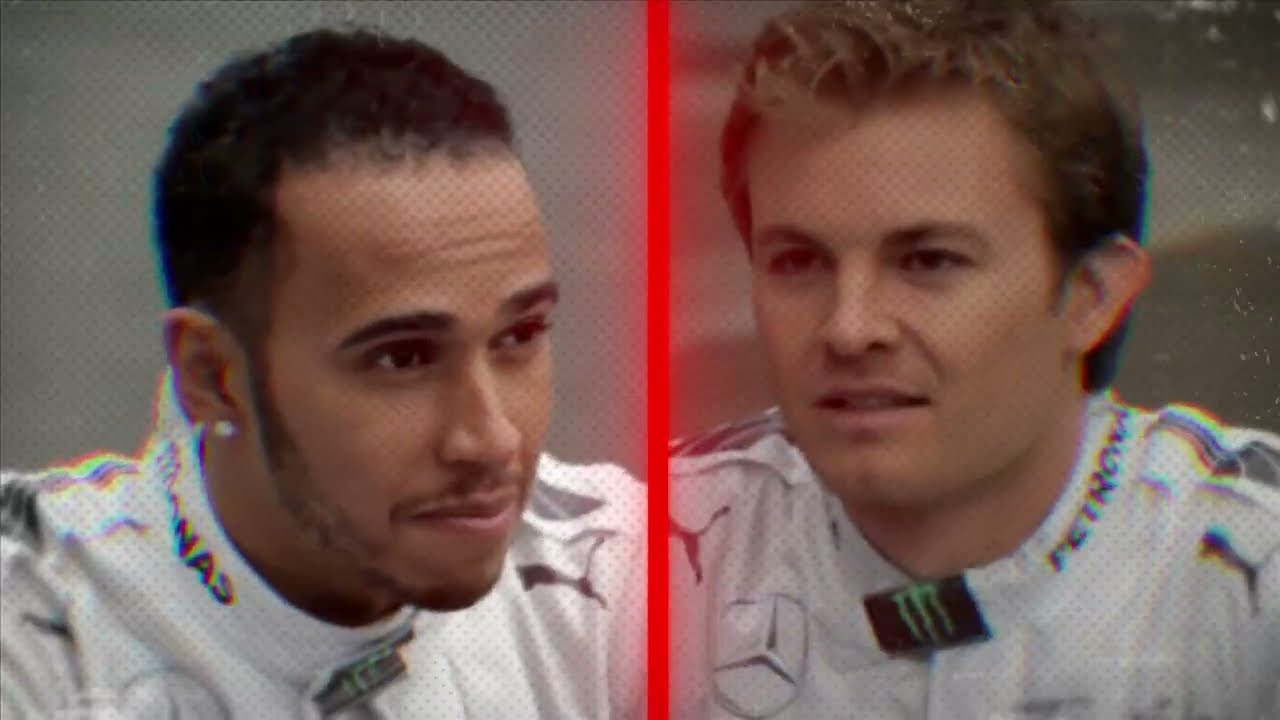
    Perhaps no modern rivalry captures the tragedy of broken friendship quite like the saga of Lewis Hamilton and Nico Rosberg. It is a story straight out of a Hollywood script: two childhood friends who grew up racing go-karts together, dreaming of one day dominating the pinnacle of motorsport, only to find themselves at each other’s throats when that dream finally came true.

    When Hamilton joined Mercedes in 2013, the tension was palpable but manageable. However, as the Silver Arrows began their era of dominance, the friendship disintegrated. The 2014 Bahrain Grand Prix gave us the “Duel in the Desert,” a breathtaking wheel-to-wheel battle that thrilled fans but sowed the seeds of distrust. Hamilton emerged victorious, but Rosberg was taking notes.

    The psychological games escalated rapidly. From “accidentally” locking up in Monaco qualifying to deny Hamilton a pole lap, to the infamous collision at Spa-Francorchamps where Rosberg’s front wing sliced Hamilton’s tire, the gloves were off. Rosberg allegedly admitted he did it “on purpose” to prove a point, a revelation that turned the Mercedes garage into a toxic wasteland.

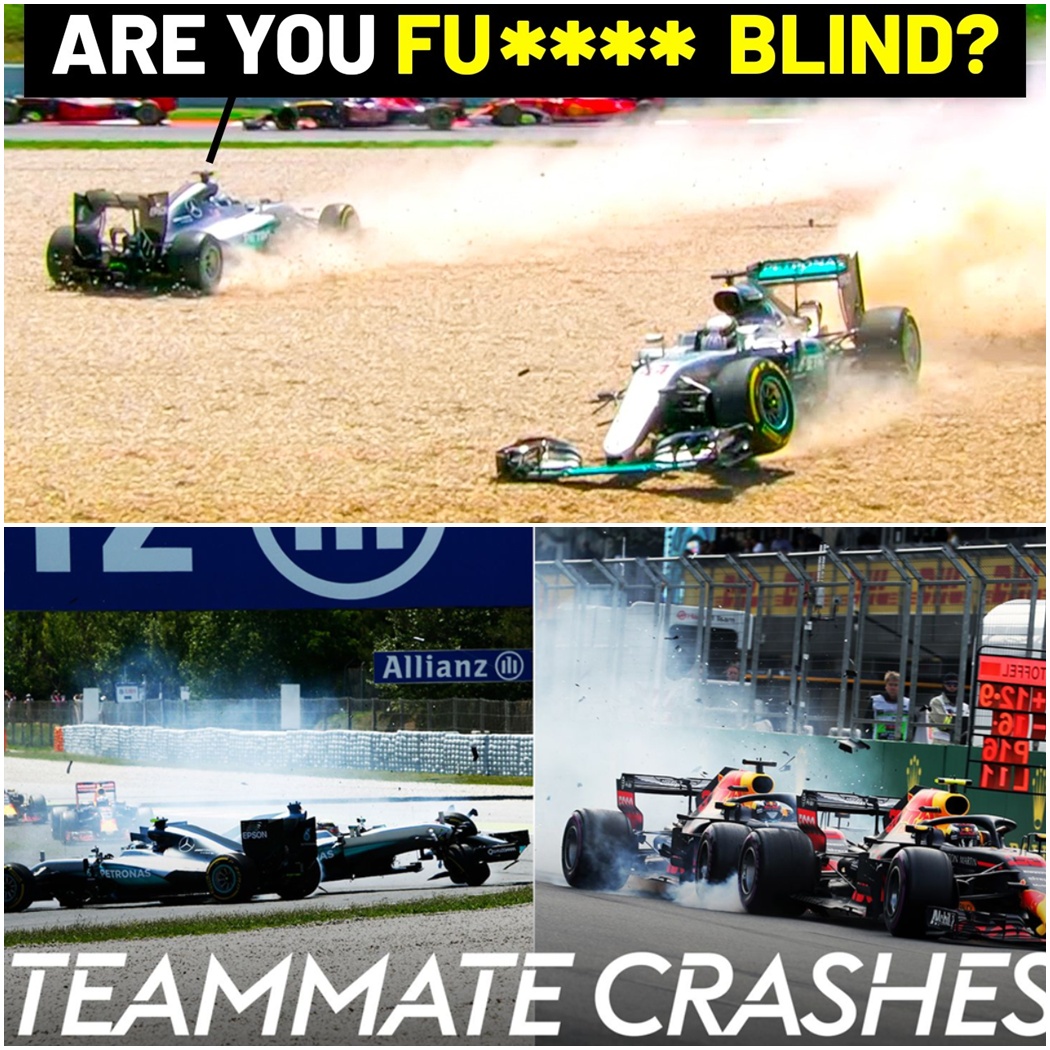
    But the defining image of their rivalry will always be the 2016 Spanish Grand Prix. On the very first lap, aggressive defending from Rosberg and an opportunistic lunge from Hamilton resulted in both Mercedes cars spinning helplessly into the gravel trap. It was a catastrophe for the team, but a spectacle for the world. The crash was inevitable—the physical manifestation of years of resentment. While Rosberg would eventually win the 2016 title and immediately retire, citing the immense mental toll needed to beat Hamilton, their battles remain the gold standard for modern F1 drama.
    The Civil War at Red Bull

    Long before the current era of Max Verstappen’s dominance, Red Bull Racing was the home of another volatile pairing: Sebastian Vettel and Mark Webber. On paper, they were a perfect mix of youthful speed and veteran experience. In reality, they were a ticking time bomb.

    The explosion happened at the 2010 Turkish Grand Prix. Driving down the back straight, Vettel attempted to pass Webber. It should have been a clean move, but a slight drift, a misjudgment, and suddenly the two dominant cars of the season were spinning out. Vettel’s gesture—twirling his finger around his ear to call Webber crazy—and his radio scream of “I’m going home!” showcased the raw, unfiltered anger of the moment.

    Yet, the most culturally significant moment of their rivalry wasn’t a crash, but a betrayal. The 2013 Malaysian Grand Prix gave us the term “Multi-21.” It was a coded instruction from the team: Car 2 (Webber) stays ahead of Car 1 (Vettel). The race was effectively over; they were meant to cruise to the finish. Vettel, driven by a ruthless hunger that defines champions, ignored the order. He attacked Webber, risking a double-DNF, and stole the win. The “Cold War” tension on the podium afterwards was thicker than tire smoke. It was a moment that proved Vettel would burn bridges to build his trophy cabinet.

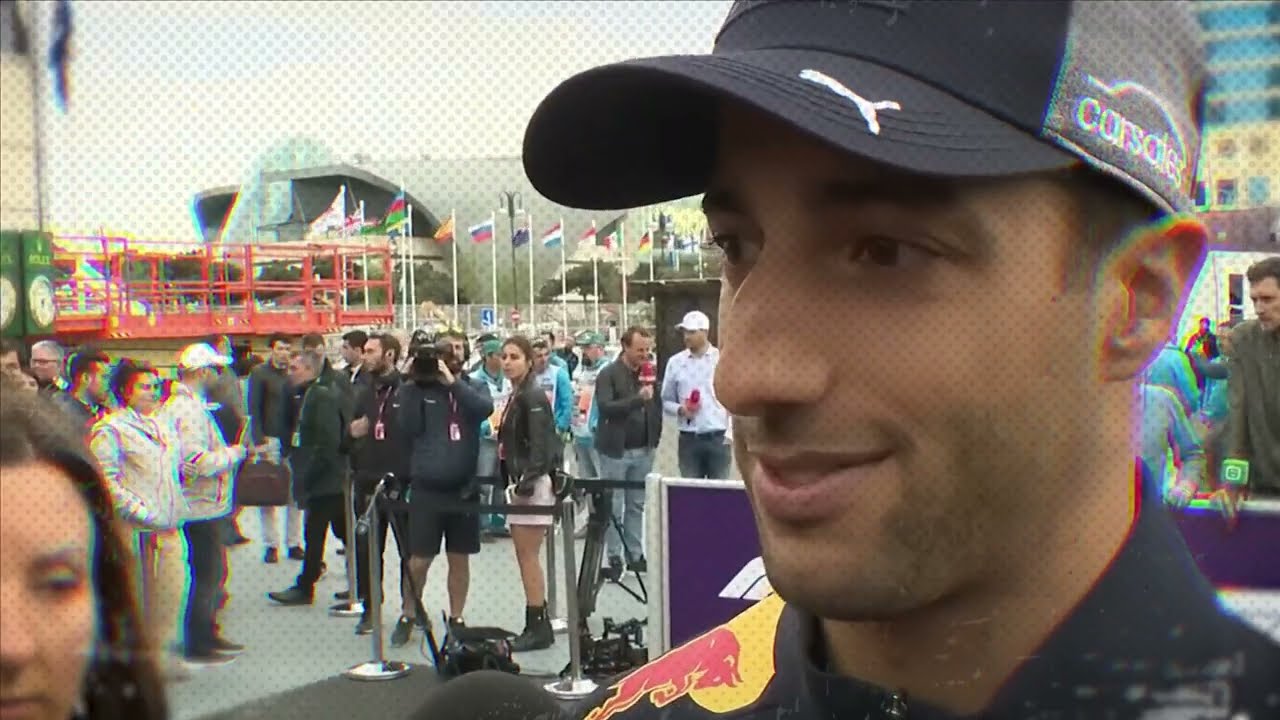
    Red Bull seems to attract this energy. Years later, a young Max Verstappen and Daniel Ricciardo found themselves in a similar spiral. The 2018 Azerbaijan Grand Prix in Baku remains one of the most violent teammate collisions in recent memory. After laps of aggressive dueling, Ricciardo threw a dummy move, Verstappen defended hard, and Ricciardo plowed into the back of his teammate at tremendous speed. That crash was a pivotal moment, arguably the catalyst that led Ricciardo to leave the Red Bull family, sensing the team was shifting its gravity entirely toward the Dutch prodigy.

    The Record Holder: Esteban Ocon

    While legends like Senna and Hamilton have had their specific nemeses, French driver Esteban Ocon has developed a reputation as a serial offender when it comes to teammate contact. His aggressive driving style often leaves no margin for error, and unfortunately, the cars he hits are frequently painted in his own team’s colors.

    His tenure at Force India alongside Sergio Perez was a masterclass in anxiety for their pit wall. In 2017 alone, they collided four times. At Spa, they touched twice in the same race, with carbon fiber flying and tires shredding. The team eventually had to ban them from racing each other, a humiliating order for professional drivers.

    But Ocon’s drama didn’t end there. At Alpine, his battles with Fernando Alonso were fierce, culminating in clashes in Brazil that left the Spaniard counting down the days until his contract expired. Even with Pierre Gasly, his compatriot and childhood acquaintance, the sparks flew almost immediately. The chaotic restart in Australia 2023 saw Ocon and Gasly obliterate each other’s cars against the wall, a disastrous end for the Alpine team. Whether it’s bad luck or a refusal to yield, Ocon’s track record adds a layer of suspense every time he gets near a sister car.

    The Gold Standard: Senna vs. Prost

    All modern rivalries, however, bow down to the kings of conflict: Ayrton Senna and Alain Prost. This was not just a sporting rivalry; it was a philosophical clash between two of the greatest drivers to ever live.

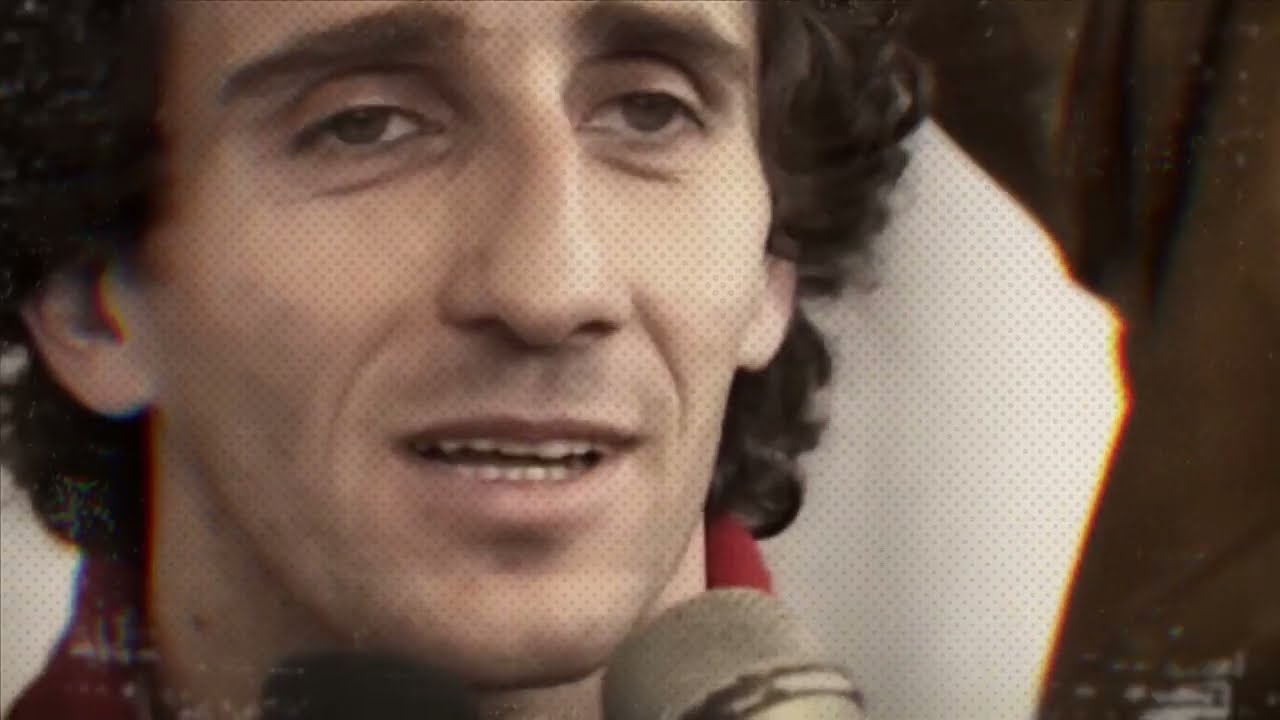
    Their time at McLaren imploded in 1989. A “gentleman’s agreement” at Imola not to overtake at the first corner was broken by Senna, leading to a total breakdown in trust. The season culminated in Suzuka, Japan, where they collided at the chicane. Prost retired on the spot; Senna continued but was controversially disqualified, handing the title to Prost. Senna felt robbed, believing the sport’s politics were rigged against him.

    He carried that rage into 1990. Returning to Suzuka, the scenario was simple: if Prost didn’t finish, Senna was champion. What followed was the most chilling moment in F1 history. At the start, as they barreled toward Turn 1 at 160 mph, Senna didn’t lift. He drove his McLaren straight into the rear of Prost’s Ferrari, sending both careening into the gravel and dust.

    It was a move of terrifying commitment. Senna later admitted that he had decided beforehand that if Prost got the jump on him, he would not make the corner. It was vengeance, pure and simple. Prost called him a “man without honor,” but Senna had the trophy. It reminds us that at the absolute limit of performance, the line between genius and madness isn’t just blurred—it’s erased completely.

    Conclusion

    Why do we love these crashes? It’s not just the spectacle of destruction. It’s because they reveal the human cost of ambition. In a sport dominated by data, telemetry, and corporate PR, a teammate crash is a moment of raw, unscripted emotion. It is the instant where the desire to win overrides logic, friendship, and even self-preservation.

    From Hamilton and Rosberg’s shattered friendship to Senna’s Machiavellian revenge, these moments remind us that Formula 1 is, at its heart, a gladiator sport. The cars may be technological marvels, but the people driving them are flawed, passionate, and dangerously competitive. And as long as there is a first-place trophy to fight for, teammates will continue to be the most dangerous enemies on the track.

  • The “Magic” Loophole: Did Mercedes and Red Bull Just Break F1 2026 Before It Started?

    The “Magic” Loophole: Did Mercedes and Red Bull Just Break F1 2026 Before It Started?

    The roar of the 2026 Formula 1 engines hasn’t even properly graced the track yet, but the paddock is already deafening with the sound of controversy. As the first chassis hit the tarmac in Barcelona for initial shakedowns, the sweet symphony of the new power units—featuring a beefed-up electric component alongside the combustion engine—was music to fans’ ears. They don’t scream like the V10s of old, but they sound good. However, beneath that sound lies a technical battle that threatens to tear the competitive order apart before the lights even go out.

    It appears the ghosts of 2014 are haunting the pit lane. Remember when Mercedes showed up with a hybrid engine so powerful they effectively locked out the championship for half a decade? Well, whispers in the paddock suggest we might be standing on the precipice of another era of dominance, but this time, it’s not just about who built the best engine—it’s about who found the smartest loophole.

    The “Transformer” Engine Trick

    At the heart of this brewing storm is a piece of engineering wizardry attributed to Mercedes and, presumably, Red Bull. The 2026 regulations were supposed to be simple and restrictive to attract newcomers like Audi. One key rule was reducing the engine’s compression ratio limit from 18:1 down to 16:1. In plain English, this limits how much the fuel-air mixture is squeezed before ignition, capping the power output to keep things fair.

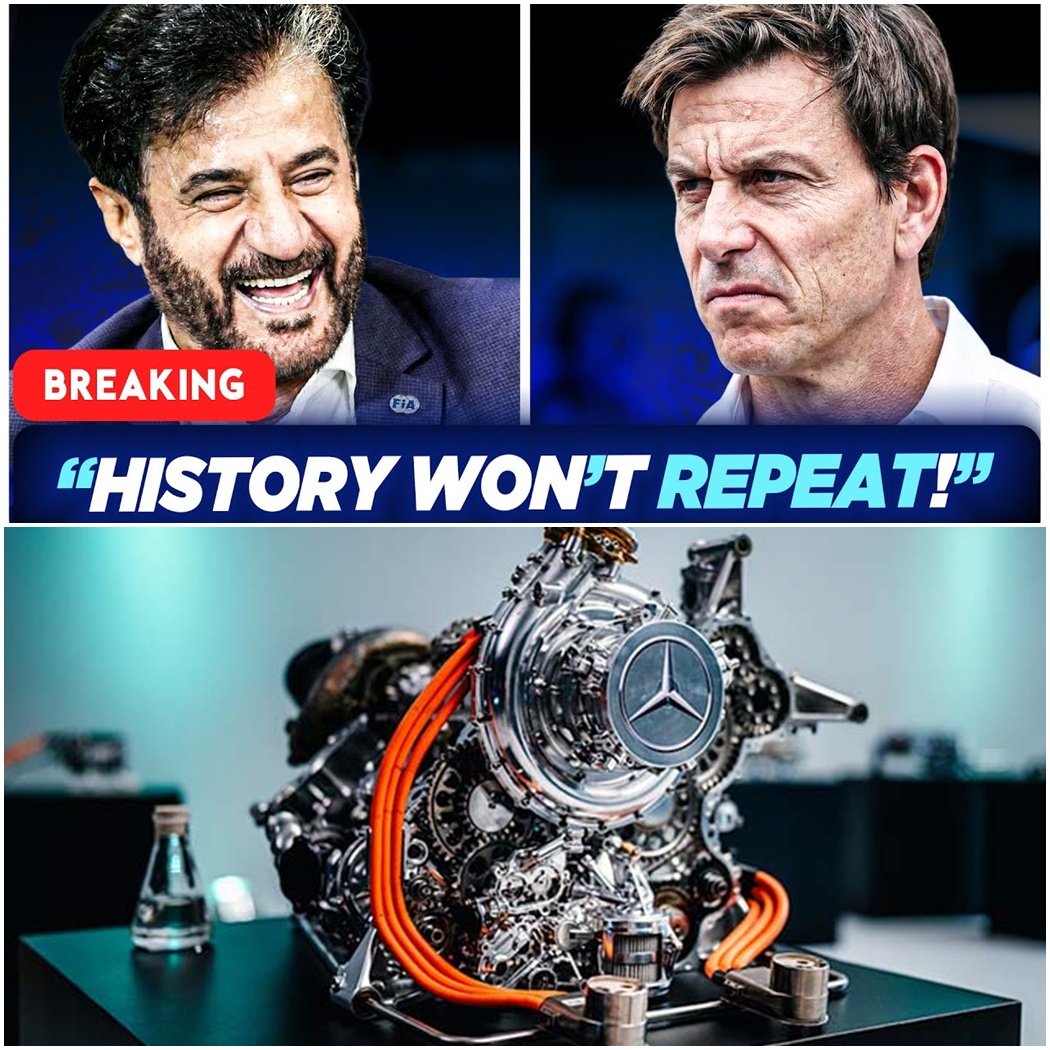
    But here is where the genius—or “cheating,” depending on who you ask—comes in. The rule states the engine must pass a static test at typical ambient temperatures. Rumor has it that Mercedes and Red Bull have developed cylinder heads using advanced materials that behave normally in the garage during inspection. However, once the car is screaming down the straight and engine temperatures soar, these materials allegedly expand.

    This thermal expansion effectively increases the compression ratio back up to 18:1 while the car is running. It’s a “flexi-wing” for the engine—legal when measured by the FIA with a ruler in the pit lane, but a completely different beast out on the track. The result? A potential “free” 15 horsepower advantage that their rivals simply do not have.

    The Rivals Revolt

    Naturally, the rest of the grid is not amused. Audi, Ferrari, and Honda are leading the charge against this interpretation of the rules. Their argument is grounded in Article C 1.5 of the regulations, which broadly states that cars must comply with the rules “at all times” during the competition, not just when parked in the garage.

    Imagine playing a game of soccer where your shoes grow springs the moment the referee looks away. That’s essentially the argument the rival manufacturers are making. They claim that if the regulation says 16:1, it should mean 16:1 always. If Mercedes and Red Bull are allowed to run effectively at 18:1, the playing field is tilted before the first kickoff.

    The frustration is palpable. Developing these “expanding” materials isn’t something you can do overnight. It requires months of R&D, testing, and validation on dynos. If Ferrari and Audi haven’t started this path yet, they are months behind. They can’t just bolt on a fix; engine components are the heart of the car’s reliability. A rushed job could lead to catastrophic failures.

    The FIA’s Dilemma

    The governing body, the FIA, finds itself between a rock and a hard place. They have a Technical Commission meeting scheduled for January 22nd, just days before the official winter testing in Barcelona kicks off. The timing couldn’t be worse.

    If the FIA bans the loophole now, they punish the teams that arguably read the rulebook more cleverly (and invested millions doing so). If they let it slide, they risk alienating new manufacturers like Audi and potentially handing the championship to one or two teams on a silver platter.

    Current signs point to the FIA sticking to the existing text for now. Changing complex technical regulations weeks before the season is a logistical nightmare. The likely outcome? The loophole stays for the start of 2026, with a promise to tighten the wording for 2027. It’s a classic F1 compromise: “You got us this time, but don’t do it next year.”

    Ferrari’s Heavy Metal Gamble

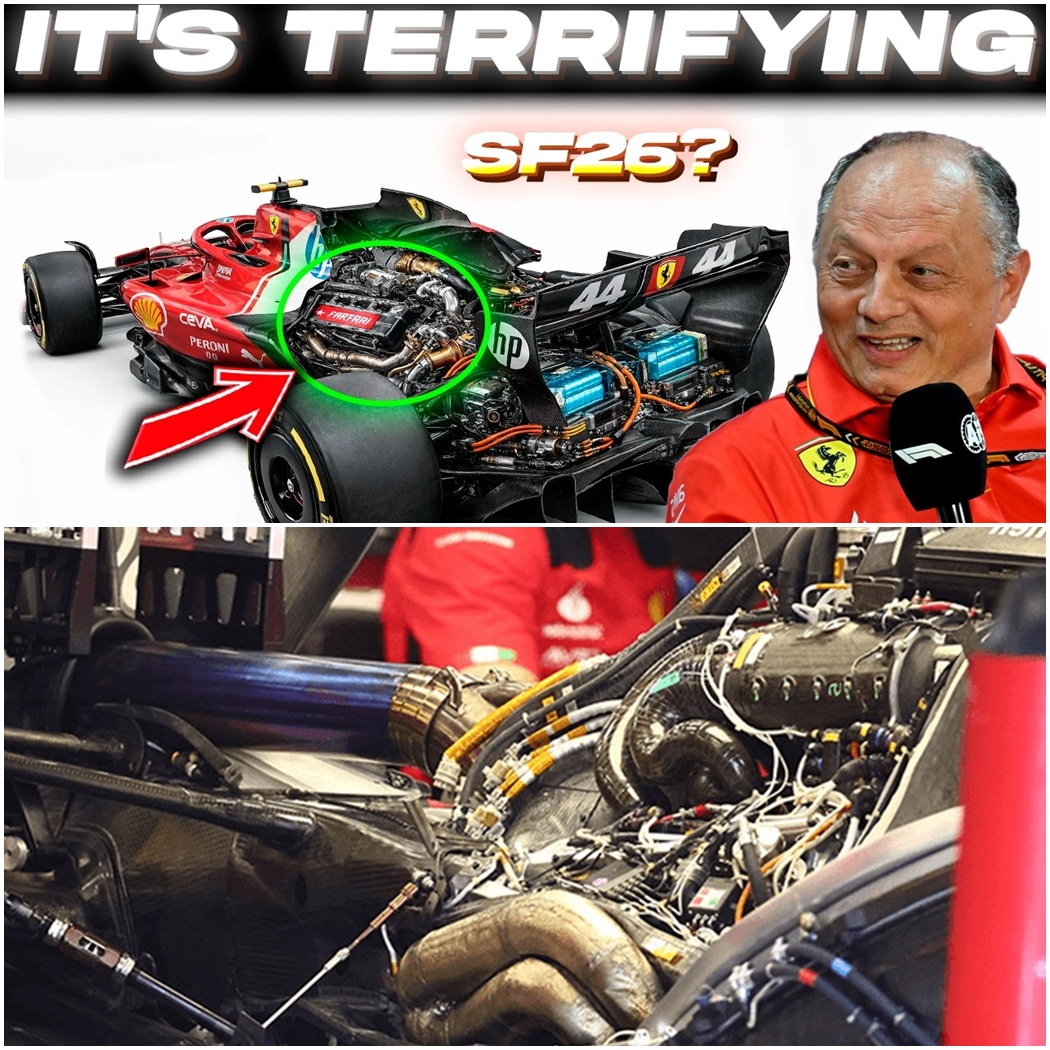
    While Mercedes plays 4D chess with expanding metals, Ferrari has taken a completely different, almost retro approach. Having seemingly missed the expansion loophole, the Scuderia has reportedly opted for steel alloy cylinder heads instead of the traditional aluminum.

    On paper, this sounds insane. Steel is heavy, and in F1, weight is the enemy—especially when it’s placed high up in the engine, raising the center of gravity and hurting the car’s handling. But Ferrari’s engineers aren’t amateurs. The new 2026 engines run at incredibly high pressures and temperatures. Steel is stronger and, crucially, has lower thermal conductivity. This means it keeps more heat energy inside the combustion chamber rather than letting it escape, leading to better thermal efficiency.

    Ferrari is betting that this efficiency gain, combined with clever packaging to keep the rest of the engine low, will offset the weight penalty. It’s a bold engineering divergence. We are looking at a season where different teams have fundamentally different philosophies on how to build power—a treat for tech nerds, but a headache for the drivers if one philosophy turns out to be a dud.

    The Safety Net

    For fans terrified of another snooze-fest where one car wins every race by 30 seconds, there is a glimmer of hope. The 2026 regulations include a “catch-up” mechanism. The FIA will monitor engine performance in three phases over the season. If a manufacturer falls 2-4% behind the leaders, they get extra development time. If they are more than 4% behind, they get even more upgrades.

    This system is designed to prevent a structural disadvantage from locking in for years. So, even if the “Mercedes Loophole” yields a super-engine in Round 1, the rules are designed to help Ferrari and Audi claw that performance back faster than they could in the past.

    The Verdict

    As we head into the Barcelona tests, the tension is thicker than tire smoke. We have secret tech, angry rivals, a hesitant referee, and a field split by radically different designs. The 2026 season was meant to be a fresh start, but it’s shaping up to be an old-fashioned street fight. Whether the “magic” cylinder heads are banned or copied, one thing is certain: the race has already started, and it’s happening in the meeting rooms, not just on the track.

  • Ferrari’s “Project 678” Revolution: The Steel Heart That Could Redefine Formula 1 Dominance in 2026

    Ferrari’s “Project 678” Revolution: The Steel Heart That Could Redefine Formula 1 Dominance in 2026

    In the high-octane world of Formula 1, where secrecy is currency and innovation is the ultimate weapon, Ferrari has just dropped a bombshell that has the entire paddock buzzing. As the sport hurtles towards the massive regulatory overhaul of 2026, the team from Maranello has signaled that they are not merely adapting to the new era—they are intending to conquer it with a radical departure from conventional wisdom.

    The buzz surrounds “Project 678,” a codename that is quickly becoming synonymous with engineering audacity. For decades, the unwritten rule of F1 engine design has been simple: lighten, simplify, and reduce. Aluminum has been the undisputed king of materials, prized for its low density and thermal conductivity. But Ferrari, in a move that can only be described as a calculated rebellion, has decided to shatter this tradition.

    The Steel Gamble: Breaking the Unwritten Rules

    At the core of this revolution is a decision that, at first glance, seems to defy the very physics of racing: Ferrari is switching from aluminum to steel for their engine cylinder heads. In a sport where every gram is shaved off with obsessive precision, voluntarily choosing a heavier, denser material sounds like madness. However, this is not a blunder; it is a masterstroke of reading the fine print of the 2026 regulations.

    The upcoming rules have increased the minimum weight of the power unit significantly, from 120 kg to 150 kg. To the casual observer, this is just a regulatory adjustment. To Ferrari’s engineers, it was a blank check. They realized that the obsession with “lightness” was no longer the primary constraint. Instead of focusing on saving weight, they pivoted to a new metric: controlling heat and pressure.

    Steel is robust. It is resistant. It can withstand extreme temperatures and pressures that would warp aluminum. By utilizing the extra weight allowance to implement steel components, Ferrari is aiming to run their combustion chambers at pressures never before seen in the sport. This is crucial because, in 2026, the MGU-H (the system that recovers heat energy from the turbo) is being banned. Efficiency must now come purely from the combustion process and the kinetic recovery system. Every percentage point of thermal efficiency extracted from the fuel is gold, and steel provides the structural integrity to mine that gold.

    A Partnership for Power: The AVL Connection

    This wasn’t an overnight epiphany. For four months, Maranello engineers ran parallel programs, developing a traditional aluminum version alongside the experimental steel concept. To ensure the success of the latter, they partnered with AVL, an Austrian firm and a global leader in hybrid technology development. Together, they tackled the “Achilles’ heel” of steel: its durability under sustained thermal stress.

    The result of this collaboration is an engine that is not just stronger, but smarter. The ability to handle higher combustion pressures improves the overall energy efficiency of the system. In a world without the MGU-H, the thermal unit must do more heavy lifting, integrating seamlessly with a vastly more powerful electrical side.

    The Hybrid Monster: Unleashing 350 kW

    The numbers surrounding the electrical component of the 2026 power unit are staggering. The MGU-K (Motor Generator Unit – Kinetic) will see its output nearly triple, jumping from the current 120 kW to a massive 350 kW. This means that nearly half of the car’s total power will be derived from the electrical system.

    Ferrari’s Project 678 is designed as an ecosystem to support this shift. The robustness of the steel engine allows it to work in perfect synergy with this high-voltage demand. Maranello has developed a new high-density battery that is lighter and more compact, with optimized charge and discharge cycles. The goal is not just raw speed on the straights, but a holistic power delivery that provides optimal traction out of slow corners and stability at high speeds.

    Aerodynamics and the “Invisible” Advantage

    One of the most fascinating aspects of this new engine architecture is how it affects the rest of the car, specifically the aerodynamics. You might wonder, how does a heavier engine help aerodynamics? The answer lies in heat dissipation.

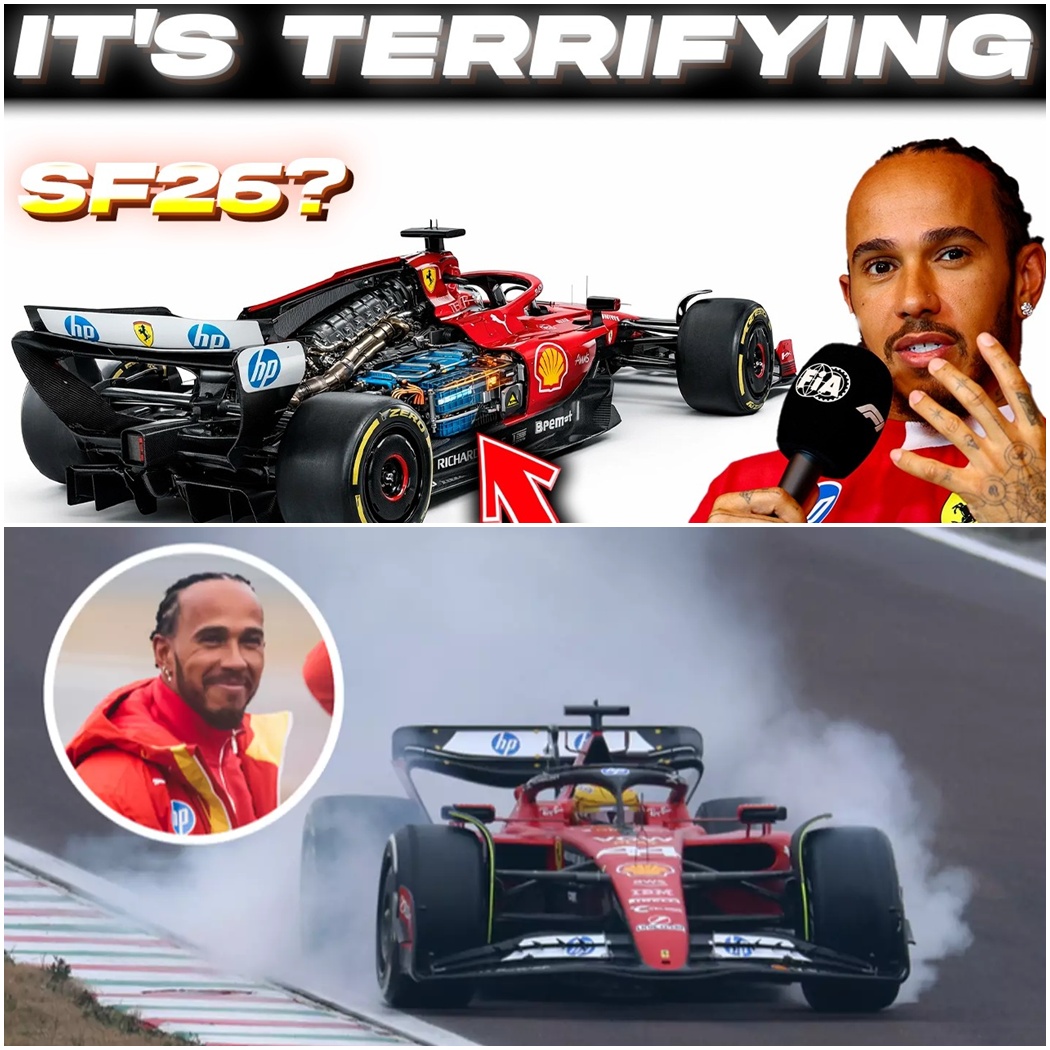
    Because steel handles heat so effectively, Ferrari has been able to redesign the cooling system completely. They have reduced the volume of the radiators without sacrificing cooling capacity. This “shrinking” of the internal components has allowed the aerodynamicists to package the rear of the car much tighter. The result is the concept for the SF26: a car with a more stylized, lower, and aerodynamically effective rear end.

    This domino effect continues into the suspension. For the first time since 2010, Ferrari is implementing push-rod suspension on both axles. This isn’t a decorative choice; it clears up space at the bottom of the car, allowing for better channeling of airflow toward the diffuser. In the modern ground-effect era, maximizing underfloor airflow is critical, and the engine’s compact nature has given the chassis designers the freedom to pursue this aggressive setup.

    Months Ahead of the Pack

    Perhaps the most terrifying detail for rival teams like Red Bull and Mercedes is the timeline. While other teams are reportedly still evaluating different configurations and running early simulations, Ferrari has already tested Project 678 on the bench in its final race specification.

    This is not a prototype. This is not a concept. This is the engine they intend to put in the car.

    Being months ahead in development allows Ferrari to refine reliability and mapping long before others have even finalized their hardware. It is a statement of intent. Ferrari is tired of playing catch-up. They are tired of adapting to other people’s innovations. This time, they want to be the ones redefining the parameters of the sport.

    A War of Concepts

    What we are witnessing is the birth of a new “war of concepts.” The 2026 season will not just be a driver’s championship; it will be a battle of engineering philosophies. On one side, the traditionalists who may stick to lighter materials and conventional designs. On the other, Ferrari, waving a red flag of rebellion with a piece of steel that symbolizes a new era of “heavy” tech.

    If Project 678 works as intended, it will force the entire grid to scramble and copy the design—a process that takes years. Ferrari is betting that by the time their rivals understand the genius of the “steel heart,” the prancing horse will already be galloping into the distance with the championship trophy.

    This is more than just an engine; it is a declaration. Ferrari is telling the world that the future of Formula 1 doesn’t belong to those who follow the rules, but to those who are brave enough to rewrite them. The 2026 season may still be a year away, but make no mistake: the race has already begun, and Ferrari is currently in pole position.

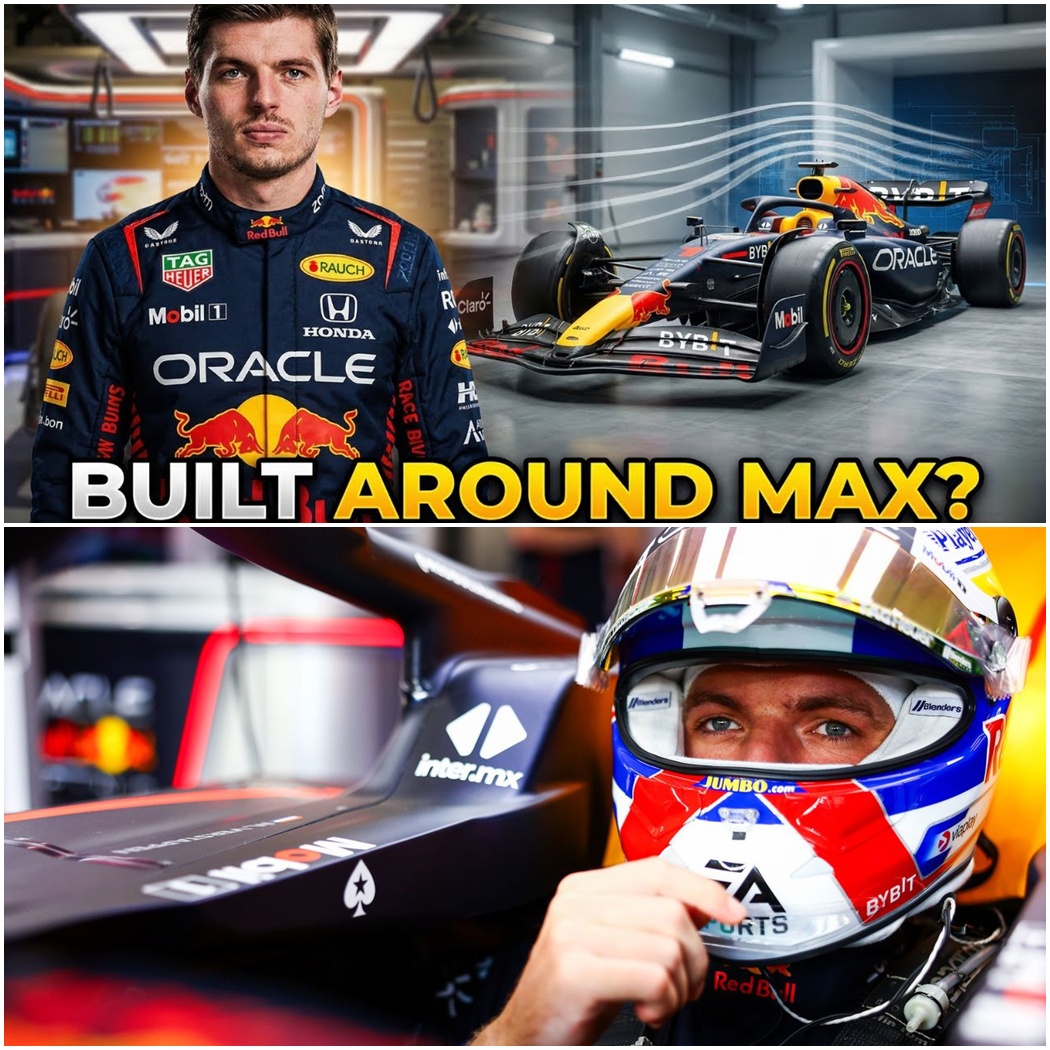
  • The Dangerous Gamble: Why Red Bull’s Ruthless Engineering Strategy Is Built to Break Everyone But Max Verstappen

    The Dangerous Gamble: Why Red Bull’s Ruthless Engineering Strategy Is Built to Break Everyone But Max Verstappen

    In the high-stakes world of Formula 1, there is a polite fiction that teams strive to build the most balanced, drivable car possible—a machine that any world-class pilot can step into and push to the limit. We like to believe that the car is a neutral canvas and the driver is the artist. But at Red Bull Racing, that philosophy died a long time ago. The Milton Keynes outfit has quietly stopped building neutral race cars, shifting instead toward a design doctrine that is far more dangerous for the rest of the grid and devastating for anyone brave enough to sit in the second seat.

    The uncomfortable reality, one that is rarely admitted out loud in the paddock, is that every major design decision, every aerodynamic concept, and every razor-thin setup window on the modern Red Bull car points back to a single name: Max Verstappen. Once you understand the mechanics of this strategy, you begin to see why so many talented drivers—from Pierre Gasly to Alex Albon and Sergio Perez—have looked pedestrian in championship-winning machinery. It is not that they forgot how to drive; it is that they are trying to tame a beast that was bred for someone else.

    The End of Balance and the Rise of Leverage

    For decades, the holy grail of race car engineering was “drivability.” A compliant car gave a driver confidence, and confidence meant speed. But in the modern cost-cap era, where teams cannot simply spend their way out of a deficit, Red Bull has realized that balance is overrated. They have traded balance for leverage.

    The smartest advantage in today’s F1 isn’t just a clever suspension trick or a double diffuser; it is building a car that unlocks a theoretical performance ceiling that only one human being on the planet can reach. By 2023, it became clear that Verstappen wasn’t just winning; he was dismantling traditional performance models. He won on tracks that should have favored Ferrari, in conditions that exposed chassis instability, and in scenarios where his teammates couldn’t even stay within half a second of his lap times.

    This performance disparity forced Red Bull to ask a ruthless question: Why waste resources making the car easier to drive for the second driver when making it “harder” makes it faster for the lead driver? Formula 1 rewards results, not fairness. If one driver can extract absolute dominance from a car that actively punishes everyone else, the logical, albeit cold, decision is to stop diluting that concept.

    The Neurological Advantage: Chaos vs. Predictability

    To understand why the Red Bull car is so difficult for others, you have to look at how Max Verstappen drives. His style is distinct and arguably neurological. Max prefers an incredibly sharp front end—a car that darts into a corner the instant he breathes on the steering wheel. To get that responsiveness at the front, you often have to sacrifice stability at the rear.

    Most drivers need a planted rear end to feel confident committing to a high-speed corner. They need to know the back of the car will stick. Verstappen, however, is comfortable—even happy—with a rear end that feels loose or “on edge.” Telemetry data shows he applies throttle earlier than almost anyone else, often before the car has fully settled. He is correcting micro-slides at 200 mph, using the instability to rotate the car faster.

    For a driver like Sergio Perez, who relies on rear stability to manage his tires and carry speed, this trait is a nightmare. When the rear becomes light, Perez loses confidence and bleeds time. For Verstappen, that looseness is a tool. He uses it to point the car exactly where he wants it. Red Bull’s engineers, led by the legendary Adrian Newey and Pierre Waché, leaned into this. They stopped trying to fix the instability and started optimizing it, creating a feedback loop that weaponized Max’s unique reflexes.

    The Teammate Trap

    This philosophy explains the “curse” of the second Red Bull seat. It creates an invisible trap for any teammate. When a driver like Alex Albon says the car felt like it was “trying to spit you out,” he isn’t exaggerating. The setup window on these cars is incredibly narrow. If you miss it, the lap time collapses.

    Drivers like Gasly and Albon arrived at Red Bull with stellar reputations, only to look lost. They found themselves fighting the car on entry, terrified the rear would snap on them. Meanwhile, in the same garage, Verstappen was complaining that the front wasn’t sharp enough. The car demands a level of precision and a specific driving style that simply cannot be taught. You cannot teach a driver to be comfortable with the sensation of crashing; they either have the instinct for it, or they don’t.

    This doesn’t mean Red Bull is anti-teammate. It means they are pro-winning. They have accepted that optimizing the car for their best driver yields more points than compromising the design to make it accessible to both. It is a brutal calculation, but the trophy cabinet proves it works.

    The 2026 Threat: Doubling Down on Difficulty

    If the current situation seems grim for Verstappen’s rivals, the horizon looks even darker. The upcoming 2026 regulations are set to introduce a new era of power units with a 50/50 split between internal combustion and electric power. These cars will have less downforce and require significantly more driver input to manage energy deployment and throttle application.

    The 2026 rules will reward drivers who can modulate power delivery mid-corner without destabilizing the car—drivers who know exactly when to lift, when to coast, and when to commit despite having only partial grip. This description fits Max Verstappen disturbingly well.

    His throttle traces are already smoother and more decisive than his peers. While others hesitate to avoid wheelspin, Max rides the limit of traction with robotic consistency. If Red Bull builds their 2026 challenger to amplify these traits rather than suppress them, they could unlock a level of dominance that makes the current era look competitive. The new rules demand “throttle discipline,” a skill that is effectively Max’s superpower.

    The Ultimate Risk

    However, this strategy is not without peril. Designing an entire engineering philosophy around the instincts of one man creates a massive point of failure. If Verstappen were to retire, switch teams, or suffer an injury, the Red Bull system risks immediate collapse. They would be left with a car that is theoretically the fastest on the grid but practically undrivable for anyone else.

    Mercedes learned a similar lesson when they chased aerodynamic theory over driver feel, and Ferrari has spent years oscillating between philosophies. Red Bull is making a calculated gamble that Verstappen’s ceiling is high enough to withstand any regulation change. So far, they have been right.

    As we look toward the future, the rest of the grid isn’t just chasing a faster car; they are chasing a symbiosis between man and machine that is nearly impossible to replicate. Red Bull has stopped trying to build a car that anyone can win with, and in doing so, they have redefined what it means to be a team in Formula 1. It is no longer about two drivers fighting for glory; it is about one driver and a machine built solely to serve his will.

    Conclusion

    The narrative of “fairness” in sport is compelling, but Formula 1 has never been fair. It is an engineering war, and Red Bull has found the ultimate weapon. By sacrificing the performance of the second car to maximize the potential of the first, they have created a dynasty. Whether you view this as a stroke of genius or a cynical sabotage of the second driver, one thing is undeniable: it is working. And as 2026 approaches, the team seems ready to push this “dangerous” philosophy even further, challenging the world to catch a driver who is quite literally in a league—and a car—of his own.

  • Panic in the Paddock? Why F1’s “Cowardly” Blackout of the 2026 Test Proves Teams Are Terrified of Failure

    Panic in the Paddock? Why F1’s “Cowardly” Blackout of the 2026 Test Proves Teams Are Terrified of Failure

    The anticipation for the 2026 Formula 1 season is palpable. It is not just another year; it is the dawn of a completely new era. We are talking about brand new cars, a radical overhaul of engine regulations featuring a 50-50 split between internal combustion and electric power, the introduction of sustainable fuels, and the historic entry of Cadillac as the grid’s eleventh team. The hype machine has been in overdrive, promising a revolution that redefines the pinnacle of motorsport. Yet, in a move that feels bafflingly archaic and deeply disappointing, the powers that be have decided to pull the plug on the fans.

    In a shocking development that has sent ripples of frustration through the motorsport community, F1’s first on-track session of this brave new world will take place in total darkness. The first test at the Circuit de Barcelona-Catalunya in late January 2026—the moment these engineering marvels finally roar into life together—will be kept almost completely private. No live TV, no media circus, no fans in the grandstands. Just empty seats and nervous engineers.

    The Great Barcelona Blackout

    For five days at the end of January, specifically from Monday the 26th to Friday the 30th, the Barcelona circuit will effectively become a fortress. While all 11 teams will be present to run their machines for a maximum of three days, the gates will be barred to the outside world. This isn’t just a case of limited tickets; it is a total media blackout.
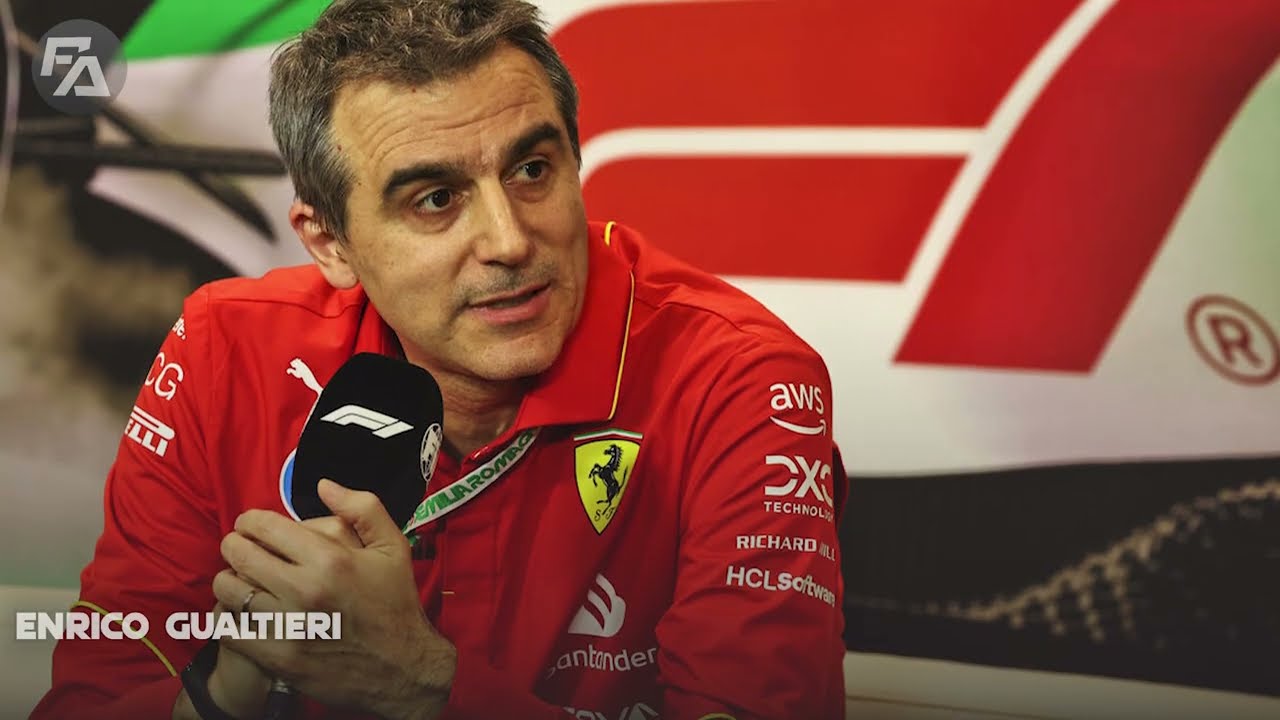
    This decision stands in stark contrast to the modern identity of Formula 1. Under Liberty Media, the sport has exploded in popularity precisely because it opened its doors. Through Drive to Survive and an aggressive social media strategy, F1 transformed from a secretive, exclusive club into a global entertainment juggernaut that thrives on access, drama, and narrative. To suddenly revert to the secrecy of the past feels like a massive step backward.

    The blackout means that when the first Cadillac F1 car rolls out of the garage, or when the new Ferrari engine fires up in anger, no one outside the immediate team personnel will be there to witness it. We are being denied the sights and sounds of a generation-defining shift. There will be no analysis of who looks fast, no recordings of the new engine notes, and no visual confirmation of who has nailed the aerodynamics and who has failed miserably.

    Fear of the Unknown: The Ghost of 2014

    So, why the secrecy? Why would a sport that monetizes every second of action choose to hide its most intriguing moment? The answer, it seems, is fear.

    The teams are reportedly terrified of embarrassment. The 2026 regulations represent a technical challenge of immense magnitude. The complexity of the new power units, which rely heavily on electrical energy, combined with the challenge of meeting reduced weight targets, has created a pressure cooker environment in the factories. There is a genuine belief among the teams that the first few days of running will be a disaster of reliability issues, stoppages, and slow laps.

    They are haunted by the ghosts of 2014. Long-time fans will remember the last time F1 underwent such a drastic engine regulation change. The first test at Jerez in 2014 was, frankly, a catastrophe for many. The complex new turbo-hybrid engines were fragile and temperamental. On the very first day, the entire grid managed a pitiful combined total of 93 laps.

    McLaren didn’t even make it out of the garage. Red Bull, the reigning champions at the time, managed just three slow laps as their Renault engine refused to cooperate. Lewis Hamilton, piloting the Mercedes, managed only 18 laps before a front wing failure sent him into the wall at Turn 1. It was a chaotic, messy, and visually underwhelming start to the hybrid era.

    The teams look back on that week as a PR disaster. They believe that broadcasting cars breaking down, mechanics frantically working behind screens, and silence on the track paints the sport in a bad light. They want to do their “dirty laundry” in private, ironing out the glitches without the world watching and judging. They want to present a polished product to the public, not the messy process of innovation.

    A Missed Opportunity for Drama

    However, this logic is fundamentally flawed. By hiding the struggle, F1 is sanitizing the very thing that makes it impressive. Formula 1 is supposed to be hard. It is supposed to be the ultimate engineering challenge. When fans see a car break down, they don’t think “this sport is a joke”; they realize “wow, this technology is incredibly difficult to master.”

    The struggle is part of the story. The narrative of a team overcoming early disasters to win races—like Red Bull eventually did after their 2014 nightmare—is compelling. By sanitizing the preseason, by only showing us the cars when they are running perfectly, the teams are robbing the fans of the human element of the sport. We want to see the panic, the problem-solving, and the triumph over adversity.

    Furthermore, the idea that a “bad” test destroys the sport’s image is nonsense. Despite the shambolic start in 2014, 15 cars finished the first race in Australia. The teams are brilliant; they fix things quickly. There is no reason to believe they couldn’t handle the scrutiny of a difficult first test in 2026. If anything, seeing the “world’s best engineers” sweat a little makes them more relatable.

    The “Cowardly” Approach to Innovation

    Critics have rightly labeled this move as “cowardly.” It suggests a fragility in the teams’ egos, a need to control the message so tightly that they cannot tolerate a single negative headline. It reflects a corporate culture obsessed with perfectionism rather than authenticity.

    There is also the rumor that one manufacturer—likely Mercedes—is already miles ahead with their 2026 engine development, while others are lagging. Perhaps the secrecy is also a way to protect the laggards from immediate stock market fluctuations or sponsor backlash. But again, this is short-sighted.

    In the vacuum of information, speculation will run wild. If a team doesn’t release footage, fans will assume the worst. Leaks are inevitable in the digital age. Grainy photos from drones or perimeter fences will surface, and without official context, the rumors will likely be far more damaging than the reality. If a car is hidden away, the narrative won’t be “they are testing quietly”; it will be “they are in crisis.”

    The Definition of Insanity

    What makes this decision even more frustrating is the inconsistency. We have seen this movie before. In 2022, when the current ground-effect cars were introduced, F1 tried a “shakedown” approach in Barcelona that was less covered than the official Bahrain test. But even then, media were allowed in. We could still read reports, see photos, and follow the lap times.

    To go from that to a near-total lockdown is an overcorrection. It treats the fans as a nuisance rather than the lifeblood of the sport. It tells us that the teams prioritize their own comfort over our engagement.

    This “secret” test in Spain is a massive missed opportunity to build hype. Imagine the global attention if the world could watch the first Cadillac F1 car struggle to leave the pit lane, or hear the new engine note of the Audi. It would dominate social media for a week. Instead, we get silence.

    Conclusion: A Bad Precedent

    Ultimately, this decision short-changes everyone. It denies the fans the content they crave. It denies the media the chance to tell the story of the sport’s technical evolution. And frankly, it denies the teams the chance to show off their hard work.

    F1 is not just about the Sunday race; it is about the journey to get there. By cutting out the first chapter of the 2026 story, the sport is making itself smaller, less exciting, and less human. We can only hope that when the “official” test happens in Bahrain later in the year, the cars are ready, and the teams are finally brave enough to let us watch. Until then, we are left in the dark, wondering what exactly is happening behind the closed doors of Barcelona.

  • Hamilton’s Redemption? Inside Ferrari’s “Project 678” and the Revolutionary Steel Engine That Could Deliver the Eighth Title

    Hamilton’s Redemption? Inside Ferrari’s “Project 678” and the Revolutionary Steel Engine That Could Deliver the Eighth Title

    For Lewis Hamilton, the 2025 Formula 1 season was not just a disappointment; it was an abyss. It was a year characterized by a car that refused to cooperate, a strategy that often faltered, and the haunting silence of a podium absence that lasted an entire calendar year. Critics whispered that the seven-time world champion had made a fatal error in leaving Mercedes, trading the silver arrows for a prancing horse that seemed to have lost its gallop. But as the winter of 2026 sets in, a new narrative is emerging from the secretive halls of Maranello—one of audacity, engineering brilliance, and a technical gamble that has left Hamilton in a state of “pure amazement.”

    Ferrari has unveiled its hand for the new regulatory era, and it is nothing short of a declaration of war on conventional Formula 1 wisdom. The team has developed a power unit for the upcoming season, dubbed “Project 678,” which fundamentally rewrites the rulebook on engine construction. At the heart of this revolution is a decision so bold it stunned even Hamilton: the switch from aluminum to steel cylinder heads.

    The Abyss of 2025: A Catalyst for Change

    To understand the magnitude of this revelation, one must first revisit the context of Hamilton’s arrival. He did not move to Italy for money or fame; he came for “sporting immortality.” He came to write a final, golden chapter in red ink. However, the reality of the SF25 was a brutal wake-up call. The car was inconsistent, plagued by poor traction in slow corners, and suffered from exasperating tire degradation. Even at Ferrari’s spiritual homes like Monza and Monaco, the car struggled to fight out of the midfield.

    For a driver accustomed to dominance, the 2025 season was an existential crisis. Hamilton’s face after each qualifying session told a story of confusion and frustration. He pressed the engineers, questioned the data, and even adapted his driving style to mimic Charles Leclerc’s progressive braking techniques, but the machine simply would not respond. The dream seemed to be fading. But unknown to the public, while the race team fought fires on the track, the design office was preparing to burn the rulebook down.

    Project 678: Breaking 30 Years of Tradition

    The 2026 regulations presented a unique challenge and a hidden opportunity. The FIA increased the minimum weight of the power unit from 120kg to 150kg. While most teams viewed this as a burden, Ferrari’s engineers saw a crack in the door. If the engine could be heavier, lightness was no longer the holy grail—structural strength was.

    For over three decades, aluminum has been the standard for F1 cylinder heads due to its lightness and thermal efficiency. Ferrari, however, chose to abandon this standard completely. The SF26’s engine features cylinder heads manufactured from steel.

    This is not a retrograde step; it is a calculated masterstroke. The 2026 rules mandate the use of 100% sustainable fuels, which possess different ignition characteristics and are notoriously difficult to exploit. Steel, with its superior ability to withstand massive combustion temperatures and pressures compared to aluminum, allows Ferrari to push the engine harder than ever before.

    The internal numbers are staggering. Ferrari’s simulations suggest that this material switch alone yields a gain of approximately 13 horsepower. In the razor-thin margins of Formula 1, where championships are decided by tenths of a second, this power advantage translates to roughly a quarter of a second per lap. In the world of motorsport, that is an eternity.

    Hamilton’s “Pure Amazement”

    When the concept was revealed to Hamilton, his reaction was one of genuine shock. He had spent the hybrid era driving for Mercedes, a team that prioritized efficiency and logical evolution. Ferrari’s approach was different—it was visceral and high-risk. The team had developed two engines in parallel: a traditional aluminum “Plan B” and the radical steel design. They only committed to the steel architecture after rigorous testing with firm AVL confirmed its reliability.

    For Hamilton, this audacity was a “breath of fresh air.” It proved that his suffering in 2025 had not been in vain. The team was not just trying to catch up; they were trying to leapfrog the competition by reinventing the physics of the sport. During a visit to Maranello in October 2025, Hamilton witnessed the first firing of the new engine on the test bench.

    The sound was distinct—a deeper, more contained roar that vibrated with suppressed power. Witnesses recount that Hamilton stood mesmerized for several minutes, listening not as a pilot, but as a man watching his destiny take shape. He famously shook the hand of Enrico Gualtieri, the project lead, and stated simply, “This is what we needed.”

    The Hybrid Redesign: A New Driving Philosophy

    The revolution of the SF26 is not limited to the combustion engine. The 2026 regulations invoke a massive shift in how power is delivered, moving to a 50/50 split between thermal and electrical energy. The complex MGU-H is gone, and the MGU-K’s power has been tripled to 350 kW.

    Ferrari’s Project 678 includes a radical redesign of the hybrid architecture. Critics had long pointed to the Scuderia’s energy management as a weak point—powerful but inefficient. The new system corrects this at the root. It features a next-generation battery that is lighter and more compact, coupled with a thermal management system that allowed for a complete aerodynamic reshaping of the car’s rear.

    Hamilton tested this new system in the simulator in November 2025 and immediately felt the difference. The power delivery was no longer a fleeting impulse out of corners; it was a sustained, relentless surge. This change fundamentally alters the driving style required. The driver is no longer just managing a throttle; they are an “energy strategist.”

    With the rear brakes now solely responsible for energy recovery alongside the massive MGU-K, the braking zones have become complex strategic battlegrounds. Hamilton, whose mastery of braking and traction is legendary, found himself reinvigorated. While other drivers may struggle to find the balance between mechanical braking and electrical harvesting, Hamilton was already exploring new trajectories in the simulator, exploiting the regeneration in corners previously thought impossible.

    A Symbol of Rupture

    The steel engine and the hybrid overhaul are more than technical specs; they are symbols. They represent a Ferrari that is no longer content to follow. They represent a philosophy of rupture and reinvention.

    For Lewis Hamilton, the SF26 is the weapon he has been waiting for. It is a car that promises not just speed, but a “freedom to attack.” The compact cooling system has freed up aerodynamic real estate, reducing drag without compromising reliability, addressing one of the key weaknesses of its predecessor.

    As the F1 world braces for the roar of the 2026 season, the mood in Maranello has shifted from confusion to quiet confidence. The “Nightmare of 2025” is in the rearview mirror. Ahead lies a path paved with steel and electricity. Lewis Hamilton came to Ferrari to touch history, and if the data from Project 678 is to be believed, he might just be about to rewrite it.

  • The £200 Million “Failure”: Why Aston Martin’s 2025 Disaster Was Actually A Calculated Masterstroke To Dominate 2026

    The £200 Million “Failure”: Why Aston Martin’s 2025 Disaster Was Actually A Calculated Masterstroke To Dominate 2026

    The Art of the Long Con in Formula 1

    In the high-octane world of Formula 1, finishing seventh in the Constructors’ Championship is usually a death knell. It signals a team in decline, a failed concept, or a lack of resources. But when Aston Martin limped across the finish line of the 2025 season with a paltry 89 points—a staggering drop from their 280-point haul just two years prior—the paddock wasn’t witnessing a collapse. They were witnessing a deception.

    As we stand on the precipice of the 2026 season, the truth is finally emerging. That “disastrous” 2025 campaign, where the AMR25 looked more like a mid-field relic than a podium contender, was a deliberate sacrifice. While their rivals fought tooth and nail for every scrap of downforce in the dying days of the old regulations, Aston Martin was doing something else entirely. They were building a war machine in the shadows, fueled by over £200 million in investment, the greatest mind in motorsport history, and a burning desire to exploit the most radical rule changes the sport has seen in a decade.

    The “Newey Factor”: Unleashing the Genius

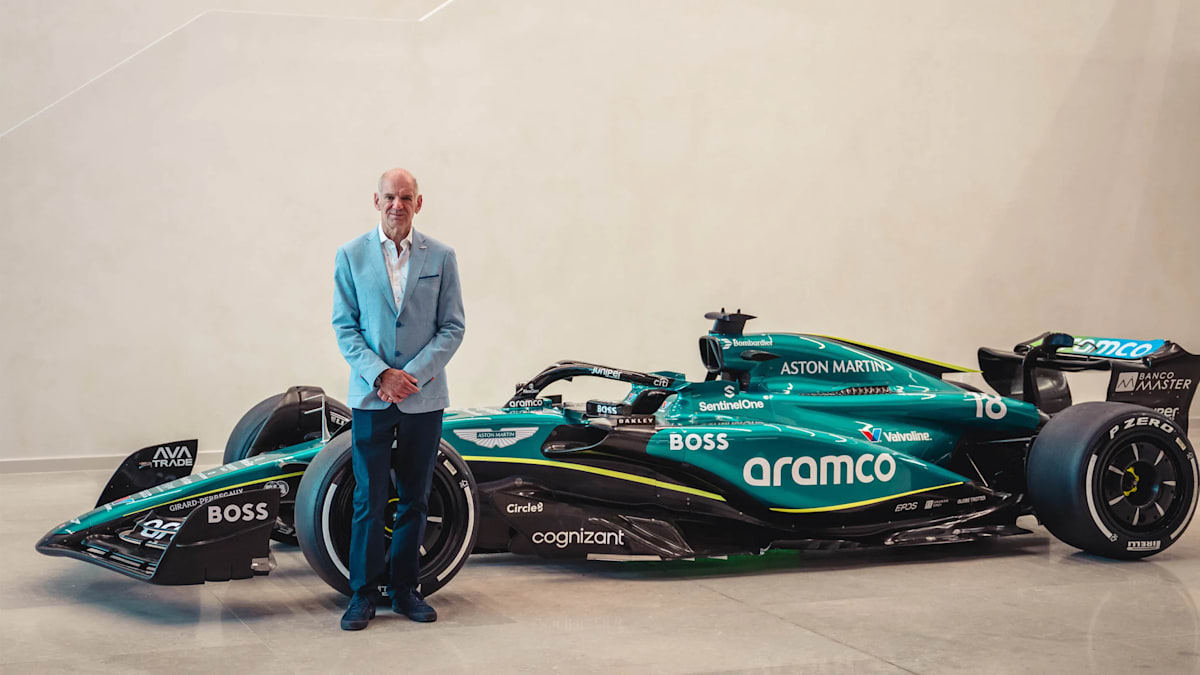
    The centerpiece of this audacious gamble is a man who needs no introduction, yet somehow manages to redefine his legend with every career move: Adrian Newey. When Red Bull announced his departure in May 2024, it sent shockwaves through the sport comparable to a driver market earthquake. Every team wanted him. Ferrari courted him. But it was Lawrence Stroll who landed the knockout punch.

    Signed for a reported £150 million over five years, including a 2.5% equity stake in the team, Newey didn’t just join Aston Martin to draw pretty lines on a chassis. He joined to lead. As of November 2025, the architect of 26 world championships was named Team Principal for the 2026 season.

    Inside the team, the atmosphere has shifted from hope to an intense, focused mania. Andy Cowell, the man behind the dominant Mercedes hybrid engines of the 2010s and now Aston’s Group CEO, describes Newey’s presence as transformative. “Adrian is heavily involved in detail aero work, mechanical work, suspension work,” Cowell noted. “You will see him both at his drawing board and at engineers’ CFD screens.”

    Newey himself admits to entering a “design trance,” a state of flow so consuming that his wife reportedly complains about his mental absence even when he’s physically present. This isn’t a figurehead role. This is the greatest designer in history, given a blank sheet of paper for the 2026 regulations, and arguably the best resources he has ever had. Fernando Alonso, a man who has driven for nearly every titan in the sport, summed it up best: “Adrian Newey will always have more impact than any driver.”

    The Honda Redemption Arc

    If Newey provides the brain, Honda provides the heart—and perhaps a bit of scar tissue. The announcement of a full works partnership between Aston Martin and Honda was a watershed moment. It marked the final step in Aston Martin’s independence from Mercedes, whose wind tunnel and engines they had relied on for years.

    Honda’s journey in modern F1 is a Shakespearean drama of failure and redemption. We all remember the “GP2 engine” days with McLaren, the humiliation of failing reliability, and the public shaming. But Honda reinvented themselves with Red Bull, powering Max Verstappen to multiple world titles. Now, they have chosen Aston Martin as their exclusive partner for the new era.

    HRC President Koji Watanabe didn’t mince words about why they switched allegiances: passion. He saw in Lawrence Stroll a reflection of Honda’s own racing spirit. But the road hasn’t been smooth. As recently as January 2025, Watanabe admitted the team was “struggling” with the new power unit regulations, citing the difficulty of the lightweight battery and the massive electrical power requirements.

    However, doubts about Honda have historically been foolish betting slips. They have been running 2026 prototype engines since December 2025, and their new UK base in Milton Keynes ensures seamless integration with the chassis team—a luxury Aston Martin has never enjoyed before.

    The 2026 Regulation Reset: A New Battlefield

    To understand why Aston Martin sacrificed 2025, you have to understand the sheer scale of the 2026 technical overhaul. These aren’t minor tweaks; they are a total reset of the sport’s DNA.

    The new power units feature a revolutionary 50/50 split between thermal (combustion) and electrical energy. The MGU-H is gone. The electrical output has tripled to 350kW (roughly 470bhp). The cars will run on 100% sustainable fuel, creating a massive engineering challenge to maintain efficiency.

    Aerodynamically, the changes are just as drastic. The Drag Reduction System (DRS) is dead, replaced by active aerodynamics where front and rear wings physically change angles—opening on straights to slash drag and closing in corners to pile on downforce. The cars are lighter, smaller, and feature a “Manual Override” mode to boost overtaking.

    This is where the genius of Aston’s strategy lies. While McLaren and Ferrari were refining concepts that would soon be obsolete, Aston Martin’s new 37,000-square-meter campus at Silverstone was humming with 2026 development. Their state-of-the-art wind tunnel, finally operational in March 2025, has been churning out data for the AMR26 exclusively. They didn’t just get a head start; they got a running start while everyone else was finishing the previous race.

    The Rivals: Chaos at the Top

    The landscape around Aston Martin further validates their strategy. The old guard is in flux.

    Red Bull, once the untouchable juggernaut, is facing its own “Mount Everest.” They have lost Newey, Jonathan Wheatley, and the steady hand of experience. They are embarking on their own engine program with Ford—a historic gamble that Toto Wolff has described as an immense challenge.

    Mercedes appears confident, with rumors of a strong engine program, but they are integrating a rookie driver in Andrea Kimi Antonelli alongside George Russell. Ferrari, despite the star power of Lewis Hamilton, is coming off a winless 2025 season and a strategic pivot that saw them stop development early—perhaps too late to match Aston’s preparation.

    McLaren enters as the defending champions, riding high on confidence. But history warns us that maintaining dominance across a regulation change is the hardest feat in sports. Aston Martin isn’t burdened by the need to defend a title; they are hungry to take one.

    The Final Roll of the Dice

    For two men, this project represents the endgame. Lawrence Stroll has poured over a billion pounds into transforming a midfield team into a superpower. He has built the facilities, poached the talent, and weathered the criticism. 2026 is the year the receipt comes due.

    And then there is Fernando Alonso. At 43 (going on 44), the Spaniard has signed a “lifetime project” contract. He has explicitly stated that if the car is a winner, 2026 might be his swan song—a final, glorious charge to a third world title that has eluded him for two decades. If the car fails, he might stay one more year to fix it. But the intent is clear: he believes in this project.

    The Convergence

    The “shocking reason” Aston Martin might dominate isn’t one single thing. It’s not just Newey. It’s not just Honda. It’s not just the wind tunnel. It is the convergence of all these massive factors hitting their peak at the exact same moment the rules of the sport are rewritten.

    In 2025, they looked like losers. They looked like a team that had lost its way. But in reality, they were a coiled spring. They accepted the short-term pain of a seventh-place finish to ensure that when the lights go out in Melbourne for the start of the 2026 season, they aren’t just participating—they are dictating the pace.

    The AMR26 launches on February 9th. Pre-season testing begins shortly after. For the first time in forever, the question isn’t whether Aston Martin can catch up to the big three. The question is: has the big three realized just how far behind they might already be?

    The gamble is massive. The variables are infinite. But if this “convergence” works, Aston Martin won’t just win; they will rewrite the history books on how a Formula 1 team is built.

  • Ferrari’s “Steel” Gamble: The Radical Engine Secret That Could Crown Them Champions or Destroy Their Future

    Ferrari’s “Steel” Gamble: The Radical Engine Secret That Could Crown Them Champions or Destroy Their Future

    By the time the 2025 Formula 1 season ended, the Tifosi were left with little more than broken hearts and a single sprint race victory. It was a year of misery for the Scuderia—painful, slow, and confusing. But while the world watched Ferrari struggle on track, a secret decision had already been made behind the closed doors of Maranello that would change the course of the team’s history.

    In April 2025, Team Principal Fred Vasseur pulled the emergency brake. In a move that shocked insiders, he ordered the complete cessation of development on the current car. It was a brutal admission of defeat, but it came with a singular, obsessive purpose: to pour every resource, every dollar, and every ounce of brainpower into the massive rule reset coming in 2026.

    Now, the details of that gamble have leaked, and they are nothing short of revolutionary.

    The “Steel” Revolution: Madness or Masterstroke?

    The cornerstone of Ferrari’s 2026 challenger—officially named the SF26 (formerly Project 678)—is an engineering choice that sounds almost archaic: Steel.

    For decades, Formula 1 engines have relied on aluminum cylinder heads. They are lightweight, efficient, and the industry standard. But sources indicate Ferrari has partnered with Austrian engineering firm AVL to develop steel cylinder heads for their new power unit.

    On paper, it sounds like a step backward. Steel is significantly heavier than aluminum. But in the context of the 2026 regulations, it might be a stroke of genius.

    The new rules already mandate heavier engines, meaning the relative weight penalty of steel is less severe than in previous eras. The payoff? Immense strength. Steel can withstand significantly higher temperatures and combustion pressures than aluminum. This allows Ferrari to run the engine harder and more aggressively, potentially unlocking a level of raw horsepower that rivals using fragile aluminum simply cannot match.

    It is a high-wire act without a safety net. Teams are limited to just four engines per driver for the entire season. If Ferrari’s heavy steel components cause overheating or reliability failures, their championship hopes could collapse before the summer break. But if it works? They could have a “monster” of an engine that leaves the grid gasping for air.

    The Silent War: Fuel and Fire

    While the paddock whispers about steel, another war is being fought in the laboratory. The 2026 regulations require 100% sustainable fuel, sparking a chemistry arms race.

    Most teams, including Mercedes with Petronas, are focusing on “e-fuels.” However, reports suggest Ferrari and long-time partner Shell are taking a completely different path with a highly advanced bio-fuel. This isn’t just about being green; it’s about performance. If Shell has discovered a chemical formula that burns cleaner and faster, specifically tuned to Ferrari’s aggressive new steel engine architecture, it could provide a “secret edge” that is impossible for rivals to copy.

    Le Mans Tech Meets F1 Speed

    Ferrari isn’t just looking at engines; they are looking at survival. The 2026 cars will feature a radical 50/50 power split between the internal combustion engine and the electric motor, with the electric side jumping to a massive 350 kW.

    Enrico Gualtieri, Ferrari’s engine boss, has already warned that on certain tracks, the battery simply won’t last a full lap at maximum attack. Drivers will have to manage energy constantly, lifting and coasting to survive.

    Here, Ferrari has an ace up its sleeve: their World Endurance Championship (WEC) team.

    While the F1 team floundered, Ferrari’s sports car program was dominating Le Mans. Engineers from that winning program have been feeding data directly into the F1 project. They are experts in efficiency and durability—exactly what the new rules demand. By reducing battery weight without sacrificing reliability, Ferrari hopes to solve the energy management puzzle better than Mercedes or Red Bull.

    The Human Factor: Hamilton and Leclerc

    All this technology would be useless without the hands to wield it. The 2026 season brings the dream pairing of Lewis Hamilton and Charles Leclerc.

    For Hamilton, this is the final frontier. He brings seven titles’ worth of experience and an innate understanding of how to navigate massive regulation changes. His feedback will be critical in shaping the SF26 into a winner. For Leclerc, the “Prince of Ferrari,” the time for patience is over.

    “I do believe Ferrari can provide me with a championship-winning car,” Leclerc said recently. “It’s now or never.”

    The dynamic between these two superstars will be as critical as the car itself. Will they work together to restore Ferrari’s glory, or will the pressure of a title-capable car turn them into bitter rivals?

    A Race Against Time

    The tension in Maranello is palpable. The SF26 is set to launch on January 23rd, hitting the track just one day later. Fred Vasseur has admitted the schedule is “aggressive,” revealing that the car’s assembly will only be finished on the 22nd—literally hours before the world sees it.

    Ferrari has sacrificed a year, risked their reputation on controversial engineering, and pushed their timeline to the absolute limit. They didn’t choose the safe path. They chose the brave one.

    In 2026, we will find out if fortune truly favors the bold, or if the Prancing Horse has gambled away its future.