The Silence Before the Storm
In the high-octane world of Formula 1, silence is rarely a sign of peace; usually, it means the engineers are up to something. As the sport gears up for the revolutionary regulation overhaul set for 2026, the paddock has been relatively quiet regarding the specifics of the new power units. That was, until now. A seismic shockwave has just rippled through the motorsport community, originating from a leak that threatens to turn the 2026 championship into a foregone conclusion before a single wheel has even turned.
At the heart of this brewing storm is a controversial engineering loophole—a “magic trick” hidden within the fine print of the FIA’s technical regulations. If the whispers circulating in the paddock are to be believed, Mercedes may have already secured the 2026 World Championship, leaving rivals like Ferrari, Honda, and newcomer Audi fighting for scraps. This isn’t a story about a broken wing or a tire strategy; it is a fundamental crisis of competition that has the sport’s governing body, the FIA, caught in an impossible checkmate.

The Magic Number: 16-to-1
To understand the magnitude of this controversy, one must first delve into the technical weeds of the 2026 rulebook. In an effort to level the playing field and encourage new manufacturers like Audi to join the fray, the FIA introduced a strict limit on engine compression ratios.
For years, the gold standard has been a ratio of 18:1—a figure that represents how tightly the air and fuel mixture is squeezed inside the cylinder before ignition. In layman’s terms: the tighter the squeeze, the bigger the bang, and the more horsepower is delivered to the wheels. For 2026, the FIA slashed this limit down to 16:1. The intention was clear: lower the ceiling to prevent established giants from running away with performance advantages derived from complex, ultra-high-compression designs.
However, rules in Formula 1 are merely challenges waiting to be solved. It appears that Mercedes, and to a lesser extent Red Bull, have found a way to have their cake and eat it too. They haven’t broken the rule; they have simply outsmarted the test used to enforce it.
Weaponizing Heat: The “Thermal Trick”
The crux of the loophole lies in how the FIA polices the sport. The compression ratio checks are performed “statically,” meaning the engine is measured when it is cold, sitting dormant in the garage. Under these specific conditions, the Mercedes power unit complies perfectly with the 16:1 regulation. It is legal. It is compliant. It is safe.
But a Formula 1 engine does not race in a garage. It races at 15,000 RPM, generating immense heat and pressure. This is where the genius—or the cheating, depending on who you ask—comes into play.
According to technical experts, including renowned analyst Gary Anderson, Mercedes has engineered their engine components with materials designed to expand thermally in a very specific manner. As the engine heats up during a race, the metal expands. This expansion causes the combustion chamber to shrink ever so slightly—we are talking about a minuscule 0.5 millimeters. Yet, in the precision world of F1, half a millimeter is a canyon.
This shrinkage effectively raises the compression ratio back up to the old standard of 18:1, or perhaps even higher, once the car is at full speed. The result? A power unit that acts like a regulated engine in the pits but transforms into a high-compression rocket on the track.

The unfair Advantage: 0.4 Seconds Per Lap
This is not a theoretical gain or a marginal improvement. Insider reports suggest that this thermal trick could be worth up to 0.4 seconds per lap. In a sport where pole positions are often decided by thousandths of a second, four-tenths is an eternity. It is the difference between fighting for a win and struggling to make it out of Q2.
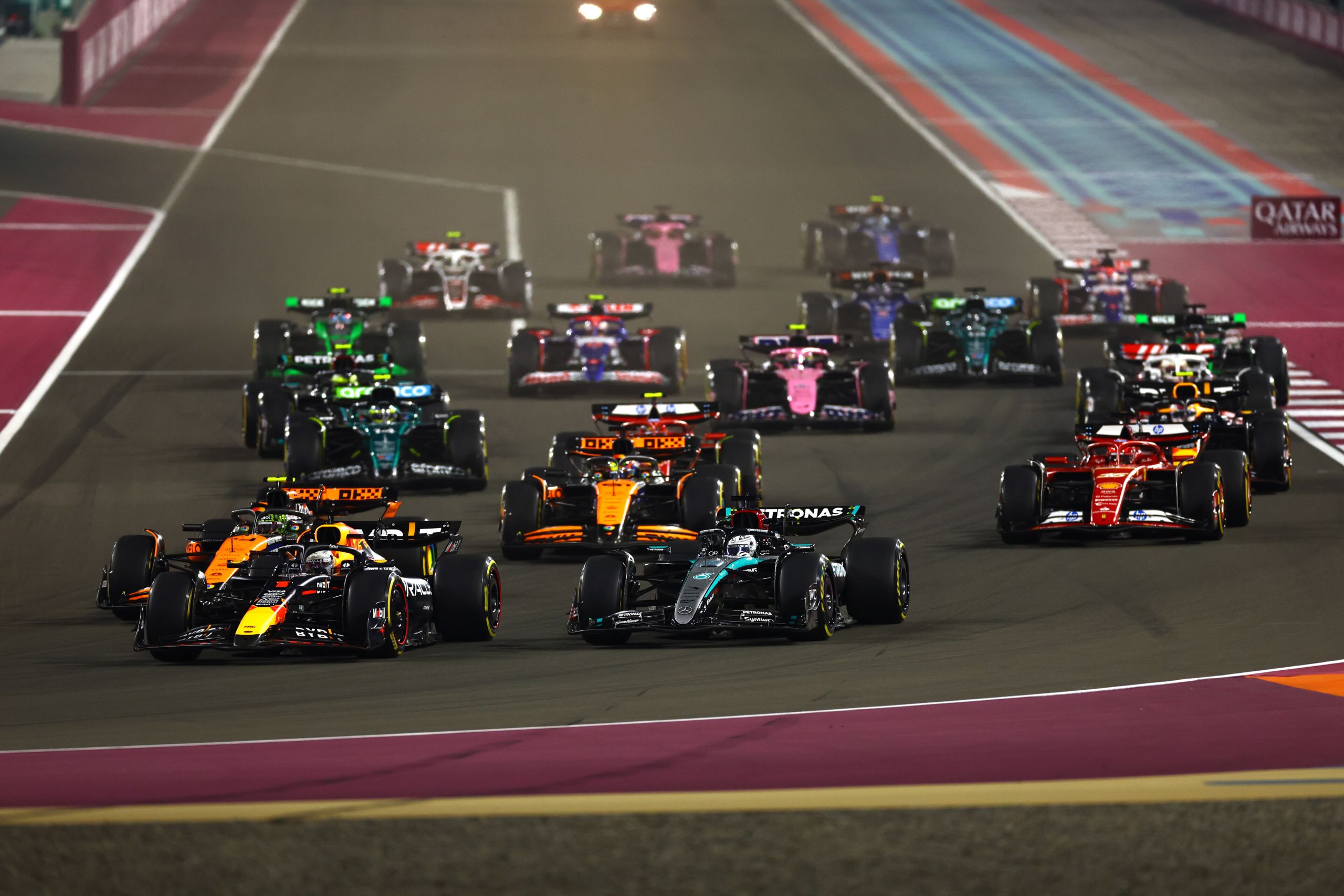
If these numbers hold true, the implications are catastrophic for the competition. It’s not just the factory Mercedes team that benefits. McLaren, Williams, and Alpine—who all use Mercedes customer engines—would also inherit this massive advantage. That is eight cars on the grid starting the season with a car that is fundamentally faster than the rest.
While Red Bull is reportedly aware of the trick and attempting to replicate it, rumor has it they are months behind. Reports from Italy suggest Red Bull hired a former Mercedes engineer who brought the concept with them, but reverse-engineering such a complex thermal system is proving difficult. Mercedes, having had a reported year-long head start, has effectively locked in their advantage.
The Rivals Revolt
Unsurprisingly, the reaction from the rest of the grid has been incandescent rage. Ferrari, Honda, and Audi find themselves staring down the barrel of a lost decade. These manufacturers have invested hundreds of millions of dollars into their 2026 programs, only to find out they might be racing for second place.
The anger is compounded by the timeline. F1 operates under strict homologation rules. Once the season begins, engine designs are “frozen” or locked to control costs. Major architectural changes, like redesigning a combustion chamber to exploit thermal expansion, cannot simply be slapped on halfway through the year. If Mercedes starts 2026 with this advantage, rivals might not be able to introduce a fix until 2027. By then, the championship momentum would be overwhelmingly in Mercedes’ favor.
Behind closed doors, tensions are reportedly reaching a boiling point. Team principals are demanding the FIA intervene immediately. They argue that while the trick technically follows the letter of the law, it violates the spirit of the regulations intended to create a fair fight.

The FIA’s Nightmare Scenario
This places the FIA in a disastrous no-win situation.
Option A: Ban the trick immediately. If the FIA outlaws this thermal expansion method now, they effectively destroy the Mercedes 2026 power unit. Mercedes has built their entire concept around this architecture. Forcing a redesign this close to the deadline—with the March 1st homologation date looming—would be an engineering and logistical nightmare, potentially leaving Mercedes without a competitive engine for the season opener in Australia. It would be viewed as a direct punishment for innovation.
Option B: Allow it. If the FIA does nothing, they risk a 2026 season that is a procession, a snooze-fest where the winner is decided before the lights go out. This would alienate fans, anger stakeholders, and ruin the commercial appeal of the sport’s new era.
Currently, rumors suggest a compromise is being floated: allow the trick for 2026 only, then ban it for 2027. This would give rivals a year to catch up or wait for the ban to kick in. However, to Ferrari and Audi, this “compromise” sounds like a surrender—a free pass for Mercedes to dominate the inaugural year of the new regulations.
A War of Philosophy
Beyond the technical jargon, this scandal strikes at the very soul of Formula 1. What is this sport supposed to be? Is it a pure engineering contest where the smartest mind wins, regardless of the spectacle? Or is it an entertainment product that requires a level playing field?
Mercedes has seemingly done what F1 teams exist to do: read the rules and find the fastest way around them. In previous eras, this would be celebrated as “genius.” But in the modern, cost-capped, entertainment-focused era of Liberty Media, “genius” that kills competition is viewed as a liability.
As the clock ticks down to the 2026 season, the “Thermal Loophole” has turned the paddock into a battlefield. The cars haven’t even been launched, but the war for the championship is already raging. Whether the FIA chooses to reward innovation or protect the show, one thing is certain: the fallout from this decision will echo through every lap of the coming era.




.jpg?cx=0.5&cy=0.5)