More Lives Being Lost Unnecessarily.
Sir Chris Hoy has said he is “disappointed and saddened” after UK health chiefs refused to introduce routine prostate cancer screening for the vast majority of men – despite the disease now being the most common cancer in men.
The six-time Olympic gold medallist, 49, revealed in 2024 that his own prostate cancer had spread to his bones and that doctors had given him between two and four years to live. Since then, he has used his status as one of Britain’s greatest sporting heroes to plead for earlier testing in the hope that other men might avoid the fate he now faces.

But on Friday the UK National Screening Committee confirmed it would not recommend population-wide screening using the PSA (prostate specific antigen) blood test, arguing that rolling it out to all men “is likely to cause more harm than good”.
In a strongly worded statement, Sir Chris said he was “extremely disappointed and saddened by the recommendation announced by the National Screening Committee today to rule against national screening for men at high risk of prostate cancer”. He stressed that more than 12,000 men die from prostate cancer every year and that it is now the UK’s most common cancer in men, with black men at double the risk, along with men who have a family history of the disease like he does.

The committee has instead only backed screening for men who carry BRCA1 and BRCA2 genetic mutations, suggesting they should be offered checks every two years between the ages of 45 and 61. Sir Chris welcomed that as “a very small step forward” but insisted “it is not enough”.
He pointed out that his own diagnosis has already helped save lives. “I know first hand that by sharing my story following my own diagnosis two years ago, many, many lives have been saved. Early screening and diagnosis saves lives,” he said, making clear he believes the burden is being unfairly shifted onto men and their families.
“Without a national screening programme, the responsibility to find prostate cancer early and in time for a cure rests entirely on men’s shoulders, and it shouldn’t be this way. Black men are at double the risk of prostate cancer and twice as likely to die, and something has to be done,” he added.

Sir Chris vowed he will not back down, saying he is “determined to continue to use my platform to raise awareness, encourage open discussion, raise vital funds for further research and support, and to campaign for change”.
He is not the only sporting legend demanding a rethink. England’s 1966 World Cup hero Sir Geoff Hurst said it should be “mandatory” for all men over 45 to be tested for prostate cancer. “I have known many people to suffer with prostate cancer and, given correct testing and early enough testing, they could’ve been furnished with a much better outcome,” he said. “So the results that they have have gone some way towards helping, but I think it would’ve been better if all men over 45 could be tested.”
Former Manchester United manager Louis van Gaal, who revealed in 2022 that he had undergone successful treatment for prostate cancer, warned that the sheer number of men affected should force governments to act. “Every country has its own norms and values, but the statistics are also important. I think many men suffer from prostate cancer, that should be a reason to at least institute a screening test for prostate cancer,” he said.
Ex-England striker Les Ferdinand, 58, whose grandfather died from the disease, added that his own family’s experience proves the power of catching it in time. He said he has seen relatives survive prostate cancer “because their cancer was found in time” – and believes leaving the onus on men to demand tests will cost lives that could have been saved.
For now, the UKNSC will wait for data from a major new trial launched by Prostate Cancer UK to see whether combining PSA with other tests could justify screening more men. But for Sir Chris Hoy and the other sporting greats urging action, that feels like a decision that has come far too late for too many.
News

EMERGENCY: THE DARKEST SECRETS OF THE JUSTICE SYSTEM ARE ABOUT TO BE UNLEASHED! The silence is finally SHATTERED! As the explosive hearings for Rupert Lowe’s “Rape Gang Inquiry” kick off in London, a terrifying truth is emerging. For years, the screams of victims were ignored, and the truth was buried deep within expensive, hidden court files. But now, the curtain is being ripped wide open, and some very powerful people are SHAKING! Why has the truth been kept behind a “paywall” for so long? Why were public authorities allowed to turn a blind eye while innocent lives were destroyed? Rupert Lowe is making a move that the establishment DREADS: he’s demanding that EVERY court transcript be made FREE for the public! Is the system hiding evidence of its own massive failures? This isn’t just an inquiry; it’s a war for justice that the “Über Elite” never wanted you to join. THEY CAN NO LONGER HIDE. Sign the urgent petition and click the link below to see the chilling testimonies they tried to suppress for decades!
EMERGENCY: THE DARKEST SECRETS OF THE JUSTICE SYSTEM ARE ABOUT TO BE UNLEASHED! Hearings Begin for Rupert Lowe’s “Rape Gang Inquiry” in London as Public Petition Gains…

JUST WANT TO LIVE…” — Bob Mortimer Has Moved Fans To Tears With A Raw, Quietly Brave Confession About Life After His Triple Heart Bypass, Admitting He’s Gently Defying Doctors’ Orders Because Fear Has Already Taken Enough From Him. Speaking With Heartbreaking Honesty, Bob Revealed The Nights Filled With Anxiety, The Moments He Cried Alone, And The Decision That Changed Everything: “I Realised I Didn’t Want To Survive — I Wanted To Live.” Rather Than Letting Worry Steal The Time He Has Left, He’s Choosing Joy, Laughter, And Meaning Wherever He Can Find It. Fans Say His Words Feel Less Like An Interview And More Like A Farewell Letter — Tender, Human, And Devastatingly Real — A Reminder That Even Comedy’s Brightest Souls Carry Quiet Battles The World Never Sees.
Bob Mortimer has made a brutally honest confession about life after his emergency triple heart bypass — and it’s left fans both shocked and strangely moved The 66-year-old comedian,…

Unraveled by Chaos: 41 Hotels Set Ablaze Amidst UK’s Explosive Anti-Migrant Riots—Is Britain’s Immigration Strategy Crumbling Under the Weight of Public Fury and Political Division? Discover the Unfolding Crisis Fueling Fear and Unrest Across the Nation!
Breaking news: In an unprecedented surge of violence across the UK, 41 hotels housing migrants have erupted in flames amid escalating anti-migrant riots. Chaotic clashes between masked…
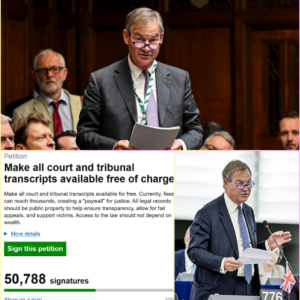
Rupert Lowe has appealed for public support by promoting a parliamentary petition that seeks to remove fees for court and tribunal transcripts, arguing it is vital to uncover the full truth about grooming gang cases.
Hearings Begin for Rupert Lowe’s “Rape Gang Inquiry” in London as Public Petition Gains Momentum Hearings for the “Rape Gang Inquiry” launched by Great Yarmouth independent MP…
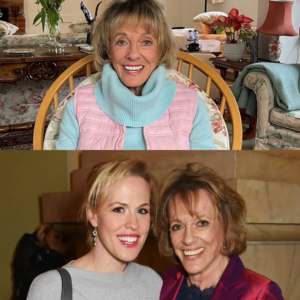
SAD NEWS — DAME ESTHER RANTZEN’S FAMILY SHARE EMOTIONAL UPDATE ON CANCER BATTLE
Esther Rantzen has issued a new health update, revealing that she was diagnosed with a second cancer. | AFP via Getty Images Dame Esther Rantzen has shared a…

“NO ONE SHOULD BE SLEEPING ON THE STREETS.” Bradley Walsh has reportedly given away every penny of his £2 million bonus and sponsorship earnings — not for publicity, not for praise, but to build 150 housing units and fund 300 emergency shelter beds for people with nowhere to go. Those close to him say the decision was made quietly, without cameras or announcements. “Bradley didn’t see it as charity,” one source revealed. “He saw it as responsibility.” At a time when most stars protect their wealth, Walsh’s gesture has stunned fans — not because of its size, but because of its sincerity. And as the first doors prepare to open, one line keeps echoing from those who know him best: “He just wanted people to come in from the cold.”
In a world where headlines are often dominated by scandals and controversies, television presenter and actor Bradley Walsh has shown us what true stardom really means —…
End of content
No more pages to load



