
Olympic cycling legend Sir Chris Hoy is set to return to the PDC World Darts Championship final at Alexandra Palace in 2026, exactly a year after he handed the famous trophy to teenage sensation Luke Littler.
The Team GB icon, who won six Olympic gold medals and 11 world titles during his glittering cycling career, attended the world darts final for the first time last year – and the experience clearly stayed with him. Speaking ahead of this year’s championship, Hoy admitted he was blown away not just by Littler’s talent, but by his composure under pressure.

Reflecting on Littler’s historic world title win at just 17, Hoy said what struck him most was how effortlessly calm the teenager appeared on the biggest stage in darts. He explained that even if Littler had been in his late 30s or early 40s, with decades of experience behind him, his performance would still have been impressive – but to show that level of control at such a young age was extraordinary.
Hoy said: “What was remarkable was how Luke Littler, even if he’d been in his late 30s, early 40s, a veteran of his sport, he would still be impressive, but he was 17. It’s incredible how calm he was for a guy of his age and truly remarkable.”
He went on to underline how mentally demanding darts can be, noting that it often takes decades not only to master the skill, but to cope with the pressure that comes with it. “His age is the first thing that catches your attention and the fact that a sport that requires such skill normally takes decades to not just master, but to deal with the pressure,” Hoy said, adding that the mental side of the game is just as important as technical ability.

What impressed him most, however, was Littler’s apparent immunity to the chaos around him. Hoy said it was Littler’s coolness under pressure, relative to his age, that made him stand out, explaining that the young star seemed completely unaffected by the noise, expectation and intensity of the occasion. He noted that sporting heroes often feel like a different breed, removed from normal life, yet Littler appeared disarmingly ordinary as he walked onto the stage. According to Hoy, there was no visible weight on his shoulders – he simply embraced the moment. Crucially, Hoy stressed it wasn’t a one-off, pointing out that Littler has continued to perform at the highest level ever since, describing him as “a true marvel”.
Hoy’s return to Ally Pally this year is about far more than admiration for a rising star. He will be back in his role as an ambassador for Prostate Cancer UK, with tournament sponsor Paddy Power teaming up with the charity for its Even Bigger 180 campaign. The initiative pledges £1,000 for every 180 thrown during the tournament and £180,000 for every nine-dart finish, helping raise life-changing funds.
Sharing his pride in the campaign on social media, Hoy said it was fantastic to see the initiative raise over £1 million with several days still to go. He explained that the funds would make a tangible difference in the fight against prostate cancer, helping countless men and their families across the UK, and said he was delighted to support the campaign again and was looking forward to being back at Alexandra Palace for the final.
Away from the darts spotlight, Hoy has continued to speak openly about his health after revealing his terminal prostate cancer diagnosis in October 2024, having first shared earlier that year that he was undergoing treatment. Despite being told he may only have two to four years to live, Hoy has recently said he is responding positively to treatment and remains focused on living life fully.
He is also recovering from a broken leg following a serious mountain bike accident. Speaking candidly about how he is coping, Hoy said: “I’m doing all right. It’s been a funny couple of years, but it changes your perspective on everything, and you learn to kind of live more in the moment. In that respect, I’m doing really well. I’ve had a bit of a tumble on the mountain bike, which wasn’t ideal, but apart from that…”
He added that anyone who has faced a serious health diagnosis goes through a period of acceptance before finding a way forward. “You go through that initial period of getting to the stage of acceptance and then you just get on with life,” he said, explaining that having young children and responsibilities makes that mindset even more important. “It’s not easy but you find your way through and once you do, you recognise that you’re still in the same position. None of us know what’s going to happen in the future.”
News

EMERGENCY: THE DARKEST SECRETS OF THE JUSTICE SYSTEM ARE ABOUT TO BE UNLEASHED! The silence is finally SHATTERED! As the explosive hearings for Rupert Lowe’s “Rape Gang Inquiry” kick off in London, a terrifying truth is emerging. For years, the screams of victims were ignored, and the truth was buried deep within expensive, hidden court files. But now, the curtain is being ripped wide open, and some very powerful people are SHAKING! Why has the truth been kept behind a “paywall” for so long? Why were public authorities allowed to turn a blind eye while innocent lives were destroyed? Rupert Lowe is making a move that the establishment DREADS: he’s demanding that EVERY court transcript be made FREE for the public! Is the system hiding evidence of its own massive failures? This isn’t just an inquiry; it’s a war for justice that the “Über Elite” never wanted you to join. THEY CAN NO LONGER HIDE. Sign the urgent petition and click the link below to see the chilling testimonies they tried to suppress for decades!
EMERGENCY: THE DARKEST SECRETS OF THE JUSTICE SYSTEM ARE ABOUT TO BE UNLEASHED! Hearings Begin for Rupert Lowe’s “Rape Gang Inquiry” in London as Public Petition Gains…

JUST WANT TO LIVE…” — Bob Mortimer Has Moved Fans To Tears With A Raw, Quietly Brave Confession About Life After His Triple Heart Bypass, Admitting He’s Gently Defying Doctors’ Orders Because Fear Has Already Taken Enough From Him. Speaking With Heartbreaking Honesty, Bob Revealed The Nights Filled With Anxiety, The Moments He Cried Alone, And The Decision That Changed Everything: “I Realised I Didn’t Want To Survive — I Wanted To Live.” Rather Than Letting Worry Steal The Time He Has Left, He’s Choosing Joy, Laughter, And Meaning Wherever He Can Find It. Fans Say His Words Feel Less Like An Interview And More Like A Farewell Letter — Tender, Human, And Devastatingly Real — A Reminder That Even Comedy’s Brightest Souls Carry Quiet Battles The World Never Sees.
Bob Mortimer has made a brutally honest confession about life after his emergency triple heart bypass — and it’s left fans both shocked and strangely moved The 66-year-old comedian,…

Unraveled by Chaos: 41 Hotels Set Ablaze Amidst UK’s Explosive Anti-Migrant Riots—Is Britain’s Immigration Strategy Crumbling Under the Weight of Public Fury and Political Division? Discover the Unfolding Crisis Fueling Fear and Unrest Across the Nation!
Breaking news: In an unprecedented surge of violence across the UK, 41 hotels housing migrants have erupted in flames amid escalating anti-migrant riots. Chaotic clashes between masked…
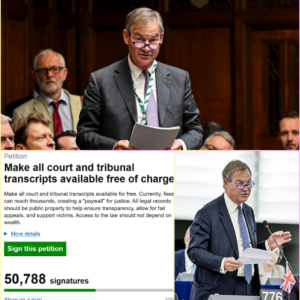
Rupert Lowe has appealed for public support by promoting a parliamentary petition that seeks to remove fees for court and tribunal transcripts, arguing it is vital to uncover the full truth about grooming gang cases.
Hearings Begin for Rupert Lowe’s “Rape Gang Inquiry” in London as Public Petition Gains Momentum Hearings for the “Rape Gang Inquiry” launched by Great Yarmouth independent MP…
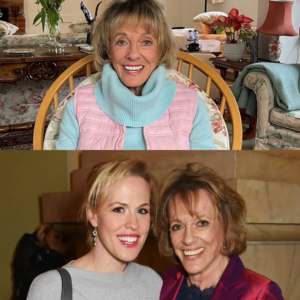
SAD NEWS — DAME ESTHER RANTZEN’S FAMILY SHARE EMOTIONAL UPDATE ON CANCER BATTLE
Esther Rantzen has issued a new health update, revealing that she was diagnosed with a second cancer. | AFP via Getty Images Dame Esther Rantzen has shared a…
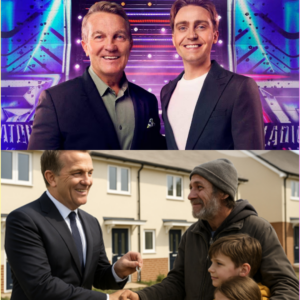
“NO ONE SHOULD BE SLEEPING ON THE STREETS.” Bradley Walsh has reportedly given away every penny of his £2 million bonus and sponsorship earnings — not for publicity, not for praise, but to build 150 housing units and fund 300 emergency shelter beds for people with nowhere to go. Those close to him say the decision was made quietly, without cameras or announcements. “Bradley didn’t see it as charity,” one source revealed. “He saw it as responsibility.” At a time when most stars protect their wealth, Walsh’s gesture has stunned fans — not because of its size, but because of its sincerity. And as the first doors prepare to open, one line keeps echoing from those who know him best: “He just wanted people to come in from the cold.”
In a world where headlines are often dominated by scandals and controversies, television presenter and actor Bradley Walsh has shown us what true stardom really means —…
End of content
No more pages to load



