The wait is finally over. After a “gap year” that saw him trading Formula 1 circuits for gravel cycling trails and the reserve bench at Mercedes, Valtteri Bottas is back where he belongs: in the cockpit of a Formula 1 car. But this isn’t just any return. The ten-time Grand Prix winner has taken on arguably the most daunting challenge of his career, leading the charge for the sport’s newest and most enigmatic entrant, the Cadillac Formula 1 Team.
On a crisp, biting Tuesday morning at the Circuit de Barcelona-Catalunya, the dawn of the 2026 Formula 1 season truly broke. It wasn’t just the sun rising over the Spanish track; it was the curtain lifting on a radical new era of technical regulations. And at the center of this storm was Bottas, clad in the fresh colors of Cadillac, piloting a machine built from scratch in a bid to disrupt the established European hierarchy of motorsport.
The significance of this moment cannot be overstated. Not since Haas entered the grid in 2016 has Formula 1 seen a brand-new team, and certainly never one with the backing of a colossal automotive giant like General Motors from day one. For Bottas, who spent 2025 on the sidelines watching others race, the emotions were palpable.
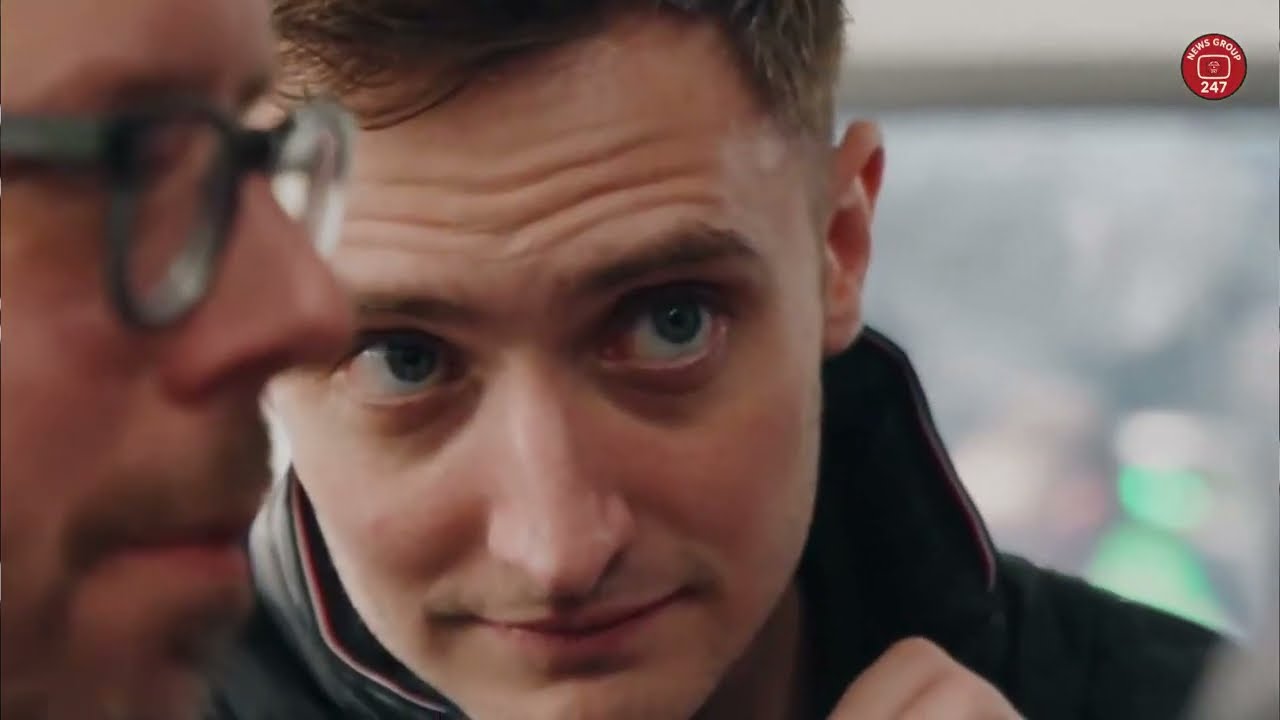
“Great to Be Back”
Stepping out of the car after his initial run, Bottas looked every bit the rejuvenated veteran. The mullet might be iconic, but the focus was steely. “First of all, great to see you again,” he told reporters, a genuine smile breaking through his professional demeanor. “It’s been a while, but yeah, it’s great to be back.”
However, the romance of the return was quickly tempered by the cold, hard reality of pre-season testing. The 2026 regulations have stripped weight from the cars, introduced active aerodynamics, and revolutionized the power units with a 50/50 split between internal combustion and electric power. For a team starting from zero, the learning curve isn’t just steep; it’s a vertical wall.
“This really is a unique situation,” Bottas admitted, referencing the rarity of a completely new outfit joining the modern F1 grid. “I really enjoyed getting back on track. This was the first time I drove this car, so it’s just good to be out there.”
The Shakedown: Cold Tires and “Debugging”
The first morning of any test is nerve-wracking, but for Cadillac, the pressure was immense. The team, operating out of a new base and integrating personnel who have never worked together before, had to ensure the car simply ran. Bottas revealed that the morning session was far from a simple cruise.
“It was cold like that early morning,” he explained. “It’s quite hard to get the tires to work here as we know, but as the temperature picked up, things got a bit better.”
The “shakedown” nature of the day meant that performance was secondary to survival. Bottas was candid about the teething problems the team faced. “We had some issues throughout the day,” he said bluntly. “Like I said, it’s debugging. That’s why we’re here.”
It’s a term often heard in software development, but in the high-stakes world of F1, “debugging” means tracing hydraulic leaks, fixing sensor errors, and ensuring the complex hybrid system doesn’t shut down the car. Bottas noted that Cadillac wasn’t alone in their struggles. “It seems like every team had some issues, so yeah, it’s just now really figuring out those and then getting more and more running each day.”
Despite the interruptions, the Finn managed to log over 30 laps—a critical milestone for a car that had only existed in CAD files and wind tunnels until recently. “The main thing is we got some running done,” he emphasized. “At the end, we got a little bit longer run as well. These are the first steps.”
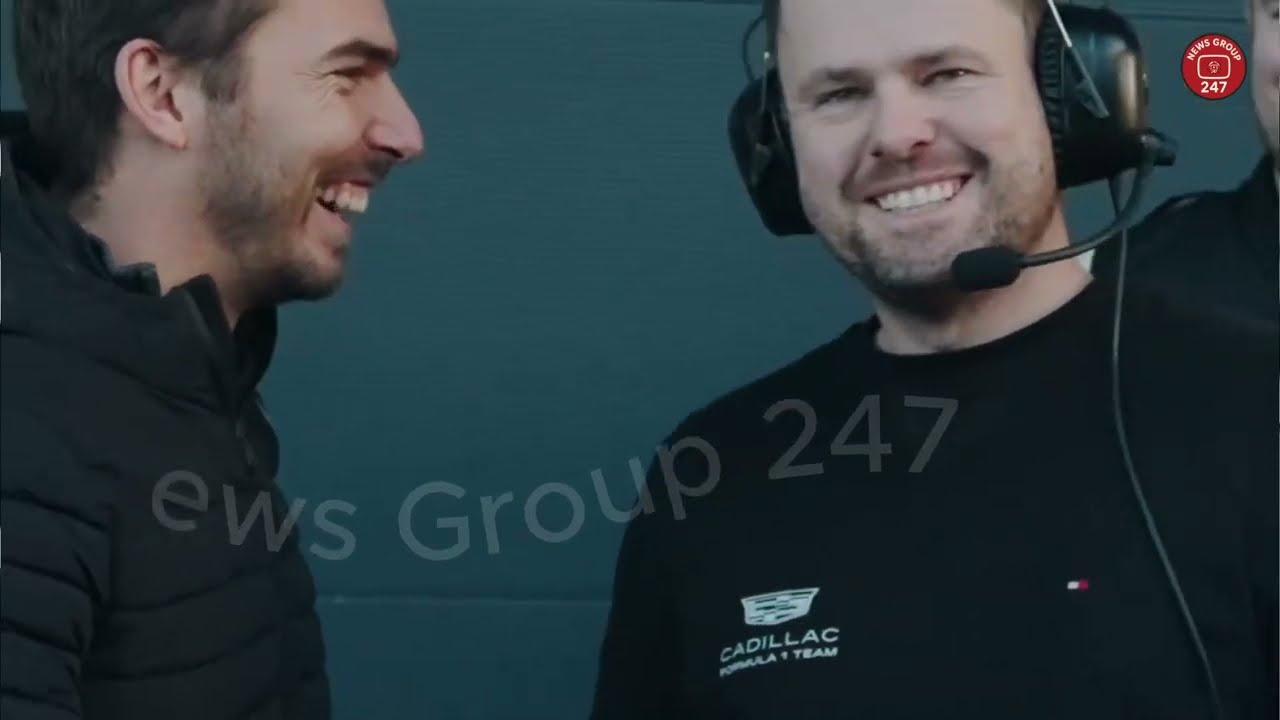
A New Beast: The 2026 Technical Revolution
Perhaps the most fascinating insight from Bottas’s first interview was his technical breakdown of the 2026 machinery. These cars are not merely evolutions of the 2025 grid; they are a different species. The regulations were designed to make cars more agile, lighter, and more reliant on electrical power.
When asked about the driving experience, Bottas didn’t mince words. “It’s definitely a big difference to before,” he said. “The cars, they handle different. You have a bit less load, especially in the high-speed corners.”
This reduction in downforce is a key feature of the new rules, intended to make the cars harder to drive and more spectacular to watch. But the biggest change comes when the driver hits the throttle. The new power units, which Cadillac is currently sourcing from Ferrari, deliver a massive punch of instant torque from the upgraded 350kW electric motor.
“The PU, you know, you have so much more torque out of the corners,” Bottas detailed, his hands mimicking the steering inputs. “But then you have the battery to manage.”
This management game is the new frontier for drivers. In the past, battery deployment was largely automated. In 2026, the strategy of energy harvesting and deployment—balancing the raw grunt of the electric motor with the combustion engine—will dictate race pace. Bottas highlighted that even their engine partner, Ferrari, is learning on the fly. “For Ferrari, this is the first proper day of running with their power unit, so naturally there is a learning curve. Still lots to learn, lots to improve.”
The “Fresh Eyes” of Cadillac
Joining a startup team is a gamble. Jacques Villeneuve did it with BAR in 1999; Daniel Ricciardo did it with Renault. It often ends in frustration. But Bottas seems energized by the specific culture brewing at Cadillac. Unlike the corporate rigidness he experienced at Mercedes or the struggling infrastructure at Sauber, Cadillac represents a clean slate.
“I really enjoy everything so far with the team,” Bottas said. “Everyone is looking at things with fresh eyes, with a different angle.”
The team has recruited aggressively, poaching talent from Red Bull, Mercedes, and Ferrari, creating a melting pot of philosophies. “We have lots of experience from different teams, and everyone has been working so hard to be here,” he added. “Starting from zero, it’s a bigger challenge than the other teams, I think. So very proud of everyone so far.”
This pride is well-placed. Building a Formula 1 team in the cost-cap era requires efficiency and ingenuity. There is no legacy data to fall back on. Every setup change, every wing angle, every suspension geometry is a first-time experiment.
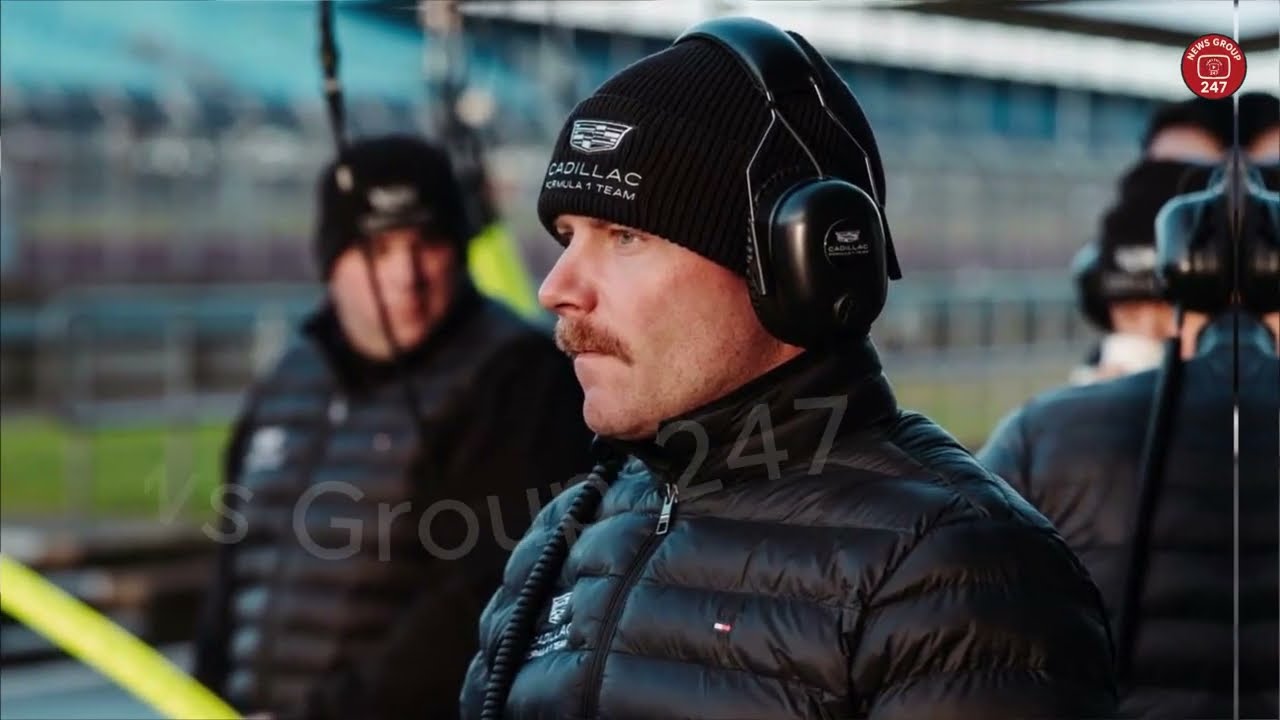
The “Gap Year” Perspective
Bottas’s return is also a personal triumph. After losing his seat at Sauber (now Audi) at the end of 2024, many wrote off the 36-year-old’s career. He spent 2025 as a reserve driver for Mercedes, a role that kept him in the paddock but out of the spotlight. He filled his time with “side quests”—gravel biking across continents, roasting coffee, and embracing a cult-hero status with his relaxed, Aussie-influenced persona.
But the fire to race never extinguished. He described his year away as a time that gave him “a different perspective” and a renewed respect for the sport. Now, back in the thick of it, he is the senior statesman. Paired with Sergio Perez, another veteran looking for redemption, Bottas is the technical leader Cadillac needs.
“Priority list now is get more laps each day,” he said, outlining the plan for the rest of the week. “We need to get some proper running in, get the mileage in, and make sure we get a reliable package for race one.”
Looking Ahead
As the sun set on Barcelona, the Cadillac garage remained a hive of activity. Mechanics were undoubtedly stripping the car down to its chassis, inspecting every bolt and connector. The “debugging” continues.
For the fans, seeing the Cadillac crest on an F1 nosecone is a novelty. For the paddock, it’s a threat. But for Valtteri Bottas, it’s a second life. He knows he isn’t fighting for a championship this year. The goal is respectability, reliability, and laying the foundation for the future.
“There is so much to get used to for the team, on and off the track,” he concluded. But as he walked away from the media pen, helmet under his arm, there was a sense that the “Flying Finn” is exactly where he wants to be: facing the impossible, with a fresh team and a fast car, ready to prove the doubters wrong one more time.
The 2026 season is young, and the road is long. But Cadillac is on the grid, and Valtteri Bottas is behind the wheel. The engine is running, and for now, that is victory enough.
News

Inside Shane Richie’s love life: Drug – fuelled orgy with six blondes; real reason he split from Coleen Nolan; six-year ‘affair with fan’
Inside Shane Richie’s love life: Orgy with six blondes; real reason he split from Coleen Nolan; six-year ‘affair with fan’ He’s popular with the ladies… Shane Richie…

SH0CKING REVELATI0N:A sh0cking behind-the-scenes secret revealed about Lizzie Rizzini, the woman replacing Carol Kirkwood on the 6pm weather bulletin
BBC viewers still reeling from the departure of Carol Kirkwood got another surprise last night when presenter Lizzie Rizzini appeared to flash her black lace stockings on…

HEARTBREAKING: Peter Andre’s Tearful Message to Son Junior After SHOCKING Revelation About How He Truly Feels Toward Mum Katie Price — Katie Price’s reaction scares fans.
Peter Andre’s emotional message to son Junior after it’s revealed how he really feels about mum Katie Pri… PETER Andre has shared an emotional message to his…

Ben Shephard opens up about the devastating health battle his wife is facing: “She wakes up crying every single morning…”
Inside This Morning Ben Shephard’s Life Including Rarely Seen Wife and Health Battle Ben Shephard is a name synonymous with British television, renowned for his engaging presentation…

🚨 LIVE TV HEARTBREAK: Good Morning Britain Host Announces ‘Devastating’ Dɘath of Guest Minutes Into Show
Viewers of Good Morning Britain were met with heartbreaking news just minutes into Friday’s (January 30) episode, as co-hosts Kate Garraway and Ranvir Singh reported the tragic…

Emmerdale legend Cain Dingle will never be the same again after a shock cancer diagnosis turns his world upside down
FROure Desk. Full Terms and conditions are available on the website http://www.itv.com/presscentre/itvpictures/terms Emmerdale wouldn’t be Emmerdale without the glowering, grunting embodiment of manliness that is Cain Dingle (Jeff Hordley) But…
End of content
No more pages to load






