The Formula 1 paddock is no stranger to smoke and mirrors, but as the sport barrels toward the revolutionary 2026 regulations, the fog of war has never been thicker. At the center of the storm stands a revitalized Toto Wolff, shedding the stoicism of recent struggling years for a return to his “feisty” championship-winning persona. But while the headlines are dominated by a bitter dispute over engine compression limits, a closer look suggests that the Mercedes Team Principal might be pulling off one of the greatest misdirections in modern F1 history. Is the loud public battle over internal combustion engines merely a distraction from the real war being won in the shadows?
The Surface War: A “Feisty” Defense
History, as they say, has a way of repeating itself—but with a twist. Unlike the early days of the ground-effect era where Mercedes was on the back foot, the German marque now seems to be the one dictating the narrative. The catalyst for the current paddock explosion is an innovation regarding engine compression limits that Mercedes and Red Bull-Ford have reportedly mastered.
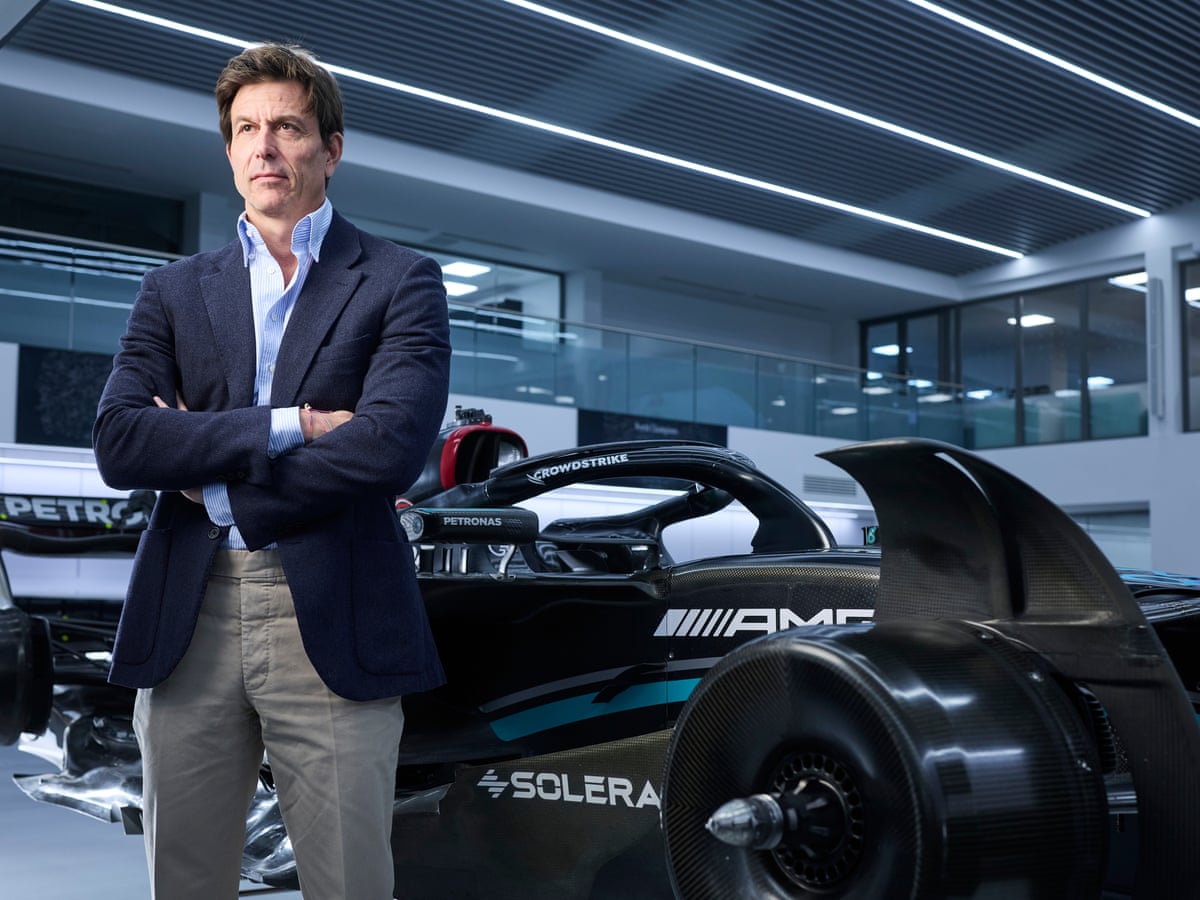
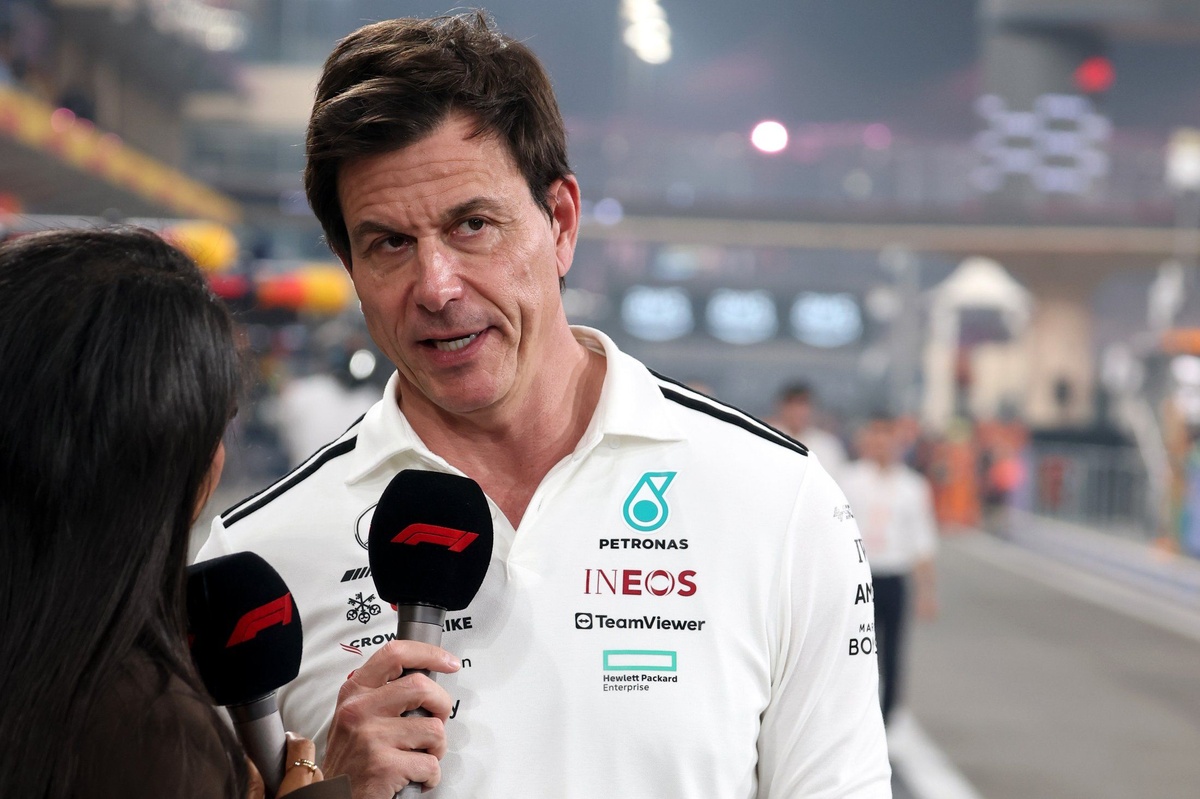
Rival teams, most notably the newcomer Audi, are crying foul. Accusations are flying that this technology violates the spirit of the rules, leading to secret meetings and “angry letters” sent to the FIA. Toto Wolff’s response has been nothing short of explosive. In a recent statement, he slammed competitors for trying to “invent ways of testing that just don’t exist,” telling them essentially to “get their act together” rather than obsessing over Mercedes’ homework.
“I just don’t understand that some teams concentrate more on the others… doing secret meetings and sending secret letters,” Wolff fired back, exuding a confidence that has been sorely missing from Brackley since 2021. He insists that their communication with the FIA has been transparent and legal. But this defensive aggression raises a suspicious question: Why is Toto so loud about an issue he claims is minor?
The Smokescreen: Why Engines Might Not Matter
The brilliance of Wolff’s strategy may lie in what he is not shouting about. While the paddock obsessively debates the legality of compression ratios measured at ambient versus operating temperatures, whispers from technical experts suggest this entire argument is a red herring.
The true differentiator for the 2026 season—the “Golden Snitch” that could decide championships—appears to be Energy Management.
While the engine tweak in question might offer a gain of roughly three-tenths of a second per lap, the mastery of battery deployment and harvesting is estimated to be worth double or even triple that amount. Ayao Komatsu of Haas recently hinted that a driver who perfectly nails the deployment of the battery alongside the internal combustion engine could find an advantage of 0.5 to 0.7 seconds per lap.
In the ruthless world of F1, seven-tenths is an eternity. It is the difference between pole position and the midfield. If Mercedes has cracked the code on energy management while baiting Audi into a legal war over engine pistons, they haven’t just out-engineered their rivals; they’ve outplayed them politically.
The “Speed Chess” Era
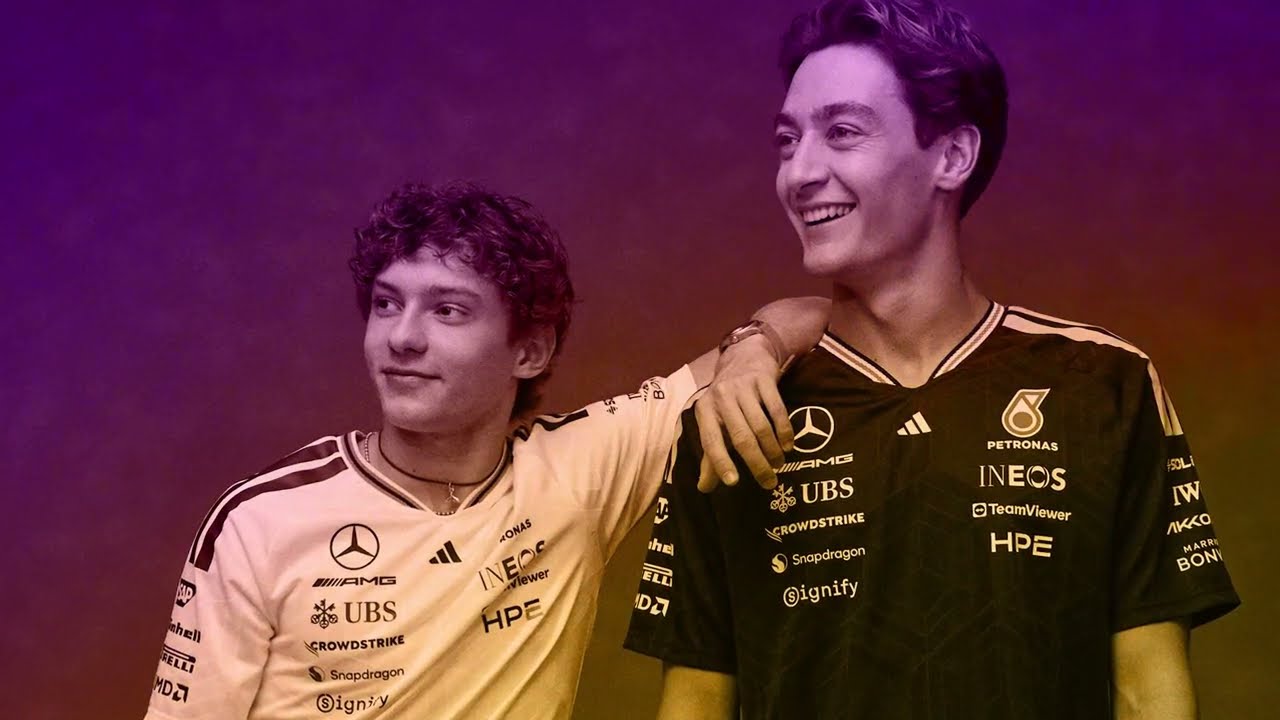
This theory is bolstered by the comments coming out of the Mercedes cockpit. Kimi Antonelli, the prodigy tapped to lead Mercedes into the future, has described the upcoming style of racing as “speed chess.”
Antonelli, a self-confessed data addict who can recall lap times from years ago with photographic precision, points to energy management as the ultimate weapon. He describes a formula where creativity in “energy fights” will supersede raw aggression. The 2026 cars will require drivers to be tacticians, managing a 50/50 split between battery power and combustion power.
If the car’s deployment strategy is flawed, it will bleed lap time regardless of how powerful the engine is. Mercedes’ massive partnership with Microsoft, framed explicitly around simulation and trackside decision-making, suggests they are building a team of “big brains” to dominate this specific area. They are betting the farm that the winner of 2026 won’t be the team with the biggest engine, but the team with the smartest computer.
The Audi Panic
On the other side of the fence, Audi’s aggressive protesting begins to make sense. As a new works project with no customer teams to gather data from, they are flying blind. Reports suggest their 2026 car already has a “long list of issues,” and they are terrified of starting their F1 journey on the back foot.
If Mercedes and Red Bull have indeed found a legal loophole regarding compression limits and are ahead on energy management, Audi faces a nightmare scenario. They need clarity now to avoid wasting years playing catch-up. Their loudness is likely a symptom of fear—fear that the established giants have already left them in the dust before a wheel has even turned in anger.
Toto’s Endgame
There is also a political dimension to Wolff’s posturing. By framing Mercedes as the “transparent” and “honest” party, he is preemptively disarming the FIA. He knows that if the season begins mired in protests and court cases, it damages the sport’s reputation and distracts from the racing.
Wolff is trying to bully the narrative into a place where the 2026 regulations are seen as a “clean reset.” He wants the story to be about innovation and the future, not about petty squabbles over engine temperatures. It’s a classic deflection tactic: keep the media focused on the “controversy” you can control, so they don’t look for the advantage you’re hiding.
Furthermore, with sustainable fuels set to cost upwards of $300 per gallon, any efficiency trick—like the compression innovation—can be framed as a cost-saving, eco-friendly measure. Wolff is positioning Mercedes not just as winners, but as the “good guys” saving the planet and the budget cap, making it even harder for the FIA to ban their tech.
A Ruthless New Identity
What we are witnessing is the birth of a new Mercedes identity for the post-Hamilton era. Gone is the team that relied solely on the brilliance of a singular superstar driver. In its place is a ruthless, driven machine that treats F1 as a tactical RPG.
With George Russell eyeing a title fight and Kimi Antonelli treating races like high-speed mathematics equations, Mercedes looks ready to weaponize their intellect. Toto Wolff’s punchy demeanor is the warning shot. The “engine war” might just be the distraction; the slaughter will happen on the timesheets, driven by invisible energy flows that only Mercedes fully understands.
As the 2026 season approaches, the question isn’t just who has the fastest engine. It’s who is smart enough to realize that the engine barely matters anymore. And right now, Toto Wolff looks like the smartest man in the room.
News

Inside Shane Richie’s love life: Drug – fuelled orgy with six blondes; real reason he split from Coleen Nolan; six-year ‘affair with fan’
Inside Shane Richie’s love life: Orgy with six blondes; real reason he split from Coleen Nolan; six-year ‘affair with fan’ He’s popular with the ladies… Shane Richie…

SH0CKING REVELATI0N:A sh0cking behind-the-scenes secret revealed about Lizzie Rizzini, the woman replacing Carol Kirkwood on the 6pm weather bulletin
BBC viewers still reeling from the departure of Carol Kirkwood got another surprise last night when presenter Lizzie Rizzini appeared to flash her black lace stockings on…

HEARTBREAKING: Peter Andre’s Tearful Message to Son Junior After SHOCKING Revelation About How He Truly Feels Toward Mum Katie Price — Katie Price’s reaction scares fans.
Peter Andre’s emotional message to son Junior after it’s revealed how he really feels about mum Katie Pri… PETER Andre has shared an emotional message to his…

Ben Shephard opens up about the devastating health battle his wife is facing: “She wakes up crying every single morning…”
Inside This Morning Ben Shephard’s Life Including Rarely Seen Wife and Health Battle Ben Shephard is a name synonymous with British television, renowned for his engaging presentation…

🚨 LIVE TV HEARTBREAK: Good Morning Britain Host Announces ‘Devastating’ Dɘath of Guest Minutes Into Show
Viewers of Good Morning Britain were met with heartbreaking news just minutes into Friday’s (January 30) episode, as co-hosts Kate Garraway and Ranvir Singh reported the tragic…

Emmerdale legend Cain Dingle will never be the same again after a shock cancer diagnosis turns his world upside down
FROure Desk. Full Terms and conditions are available on the website http://www.itv.com/presscentre/itvpictures/terms Emmerdale wouldn’t be Emmerdale without the glowering, grunting embodiment of manliness that is Cain Dingle (Jeff Hordley) But…
End of content
No more pages to load






