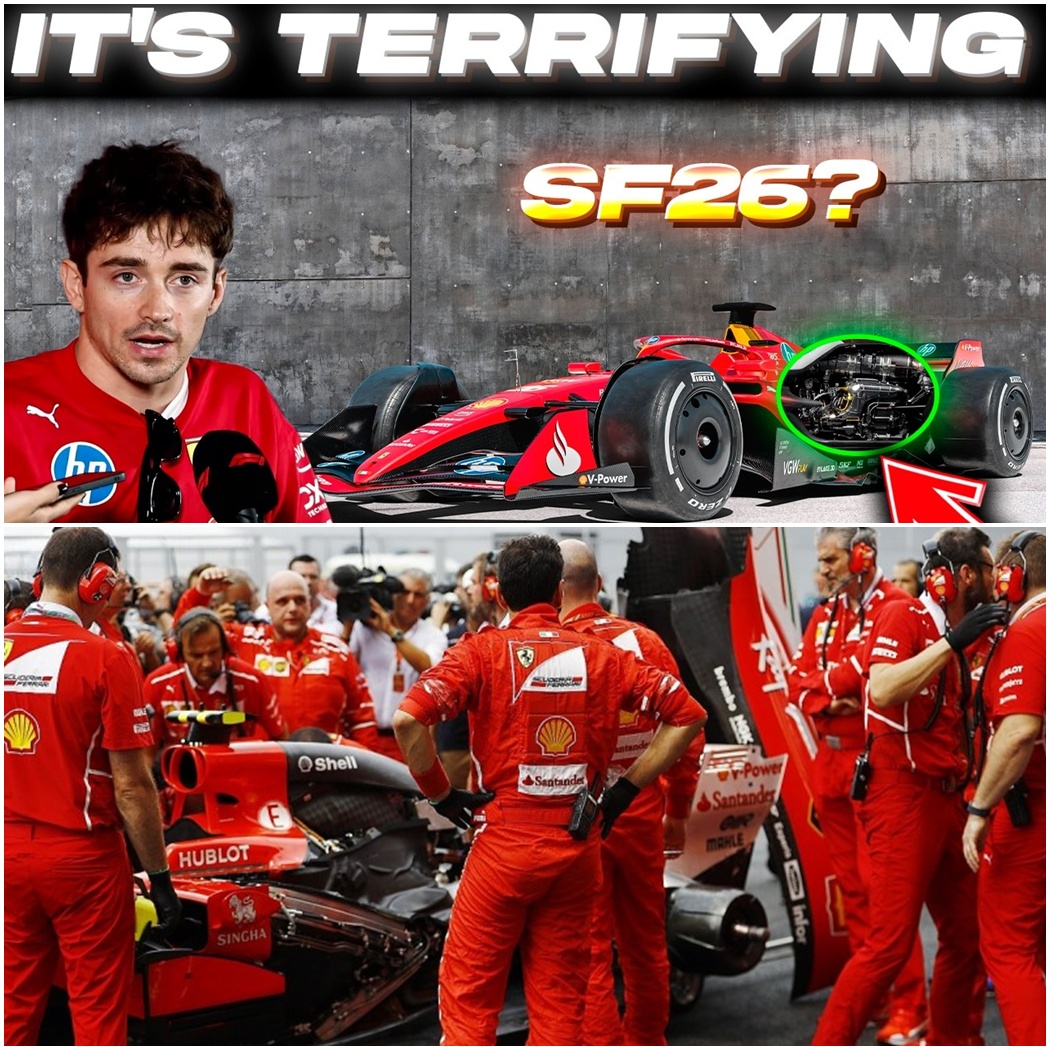
The “Thermal Loophole” That Threatens to Break F1: Why the 2026 Revolution is Already in Crisis
The promise of Formula 1’s 2026 regulations was simple: a clean slate. It was supposed to be a new era of equality, sustainability, and simplified technology designed to lure in new manufacturers like Audi and level the playing field for giants like Ferrari. But just weeks before the first cars are set to hit the track, that promise is teetering on the edge of collapse. A technical scandal of massive proportions has erupted behind closed doors, threatening to fracture the sport before the first light even goes out.
At the heart of the storm is a concept that sounds like science fiction but is dangerously real: “Optimized Structural Thermal Expansion.” It is a controversy that has pitted the sport’s traditional heavyweights against its modern innovators, with the FIA caught helplessly in the middle. The outcome of a critical meeting scheduled for January 22, 2026, will not just decide the legality of an engine part—it could determine the winners and losers of the next five years of Formula 1.
The 16:1 Rule and the “Invisible” Trick
To understand the fury currently engulfing Maranello and Ingolstadt, one must look at the fine print of the new rulebook. For 2026, the FIA mandated that all internal combustion engines must operate with a maximum compression ratio of 16:1. This was a deliberate reduction from previous years, intended to cap costs and reduce the technical barriers for new entrants.
However, the regulations contained a fatal flaw in their wording: they stipulated that this ratio must be checked at room temperature and under static conditions.
This seemingly harmless detail opened a Pandora’s box for the sport’s most creative engineers. According to explosive revelations shaking the paddock, Mercedes and Red Bull have been singled out for developing a system that exploits this specific testing condition. They haven’t broken the rule; they have simply engineered a way to bypass it when it matters most.
The accusation centers on the use of advanced alloys in the pistons and combustion chambers—materials originally developed for aerospace applications. These components are designed to behave obediently during a cold FIA inspection, measuring exactly 16:1. But once the engine fires up and temperatures soar to 130°C on the track, the materials undergo a “controlled deformation.”
It is a microscopic dance of physics. The walls narrow, the chamber ceilings descend, and the combustion volume shrinks by mere hundredths of a millimeter. The result? The compression ratio quietly spikes to 17:1 or even 18:1 during the race. This yields a massive, “illegal” performance boost that is completely invisible to static scrutineering tools.
A Betrayal of the Spirit of Sport?
For teams like Ferrari, Honda, and newcomer Audi, this is not innovation—it is a betrayal. These manufacturers built their power units based on a traditional, good-faith interpretation of the rules. They see the “thermal trick” not as a stroke of genius, but as a violation of the competitive integrity the 2026 regulations promised to uphold.
The anger in Maranello is palpable. Ferrari finds itself in a nightmare scenario: facing a rival that has effectively brought a knife to a fistfight, protected by a regulatory blind spot. It is not just about losing a few tenths of a second per lap; it is about the principle of the sport. If engines are allowed to “transform” once they leave the garage, the rulebook becomes nothing more than a suggestion.
The specific frustration for Ferrari lies in the timing. With the engines set to be homologated and frozen for development, they cannot simply redesign their entire power unit to copy the trick. If the FIA deems the Mercedes and Red Bull solution legal, Ferrari faces the prospect of starting the new era with a baked-in structural disadvantage that they cannot fix.

The “D-Day” Meeting: January 22, 2026
The tension is building toward a crescendo on January 22, when the FIA will convene a summit with all manufacturers. This is not a routine technical briefing; it is a crisis meeting.
The governing body is trapped in a regulatory “Catch-22.” If they ban the thermal expansion technology now, they face potential lawsuits from Mercedes and Red Bull, who have spent millions developing a solution that technically complies with the written text. Banning it would effectively punish them for being smarter than the rule makers.
However, if the FIA allows it, they risk alienating Ferrari, Audi, and Honda, confirming their fears that F1 remains a sport where the “spirit of the rules” is secondary to loophole exploitation. It would set a dangerous precedent: that any parameter can be exceeded as long as it happens while the scrutineers aren’t looking.
The Commercial Shadow
Looming over the technical debate is the undeniable weight of politics and money. Mercedes and Red Bull wield enormous influence in the paddock. Their commercial reach, lobbying power, and history of dominance give them a voice that is hard to ignore. The fear among rival teams is that the FIA might be pressured into a compromise to avoid a public war with its biggest stars.
But the cost of such a compromise could be the show itself. The 2026 regulations were designed to bring the field closer together. If one or two teams start the cycle with a fundamental, unassailable advantage, the dream of a competitive grid evaporates. We could be looking at a repeat of 2014, where one engine manufacturer walked away with the title before the season even reached its midpoint.

Conclusion: A Defining Moment
As the F1 world holds its breath for January 22, the question is no longer about pistons or compression ratios. It is about the identity of Formula 1. Is it a sport of absolute engineering freedom, where the cleverest “cheat” wins? Or is it a competition governed by fair and equal boundaries?
For Ferrari, this is a fight for survival. For the fans, it is a fight for an exciting championship. And for the FIA, it is a test of authority. One thing is certain: when the engines finally fire up in 2026, the war will have already been fought in a conference room in Paris.
Let us know in the comments: Do you think this “thermal trick” is brilliant engineering or unfair cheating?