If you were scanning the timing screens at the Circuit de Barcelona-Catalunya on Wednesday, you might have missed the most significant moment of the pre-season. There were no fireworks, no shock lap times that shattered records, and no aggressive posturing from the reigning champions. In fact, on paper, it looked like a disjointed day for Red Bull Racing: a truncated run plan, a cameo by rain, and a late crash by their reserve driver.
But in Formula 1, the raw data often hides the true narrative. While the rest of the paddock frantically chased mileage and reassurance, Red Bull was quietly chasing something far more dangerous to their rivals: certainty. And as the rain settled over the Spanish track, an uncomfortable truth began to dawn on the engineers huddled in rival garages. The 2026 regulation reset—designed to shake up the order—may have simply handed Max Verstappen a weapon more lethal than the last.
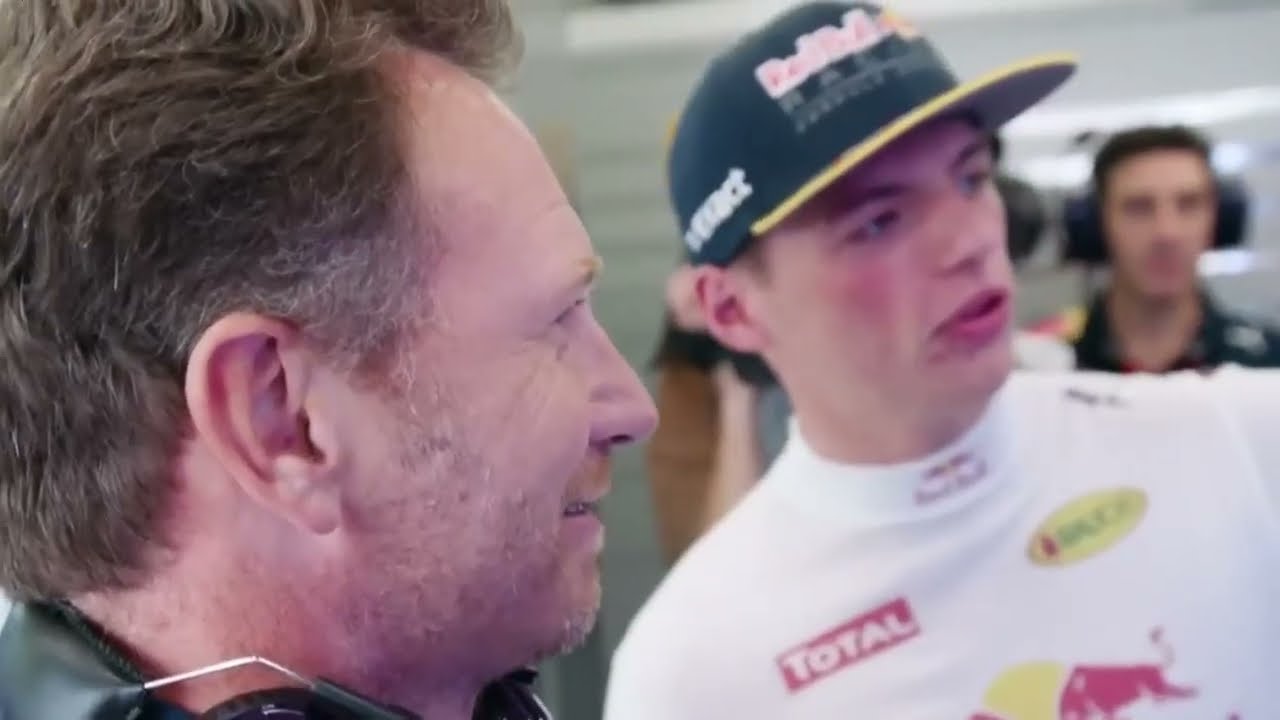
The Deception of Data
To the casual observer, Ferrari looked like the winners of the day. Charles Leclerc was a machine of consistency, logging 66 laps and validating the fundamental systems of his new challenger. In contrast, Max Verstappen completed just 27 laps in the RB22. In a sport obsessed with data accumulation, less is usually worrying.
However, context is everything. Verstappen’s headline lap of 1:19.578 wasn’t born from a desperate, fuel-light “glory run.” It arrived early, casually, and without drama. While Leclerc and Ferrari were in “validation mode”—checking if the car simply functioned as designed—Red Bull appeared to be in “confirmation mode.” They weren’t asking, “Does this work?” They were confirming, “We are right.”
The gap between a 1:19.5 and Leclerc’s 1:20.8 might seem negligible in testing, but the manner in which those times were achieved tells the story. Verstappen’s run was surgical. He entered the track, delivered the reference time, and parked the car. There was no need for endless circulation to understand the platform. The car was ready.
The “Visual Noise” Factor
The most terrifying aspect of the RB22 wasn’t its speed; it was its behavior. New regulation cycles, particularly one as radical as 2026 with its overhauled power units and aerodynamic philosophies, usually produce “nervous” cars. You expect to see drivers fighting the steering wheel, correcting slides on corner exits, or struggling with braking stability as energy recovery systems harvest aggressively.
We call this “visual noise.” It is the visible evidence of a driver and machine trying to find a common language.
On Day 2, the RB22 had zero visual noise. Verstappen’s onboard footage was hauntingly smooth. There were no exaggerated corrections, no moments of hesitation at the apex, and no fighting for traction. The car looked immediately usable, predictable, and locked into a narrow operating window.
For rival aerodynamicists watching from the pit wall, this is the worst-case scenario. It suggests that Red Bull hasn’t just built a fast car; they have built a compliant one. In a year where teams are grappling with complex energy management strategies, having a chassis that requires zero “bedding in” time allows the driver to focus entirely on optimizing the hybrid systems. While others are trying to keep the car on the track, Verstappen is already fine-tuning how he deploys his battery over a race distance.
The 2026 Challenge: A Rebuild, Not an Evolution
It is crucial to understand why this specific test is so significant. The 2026 season is not an evolution of the previous year; it is a total rebuild. The cars feature new active aerodynamics, a powertrain with significantly increased electrical dependence, and a completely different weight distribution.
Historically, resets like this lead to reliability issues and handling quirks. Teams usually spend the first week of testing just mapping the car—figuring out where it “wants to live” in terms of ride height and suspension stiffness.
Red Bull, however, seems to have skipped this awkward adolescence entirely. Verstappen didn’t look like a man discovering a new machine; he looked like he was continuing a conversation that started months ago in the simulator. This continuity between the virtual world and the real world is the holy grail of modern F1 engineering. If the RB22 correlates perfectly with the wind tunnel this early, the development ceiling for Red Bull is effectively nonexistent. They aren’t fixing problems; they are already adding performance.

The “Triple Advantage”
Red Bull insiders have been unusually vocal—and confident—about their standing in this new era. Leadership at Milton Keynes has spoken openly about what they call the “Triple Advantage” that Verstappen brings to the table:
Commitment: The ability to trust the car instantly.
Feel: An innate sensitivity to the tire contact patch.
Extra Brain Power: This is the critical factor for 2026.
With the driver now responsible for managing a far more complex ecosystem of energy harvesting and deployment, the cognitive load in the cockpit has skyrocketed. The team argues that Verstappen has the “spare capacity” to act as a development engineer while driving at 200 mph. He isn’t just steering; he is validating the energy deployment maps in real-time.
This “extra brain power” was evident in how efficiently the team used their limited track time. They didn’t need Verstappen to grind out 100 laps to gather data. They trusted his feedback after five. This efficiency allows Red Bull to preserve parts and engine life while accelerating their development curve faster than teams relying purely on telemetry.
The Hadjar Incident: A Red Herring
Skeptics might point to the afternoon session as a sign of weakness. Isack Hadjar, the Red Bull junior who topped the timesheets on Day 1, ended Day 2 in the barriers after losing control at the final corner. The image of the RB22 with a damaged rear wing was the only blemish on the team’s record.
But even this incident fails to undermine the narrative. By the time Hadjar crashed, the real work was done. Hadjar had already banked over 40 laps, and Verstappen’s morning program was complete. The crash was a situational error, likely due to conditions or inexperience, rather than a structural flaw in the car. If anything, the fact that Red Bull felt comfortable handing the car over to a rookie for substantial running on both days speaks volumes about their confidence. They don’t need Verstappen in the car every second to fix issues—because there aren’t massive issues to fix.
The Psychological Blow
Testing is as much about psychology as it is about engineering. The goal is to intimidate your rivals before the lights go out in Bahrain. In this regard, Red Bull has achieved a checkmate.
Imagine being a rival team principal. You have spent hundreds of millions of dollars, worked through the winter, and arrived in Barcelona hoping to see Red Bull stumble with the new rules. Instead, you see their star driver complete a handful of laps, set the fastest time without breaking a sweat, and retreat to the motorhome. It sends a clear message: We are ready. Are you?
The “probability needle” has shifted. While testing times are never a guarantee of championship points, they deal in probabilities. The probability of a three-way title fight looks slimmer today than it did 48 hours ago. The probability of another era of dominance looks increasingly high.
Conclusion: The Structural Advantage
Was Barcelona Day 2 just a good day at the office, or the prologue to another season of suffocation for the rest of the grid? The evidence points to the latter. The RB22’s advantage appears to be structural, not situational. It is baked into the DNA of the car.
When the fastest driver in the history of the sport steps into a brand-new car and looks bored, you know the rest of the grid is in trouble. The silence in the Red Bull garage wasn’t a lack of activity; it was the quiet confidence of a team that knows the answers before the questions have even been asked. The 2026 revolution is here, and it speaks with a very familiar accent.
News

Inside Shane Richie’s love life: Drug – fuelled orgy with six blondes; real reason he split from Coleen Nolan; six-year ‘affair with fan’
Inside Shane Richie’s love life: Orgy with six blondes; real reason he split from Coleen Nolan; six-year ‘affair with fan’ He’s popular with the ladies… Shane Richie…

SH0CKING REVELATI0N:A sh0cking behind-the-scenes secret revealed about Lizzie Rizzini, the woman replacing Carol Kirkwood on the 6pm weather bulletin
BBC viewers still reeling from the departure of Carol Kirkwood got another surprise last night when presenter Lizzie Rizzini appeared to flash her black lace stockings on…

HEARTBREAKING: Peter Andre’s Tearful Message to Son Junior After SHOCKING Revelation About How He Truly Feels Toward Mum Katie Price — Katie Price’s reaction scares fans.
Peter Andre’s emotional message to son Junior after it’s revealed how he really feels about mum Katie Pri… PETER Andre has shared an emotional message to his…

Ben Shephard opens up about the devastating health battle his wife is facing: “She wakes up crying every single morning…”
Inside This Morning Ben Shephard’s Life Including Rarely Seen Wife and Health Battle Ben Shephard is a name synonymous with British television, renowned for his engaging presentation…

🚨 LIVE TV HEARTBREAK: Good Morning Britain Host Announces ‘Devastating’ Dɘath of Guest Minutes Into Show
Viewers of Good Morning Britain were met with heartbreaking news just minutes into Friday’s (January 30) episode, as co-hosts Kate Garraway and Ranvir Singh reported the tragic…

Emmerdale legend Cain Dingle will never be the same again after a shock cancer diagnosis turns his world upside down
FROure Desk. Full Terms and conditions are available on the website http://www.itv.com/presscentre/itvpictures/terms Emmerdale wouldn’t be Emmerdale without the glowering, grunting embodiment of manliness that is Cain Dingle (Jeff Hordley) But…
End of content
No more pages to load






