If you were scanning the timing screens on the second day of Formula 1 pre-season testing, looking for fireworks, you likely came away disappointed. There were no headline-grabbing glory runs, no catastrophic mechanical failures from the top teams, and no visible panic in the paddock. The narrative, on the surface, seemed almost mundane: cars circled, data was harvested, and the rain eventually spoiled the fun.
But in the high-stakes world of Formula 1, silence is often the loudest sound of all. And on Tuesday at the Circuit de Barcelona-Catalunya, the silence coming from the Red Bull garage was deafening.
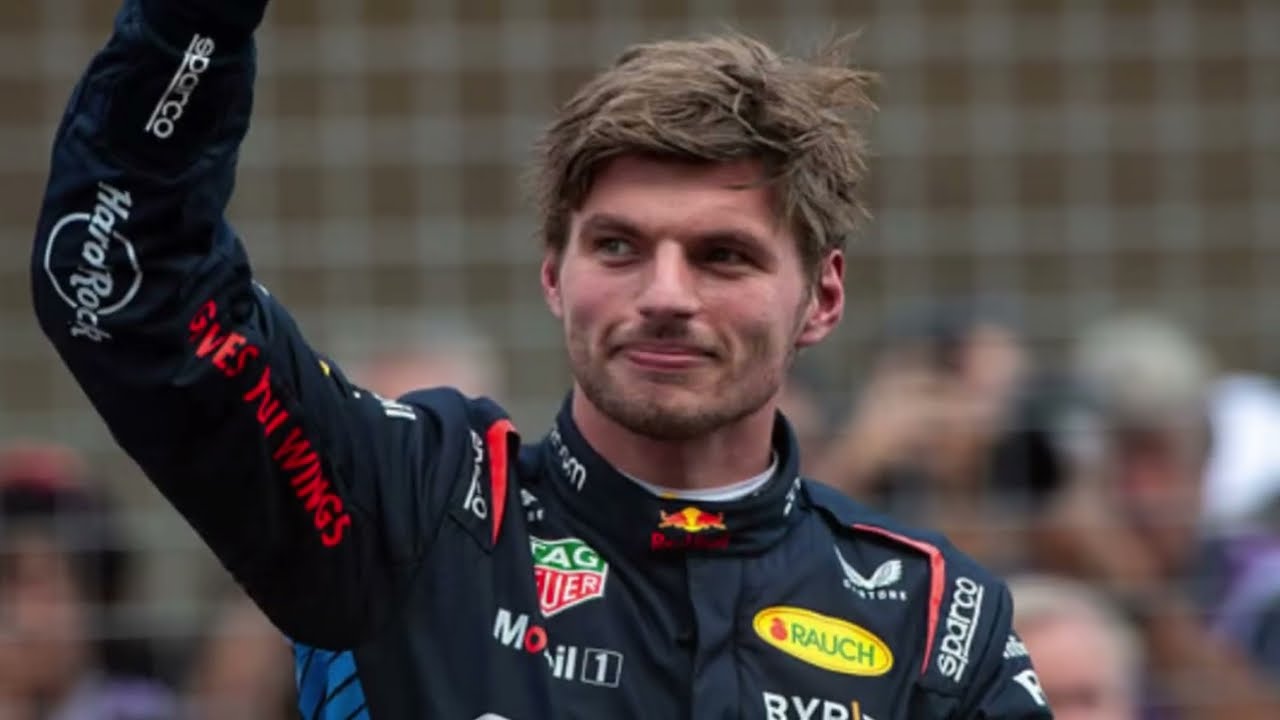
While the rest of the world was busy debating fuel loads and tire compounds, Max Verstappen and Red Bull Racing were quietly dismantling the hopes of a competitive 2026 reset. They didn’t do it with speed traps or purple sectors; they did it with a terrifying lack of drama. In a brand-new era of regulations designed to compress the field and challenge the drivers, the reigning champion stepped into the RB22 and looked like he had been driving it for years.
The Myth of the “Great Reset”
To understand the gravity of what happened on Day 2, we must first appreciate the context of 2026. This isn’t just another season; it is the dawn of a new age for the sport. With radically revised power units heavily reliant on electrical deployment and a complete overhaul of aerodynamic philosophies, the 2026 regulations were billed as the “Great Equalizer.”
History tells us that when F1 hits the reset button, chaos ensues. Dominant teams stumble, mid-fielders find loopholes, and drivers struggle to tame beasts that behave unlike anything they’ve driven before. The expectation was that everyone—even Max Verstappen—would need time to wrestle their new machines into submission. Cars should feel “peaky,” operating windows should be narrow, and reliability should be a nightmare.
Yet, when the garage door opened on Tuesday morning, Red Bull didn’t look like a team searching for answers. They looked like a team that had already read the answer key.
The Lap That Wasn’t Chased
Verstappen’s fastest lap, a 1:19.578, will not go down in history as a track record. But the lap time itself is irrelevant; the behavior of the car is everything.
Most observers missed the nuance. Verstappen didn’t spend the morning fighting the steering wheel or making frantic corrections mid-corner. There was no “sawing” at the wheel, no visible understeer snapping into oversteer. He simply left the pits, found his rhythm, and delivered a reference lap that looked eerily casual.
This is not normal. In the early days of a new regulation cycle, a driver usually looks like they are taming a wild animal. They explore the limits by crossing them. But Verstappen’s adaptation phase was non-existent. He didn’t look like a driver learning a new machine; he looked like a pilot confirming what he already knew from the simulator.
Contrast this with the activity down the pit lane. Ferrari, led by Charles Leclerc, logged over 60 laps in a relentless pursuit of system checks and correlation data. Mercedes kept their cards close to their chest, running conservative modes. These teams were still asking questions of their cars: Will this hold together? Does the cooling correlation match the wind tunnel?
Red Bull, on the other hand, seemed to be checking off a list of affirmations. Yes, it works. Yes, it’s fast. Okay, we’re done.
Quality Over Quantity: The Confidence Flex
The most telling statistic of Day 2 wasn’t the lap time, but the lap count. Verstappen completed his priority work in fewer than 30 laps before the rain arrived.
Think about the arrogance required to run such a lean program in a new era. Most teams would be desperate for mileage, terrified that a lack of data would leave them blind for the season opener. But Red Bull’s confidence is so high that they felt comfortable skipping Day 1 entirely—handing the car over to rookie Isack Hadjar—and then running a minimal program with their star driver on Day 2.
This approach screams “correlation.” It suggests that Red Bull’s simulation tools are so precise that the physical car on the track is behaving exactly as the virtual car in Milton Keynes. They aren’t chasing ghosts; they are validating reality.
There was a brief moment of potential drama when Verstappen ran wide at Turn 5, dipping a wheel into the gravel and triggering a red flag. In previous years, or for a less confident team, this might have signaled a setup issue or a nervous car. Instead, it was a non-event. No damage, no drama. Verstappen returned to the track immediately and continued his program. It was a calculated exploration of the edge, not a clumsy stumble over it.
The “Triple Advantage”
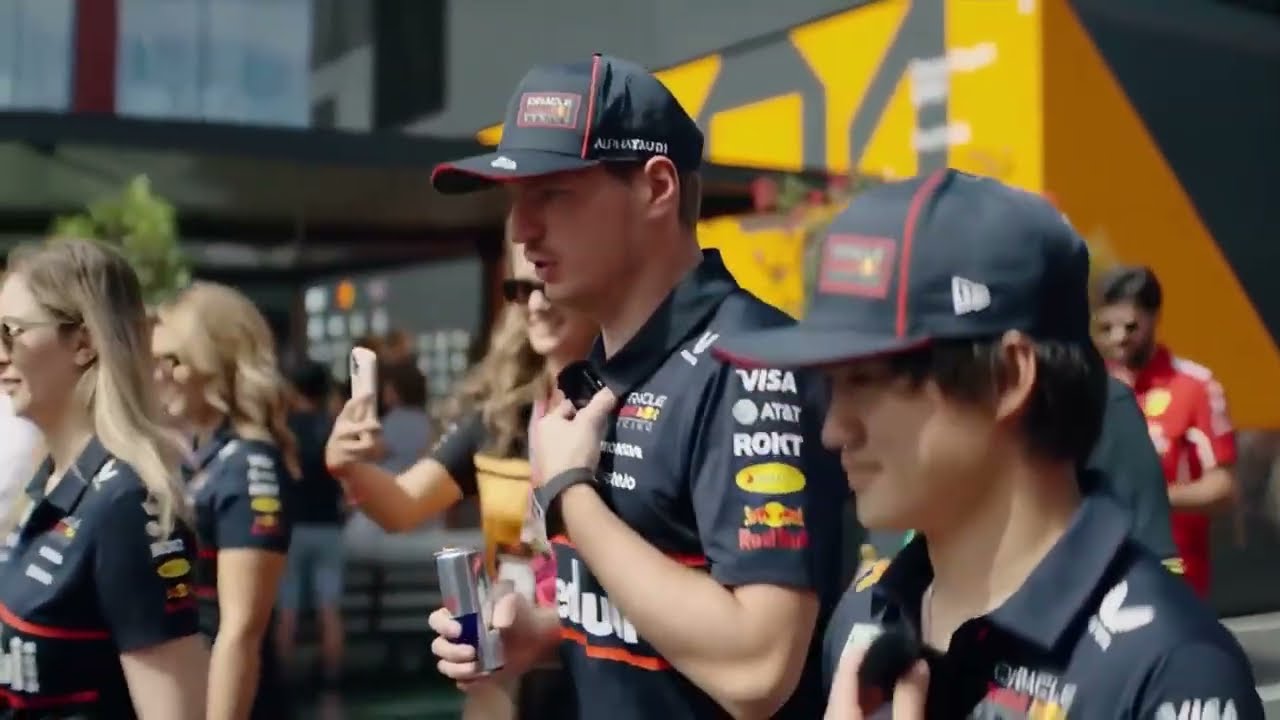
Red Bull leadership has been open about their strategy for this new era, citing a “triple advantage”: Commitment, Feel, and Brain Power. The 2026 power units are complex beasts. The driver is no longer just steering; they are managing energy deployment, harvesting strategies, and active aerodynamics in real-time.
This is where the “Brain Power” comes in. The silence on the radio and the calm in the cockpit suggest that Verstappen has already mastered the cognitive load of these new systems. While other drivers might be overwhelmed by the complexity—struggling to balance raw pace with energy management—Verstappen is already operating at a level where these tasks are subconscious.
It raises an uncomfortable question for his rivals: What if the reset didn’t filter the cars, but the drivers? What if the 2026 regulations have created a formula that disproportionately rewards the most adaptable human processor on the grid?
The Cosmetic Crash
Critics might point to the afternoon session as a sign of weakness. When the rain fell, Isack Hadjar took over the RB22 and promptly put it into the barriers at the final corner.
But even this incident serves to highlight Red Bull’s position. Hadjar is a rookie; his crash was a result of wet conditions and inexperience, not a fundamental flaw in the car’s dry-weather concept. More importantly, from Red Bull’s perspective, the crash was “cosmetic.” The critical data—the dry running with Verstappen—was already banked. The team didn’t panic because the work that mattered was done.
The Nightmare Scenario for 2026
As the sun set on Barcelona, the paddock was left with a lingering sense of unease. Testing is notoriously deceptive. Fuel loads are unknown, engine modes are turned down, and “sandbagging” is a time-honored tradition. Ferrari’s high-mileage run could turn out to be the smarter long-term play. Mercedes might have a monster engine waiting to be unleashed.
But patterns rarely lie this consistently. When a car looks compliant, stable, and fast immediately out of the box, it rarely gets slower. Foundations matter. If Red Bull has started this era with a stable platform while others are still ironing out the kinks, the developmental gap will only widen.
The terrifying truth of Barcelona Day 2 is not that Red Bull is seconds faster. It’s that they are miles ahead in understanding. They aren’t guessing. They aren’t hoping. They know.
For Formula 1 fans hoping for a chaotic, unpredictable season where the mighty fall, Day 2 offered a sobering counter-narrative. The “New Era” looks suspiciously like the old one, only quieter. And as any racer will tell you, it’s the quiet ones you have to watch out for.
Max Verstappen didn’t win the championship on Tuesday. But looking at the body language of his rivals and the serene stability of the RB22, you can’t shake the feeling that he might have just put one hand on the trophy.
News

Inside Shane Richie’s love life: Drug – fuelled orgy with six blondes; real reason he split from Coleen Nolan; six-year ‘affair with fan’
Inside Shane Richie’s love life: Orgy with six blondes; real reason he split from Coleen Nolan; six-year ‘affair with fan’ He’s popular with the ladies… Shane Richie…

SH0CKING REVELATI0N:A sh0cking behind-the-scenes secret revealed about Lizzie Rizzini, the woman replacing Carol Kirkwood on the 6pm weather bulletin
BBC viewers still reeling from the departure of Carol Kirkwood got another surprise last night when presenter Lizzie Rizzini appeared to flash her black lace stockings on…

HEARTBREAKING: Peter Andre’s Tearful Message to Son Junior After SHOCKING Revelation About How He Truly Feels Toward Mum Katie Price — Katie Price’s reaction scares fans.
Peter Andre’s emotional message to son Junior after it’s revealed how he really feels about mum Katie Pri… PETER Andre has shared an emotional message to his…

Ben Shephard opens up about the devastating health battle his wife is facing: “She wakes up crying every single morning…”
Inside This Morning Ben Shephard’s Life Including Rarely Seen Wife and Health Battle Ben Shephard is a name synonymous with British television, renowned for his engaging presentation…

🚨 LIVE TV HEARTBREAK: Good Morning Britain Host Announces ‘Devastating’ Dɘath of Guest Minutes Into Show
Viewers of Good Morning Britain were met with heartbreaking news just minutes into Friday’s (January 30) episode, as co-hosts Kate Garraway and Ranvir Singh reported the tragic…

Emmerdale legend Cain Dingle will never be the same again after a shock cancer diagnosis turns his world upside down
FROure Desk. Full Terms and conditions are available on the website http://www.itv.com/presscentre/itvpictures/terms Emmerdale wouldn’t be Emmerdale without the glowering, grunting embodiment of manliness that is Cain Dingle (Jeff Hordley) But…
End of content
No more pages to load






