The Landscape of Formula 1 Has Changed Forever
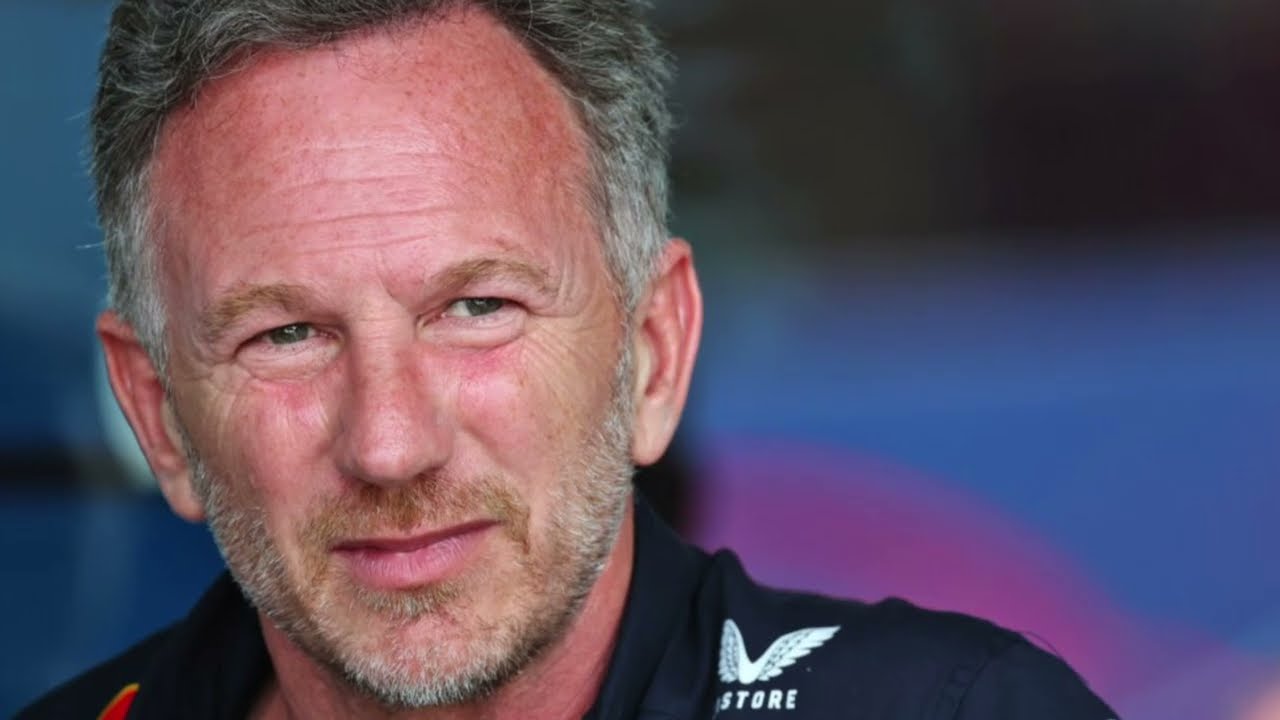
The paddock gossip is over. The whispers behind closed hospitality suite doors have solidified into what is arguably the most significant power realignment the sport has witnessed since the dawn of the hybrid era in 2014. Christian Horner, the man synonymous with Red Bull Racing’s modern dynasty, is not just returning to the grid—he is rewriting the rules of engagement.
Negotiations are reportedly underway for Horner to acquire the 24% stake in Alpine currently held by Otro Capital. This is not merely a rich man’s hobby; it is a calculated, multi-million-pound strategic strike designed to exploit the upcoming 2026 regulatory reset. For a team that has spent the last three seasons trapped in operational paralysis, Horner’s entry—backed by a consortium of high-net-worth investors—represents a definitive guillotine to the failed corporate structures of the past.
But to truly understand the magnitude of this seismic shift, we must look beyond the headlines and into the cold, hard fiscal and technical realities of Formula 1 in 2026.

The Billion-Dollar Franchise Play
In the budget cap era, Formula 1 teams have transformed from money pits into gold mines. In 2023, Otro Capital acquired its stake for approximately $171 million, valuing the Enstone-based squad at roughly $700 million. Today, in early 2026, conservative estimates place that same stake at a staggering $600 million, implying a total team valuation nearing the $2.5 billion mark.
This exponential growth isn’t just “Drive to Survive” hype. It is the result of a closed-shop franchise model where entry is restricted, and demand is infinite. Horner, having severed ties with Red Bull in July 2024, understands the market better than anyone. He knows the window to own a piece of the grid is closing rapidly. Alpine represents the only viable entry point with significant upside potential. It is a distressed asset ripe for a takeover by someone who knows how to polish it into a diamond.
The End of French Pride: The Mercedes “Super Customer”
For decades, Alpine (and formerly Renault) clung to the romantic notion of being a “pure” constructor—building both chassis and engine in-house. It was a point of national pride, but in terms of performance, it was an anchor dragging them to the ocean floor.
The decision to abandon the Viry-Châtillon power unit program is, statistically speaking, the most rational move the team has made in ten years. Throughout the previous regulatory cycle, the Renault E-Tech engine consistently languished at the bottom of the horsepower charts, suffering an estimated deficit of 15 to 22 kW (roughly 20 to 30 horsepower) compared to the class-leading Honda and Mercedes units.
In a sport where three-tenths of a second separates a podium contender from a backmarker, carrying that deficit was a mathematical death sentence.
Enter Flavio Briatore. The enigmatic “enforcer” was characteristically blunt: a Mercedes engine deal was his non-negotiable condition for the team’s future. From 2026, Alpine will receive the same Internal Combustion Engine (ICE), MGU-K, and MGU-H as the works Mercedes team. This deal eliminates the power unit variable entirely. If the 2026 car—internally codenamed the A526—fails to perform, the blame will lie solely with Enstone’s aerodynamic and mechanical departments. It is the ultimate “no excuses” technical framework.
The “Milton Keynes Blueprint”
This is where Christian Horner’s potential involvement becomes the catalyst for a championship charge. Formula 1 is, at its core, a people business. Horner’s departure from Red Bull left a void of loyalty in Milton Keynes. There is significant data to suggest that key engineering figures at Red Bull remain loyal to his leadership style.
Should his ownership stake be ratified, we can expect a “brain drain” from Milton Keynes to Enstone. This isn’t just about hiring a few mechanics; it’s about importing a championship culture into a factory that has been plagued by a civil service mentality for far too long. Horner brings the blueprint—a methodology of integration that led Red Bull to six constructors’ titles. If he can bridge the gap between Enstone’s design office and the Mercedes engine data, Alpine could feasibly leapfrog the midfield and challenge the “Big Three” within the first 24 months of the new rules.
The 2026 Tech Reset: A New Battlefield
The 2026 technical regulations are a radical departure from the current ground-effect philosophy. We are looking at a 50/50 power split between the internal combustion engine and electric assistance. The ICE power is being scaled back from 550 kW to 400 kW, while the battery output is surging from 120 kW to 350 kW.
This creates a massive engineering challenge in terms of energy harvesting and deployment. Mercedes has a historical pedigree of mastering these transitions. By aligning with them, Alpine is betting on a proven technological roadmap rather than the uncertain, underfunded development cycle that plagued their own project.
Furthermore, the 2026 cars will feature active aerodynamics, including an “X-mode” for high-speed straights and a “Z-mode” for cornering downforce. This shift requires a level of integration between the chassis and the power unit’s energy management software that is incredibly complex. The 2026 regulations will also introduce a manual override mode for the electric motor, adding a layer of tactical complexity to overtaking.
By adopting the Mercedes gearbox and rear end, Alpine avoids the massive R&D costs of developing a bespoke casing and hydraulic system. This allows them to focus their aerodynamic budget on front-wing sensitivity and floor edges—the areas that generate the most performance. It is a pragmatic shift from “pride of manufacturing” to “pride of performance.”
Sacrificing the Present to Own the Future
Briatore and the current leadership have made a brutal but necessary calculation: the 2025 season is a write-off. Accepting a dismal 10th place in the standings was a strategic reallocation of resources. In the budget cap era, you cannot develop two cars simultaneously and expect to win.
By diverting nearly 90% of their R&D hours to the 2026 project as early as late 2024, Alpine has gained a development lead that few other teams can match. They are sacrificing the present to own the future.
The Verdict: A Dark Horse Rises
The synergy between Briatore’s old-school ruthlessness and Horner’s modern technical management could form the most formidable leadership duo in the paddock. They are dismantling the romantic notion of a French national team to build a high-performance racing machine that actually wins trophies.
Alpine is following the statistical path of McLaren—transforming from a struggling mid-pack team into a race winner by utilizing top-tier customer engines and agile management. But Alpine has the added benefit of a clean sheet for 2026.
For Christian Horner, this isn’t just a comeback. It’s a chance to prove that he was the secret sauce in the Red Bull recipe all along. And if the numbers are anything to go by, the rest of the paddock should be very, very concerned. The 2026 grid will not just be a battle of cars, but a battle of management philosophies. And Alpine just brought a bazooka to a knife fight.
News

Inside Shane Richie’s love life: Drug – fuelled orgy with six blondes; real reason he split from Coleen Nolan; six-year ‘affair with fan’
Inside Shane Richie’s love life: Orgy with six blondes; real reason he split from Coleen Nolan; six-year ‘affair with fan’ He’s popular with the ladies… Shane Richie…

SH0CKING REVELATI0N:A sh0cking behind-the-scenes secret revealed about Lizzie Rizzini, the woman replacing Carol Kirkwood on the 6pm weather bulletin
BBC viewers still reeling from the departure of Carol Kirkwood got another surprise last night when presenter Lizzie Rizzini appeared to flash her black lace stockings on…

HEARTBREAKING: Peter Andre’s Tearful Message to Son Junior After SHOCKING Revelation About How He Truly Feels Toward Mum Katie Price — Katie Price’s reaction scares fans.
Peter Andre’s emotional message to son Junior after it’s revealed how he really feels about mum Katie Pri… PETER Andre has shared an emotional message to his…

Ben Shephard opens up about the devastating health battle his wife is facing: “She wakes up crying every single morning…”
Inside This Morning Ben Shephard’s Life Including Rarely Seen Wife and Health Battle Ben Shephard is a name synonymous with British television, renowned for his engaging presentation…

🚨 LIVE TV HEARTBREAK: Good Morning Britain Host Announces ‘Devastating’ Dɘath of Guest Minutes Into Show
Viewers of Good Morning Britain were met with heartbreaking news just minutes into Friday’s (January 30) episode, as co-hosts Kate Garraway and Ranvir Singh reported the tragic…

Emmerdale legend Cain Dingle will never be the same again after a shock cancer diagnosis turns his world upside down
FROure Desk. Full Terms and conditions are available on the website http://www.itv.com/presscentre/itvpictures/terms Emmerdale wouldn’t be Emmerdale without the glowering, grunting embodiment of manliness that is Cain Dingle (Jeff Hordley) But…
End of content
No more pages to load






