The Formula 1 world has just witnessed one of the most bizarre and secretive preludes to a season in the sport’s modern history. As the calendar turned to February 2026, marking the dawn of the revolutionary new engine regulations, the paddock descended on the Circuit de Barcelona-Catalunya. But this wasn’t the usual fanfare of media scrums, fan festivals, and wall-to-wall television coverage. Instead, F1 locked the gates.
In a move that baffled many and intrigued even more, the five-day Barcelona test was held entirely behind closed doors. No fans. No media. Not even the broadcast giant Sky Sports was permitted entry. Security ushered away anyone daring to catch a glimpse through the perimeter fences. The sport went dark, sparking wild theories and intense curiosity. Why the secrecy? And more importantly, what exactly unfolded on the tarmac during those five days of silence?
Now that the dust has settled and the silence has broken, we can piece together the fascinating narrative of F1 2026. From Adrian Newey’s mysterious “sexy” creation to McLaren’s high-stakes poker game, here is the full, unvarnished truth of what happened in Spain.
The Great Reliability Surprise
To understand the paranoia behind the closed doors, we have to rewind to 2014. That year marked the last major engine overhaul, and the first pre-season test was a catastrophe. Cars broke down instantly, engines smoked, and teams spent days staring at blank screens in the garage. F1 bosses feared a repeat performance with the ambitious 2026 regulations, which mandate a 50/50 split between internal combustion and electrical power—a massive engineering challenge.
However, the fears were unfounded. The headline story of Barcelona is not failure, but astonishing success. Excluding the absent Williams team, the grid completed a staggering 3,047 laps. To put that in perspective, in the chaotic days of 2014, Mercedes managed just a fraction of that. This time, the new power units—beefed up with 350kW of electrical energy—ran almost flawlessly.
Mercedes, in particular, looks frighteningly reliable. The Silver Arrows, along with their customer teams McLaren and Alpine, racked up mileage that suggests the German manufacturer has once again mastered a new engine formula. But reliability is only half the story. The real drama lies in the wildly different strategies teams are adopting to unlock speed.
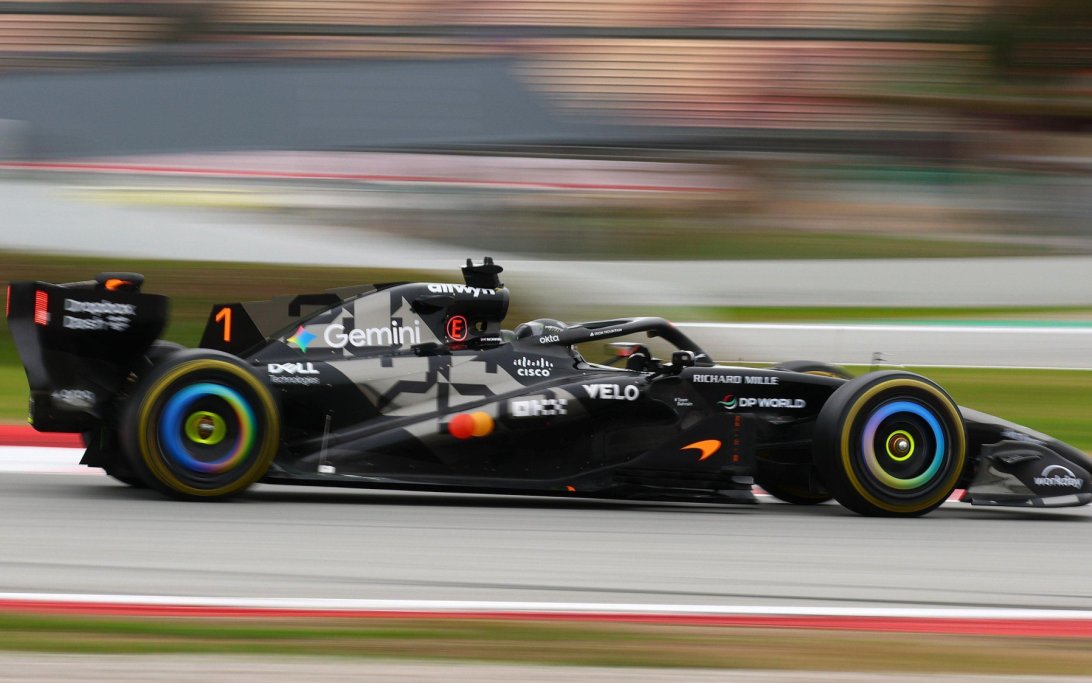
The “Sexy” Mystery of Aston Martin
If there was one car that generated buzz despite barely turning a wheel, it was the Aston Martin. The team, now effectively a Honda works outfit, missed the bulk of the test. They only emerged from the garage in the final hour of Thursday and ran a limited program on Friday with Fernando Alonso.
But it wasn’t the lap count that had tongues wagging; it was the car’s appearance.
Designed by the legendary Adrian Newey, who joined the team in May of the previous year, the car sports a radically different look to anything else on the grid. Described by onlookers as “sexy” and featuring a unique engine cover geometry, the all-black, liveriless machine stood out as a piece of aggressive aerodynamic sculpture.
Even rivals were forced to take notice. Mercedes driver George Russell, usually reserved in his praise for the competition, admitted he was “quite impressed” by what he saw, hinting that Newey might have produced something special. However, Russell also offered a sharp reminder: F1 is not a beauty contest. “It’s not about which car looks the sexiest,” he quipped. “It’s about performance.”
With Honda’s resources and Newey’s genius, Aston Martin is the paddock’s dark horse. They may have started late, but if that car is as fast as it looks, the hierarchy could be turned upside down in Bahrain.
McLaren’s “Dangerous Game”
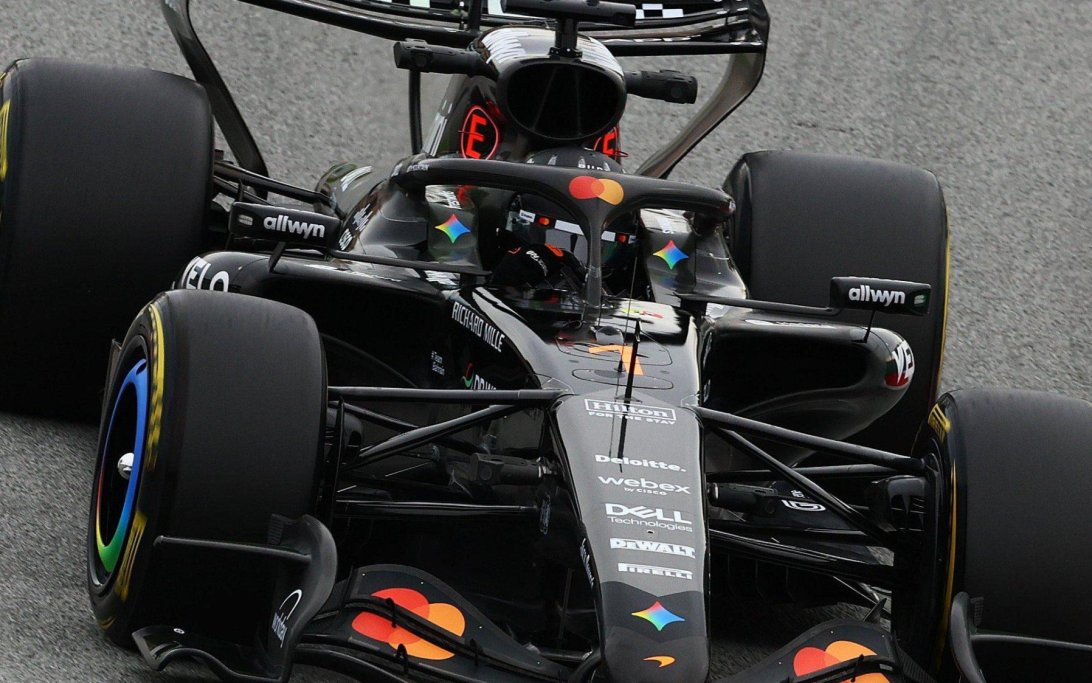
While Aston Martin went for visual shock, McLaren has opted for strategic silence—a move that some insiders are calling a “dangerous game.”
The Woking-based team, led by Andrea Stella, arrived in Barcelona with a calm, almost unnerving demeanor. They didn’t even run their car until Wednesday, opting to finish the build carefully rather than rush. When the MCL40 finally hit the track, it was fast—Lando Norris clocked the third-quickest time of the week—but the team’s development strategy is raising eyebrows.
Unlike Ferrari, who are throwing “everything but the kitchen sink” at their car with massive upgrades planned immediately for Bahrain, McLaren is holding back. They are adopting a “watching brief,” waiting to see what innovations other teams bring before committing to their own development path.
It’s a logical strategy in a budget-cap era, but it carries immense risk. If McLaren’s base package isn’t a world-beater, waiting three or four races to bring upgrades could leave them dust in the wind. In F1, standing still is moving backward. By the time McLaren reacts to their rivals’ tricks, the championship train might have already left the station. Is this confidence, or is it complacency?
The Prancing Horse is Smiling
Over at Maranello, the mood is buoyant. Lewis Hamilton, entering his second season in red at the age of 41, topped the timesheets in Barcelona. While testing times are notoriously unreliable—often fueled by “glory runs” on soft tires and low fuel—the body language tells a deeper story.
Hamilton looks happy. For the first time since the ground-effect era began, he seems at one with the car. The 2026 regulations allow for cars that accelerate brutally out of corners, a trait that suits Hamilton’s aggressive, late-braking style perfectly. Reports suggest he is far more comfortable with this machine than the erratic Mercedes cars of recent years.
Ferrari isn’t resting on its laurels, either. They have openly declared that the car seen in Barcelona is effectively a “launch spec” and that a significantly different, upgraded beast will arrive for the Bahrain tests. If the base car is already this good, and a major upgrade is incoming, the Tifosi have every reason to dream.

Red Bull Silences the Doubters
The biggest question mark going into 2026 was Red Bull. For the first time in their history, they are manufacturing their own engines, with technical support from Ford. Many predicted teething troubles, reliability nightmares, and a fall from grace.
Those critics are currently eating their words.
The Red Bull Powertrains unit ran reliably and competitively. George Russell noted that Max Verstappen will “be up there fighting,” dispelling any notions that the reigning champions would drop the ball. Despite Max battling a flu-like illness that limited his running, the team exuded quiet confidence.
However, it wasn’t all smooth sailing. Rookie Isack Hadjar, replacing Sergio Perez (implied by the context of a new lineup), suffered a massive crash on Tuesday, burying his car in the barriers and damaging the chassis. It was a confidence-shaking moment for the youngster, but the team remains supportive. The car seems fast; now the drivers just need to keep it on the gray stuff.
The Brutal Reality for Cadillac and Audi
Finally, we must address the elephants in the room: the new entries. The arrival of Cadillac (General Motors) and Audi has been hyped for years, but Barcelona provided a harsh reality check.
Cadillac, despite the might of GM, managed only 164 laps—barely a third of Mercedes’ total. Worse still, their pace was alarming. The Cadillac drivers were languishing at the bottom of the time sheets, a massive 4.5 seconds off Hamilton’s pace.
While it is an achievement simply to build a team from scratch and get a car on track, the gap is a chasm. Audi fared slightly better but still struggled for mileage. For these newcomers, 2026 is going to be a brutal lesson in the unparalleled difficulty of Formula 1. They aren’t just fighting for points; they are fighting to not be embarrassed.
Looking Ahead to Bahrain
As the circus packs up and heads to the Middle East, the secrecy continues. The upcoming Bahrain tests will also have limited TV coverage, keeping the true pecking order hidden until the very last moment.
We have a “sexy” Aston Martin that remains an enigma, a McLaren team playing chicken with development, a resurgent Ferrari, and a Red Bull team that refuses to falter. And somewhere at the back, American dreams are facing a rude awakening.
The 2026 season hasn’t just started; it has exploded into life behind closed doors. And if this test was anything to go by, we are in for one of the most unpredictable years in racing history.
News

Inside Shane Richie’s love life: Drug – fuelled orgy with six blondes; real reason he split from Coleen Nolan; six-year ‘affair with fan’
Inside Shane Richie’s love life: Orgy with six blondes; real reason he split from Coleen Nolan; six-year ‘affair with fan’ He’s popular with the ladies… Shane Richie…

SH0CKING REVELATI0N:A sh0cking behind-the-scenes secret revealed about Lizzie Rizzini, the woman replacing Carol Kirkwood on the 6pm weather bulletin
BBC viewers still reeling from the departure of Carol Kirkwood got another surprise last night when presenter Lizzie Rizzini appeared to flash her black lace stockings on…

HEARTBREAKING: Peter Andre’s Tearful Message to Son Junior After SHOCKING Revelation About How He Truly Feels Toward Mum Katie Price — Katie Price’s reaction scares fans.
Peter Andre’s emotional message to son Junior after it’s revealed how he really feels about mum Katie Pri… PETER Andre has shared an emotional message to his…

Ben Shephard opens up about the devastating health battle his wife is facing: “She wakes up crying every single morning…”
Inside This Morning Ben Shephard’s Life Including Rarely Seen Wife and Health Battle Ben Shephard is a name synonymous with British television, renowned for his engaging presentation…

🚨 LIVE TV HEARTBREAK: Good Morning Britain Host Announces ‘Devastating’ Dɘath of Guest Minutes Into Show
Viewers of Good Morning Britain were met with heartbreaking news just minutes into Friday’s (January 30) episode, as co-hosts Kate Garraway and Ranvir Singh reported the tragic…

Emmerdale legend Cain Dingle will never be the same again after a shock cancer diagnosis turns his world upside down
FROure Desk. Full Terms and conditions are available on the website http://www.itv.com/presscentre/itvpictures/terms Emmerdale wouldn’t be Emmerdale without the glowering, grunting embodiment of manliness that is Cain Dingle (Jeff Hordley) But…
End of content
No more pages to load






