Revolution does not arrive quietly. In the high-stakes world of Formula 1, it arrives screaming at 350 km/h, smelling of burnt rubber and unspent potential. As dawn broke over the Barcelona circuit, a machine painted in the iconic crimson of Maranello sat waiting behind closed garage doors. This wasn’t just another pre-season test. This was the moment Ferrari pushed its chips into the center of the table, betting its entire legacy on three gambles that nobody saw coming.
The car, codenamed Project 678 and officially dubbed the SF26, is not merely an evolution of last year’s challenger. It is a violent rejection of the past. It represents a technical and philosophical pivot so aggressive that it has left the paddock whispering a single, terrifying question: Has Ferrari just built a rocket ship that will deliver Lewis Hamilton his eighth title, or have they signed their own death warrant?
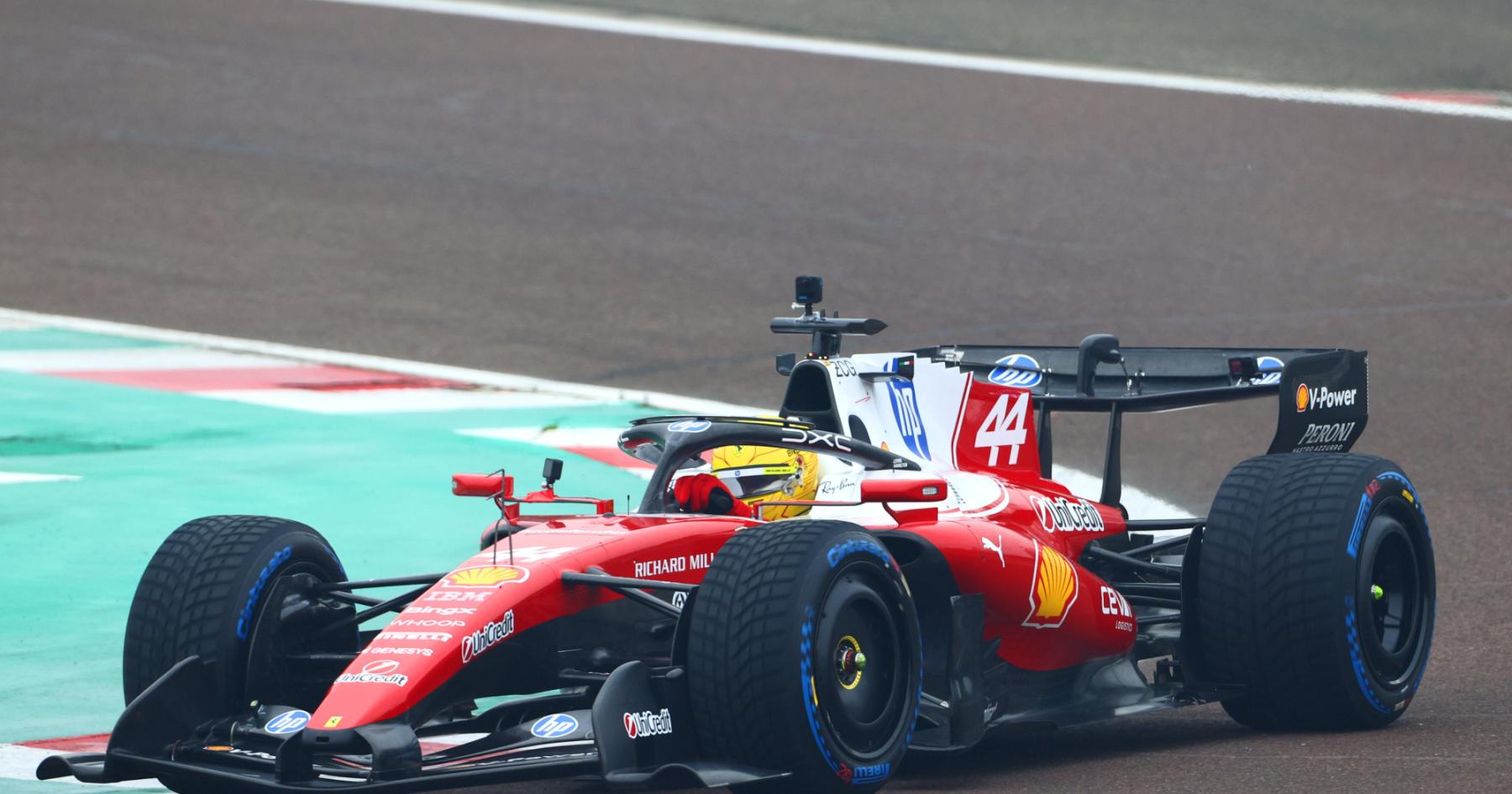
The Suspension Shock: A Decade of Dogma, Deleted
For years, Ferrari has defended its pull-rod suspension setup with religious fervor. It was part of the Scuderia’s DNA, a stubborn adherence to a philosophy they believed they could perfect. But when the covers came off the SF26, that dogma had vanished.
In its place sits a double push-rod system, a concept borrowed straight from the playbook of their rivals at McLaren. The fingerprints of Loic Serra, Ferrari’s new technical heavyweight, are all over this decision. The engineering is as brilliant as it is complex: the upper wishbone is anchored at the very top of the chassis, while the steering arm is tucked away, hidden behind the lower wishbone.
For the mechanics in the garage, it is a nightmare of accessibility. But for the aerodynamicists, it is a dream. This new geometry clears the way for cleaner airflow, feeding the floor and the rear diffuser in ways the old car never could. It is an admission—rare for the proud Italian team—that someone else had a better idea. But implementing it is a risk. Changing suspension geometry alters the fundamental mechanical grip of the car. If the correlation data from the wind tunnel doesn’t match the asphalt of Barcelona, Ferrari will have built a car that looks fast but drives like a shopping cart.
The “Steel Heart” Gamble
If the suspension changes were a surprise, what lies beneath the engine cover is a shock to the system. The 2026 power unit regulations have shifted the sport into a new era, with a 50/50 split between internal combustion and electric power. Most manufacturers have scrambled to optimize traditional aluminum alloys to keep weight down.
Not Ferrari.
Wolf Zimmermann’s engine team has done the unthinkable. They have built the cylinder heads of the SF26’s internal combustion engine out of steel.
On paper, it sounds like madness. Steel is heavy. In a sport where every gram is a prisoner, voluntarily adding weight seems counterintuitive. But the logic is ruthless. To extract maximum efficiency from the reduced fuel flow mandates of 2026, the engine needs to withstand immense combustion pressures and temperatures—heat that would turn a standard aluminum engine into a puddle of molten metal in seconds.
Steel can take the punishment. If this gamble pays off, Ferrari will have a combustion advantage that defines the season, allowing them to run harder, longer, and with more power than anyone else. But the downside is grave. If the advantage isn’t there, they are carrying what insiders are calling “15 kg of holiday weight.” In F1, carrying that kind of excess bulk while rivals sprint is not a handicap; it is a competitive death sentence.
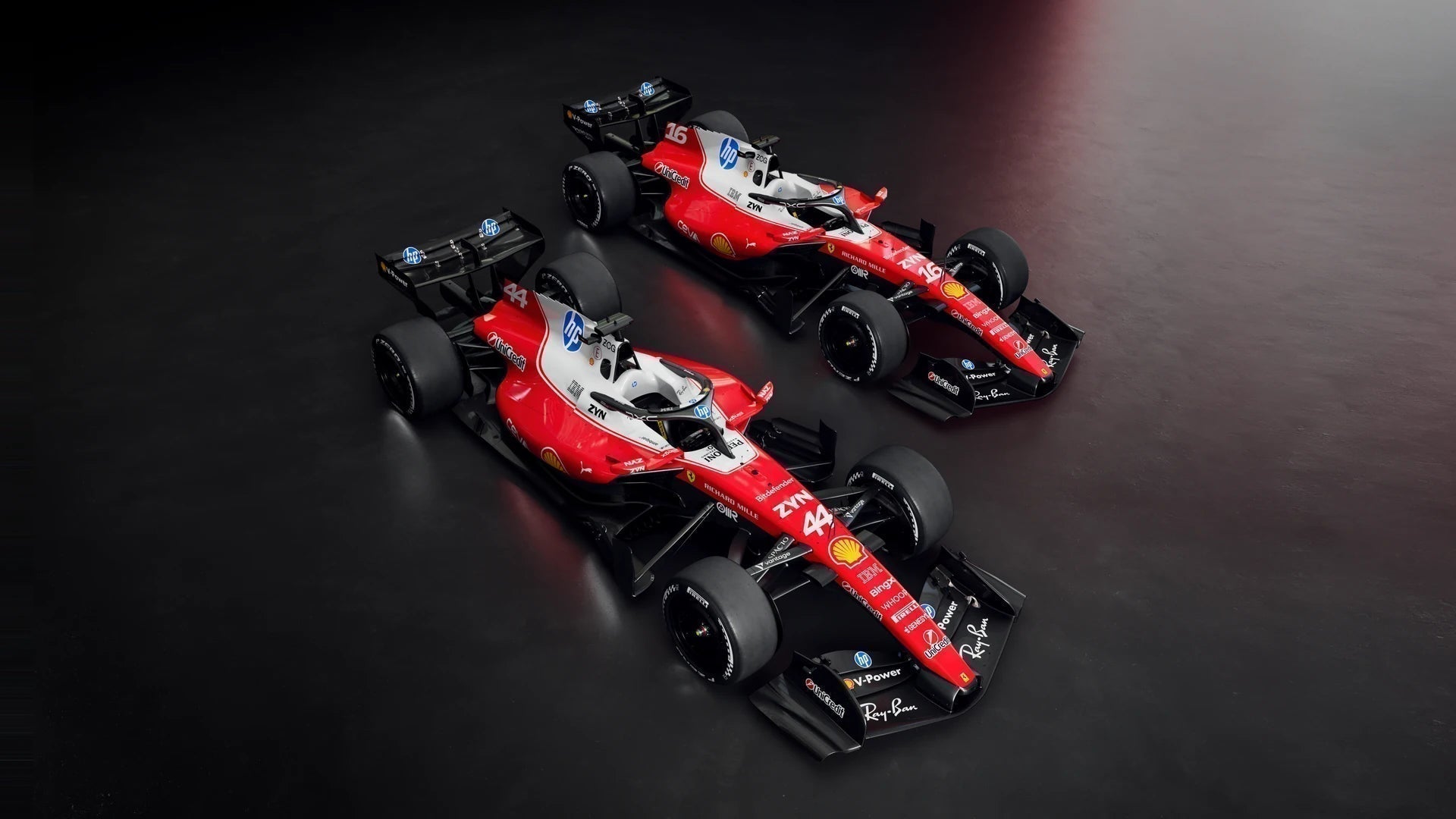
The Hamilton Dilemma: Driving Blind?
Then there is the human element, the star of the show: Lewis Hamilton. The seven-time world champion left the safety of Mercedes to chase a final dream in red. But his arrival has been anything but smooth sailing.
In a twist that defies logic for a driver of his stature, Hamilton has arrived in Barcelona without a permanent race engineer. He is currently sharing Bryan Bozzi with his teammate, Charles Leclerc.
Consider the magnitude of this. Hamilton is facing the most complex regulatory reset in the history of the sport. He is learning a car that behaves differently than anything he has driven before—shorter, narrower, and equipped with radical active aerodynamics. Usually, a driver relies on a symbiotic relationship with their engineer, a shorthand language built over years, to navigate these challenges. Hamilton is learning to communicate through a translator who is already busy speaking to someone else.
Fred Vasseur, Ferrari’s Team Principal, calls it a “pragmatic solution.” Critics call it a dangerous oversight. If Hamilton cannot convey the nuances of the car’s balance because the communication channel is cluttered, the development path of the SF26 could veer off a cliff before the first race even starts.
The Battle of the Scales
There is a secret victory Ferrari is banking on, one that is barely visible to the naked eye. The SF26 is reportedly built 50 millimeters shorter than the maximum wheelbase allowed by the regulations.
Fifty millimeters sounds like nothing to a layman. In Formula 1 engineering, it is a canyon. That reduction translates to approximately 1.5 kilograms of weight saved. In a year where teams are fighting desperately to hit the 678 kg minimum weight limit, this is massive.
Rumors swirling in the paddock suggest that Ferrari might start the season only 5 to 7 kg overweight, while some rivals could be languishing at 15 kg over the limit. If Ferrari hits the ground running with a naturally lighter car, they will have a massive advantage in tire degradation and race pace. A lighter car is kinder to its rubber, easier to stop, and faster out of corners. While others strip paint off their cars to save grams, Ferrari might have engineered lightness into the chassis itself.
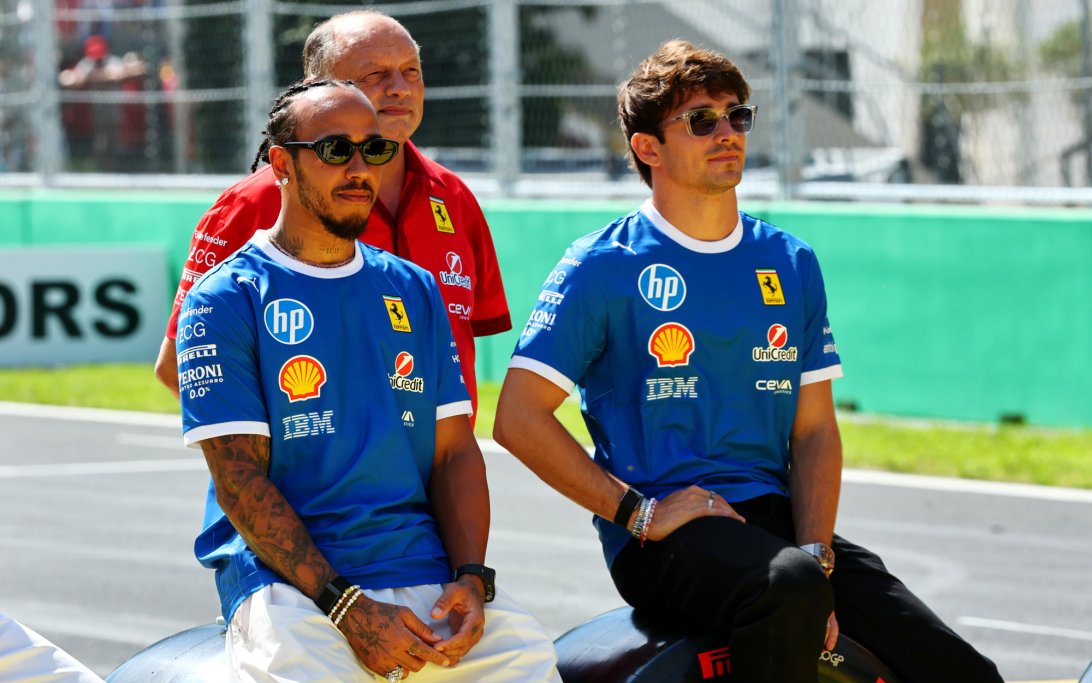
The Verdict: Glory or Ruin?
As the testing program begins, three scenarios loom over Maranello, each more dramatic than the last.
Scenario One: The gambles pay off. The steel engine delivers unstoppable power, the push-rod suspension provides cornering on rails, and the shorter wheelbase makes the car nimble and kind on tires. Hamilton and Leclerc form the deadliest duo on the grid, and Ferrari doesn’t just win—they dominate.
Scenario Two: The weight kills them. The steel engine is too heavy, the “holiday weight” drags them down, and the aerodynamic changes don’t yield enough lap time to compensate. Hamilton spends his twilight years fighting for scraps, and the dream of a red championship dissolves into heartbreak.
Scenario Three: The “Fast but Fragile” paradox. The car is a rocket, but the complexity bites back. The hydraulic active aero glitches at 300 km/h; the steel heads overheat; the shared engineer situation leads to strategic chaos. They win on Sundays but break down on Saturdays, letting the championship slip through their fingers because they were too brave, too early.
Fred Vasseur has cleared out the old guard and staked his reputation on this machine. He told the press to expect them to be “boring” and “reliable” in testing. But the telemetry from Fiorano tells a different story. The SF26 is stable, aggressive, and radically different.
One thing is certain: Ferrari is no longer playing it safe. They have looked at the rulebook and decided that to beat the dynasties of Red Bull and Mercedes, they cannot just be better; they have to be different. Whether the SF26 is the chariot of legends or a cautionary tale of hubris remains to be seen. But when Lewis Hamilton lowers his visor in Barcelona, he won’t just be testing a car. He will be testing the resolve of a team that has decided it is finally time to win or die trying.
News

Inside Shane Richie’s love life: Drug – fuelled orgy with six blondes; real reason he split from Coleen Nolan; six-year ‘affair with fan’
Inside Shane Richie’s love life: Orgy with six blondes; real reason he split from Coleen Nolan; six-year ‘affair with fan’ He’s popular with the ladies… Shane Richie…

SH0CKING REVELATI0N:A sh0cking behind-the-scenes secret revealed about Lizzie Rizzini, the woman replacing Carol Kirkwood on the 6pm weather bulletin
BBC viewers still reeling from the departure of Carol Kirkwood got another surprise last night when presenter Lizzie Rizzini appeared to flash her black lace stockings on…

HEARTBREAKING: Peter Andre’s Tearful Message to Son Junior After SHOCKING Revelation About How He Truly Feels Toward Mum Katie Price — Katie Price’s reaction scares fans.
Peter Andre’s emotional message to son Junior after it’s revealed how he really feels about mum Katie Pri… PETER Andre has shared an emotional message to his…

Ben Shephard opens up about the devastating health battle his wife is facing: “She wakes up crying every single morning…”
Inside This Morning Ben Shephard’s Life Including Rarely Seen Wife and Health Battle Ben Shephard is a name synonymous with British television, renowned for his engaging presentation…

🚨 LIVE TV HEARTBREAK: Good Morning Britain Host Announces ‘Devastating’ Dɘath of Guest Minutes Into Show
Viewers of Good Morning Britain were met with heartbreaking news just minutes into Friday’s (January 30) episode, as co-hosts Kate Garraway and Ranvir Singh reported the tragic…

Emmerdale legend Cain Dingle will never be the same again after a shock cancer diagnosis turns his world upside down
FROure Desk. Full Terms and conditions are available on the website http://www.itv.com/presscentre/itvpictures/terms Emmerdale wouldn’t be Emmerdale without the glowering, grunting embodiment of manliness that is Cain Dingle (Jeff Hordley) But…
End of content
No more pages to load






