The dawn of a new era in Formula 1 has officially arrived. On a rain-soaked Tuesday in Barcelona, the image that motorsport fans have dreamed of—or feared—for over a decade finally became reality. Lewis Hamilton, the seven-time world champion, took the wheel of the Ferrari SF-26 for his first proper test session, marking the beginning of what promises to be the most scrutinized partnership in the sport’s history.
The atmosphere at the Circuit de Barcelona-Catalunya was electric, despite the gloomy weather that plagued the session. For Hamilton, this was more than just a shakedown; it was the culmination of months of secretive work, late-night simulator sessions, and the massive emotional weight of leaving Mercedes to don the legendary scarlet racing suit.

A Wet and Wild Baptism of Fire
The weather gods did not seem eager to welcome the 2026 regulations with open arms. The track was dampened by rain starting around 10:30 AM, forcing teams to scramble and adjust their meticulously planned run sheets. For a driver getting acclimated to a completely new machine, wet conditions are far from ideal. The nuances of a new chassis, the bite point of the brakes, and the torque delivery of the new power unit are notoriously difficult to learn when the car is sliding on a low-grip surface.
Yet, despite the challenging conditions and a red flag interruption, Hamilton’s first report card for the SF-26 was surprisingly positive. In an exclusive interview following the session, the Briton revealed a sense of relief and quiet confidence that will surely send ripples of anxiety through the rival paddocks.
“It was very challenging today, obviously, because it started raining at 10:30,” Hamilton admitted, still visibly energized from the stint. “We had a little bit of dry running, but then it’s been wet all afternoon. Figuring out how to get the tires working was really productive.”
Productive might be an understatement. In a sport where reliability is often the Achilles’ heel of new regulations, Ferrari seems to have built a tank. Hamilton and the team managed to clock a staggering 120 laps—a distance equivalent to nearly two Grand Prix races—mostly in treacherously wet conditions.
“I think we got 120 laps or something like that, given it’s in the wet conditions and we had a red flag. I think that’s pretty solid,” Hamilton said, praising the team’s effort. “I’m really proud of everyone back at the factory for getting the car to this point. We got a lot of information on the car today.”
The Mystery of the “SM” System and 2026 Regulations
The 2026 season brings with it a massive overhaul of the technical regulations, featuring simpler internal combustion engines with significantly increased electrical power and active aerodynamics. These changes mean that the cars drive differently, feel different, and require a new approach from the drivers.
Hamilton hinted at the steep learning curve involved with these new systems. He specifically mentioned the need to understand the “SM”—a likely reference to a new suspension mode or system management setting specific to the SF-26—and the critical importance of energy deployment.
“I think just understanding balance, understanding the new SM that we have and how to utilize it, how you can feel it… I’ve not driven it in the dry so I don’t really have a feeling for it,” he explained.
The electrical deployment is set to be a major differentiator in 2026. With the removal of the MGU-H and the increased reliance on the kinetic energy recovery system (MGU-K), drivers will have to be more strategic than ever with how they deploy battery power over a lap.
“Understanding the deployment is going to be crucial,” Hamilton emphasized. “Understanding how to utilize the power, the battery, throughout the lap and recharging, all that kind of stuff. But I mean, we’ve done a huge amount of work, everyone’s done a huge amount of work on the simulator, so it’s not like it’s 100% brand new for us.”
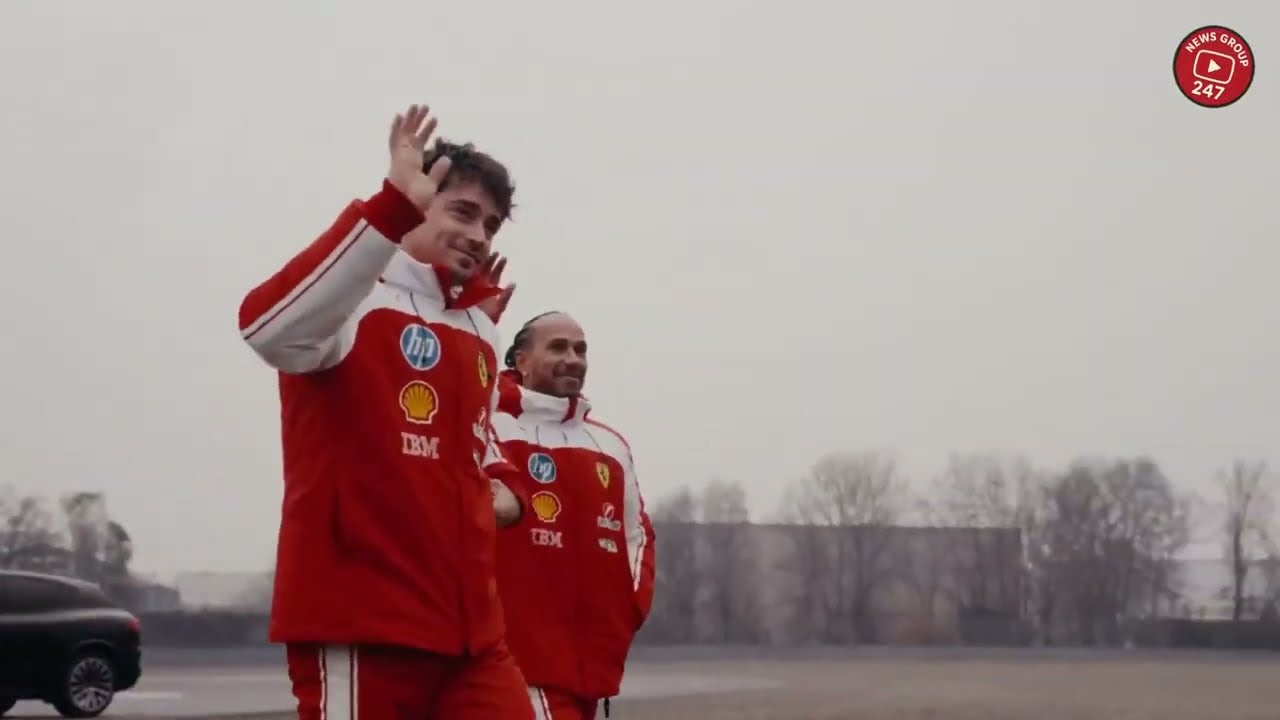
A Dream Realized: Waking Up to the Prancing Horse
Beyond the technical jargon and lap times, there is a palpable emotional undercurrent to this test. Hamilton, who spent the vast majority of his career with Mercedes, is clearly soaking in the romanticism of driving for Ferrari. He spoke with a sense of wonder about the environment he now finds himself in.
“It’s so awesome. I get to wake up here, so I have my motorhome here, and every day I wake up and I see this big Ferrari sign,” Hamilton shared, a smile breaking through his professional demeanor. “Sometimes I go and run the track, which I’m not actually allowed to do. This is always one of my favorite periods because this is when you get to see all the hard work from over a thousand people come together.”
He revealed that he has been working with the team on the SF-26 project for “eight to ten months,” a timeline that suggests he was heavily involved in the development phase long before he officially hit the track. This level of integration is crucial. Hamilton isn’t just a hired gun stepping into a finished car; he is an architect of this new era for the Scuderia.
No Major Issues: A Warning Shot to Rivals?
Perhaps the most terrifying takeaway for Ferrari’s rivals is not the lap count, but the lack of drama. Pre-season testing, especially at the start of a new regulatory cycle, is usually plagued by breakdowns, leaks, and software glitches. For Hamilton to step out of the car after 120 laps in the rain and declare there were “no major issues” is significant.
“It could be so much worse, you know, with such a big rule regulation change,” Hamilton noted. “To get through the day without too many major—there were no major issues. It’s just small little increments that we’re trying to improve on. I think it’s great.”
This reliability allows the team to focus immediately on performance rather than troubleshooting. Every lap gathered is data banked, every corner analyzed is a step closer to optimizing the setup. While other teams might be fighting gremlins in the garage, Ferrari is already fine-tuning the “small increments.”
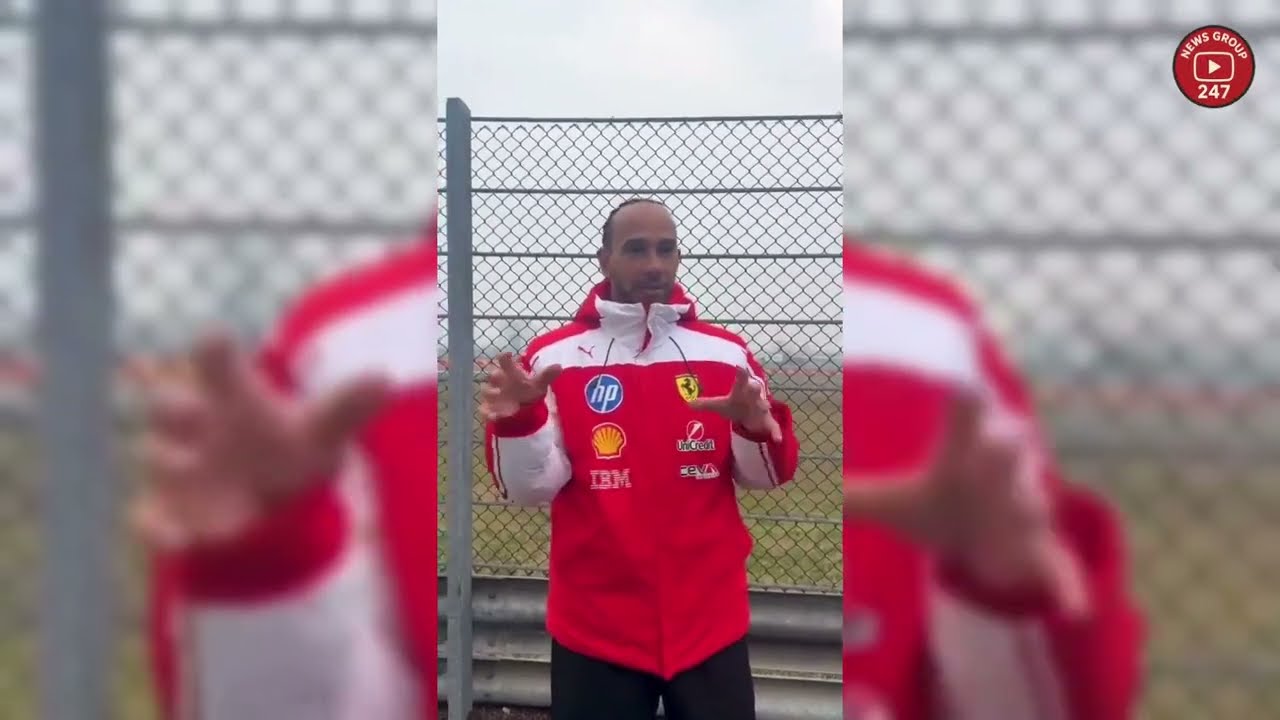
Looking Ahead: The Craving for Dry Asphalt
Despite the successful outing, Hamilton remains hungry for a dry track. The wet weather masks the true characteristics of the car’s handling limit and the ultimate efficiency of the aerodynamic package.
“I’m hoping to experience the car in the dry,” he said, outlining his checklist for the remaining days of the test. “We still have to go through our sessions and through the data to try and optimize it in the dry.”
The coming days in Barcelona will be critical. If the sun breaks through, we will get our first real glimpse of the SF-26’s pace. But for now, the message from the Ferrari camp is loud and clear: The car works, the driver is motivated, and the legend of Lewis Hamilton in red has begun with a very “solid” first chapter.
As the F1 world watches with bated breath, one thing is certain: The combination of Lewis Hamilton and Ferrari is not just a marketing dream—it is a serious, well-oiled machine ready to hunt for championships. The 2026 season hasn’t even started, but the psychological battle has already been won on a rainy day in Spain.
News

Inside Shane Richie’s love life: Drug – fuelled orgy with six blondes; real reason he split from Coleen Nolan; six-year ‘affair with fan’
Inside Shane Richie’s love life: Orgy with six blondes; real reason he split from Coleen Nolan; six-year ‘affair with fan’ He’s popular with the ladies… Shane Richie…

SH0CKING REVELATI0N:A sh0cking behind-the-scenes secret revealed about Lizzie Rizzini, the woman replacing Carol Kirkwood on the 6pm weather bulletin
BBC viewers still reeling from the departure of Carol Kirkwood got another surprise last night when presenter Lizzie Rizzini appeared to flash her black lace stockings on…

HEARTBREAKING: Peter Andre’s Tearful Message to Son Junior After SHOCKING Revelation About How He Truly Feels Toward Mum Katie Price — Katie Price’s reaction scares fans.
Peter Andre’s emotional message to son Junior after it’s revealed how he really feels about mum Katie Pri… PETER Andre has shared an emotional message to his…

Ben Shephard opens up about the devastating health battle his wife is facing: “She wakes up crying every single morning…”
Inside This Morning Ben Shephard’s Life Including Rarely Seen Wife and Health Battle Ben Shephard is a name synonymous with British television, renowned for his engaging presentation…

🚨 LIVE TV HEARTBREAK: Good Morning Britain Host Announces ‘Devastating’ Dɘath of Guest Minutes Into Show
Viewers of Good Morning Britain were met with heartbreaking news just minutes into Friday’s (January 30) episode, as co-hosts Kate Garraway and Ranvir Singh reported the tragic…

Emmerdale legend Cain Dingle will never be the same again after a shock cancer diagnosis turns his world upside down
FROure Desk. Full Terms and conditions are available on the website http://www.itv.com/presscentre/itvpictures/terms Emmerdale wouldn’t be Emmerdale without the glowering, grunting embodiment of manliness that is Cain Dingle (Jeff Hordley) But…
End of content
No more pages to load






