The curtain has finally risen on the 2026 Formula 1 season, but if the sport’s bosses had their way, nobody outside the paddock would have seen a thing. The first pre-season test in Barcelona was designed to be a fortress—a “blackout” event held strictly behind closed doors. There were no fans in the stands, no official television cameras rolling, and a deliberate attempt to keep the revolutionary new cars shrouded in mystery. Yet, in the age of information, total secrecy is an illusion.
As the engines fired up on day one, the “iron curtain” around the Circuit de Barcelona-Catalunya proved to be porous. Despite aggressive attempts to control the narrative, leaks have sprung from every corner of the track. From spy shots to illicitly obtained lap times, the truth of the 2026 hierarchy is already beginning to take shape. But beyond the lap times, two major narratives have emerged: the extreme lengths F1 went to to hide the cars, and a shocking political maneuver by Mercedes to assist their arch-rival, Max Verstappen.
The Great Barcelona Information War
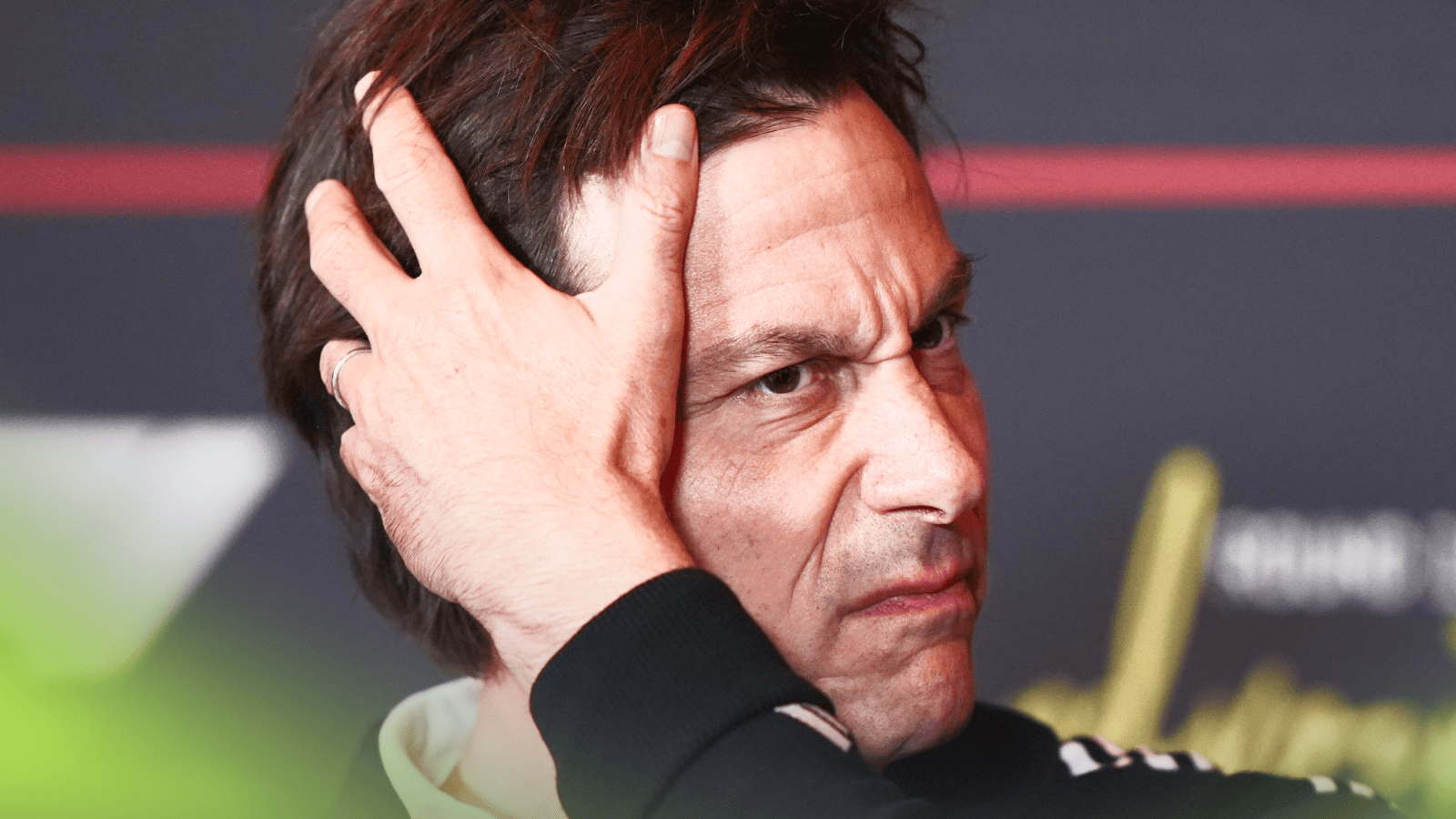
The atmosphere in Barcelona was less like a sporting event and more like a military operation. It has been known for some time that this first test of the new regulation era would be private, but the extent of the lockdown caught many off guard. The goal was to prevent “uncontrolled information” from escaping, allowing teams to test their radical new designs without fear of their secrets being broadcast to the world instantly.
However, the execution of this security plan led to heated confrontations. The circuit is surrounded by public areas, including a well-known open grass space and hiking trails that offer panoramic views of the final corner and pit lane entry. Historically, these have been popular spots for photographers and journalists to observe the cars even when the paddock is restricted. This time, however, they were met with a zero-tolerance policy.
According to reports from the ground, security personnel began patrolling these public zones immediately. Just 18 minutes into the session, assembled media members were ordered to leave public land. Arguments that the area was a public hiking trail fell on deaf ears; the mandate was that any location with a line of sight to the track was off-limits. This heavy-handed approach has drawn criticism for treating the test like a state secret rather than a sporting event. It raises questions about the balance between protecting intellectual property and maintaining the engagement of the global fanbase.
To further tighten the noose, the publicly available live timing feed—a staple for fans following testing remotely—was unceremoniously cut off just a few hours into the running. The message was clear: F1 did not want anyone knowing who was fast and who was failing.
Leaked Times: The First Pecking Order
Despite the blackout, data always finds a way out. Leaked timing sheets have provided the first glimpse into the competitive order of the 2026 grid, and the familiar names are already at the top.
Red Bull Racing, continuing their dominance from the previous era, appear to have hit the ground running. Their reserve driver, Isack Hadjar, clocked the fastest time of the day with a 1:18.159. The team was not just fast; they were reliable, logging a substantial 107 laps. This suggests that the Red Bull Powertrains project, a massive undertaking for the Milton Keynes squad, is functioning as intended.
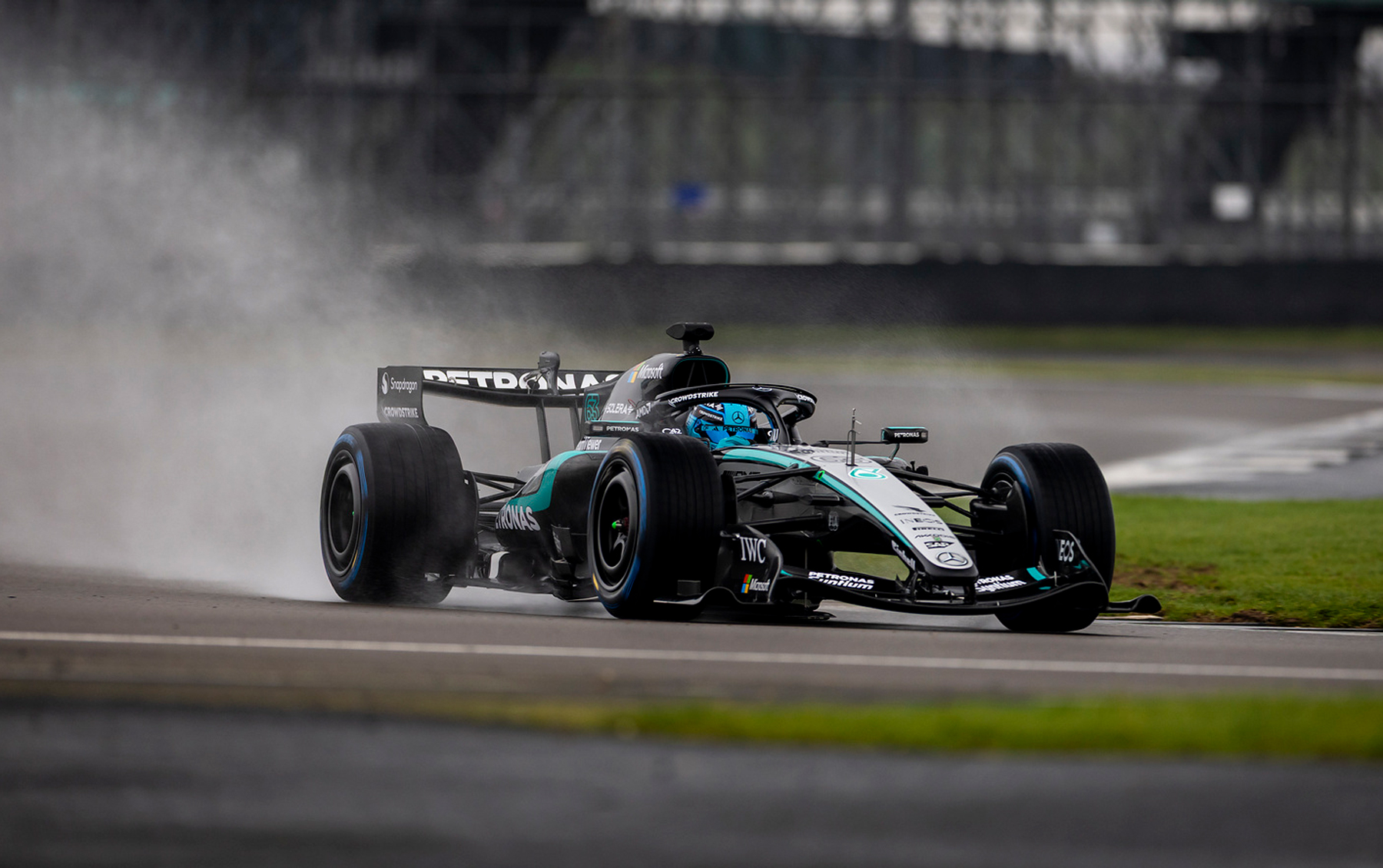
Mercedes, the team looking to reclaim their throne, was the closest challenger. George Russell ended the day roughly five-tenths of a second slower than Hadjar. However, context is king in testing. Insider reports indicate a divergence in tire strategy that makes a direct comparison difficult. Red Bull opted for the softer C3 tire compound for their headline times, while Mercedes focused their running on the harder compounds. In the complex world of F1 data analysis, a half-second deficit on a harder tire suggests that the Silver Arrows are very much in the hunt, perhaps even neck-and-neck with their rivals once fuel loads and rubber are equalized.
Further down the order, the leaked times show Williams showing promise with Franco Colapinto taking third, albeit two seconds off the pace. Kimi Antonelli, the Mercedes prodigy, logged a solid 56 laps, while Esteban Ocon proved to be the workhorse of the day, completing a marathon 154 laps, providing invaluable data for his team.
Nightmare Start for New Manufacturers
While the established giants traded blows at the front, the 2026 test served as a brutal wake-up call for the sport’s newest manufacturers. The allure of the new engine regulations attracted giants like Audi and General Motors (Cadillac), but the reality of the racetrack has proven unforgiving.
Audi, taking over the Sauber entry, faced a disastrous opening day. With Gabriel Bortoleto behind the wheel, the car suffered a stoppage that triggered an early red flag. The concern isn’t just the stoppage, but the aftermath: the car, equipped with the brand-new Audi power unit, never returned to the track. Losing nearly an entire day of running in a limited testing schedule is a critical blow for a new manufacturer trying to catch up to competitors with decades of experience.
Cadillac fared little better. Fielding a lineup of veterans Valtteri Bottas and Sergio Perez, the American team struggled to get going. Perez, in particular, barely cracked a double-digit lap count. For a new entrant, mileage is everything. Every lap lost is data missing, and with the complexity of the 2026 hybrid systems, reliability issues this early on can set development back by months. The struggles of Audi and Cadillac highlight the immense challenge of entering Formula 1, even for automotive powerhouses.
The Unlikely Alliance: Mercedes helps Verstappen
Perhaps the most intriguing story to emerge from the testing window has nothing to do with the cars on the track, but rather the politicking off it. A surprising alliance has formed between Mercedes and Max Verstappen, centered around the Dutchman’s desire to compete in the legendary Nurburgring 24 Hours.
Verstappen has never made a secret of his passion for GT racing and his ambition to conquer the “Green Hell.” He intends to race a GT3 car, specifically a Mercedes-AMG GT3 run by Winward Racing. However, the strict licensing rules for the Nurburgring 24 Hours require drivers to participate in preliminary NLS races to qualify.
Here lay the problem: the 2026 calendar was a logistical nightmare for Verstappen. The required NLS races clashed directly with Formula 1 Grand Prix weekends. The season opener clashed with the Chinese Grand Prix, and the second round conflicted with the Japanese Grand Prix. It seemed Verstappen’s dream was dead in the water.
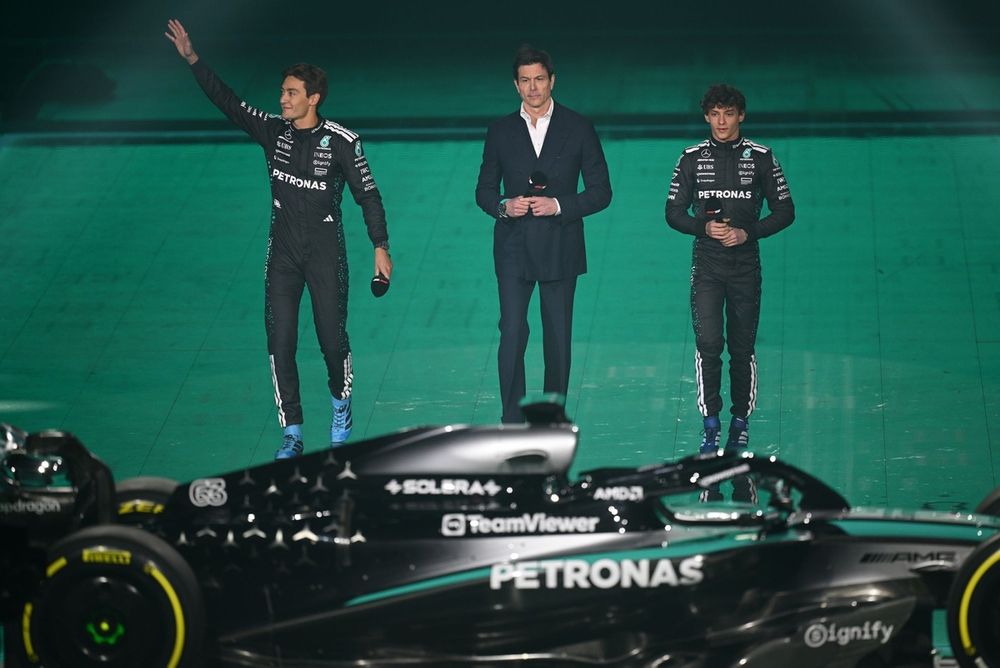
Enter Mercedes. In a move that has stunned insiders, reports confirm that Mercedes-Benz CEO Ola Källenius and Team Principal Toto Wolff actively lobbied the organizers of the NLS series to alter their schedule. It is a remarkable scenario: the heads of Mercedes Motorsport using their political capital to assist the star driver of their fiercest rival, Red Bull Racing.
The lobbying was successful. The organizers, likely swaying under the pressure of a manufacturer as powerful as Mercedes, explored options and found a solution. The second round of the NLS series has been moved forward to March 21st, a weekend free of F1 commitments. This change was corroborated by the RCN (another racing series on the Nordschleife), which adjusted its own calendar to accommodate the shift.
This development clears the path for Verstappen to race the Winward Racing Mercedes on March 21st, securing his eligibility for the 24-hour race in May. While Verstappen will be driving a Mercedes-badged car in the GT event, the sight of Toto Wolff intervening to help the man who denied Lewis Hamilton an eighth world title is a fascinating subplot. It speaks to the mutual respect between the parties, or perhaps, the commercial value Mercedes sees in having the world’s best driver behind the wheel of their GT machinery, regardless of his F1 allegiance.
A Season of Secrets and Surprises
The 2026 season was always billed as a new era, but few predicted it would start with such cloak-and-dagger drama. The Barcelona test has set the tone for a year where information is the most valuable commodity.
We have learned that the old guard of Red Bull and Mercedes are still the teams to beat. We have learned that the newcomers have a mountain to climb. And we have learned that in the world of motorsport, enemies can become friends if the cause—and the car—is right. As the paddock moves on from the secrecy of Barcelona, the questions remain: Is Red Bull’s pace real? Can Audi salvage their start? And will Verstappen deliver Mercedes a win at the Nurburgring? The 2026 season is just beginning, and the drama is already at fever pitch.
News

Inside Shane Richie’s love life: Drug – fuelled orgy with six blondes; real reason he split from Coleen Nolan; six-year ‘affair with fan’
Inside Shane Richie’s love life: Orgy with six blondes; real reason he split from Coleen Nolan; six-year ‘affair with fan’ He’s popular with the ladies… Shane Richie…

SH0CKING REVELATI0N:A sh0cking behind-the-scenes secret revealed about Lizzie Rizzini, the woman replacing Carol Kirkwood on the 6pm weather bulletin
BBC viewers still reeling from the departure of Carol Kirkwood got another surprise last night when presenter Lizzie Rizzini appeared to flash her black lace stockings on…

HEARTBREAKING: Peter Andre’s Tearful Message to Son Junior After SHOCKING Revelation About How He Truly Feels Toward Mum Katie Price — Katie Price’s reaction scares fans.
Peter Andre’s emotional message to son Junior after it’s revealed how he really feels about mum Katie Pri… PETER Andre has shared an emotional message to his…

Ben Shephard opens up about the devastating health battle his wife is facing: “She wakes up crying every single morning…”
Inside This Morning Ben Shephard’s Life Including Rarely Seen Wife and Health Battle Ben Shephard is a name synonymous with British television, renowned for his engaging presentation…

🚨 LIVE TV HEARTBREAK: Good Morning Britain Host Announces ‘Devastating’ Dɘath of Guest Minutes Into Show
Viewers of Good Morning Britain were met with heartbreaking news just minutes into Friday’s (January 30) episode, as co-hosts Kate Garraway and Ranvir Singh reported the tragic…

Emmerdale legend Cain Dingle will never be the same again after a shock cancer diagnosis turns his world upside down
FROure Desk. Full Terms and conditions are available on the website http://www.itv.com/presscentre/itvpictures/terms Emmerdale wouldn’t be Emmerdale without the glowering, grunting embodiment of manliness that is Cain Dingle (Jeff Hordley) But…
End of content
No more pages to load






