The dawn of a new Formula 1 era is always accompanied by a mixture of apprehension and excitement, but nothing could have prepared the paddock for what rolled out of the Aston Martin garage last week in Barcelona. The AMR26, the first machine personally penned by the legendary Adrian Newey since his high-profile move to the team, has finally broken cover. And to put it mildly: it is not what anyone expected.
For months, whispers have circulated that Newey, now wielding unprecedented power as both Team Principal and Managing Technical Partner, was cooking up something special. But as the covers came off and Fernando Alonso took the wheel for the car’s maiden shakedown, the collective jaw of the F1 world hit the floor. This was not a conservative evolution designed to safely navigate the treacherous waters of the new 2026 regulations. This was a revolution—a technical “manifesto” written in carbon fiber that challenges every conventional wisdom of the sport.
The “Alien” Concept: A Visual Shock to the System
From the moment the AMR26 touched the tarmac, it became the undisputed center of gravity in Barcelona. Visually, the car is jarring. It possesses a brutality and an aggression that makes its rivals look almost hesitant. The headline features are impossible to miss: strange “aerodynamic horns” protruding from the roll hoop, a nose width that seems to harken back to a different decade, and sidepods so extreme they look like they’ve been carved out by a laser.
Observers were quick to point out that the car looks like it was ripped straight from the pages of a theoretical engineering textbook—the kind of “what if” sketches that usually get discarded for being too risky. But this is Adrian Newey we are talking about. “Risk” is simply the canvas upon which he paints his masterpieces.
The most immediate talking point was the reappearance of the “horns.” For seasoned F1 historians, these appendages triggered immediate flashbacks to 2005 and the McLaren MP4-20. That car, also a Newey creation, used similar devices to manipulate airflow to the rear wing. At the time, they were a clever workaround to maximize downforce. In 2026, with regulations that severely restrict wing performance to reduce “dirty air,” Newey seems to have resurrected and refined this concept to stabilize airflow in a way no other team has thought to attempt. If he has cracked the code on generating consistent rear stability while others struggle with the new limitations, the AMR26 could effectively be driving in a different category.
Echoes of History: The Newey “Greatest Hits” Album
What makes the AMR26 so fascinating is that it feels like a compilation of Newey’s greatest engineering hits, remixed for the future. The wide nose is a clear nod to the Red Bull dominant era of 2010-2013, a period where front-end stability allowed Sebastian Vettel to drive with impunity. By widening the nose, Newey is likely prioritizing the quality of airflow feeding the underfloor tunnels—the critical area for generating ground effect downforce.
Then there are the sidepods. When Mercedes debuted their “zero pod” concept in 2022, it was a disaster that set the team back years. Aston Martin’s interpretation, however, is distinct. It features an enormous undercut, creating a cavernous channel between the bodywork and the floor. It echoes the fearless innovation of Ferrari’s 1992 double-floor concept or Toro Rosso’s 2011 designs. It is confrontational engineering. It says, “We know this is hard to get right, but we are going to do it anyway.”
By accelerating air through this massive gap, Aston Martin appears to be chasing peak ground effect performance while keeping the upper body slim. It is a high-risk strategy. If the correlation is wrong, the car will be undrivable. But if it works, it offers a ceiling of performance that “safe” designs simply cannot reach.
The Stopwatch Lie: Why Fans Shouldn’t Panic
Social media was arguably less kind than the technical analysts. On the timesheets, Fernando Alonso finished the test a staggering four seconds adrift of Lewis Hamilton in the Ferrari. For the casual fan, this looked like a catastrophe. “Has Newey lost his touch?” was the trending sentiment.
However, inside the paddock, the mood was vastly different. Those in the know understand that “shakedown” does not mean “qualifying simulation.” Aston Martin’s run plan was described as short, controlled, and deliberately conservative. The team was not chasing lap times; they were chasing correlation.
With a design this radical, the priority is to verify that the air is moving exactly where the wind tunnel said it would. Is the flow attaching to the horns? Is the floor sealing properly? Are the tires responding to the downforce loads? The four-second gap is meaningless if the data validates the concept. The fact that the car ran reliably and Alonso was able to complete the program is the only metric that matters at this stage. Speed is easy to find if the platform is stable; stability is impossible to find if the concept is flawed. Newey is playing the long game.
The “Teacher” and the Student
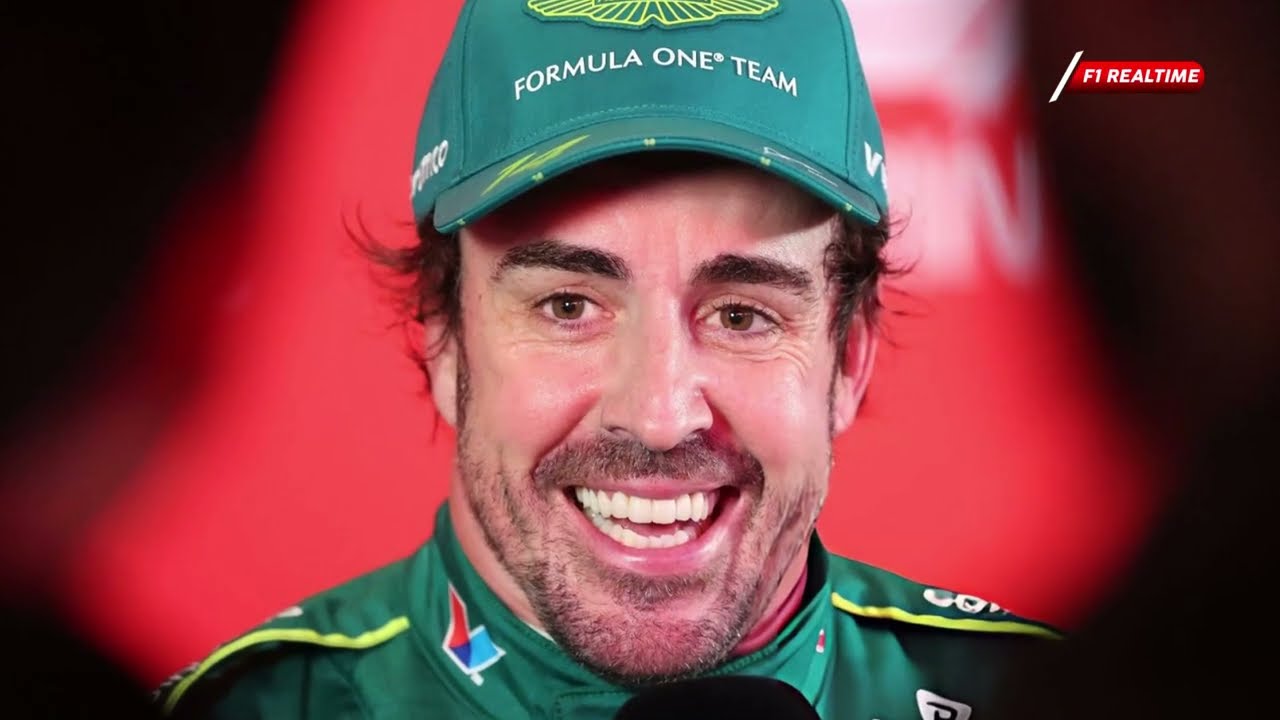
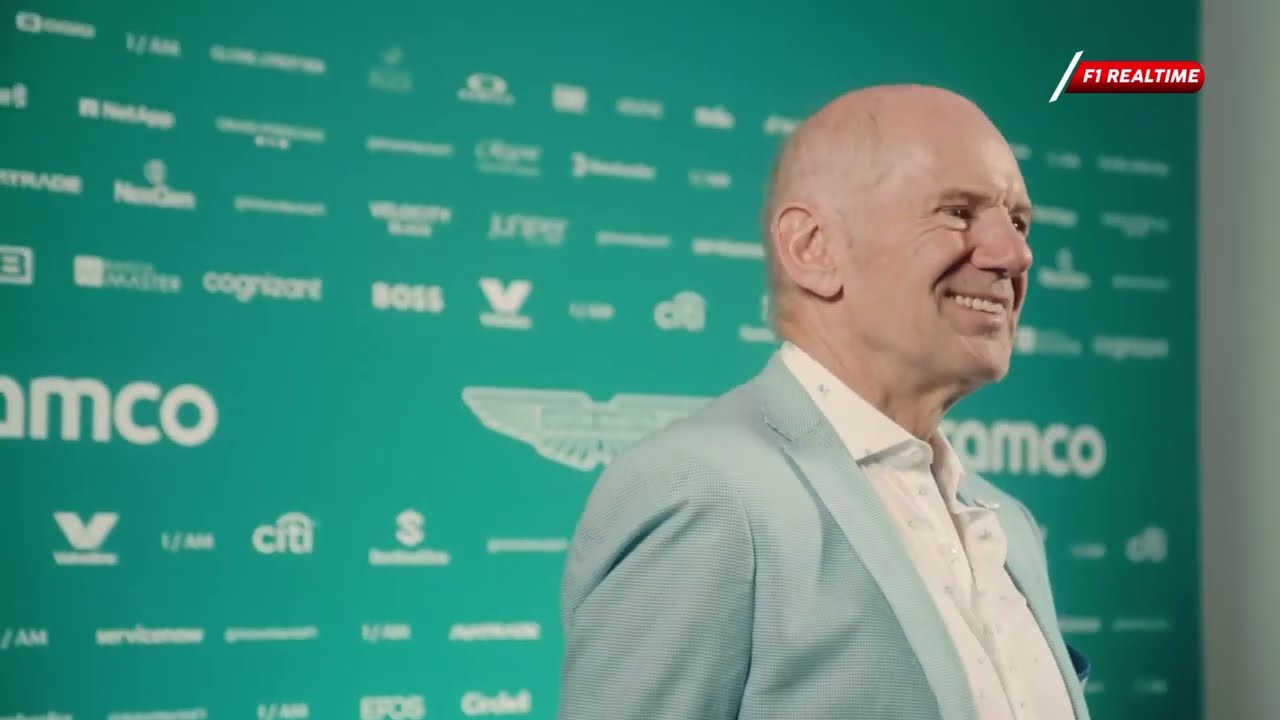
Perhaps the most telling insight came not from the telemetry, but from Fernando Alonso himself. The Spanish veteran, known for his demanding nature and no-nonsense feedback, stepped out of the cockpit with a look of intense focus. He didn’t just praise the car’s potential; he described Adrian Newey as a “teacher.”
This choice of words is significant. It implies a cultural shift within Aston Martin. For years, the team has been “Team Silverstone”—efficient, punchy, but ultimately a midfield operation punching up. Now, under Newey’s dual leadership as Team Principal and technical lead, there is a singular vision. Mechanics are watching him; engineers are listening to him. There is no disconnect between the boardroom and the wind tunnel because the man in charge occupies both.
Alonso’s comment suggests that Newey is educating the team on how to win. He is raising the standards of every bolt, every surface, and every procedure. With Honda returning as a works engine partner and the financial might of Aramco behind them, Aston Martin is no longer a “project.” It is a war machine being assembled by the greatest general the sport has ever seen.
A Gamble for Glory
The AMR26 is not just a car; it is a gamble. Newey has looked at the 2026 rulebook—a set of regulations intended to level the playing field—and decided to tear it up. He has bet on radical aerodynamics, historical inspiration, and his own innate feel for airflow.
If this car works, it won’t just win; it will dominate. It possesses the kind of “grey area” innovation that leaves rivals scrambling to copy it, usually months too late. The horns, the wide nose, the aggressive undercut—these are features that you cannot simply bolt onto a different car concept mid-season.
Conversely, if the gamble fails, the fall will be spectacular. But in Formula 1, fortune favors the brave. As the paddock packs up in Barcelona and looks toward the first race, one thing is certain: Aston Martin has captured the imagination of the world. The lap times may be slow for now, but the fear in the eyes of their rivals is very real. Adrian Newey is back, and he hasn’t come to participate—he’s come to teach everyone a lesson.
News

Inside Shane Richie’s love life: Drug – fuelled orgy with six blondes; real reason he split from Coleen Nolan; six-year ‘affair with fan’
Inside Shane Richie’s love life: Orgy with six blondes; real reason he split from Coleen Nolan; six-year ‘affair with fan’ He’s popular with the ladies… Shane Richie…

SH0CKING REVELATI0N:A sh0cking behind-the-scenes secret revealed about Lizzie Rizzini, the woman replacing Carol Kirkwood on the 6pm weather bulletin
BBC viewers still reeling from the departure of Carol Kirkwood got another surprise last night when presenter Lizzie Rizzini appeared to flash her black lace stockings on…

HEARTBREAKING: Peter Andre’s Tearful Message to Son Junior After SHOCKING Revelation About How He Truly Feels Toward Mum Katie Price — Katie Price’s reaction scares fans.
Peter Andre’s emotional message to son Junior after it’s revealed how he really feels about mum Katie Pri… PETER Andre has shared an emotional message to his…

Ben Shephard opens up about the devastating health battle his wife is facing: “She wakes up crying every single morning…”
Inside This Morning Ben Shephard’s Life Including Rarely Seen Wife and Health Battle Ben Shephard is a name synonymous with British television, renowned for his engaging presentation…

🚨 LIVE TV HEARTBREAK: Good Morning Britain Host Announces ‘Devastating’ Dɘath of Guest Minutes Into Show
Viewers of Good Morning Britain were met with heartbreaking news just minutes into Friday’s (January 30) episode, as co-hosts Kate Garraway and Ranvir Singh reported the tragic…

Emmerdale legend Cain Dingle will never be the same again after a shock cancer diagnosis turns his world upside down
FROure Desk. Full Terms and conditions are available on the website http://www.itv.com/presscentre/itvpictures/terms Emmerdale wouldn’t be Emmerdale without the glowering, grunting embodiment of manliness that is Cain Dingle (Jeff Hordley) But…
End of content
No more pages to load






