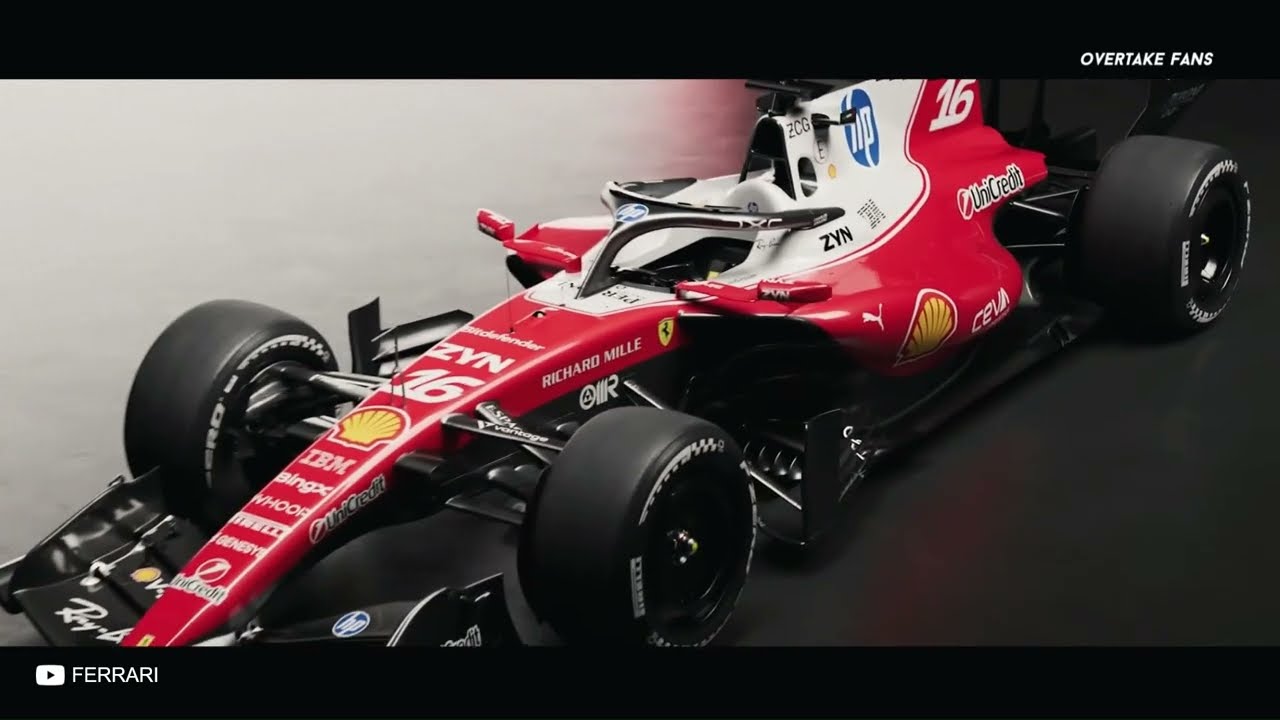
The wait is finally over for the Tifosi. On a crisp January morning, amidst the high expectations that always surround the Prancing Horse, Ferrari’s 2026 challenger, the SF-26, made its dramatic debut. In typical Maranello fashion, the launch was a swift one-two punch: a high-resolution render that teased the senses, followed almost immediately by the real beast tearing up the tarmac at Fiorano for its initial shakedown. But as the tyre smoke clears and the technical analysts pore over the footage, a complex picture is emerging. Is this the car that finally brings the championship back to Italy, or is it a conservative gamble in a year of radical change?
The “Spec” War: A Three-Stage Rocket
Perhaps the most startling revelation isn’t a piece of carbon fiber, but a piece of strategy. Sources indicate that the SF-26 we see today is merely the “A-spec.” In a move that signals either supreme confidence or desperate urgency, Ferrari is reportedly planning a staggered rollout of upgrades that would make a software engineer dizzy.
The plan is bold: this A-spec foundation will run at the Barcelona tests. A significant “B-spec” upgrade package is slated for the Bahrain test, followed by a final “C-spec” iteration to complete the package for the season opener in Melbourne. This aggressive development curve suggests that Ferrari is not treating the start of the season as a finish line, but as a live development war zone. It’s a high-risk strategy; if the correlation between wind tunnel data and track reality is off by even a millimeter, this house of cards could tumble before the first lights go out.
Aero Philosophy: Conservative or Calculated?
At first glance, the SF-26 cuts a surprisingly conservative figure, especially when placed alongside the radical concepts emerging from the Mercedes garage. But as the saying goes, the devil is in the details. While Mercedes appears to be throwing the kitchen sink at aerodynamic innovation, Ferrari has opted for evolution over revolution—at least on the surface.
The nose design, however, tells a different story of aggression. Diverging from the pack, Ferrari has sculpted a nose cone that is visibly sharper and more aggressive than the Mercedes counterpart. They’ve utilized larger fairings to connect the nose to the wing elements, a subtle but crucial attempt to manipulate the air before it even hits the chassis. The third wing element shapes inwards and upwards, a deliberate move to force airflow into the nose and over the front wishbones, setting up the aerodynamic structures for the rest of the car.
The Hamilton Effect: Cockpit Changes
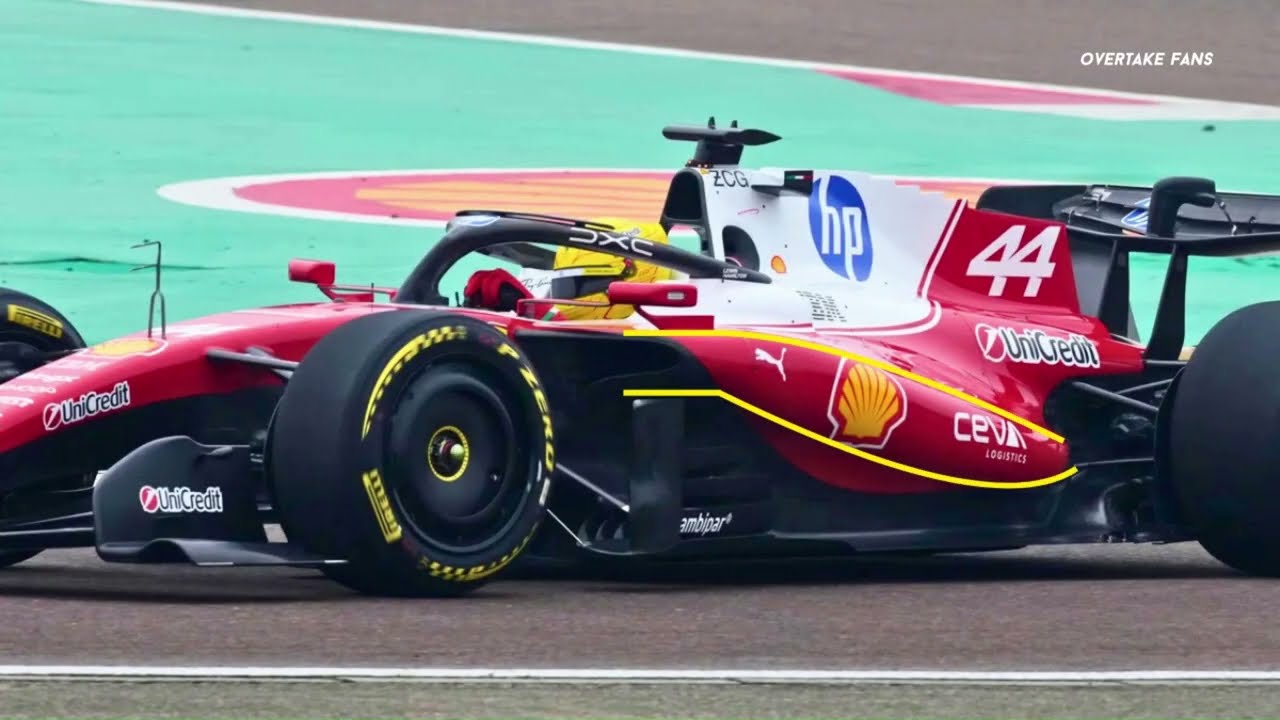
For years, Lewis Hamilton vocalized his frustration with the cockpit positioning at Mercedes, famously feeling like he was “sitting on the front wheels.” It seems his move to Maranello has come with perks beyond the paycheck. A side-by-side comparison of the SF-26 and the Red Bull RB22 reveals that Ferrari has shifted the cockpit significantly rearwards.
This is a massive specific change that aligns perfectly with Hamilton’s driving style preferences. By moving the driver back, Ferrari is essentially handing Hamilton a car that behaves more predictably for him, allowing him to feel the rear rotation better—a critical factor for a driver who thrives on late braking and precise corner entry. It is a clear signal that the team is molding the machine around their new superstar.
The War of the Sidepods
Moving down the car, the differences become stark. The SF-26 features a large, P-shaped sidepod inlet, feeding into a bodywork design that remains arguably “bulky” compared to the shrink-wrapped aesthetic of the Red Bull RB22.
Is this a failure of packaging, or a stroke of genius? The downwashing shape features a significant undercut, and the team seems intent on manipulating airflow outwards, pushing it around the tires to generate that elusive “outwash” effect. The engine cover sports a “shoulder cannon” design, distinct from Mercedes’ tightly packed approach. Ferrari is betting that managing the wake of the tires is more valuable than minimizing the physical volume of the bodywork. It’s a philosophy that prioritizes aerodynamic stability over raw drag reduction.
Under the Floor: The Hidden Genius
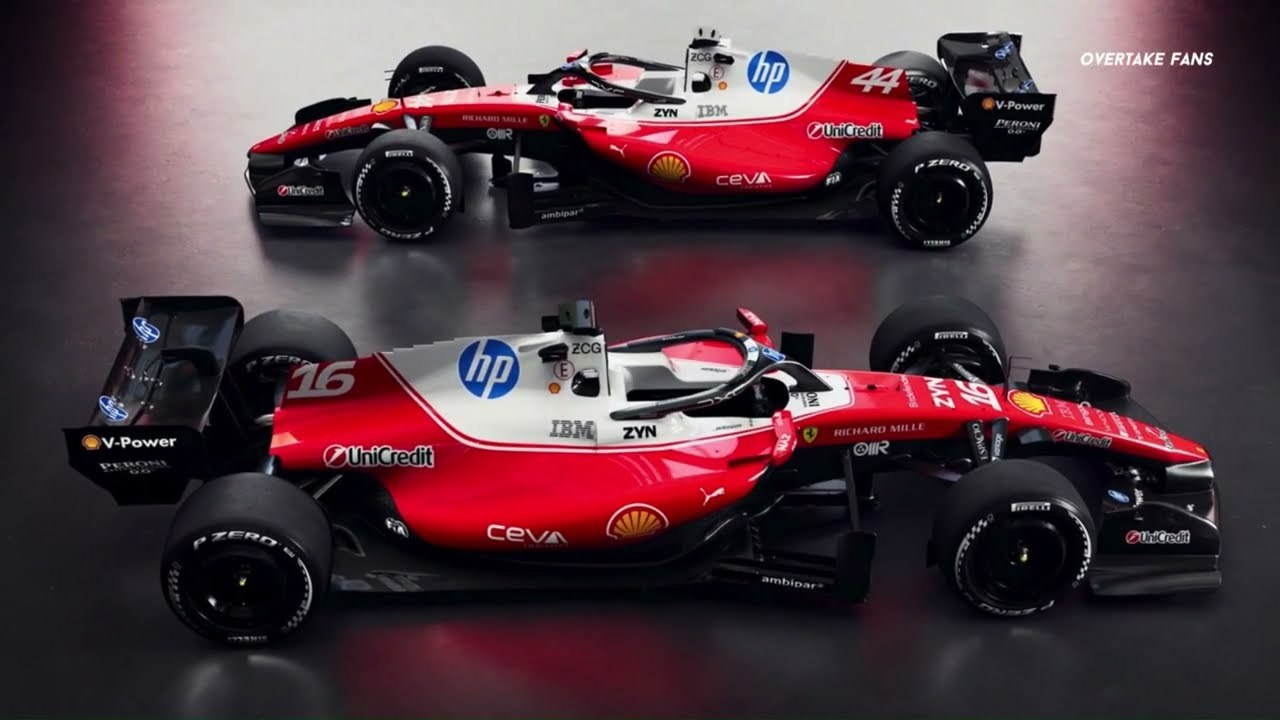
The real magic of the 2026 regulations often happens where the cameras can’t see—under the floor. However, the visible edges of the SF-26’s floor reveal some fascinating secrets. The bargeboard section features a vertical piece significantly longer than rivals, coupled with a complex three-piece fence system designed to generate powerful vortices.
But the pièce de résistance is found at the rear floor corner. While most teams are running standard slots, Ferrari has introduced a unique configuration: two horizontal slots paired with a single vertical slot. This anomaly is the kind of detail that keeps rival technical directors awake at night. The vertical slot is likely designed to energize airflow towards the diffuser, acting as a turbocharger for the ground effect suction. It’s a minute detail, but in F1, these are the margins where championships are won or lost.
Suspension and Stability
Mechanically, Ferrari has stuck to a push-rod configuration for both front and rear suspension, aligning with the grid consensus. They have retained the anti-dive and anti-lift characteristics of the 2025 car, suggesting they were happy with the platform’s mechanical stability. This stability is crucial. If the aero platform is “conservative,” the mechanical grip must be absolute. By not reinventing the wheel on suspension, Ferrari ensures that Hamilton and Leclerc have a predictable, compliant car underneath them—something the chaotic Mercedes of recent years rarely provided.
The Verdict: A Glossy Red Enigma
Visually, the car is a stunner. The livery has ditched much of the intrusive “HP blue” for a glossy red and white scheme that screams heritage. But pretty paint doesn’t win races.
The SF-26 is a car of contradictions. It looks conservative but hides aggressive details. It plans a chaotic three-stage upgrade path before the first race. It caters to Hamilton’s specific requests while retaining the DNA of previous Ferraris. It is a machine built on the confidence that “different” doesn’t always mean “better,” but “refined” often means “fast.”
As we head to Barcelona, the stopwatch will be the ultimate judge. But one thing is certain: Ferrari is not here to make up the numbers. They have built a car that asks questions of their rivals, and with Hamilton in the cockpit, the answers might just be terrifying for the rest of the grid.
News

Inside Shane Richie’s love life: Drug – fuelled orgy with six blondes; real reason he split from Coleen Nolan; six-year ‘affair with fan’
Inside Shane Richie’s love life: Orgy with six blondes; real reason he split from Coleen Nolan; six-year ‘affair with fan’ He’s popular with the ladies… Shane Richie…

SH0CKING REVELATI0N:A sh0cking behind-the-scenes secret revealed about Lizzie Rizzini, the woman replacing Carol Kirkwood on the 6pm weather bulletin
BBC viewers still reeling from the departure of Carol Kirkwood got another surprise last night when presenter Lizzie Rizzini appeared to flash her black lace stockings on…

HEARTBREAKING: Peter Andre’s Tearful Message to Son Junior After SHOCKING Revelation About How He Truly Feels Toward Mum Katie Price — Katie Price’s reaction scares fans.
Peter Andre’s emotional message to son Junior after it’s revealed how he really feels about mum Katie Pri… PETER Andre has shared an emotional message to his…

Ben Shephard opens up about the devastating health battle his wife is facing: “She wakes up crying every single morning…”
Inside This Morning Ben Shephard’s Life Including Rarely Seen Wife and Health Battle Ben Shephard is a name synonymous with British television, renowned for his engaging presentation…

🚨 LIVE TV HEARTBREAK: Good Morning Britain Host Announces ‘Devastating’ Dɘath of Guest Minutes Into Show
Viewers of Good Morning Britain were met with heartbreaking news just minutes into Friday’s (January 30) episode, as co-hosts Kate Garraway and Ranvir Singh reported the tragic…

Emmerdale legend Cain Dingle will never be the same again after a shock cancer diagnosis turns his world upside down
FROure Desk. Full Terms and conditions are available on the website http://www.itv.com/presscentre/itvpictures/terms Emmerdale wouldn’t be Emmerdale without the glowering, grunting embodiment of manliness that is Cain Dingle (Jeff Hordley) But…
End of content
No more pages to load






