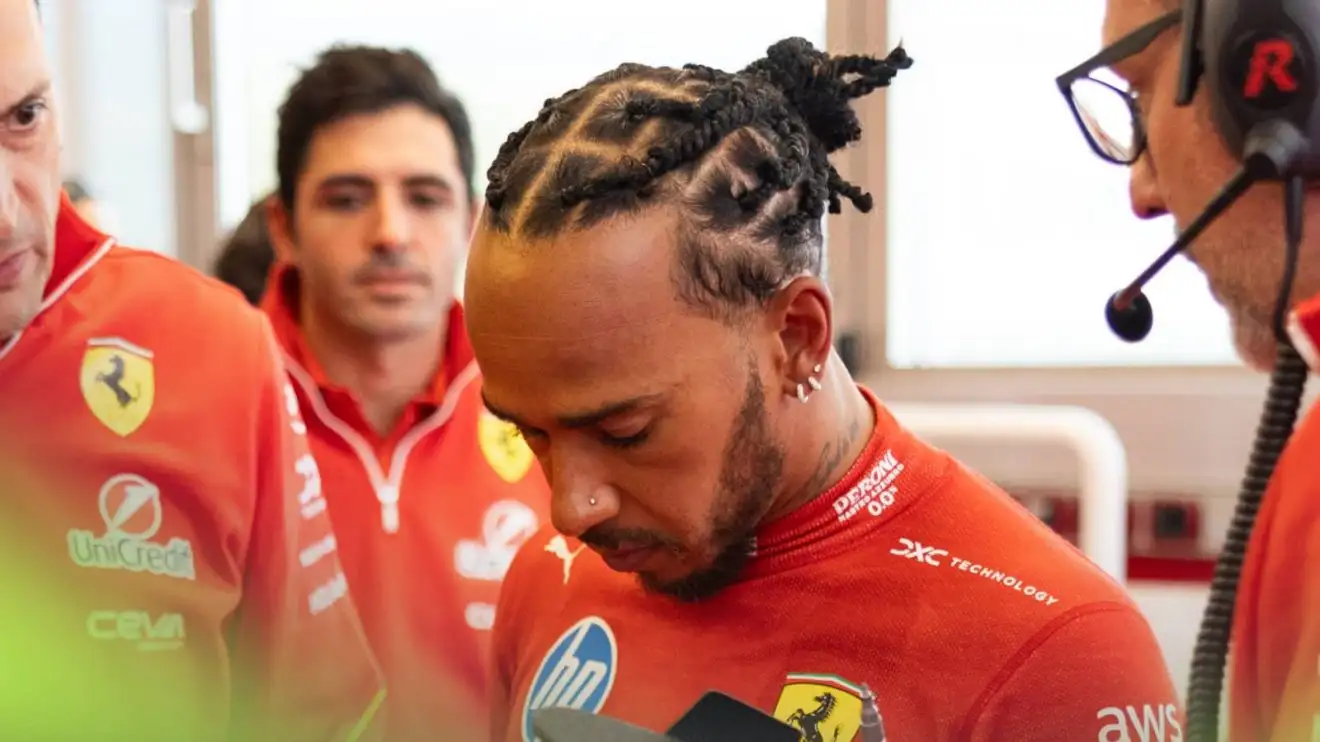
In the high-stakes world of Formula 1, the term “revolution” is often thrown around loosely. But make no mistake: what is happening inside the walls of Maranello right now is not an evolution, an update, or a tweak. It is a fundamental rewriting of the sport’s DNA. Ferrari’s 2026 engine project has quietly become the center of gravity for their entire future, and for Lewis Hamilton, it represents a “clean slate” that could define his final legacy in the sport.
The Great Inversion: Engine Over Aero
For years, Formula 1 has been dominated by aerodynamics. The engine, while crucial, often played a supporting role to the air-bending genius of the chassis designers. However, Ferrari has flipped that logic entirely for 2026.
According to deep insights from Maranello, the team is no longer allowing aerodynamics to dictate the car’s identity. Instead, they are building the entire vehicle around the power unit. This is a staggering shift in philosophy. The 2026 regulations mandate an almost even 50/50 split between the internal combustion engine and the electrical system. This transforms the engine from a brute-force tool into a “complex, intelligent system.”
It is no longer just about who has the most horsepower. It is about how effectively energy is harvested, stored, and deployed. Ferrari is betting that this intricate dance of energy management will be the true differentiator, and they are designing every cooling duct, sidepod, and suspension arm to serve the hybrid heart of the car.
High-Speed Chess: The New Driver Challenge
This technical pivot explains why Lewis Hamilton is paying such close attention. The seven-time world champion hasn’t just joined a new team; he has joined a new era. The removal of the MGU-H (Motor Generator Unit-Heat) and the increased reliance on the MGU-K (Kinetic) means that energy recovery is no longer a background process. It is the defining lever of performance.
Drivers will no longer be able to simply drive “flat out” for an entire stint. The 2026 rules will require a style of racing akin to high-speed chess. Energy will need to be spent deliberately—sometimes corner by corner. Overtaking, defending, and even qualifying laps will become exercises in judgment.
For Hamilton, this plays directly into his strengths. While raw speed is the currency of youth, experience, adaptability, and racecraft are the currencies of this new regulation set. The ability to anticipate the flow of a race, to know when to burn energy for track position and when to harvest for a later battle, will be paramount. Ferrari’s system is reportedly showing strong regeneration capabilities, which could give Hamilton the strategic flexibility to attack when others are forced to save.
.jpg)
The “Secret Weapon” on the Pit Wall
Ferrari is keenly aware that asking a driver to process this immense cognitive load alone is a recipe for disaster. Driving at 200 mph while calculating battery deltas and thermal degradation is a superhuman task.
In a move that highlights their preparation, Ferrari is reportedly adding a dedicated ERS (Energy Recovery System) and energy management specialist to the pit wall. This person will work directly with Hamilton and Charles Leclerc, filtering data and translating it into clear, real-time guidance.
This organizational change is just as critical as the mechanical ones. It creates a support structure that allows the drivers to focus on racing while ensuring that critical energy decisions are based on strategy rather than just instinct. It acknowledges that the driver’s role is expanding, becoming part engineer and part racer, and Ferrari is ensuring they are not left to drown in the data.
Reliability vs. Risk: The Mercedes Contrast
Interestingly, the murmurs from the paddock suggest a divergence in philosophy between Ferrari and their old rivals, Mercedes. Speculation indicates that Mercedes may be pursuing extreme, aggressive concepts in search of an early advantage—a strategy that sits close to the “regulatory gray zones” and attracts scrutiny.
Ferrari, by contrast, appears to be prioritizing robustness, efficiency, and stability. They are not trying to “outsmart” the rules; they are trying to master them. Reports from the test bench are encouraging, with the hybrid side of the power unit performing exceptionally well. In a brand-new era, a “bulletproof” engine that finishes races may ultimately be worth more than a fragile rocket ship.
Hamilton’s “All-In” Bet
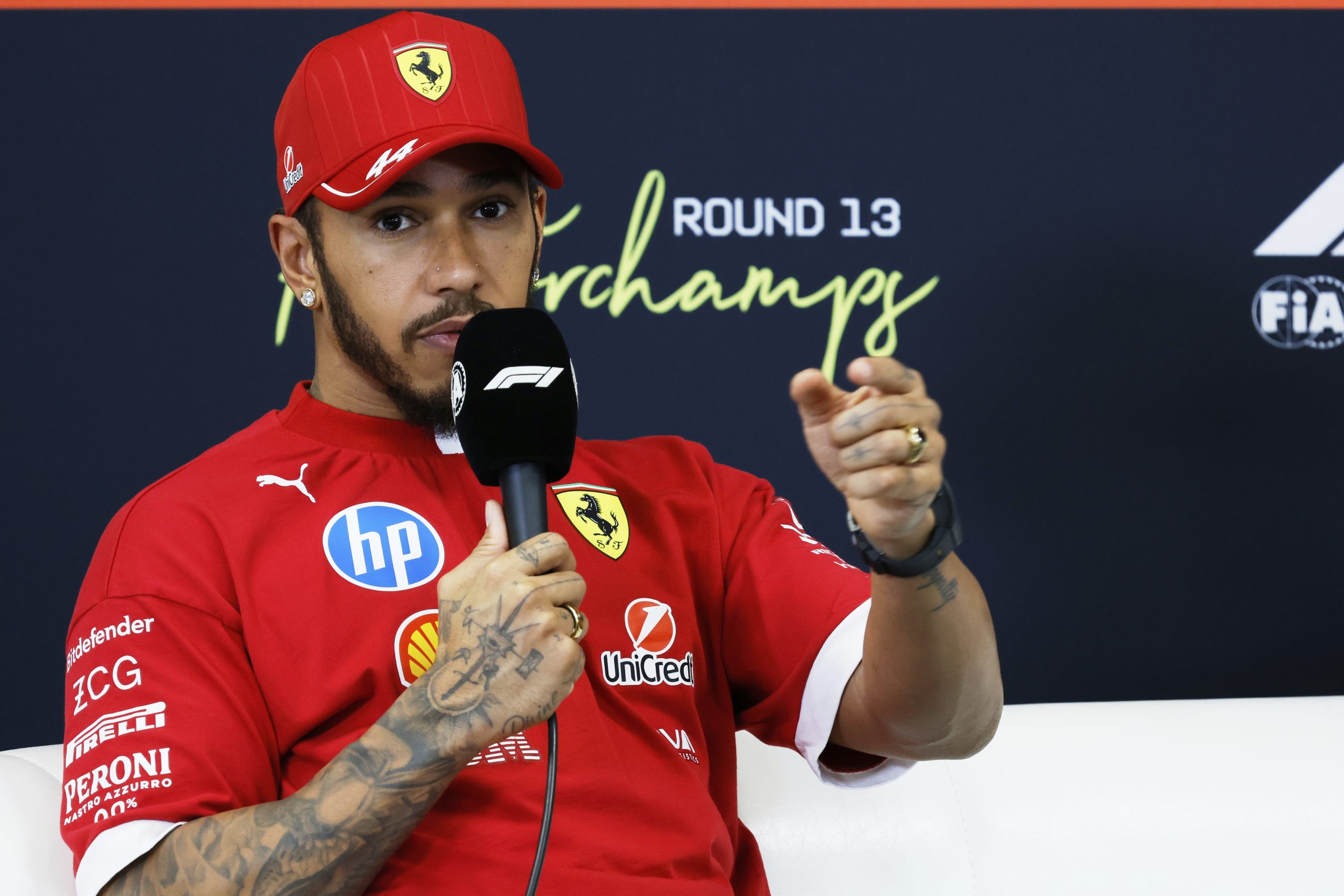
For Lewis Hamilton, this project is personal. After a difficult final season with his previous team, he was one of the strongest voices pushing to shift focus early toward 2026. He understands that this is not just about chasing one last title; it is about mastering a new frontier.
The sheer complexity of the 2026 cars offers Hamilton a challenge that rejuvenates his competitive spirit. It is a reinvention. The “OUT” in the headlines may be clickbait, but in a metaphorical sense, it is true: the Lewis Hamilton of the turbo-hybrid era is gone. In his place is a veteran master preparing to conduct a symphony of electrical and mechanical power.
If Ferrari’s gamble on an “engine-first” car pays off, and if their focus on reliability holds true, we might not just see Hamilton fighting for wins. We might see him orchestrating them with a level of precision the sport has never seen before. The 2026 season is going to reward the teams who understand the details first, and right now, Ferrari looks like they have done their homework.
News

Inside Shane Richie’s love life: Drug – fuelled orgy with six blondes; real reason he split from Coleen Nolan; six-year ‘affair with fan’
Inside Shane Richie’s love life: Orgy with six blondes; real reason he split from Coleen Nolan; six-year ‘affair with fan’ He’s popular with the ladies… Shane Richie…

SH0CKING REVELATI0N:A sh0cking behind-the-scenes secret revealed about Lizzie Rizzini, the woman replacing Carol Kirkwood on the 6pm weather bulletin
BBC viewers still reeling from the departure of Carol Kirkwood got another surprise last night when presenter Lizzie Rizzini appeared to flash her black lace stockings on…

HEARTBREAKING: Peter Andre’s Tearful Message to Son Junior After SHOCKING Revelation About How He Truly Feels Toward Mum Katie Price — Katie Price’s reaction scares fans.
Peter Andre’s emotional message to son Junior after it’s revealed how he really feels about mum Katie Pri… PETER Andre has shared an emotional message to his…

Ben Shephard opens up about the devastating health battle his wife is facing: “She wakes up crying every single morning…”
Inside This Morning Ben Shephard’s Life Including Rarely Seen Wife and Health Battle Ben Shephard is a name synonymous with British television, renowned for his engaging presentation…

🚨 LIVE TV HEARTBREAK: Good Morning Britain Host Announces ‘Devastating’ Dɘath of Guest Minutes Into Show
Viewers of Good Morning Britain were met with heartbreaking news just minutes into Friday’s (January 30) episode, as co-hosts Kate Garraway and Ranvir Singh reported the tragic…

Emmerdale legend Cain Dingle will never be the same again after a shock cancer diagnosis turns his world upside down
FROure Desk. Full Terms and conditions are available on the website http://www.itv.com/presscentre/itvpictures/terms Emmerdale wouldn’t be Emmerdale without the glowering, grunting embodiment of manliness that is Cain Dingle (Jeff Hordley) But…
End of content
No more pages to load






