The engines have finally fired up for the 2026 Formula 1 season, but for some teams, the silence in the paddock was deafening. While the winners of the winter emerged from Barcelona with mountains of data and quiet confidence, a darker narrative began to unfold for others. We are talking about catastrophic failures, “crisis mode” panic, and a preseason start so disastrous that it threatens to derail entire campaigns before the first red light even fades.
Barcelona’s Circuit de Barcelona-Catalunya has always been the ultimate truth-teller, and this year, it exposed the cracks in the armor of F1’s biggest players and newest hopefuls alike. From Red Bull’s deceptive lap counts masking a fiery problem to Williams missing the test entirely, the first glimpse of the new era has been nothing short of a nightmare for the grid’s struggling squads.

Red Bull and Ford: The “Burning” Issue Hidden by the Cold
On the surface, the new Red Bull-Ford partnership looks like a resounding success. The team, along with their sister squad Racing Bulls, racked up an impressive tally of nearly 400 laps. Reliability, for a brand-new power unit manufacturer, seemed bulletproof. Tim Goss, Racing Bulls’ Chief Technical Officer, even praised the engine’s “fantastic drivability.” But scratch beneath that polished PR surface, and you find a team sweating over a serious mechanical headache.
Reports emerging from the test suggest the new Red Bull Power Trains unit is suffering from excessive overheating. In the chilly 50°F (10°C) air of a Barcelona winter, the cars ran fine. But F1 races don’t happen in winter coats. The upcoming tests in Bahrain and the season opener in Australia will see temperatures soar well past 86°F (30°C). If the engine is struggling to stay cool in a European freeze, how will it survive the desert heat?
The implications are terrifying for the team’s aerodynamicists. To combat the heat, engineers might be forced to open up the bodywork, adding louvers and larger air intakes—like the massive airbox already spotted on the Racing Bulls car. Every new hole punches a wound in the car’s aerodynamic efficiency, adding drag and killing straight-line speed. Is Red Bull’s “perfect” start actually a ticking time bomb waiting for the mercury to rise? The panic in Milton Keynes might be realer than they are letting on.
Audi: The Stuttering Start of a Giant
Expectations were sky-high for Audi. Taking over the Sauber entry, the German giant arrived with a new management structure, a new engine, and a reputation for excellence. They were there on day one—a victory in itself compared to some—but their on-track performance was a sobering reality check.
The debut was cut short after just 27 laps. Then, calamity struck when Nico Hülkenberg’s car ground to a halt between turns 9 and 10, the victim of a hydraulic leak. While the team downplayed the issues as “teething problems” and focused on simple mechanical checks, the lack of running is alarming.
Audi is seconds off the pace. While they claim performance isn’t the priority yet, the deficit is stark. James Key, the designer, admitted the car is “very, very immature.” For a manufacturer used to dominating motorsport, being resigned to the back of the grid while scrambling for basic reliability data is a bitter pill to swallow. They aren’t just fighting for lap time; they are fighting to understand a complex new hybrid system with almost zero track reference.

Cadillac: Shaking Down the Team, Not Just the Car
If Audi stumbled, Cadillac is still learning how to walk. The American brand’s entry into F1 is a romantic story—brand new, bold, and backed by General Motors—but the track cares little for romance. Unlike Audi, which inherited an existing race team, Cadillac is building from scratch. And it shows.
Despite a promising private shakedown at Silverstone, their Barcelona test fell apart. Sergio “Checo” Perez managed a measly 11 laps on Monday before the team packed up, skipping Tuesday and Wednesday entirely. Valtteri Bottas, ever the diplomat, called it “debugging,” but the reality is harsh: Cadillac isn’t just testing a car; they are figuring out how to be an F1 team.
Every minute lost in the garage is a minute their rivals spend refining energy recovery systems and tire strategies. Perez insisted that “you want all the problems to come now,” but for a team that has never run a car in anger, missing two-thirds of the first test is a devastating blow. They are miles behind, and the learning curve just turned into a vertical wall.
Williams: The Empty Garage and a “Painful” Gamble
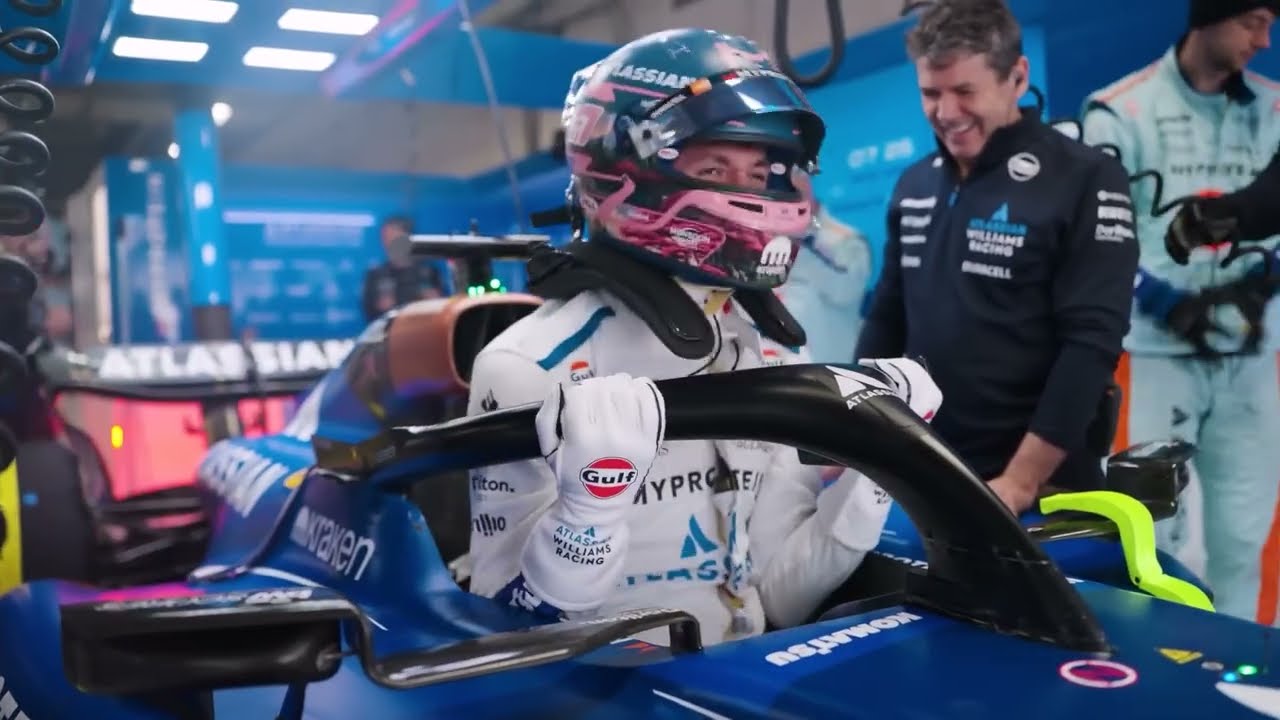
Perhaps the most shocking story of the week, however, belongs to a team that wasn’t even there. Williams, one of the sport’s most historic names, missed the Barcelona test entirely. Rumors swirled for days, but when the confirmation finally came, it hit hard. The FW48 chassis had failed initial crash tests, and delays in part production kept the car grounded in Grove.
Team Principal James Vowles, the architect of Williams’ attempted revival, stood by the “incredibly painful” decision. He argued that rushing a “shakedown” in cold Barcelona wasn’t worth compromising their spare parts supply for the critical Bahrain tests. He described the new car as “three times more complicated” than anything the team has built before, a result of pushing the boundaries of performance.
Vowles claims this is a calculated risk—a “blip” in the grand scheme of a long-term transformation. But in F1, track time is gold dust. While Red Bull, Ferrari, and Mercedes were validating their simulations, Williams was running virtual tests on a rig. Virtual data is useful, but it cannot replicate the chaotic reality of a race track.
The last time Williams missed a test was in 2019, marking the lowest point in their modern history. Vowles insists this is different, a consequence of ambition rather than incompetence. But the facts remain: Williams will arrive in Bahrain hundreds of laps behind their rivals. They are starting the season on the back foot, praying that their “aggressive” approach pays off and doesn’t leave drivers Carlos Sainz and Alex Albon driving a ghost car that only looked fast in the simulator.
The Clock is Ticking
The 2026 season represents the biggest regulatory shake-up in years. New engines, new fuels, new aerodynamics. In such a volatile environment, reliability is king, and data is the currency of success.
Red Bull is battling physics to keep their engine from melting. Audi and Cadillac are fighting the growing pains of infancy. And Williams is fighting the clock itself. As the paddock packs up and heads to Bahrain, the “winners” of the winter are already looking ahead. For the teams in crisis, however, the race hasn’t even started, and they are already losing. The panic button has been pressed; the question now is, who can survive the fallout?
News

Inside Shane Richie’s love life: Drug – fuelled orgy with six blondes; real reason he split from Coleen Nolan; six-year ‘affair with fan’
Inside Shane Richie’s love life: Orgy with six blondes; real reason he split from Coleen Nolan; six-year ‘affair with fan’ He’s popular with the ladies… Shane Richie…

SH0CKING REVELATI0N:A sh0cking behind-the-scenes secret revealed about Lizzie Rizzini, the woman replacing Carol Kirkwood on the 6pm weather bulletin
BBC viewers still reeling from the departure of Carol Kirkwood got another surprise last night when presenter Lizzie Rizzini appeared to flash her black lace stockings on…

HEARTBREAKING: Peter Andre’s Tearful Message to Son Junior After SHOCKING Revelation About How He Truly Feels Toward Mum Katie Price — Katie Price’s reaction scares fans.
Peter Andre’s emotional message to son Junior after it’s revealed how he really feels about mum Katie Pri… PETER Andre has shared an emotional message to his…

Ben Shephard opens up about the devastating health battle his wife is facing: “She wakes up crying every single morning…”
Inside This Morning Ben Shephard’s Life Including Rarely Seen Wife and Health Battle Ben Shephard is a name synonymous with British television, renowned for his engaging presentation…

🚨 LIVE TV HEARTBREAK: Good Morning Britain Host Announces ‘Devastating’ Dɘath of Guest Minutes Into Show
Viewers of Good Morning Britain were met with heartbreaking news just minutes into Friday’s (January 30) episode, as co-hosts Kate Garraway and Ranvir Singh reported the tragic…

Emmerdale legend Cain Dingle will never be the same again after a shock cancer diagnosis turns his world upside down
FROure Desk. Full Terms and conditions are available on the website http://www.itv.com/presscentre/itvpictures/terms Emmerdale wouldn’t be Emmerdale without the glowering, grunting embodiment of manliness that is Cain Dingle (Jeff Hordley) But…
End of content
No more pages to load






