The Formula 1 paddock is never truly quiet, even in the off-season. As the calendar flips closer to the monumental regulation changes of 2026, the whispers behind closed doors are turning into roars. From Maranello to Silverstone, the race to master the new era has already begun, and recent leaks and developments paint a picture of a grid on the verge of chaos, innovation, and ruthless restructuring.
The Prancing Horse’s Hidden Edge
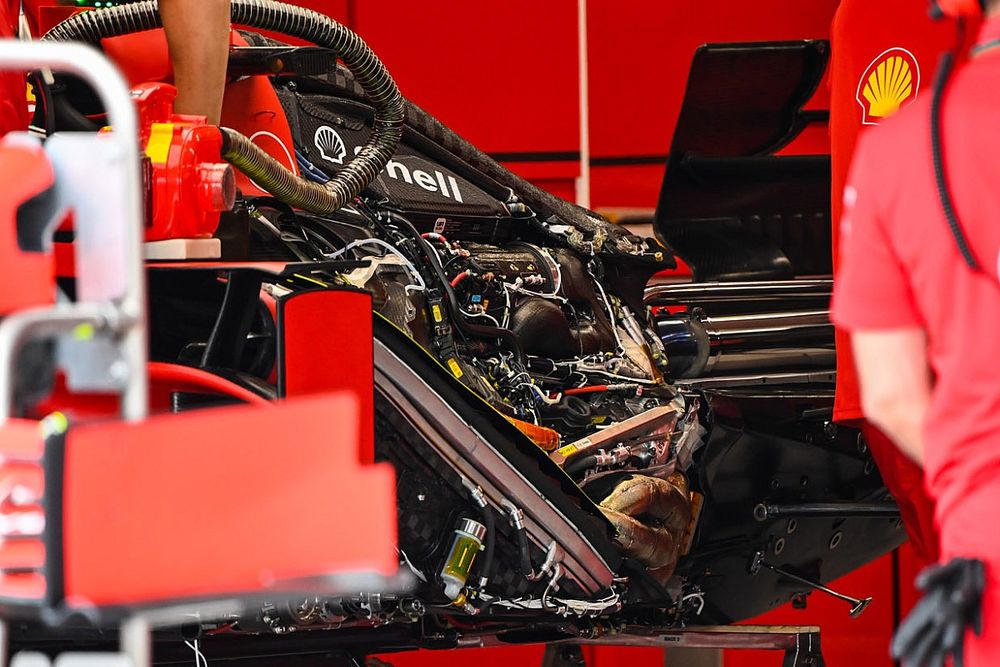
For years, Ferrari has been chasing the ghosts of its past glory. But new rumors emerging from Italy suggest that the Scuderia might be holding a royal flush for the 2026 engine regulations. While the world has been focused on Red Bull Powertrains and Mercedes, Ferrari has quietly taken a divergent path that could revolutionize the grid.
The buzz centers around Ferrari’s internal combustion engine (ICE) for the new regulations. Unlike their rivals who are sticking with traditional aluminum alloys, Ferrari is reportedly utilizing steel cylinder heads. It sounds like a step backward in a sport obsessed with weight saving, but the engineering logic is sound—and terrifying for their competitors. Steel offers superior thermal resistance and structural integrity, potentially allowing Ferrari to run their engines at much higher pressures and temperatures.
This isn’t just wild speculation. An eagle-eyed observation spotted a verified Ferrari ICE engineer “liking” a detailed technical post about this exact steel vs. aluminum architecture, effectively giving a digital nod of approval to the theory. If Ferrari can manage the weight penalty, the durability and power output gains could be the “silver bullet” they’ve been waiting for.
Adding to this optimism is the fuel war. 2026 mandates 100% sustainable fuels. While competitors like Aramco (Aston Martin) are focusing on synthetic e-fuels, Ferrari’s partner Shell is doubling down on advanced biofuels derived from waste products. Crucially, Shell is the only supplier with active, high-level experience in this specific domain thanks to their involvement in IndyCar. This operational head-start could give Ferrari the most reliable and potent combustion recipe on the grid come lights out in 2026.
Newey’s Reign of Terror at Aston Martin
While Ferrari builds in silence, Aston Martin is building with a sledgehammer. The arrival of design genius Adrian Newey was hailed as the final piece of the puzzle for Lawrence Stroll’s “superteam,” but the reality of his arrival is proving to be far more brutal than expected.
Newey hasn’t just arrived to draw pretty car shapes; he has been given “carte blanche”—total freedom—to reshape the team in his image. Reports confirm that Newey is currently executing a massive “layoff campaign,” firing engineers and staff members he deems surplus to requirements or unfit for his vision. Second and third-tier engineers are allegedly being let go in droves, with some already defecting to rival teams.
Perhaps most shockingly, Newey reportedly cannot monitor the entire factory himself, so he has employed a trusted “mole”—an inside man whose sole job is to watch the factory floor and report back on what is working, who is failing, and where the bottlenecks are. It is a hierarchical, ruthless approach reminiscent of the most dominant eras of F1.
His ambition doesn’t stop at the staff list. Newey is reportedly targeting Gianpiero Lambiase (GP), Max Verstappen’s iconic race engineer at Red Bull. While GP is contracted through 2027, sources suggest Aston Martin has tabled a concrete offer for him to eventually take on a CEO or Team Principal role. Newey wants GP to run the team, allowing Newey to focus purely on the car. If Red Bull stumbles early in the season, don’t be surprised to see GP tempted away by the green team’s millions and Newey’s vision.
The 2026 Reliability Nightmare
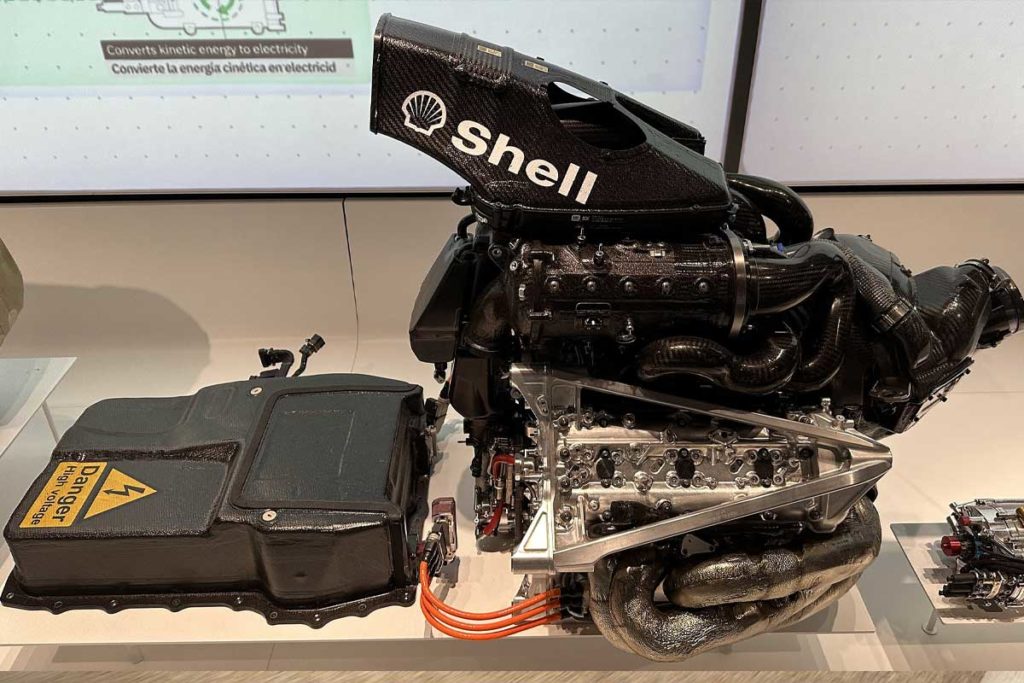
Amidst the poaching and the tech secrets, a darker cloud looms over the sport: reliability. The 2026 power units are a radical departure from the current crop. The removal of the MGU-H and the massive reliance on battery power, combined with new combustion constraints, has engineers sweating bullets.
Audi has just released footage of their very first engine fire-up. It runs, which is a start, but the paddock expectation is that 2026 will look less like modern F1 and more like the attrition-heavy races of the 1990s. Experts are predicting a mechanical failure rate that we haven’t seen in decades. The days of bulletproof reliability where 19 cars finish the race may be over.
Imagine a season opener where five or six cars blow up on the main straight. That is the very real fear—or excitement, depending on your perspective—facing the teams. With compression ratios mandated to drop, but teams like Mercedes and Ferrari finding “loopholes” to claw back horsepower, the engines will be stressed to their absolute breaking points.
McLaren and the “Gaslighting” Problem
Finally, the philosophical war on how to manage drivers is heating up. Former F1 ace David Coulthard has issued a stern warning to teams, specifically McLaren, regarding team orders. Following the controversies of last year where Lando Norris was engaged in awkward, prolonged debates with his engineer Will Joseph, Coulthard argues that the sacred bond between driver and engineer is being broken.
He posits that team orders—orders to yield position or compromise a race—must come from the Team Principal (Andrea Stella), not the race engineer. Making the race engineer deliver the “bad news” or manipulate the driver (as seen in Hungary 2024) destabilizes the trust required for a driver to perform at the limit. “You never want to feel like your engineer is undermining you,” Coulthard noted. As McLaren looks to fight for the title again, this internal communication protocol could be the difference between winning a championship and imploding on the radio.
The Verdict
The 2026 season feels far away, but for the teams, it is already here. Ferrari is betting on steel, Newey is betting on a ruthless purge, and the entire grid is betting against physics to keep their engines from exploding. The upcoming season is not just a bridge to the future; it is the battlefield where the war for the next decade of Formula 1 is being decided right now.
Buckle up. The drama is just getting started.
News

Inside Shane Richie’s love life: Drug – fuelled orgy with six blondes; real reason he split from Coleen Nolan; six-year ‘affair with fan’
Inside Shane Richie’s love life: Orgy with six blondes; real reason he split from Coleen Nolan; six-year ‘affair with fan’ He’s popular with the ladies… Shane Richie…

SH0CKING REVELATI0N:A sh0cking behind-the-scenes secret revealed about Lizzie Rizzini, the woman replacing Carol Kirkwood on the 6pm weather bulletin
BBC viewers still reeling from the departure of Carol Kirkwood got another surprise last night when presenter Lizzie Rizzini appeared to flash her black lace stockings on…

HEARTBREAKING: Peter Andre’s Tearful Message to Son Junior After SHOCKING Revelation About How He Truly Feels Toward Mum Katie Price — Katie Price’s reaction scares fans.
Peter Andre’s emotional message to son Junior after it’s revealed how he really feels about mum Katie Pri… PETER Andre has shared an emotional message to his…

Ben Shephard opens up about the devastating health battle his wife is facing: “She wakes up crying every single morning…”
Inside This Morning Ben Shephard’s Life Including Rarely Seen Wife and Health Battle Ben Shephard is a name synonymous with British television, renowned for his engaging presentation…

🚨 LIVE TV HEARTBREAK: Good Morning Britain Host Announces ‘Devastating’ Dɘath of Guest Minutes Into Show
Viewers of Good Morning Britain were met with heartbreaking news just minutes into Friday’s (January 30) episode, as co-hosts Kate Garraway and Ranvir Singh reported the tragic…

Emmerdale legend Cain Dingle will never be the same again after a shock cancer diagnosis turns his world upside down
FROure Desk. Full Terms and conditions are available on the website http://www.itv.com/presscentre/itvpictures/terms Emmerdale wouldn’t be Emmerdale without the glowering, grunting embodiment of manliness that is Cain Dingle (Jeff Hordley) But…
End of content
No more pages to load






