The future of Formula 1 has arrived, but if the powers that be had their way, you wouldn’t have seen a single second of it.
Welcome to the weird, wild, and slightly illicit world of the first-ever 2026 F1 pre-season test. Officially dubbed a “shakedown,” this event at the Circuit de Barcelona-Catalunya was intended to be a strictly private affair—a “behind closed doors” operation where teams could iron out the gremlins of their revolutionary new machines away from the prying eyes of the media and the public.
But this is Formula 1. Secrets don’t stay secret for long, especially when the anticipation for a new regulation cycle is at a fever pitch.
Instead of a quiet engineering exercise, the perimeter of the Spanish circuit turned into a battleground of wits between desperate spectators, determined journalists, and an increasingly frustrated security team. What unfolded was less like a sporting event and more like a spy thriller, complete with car chases, hidden vantage points, and fans literally hanging from trees to witness history.
The Cat-and-Mouse Game: “The Ford Puma Has Been Spotted”
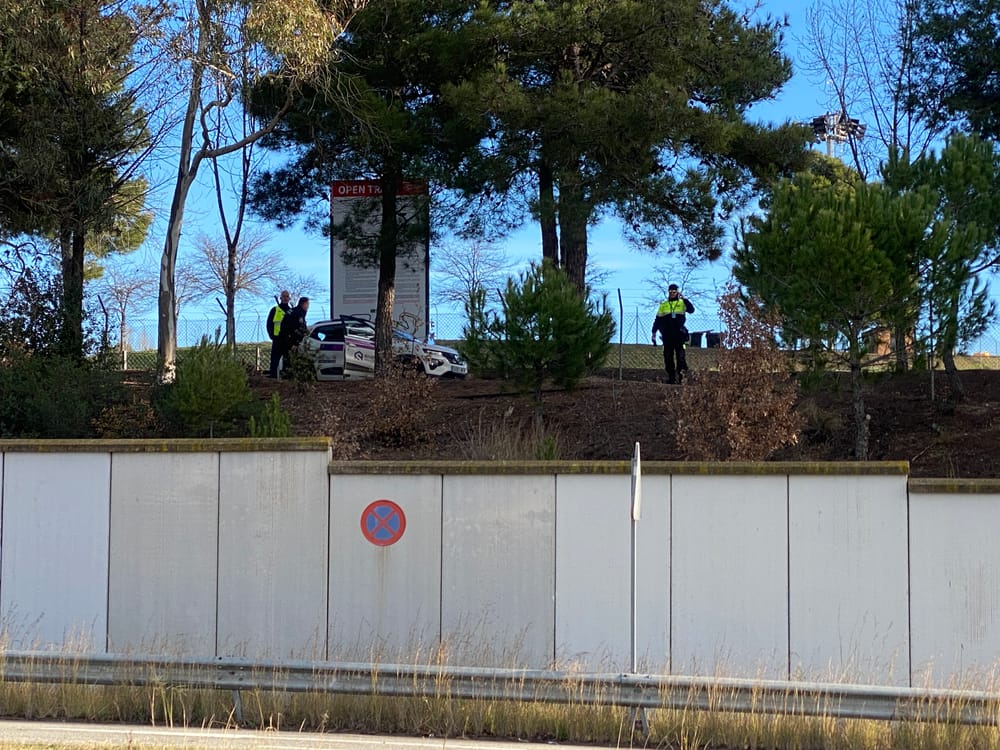
For the team on the ground, including seasoned F1 journalists Edd Straw and Jon Noble, the mission was simple: find a gap in the fence, a hill with a view, or a crack in the wall to see the 2026 cars in action. The reality, however, was far more comical.
“It’s been a game of cat and mouse,” Noble reported from the outskirts of the track. “I was there with maybe four or five other journalists and a photographer, all happily watching. And then, after about 45 minutes, security turned up and demanded we move on.”
The security measures were surprisingly robust for a test that, in theory, shouldn’t have had any spectators. Security guards patrolled the perimeter roads in vehicles, clocking the license plates of known media members and flushing out fans from makeshift hiding spots.
In one hilarious encounter, Straw realized he had been “made” by a security guard while parked on a dirt embankment near Turn 3. “There was a security guy there who kept looking at me. We did a bit of staring at each other… I thought, ‘I’m certain he’s clocked me.'”
Later, when Straw attempted to rendezvous with Noble, his suspicions were confirmed in the most bureaucratic way possible. A security vehicle pulled up, the window rolled down, and the guard simply uttered two words that signaled the jig was up: “Ford Puma.”
They had identified Straw’s rental car. The “Ford Puma” was now a marked vehicle.
Despite the crackdown, the ingenuity of F1 fans shone through. Reports flooded in of spectators scaling banks, hiding in dense foliage, and even one enterprising individual on a flatbed truck attempting to use the vehicle’s hydraulic tilt-bed as a mobile grandstand—only to realize it still wasn’t high enough to see over the fence.
The First Glimpse: Evolution, Not Revolution
So, what did those who braved the security patrols actually see?
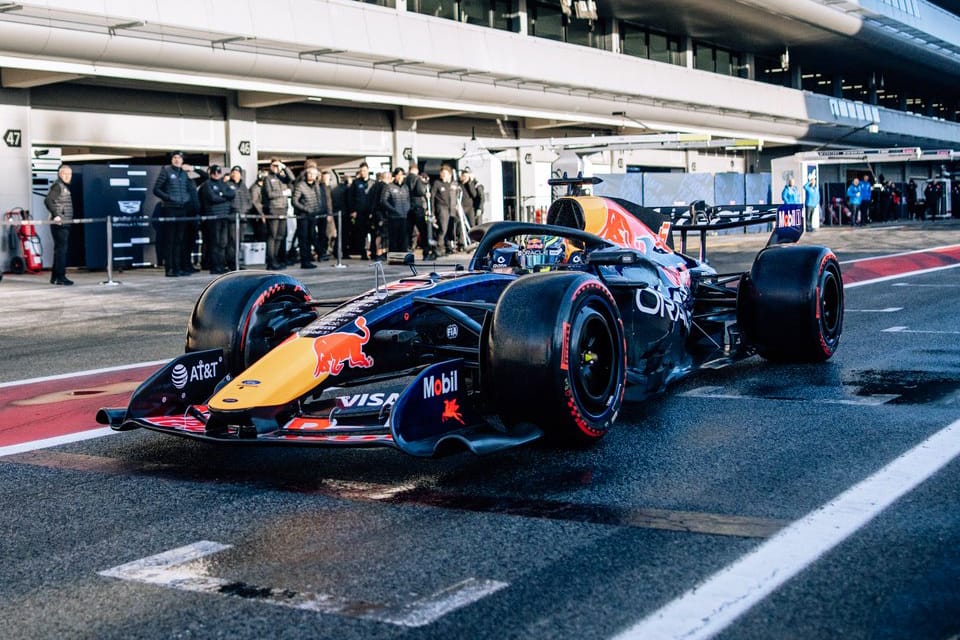
For the first time, the 2026 generation of F1 cars roared into life in anger. These machines represent a massive technical overhaul: smaller dimensions, active aerodynamics, and a power unit split 50/50 between internal combustion and electric power (with the removal of the complex MGU-H).
Visually, however, the verdict is reassuringly familiar. “The actual glimpse I’ve got of the cars… they just look like Formula 1 cars,” Noble observed. “It’s not the revolution that it looks like on track. They don’t look appalling to drive.”
Early fears that the 2026 regulations would produce “Frankenstein” cars that were slow or handled poorly seem unfounded, at least from trackside observations. The cars appeared skittish in the damp morning conditions, but they sounded like F1 cars and moved with the aggression fans expect.
Mercedes and Antonelli Set the Pace
If there is a winner of the “Secret Shakedown,” it is undoubtedly Mercedes.
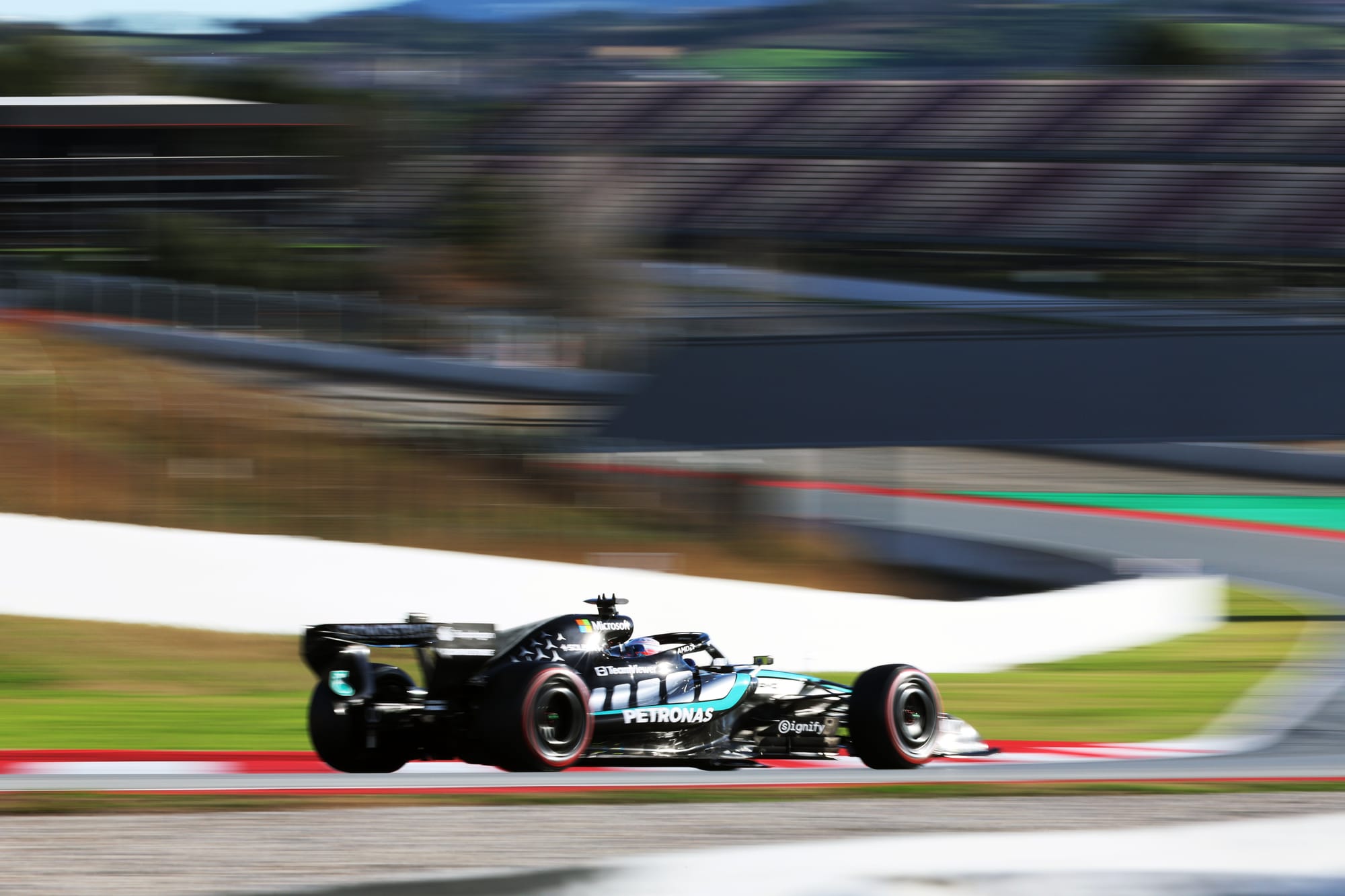
Echoing the start of the hybrid era in 2014, the Silver Arrows (or rather, their 2026 iteration) hit the ground running with ominous efficiency. Young phenom Kimi Antonelli was the star of the morning session, logging the most consistent running and topping the unofficial timing charts.
“Mercedes did the most running early on,” Straw noted. “Kimi Antonelli was quickest. He got down into the 1:22s… it shows that the teams have these systems under control.”
While a 1:22 lap time is significantly slower than the 1:11s seen in previous years, context is key. The track was cold, damp, and “green,” and these are brand-new cars running at conservative power modes. The fact that Mercedes could send Antonelli out for an 8-9 lap stint immediately is a terrifying signal to their rivals: they are ready.
Cadillac’s Historic Debut
Perhaps the most heartening sight of the day was the presence of Formula 1’s newest team: Cadillac.
There were whispers and doubts about whether the American outfit could get a car ready in time for this early shakedown. Yet, there was Valtteri Bottas, piloting the V-Series machine around the Circuit de Barcelona-Catalunya.
“A tip of the hat to Cadillac who are here,” Straw said. “Valtteri Bottas is out and running. They haven’t done a huge amount of laps early on, but they’ve made the first test… that’s very positive.”
For a new manufacturer to hit the track on Day 1 alongside veterans like Red Bull and Ferrari is a massive achievement and silences many critics who doubted the General Motors-backed entry’s readiness.
The Missing and The Red Flags
Not everyone had a perfect day. The session saw its first Red Flag courtesy of rookie Franco Colapinto in the Alpine. The stoppage was brief, suggesting a minor mechanical gremlin rather than a chassis-destroying crash, but it was a reminder that these prototype machines are still fragile.
Notable by their absence were Williams, McLaren, and Aston Martin.
Williams had already confirmed they would miss the test due to delays—a worrying sign for a team hoping to move up the grid. McLaren, on the other hand, opted for a strategic delay, planning to join on Day 2 or Day 3. However, this gamble relies heavily on the weather.
“We were caught in a huge rainstorm here last night,” Straw warned. “The rain is supposed to come in on Tuesday… Teams will not want to waste half a day of a wet track.”
Under the strict testing rules, the moment a car leaves the pit lane, “Day 1” is registered for that team. By waiting, McLaren hopes to maximize dry running later in the week, but if the Spanish weather turns, they could be left with zero data while Mercedes and Cadillac analyze terabytes of information back at the factory.
Why This Matters
Why all the secrecy? Why the cat-and-mouse games with security?
This test is the first real-world validation of the 2026 regulations. The teams are dealing with an entirely new energy management profile (350kW MGU-K) and active aero systems that change the car’s drag on straights.
“The success of Day 1 will be the number of laps completed,” Straw summarized. “Whoever sits at the top of that… will be very happy.”
Despite the “closed doors” status, the consensus is that the 2026 era has launched successfully. There were no mass breakdowns, the cars look fast, and the sound is still viscerally F1.
As the sun sets over Barcelona and the security guards finally relax, the journalists and fans can retreat to their hotels (and hide their rental cars). The secret is out: F1 2026 is real, it’s running, and the battle has just begun.
News

Inside Shane Richie’s love life: Drug – fuelled orgy with six blondes; real reason he split from Coleen Nolan; six-year ‘affair with fan’
Inside Shane Richie’s love life: Orgy with six blondes; real reason he split from Coleen Nolan; six-year ‘affair with fan’ He’s popular with the ladies… Shane Richie…

SH0CKING REVELATI0N:A sh0cking behind-the-scenes secret revealed about Lizzie Rizzini, the woman replacing Carol Kirkwood on the 6pm weather bulletin
BBC viewers still reeling from the departure of Carol Kirkwood got another surprise last night when presenter Lizzie Rizzini appeared to flash her black lace stockings on…

HEARTBREAKING: Peter Andre’s Tearful Message to Son Junior After SHOCKING Revelation About How He Truly Feels Toward Mum Katie Price — Katie Price’s reaction scares fans.
Peter Andre’s emotional message to son Junior after it’s revealed how he really feels about mum Katie Pri… PETER Andre has shared an emotional message to his…

Ben Shephard opens up about the devastating health battle his wife is facing: “She wakes up crying every single morning…”
Inside This Morning Ben Shephard’s Life Including Rarely Seen Wife and Health Battle Ben Shephard is a name synonymous with British television, renowned for his engaging presentation…

🚨 LIVE TV HEARTBREAK: Good Morning Britain Host Announces ‘Devastating’ Dɘath of Guest Minutes Into Show
Viewers of Good Morning Britain were met with heartbreaking news just minutes into Friday’s (January 30) episode, as co-hosts Kate Garraway and Ranvir Singh reported the tragic…

Emmerdale legend Cain Dingle will never be the same again after a shock cancer diagnosis turns his world upside down
FROure Desk. Full Terms and conditions are available on the website http://www.itv.com/presscentre/itvpictures/terms Emmerdale wouldn’t be Emmerdale without the glowering, grunting embodiment of manliness that is Cain Dingle (Jeff Hordley) But…
End of content
No more pages to load






