The world of Formula 1 is no stranger to high-stakes drama and logistical miracles, but what unfolded this week at the Circuit de Barcelona-Catalunya has set a new benchmark for the “unorthodox.” As the grid prepares for the sweeping regulation changes of 2026, all eyes were fixed on Aston Martin. The Silverstone-based squad, now bolstered by the design genius of Adrian Newey, was expected to make a statement. Instead, the debut of the AMR26 felt less like a polished corporate launch and more like a frantic, high-octane thriller involving vintage military aircraft, all-night mechanical marathons, and a heartbreaking breakdown just minutes into its first run.
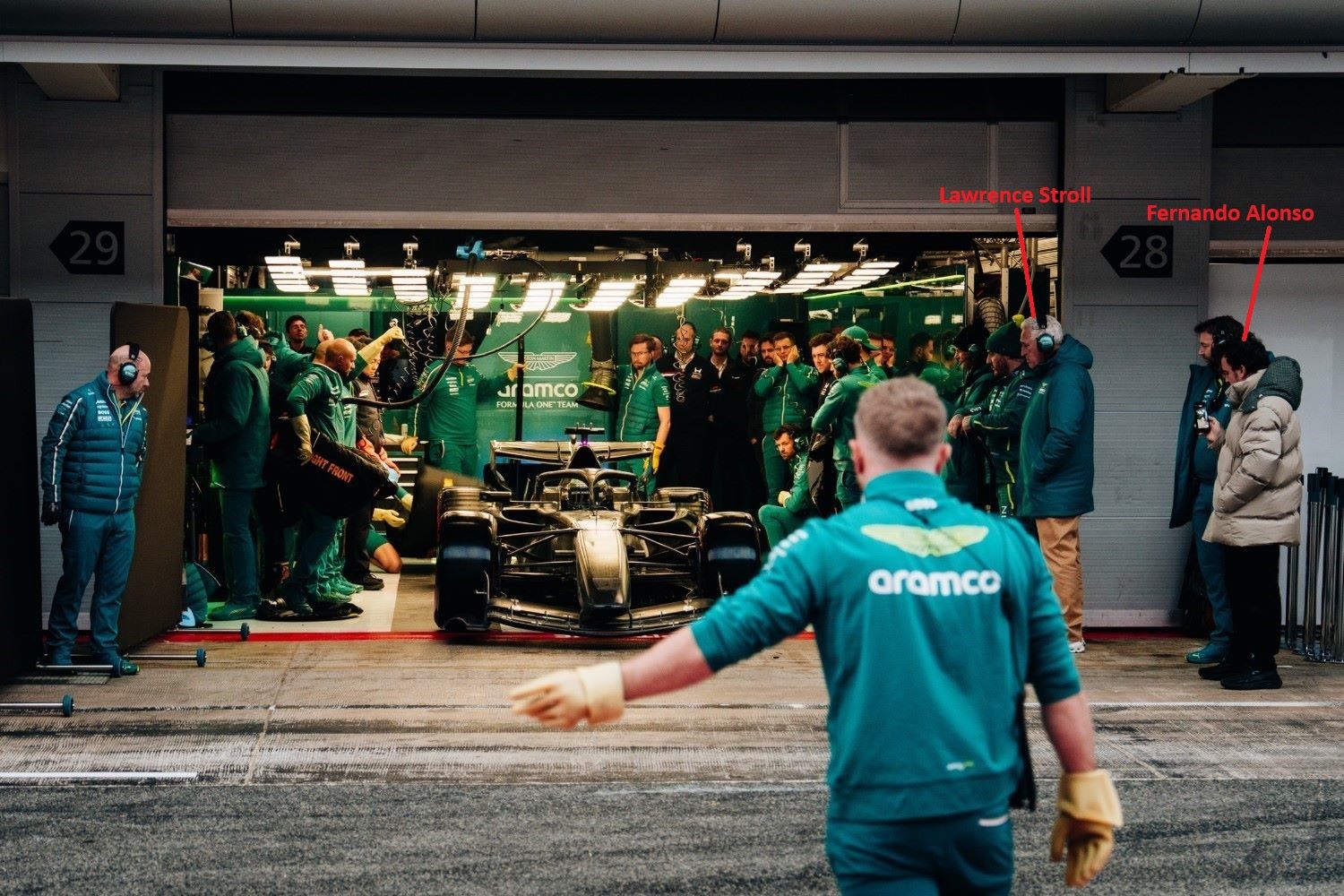
For weeks, the paddock had been whispering about Aston Martin’s silence. While giants like Mercedes were already racking up over 500 laps in ominous displays of reliability, Aston Martin remained tight-lipped. The team eventually confirmed they would miss the start of the three-day test allocation, aiming instead for a late-week “shakedown.” The stakes could not be higher; this is the car designed to deliver Fernando Alonso his long-awaited third World Championship, the vehicle that marks the beginning of the team’s exclusive works partnership with Honda. Yet, as Monday and Tuesday passed with nothing but photos of mechanics’ tools on social media, anxiety among the “Green Team” faithful began to peak.
The logistics of getting the car to Spain proved to be the first chapter of this bizarre saga. In a move that felt like a throwback to a different era, the team bypassed standard freight options. Aviation enthusiasts and photographers captured images of a massive crate, branded with the iconic Aston Martin wings, being loaded onto a 54-year-old Antonov-12BP at Birmingham Airport. This Soviet-designed turboprop—a plane whose prototype first flew when Juan Manuel Fangio was still winning championships—was the chosen vessel for Newey’s “Batmobile.” It was a scene of pure “vibe”: a multi-million dollar masterpiece of carbon fiber and aerodynamic secrets tucked inside the belly of a Cold War-era workhorse.
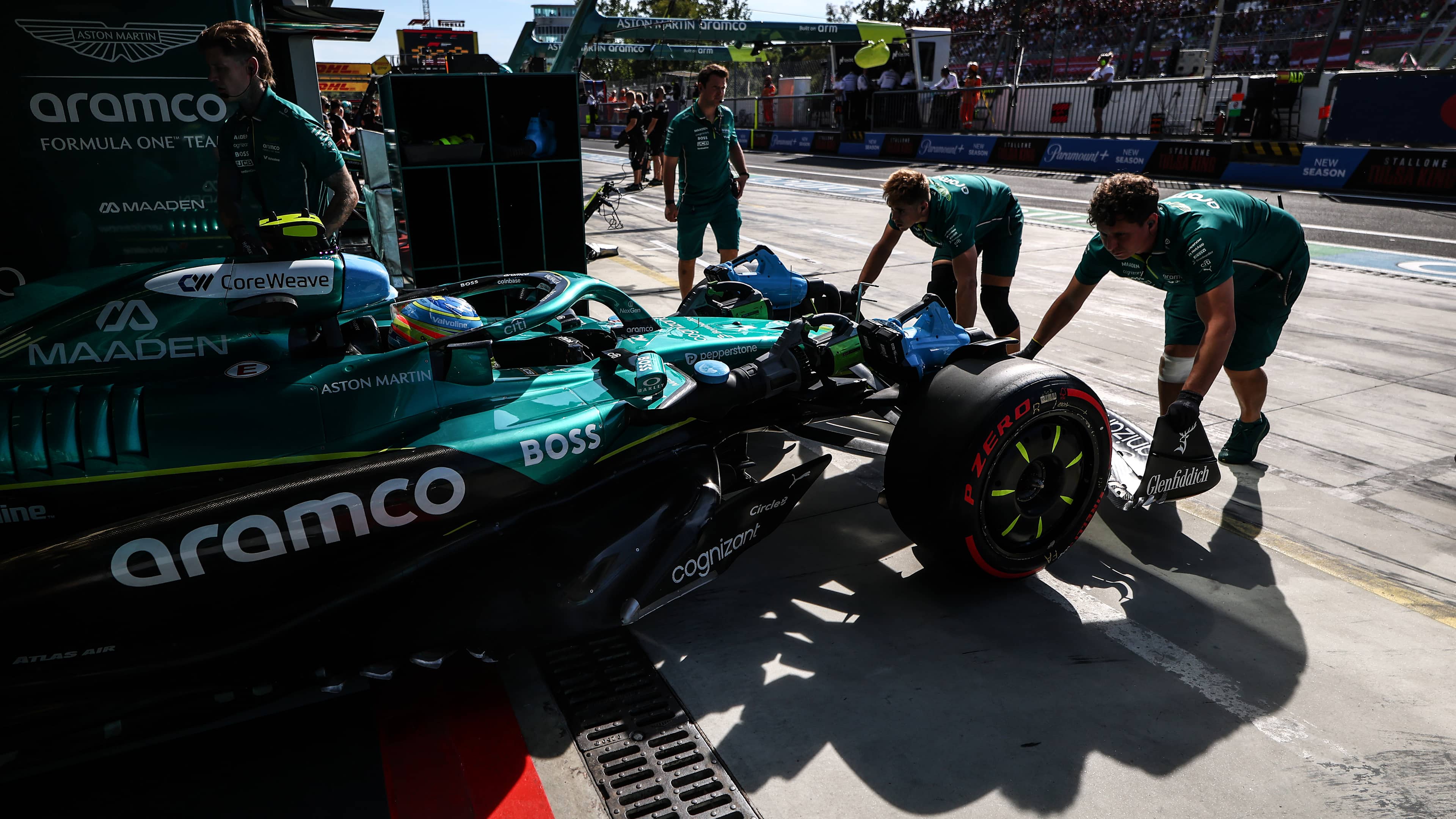
The flight itself was plagued by delays, eventually landing in Girona hours behind schedule. By the time a DHL lorry finally pulled into the Barcelona paddock on Wednesday evening, the pressure on the track operations team was immense. While other drivers were resting for their final sessions, the Aston Martin garage was a hive of frantic activity. Mechanics pulled a grueling all-nighter, fueled by caffeine and the weight of expectation, to prepare the brand-new chassis for its Thursday debut. Lance Stroll’s lead mechanic, Harry Rush, later expressed immense pride in the crew’s relentless effort, but the physical toll of such a “suboptimal” preparation was evident.
When the garage doors finally slid open at 5:00 PM local time on Thursday, the atmosphere was electric. The AMR26 emerged in a “blacked-out” testing livery, looking every bit the aggressive predator Newey is known for creating. Early glimpses revealed a car pushing the boundaries of the 2026 regulations: hyper-aggressive sidepods, a suspicious “blown diffuser” look, and a high-rake stance that screamed aerodynamic efficiency. Lance Stroll took the wheel for the initial installation laps, and for a fleeting moment, it seemed the gamble had paid off.
Then, disaster struck. After just four laps of meaningful running, the AMR26 ground to a halt on the side of the track, triggering a red flag. The sight of the smoking, stationary car was a gut punch to the team. Whether the failure was a terminal engine issue or a “precautionary” stop remains a subject of intense speculation. In the high-pressure environment of F1 testing, every lost minute is a lost opportunity to gather data, and for a team already starting on the back foot, this was the ultimate “stinker” of a session.
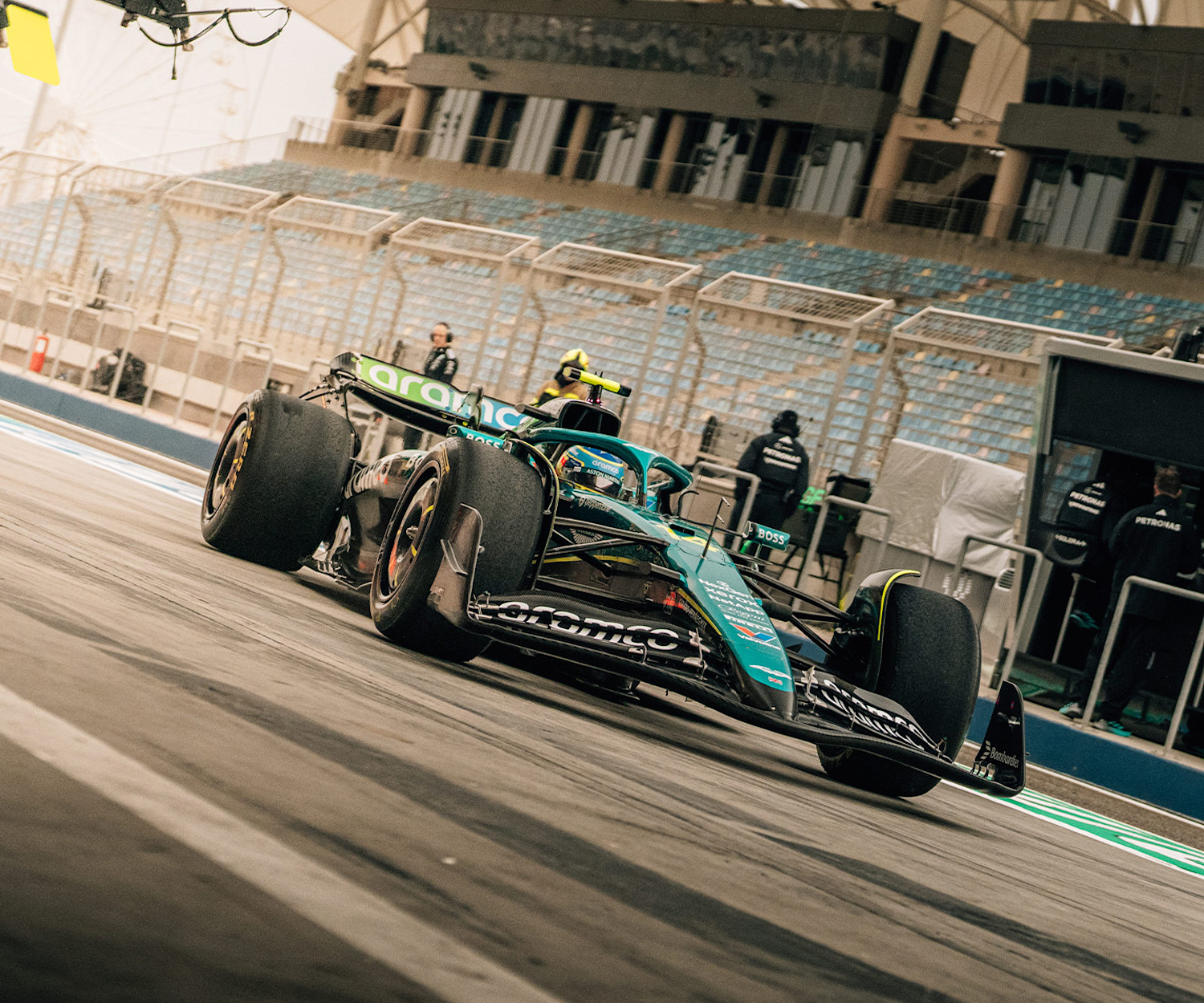
The spotlight now shifts to the partnership with Honda. While Honda has a legendary pedigree, the transition has been rocky. Much of the personnel who powered Red Bull’s recent dominance stayed with Red Bull Powertrains, forcing Honda to undergo a significant rebuilding phase for the 2026 project. For Fernando Alonso, who has banked the twilight of his career on this specific regulation cycle, the reliability of the Honda unit is a “now or never” proposition. He needs a car that can compete with the young guns of the sport, and he needs it to work from day one.
As the test concludes, the AMR26 remains an enigma. It is a car born of brilliance but hindered by a chaotic birth. The aggressive design suggests that Adrian Newey has once again found a loophole or a path to performance that others have missed, but if the car cannot stay on the track, that performance is moot. The “unorthodox” nature of this test—from the Soviet plane to the four-lap breakdown—will either be remembered as a quirky footnote in a championship-winning season or the first warning sign of a project that was rushed too close to the sun. For now, the mechanics at Silverstone and the engineers in Sakura have a long road ahead before the lights go out in 2026.
News

Inside Shane Richie’s love life: Drug – fuelled orgy with six blondes; real reason he split from Coleen Nolan; six-year ‘affair with fan’
Inside Shane Richie’s love life: Orgy with six blondes; real reason he split from Coleen Nolan; six-year ‘affair with fan’ He’s popular with the ladies… Shane Richie…

SH0CKING REVELATI0N:A sh0cking behind-the-scenes secret revealed about Lizzie Rizzini, the woman replacing Carol Kirkwood on the 6pm weather bulletin
BBC viewers still reeling from the departure of Carol Kirkwood got another surprise last night when presenter Lizzie Rizzini appeared to flash her black lace stockings on…

HEARTBREAKING: Peter Andre’s Tearful Message to Son Junior After SHOCKING Revelation About How He Truly Feels Toward Mum Katie Price — Katie Price’s reaction scares fans.
Peter Andre’s emotional message to son Junior after it’s revealed how he really feels about mum Katie Pri… PETER Andre has shared an emotional message to his…

Ben Shephard opens up about the devastating health battle his wife is facing: “She wakes up crying every single morning…”
Inside This Morning Ben Shephard’s Life Including Rarely Seen Wife and Health Battle Ben Shephard is a name synonymous with British television, renowned for his engaging presentation…

🚨 LIVE TV HEARTBREAK: Good Morning Britain Host Announces ‘Devastating’ Dɘath of Guest Minutes Into Show
Viewers of Good Morning Britain were met with heartbreaking news just minutes into Friday’s (January 30) episode, as co-hosts Kate Garraway and Ranvir Singh reported the tragic…

Emmerdale legend Cain Dingle will never be the same again after a shock cancer diagnosis turns his world upside down
FROure Desk. Full Terms and conditions are available on the website http://www.itv.com/presscentre/itvpictures/terms Emmerdale wouldn’t be Emmerdale without the glowering, grunting embodiment of manliness that is Cain Dingle (Jeff Hordley) But…
End of content
No more pages to load






