If the first day of Formula 1’s 2026 pre-season testing was about the anticipation of a new era, Day 2 was a stark, brutal reminder of the challenges that come with it. What was supposed to be a quiet Tuesday of gathering data in the wet turned into a headline-grabbing drama that has left the reigning constructors’ champions, Red Bull Racing, facing a potential crisis before the season has even properly begun.
The Circuit de Barcelona-Catalunya, usually buzzing with the roar of engines, was eerily quiet for much of the day as rain swept across the track. But the silence was violently broken in the dying minutes of the session, capping off a day of mixed fortunes that saw Ferrari surge with quiet confidence while their main rivals stumbled in the slippery conditions.

Red Bull’s Late-Afternoon Nightmare
The story of the day—and perhaps the week so far—is undoubtedly the heavy crash involving Red Bull’s young talent, Isack Hadjar. With just 30 minutes left on the clock and the track surface treacherous, the French-Algerian driver was pushing to squeeze in valuable mileage. The conditions were far from ideal, with standing water making the curbs slick and visibility poor.
As Hadjar navigated the final corner—a high-speed right-hander that demands absolute precision—disaster struck. The rear of the RB22 snapped away aggressively. In a split second, the car was no longer a precision engineering marvel but a projectile spinning backward toward the barriers. The impact was sickeningly loud, echoing around the empty grandstands.
Images circulating on social media minutes later painted a grim picture for the Milton Keynes-based squad. The car was lodged against the TechPro barriers, its rear wing completely sheared off and significant structural damage visible to the rear suspension and gearbox area. While Hadjar thankfully walked away unscathed—a testament to modern F1 safety standards—the psychological and logistical damage to the team is immense.
Red Bull is currently the only team attempting to run on every day of this test, an aggressive strategy designed to maximize learning about the radically new 2026 regulations. However, this crash throws a massive wrench in the works. In the early days of pre-season, spare parts are a luxury. Teams often arrive with just enough components to build the car and perhaps one or two spares. A shunt of this magnitude doesn’t just end the day; it potentially sidelines the car for days if replacement parts need to be flown in from the factory in England. Every hour the car sits in the garage is an hour of data lost—data that is critical for understanding the new active aerodynamics and hybrid power units.
Verstappen’s Early Warning Sign
Hadjar’s crash wasn’t the only heart-stopping moment for the bulls. Earlier in the morning, the undisputed king of the current grid, Max Verstappen, proved that the 2026 cars are no walk in the park. On his very first lap out of the pits, with the track still “green” and greasy, the four-time world champion found himself a passenger.
Verstappen slid off the road at Turn 5, beaching his car in the gravel and bringing out the red flags. While he managed to return to the pits without significant damage, the image of a Red Bull in the gravel trap so early in the test sent a shiver down the paddock. If a driver of Verstappen’s caliber can be caught out so easily, it speaks volumes about the handling characteristics of these new machines. The 2026 regulation changes have introduced new tires, different weight distributions, and complex energy recovery systems. The cars are clearly “on edge,” and finding the limit is going to be a perilous process for everyone.
Ferrari’s Quiet Triumph
While Red Bull was busy recovering vehicles from gravel traps and barriers, the mood down at Ferrari was one of serene satisfaction. The Scuderia was one of the few teams to brave the conditions earnestly, and their gamble paid off handsomely.
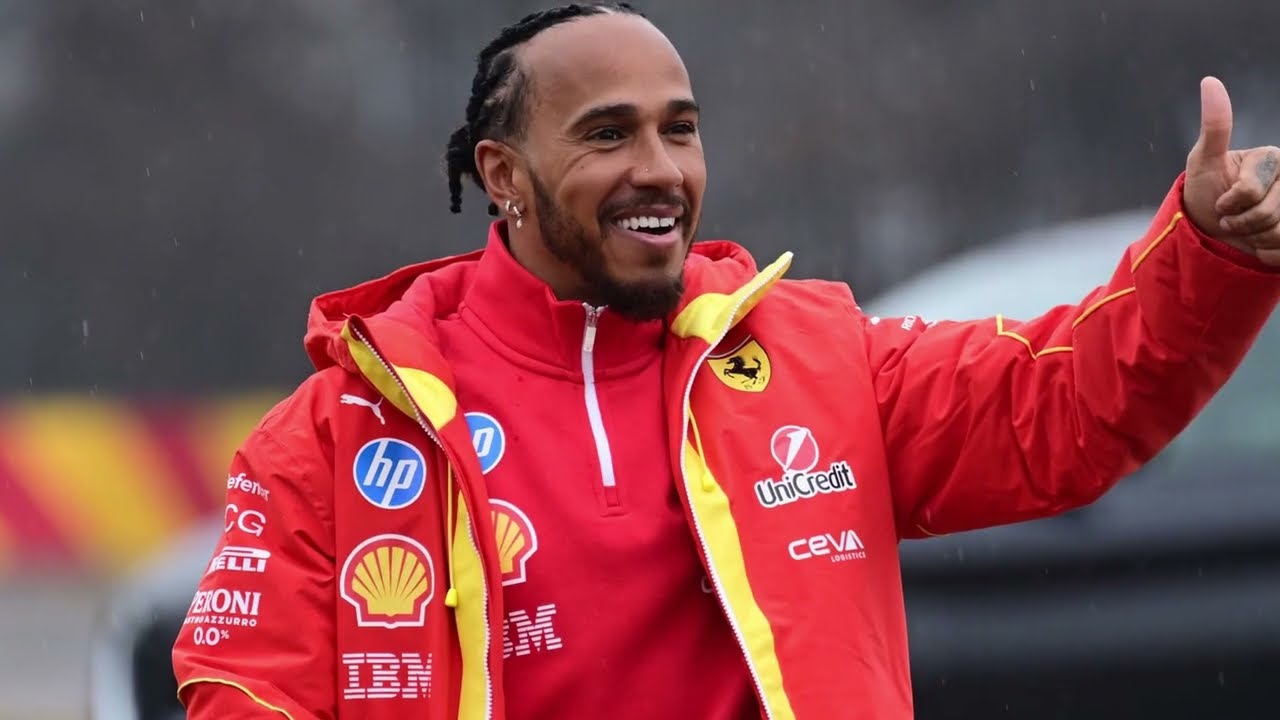
The new Ferrari SF-26 looks, simply put, planted. In the morning session, Charles Leclerc was a machine, clocking up an impressive 66 laps. To put that in perspective, that’s nearly a full race distance in a brand-new car, in the rain, without a single mechanical hiccup. For a team that has historically struggled with reliability in the early stages of testing, this was a massive statement of intent. The car looked compliant and predictable, allowing Leclerc to push even when the grip levels were low.
Then came the moment millions of fans have been waiting for: Lewis Hamilton, the seven-time world champion, stepping into the cockpit of the Prancing Horse for his first proper wet-weather run. Hamilton took over in the afternoon and continued the team’s solid work, completing 45 laps. He wasn’t chasing headline times; he was methodically building a relationship with his new engineers and getting a feel for the car’s balance. Seeing Hamilton in red still feels surreal to many, but his smooth, error-free running suggests that the transition is going better than many rivals would hope.
Ferrari’s reliability is the bedrock upon which a championship challenge is built. After a disappointing 2025 where they finished fourth, the Tifosi finally have a tangible reason to hope. The car works. It runs. And it seems fast.
The Ghost Town Gamble
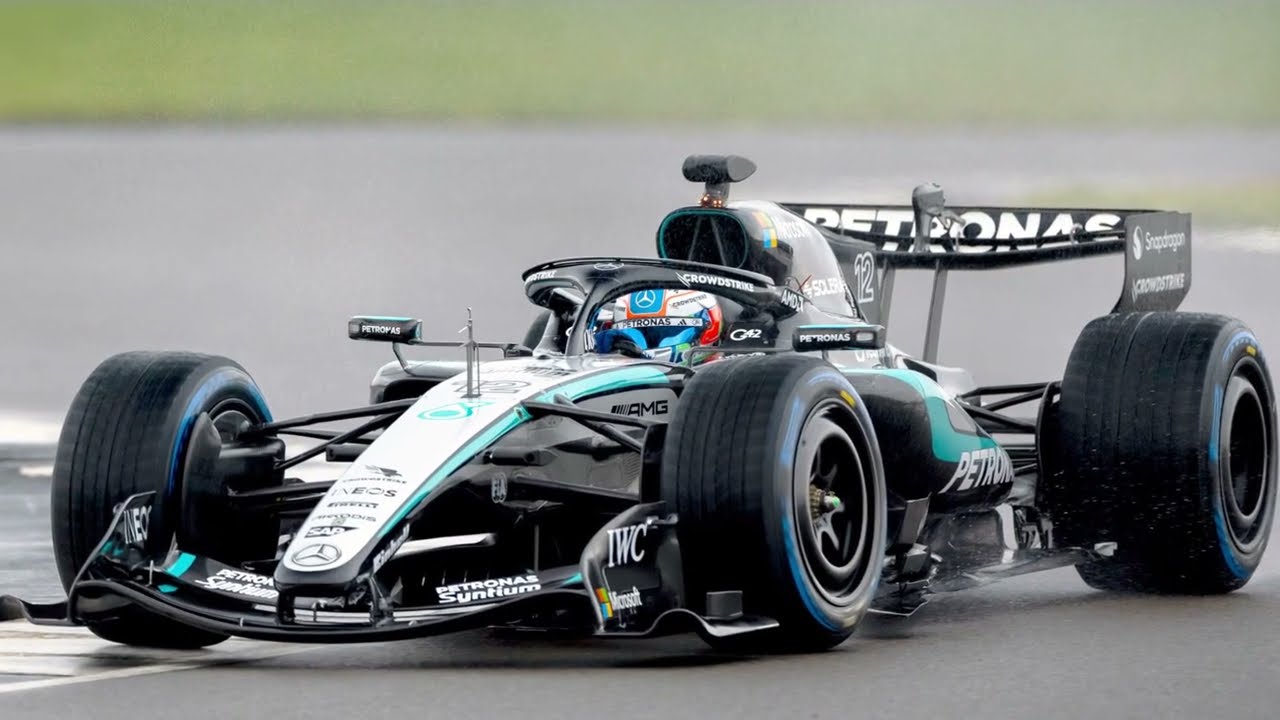
A strange subplot of Day 2 was the emptiness of the track. Aside from the drama at Red Bull and the diligence of Ferrari, the circuit was largely deserted. Major players like Mercedes, McLaren, Alpine, Audi, and the newly formed Cadillac team decided to keep their garage doors firmly shut.
This was a calculated strategic gamble. F1 testing rules strictly limit the number of days teams can run. With rain compromising the data—wet tires behave completely differently from slicks, and aerodynamic data is harder to correlate—these teams decided it wasn’t worth “wasting” a day. They are betting on better weather later in the week to cram in their programs.
It’s a high-stakes game of poker. If the weather clears, they look like geniuses who saved their equipment for relevant conditions. If the rain persists, or if they encounter mechanical issues when they finally do run, they will be miles behind Ferrari and Red Bull in terms of track time.
The Missing Players
The silence from the McLaren garage was particularly deafening. The reigning champions have yet to turn a wheel in anger this week. They are expected to debut on Wednesday, but every day they delay is a day they give their rivals a head start. The pressure will be immense when Lando Norris and Oscar Piastri finally hit the track; they need to be perfect from the get-go.
Even more concerning is the situation at Williams. The historic team announced before testing even began that they would miss the entire Barcelona test due to production delays. In the modern era of F1, where simulation tools are advanced but no substitute for reality, missing a full test is catastrophic. It suggests deep-rooted issues in their production pipeline and puts their drivers on the back foot before they even arrive at the first race in Australia.
A New Era of Unpredictability
If Day 2 taught us anything, it’s that the 2026 regulations have successfully reset the board. The cars are difficult to drive. The engines sound different, the aero works differently, and the drivers are clearly fighting the machinery.
Red Bull, usually the benchmark for perfection, looks vulnerable. Their car is fast but fragile and snappy. Ferrari, often chaotic, looks composed and reliable. And the rest of the grid is hiding in the shadows, waiting to show their hand.
As the sun is forecast to return for Day 3, the track will likely become a frenzied hive of activity. Teams will be desperate to make up for lost time, and with 20 cars sharing the asphalt, traffic will become a nightmare. But for now, the image seared into everyone’s mind is that of a Red Bull crumpled against the barrier—a symbol that in Formula 1, no one is invincible, and the line between glory and the gravel trap is razor-thin.
News

Inside Shane Richie’s love life: Drug – fuelled orgy with six blondes; real reason he split from Coleen Nolan; six-year ‘affair with fan’
Inside Shane Richie’s love life: Orgy with six blondes; real reason he split from Coleen Nolan; six-year ‘affair with fan’ He’s popular with the ladies… Shane Richie…

SH0CKING REVELATI0N:A sh0cking behind-the-scenes secret revealed about Lizzie Rizzini, the woman replacing Carol Kirkwood on the 6pm weather bulletin
BBC viewers still reeling from the departure of Carol Kirkwood got another surprise last night when presenter Lizzie Rizzini appeared to flash her black lace stockings on…

HEARTBREAKING: Peter Andre’s Tearful Message to Son Junior After SHOCKING Revelation About How He Truly Feels Toward Mum Katie Price — Katie Price’s reaction scares fans.
Peter Andre’s emotional message to son Junior after it’s revealed how he really feels about mum Katie Pri… PETER Andre has shared an emotional message to his…

Ben Shephard opens up about the devastating health battle his wife is facing: “She wakes up crying every single morning…”
Inside This Morning Ben Shephard’s Life Including Rarely Seen Wife and Health Battle Ben Shephard is a name synonymous with British television, renowned for his engaging presentation…

🚨 LIVE TV HEARTBREAK: Good Morning Britain Host Announces ‘Devastating’ Dɘath of Guest Minutes Into Show
Viewers of Good Morning Britain were met with heartbreaking news just minutes into Friday’s (January 30) episode, as co-hosts Kate Garraway and Ranvir Singh reported the tragic…

Emmerdale legend Cain Dingle will never be the same again after a shock cancer diagnosis turns his world upside down
FROure Desk. Full Terms and conditions are available on the website http://www.itv.com/presscentre/itvpictures/terms Emmerdale wouldn’t be Emmerdale without the glowering, grunting embodiment of manliness that is Cain Dingle (Jeff Hordley) But…
End of content
No more pages to load






