The atmosphere in Barcelona on the fourth day of pre-season testing—or “shakedown,” as some prefer to call this semi-private affair—was nothing short of electric. While the grandstands weren’t packed to the rafters like a Grand Prix Sunday, the intensity in the paddock was palpable. This wasn’t just another day of checking systems and gathering data; it was the day the world finally got a clear look at the most anticipated machine of the 2026 season: the Aston Martin AMR26.
For months, speculation has run rampant about the “Team in Green.” With the legendary Adrian Newey embarking on his new adventure with the Silverstone-based squad, expectations have been sky-high. The intrigue surrounding this season feels different, sharper. Perhaps it’s the secretive nature of these early tests, or perhaps it’s the knowledge that we are witnessing the dawn of a new era in Formula 1 engineering. Regardless, Day 4 delivered the headlines we were craving, from radical aerodynamic solutions to heart-stopping moments on the tarmac.

The AMR26: A Radical Departure
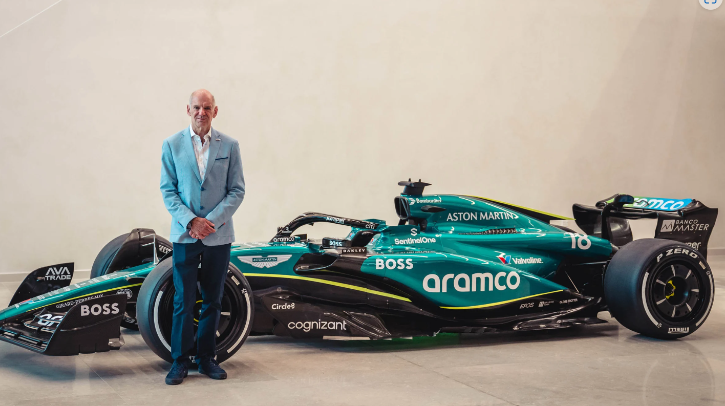
After days of grainy spy shots and speculation, a high-resolution image of the AMR26 finally emerged, and it is a stunner. This is not a basic “A-spec” launch car or a placeholder vehicle like we’ve seen from Cadillac or others. This is a highly developed, aggressive piece of engineering that screams performance.
The first thing that catches the eye is the sheer intricacy of the design. It is immediately clear that a tremendous amount of development time has already been poured into this chassis. The car features a “push-rod” front suspension setup, a detail that has been the subject of intense rumor. Many insiders suggested that Adrian Newey had dedicated significant time to refining the front suspension geometry, and the angles visible in the new photos confirm an extreme and highly evolved design.
Moving to the front wing, Aston Martin has followed a specific design philosophy that only one other team—Mercedes—has adopted so far. The nose is connected directly to the second flap of the wing. However, the nose itself appears surprisingly bulky. When compared to the McLaren, which sports a super-developed, incredibly slender nose cone that has already passed crash testing, the Aston Martin’s front end looks almost hefty. It raises the question: is there weight to be shed here, or is this volume necessary for structural integrity with their specific aero concept? The footplate of the wing has also seen changes, with the strake removed from the top, mimicking the clean lines seen on the McLaren, though the bottom section remains largely intact.
Sidepods and the “Invisible” Inlet
If the front of the car is intriguing, the middle section is radical. The sidepod inlets are, quite frankly, tiny. They feature a massive “underbite” design, with the actual opening for air being skinnier and smaller than perhaps anything else currently on the grid. The wing mirrors are positioned high above this inlet, accentuating just how compact the cooling openings are. Unlike other teams that have brought the sidepod bodywork up to meet the mirrors, Aston Martin has left the inlet isolated, creating a unique airflow structure.
The sidepods themselves are aggressive. They bulge out initially but feature a drastic undercut that sweeps completely under the belly of the car. This leads into a heavily sculpted “coke bottle” section at the rear. The engine cover adopts a triangular design reminiscent of recent Ferraris, but it has been slimmed down to an extreme degree. The packaging is so tight it almost looks like there is nothing underneath the skin. Massive cooling gills are visible, a necessity given the tiny inlets, but the overall impression is one of obsessive aerodynamic sculpting.
Trouble on Track?
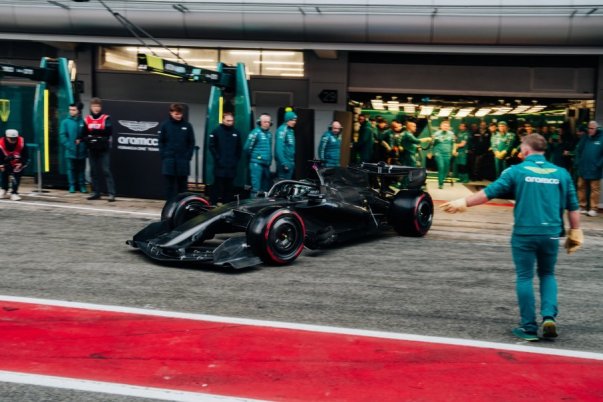
However, radical designs often come with teething problems. The excitement of seeing the AMR26 on track was tempered slightly when the car stopped on the circuit. For a brief moment, panic set in—was this a major failure? Fortunately, reports from the track suggest it wasn’t a “barbecue.” There was no fire, and the power unit seems to have survived intact. The stoppage is believed to be related to a sensor issue rather than a mechanical catastrophe. While it wasn’t the flawless debut the team might have hoped for, the fact that the car is running and showing such aggressive innovation is a victory in itself.
Alpine’s Ingenious Aero Twist
While Aston Martin stole the spotlight, Alpine was quietly conducting an engineering masterclass of their own. Although they weren’t on track for Day 4, analysis of their running from the previous day revealed a fascinating divergence in “active aero” philosophy.
Most teams, including Mercedes, are achieving drag reduction by lifting the leading edge of the rear wing flaps. Alpine, under the guidance of Sanchez, has developed the complete opposite solution. Their actuator, located on the rear wing, does not lift the front; instead, it lowers the trailing edge of the flaps. This essentially drops the entire rear wing profile to shed drag.
It is a clever, “smart” solution that sets them apart from the pack. While the jury is still out on which method will prove superior—Mercedes’ approach or Alpine’s—it is thrilling to see such distinct technical paths being taken in the active aero department. This kind of engineering diversity is exactly what makes pre-season testing so compelling for tech enthusiasts.
Mercedes, Williams, and the Rest of the Field
Mercedes continues to look insanely impressive. Their reliability has been rock-solid, logging lap after lap with a power unit that is becoming the envy of the paddock. The “Silver Arrows” (though the livery varies) seem to have a package that is both fast and durable. Their customer teams are benefiting too, with McLaren and even the Racing Bulls putting in decent mileage. The Mercedes powertrain is currently the gold standard for reliability, a crucial factor as teams head toward the official tests in Bahrain.
On the other end of the spectrum, Williams suffered a setback. James Vowles, the team principal, was present to assess the situation, but miscalculations meant the team missed out on the Barcelona running entirely. However, reports confirm they will be ready for Bahrain. They have the strong Mercedes power unit in the back, which is a silver lining, but missing these early “shakedown” miles puts them on the back foot compared to their rivals.
The “AI” Mirage and Alonso’s Expectations
The hunger for information about the AMR26 was so intense that it led to a bizarre moment on social media. A clearly fake, AI-generated image of the Aston Martin began circulating online. It was so convincing at first glance that even reputable figures in the motorsport community retweeted and discussed it. A closer look revealed the tell-tale signs of AI—notably, the complete absence of a driver in the cockpit—but the incident highlighted just how desperate fans were to see the real thing.
When the real car finally appeared, so did Fernando Alonso. The Spanish veteran was stopped for a quick interview before entering the garage. His message? “Excitement, excitement,” followed immediately by a veteran’s caution: “We need to temper expectations.” He expressed his happiness to be back and working, but his measured words suggest that while the car is radical, the team knows there is a long road ahead to unlock its full potential.
Summary
Day 4 in Barcelona was a microcosm of everything we love about Formula 1: technical innovation, secrets revealed, and the inevitable drama of mechanical gremlins. From Alpine’s unique rear wing to Mercedes’ bulletproof reliability, the 2026 season is shaping up to be a technical war. But the day belonged to Aston Martin. The AMR26 is real, it is radical, and it has Adrian Newey’s fingerprints all over it. Now, the focus shifts to Bahrain, where we will see if this aggressive design can translate its stunning looks into championship-winning lap times.
News

Inside Shane Richie’s love life: Drug – fuelled orgy with six blondes; real reason he split from Coleen Nolan; six-year ‘affair with fan’
Inside Shane Richie’s love life: Orgy with six blondes; real reason he split from Coleen Nolan; six-year ‘affair with fan’ He’s popular with the ladies… Shane Richie…

SH0CKING REVELATI0N:A sh0cking behind-the-scenes secret revealed about Lizzie Rizzini, the woman replacing Carol Kirkwood on the 6pm weather bulletin
BBC viewers still reeling from the departure of Carol Kirkwood got another surprise last night when presenter Lizzie Rizzini appeared to flash her black lace stockings on…

HEARTBREAKING: Peter Andre’s Tearful Message to Son Junior After SHOCKING Revelation About How He Truly Feels Toward Mum Katie Price — Katie Price’s reaction scares fans.
Peter Andre’s emotional message to son Junior after it’s revealed how he really feels about mum Katie Pri… PETER Andre has shared an emotional message to his…

Ben Shephard opens up about the devastating health battle his wife is facing: “She wakes up crying every single morning…”
Inside This Morning Ben Shephard’s Life Including Rarely Seen Wife and Health Battle Ben Shephard is a name synonymous with British television, renowned for his engaging presentation…

🚨 LIVE TV HEARTBREAK: Good Morning Britain Host Announces ‘Devastating’ Dɘath of Guest Minutes Into Show
Viewers of Good Morning Britain were met with heartbreaking news just minutes into Friday’s (January 30) episode, as co-hosts Kate Garraway and Ranvir Singh reported the tragic…

Emmerdale legend Cain Dingle will never be the same again after a shock cancer diagnosis turns his world upside down
FROure Desk. Full Terms and conditions are available on the website http://www.itv.com/presscentre/itvpictures/terms Emmerdale wouldn’t be Emmerdale without the glowering, grunting embodiment of manliness that is Cain Dingle (Jeff Hordley) But…
End of content
No more pages to load






