In the high-octane world of Formula 1, admitting defeat is rare. Teams often cling to failed concepts for years, masking deficiencies with corporate speak and hollow optimism. But this week, amidst the opulent backdrop of the MSC World Europa cruise ship, the Alpine F1 Team did the unthinkable: they publicly admitted their engine wasn’t good enough, buried the program, and staked their entire future on a rival’s technology.
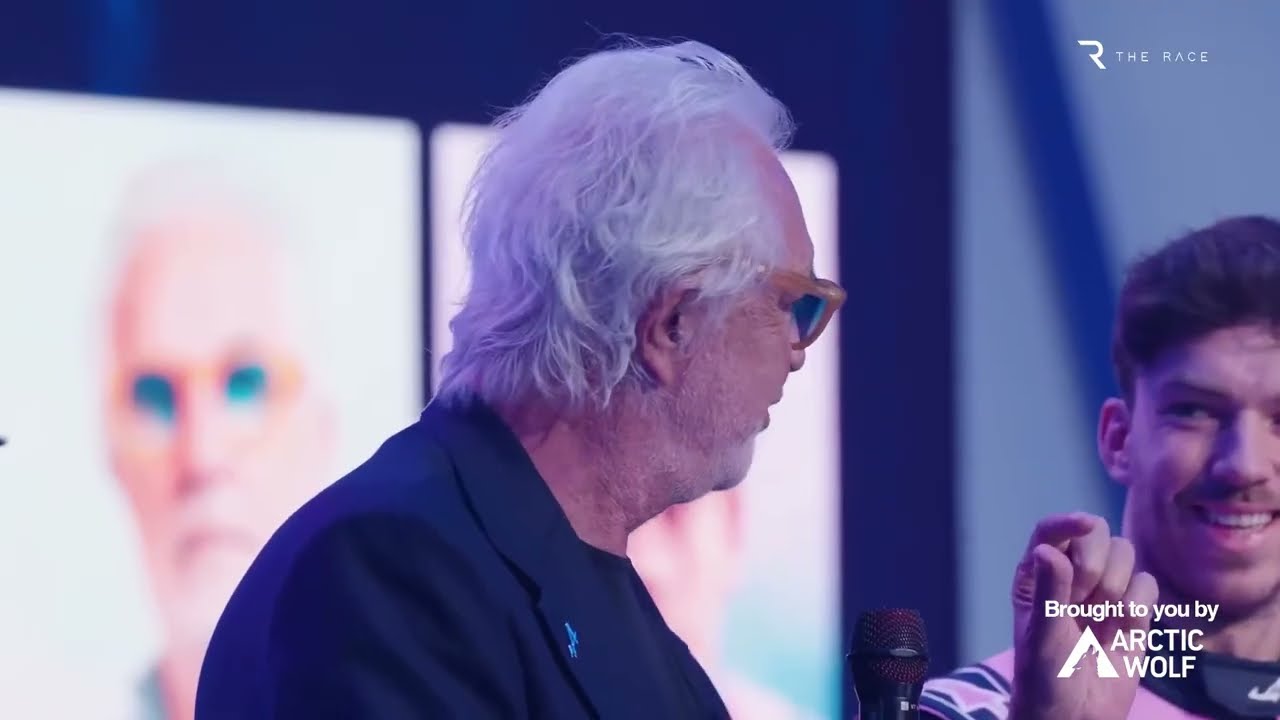
The 2026 season launch for Alpine wasn’t just a reveal of a new livery; it was the dawn of a radical new philosophy. Under the watchful eye of the returning—and ever-controversial—Flavio Briatore, the French outfit has officially transitioned from a “works” manufacturer to a Mercedes customer team. It is a decision that strips away the pride of being an engine builder but replaces it with something far more valuable: a fighting chance.
The End of an Era: Why Alpine Ditched Renault Power
For over a decade, the Renault power unit has been the Achilles’ heel of the Enstone-based team. Since the introduction of the turbo-hybrid era in 2014, the French manufacturer has struggled to match the performance and reliability of Mercedes, Ferrari, and eventually Honda. The decision to shut down the Viry-Châtillon engine program was not taken lightly, but it was, as experts note, a brutally pragmatic one.
“It’s basically an admission from Renault that they can’t crack it,” explains one F1 insider. “Once you accept that, switching to Mercedes is the better decision.”
By bolting a Mercedes power unit into the back of the 2026 car, Alpine effectively removes the biggest variable from their equation. They are no longer dragging around the “millstone” of an underperforming engine. Instead, they are equipping themselves with the same machinery that powered McLaren to multiple championships. The logic is sound, but the implications are terrifying for the technical team at Enstone.
The “No Excuses” Ultimatum
Flavio Briatore, the team’s executive advisor, is known for his no-nonsense management style, and his message at the launch was crystal clear. “If we do a bad job this year, it’s our fault,” Briatore declared.
This statement marks a significant psychological shift for the team. In previous years, a lack of straight-line speed could be blamed on the engine department in Viry. Poor reliability could be attributed to the power unit. Now, with a Mercedes engine—widely regarded as the gold standard for the 2026 regulations—there is nowhere to hide.
If the car is slow, it will be because the chassis is flawed. If the aerodynamics don’t work, it will be an aerodynamic failure. Briatore has stripped away the safety net, exposing the engineering core of the team to the harsh light of accountability. It is a high-pressure environment, but one that Briatore believes is necessary to shake the team out of its midfield stupor.

A Clean Sheet of Paper
The 2026 regulations represent a complete reset for Formula 1, with new cars, new engines, and new energy management systems. For Alpine, this timing is fortuitous. While other teams have been splitting their focus between engine development and chassis design, Alpine’s decision to buy an engine allowed them to focus exclusively on the car itself.
According to the team, when they put the concept in the wind tunnel on January 2nd, their focus was purely on maximizing aerodynamics. They didn’t have to worry about the complex packaging of a developmental engine or the intricacies of the gearbox—they simply took the Mercedes dimensions and built the fastest possible shape around them.
This singular focus could be Alpine’s secret weapon. While rivals are troubleshooting their new power units, Alpine can dedicate every resource to understanding the chassis. The team has already completed a 140km shakedown at Silverstone, a stark contrast to teams like Williams, who are reportedly set to miss the first test in Barcelona.
The Shadow of the “Honda Years”
However, history offers a cautionary tale. Fans will remember the McLaren-Honda era, where McLaren famously claimed they had the “best chassis on the grid” hampered only by a poor Honda engine. When they finally switched to Renault power, the truth was laid bare: the chassis had significant flaws of its own.
Alpine faces a similar risk. “It will lay bare any problems they’ve still got on the team side,” notes an analyst. “Because they’ve got the same engine as McLaren and Mercedes.”
If Alpine finishes significantly behind their engine supplier (Mercedes) or fellow customer (McLaren), it will be a humiliating indictment of their car design. The “benchmark” of the Mercedes engine is invaluable for data, but it can also be a brutal mirror reflecting a team’s inadequacies.

Optimism Amidst the Uncertainty
Despite the risks, the mood aboard the MSC World Europa was one of cautious optimism. The team is not promising World Championships in 2026. Instead, they have set realistic but ambitious targets: regular points finishes, consistently fighting for the top six, and sniffing around the podium on chaotic days.
For a team that finished a dismal 10th in the standings previously, this would represent a massive turnaround. The sacrifice of the 2025 season—where development was halted early to go “all in” on 2026—appears to be the correct strategic call, provided the new car delivers.
Driver Pierre Gasly, a race winner with immense talent, finally has a package that should offer reliability and consistent power. Alongside him is Franco Colapinto, a rookie with a “high ceiling” and everything to prove. It is a driver lineup capable of extracting the maximum from the car, provided the machinery is up to the task.
The Final Verdict
Alpine’s gamble is the defining storyline of the 2026 preseason. They have traded heritage for horsepower, and pride for performance. It is a decision that could finally propel them back toward the front of the grid, laying the foundation for a return to glory. Or, it could expose deep-rooted structural issues that no engine can fix, potentially signaling the end of the team’s current iteration.
As the F1 circus heads to Barcelona for testing, all eyes will be on the French team. They have the budget, the infrastructure, and now, the engine. The excuses are gone. Now, they must race.
News

Inside Shane Richie’s love life: Drug – fuelled orgy with six blondes; real reason he split from Coleen Nolan; six-year ‘affair with fan’
Inside Shane Richie’s love life: Orgy with six blondes; real reason he split from Coleen Nolan; six-year ‘affair with fan’ He’s popular with the ladies… Shane Richie…

SH0CKING REVELATI0N:A sh0cking behind-the-scenes secret revealed about Lizzie Rizzini, the woman replacing Carol Kirkwood on the 6pm weather bulletin
BBC viewers still reeling from the departure of Carol Kirkwood got another surprise last night when presenter Lizzie Rizzini appeared to flash her black lace stockings on…

HEARTBREAKING: Peter Andre’s Tearful Message to Son Junior After SHOCKING Revelation About How He Truly Feels Toward Mum Katie Price — Katie Price’s reaction scares fans.
Peter Andre’s emotional message to son Junior after it’s revealed how he really feels about mum Katie Pri… PETER Andre has shared an emotional message to his…

Ben Shephard opens up about the devastating health battle his wife is facing: “She wakes up crying every single morning…”
Inside This Morning Ben Shephard’s Life Including Rarely Seen Wife and Health Battle Ben Shephard is a name synonymous with British television, renowned for his engaging presentation…

🚨 LIVE TV HEARTBREAK: Good Morning Britain Host Announces ‘Devastating’ Dɘath of Guest Minutes Into Show
Viewers of Good Morning Britain were met with heartbreaking news just minutes into Friday’s (January 30) episode, as co-hosts Kate Garraway and Ranvir Singh reported the tragic…

Emmerdale legend Cain Dingle will never be the same again after a shock cancer diagnosis turns his world upside down
FROure Desk. Full Terms and conditions are available on the website http://www.itv.com/presscentre/itvpictures/terms Emmerdale wouldn’t be Emmerdale without the glowering, grunting embodiment of manliness that is Cain Dingle (Jeff Hordley) But…
End of content
No more pages to load






