The secrecy surrounding Formula 1’s 2026 preseason testing was supposed to be absolute. A “private” affair designed to let teams shake down their radical new machines away from the prying eyes of the media and rival engineers. But in the age of digital information, secrets are hard to keep.
The paddock at the Circuit de Barcelona-Catalunya became a hotbed of intrigue as 10 of the 11 teams took to the track, inadvertently unleashing a torrent of leaks that have given the world its first true look at the next generation of Grand Prix racing. From Adrian Newey’s extreme aerodynamic sculpting at Aston Martin to the deceptive launch tactics of Red Bull Racing, the 2026 season has kicked off not with a whimper, but with a technical roar.
The “Private” Test That Wasn’t
What was intended to be a quiet shakedown turned into a treasure trove for technical analysts. The images emerging from Barcelona paint a picture of a grid that has diverged wildly in its interpretation of the new regulations. The uniformity that often plagues late-regulation eras is gone. In its place is a fascinating array of “extreme design solutions” that suggest the 2026 championship battle will be fought in the wind tunnels as fiercely as on the tarmac.
While the official Bahrain tests are still to come, the Barcelona leaks have provided the first concrete evidence of who has done their homework and who might be in trouble. And sitting right at the center of the storm is the sport’s most legendary designer.
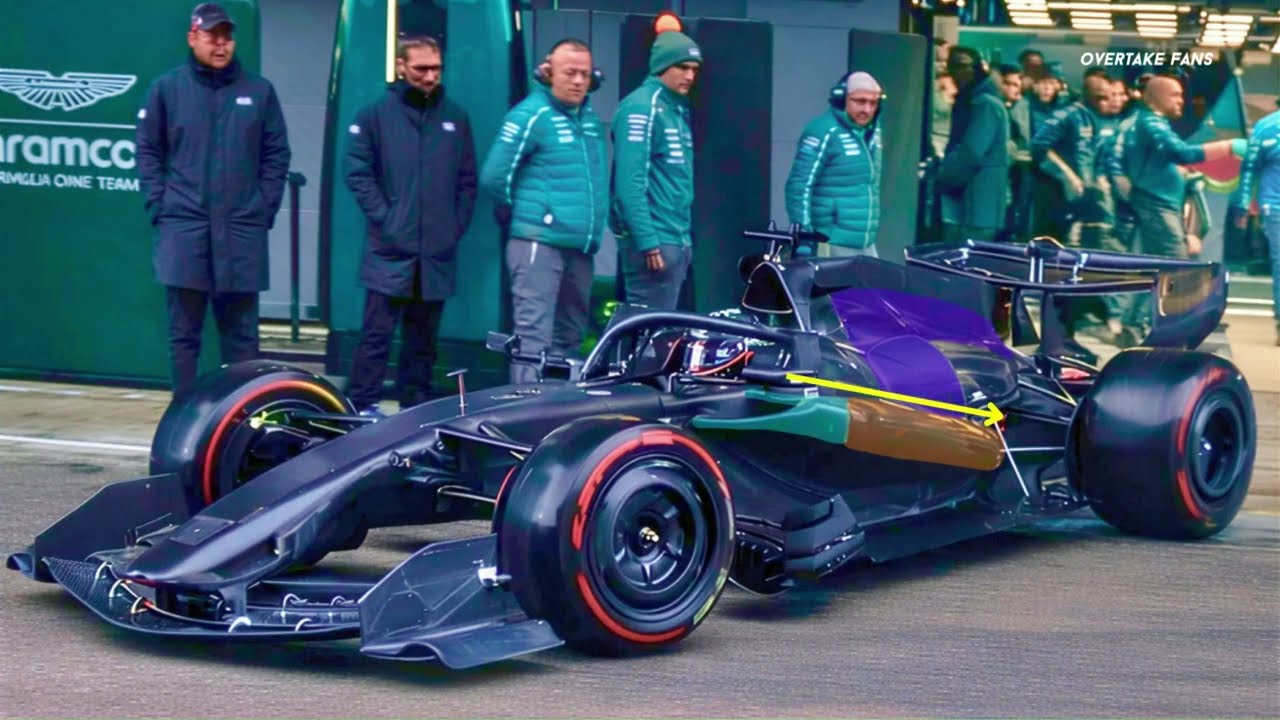
Aston Martin AMR26: Newey’s Radical “Zero Pod” Revival?
All eyes were inevitably drawn to the Aston Martin garage, where the AMR26—the first car fully overseen by the genius of Adrian Newey since his departure from Red Bull—broke cover. The design is nothing short of aggressive, signaling that Newey has lost none of his appetite for pushing the boundaries of physics.
The front of the car features a nose cone that is wide yet aggressively tipped, attached to the second element of the front wing via distinct pylons. It’s a design choice that prioritizes airflow profiling under the nose, creating a “bulbous” front that slims down rapidly to generate load. But the real magic, as always with Newey, is in the suspension and the sidepods.
The AMR26 sports a push-rod configuration on both the front and rear, but the geometry is extreme. The inboard height difference between the suspension legs indicates a massive amount of “anti-dive” at the front and “anti-squat” at the rear. Newey is effectively locking the car’s platform in place, ensuring that the aerodynamic floor works consistently regardless of braking or acceleration forces. It is a setup pushed to the absolute limit of what is mechanically possible.
Then there are the sidepods. The industry has been whispering about the return of the “zero pod” concept, and the AMR26 brings us dangerously close to that reality. The inlets are “letterbox” style, feeding into a body shape that is incredibly slim with a severe down-washing profile. It’s an aerodynamicist’s dream, prioritizing efficiency over everything else. The cooling package appears aggressively integrated, with a massive outlet along the engine cover suggesting that keeping the Honda power unit cool within such a tight skin is the primary challenge.
With a triangular airbox reminiscent of Ferrari and “cobra head” winglets managing airflow around the halo, the AMR26 is a complex beast. However, it wasn’t all smooth sailing; reports indicate the team faced hiccups, potentially related to the new Honda power unit, a reminder that radical design often comes with initial reliability headaches.
The “Real” Red Bull RB22 Finally Emerges
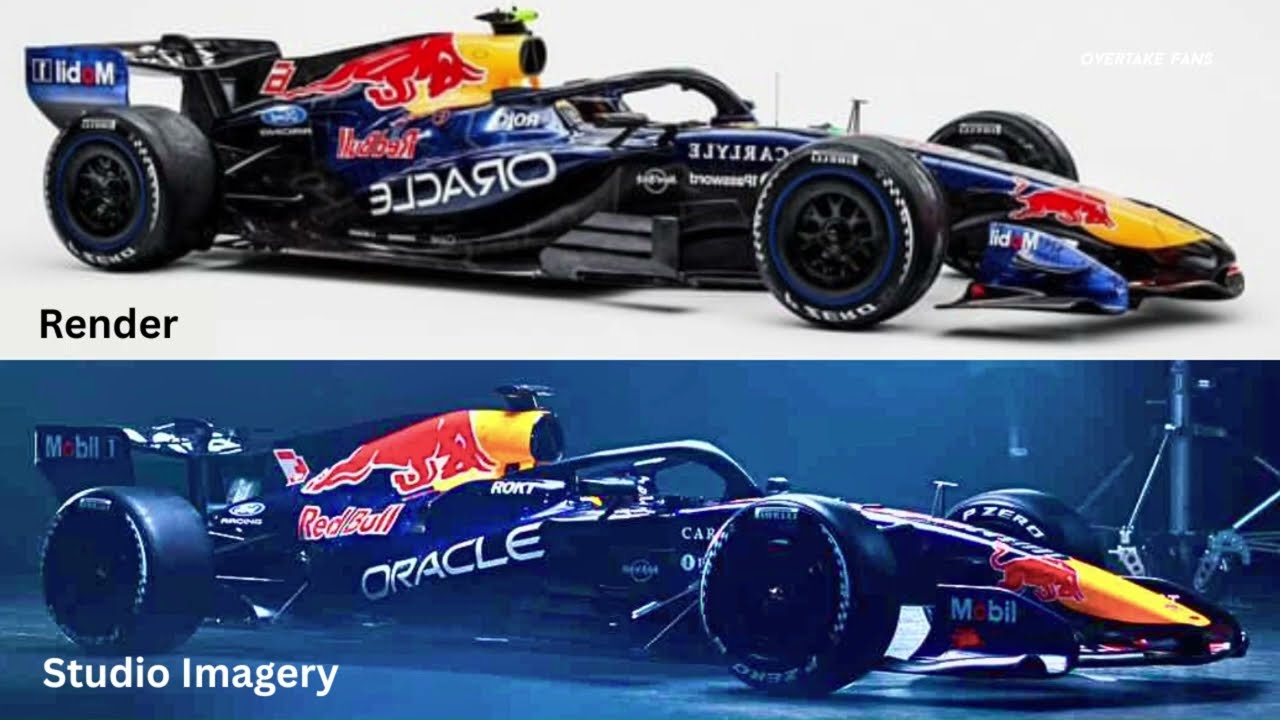
If Aston Martin was about radical transparency, Red Bull was about deception. The team had released renders of the RB22 prior to the test, but the car that rolled out of the garage in Barcelona bore little resemblance to those digital images. This was the real RB22, and it is a far more menacing machine.
Gone is the generic nose of the renders. The actual car features a flatter, shorter nose cone with narrow pylons, a stark contrast to the Mercedes approach. The front wing elements are surprisingly conservative, shaping upwards and inwards to push airflow into the undercut.
The biggest shock, however, came at the sidepods. The “real” RB22 features significantly larger inlets than the concept art suggested, yet the sidepods themselves are smaller and more tightly packed. It’s a packaging marvel that exposes a significant amount of the floor, allowing the air to work the underbody harder.
The floor edge features a curled profile similar to Ferrari’s SF26, creating a “floor fence” to generate powerful vortices. Interestingly, Red Bull has also introduced a unique vane attached to the rear wheel deflector—a clear attempt to harness high-energy airflow from the tires to supercharge the diffuser. It’s a sophisticated, detailed design that proves the reigning champions are not resting on their laurels, even without Newey at the helm.
McLaren’s Stealthy Innovation: The MCL40
McLaren waited until the third day to fully reveal the MCL40, and it was worth the wait. The Woking-based team has opted for a design philosophy that balances complexity with clever detailing.
The standout feature is the brake duct assembly. The MCL40 runs large ducts divided into multiple sections with varying volumes. Technical experts suggest this is a bespoke method to facilitate different levels of cooling for internal parts—a critical advantage in a season where thermal management could decide races.
Aerodynamically, the car features P-shaped sidepod inlets and a significant undercut that drives airflow to the rear. The floor is particularly interesting, with a massive top piece sitting above a complex arrangement of slots and curved edges. This design aims to generate vorticity along the floor edge while sealing the underbody, a technique that helped McLaren master tire temperature management last season. If this evolution works, McLaren could be the team to beat on Sundays when tire degradation becomes a factor.
Mercedes W17: The Class Leader?
Perhaps the biggest surprise of the Barcelona test was the resurgence of Mercedes. The W17 not only looked fast but ran reliably, racking up mileage while rivals like Audi and Aston Martin faced teething issues.
Mercedes has brought a unique innovation to the front wing. Unlike the rest of the grid, their nose pylons attach to the second element, leaving only the third element movable. Furthermore, they have integrated a “flow conditioner” directly below the nose cone—a feature absent on other cars. This suggests Mercedes has found a different aerodynamic path, one that prioritizes flow structures under the nose over conventional adjustability.
The W17’s reliability and mileage have led many to label them the “class leader” of the test. In a new regulation cycle, reliability is performance. If the Silver Arrows have a car that works straight out of the box, they have a massive advantage heading into the first race.
The Rest of the Field: Audi and Alpine
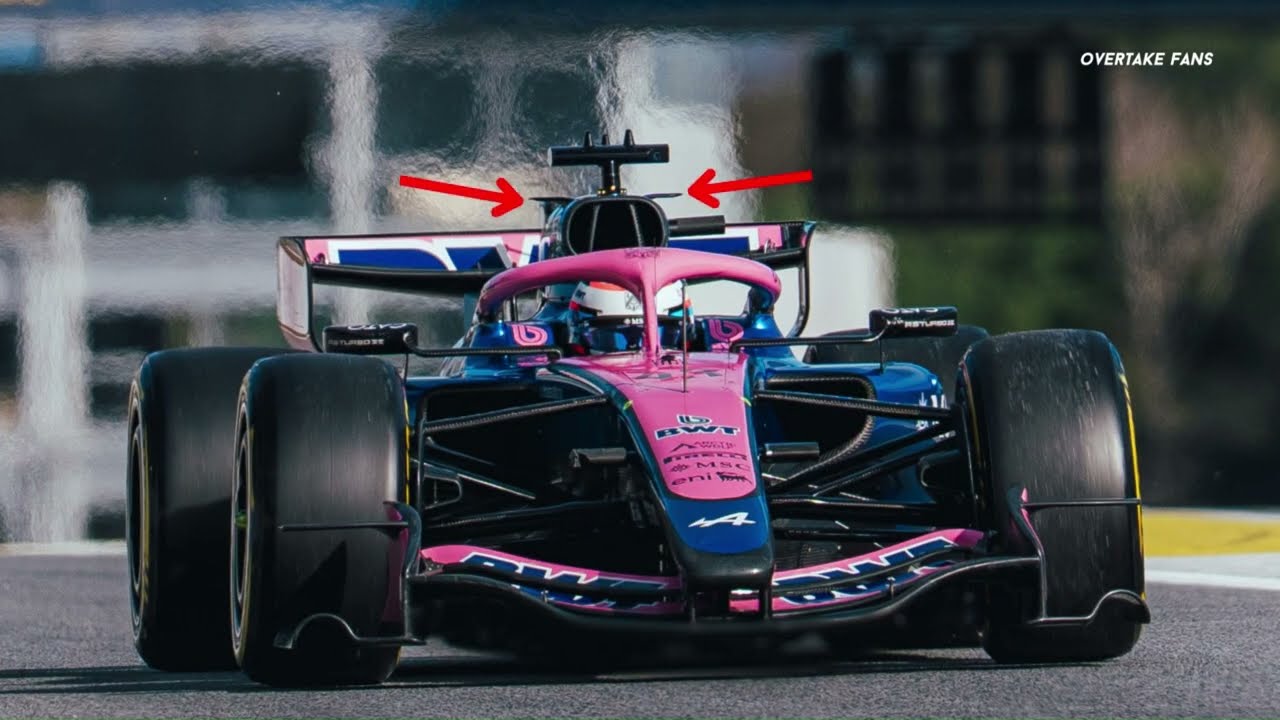
The test wasn’t just about the “Big Four.” Alpine showed off some interesting airbox fins designed to streamline flow to the rear wing, though their solution appeared less complex than Aston Martin’s. Meanwhile, newcomer Audi, along with Aston Martin, reportedly faced “hiccups” with their power units. In the high-stakes game of F1 2026 engine regulations, these early stumbles are concerning but expected.
Conclusion: The Battle Lines Are Drawn
The “private” Barcelona test has effectively ripped the covers off the 2026 grid. We have seen Adrian Newey’s uncompromising vision for Aston Martin, Red Bull’s aggressive repackaging, McLaren’s detailed refinement, and Mercedes’ confident innovation.
While lap times in testing are notoriously unreliable, the visual evidence tells a compelling story. Teams have taken vastly different paths to solve the 2026 puzzle. Aston Martin has gone for extreme aerodynamics; Mercedes has prioritized a unique flow structure and reliability; Red Bull has focused on tight packaging and floor efficiency.
As the circus moves to Bahrain for the official pre-season test, the question remains: Which of these divergent philosophies is the winning one? The leaks from Barcelona have given us the clues, but the stopwatch will soon provide the answer. One thing is certain—2026 is going to be a season of technical warfare unlike anything we’ve seen in years.
News

Inside Shane Richie’s love life: Drug – fuelled orgy with six blondes; real reason he split from Coleen Nolan; six-year ‘affair with fan’
Inside Shane Richie’s love life: Orgy with six blondes; real reason he split from Coleen Nolan; six-year ‘affair with fan’ He’s popular with the ladies… Shane Richie…

SH0CKING REVELATI0N:A sh0cking behind-the-scenes secret revealed about Lizzie Rizzini, the woman replacing Carol Kirkwood on the 6pm weather bulletin
BBC viewers still reeling from the departure of Carol Kirkwood got another surprise last night when presenter Lizzie Rizzini appeared to flash her black lace stockings on…

HEARTBREAKING: Peter Andre’s Tearful Message to Son Junior After SHOCKING Revelation About How He Truly Feels Toward Mum Katie Price — Katie Price’s reaction scares fans.
Peter Andre’s emotional message to son Junior after it’s revealed how he really feels about mum Katie Pri… PETER Andre has shared an emotional message to his…

Ben Shephard opens up about the devastating health battle his wife is facing: “She wakes up crying every single morning…”
Inside This Morning Ben Shephard’s Life Including Rarely Seen Wife and Health Battle Ben Shephard is a name synonymous with British television, renowned for his engaging presentation…

🚨 LIVE TV HEARTBREAK: Good Morning Britain Host Announces ‘Devastating’ Dɘath of Guest Minutes Into Show
Viewers of Good Morning Britain were met with heartbreaking news just minutes into Friday’s (January 30) episode, as co-hosts Kate Garraway and Ranvir Singh reported the tragic…

Emmerdale legend Cain Dingle will never be the same again after a shock cancer diagnosis turns his world upside down
FROure Desk. Full Terms and conditions are available on the website http://www.itv.com/presscentre/itvpictures/terms Emmerdale wouldn’t be Emmerdale without the glowering, grunting embodiment of manliness that is Cain Dingle (Jeff Hordley) But…
End of content
No more pages to load






